
|
시장보고서
상품코드
1936053
방위용 제트 연료 스타터(JFS) 시장(2026-2036년)Global Defense Jet Fuel Starters (JFS) Market 2026-2036 |
||||||

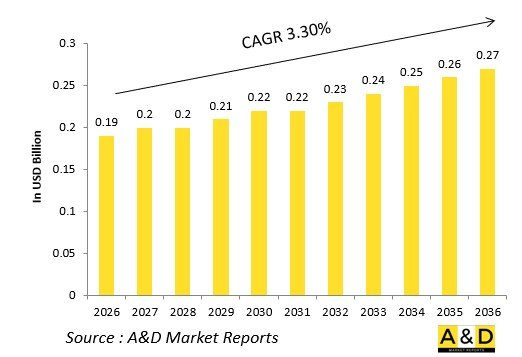
세계의 방위용 제트 연료 스타터(JFS) 시장 규모는 2026년에 1억 9,000만 달러로 추정되며, 2036년까지 2억 7,000만 달러에 달할 것으로 예측되고, 2026-2036년의 예측 기간 중 CAGR 3.30%의 성장이 전망되고 있습니다.

소개
세계의 방위용 제트 연료 스타터(JFS) 시장은 터빈 컴프레서 어셈블리를 통해 제트 A를 연소시키는 자립식 가스 발생 장치에 의해 메인 엔진의 점화를 구동합니다. 단축식 JFS는 코어를 제로 회전에서 자주 가능 회전 수까지 가속한 후 클러치를 통해 보조 구동 장치에서 분리합니다.
시장 발전은 하이브리드 추진 시스템과 호환되는 경량 스타터를 필요로 하는 "More-Electric" 아키텍처를 따라 진행되고 있습니다. 핵심 기술에는 에어 베어링 터빈, 가변 흡기 가이드 베인, 원활한 전환을 위한 FADEC 연동 시퀀싱이 포함됩니다. 모듈식 오버홀을 통해 현장 레벨에서 유지보수가 가능합니다.
지정학적 긴급 발진 대응 요구가 개발을 추진하고 오염 연료와 극한 기후에 내성이 있는 JFS가 우선시되고 있습니다. 오픈 아키텍처는 엔진 패밀리 간의 통합을 지원합니다. 공급망은 고온 씰과 단결정 블레이드에 주력하고 있습니다. 경쟁에서 Honeywell, Prat & Whitney, Safran은 전기 보조 버전을 선도합니다.
방위용 제트 연료 스타터(JFS) 기술의 영향
전기 부스트 JFS는 고토크 모터에 의한 초기 스풀업 후 연료 연소로 이행함으로써 고온 재시동시의 기동 시간을 대폭 단축합니다. 가변 지오메트리 압축기는 극한에서 사막 환경까지 모든 주변 조건에서 서지를 방지합니다.
세라믹 베어링은 오일 시스템을 완전히 제거하고 소기 펌프가 필요없는 건식 모터 작동을 가능하게 합니다. 임베디드 헬스 모니터링 시스템은 배기 가스 온도와 진동 특성을 분석하여 터빈 블레이드의 손상을 고장 전에 예측합니다. 적층 성형된 임펠러는 공기 흐름을 최적화하면서 관성 질량을 최소화합니다.
FADEC 융합 제어는 스타터의 분리와 메인 엔진의 점화를 연동시켜 고온 가스의 재흡입을 방지합니다. 하이브리드 설계는 통합 스타터 생성기와 통합되어 원활한 모드 전환을 실현합니다. 단축화를 통한 단순화로 트윈 스풀 구조에 비해 부품 수가 줄어듭니다.
디지털 트윈 기술은 전투 손상을 입은 흡기 조건 하에서 시동 범위를 검증합니다. 연료 미립화 환형 연소기는 합성 혼합 연료에서도 확실하게 점화합니다. 이러한 진보에 의해 전선 활주로로부터의 자율 운용이 가능하게 됩니다.
방위용 제트 연료 스타터(JFS)의 주요 촉진요인
More-Electric 엔진의 보급으로 외부 JFS를 대체하는 통합 스타터 제너레이터 수요가 높아지고 하이브리드 설계가 추진되고 있습니다. 6세대 무인 플랫폼에서는 지상 지원 없이 공중 시동 능력이 요구되고 있습니다.
유지 관리는 카트리지 교체를 가능하게 하는 모듈식 로터의 채택을 강조합니다. 수출 프로그램은 다양한 케로신 연료에 대한 광범위한 내성을 요구합니다. 긴급 발진태세에서는 저온 침지상태로부터 1분 미만에서의 시동이 필수입니다.
예산면에서는 군용 규격 강화를 실시한 상용 파생품의 채용이 유리합니다. 공급 탄력성은 터빈 블레이드 재료의 제약에 대항합니다. 상호 운용성을 통해 연합군의 엔진간에 드라이브 패드를 공통화할 수 있습니다.
지향성 에너지 무기에는 메가와트급의 시동 능력이 요구됩니다. 이것에 의해 JFS는 자립한 인에이블러가 되고 있습니다.
본 보고서에서는 세계의 방위용 제트 연료 스타터(JFS) 시장에 대해 조사 분석했으며, 시장에 영향을 주는 기술, 향후 10년간의 예측, 각 지역의 동향 등의 정보를 제공합니다.
목차
방위용 제트 연료 스타터(JFS) 시장 보고서 정의
방위용 제트 연료 스타터(JFS) 시장 세분화
플랫폼별
스타터 유형별
점화별
향후 10년간 방위용 제트 연료 스타터(JFS) 시장 분석
방위용 제트 연료 스타터(JFS) 시장 기술
세계의 방위용 제트 연료 스타터(JFS) 시장 예측
지역의 방위용 제트 연료 스타터(JFS) 시장 동향 및 예측
북미
촉진요인, 억제요인, 과제
PEST
시장 예측 및 시나리오 분석
주요 기업
공급자의 Tier 상황
기업 벤치마킹
유럽
중동
아시아태평양
남미
방위용 제트 연료 스타터(JFS) 시장 국가 분석
미국
방위 프로그램
최신 뉴스
특허
이 시장의 현재 기술 성숙도
시장 예측 및 시나리오 분석
캐나다
이탈리아
프랑스
독일
네덜란드
벨기에
스페인
스웨덴
그리스
호주
남아프리카
인도
중국
러시아
한국
일본
말레이시아
싱가포르
브라질
방위용 제트 연료 스타터(JFS) 시장 기회 매트릭스
방위용 제트 연료 스타터(JFS) 시장 보고서에 대한 전문가의 의견
결론
Aviation and Defense Market Reports 정보
JHSThe Global Defense Jet Fuel Starters (JFS) Market is estimated at USD 0.19 billion in 2026, projected to grow to USD 0.27 billion by 2036 at a Compound Annual Growth Rate (CAGR) of 3.30% over the forecast period 2026-2036.
Introduction
The global Defense Jet Fuel Starters (JFS) market powers main engine ignition via self-contained gas generators burning Jet-A through turbine-compressor assemblies. Single-shaft JFS accelerate cores from zero to self-sustaining RPM, then disengage via clutches for accessory drive.
Market evolution tracks more-electric architectures requiring lightweight starters compatible with hybrid propulsion. Core technologies include air-bearing turbines, variable inlet guide vanes, and FADEC-linked sequencing for seamless transitions. Modular overhauls enable field-level maintenance.
Geopolitical demands for scramble readiness drive development, prioritizing JFS tolerant of contaminated fuels and extreme climates. Open architectures support integration across engine families. Supply chains focus on high-temperature seals and single-crystal blades. Competition features Honeywell, Pratt & Whitney, and Safran pioneering electric-assist variants.
Technology Impact in Defense Jet Fuel Starters (JFS)
Electric boost JFS employ high-torque motors for initial spool-up, then transition to fuel combustion, slashing startup times during hot restarts. Variable geometry compressors prevent surge across ambient conditions from arctic to desert.
Ceramic bearings eliminate oil systems entirely, enabling dry motoring without scavenge pumps. Embedded health monitoring analyzes exhaust gas temps and vibration signatures, predicting turbine blade distress before failure. Additive manufactured impellers optimize airflow while minimizing inertia.
FADEC fusion sequences starter disengagement with main engine light-off, preventing hot gas reingestion. Hybrid designs integrate with integrated starter generators for seamless mode transitions. Single-shaft simplification reduces parts count versus twin-spool architectures.
Digital twins validate startup envelopes under battle-damaged inlet conditions. Fuel-atomizing can-annular combustors ignite reliably with synthetic blends. These advancements enable autonomous operations from forward strips.
Key Drivers in Defense Jet Fuel Starters (JFS)
More-electric engines demand integrated starter-generators replacing discrete JFS, driving hybrid designs. Sixth-generation unmanned platforms require air-start capability without ground support.
Sustainment prioritizes modular rotors enabling cartridge swaps. Export programs need wide-cut fuel tolerance across kerosene variants. Scramble readiness mandates sub-minute startups from cold soak.
Budget favors commercial derivatives with mil-spec hardening. Supply resilience counters turbine blade material constraints. Interoperability enables common drive pads across coalition engines.
Directed-energy weapons demand megawatt-class starter capacity. These position JFS as self-reliance enablers.
Regional Trends in Defense Jet Fuel Starters (JFS)
North America dominates F-35 sustainment, pioneering electric-hybrid starters for STOVL scrambles.
Europe upgrades Rafale/Typhoon JFS for dispersed basing with synthetic fuels.
Asia-Pacific surges with indigenous programs-India's Tejas, China's J-20-prioritizing high-altitude cold starts.
Middle East adapts fuel controls for sand-contaminated kerosene.
Russia hardens starters for Su-57 arctic deployments.
South Korea integrates KF-21 exports with common cartridges.
Trends favor electric integration; Asia-Pacific captures growth.
Key Defense Jet Fuel Starters (JFS) Programs
F135 JFS powers STOVL lift fan spin-up and main engine light-off sequencing.
NGAD hybrid starter integrates with variable cycle core transitions.
EJ200 upgrades enable rapid dry cranking for intercept missions.
Kaveri equips Tejas with indigenous air-bearing turbine.
F119 JFS sustains stealth missions from carrier catapults.
Rafale M88 starter handles STOBAR shipboard hot restarts.
Su-57 AL-41F1 integrates with 3D thrust vectoring spool-up.
T-50 FADEC-controlled startup prevents hot gas reingestion.
Table of Contents
Defense Jet Fuel Starters Market - Table of Contents
Defense Jet Fuel Starters Market Report Definition
Defense Jet Fuel Starters Market Segmentation
By Platform
By Starter Type
By Ignition
Defense Jet Fuel Starters Market Analysis for next 10 Years
The 10-year Defense Jet Fuel Starters market analysis would give a detailed overview of Defense Jet Fuel Starters market growth, changing dynamics, technology adoption overviews and the overall market attractiveness is covered in this chapter.
Market Technologies of Defense Jet Fuel Starters Market
This segment covers the top 10 technologies that is expected to impact this market and the possible implications these technologies would have on the overall market.
Global Defense Jet Fuel Starters Market Forecast
The 10-year Defense Jet Fuel Starters market forecast of this market is covered in detailed across the segments which are mentioned above.
Regional Defense Jet Fuel Starters Market Trends & Forecast
The regional counter drone market trends, drivers, restraints and Challenges of this market, the Political, Economic, Social and Technology aspects are covered in this segment. The market forecast and scenario analysis across regions are also covered in detailed in this segment. The last part of the regional analysis includes profiling of the key companies, supplier landscape and company benchmarking. The current market size is estimated based on the normal scenario.
North America
Drivers, Restraints and Challenges
PEST
Market Forecast & Scenario Analysis
Key Companies
Supplier Tier Landscape
Company Benchmarking
Europe
Middle East
APAC
South America
Country Analysis of Defense Jet Fuel Starters Market
This chapter deals with the key defense programs in this market, it also covers the latest news and patents which have been filed in this market. Country level 10 year market forecast and scenario analysis are also covered in this chapter.
US
Defense Programs
Latest News
Patents
Current levels of technology maturation in this market
Market Forecast & Scenario Analysis
Canada
Italy
France
Germany
Netherlands
Belgium
Spain
Sweden
Greece
Australia
South Africa
India
China
Russia
South Korea
Japan
Malaysia
Singapore
Brazil
Opportunity Matrix for Defense Jet Fuel Starters Market
The opportunity matrix helps the readers understand the high opportunity segments in this market.
Expert Opinions on Defense Jet Fuel Starters Market Report
Hear from our experts their opinion of the possible analysis for this market.