|
시장보고서
상품코드
1708548
로봇 간호 보조 시장 : 유형별, 최종사용자별, 지역별.Global Robotic Nurse Assistant Market, By Type, By End User, By Geography . |
||||||

로봇 간호 보조 세계 시장 규모는 2025년 10억 1,870만 달러로 추정되며, 2032년에는 31억 3,140만 달러에 달할 것으로 예상되며, 2025-2032년 CAGR은 17.4%로 성장할 것으로 예상됩니다.
| 보고서 범위 | 보고서 상세 | ||
|---|---|---|---|
| 기준 연도 | 2024년 | 2025년 시장 규모 | 10억 1,870만 달러 |
| 실적 데이터 | 2020-2024년 | 예측 기간 | 2025-2032년 |
| 예측 기간 : 2025-2032년 CAGR | 17.40% | 2032년 금액 예측 | 31억 3,140만 달러 |
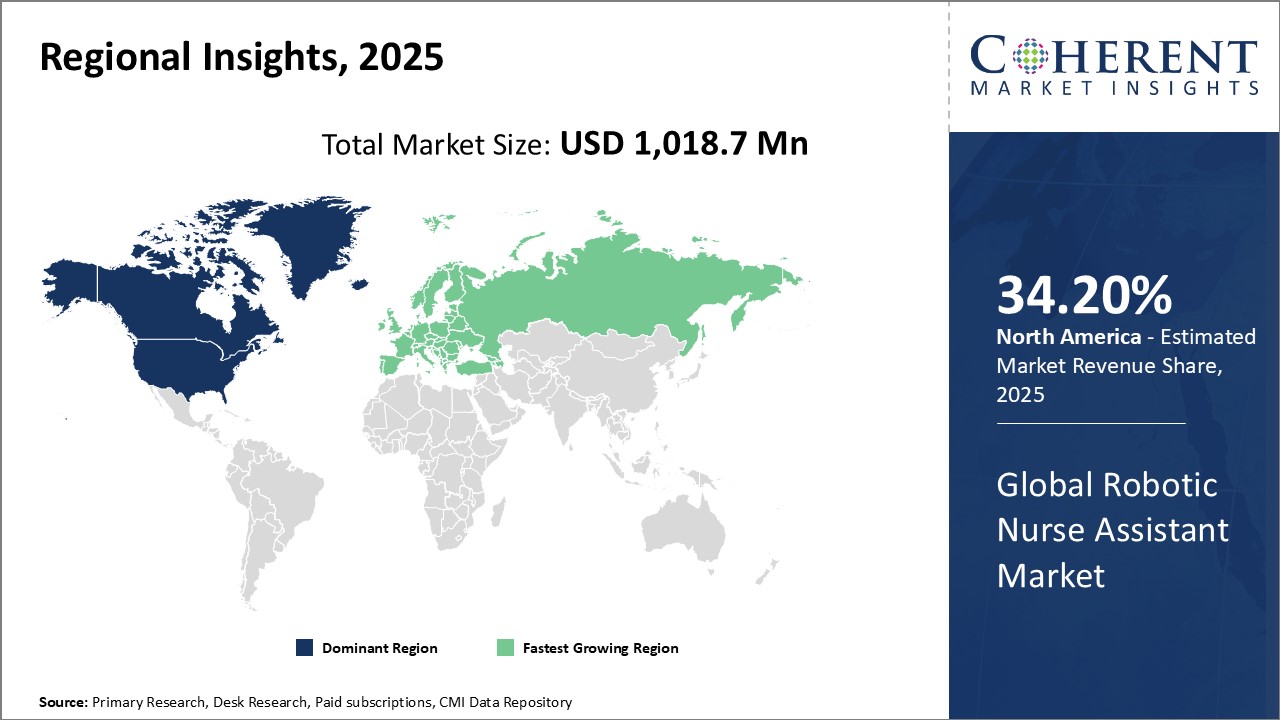
로봇 간호 보조는 환자 치료 개선과 간호사 및 의료진 지원에 초점을 맞춘 의료 산업의 최신 기술 발전 중 하나입니다. 이 로봇은 간호사가 더 중요한 환자 치료 활동에 집중할 수 있도록 단순하지만 반복적인 작업을 수행하도록 돕습니다. 로봇 간호 보조는 의료용품 및 음식 트레이의 경량 운반, 환자 정기 검진, 활력징후 기록 등을 지원할 수 있습니다. 이러한 자동화된 도우미는 간호사의 신체적 스트레스를 줄이면서 간호 제공의 안전성, 품질, 효율성을 높이는 것을 목표로 합니다. 로봇 간호 보조는 지속적으로 작동할 수 있으며, 24시간 내내 환자를 모니터링하고 지원할 수 있습니다. 이러한 끊임없는 경계는 특히 중환자 치료 상황에서 환자의 예후를 개선하는 데 기여합니다. 또한, 로봇은 정확하고 일관된 작업을 수행하여 인적 오류의 위험을 최소화합니다. 이는 투약이나 활력징후 모니터링과 같이 정확성이 가장 중요한 작업에서 특히 중요합니다.
시장 역학
로봇 간호 보조 시장은 의료가 자동화를 수용함에 따라 빠르게 성장하고 있습니다. 고령화가 진행되면서 효율적인 의료 솔루션이 요구되는 가운데, 이러한 로봇이 인기를 끌고 있습니다. 의료진 부족을 해소하고, 환자 치료를 강화하며, 운영 비용을 절감할 필요성이 시장을 주도하고 있습니다. 기술 발전, AI 기능의 향상, 의료 분야의 디지털 혁신의 진행과 같은 요인들이 시장을 더욱 활성화시키고 있습니다. 그러나 규제 문제, 윤리적 고려사항, 초기 도입 비용 등의 과제가 보급에 걸림돌이 되고 있습니다. 전반적으로, 로봇 간호 보조 시장은 지속적으로 확대될 것이며, 지속적인 연구 개발이 이 시장의 혁신적인 솔루션에 기여하고 있습니다.
본 조사의 주요 특징
- 세계의 로봇 간호 보조 시장을 상세히 분석했으며, 2024년을 기준 연도로 하여 예측 기간(2025-2032년)의 시장 규모와 연평균 성장률(CAGR)에 대해 조사 분석하여 전해드립니다.
- 또한, 다양한 부문에 걸친 잠재적 수익 성장 기회를 파악하고, 이 시장의 매력적인 투자 제안 매트릭스를 설명합니다.
- 또한 시장 촉진요인, 억제요인, 기회, 신제품 출시 및 승인, 시장 동향, 지역별 전망, 주요 기업의 경쟁 전략 등에 대한 주요 인사이트를 제공합니다.
- 이 보고서는 회사 하이라이트, 제품 포트폴리오, 주요 하이라이트, 재무 성과, 전략 및 기타 매개 변수를 기반으로 세계 로봇 간호 보조 시장의 주요 기업을 프로파일링합니다.
- 이 보고서의 인사이트를 통해 마케팅 담당자와 기업 경영진은 향후 제품 출시, 유형화, 시장 확대, 마케팅 전술에 대한 정보에 입각한 의사결정을 내릴 수 있습니다.
- 로봇 간호 보조 세계 시장 보고서는 투자자, 공급업체, 제품 제조업체, 유통업체, 신규 진입자, 재무 분석가 등 이 산업의 다양한 이해관계자를 대상으로 합니다.
- 이해관계자들은 세계 로봇 간호 보조 시장 분석에 사용되는 다양한 전략 매트릭스를 통해 의사결정을 쉽게 내릴 수 있습니다.
목차
제1장 조사 목적과 가정
- 조사 목적
- 가정
- 약어
제2장 시장 전망
- 보고서 설명
- 시장 정의와 범위
- 주요 요약
- Coherent Opportunity Map(COM)
제3장 시장 역학, 규제, 동향 분석
- 시장 역학
- 로봇 간병 보조 기기의 도입 증가
- 간병 로봇 활용에 관한 기술적 과제
- 미개척 신흥 시장
- 시장 동향
- PEST 분석
- 투자와 자금 조달
- 합병, 인수, 제휴
- 제공되는 주요 서비스
- 상위 시장 진출 기업 특정
- 국가에 의한 의료비 지출
제4장 세계의 로봇 간호 보조 시장 - COVID-19 팬데믹의 영향
- COVID-19 역학
- 공급측과 수요측 분석
- 경제에 대한 영향
제5장 세계의 로봇 간호 보조 시장, 유형별, 2020-2032년
- 소개
- 독립 지원 로봇
- 자율 이동 로봇
제6장 세계의 로봇 간호 보조 시장, 최종사용자별, 2020-2032년
- 소개
- 병원과 클리닉
- 고령자 간병 시설
- 재택 간병 시설
제7장 세계의 로봇 간호 보조 시장, 지역별, 2020-2032년
- 소개
- 북미
- 유럽
- 아시아태평양
- 라틴아메리카
- 중동
- 아프리카
제8장 경쟁 구도
- 기업 개요
- Hstar Technologies Diligent Robotics
- Toyota Motor Corporation
- RIKEN
- Aldebaran
- Panasonic Holdings Corporation
- Fraunhofer IPA
- ST Engineering Aethon, Inc
- Triage Staffing
제9장 섹션
- 참고문헌
- 조사 방법
- 출판사 소개
Global Robotic Nurse Assistant Market is estimated to be valued at USD 1,018.7 Mn in 2025 and is expected to reach USD 3,131.4 Mn by 2032, growing at a compound annual growth rate (CAGR) of 17.4% from 2025 to 2032.
| Report Coverage | Report Details | ||
|---|---|---|---|
| Base Year: | 2024 | Market Size in 2025: | USD 1,018.7 Mn |
| Historical Data for: | 2020 To 2024 | Forecast Period: | 2025 To 2032 |
| Forecast Period 2025 to 2032 CAGR: | 17.40% | 2032 Value Projection: | USD 3,131.4 Mn |
Robotic nurse assistants are one of the latest technological advancements in the healthcare industry with a focus on improving patient care and support for nurses and medical staff. These robots help perform simple yet repetitive tasks to allow nurses to focus more on critical patient care activities. Robotic nurse assistants can assist with lightweight transport of medical supplies or food trays, routine checkups of patients, and recording vital signs. Such automated helpers aim to reduce physical stress on nurses while enhancing safety, quality, and efficiency of care delivery Robotic nurse assistants can operate continuously, providing round-the-clock monitoring and assistance to patients. This constant vigilance contributes to improved patient outcomes, especially in critical care situations. Moreover, Robots perform tasks with precision and consistency, minimizing the risk of human error. This is particularly crucial in activities like medication administration and monitoring vital signs where accuracy is paramount.
Market Dynamics:
The market for robotic nurse assistants is rapidly growing as healthcare embraces automation. With an increasing aging population and a demand for efficient healthcare solutions, these robots are gaining traction. The market is driven by the need to alleviate healthcare staff shortages, enhance patient care, and reduce operational costs. Factors such as technological advancements, improved AI capabilities, and the ongoing digital transformation in healthcare further fuel the market. However, challenges like regulatory concerns, ethical considerations, and the upfront costs of implementation pose obstacles to widespread adoption. Overall, the robotic nurse assistant market is poised for continued expansion, with ongoing research and development contributing to innovative solutions in this evolving sector.
Key Features of the Study:
- This report provides an in-depth analysis of the global robotic nurse assistant market, and provides market size (US$ Mn) and compound annual growth rate (CAGR %) for the forecast period (2025-2032), considering 2024 as the base year
- It elucidates potential revenue growth opportunities across different segments and explains attractive investment proposition matrices for this market
- This study also provides key insights about market drivers, restraints, opportunities, new product launches or approvals, market trends, regional outlook, and competitive strategies adopted by key players
- It profiles key players in the global robotic nurse assistant market based on the following parameters - company highlights, products portfolio, key highlights, financial performance, and strategies
- Key companies covered as a part of this study include Hstar Technologies Diligent Robotics, Toyota Motor Corporation. RIKEN, Aldebaran, Panasonic Holdings Corporation, Fraunhofer IPA, ST Engineering Aethon, Inc., and Triage Staffing
- Insights from this report would allow marketers and the management authorities of the companies to make informed decisions regarding their future product launches, type up-gradation, market expansion, and marketing tactics
- The global robotic nurse assistant market report caters to various stakeholders in this industry including investors, suppliers, product manufacturers, distributors, new entrants, and financial analysts
- Stakeholders would have ease in decision-making through various strategy matrices used in analyzing the global robotic nurse assistant market
Detailed Segmentation:
- Global Robotic nurse assistant Market, By Type
- Independent Support Robots
- Daily Care and Transportation Robots
- Autonomous Mobile Robots
- Global Robotic nurse assistant Market, By End User
- Hospitals & Clinics
- Elderly Care Facilities
- Home Care Settings
- Global Robotic nurse assistant Market, By Region
- North America
- Europe
- Asia Pacific
- Latin America
- Middle East and Africa
- Company Profiles
- Hstar Technologies Diligent Robotics
- Toyota Motor Corporation
- RIKEN, Aldebaran
- Panasonic Holdings Corporation
- Fraunhofer IPA
- ST Engineering Aethon, Inc
- Triage Staffing
Table of Contents
1. Research Objectives and Assumptions
- Research Objectives
- Assumptions
- Abbreviations
2. Market Purview
- Report Description
- Market Definition and Scope
- Executive Summary
- Market Snippet, By Type
- Market Snippet, By End User
- Market Snippet, By Region
- Coherent Opportunity Map (COM)
3. Market Dynamics, Regulations, and Trends Analysis
- Market Dynamics
- Increasing Adoption of Robotic Nursing Assistant Devices
- Technical Issues Related to the Use of Nursing-Care Robots
- Untapped Emerging Markets
- Key Highlights
- Market Trends
- PEST Analysis
- Investments and Fundings
- Mergers, Acquisitions, and Collaborations
- Key Services Offered
- Identification of Top Market Players
- Healthcare Spending by Country
4. Global Robotic Nurse Assistant Market - Impact of Coronavirus (COVID-19) Pandemic
- COVID-19 Epidemiology
- Supply Side and Demand Side Analysis
- Economic Impact
5. Global Robotic Nurse Assistant Market, By Type, 2020-2032, (US$ Bn)
- Introduction
- Market Share Analysis, 2025 and 2032 (%)
- Y-o-Y Growth Analysis, 2021 - 2032
- Segment Trends
- Independent Support Robots
- Introduction
- Market Size and Forecast, and Y-o-Y Growth, 2020-2032, (US$ Bn)
- Autonomous Mobile Robots
- Introduction
- Market Size and Forecast, and Y-o-Y Growth, 2020-2032, (US$ Bn)
6. Global Robotic Nurse Assistant Market, By End User, 2020-2032, (US$ Bn)
- Introduction
- Market Share Analysis, 2025 and 2032 (%)
- Y-o-Y Growth Analysis, 2021 - 2032
- Segment Trends
- Hospitals & Clinics
- Introduction
- Market Size and Forecast, and Y-o-Y Growth, 2020-2032, (US$ Bn)
- Elderly Care Facilities
- Introduction
- Market Size and Forecast, and Y-o-Y Growth, 2020-2032, (US$ Bn)
- Home Care Facilities
- Introduction
- Market Size and Forecast, and Y-o-Y Growth, 2020-2032, (US$ Bn)
7. Global Robotic Nurse Assistant Market, By Region, 2020-2032, (US$ Bn)
- Introduction
- Market Share Analysis, By Region, 2025 and 2032 (%)
- Y-o-Y Growth Analysis, For Region, 2021 - 2032
- Country Trends
- North America
- Introduction
- Market Size and Forecast, and Y-o-Y Growth, By Type, 2020-2032, (US$ Bn)
- Market Size and Forecast, and Y-o-Y Growth, By End User, 2020-2032, (US$ Bn)
- Market Size and Forecast, and Y-o-Y Growth, By Country, 2020-2032, (US$ Bn)
- U.S.
- Canada
- Europe
- Introduction
- Market Size and Forecast, and Y-o-Y Growth, By Type, 2020-2032, (US$ Bn)
- Market Size and Forecast, and Y-o-Y Growth, By End User, 2020-2032, (US$ Bn)
- Market Size and Forecast, and Y-o-Y Growth, By Country, 2020-2032, (US$ Bn)
- Germany
- U.K.
- Spain
- France
- Italy
- Russia
- Rest of Europe
- Asia Pacific
- Introduction
- Market Size and Forecast, and Y-o-Y Growth, By Type, 2020-2032, (US$ Bn)
- Market Size and Forecast, and Y-o-Y Growth, By End User, 2020-2032, (US$ Bn)
- Market Size and Forecast, and Y-o-Y Growth, By Country, 2020-2032, (US$ Bn)
- China
- India
- Japan
- Australia
- South Korea
- ASEAN
- Rest of Asia Pacific
- Latin America
- Introduction
- Market Size and Forecast, and Y-o-Y Growth, By Type, 2020-2032, (US$ Bn)
- Market Size and Forecast, and Y-o-Y Growth, By End User, 2020-2032, (US$ Bn)
- Market Size and Forecast, and Y-o-Y Growth, By Country, 2020-2032, (US$ Bn)
- Brazil
- Argentina
- Mexico
- Rest of Latin America
- Middle East
- Introduction
- Market Size and Forecast, and Y-o-Y Growth, By Type, 2020-2032, (US$ Bn)
- Market Size and Forecast, and Y-o-Y Growth, By End User, 2020-2032, (US$ Bn)
- Market Size and Forecast, and Y-o-Y Growth, By Country, 2020-2032, (US$ Bn)
- GCC Countries
- Israel
- Rest of Middle East
- Africa
- Introduction
- Market Size and Forecast, and Y-o-Y Growth, By Type, 2020-2032, (US$ Bn)
- Market Size and Forecast, and Y-o-Y Growth, By End User, 2020-2032, (US$ Bn)
- Market Size and Forecast, and Y-o-Y Growth, By Country/Region, 2020-2032, (US$ Bn)
- North Africa
- Central Africa
- South Africa
8. Competitive Landscape
- Company Profile
- Hstar Technologies Diligent Robotics
- Company Highlights
- Product Portfolio
- Key Highlights
- Financial Performance
- Strategies
- Toyota Motor Corporation.
- RIKEN
- Aldebaran
- Panasonic Holdings Corporation,
- Fraunhofer IPA
- ST Engineering Aethon, Inc
- Triage Staffing
- Analyst Views
9. Section
- References
- Research Methodology
- About us