|
시장보고서
상품코드
2028301
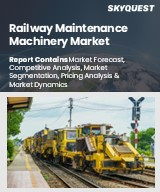
철도 유지보수 기계 시장 : 규모, 점유율, 성장, 업계 분석, 유형별, 용도별, 지역별 인사이트, 예측(2026-2034년)Railway Maintenance Machinery Market Size, Share, Growth and Global Industry Analysis By Type & Application, Regional Insights and Forecast to 2026-2034 |
||||||

철도 유지보수 기계 시장의 성장 요인
세계의 철도 유지보수 기계 시장은 철도 인프라에 대한 투자 확대와 현대화 노력으로 꾸준한 성장을 이루고 있습니다. 이 시장은 2025년에 47억 9,000만 달러로 평가되었으며, 2026년에는 50억 7,000만 달러, 2034년까지 80억 5,000만 달러에 이를 것으로 예상되며 안정된 속도로 성장을 이어가고 있습니다. 아시아태평양은 급속한 철도망의 확대와 도시화에 견인되어 2025년에는 35.20%의 점유율을 차지해 시장을 선도했습니다.
철도 유지보수 기계에는 철도 인프라 유지 및 보수에 사용되는 다짐 작업기, 자갈 정리 장비, 레일 그라인더, 궤도 리프팅 기계 등의 전용 장비가 포함됩니다. 이러한 기계는 운행 안전 확보, 지연 최소화 및 철도 네트워크의 수명 연장에 필수적입니다.
시장 동향
철도 유지보수 기계 시장을 형성하는 주요 동향 중 하나는 지하철 및 교외 철도 네트워크의 급속한 확대입니다. 인도, 중국, 브라질 등 국가의 도시화는 철도 운송 시스템에 대한 투자를 뒷받침하고 있습니다. 예를 들어 인도에서는 31개 도시에서 지하철 서비스의 확대가 진행되고 있어 정기적인 선로보수 수요가 높아지고 있습니다.
또 다른 중요한 동향은 지속 가능하고 에너지 효율적인 기계의 도입입니다. 제조업체 각 회사는 연료 소비를 줄이고 소음을 줄이고 이산화탄소 배출량을 최소화하는 장비 개발에 주력하고 있습니다. 또한, 예지보전기술로의 전환도 기세를 늘리고 있으며, 이로써 사업자는 고장이 발생하기 전에 결함을 특정할 수 있게 됩니다.
시장 성장 촉진요인
철도 안전과 사고 예방에 대한 관심 증가는 시장 성장의 주요 촉진요인입니다. 선로 상태의 악화에 의한 사고의 발생에 의해 고도의 보수 기계에의 요구가 높아지고 있습니다. 정부와 민간 사업자들은 선로의 안정성을 높이고 탈선 위험을 줄이는 설비에 많은 투자를 하고 있습니다.
철도 인프라에 대한 세계 투자 증가는 시장 확대를 더욱 강화하고 있습니다. 예를 들어, 독일은 철도 인프라에 400억 달러를 넘는 투자를 발표했고, 스페인은 철도 개발에 24억 달러를 투자할 것을 약속했습니다. 이러한 이니셔티브는 확장되는 네트워크를 지원하는 효율적인 유지 보수 기계에 대한 수요를 높입니다.
화물 수송 증가도 큰 요인이 되고 있습니다. 미국의 장거리 화물 수송의 약 40%를 철도화물이 차지하고 있으며, 내구성이 있고 효율적인 철도 시스템의 유지 관리가 얼마나 중요한가가 부각되고 있습니다.
시장 성장 억제요인
높은 초기 투자 비용은 철도 유지보수 기계 시장의 주요 과제입니다. 다짐 작업 시스템과 레일 그라인더와 같은 고급 기계에는 많은 양의 자금이 필요하기 때문에 소규모 사업자의 도입이 제한됩니다.
공급망의 혼란과 특히 철강 및 전자 부품의 원재료 부족도 시장 성장을 더욱 저해하고 있습니다. 이러한 과제는 생산 비용을 높이고 납기를 지연시키는 요인이 되고 있습니다.
게다가, 특히 COVID-19 팬데믹 이후, 철도 부문의 경제 불확실성과 설비 투자의 축소는 새로운 기계에 대한 투자에 계속 영향을 미쳤습니다.
세분화 분석
제품 유형별로는 다짐 작업기가 시장을 독점하고 있으며 2026년에는 37.36%의 점유율을 차지할 것으로 예상되고 있습니다. 이 기계는 선로 정렬을 유지하고 열차의 원활한 운행을 보장하는 데 매우 중요한 역할을 합니다.
자갈 정리 장비는 선로의 기초 부분을 청소하고 유지하는 데 필수적이므로 두 번째로 큰 점유율을 차지합니다. 레일 그라인더와 궤도 리프팅도 선로의 품질과 내구성을 향상시켜 시장 성장에 크게 기여하고 있습니다.
최종 사용자별로는 철도 인프라의 대부분이 공공기관에 의해 소유 및 유지 관리되고 있기 때문에 2026년에는 정부 부문이 52.39%의 점유율로 선두를 차지할 전망입니다. 한편, 계약자는 유지보수 작업에 있어서 전문적인 노하우를 활용하여 보다 급속한 성장이 예상되고 있습니다.
판매 형태별로는 철도망의 확대를 배경으로, 2026년에는 신규 기계 판매가 63.18%의 점유율을 차지해 주류가 되고 있습니다. 그러나 업그레이드 및 개조에 대한 수요로 애프터마켓 판매도 꾸준히 성장하고 있습니다.
지역별 동향
아시아태평양은 시장을 견인하고 있으며, 2025년에는 16억 9,000만 달러에 이르렀고, 2026년에는 18억 달러로 성장할 것으로 예측됩니다. 이 성장은 인구 증가, 도시화 및 중국과 인도의 대규모 철도 프로젝트에 의해 견인되고 있습니다. 2024년 초, 중국의 철도 투자액은 260억 달러를 넘어서 이 지역의 강한 수요를 부각하고 있습니다.
북미는 2025년 11억 7,000만 달러를 차지하며 강력한 화물 철도망과 규제 요건에 힘입어 2026년에는 12억 3,000만 달러에 이를 것으로 예측됩니다.
유럽은 2025년에 13억 9,000만 달러를 기록했으며, 확립된 철도 시스템의 안정적인 수요를 배경으로 2026년에는 14억 7,000만 달러에 이를 것으로 예측됩니다. 한편, 중동, 아프리카, 남미 등 지역에서는 인프라 개발로 완만한 성장을 볼 수 있습니다.
목차
제1장 서론
제2장 주요 요약
제3장 시장 역학
- 매크로 및 마이크로 경제 지표
- 성장 촉진요인, 억제요인, 기회 및 동향
제4장 경쟁 구도
- 주요 기업이 채택하는 사업 전략
- 주요 기업의 통합 SWOT 분석
- 세계의 철도 유지보수 기계: 주요 기업의 시장 점유율 순위, 2025년
제5장 세계의 철도 유지보수 기계 시장 규모 추정, 예측, 2021년-2034년
- 주요 조사 결과
- 제품 유형별
- 다짐 작업기
- 자갈 정리 장비
- 레일 그라인더
- 궤도 리프팅 및 운반 기계
- 기타(선로 점검기 등)
- 최종 사용자별
- 정부
- 민간 철도 사업자
- 계약자
- 판매 형태별
- 신규 판매
- 애프터마켓 매출
- 국가별
- 북미
- 남아메리카
- 유럽
- 중동 및 아프리카
- 아시아태평양
제6장 북미의 철도 유지보수 기계 시장 규모 추정, 예측, 2021년-2034년
- 국가별
- 미국
- 캐나다
- 멕시코
제7장 남아메리카의 철도 유지보수 기계 시장 규모 추정, 예측, 2021년-2034년
- 국가별
- 브라질
- 아르헨티나
- 기타 남미 국가
제8장 유럽의 철도 유지보수 기계 시장 규모 추정, 예측, 2021년-2034년
- 국가별
- 영국
- 독일
- 프랑스
- 이탈리아
- 스페인
- 러시아
- 베네룩스
- 북유럽
- 기타 유럽 국가
제9장 중동 및 아프리카의 철도 유지보수 기계 시장 규모 추정, 예측, 2021년-2034년
- 국가별
- 튀르키예
- 이스라엘
- GCC
- 남아프리카
- 북아프리카
- 기타 중동 및 아프리카 국가
제10장 아시아태평양의 철도 유지보수 기계 시장 규모 추정, 예측, 2021년-2034년
- 국가별
- 중국
- 인도
- 일본
- 한국
- ASEAN
- 오세아니아
- 기타 아시아태평양 국가
제11장 주요 10개 기업의 기업 프로파일
- ENVIRI CORPORATION(Harsco Rail)
- Nordco, Inc.
- Loram
- Plasser & Theurer
- Gamzen
- Speno International SA
- China Railway Construction Corp.
- Geismar
- Rhomberg Sersa Rail Holding GmbH
- ROBEL Bahnbaumaschinen GmbH
Growth Factors of railway maintenance machinery Market
The global railway maintenance machinery market is experiencing steady growth due to increasing investments in rail infrastructure and modernization initiatives. The market was valued at USD 4.79 billion in 2025, increased to USD 5.07 billion in 2026, and is projected to reach USD 8.05 billion by 2034, growing at a consistent pace. Asia Pacific dominated the market with a 35.20% share in 2025, driven by rapid railway expansion and urbanization.
Railway maintenance machinery includes specialized equipment such as tamping machines, rail grinders, ballast cleaners, and track lifting machines used to maintain and repair rail infrastructure. These machines are essential for ensuring operational safety, minimizing delays, and enhancing the lifespan of railway networks.
Market Trends
One of the key trends shaping the railway maintenance machinery market is the rapid expansion of metro and suburban rail networks. Urbanization across countries such as India, China, and Brazil is driving investments in rail transport systems. For instance, India is expanding metro rail services across 31 cities, increasing demand for regular track maintenance.
Another significant trend is the adoption of sustainable and energy-efficient machinery. Manufacturers are focusing on developing equipment that consumes less fuel, reduces noise, and minimizes carbon emissions. The shift toward predictive maintenance technologies is also gaining traction, enabling operators to identify faults before failures occur.
Market Drivers
The growing focus on railway safety and accident prevention is a major driver of market growth. Incidents caused by poor track conditions have increased the need for advanced maintenance machinery. Governments and private operators are investing heavily in equipment that enhances track stability and reduces derailment risks.
Rising global investments in railway infrastructure further support market expansion. For example, Germany announced investments exceeding USD 40 billion in rail infrastructure, while Spain committed nearly USD 2.4 billion for rail development. These initiatives increase the demand for efficient maintenance machinery to support expanding networks.
The growth in freight transportation also contributes significantly. Rail freight accounts for nearly 40% of long-distance freight movement in the U.S., highlighting the importance of maintaining durable and efficient rail systems.
Market Restraints
High initial investment costs remain a major challenge in the railway maintenance machinery market. Advanced machines such as tamping systems and rail grinders require substantial capital, limiting adoption among smaller operators.
Supply chain disruptions and raw material shortages, particularly for steel and electronic components, further hinder market growth. These challenges increase production costs and extend delivery timelines.
Additionally, economic uncertainties and reduced capital expenditure in the railway sector, especially after the COVID-19 pandemic, continue to affect investment in new machinery.
Segmentation Analysis
By product type, tamping machines dominate the market and are expected to hold 37.36% share in 2026. These machines play a critical role in maintaining track alignment and ensuring smooth train operations.
Ballast maintenance machines hold the second-largest share, as they are essential for cleaning and maintaining track foundations. Rail grinders and track handling machines also contribute significantly to market growth by improving track quality and durability.
By end-user, the government segment leads with 52.39% share in 2026, as most railway infrastructure is publicly owned and maintained. Contractors are expected to witness faster growth due to their specialized expertise in maintenance operations.
By sales type, new machinery sales dominate with 63.18% share in 2026, driven by expanding rail networks. However, aftermarket sales are growing steadily due to demand for upgrades and retrofits.
Regional Insights
Asia Pacific leads the market, reaching USD 1.69 billion in 2025 and projected to grow to USD 1.8 billion in 2026. Growth is driven by population expansion, urbanization, and large-scale railway projects in China and India. China's railway investments exceeded USD 26 billion in early 2024, highlighting strong regional demand.
North America accounted for USD 1.17 billion in 2025 and is expected to reach USD 1.23 billion in 2026, supported by strong freight rail networks and regulatory requirements.
Europe held USD 1.39 billion in 2025 and is projected to reach USD 1.47 billion in 2026, with steady demand from established rail systems. Meanwhile, regions such as the Middle East, Africa, and South America are witnessing gradual growth due to infrastructure development.
Competitive Landscape
The market is moderately consolidated, with key players such as Harsco Rail, Plasser & Theurer, Loram, and China Railway Construction Corporation. These companies focus on product innovation, partnerships, and expansion strategies to strengthen their market position.
Recent developments, including new product launches and R&D investments, highlight the industry's focus on advanced and sustainable machinery solutions.
Conclusion
The railway maintenance machinery market is set to grow from USD 4.79 billion in 2025 to USD 8.05 billion by 2034, driven by infrastructure expansion, safety requirements, and technological advancements. While high costs and supply chain challenges persist, increasing investments and the shift toward predictive and sustainable maintenance solutions are expected to support long-term market growth.
Segmentation By Product Type
- Tamping Machine
- Ballast Maintenance Machines
- Rail Grinders
- Track Lifting and Handling Machines
- Others (Track Inspection Machines, etc.)
By End-user
- Government
- Private Railway Operators
- Contractors
By Sales Type
- New Sales
- Aftermarket Sales
By Region
- North America (By Product Type, End-user, Sales Type, and Country)
- U.S. (By End-user)
- Canada (By End-user)
- Mexico (By End-user)
- South America (By Product Type, End-user, Sales Type, and Country)
- Brazil (By End-user)
- Argentina (By End-user)
- Rest of South America
- Europe (By Product Type, End-user, Sales Type, and Country)
- United Kingdom (By End-user)
- Germany (By End-user)
- France (By End-user)
- Italy (By End-user)
- Spain (By End-user)
- Russia (By End-user)
- Benelux (By End-user)
- Nordics (By End-user)
- Rest of Europe
- Middle East & Africa (By Product Type, End-user, Sales Type, and Country)
- Turkey (By End-user)
- Israel (By End-user)
- GCC (By End-user)
- South Africa (By End-user)
- North Africa (By End-user)
- Rest of Middle East & Africa
- Asia Pacific (By Product Type, End-user, Sales Type, and Country)
- China (By End-user)
- India (By End-user)
- Japan (By End-user)
- South Korea (By End-user)
- ASEAN (By End-user)
- Oceania (By End-user)
- Rest of Asia Pacific
Table of Content
1. Introduction
- 1.1. Definition, By Segment
- 1.2. Research Methodology/Approach
- 1.3. Data Sources
2. Executive Summary
3. Market Dynamics
- 3.1. Macro and Micro Economic Indicators
- 3.2. Drivers, Restraints, Opportunities, and Trends
4. Competition Landscape
- 4.1. Business Strategies Adopted by Key Players
- 4.2. Consolidated SWOT Analysis of Key Players
- 4.3. Global Railway Maintenance Machinery Key Players Market Share/Ranking, 2025
5. Global Railway Maintenance Machinery Market Size Estimates and Forecasts, By Segments, 2021-2034
- 5.1. Key Findings
- 5.2. By Product Type (USD)
- 5.2.1. Tamping Machine
- 5.2.2. Ballast Maintenance Machines
- 5.2.3. Rail Grinders
- 5.2.4. Track Lifting and Handling Machines
- 5.2.5. Others (Track Inspection Machines, etc.)
- 5.3. By End-user (USD)
- 5.3.1. Government
- 5.3.2. Private Railway Operators
- 5.3.3. Contractors
- 5.4. By Sales Type (USD)
- 5.4.1. New Sales
- 5.4.2. Aftermarket Sales
- 5.5. By Country (USD)
- 5.5.1. North America
- 5.5.2. South America
- 5.5.3. Europe
- 5.5.4. Middle East & Africa
- 5.5.5. Asia Pacific
6. North America Railway Maintenance Machinery Market Size Estimates and Forecasts, By Segments, 2021-2034
- 6.1. Key Findings
- 6.2. Product Type (USD)
- 6.2.1. Tamping Machine
- 6.2.2. Ballast Maintenance Machines
- 6.2.3. Rail Grinders
- 6.2.4. Track Lifting and Handling Machines
- 6.2.5. Others (Track Inspection Machines, etc.)
- 6.3. By End-user (USD)
- 6.3.1. Government
- 6.3.2. Private Railway Operators
- 6.3.3. Contractors
- 6.4. By Sales Type (USD)
- 6.4.1. New Sales
- 6.4.2. Aftermarket Sales
- 6.5. By Country (USD)
- 6.5.1. United States
- 6.5.1.1. By End-user
- 6.5.2. Canada
- 6.5.2.1. By End-user
- 6.5.3. Mexico
- 6.5.3.1. By End-user
- 6.5.1. United States
7. South America Railway Maintenance Machinery Market Size Estimates and Forecasts, By Segments, 2021-2034
- 7.1. Key Findings
- 7.2. Product Type (USD)
- 7.2.1. Tamping Machine
- 7.2.2. Ballast Maintenance Machines
- 7.2.3. Rail Grinders
- 7.2.4. Track Lifting and Handling Machines
- 7.2.5. Others (Track Inspection Machines, etc.)
- 7.3. By End-user (USD)
- 7.3.1. Government
- 7.3.2. Private Railway Operators
- 7.3.3. Contractors
- 7.4. By Sales Type (USD)
- 7.4.1. New Sales
- 7.4.2. Aftermarket Sales
- 7.5. By Country (USD)
- 7.5.1. Brazil
- 7.5.1.1. By End-user
- 7.5.2. Argentina
- 7.5.2.1. By End-user
- 7.5.3. Rest of South America
- 7.5.1. Brazil
8. Europe Railway Maintenance Machinery Market Size Estimates and Forecasts, By Segments, 2021-2034
- 8.1. Key Findings
- 8.2. Product Type (USD)
- 8.2.1. Tamping Machine
- 8.2.2. Ballast Maintenance Machines
- 8.2.3. Rail Grinders
- 8.2.4. Track Lifting and Handling Machines
- 8.2.5. Others (Track Inspection Machines, etc.)
- 8.3. By End-user (USD)
- 8.3.1. Government
- 8.3.2. Private Railway Operators
- 8.3.3. Contractors
- 8.4. By Sales Type (USD)
- 8.4.1. New Sales
- 8.4.2. Aftermarket Sales
- 8.5. By Country (USD)
- 8.5.1. United Kingdom
- 8.5.1.1. By End-user
- 8.5.2. Germany
- 8.5.2.1. By End-user
- 8.5.3. France
- 8.5.3.1. By End-user
- 8.5.4. Italy
- 8.5.4.1. By End-user
- 8.5.5. Spain
- 8.5.5.1. By End-user
- 8.5.6. Russia
- 8.5.6.1. By End-user
- 8.5.7. Benelux
- 8.5.7.1. By End-user
- 8.5.8. Nordics
- 8.5.8.1. By End-user
- 8.5.9. Rest of Europe
- 8.5.1. United Kingdom
9. Middle East & Africa Railway Maintenance Machinery Market Size Estimates and Forecasts, By Segments, 2021-2034
- 9.1. Key Findings
- 9.2. Product Type (USD)
- 9.2.1. Tamping Machine
- 9.2.2. Ballast Maintenance Machines
- 9.2.3. Rail Grinders
- 9.2.4. Track Lifting and Handling Machines
- 9.2.5. Others (Track Inspection Machines, etc.)
- 9.3. By End-user (USD)
- 9.3.1. Government
- 9.3.2. Private Railway Operators
- 9.3.3. Contractors
- 9.4. By Sales Type (USD)
- 9.4.1. New Sales
- 9.4.2. Aftermarket Sales
- 9.5. By Country (USD)
- 9.5.1. Turkey
- 9.5.1.1. By End-user
- 9.5.2. Israel
- 9.5.2.1. By End-user
- 9.5.3. GCC
- 9.5.3.1. By End-user
- 9.5.4. South Africa
- 9.5.4.1. By End-user
- 9.5.5. North Africa
- 9.5.5.1. By End-user
- 9.5.6. Rest of Middle East & Africa
- 9.5.1. Turkey
10. Asia Pacific Railway Maintenance Machinery Market Size Estimates and Forecasts, By Segments, 2021-2034
- 10.1. Key Findings
- 10.2. Product Type (USD)
- 10.2.1. Tamping Machine
- 10.2.2. Ballast Maintenance Machines
- 10.2.3. Rail Grinders
- 10.2.4. Track Lifting and Handling Machines
- 10.2.5. Others (Track Inspection Machines, etc.)
- 10.3. By End-user (USD)
- 10.3.1. Government
- 10.3.2. Private Railway Operators
- 10.3.3. Contractors
- 10.4. By Sales Type (USD)
- 10.4.1. New Sales
- 10.4.2. Aftermarket Sales
- 10.5. By Country (USD)
- 10.5.1. China
- 10.5.1.1. By End-user
- 10.5.2. India
- 10.5.2.1. By End-user
- 10.5.3. Japan
- 10.5.3.1. By End-user
- 10.5.4. South Korea
- 10.5.4.1. By End-user
- 10.5.5. ASEAN
- 10.5.5.1. By End-user
- 10.5.6. Oceania
- 10.5.6.1. By End-user
- 10.5.7. Rest of Asia Pacific
- 10.5.1. China
11. Company Profiles for Top 10 Players (Based on data availability in public domain and/or on paid databases)
- 11.1. ENVIRI CORPORATION (Harsco Rail)
- 11.1.1. Overview
- 11.1.1.1. Key Management
- 11.1.1.2. Headquarters
- 11.1.1.3. Offerings/Business Segments
- 11.1.2. Key Details (Key details are consolidated data and not product/service specific)
- 11.1.2.1. Employee Size
- 11.1.2.2. Past and Current Revenue
- 11.1.2.3. Geographical Share
- 11.1.2.4. Business Segment Share
- 11.1.2.5. Recent Developments
- 11.1.1. Overview
- 11.2. Nordco, Inc.
- 11.2.1. Overview
- 11.2.1.1. Key Management
- 11.2.1.2. Headquarters
- 11.2.1.3. Offerings/Business Segments
- 11.2.2. Key Details (Key details are consolidated data and not product/service specific)
- 11.2.2.1. Employee Size
- 11.2.2.2. Past and Current Revenue
- 11.2.2.3. Geographical Share
- 11.2.2.4. Business Segment Share
- 11.2.2.5. Recent Developments
- 11.2.1. Overview
- 11.3. Loram
- 11.3.1. Overview
- 11.3.1.1. Key Management
- 11.3.1.2. Headquarters
- 11.3.1.3. Offerings/Business Segments
- 11.3.2. Key Details (Key details are consolidated data and not product/service specific)
- 11.3.2.1. Employee Size
- 11.3.2.2. Past and Current Revenue
- 11.3.2.3. Geographical Share
- 11.3.2.4. Business Segment Share
- 11.3.2.5. Recent Developments
- 11.3.1. Overview
- 11.4. Plasser & Theurer
- 11.4.1. Overview
- 11.4.1.1. Key Management
- 11.4.1.2. Headquarters
- 11.4.1.3. Offerings/Business Segments
- 11.4.2. Key Details (Key details are consolidated data and not product/service specific)
- 11.4.2.1. Employee Size
- 11.4.2.2. Past and Current Revenue
- 11.4.2.3. Geographical Share
- 11.4.2.4. Business Segment Share
- 11.4.2.5. Recent Developments
- 11.4.1. Overview
- 11.5. Gamzen
- 11.5.1. Overview
- 11.5.1.1. Key Management
- 11.5.1.2. Headquarters
- 11.5.1.3. Offerings/Business Segments
- 11.5.2. Key Details (Key details are consolidated data and not product/service specific)
- 11.5.2.1. Employee Size
- 11.5.2.2. Past and Current Revenue
- 11.5.2.3. Geographical Share
- 11.5.2.4. Business Segment Share
- 11.5.2.5. Recent Developments
- 11.5.1. Overview
- 11.6. Speno International SA
- 11.6.1. Overview
- 11.6.1.1. Key Management
- 11.6.1.2. Headquarters
- 11.6.1.3. Offerings/Business Segments
- 11.6.2. Key Details (Key details are consolidated data and not product/service specific)
- 11.6.2.1. Employee Size
- 11.6.2.2. Past and Current Revenue
- 11.6.2.3. Geographical Share
- 11.6.2.4. Business Segment Share
- 11.6.2.5. Recent Developments
- 11.6.1. Overview
- 11.7. China Railway Construction Corp.
- 11.7.1. Overview
- 11.7.1.1. Key Management
- 11.7.1.2. Headquarters
- 11.7.1.3. Offerings/Business Segments
- 11.7.2. Key Details (Key details are consolidated data and not product/service specific)
- 11.7.2.1. Employee Size
- 11.7.2.2. Past and Current Revenue
- 11.7.2.3. Geographical Share
- 11.7.2.4. Business Segment Share
- 11.7.2.5. Recent Developments
- 11.7.1. Overview
- 11.8. Geismar
- 11.8.1. Overview
- 11.8.1.1. Key Management
- 11.8.1.2. Headquarters
- 11.8.1.3. Offerings/Business Segments
- 11.8.2. Key Details (Key details are consolidated data and not product/service specific)
- 11.8.2.1. Employee Size
- 11.8.2.2. Past and Current Revenue
- 11.8.2.3. Geographical Share
- 11.8.2.4. Business Segment Share
- 11.8.2.5. Recent Developments
- 11.8.1. Overview
- 11.9. Rhomberg Sersa Rail Holding GmbH
- 11.9.1. Overview
- 11.9.1.1. Key Management
- 11.9.1.2. Headquarters
- 11.9.1.3. Offerings/Business Segments
- 11.9.2. Key Details (Key details are consolidated data and not product/service specific)
- 11.9.2.1. Employee Size
- 11.9.2.2. Past and Current Revenue
- 11.9.2.3. Geographical Share
- 11.9.2.4. Business Segment Share
- 11.9.2.5. Recent Developments
- 11.9.1. Overview
- 11.10. ROBEL Bahnbaumaschinen GmbH
- 11.10.1. Overview
- 11.10.1.1. Key Management
- 11.10.1.2. Headquarters
- 11.10.1.3. Offerings/Business Segments
- 11.10.2. Key Details (Key details are consolidated data and not product/service specific)
- 11.10.2.1. Employee Size
- 11.10.2.2. Past and Current Revenue
- 11.10.2.3. Geographical Share
- 11.10.2.4. Business Segment Share
- 11.10.2.5. Recent Developments
- 11.10.1. Overview