|
시장보고서
상품코드
2028386
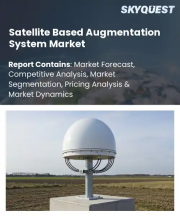
위성 기반 보정 시스템(SBAS) 시장 : 규모, 점유율, 성장률, 시장 분석, 유형별, 용도별, 지역별 인사이트, 예측(2026-2034년)Satellite Based Augmentation System Market Size, Share, Growth and Global Industry Analysis By Type & Application, Regional Insights and Forecast to 2026-2034 |
||||||

위성 기반 보정 시스템(SBAS) 시장 성장 요인
세계의 위성 기반 보정 시스템(SBAS) 시장은 모든 산업분야에서 정밀한 내비게이션 및 위치 추적시스템에 대한 수요가 높아짐에 따라 꾸준한 성장을 이루고 있습니다. 이 시장은 2025년에 16억 9,000만 달러로 평가되었고, 2026년에는 17억 7,000만 달러, 예측 기간 중 CAGR 4.74%로 성장하고, 2034년에는 25억 6,000만 달러에 이를 것으로 전망되고 있습니다. 북미는 첨단 내비게이션 시스템의 도입이 활발한 것으로 뒷받침되었으며, 2025년에는 8.27%의 점유율로 시장을 선도했습니다.
위성 기반 보정 시스템(SBAS)은 GPS와 같은 세계 측위 위성 시스템(GNSS)의 정확성, 무결성 및 신뢰성을 향상시킵니다. 이러한 시스템은 지상 기준국과 정지 위성을 이용하여 보정된 위치 정보를 제공합니다. 대표적인 예로는 WAAS(미국), EGNOS(유럽), GAGAN(인도), MSAS(일본) 등이 있습니다. SBAS는 안전하고 정확한 항해를 위해 항공, 해운 및 육상 운송 분야에서 널리 사용됩니다.
시장 역학
성장 요인
SBAS 시장의 주요 촉진요인 중 하나는 항공 분야에서 LPV(Localizer Performance with Vertical Guidance) 절차의 활용 확대입니다. LPV를 통해 항공기는 안전성과 정밀도가 향상된 정밀 착륙을 할 수 있습니다. 항공 당국에 따르면 세계에서 이미 수천 건의 LPV 절차가 도입되었으며, 공항의 현대화에 따라 지속적인 확대가 예상됩니다.
게다가 항공업계의 신뢰성이 높고 정확한 항법 시스템에 대한 수요 증가가 시장의 성장을 뒷받침하고 있습니다. SBAS는 GNSS 신호의 정확도를 향상시키고 간섭을 완화하며 비행 안전을 향상시킵니다. 또한 중복성을 제공하고 스푸핑에 대한 보호 기능을 갖추고 있기 때문에 현대 항공 교통 관리 시스템에 필수적인 존재가되었습니다.
또한 세계 항공 교통량 증가, 인프라 정비, 신흥국의 경제 성장이 다양한 분야에서 SBAS 기술의 채택 확대에 기여하고 있습니다.
시장 성장 억제요인
그 이점에도 불구하고, 시장은 숙련된 인력 부족, 공급망 혼란, 기술적 복잡성 등의 과제에 직면하고 있습니다. SBAS의 개발과 유지 관리에는 위성 항법과 측지학에 대한 전문 지식이 필요하지만, 이들은 일부 지역에서만 제한됩니다. 또한 시스템 오류나 하드웨어 고장이 성능과 신뢰성에 영향을 줄 수 있습니다.
시장 동향
기술의 진보는 SBAS 시장을 형성하는 중요한 동향입니다. 각 회사는 높은 정밀도와 신뢰성을 제공하기 위해 다중 별자리 및 다중 주파수 시스템에 주력하고 있습니다. 이러한 진보는 센티미터 단위의 위치 측위를 가능하게 하며, 이는 자율주행차나 정밀농업 등의 용도에 있어서 매우 중요합니다.
또 다른 큰 동향은 SBAS 인프라의 현대화를 목표로 한 정부 주도 프로젝트와 계약이 증가하고 있다는 것입니다. 항공우주기업과 정부기관과의 전략적 제휴가 혁신을 추진하고 세계적으로 시스템의 기능확장을 가져오고 있습니다.
세분화 분석
플랫폼별로는 중국이 GNSS 보강 기술에 대한 투자 확대를 배경으로 BDSBAS 부문이 시장을 견인할 것으로 예측됩니다. 중국 기업은 자율 항행과 스마트 교통 시스템을 지원하기 위해 첨단 위성 별자리 개발을 적극적으로 추진하고 있습니다.
솔루션별로 위성 시스템을 위한 고급 페이로드 기술의 개발이 진행되고 있는 점에서 SBAS 페이로드 부문이 가장 큰 점유율을 차지하고 있습니다. 또한 보정 데이터 수집 및 전송에 필수적인 기준국도 시장에 크게 기여하고 있습니다.
용도별로는 도로·철도 부문이 시장을 견인할 것으로 예측되고 있습니다. 수송, 철도신호, 물류에 있어서의 위성 항법 시스템의 채택 확대가 수요를 견인하고 있습니다. 해양 부문도 선박의 항법 정밀도 향상으로 인한 혜택을 누리며 현저한 점유율을 차지합니다.
지역별 동향
북미는 SBAS 시장을 견인하고 있으며, 2025년에는 1억 4,000만 달러, 2026년에는 1억 5,000만 달러 시장 규모가 예상됩니다. 이 지역의 성장은 강력한 R&D 투자와 수억 달러 규모의 계약을 포함한 FAA의 WAAS 현대화 프로그램과 같은 노력에 의해 견인되고 있습니다.
유럽에서는 EGNOS와 같은 정지 위성 시스템에 대한 투자 확대로 상당한 성장이 예상됩니다. 정부의 지원과 항법 인프라의 진전이 이 지역 시장을 강화하고 있습니다.
아시아태평양은 인도의 GAGAN과 같은 시스템과 위성 항법 기술에 대한 투자 확대에 힘입어 주요 성장 지역으로 부상하고 있습니다. 중국이나 일본 등의 나라들도 이 지역의 확대에 크게 공헌하고 있습니다.
라틴아메리카, 중동 및 아프리카를 포함한 세계 기타 지역에서는 항공 및 운송 분야에서 고급 네비게이션 시스템의 도입 확대로 꾸준한 성장이 예상됩니다.
목차
제1장 서론
제2장 주요 요약
제3장 시장 역학
- 시장 성장 촉진요인
- 시장 성장 억제요인
제4장 주요 고찰
- 주요 업계 동향 : 주요 계약 및 합의, 합병, 인수, 제휴
- 최신 기술적 진보
- Porter's Five Forces 분석
- 공급망 분석
- 정량적 분석-COVID-19 팬데믹이 세계의 위성 기반 보강 시스템 시장에 미치는 영향
제5장 세계의 위성 기반 보정 시스템(SBAS) 시장 분석, 인사이트, 예측, 2021년-2034년
- 주요 조사 결과 및 정의
- 시장 분석, 인사이트, 예측 : 플랫폼별
- WAAS
- EGNOS
- BDSBAS
- 기타
- 시장 분석, 인사이트, 예측 : 솔루션별
- SBAS 페이로드
- 기준국
- 업링크 스테이션
- 기타
- 시장 분석, 인사이트, 예측 : 용도별
- 항공
- 해양
- 철도 및 도로
- 기타
- 시장 분석, 인사이트, 예측 : 지역별
- 북미
- 유럽
- 아시아태평양
- 세계 기타 지역
제6장 북미의 위성 기반 보정 시스템(SBAS) 시장 분석, 인사이트, 예측, 2021년-2034년
- 국가별
- 미국(용도별)
- 캐나다(용도별)
제7장 유럽의 위성 기반 보정 시스템(SBAS) 시장 분석, 인사이트, 예측, 2021년-2034년
- 국가별
- 영국(용도별)
- 독일(용도별)
- 프랑스(용도별)
- 러시아(용도별)
- 기타 유럽(용도별)
제8장 아시아태평양의 위성 기반 보정 시스템(SBAS) 시장 분석, 인사이트, 예측, 2021년-2034년
- 국가별
- 중국(용도별)
- 인도(용도별)
- 일본(용도별)
- 기타 아시아태평양(용도별)
제9장 세계의 기타 지역의 위성 기반 보정 시스템(SBAS) 시장 분석, 인사이트, 예측, 2021년-2034년
- 국가별
- 사우디아라비아(용도별)
- 이스라엘(용도별)
- 튀르키예(용도별)
- 세계 기타 지역(용도별)
제10장 경쟁 분석
- 세계 시장 순위 분석(2025년)
- 경쟁 대시보드
제11장 기업 프로파일
- Raytheon Technologies Corporation
- Overview,
- Products & services,
- SWOT analysis,
- recent developments,
- strategies,
- financials(based on availability)
- Northrop Grumman Corporation
- Overview,
- Products & services,
- SWOT analysis,
- recent developments,
- strategies,
- financials(based on availability)
- Airbus SE
- Overview,
- Products & services,
- SWOT analysis,
- recent developments,
- strategies,
- financials(based on availability)
- Thales Group
- Overview,
- Products & services,
- SWOT analysis,
- recent developments,
- strategies,
- financials(based on availability)
- Leidos Holdings, Inc.
- Overview,
- Products & services,
- SWOT analysis,
- recent developments,
- strategies,
- financials(based on availability)
- Honeywell International Inc.
- Overview,
- Products & services,
- SWOT analysis,
- recent developments,
- strategies,
- financials(based on availability)
- Lockheed Martin Corporation.
- Overview,
- Products & services,
- SWOT analysis,
- recent developments,
- strategies,
- financials(based on availability)
- L3Harris Technologies Inc.
- Overview,
- Products & services,
- SWOT analysis,
- recent developments,
- strategies,
- financials(based on availability)
- Universal Avionics Systems Corporation
- Overview,
- Products & services,
- SWOT analysis,
- recent developments,
- strategies,
- financials(based on availability)
- Grintex India Limited
- Overview,
- Products & services,
- SWOT analysis,
- recent developments,
- strategies,
- financials(based on availability)
Growth Factors of satellite-based augmentation system (SBAS) Market
The global satellite-based augmentation system (SBAS) market is witnessing steady growth due to increasing demand for high-precision navigation and positioning systems across industries. The market was valued at USD 1.69 billion in 2025 and is projected to grow to USD 1.77 billion in 2026, reaching USD 2.56 billion by 2034, at a CAGR of 4.74% during the forecast period. North America dominated the market with a share of 8.27% in 2025, supported by strong adoption of advanced navigation systems.
Satellite-Based Augmentation Systems enhance the accuracy, integrity, and reliability of Global Navigation Satellite Systems (GNSS) such as GPS. These systems utilize ground-based reference stations and geostationary satellites to provide corrected positioning data. Prominent examples include WAAS (U.S.), EGNOS (Europe), GAGAN (India), and MSAS (Japan). SBAS is widely used in aviation, maritime, and land transportation for safe and precise navigation.
Market Dynamics
Growth Drivers
One of the primary drivers of the SBAS market is the increasing use of Localizer Performance with Vertical Guidance (LPV) procedures in aviation. LPV enables aircraft to perform precision landings with enhanced safety and accuracy. According to aviation authorities, thousands of LPV procedures are already deployed globally, and continuous expansion is expected with airport modernization.
Additionally, the growing need for reliable and accurate navigation systems in the aviation industry is fueling market growth. SBAS improves GNSS signal accuracy, mitigates interference, and enhances flight safety. It also provides redundancy and protection against spoofing, making it critical for modern air traffic management systems.
Furthermore, rising global air traffic, infrastructure development, and economic growth in emerging economies are contributing to increased adoption of SBAS technologies across multiple sectors.
Market Restraints
Despite its advantages, the market faces challenges such as lack of skilled workforce, supply chain disruptions, and technical complexities. The development and maintenance of SBAS require specialized expertise in satellite navigation and geodesy, which is limited in several regions. Additionally, system errors and hardware failures can impact performance and reliability.
Market Trends
Technological advancements are a key trend shaping the SBAS market. Companies are focusing on multi-constellation and multi-frequency systems to achieve higher accuracy and reliability. These advancements enable centimeter-level positioning, which is crucial for applications such as autonomous vehicles and precision agriculture.
Another major trend is the increasing number of government-led projects and contracts aimed at modernizing SBAS infrastructure. Strategic collaborations between aerospace companies and government agencies are driving innovation and expanding system capabilities globally.
Segmentation Analysis
By platform, the BDSBAS segment is expected to dominate the market due to rising investments by China in GNSS augmentation technologies. Chinese companies are actively developing advanced satellite constellations to support autonomous navigation and smart transportation systems.
By solution, the SBAS payload segment holds the largest share, driven by increasing development of advanced payload technologies for satellite systems. Reference stations also contribute significantly, as they are essential for collecting and transmitting correction data.
By application, the road and rail segment is projected to dominate the market. The growing adoption of satellite-based navigation in transportation, rail signaling, and logistics is driving demand. The maritime segment also holds a notable share, benefiting from improved navigation accuracy for ships and vessels.
Regional Insights
North America leads the SBAS market, with a value of USD 0.14 billion in 2025 and USD 0.15 billion in 2026. The region's growth is driven by strong R&D investments and initiatives such as the FAA's WAAS modernization programs, including contracts worth hundreds of millions of dollars.
Europe is expected to witness significant growth due to increased investments in geostationary satellite systems such as EGNOS. Government support and advancements in navigation infrastructure are strengthening the regional market.
Asia Pacific is emerging as a key growth region, supported by systems such as GAGAN in India and increasing investments in satellite navigation technologies. Countries like China and Japan are also contributing significantly to regional expansion.
The rest of the world, including Latin America and the Middle East & Africa, is expected to grow steadily due to increasing adoption of advanced navigation systems in aviation and transportation sectors.
Competitive Landscape
The SBAS market is highly consolidated, with key players such as Thales Group, Raytheon Technologies Corporation, Airbus SE, Lockheed Martin Corporation, and Northrop Grumman. These companies are focusing on innovation, partnerships, and development of advanced navigation solutions.
Recent developments include major contracts for system upgrades, deployment of next-generation SBAS systems, and advancements in satellite payload technologies. Companies are also investing in digital solutions and integration with cloud-based platforms to enhance system capabilities.
Conclusion
The global satellite-based augmentation system market is poised for steady growth, driven by increasing demand for precise navigation, advancements in satellite technology, and expanding applications across aviation, transportation, and maritime sectors. While challenges such as technical complexity and workforce shortages persist, continuous innovation and government support are expected to strengthen the market's long-term outlook.
Segmentation By Platform, Solution, Application, and Geography
By Platform
- WAAS
- EGNOS
- BDSBAS
- Others
By Solution
- SBAS Payload
- Reference Station
- Uplink Station
- Others
By Application
- Aviation
- Maritime
- Road & Rail
- Others
By Geography
North America (By Platform, Solution, Application, and Country)
- U.S. (By Application)
- Canada (By Application)
- Europe (By Platform, Solution, Application, and Country)
- U.K. (By Application)
- Germany (By Application)
- France (By Application)
- Russia (By Application)
- Rest of Europe (By Application)
- Asia Pacific (By Platform, Solution, Application, and Country)
- China (By Application)
- Japan (By Application)
- India (By Application)
- Rest of Asia Pacific (By Application)
- Rest of the World (By Platform, Solution, Application, and Country)
- Saudi Arabia (By Application)
- Israel (By Application)
- Turkey (By Application)
- Rest of the World (By Application)
Table of Content
1. Introduction
- 1.1. Research Scope
- 1.2. Market Segmentation
- 1.3. Research Methodology
- 1.4. Definitions and Assumptions
2. Executive Summary
3. Market Dynamics
- 3.1. Market Drivers
- 3.2. Market Restraints
4. Key Insights
- 4.1. Key Industry Developments - Key Contracts & Agreements, Mergers, Acquisitions and Partnerships
- 4.2. Latest Technological Advancements
- 4.3. Porters Five Forces Analysis
- 4.4. Supply Chain Analysis
- 4.5. Quantitative Insights - Impact of COVID-19 Pandemic on Global Satellite Based Augmentation System Market
5. Global Satellite Based Augmentation System Market Analysis, Insights and Forecast, 2021-2034
- 5.1. Key Findings / Definition
- 5.2. Market Analysis, Insights and Forecast - By Platform
- 5.2.1. WAAS
- 5.2.2. EGNOS
- 5.2.3. BDSBAS
- 5.2.4. Others
- 5.3. Market Analysis, Insights and Forecast - By Solution
- 5.3.1. SBAS Payload
- 5.3.2. Reference Station
- 5.3.3. Uplink Station
- 5.3.4. Others
- 5.4. Market Analysis, Insights and Forecast - By Application
- 5.4.1. Aviation
- 5.4.2. Maritime
- 5.4.3. Rail & Road
- 5.4.4. Others
- 5.5. Market Analysis, Insights and Forecast - By Region
- 5.5.1. North America
- 5.5.2. Europe
- 5.5.3. Asia Pacific
- 5.5.4. Rest of the World
6. North America Satellite Based Augmentation System Market Analysis, Insights and Forecast, 2021-2034
- 6.1. Market Analysis, Insights and Forecast - By Platform
- 6.1.1. WAAS
- 6.1.2. EGNOS
- 6.1.3. BDSBAS
- 6.1.4. Others
- 6.2. Market Analysis, Insights and Forecast - By Solution
- 6.2.1. SBAS Payload
- 6.2.2. Reference Station
- 6.2.3. Uplink Station
- 6.2.4. Others
- 6.3. Market Analysis, Insights and Forecast - By Application
- 6.3.1. Aviation
- 6.3.2. Maritime
- 6.3.3. Rail & Road
- 6.3.4. Others
- 6.4. Market Analysis, Insights and Forecast - By Country
- 6.4.1. U.S. (By Application)
- 6.4.2. Canada (By Application)
7. Europe Satellite Based Augmentation System Market Analysis, Insights and Forecast, 2021-2034
- 7.1. Market Analysis, Insights and Forecast - By Platform
- 7.1.1. WAAS
- 7.1.2. EGNOS
- 7.1.3. BDSBAS
- 7.1.4. Others
- 7.2. Market Analysis, Insights and Forecast - By Solution
- 7.2.1. SBAS Payload
- 7.2.2. Reference Station
- 7.2.3. Uplink Station
- 7.2.4. Others
- 7.3. Market Analysis, Insights and Forecast - By Application
- 7.3.1. Aviation
- 7.3.2. Maritime
- 7.3.3. Rail & Road
- 7.3.4. Others
- 7.4. Market Analysis, Insights and Forecast - By Country
- 7.4.1. U.K. (By Application)
- 7.4.2. Germany (By Application)
- 7.4.3. France (By Application)
- 7.4.4. Russia (By Application)
- 7.4.5. Rest of Europe (By Application)
8. Asia Pacific Satellite Based Augmentation System Market Analysis, Insights and Forecast, 2021-2034
- 8.1. Market Analysis, Insights and Forecast - By Platform
- 8.1.1. WAAS
- 8.1.2. EGNOS
- 8.1.3. BDSBAS
- 8.1.4. Others
- 8.2. Market Analysis, Insights and Forecast - By Solution
- 8.2.1. SBAS Payload
- 8.2.2. Reference Station
- 8.2.3. Uplink Station
- 8.2.4. Others
- 8.3. Market Analysis, Insights and Forecast - By Application
- 8.3.1. Aviation
- 8.3.2. Maritime
- 8.3.3. Rail & Road
- 8.3.4. Others
- 8.4. Market Analysis, Insights and Forecast - By Country
- 8.4.1. China (By Application)
- 8.4.2. India (By Application)
- 8.4.3. Japan (By Application)
- 8.4.4. Rest of Asia Pacific (By Application)
9. Rest of the World Satellite Based Augmentation System Market Analysis, Insights and Forecast, 2021-2034
- 9.1. Market Analysis, Insights and Forecast - By Platform
- 9.1.1. WAAS
- 9.1.2. EGNOS
- 9.1.3. BDSBAS
- 9.1.4. Others
- 9.2. Market Analysis, Insights and Forecast - By Solution
- 9.2.1. SBAS Payload
- 9.2.2. Reference Station
- 9.2.3. Uplink Station
- 9.2.4. Others
- 9.3. Market Analysis, Insights and Forecast - By Application
- 9.3.1. Aviation
- 9.3.2. Maritime
- 9.3.3. Rail & Road
- 9.3.4. Others
- 9.4. Market Analysis, Insights and Forecast - By Country
- 9.4.1. Saudi Arabia (By Application)
- 9.4.2. Israel (By Application)
- 9.4.3. Turkey (By Application)
- 9.4.4. Rest of the World (By Application)
10. Competitive Analysis
- 10.1. Global Market Rank Analysis (2025)
- 10.2. Competitive Dashboard
11. Company Profiles (Overview, Products & services, SWOT analysis, recent developments, strategies, financials (based on availability))
- 11.1. Raytheon Technologies Corporation
- 11.1.1. Overview,
- 11.1.2. Products & services,
- 11.1.3. SWOT analysis,
- 11.1.4. recent developments,
- 11.1.5. strategies,
- 11.1.6. financials (based on availability)
- 11.2. Northrop Grumman Corporation
- 11.2.1. Overview,
- 11.2.2. Products & services,
- 11.2.3. SWOT analysis,
- 11.2.4. recent developments,
- 11.2.5. strategies,
- 11.2.6. financials (based on availability)
- 11.3. Airbus SE
- 11.3.1. Overview,
- 11.3.2. Products & services,
- 11.3.3. SWOT analysis,
- 11.3.4. recent developments,
- 11.3.5. strategies,
- 11.3.6. financials (based on availability)
- 11.4. Thales Group
- 11.4.1. Overview,
- 11.4.2. Products & services,
- 11.4.3. SWOT analysis,
- 11.4.4. recent developments,
- 11.4.5. strategies,
- 11.4.6. financials (based on availability)
- 11.5. Leidos Holdings, Inc.
- 11.5.1. Overview,
- 11.5.2. Products & services,
- 11.5.3. SWOT analysis,
- 11.5.4. recent developments,
- 11.5.5. strategies,
- 11.5.6. financials (based on availability)
- 11.6. Honeywell International Inc.
- 11.6.1. Overview,
- 11.6.2. Products & services,
- 11.6.3. SWOT analysis,
- 11.6.4. recent developments,
- 11.6.5. strategies,
- 11.6.6. financials (based on availability)
- 11.7. Lockheed Martin Corporation.
- 11.7.1. Overview,
- 11.7.2. Products & services,
- 11.7.3. SWOT analysis,
- 11.7.4. recent developments,
- 11.7.5. strategies,
- 11.7.6. financials (based on availability)
- 11.8. L3Harris Technologies Inc.
- 11.8.1. Overview,
- 11.8.2. Products & services,
- 11.8.3. SWOT analysis,
- 11.8.4. recent developments,
- 11.8.5. strategies,
- 11.8.6. financials (based on availability)
- 11.9. Universal Avionics Systems Corporation
- 11.9.1. Overview,
- 11.9.2. Products & services,
- 11.9.3. SWOT analysis,
- 11.9.4. recent developments,
- 11.9.5. strategies,
- 11.9.6. financials (based on availability)
- 11.10. Grintex India Limited
- 11.10.1. Overview,
- 11.10.2. Products & services,
- 11.10.3. SWOT analysis,
- 11.10.4. recent developments,
- 11.10.5. strategies,
- 11.10.6. financials (based on availability)