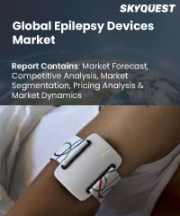
|
시장보고서
상품코드
1936399
간질 치료 기기 시장 : 시장 인사이트, 경쟁 구도 및 시장 예측(2033년)Epilepsy Devices Market Insights, Competitive Landscape, and Market Forecast - 2033 |
||||||

세계 간질 치료 기기 시장은 기술 발전, 환자 중심의 모니터링 솔루션, 혁신적인 치료 개입이 간질 관리를 재구성하는 가운데 꾸준한 성장세를 보이고 있습니다. 간질은 반복적인 발작이 특징인 만성 신경질환으로 전 세계 수백만 명이 앓고 있으며, 효과적인 진단 및 치료 솔루션이 절실히 요구되고 있습니다. 시장 규모는 2026년 6억 2,180만 달러에서 2033년까지 10억 2,140만 달러로 성장하여 예측 기간 동안 5.10%의 견고한 CAGR을 나타낼 것으로 예상됩니다.
간질 치료 기기에는 발작 감지, 모니터링, 치료를 위한 다양한 기기가 포함됩니다. 웨어러블 기기, 기존 모니터링 시스템, 비디오 감지 도구, 임플란트 신경 자극 기술 등으로 구성됩니다. 간질에 대한 인식의 증가, 유병률의 증가, 기술의 발전으로 병원, 클리닉, 진단센터, 신경과, 재택의료 환경에서의 채택이 증가하고 있습니다.
시장 인사이트
간질 치료 기기 시장은 웨어러블 기술, 인공지능, 원격 모니터링 기능의 통합으로 계속 진화하고 있습니다. 정확한 진단과 발작 추적을 위해 뇌파(EEG) 및 심전도(EKG) 시스템이 여전히 표준이지만, 웨어러블 기기는 실시간 및 지속적인 모니터링을 제공합니다. 미주신경자극요법(VNS), 반응성신경자극요법(RNS), 심부뇌자극요법(DBS)과 같은 이식형 신경자극 솔루션은 맞춤형 치료와 환자 결과 개선을 통해 치료에 혁명을 일으키고 있습니다.
북미는 선진화된 의료 인프라, 높은 혁신 기술 보급률, 유리한 상환 정책으로 시장을 독점하고 있습니다. 유럽은 잘 구축된 임상 네트워크와 신경학 연구에 대한 투자로 견고한 성장세를 유지하고 있습니다. 한편, 아시아태평양은 인지도 향상, 의료 인프라 확대, 신경질환 치료에 대한 정부 지원 등을 배경으로 고성장 지역으로 부상하고 있습니다.
시장 촉진요인
간질 치료 기기 시장을 이끄는 주요 요인은 다음과 같습니다:
- 기술 혁신 : 정확한 발작 모니터링과 치료를 제공하는 웨어러블 기기 및 이식형 신경 자극 시스템 도입.
- 간질 유병률 증가 : 전 세계적으로 간질 진단 건수가 증가하고 있으며, 효과적인 진단 및 치료 장비에 대한 수요가 증가하고 있습니다.
- 조기 진단 및 인식 개선 : 환자 교육 캠페인과 의료 접근성 확대를 통해 적시에 진단과 치료를 받을 수 있도록 돕고 있습니다.
- 원격 모니터링 : 재택 발작 모니터링을 통해 병원 방문 횟수를 줄이고 환자의 삶의 질을 향상시킬 수 있습니다.
- 규제 측면의 지원 : 정부의 적극적인 정책 및 환급 제도가 시장 침투를 촉진하고 있습니다.
비즈니스 기회
이 시장은 이해관계자들에게 다양한 기회를 제공하고 있습니다:
- 웨어러블 기기 개발 : 비침습적이고 사용하기 쉬운 기기에 대한 수요는 지속적으로 증가하고 있습니다.
- 인공지능 통합 : 인공지능과 머신러닝을 통해 발작 예측 감지 및 원격 환자 모니터링 솔루션이 가능해집니다.
- 신흥 시장으로의 확장 : 아시아태평양, 라틴아메리카, 중동 지역은 큰 성장 잠재력을 가지고 있습니다.
- 전략적 제휴 : 의료기기 제조업체와 기술 기업과의 파트너십을 통해 혁신과 시장 진입을 가속화할 수 있습니다.
- 원격의료와의 호환성 : 원격의료의 도입 확대에 따라 원격의료 시스템에 대응하는 간질 장치에 대한 수요가 증가하고 있습니다.
지역별 분석
- 북미 : 선진화된 의료 인프라, 혁신적인 기기 도입이 활발하고, 주요 제조업체들이 진출해 있어 시장을 선도하고 있습니다.
- 유럽 : 신경학 연구, 정부 주도 정책, 임상 도입의 진전으로 꾸준한 성장세를 보이고 있습니다.
- 아시아태평양 : 인지도 향상, 유병률 상승, 상환 정책 개선으로 빠른 성장세를 보이고 있습니다.
- 라틴아메리카 : 환자 수 증가, 의료 접근성 향상, 인지도 향상으로 시장 확대에 기여하고 있습니다.
- 중동 및 아프리카 : 의료 인프라에 대한 투자와 신경질환 치료 정책으로 완만한 성장이 예상됩니다.
주요 기업
간질 치료 기기 시장은 혁신, 연구 개발, 기술 전문성, 전문성, 경쟁이 매우 치열한 상황입니다. 주요 기업은 다음과 같습니다:
- Medtronic plc
- Boston Scientific Corporation
- Natus Medical Incorporated
- Nihon Kohden Corporation
- Empatica Inc.
- Philips Healthcare
- Compumedics Limited
- LivaNova PLC
- Abbott Laboratories
- Cerbomed GmbH
- Medpage Ltd.
- Masimo Corporation
- GE Healthcare
- Siemens Healthineers
- NeuroPace Inc.
이들 기업은 시장에서의 입지를 강화하기 위해 제품 혁신, 전략적 제휴, 신흥 시장 진출에 집중하고 있습니다.
시장 세분화
제품 유형별
- 웨어러블 디바이스
- 기존 간질 치료 장비
- 뇌파계
- 심전도
- sEMG
- 비디오 감지 시스템
- 기타
기술별
- 심부 뇌 자극
- 가속도 측정
- 미주신경 자극
- 반응성 신경 자극
최종사용자별
- 병원
- 진료소
- 진단센터
- 신경학센터
- 재택의료 환경
- 기타
지역별
- 북미
- 유럽
- 아시아태평양
- 라틴아메리카
- 중동 및 아프리카
목차
제1장 주요 요약
제2장 시장 개요
- 시장 정의와 세분화
- 시장 역학
- 성장 촉진요인
- 성장 억제요인
- 시장 기회
- 밸류체인 분석
- COVID-19의 영향 분석
- Porter's Five Forces 분석
- 러시아·우크라이나 분쟁의 영향
- PESTLE 분석
- 규제 분석
- 가격 동향 분석
- 현재 가격과 향후 예측, 2025-2033년
- 가격 영향요인
제3장 세계의 간질 치료 기기 시장 전망, 2020-2033년
- 세계의 간질 치료 기기 시장 전망, 제품 유형별, 금액(100만 달러), 2020-2033년
- 웨어러블 디바이스
- 기존 간질 치료 기기
- 뇌파
- 심전도
- 근전도
- 비디오 검출 시스템
- 기타
- 세계의 간질 치료 기기 시장 전망, 기술별, 금액(100만 달러), 2020-2033년
- 뇌심부자극 요법
- 가속도계
- 미주신경자극
- 응답성 신경자극
- 세계의 간질 치료 기기 시장 전망, 최종사용자별, 금액(100만 달러), 2020-2033년
- 병원
- 클리닉
- 진단 센터
- 신경학 센터
- 재택의료 환경
- 기타
- 세계의 간질 치료 기기 시장 전망, 지역별, 금액(100만 달러), 2020-2033년
- 북미
- 유럽
- 아시아태평양
- 라틴아메리카
- 중동 및 아프리카
제4장 북미의 간질 치료 기기 시장 전망, 2020-2033년
제5장 유럽의 간질 치료 기기 시장 전망, 2020-2033년
제6장 아시아태평양의 간질 치료 기기 시장 전망, 2020-2033년
제7장 라틴아메리카의 간질 치료 기기 시장 전망, 2020-2033년
제8장 중동 및 아프리카의 간질 치료 기기 시장 전망, 2020-2033년
제9장 경쟁 구도
- 기업 대 부문 히트맵
- 기업 시장 점유율 분석, 2025년
- 경쟁 대시보드
- 기업 개요
- Medtronic plc
- Boston Scientific Corporation
- Natus Medical Incorporated
- Nihon Kohden Corporation
- Empatica Inc.
- Philips Healthcare
- Compumedics Limited
- LivaNova PLC
- Abbott Laboratories
- Cerbomed GmbH
제10장 부록
KSM 26.03.05The global epilepsy devices market is witnessing steady growth as technological advancements, patient-centered monitoring solutions, and innovative therapeutic interventions continue to reshape epilepsy management. Epilepsy, a chronic neurological condition characterized by recurrent seizures, affects millions worldwide and demands effective diagnostic and treatment solutions. The market is anticipated to grow from USD 621.8 million in 2026 to USD 1,021.4 million by 2033, reflecting a robust CAGR of 5.10% during the forecast period.
Epilepsy devices include a wide range of equipment for seizure detection, monitoring, and therapy. These comprise wearable devices, conventional monitoring systems, video detection tools, and implantable neurostimulation technologies. Increasing awareness of epilepsy, rising prevalence, and advancements in technology are driving adoption across hospitals, clinics, diagnostic centers, neurology centers, and home care settings.
Market Insights
The epilepsy devices market is evolving due to the integration of wearable technologies, artificial intelligence, and remote monitoring capabilities. EEG (electroencephalogram) and EKG (electrocardiogram) systems remain standard for accurate diagnosis and seizure tracking, while wearable devices provide real-time, continuous monitoring. Implantable neurostimulation solutions, such as vagus nerve stimulation (VNS), responsive neurostimulation (RNS), and deep brain stimulation (DBS), are revolutionizing treatment by offering personalized therapy and improved patient outcomes.
North America dominates the market due to advanced healthcare infrastructure, high adoption of innovative technologies, and favorable reimbursement policies. Europe maintains strong growth with established clinical networks and investments in neurological research. Meanwhile, Asia Pacific is emerging as a high-growth region, driven by increasing awareness, expanding healthcare infrastructure, and government support for neurological care.
Market Drivers
Key factors driving the epilepsy devices market include:
- Technological Innovation: Introduction of wearable devices and implantable neurostimulation systems providing precise seizure monitoring and therapy.
- Rising Epilepsy Prevalence: Increasing diagnosed cases globally fuel demand for effective diagnostic and therapeutic devices.
- Early Diagnosis and Awareness: Patient education campaigns and wider healthcare access encourage timely diagnosis and treatment.
- Remote Monitoring: Home-based seizure monitoring reduces hospital visits and improves patient quality of life.
- Regulatory Support: Favorable government policies and reimbursement schemes enhance market penetration.
Business Opportunities
The market offers multiple opportunities for stakeholders:
- Wearable Device Development: Demand for non-invasive, user-friendly devices continues to rise.
- Artificial Intelligence Integration: AI and machine learning enable predictive seizure detection and remote patient monitoring solutions.
- Emerging Market Expansion: Asia Pacific, Latin America, and the Middle East offer significant growth potential.
- Strategic Collaborations: Partnerships between medical device manufacturers and technology firms accelerate innovation and market access.
- Telemedicine Compatibility: Increasing telehealth adoption creates demand for epilepsy devices compatible with remote healthcare systems.
Regional Analysis
- North America: Leads the market with advanced healthcare infrastructure, strong adoption of innovative devices, and presence of major manufacturers.
- Europe: Exhibits steady growth supported by neurological research, government initiatives, and clinical adoption.
- Asia Pacific: Shows rapid growth driven by increasing awareness, rising prevalence, and improving reimbursement policies.
- Latin America: Growing patient population, better healthcare access, and rising awareness contribute to market expansion.
- Middle East & Africa: Gradual growth is supported by investments in healthcare infrastructure and neurological care initiatives.
Key Players
The epilepsy devices market is highly competitive, driven by innovation, R&D, and technological expertise. Leading companies include:
- Medtronic plc
- Boston Scientific Corporation
- Natus Medical Incorporated
- Nihon Kohden Corporation
- Empatica Inc.
- Philips Healthcare
- Compumedics Limited
- LivaNova PLC
- Abbott Laboratories
- Cerbomed GmbH
- Medpage Ltd.
- Masimo Corporation
- GE Healthcare
- Siemens Healthineers
- NeuroPace Inc.
These companies focus on product innovation, strategic partnerships, and expansion into emerging markets to strengthen their market position.
Market Segmentation
By Product Type
- Wearable Epilepsy Devices
- Conventional Epilepsy Devices
- EEG
- EKG
- sEMG
- Video Detection Systems
- Others
By Technology
- Deep Brain Stimulation
- Accelerometry
- Vagus Nerve Stimulation
- Responsive Neurostimulation
By End User
- Hospitals
- Clinics
- Diagnostic Centers
- Neurology Centers
- Home Care Settings
- Others
By Region
- North America
- Europe
- Asia Pacific
- Latin America
- Middle East and Africa
Table of Contents
1. Executive Summary
- 1.1. Global Epilepsy Devices Market Snapshot
- 1.2. Future Projections
- 1.3. Key Market Trends
- 1.4. Regional Snapshot, by Value, 2026
- 1.5. Analyst Recommendations
2. Market Overview
- 2.1. Market Definitions and Segmentations
- 2.2. Market Dynamics
- 2.2.1. Drivers
- 2.2.2. Restraints
- 2.2.3. Market Opportunities
- 2.3. Value Chain Analysis
- 2.4. COVID-19 Impact Analysis
- 2.5. Porter's Fiver Forces Analysis
- 2.6. Impact of Russia-Ukraine Conflict
- 2.7. PESTLE Analysis
- 2.8. Regulatory Analysis
- 2.9. Price Trend Analysis
- 2.9.1. Current Prices and Future Projections, 2025-2033
- 2.9.2. Price Impact Factors
3. Global Epilepsy Devices Market Outlook, 2020 - 2033
- 3.1. Global Epilepsy Devices Market Outlook, by Product Type, Value (US$ Mn), 2020-2033
- 3.1.1. Wearable Epilepsy Devices
- 3.1.2. Conventional Epilepsy Devices
- 3.1.3. EEG
- 3.1.4. EKG
- 3.1.5. sEMG
- 3.1.6. Video Detection Systems
- 3.1.7. Others
- 3.2. Global Epilepsy Devices Market Outlook, by Technology, Value (US$ Mn), 2020-2033
- 3.2.1. Deep Brain Stimulation
- 3.2.2. Accelerometry
- 3.2.3. Vagus Nerve Stimulation
- 3.2.4. Responsive Neurostimulation
- 3.3. Global Epilepsy Devices Market Outlook, by End User, Value (US$ Mn), 2020-2033
- 3.3.1. Hospitals
- 3.3.2. Clinics
- 3.3.3. Diagnostic Centers
- 3.3.4. Neurology Centers
- 3.3.5. Home Care Settings
- 3.3.6. Others
- 3.4. Global Epilepsy Devices Market Outlook, by Region, Value (US$ Mn), 2020-2033
- 3.4.1. North America
- 3.4.2. Europe
- 3.4.3. Asia Pacific
- 3.4.4. Latin America
- 3.4.5. Middle East & Africa
4. North America Epilepsy Devices Market Outlook, 2020 - 2033
- 4.1. North America Epilepsy Devices Market Outlook, by Product Type, Value (US$ Mn), 2020-2033
- 4.1.1. Wearable Epilepsy Devices
- 4.1.2. Conventional Epilepsy Devices
- 4.1.3. EEG
- 4.1.4. EKG
- 4.1.5. sEMG
- 4.1.6. Video Detection Systems
- 4.1.7. Others
- 4.2. North America Epilepsy Devices Market Outlook, by Technology, Value (US$ Mn), 2020-2033
- 4.2.1. Deep Brain Stimulation
- 4.2.2. Accelerometry
- 4.2.3. Vagus Nerve Stimulation
- 4.2.4. Responsive Neurostimulation
- 4.3. North America Epilepsy Devices Market Outlook, by End User, Value (US$ Mn), 2020-2033
- 4.3.1. Hospitals
- 4.3.2. Clinics
- 4.3.3. Diagnostic Centers
- 4.3.4. Neurology Centers
- 4.3.5. Home Care Settings
- 4.3.6. Others
- 4.4. North America Epilepsy Devices Market Outlook, by Country, Value (US$ Mn), 2020-2033
- 4.4.1. U.S. Epilepsy Devices Market Outlook, by Product Type, 2020-2033
- 4.4.2. U.S. Epilepsy Devices Market Outlook, by Technology, 2020-2033
- 4.4.3. U.S. Epilepsy Devices Market Outlook, by End User, 2020-2033
- 4.4.4. Canada Epilepsy Devices Market Outlook, by Product Type, 2020-2033
- 4.4.5. Canada Epilepsy Devices Market Outlook, by Technology, 2020-2033
- 4.4.6. Canada Epilepsy Devices Market Outlook, by End User, 2020-2033
- 4.5. BPS Analysis/Market Attractiveness Analysis
5. Europe Epilepsy Devices Market Outlook, 2020 - 2033
- 5.1. Europe Epilepsy Devices Market Outlook, by Product Type, Value (US$ Mn), 2020-2033
- 5.1.1. Wearable Epilepsy Devices
- 5.1.2. Conventional Epilepsy Devices
- 5.1.3. EEG
- 5.1.4. EKG
- 5.1.5. sEMG
- 5.1.6. Video Detection Systems
- 5.1.7. Others
- 5.2. Europe Epilepsy Devices Market Outlook, by Technology, Value (US$ Mn), 2020-2033
- 5.2.1. Deep Brain Stimulation
- 5.2.2. Accelerometry
- 5.2.3. Vagus Nerve Stimulation
- 5.2.4. Responsive Neurostimulation
- 5.3. Europe Epilepsy Devices Market Outlook, by End User, Value (US$ Mn), 2020-2033
- 5.3.1. Hospitals
- 5.3.2. Clinics
- 5.3.3. Diagnostic Centers
- 5.3.4. Neurology Centers
- 5.3.5. Home Care Settings
- 5.3.6. Others
- 5.4. Europe Epilepsy Devices Market Outlook, by Country, Value (US$ Mn), 2020-2033
- 5.4.1. Germany Epilepsy Devices Market Outlook, by Product Type, 2020-2033
- 5.4.2. Germany Epilepsy Devices Market Outlook, by Technology, 2020-2033
- 5.4.3. Germany Epilepsy Devices Market Outlook, by End User, 2020-2033
- 5.4.4. Italy Epilepsy Devices Market Outlook, by Product Type, 2020-2033
- 5.4.5. Italy Epilepsy Devices Market Outlook, by Technology, 2020-2033
- 5.4.6. Italy Epilepsy Devices Market Outlook, by End User, 2020-2033
- 5.4.7. France Epilepsy Devices Market Outlook, by Product Type, 2020-2033
- 5.4.8. France Epilepsy Devices Market Outlook, by Technology, 2020-2033
- 5.4.9. France Epilepsy Devices Market Outlook, by End User, 2020-2033
- 5.4.10. U.K. Epilepsy Devices Market Outlook, by Product Type, 2020-2033
- 5.4.11. U.K. Epilepsy Devices Market Outlook, by Technology, 2020-2033
- 5.4.12. U.K. Epilepsy Devices Market Outlook, by End User, 2020-2033
- 5.4.13. Spain Epilepsy Devices Market Outlook, by Product Type, 2020-2033
- 5.4.14. Spain Epilepsy Devices Market Outlook, by Technology, 2020-2033
- 5.4.15. Spain Epilepsy Devices Market Outlook, by End User, 2020-2033
- 5.4.16. Russia Epilepsy Devices Market Outlook, by Product Type, 2020-2033
- 5.4.17. Russia Epilepsy Devices Market Outlook, by Technology, 2020-2033
- 5.4.18. Russia Epilepsy Devices Market Outlook, by End User, 2020-2033
- 5.4.19. Rest of Europe Epilepsy Devices Market Outlook, by Product Type, 2020-2033
- 5.4.20. Rest of Europe Epilepsy Devices Market Outlook, by Technology, 2020-2033
- 5.4.21. Rest of Europe Epilepsy Devices Market Outlook, by End User, 2020-2033
- 5.5. BPS Analysis/Market Attractiveness Analysis
6. Asia Pacific Epilepsy Devices Market Outlook, 2020 - 2033
- 6.1. Asia Pacific Epilepsy Devices Market Outlook, by Product Type, Value (US$ Mn), 2020-2033
- 6.1.1. Wearable Epilepsy Devices
- 6.1.2. Conventional Epilepsy Devices
- 6.1.3. EEG
- 6.1.4. EKG
- 6.1.5. sEMG
- 6.1.6. Video Detection Systems
- 6.1.7. Others
- 6.2. Asia Pacific Epilepsy Devices Market Outlook, by Technology, Value (US$ Mn), 2020-2033
- 6.2.1. Deep Brain Stimulation
- 6.2.2. Accelerometry
- 6.2.3. Vagus Nerve Stimulation
- 6.2.4. Responsive Neurostimulation
- 6.3. Asia Pacific Epilepsy Devices Market Outlook, by End User, Value (US$ Mn), 2020-2033
- 6.3.1. Hospitals
- 6.3.2. Clinics
- 6.3.3. Diagnostic Centers
- 6.3.4. Neurology Centers
- 6.3.5. Home Care Settings
- 6.3.6. Others
- 6.4. Asia Pacific Epilepsy Devices Market Outlook, by Country, Value (US$ Mn), 2020-2033
- 6.4.1. China Epilepsy Devices Market Outlook, by Product Type, 2020-2033
- 6.4.2. China Epilepsy Devices Market Outlook, by Technology, 2020-2033
- 6.4.3. China Epilepsy Devices Market Outlook, by End User, 2020-2033
- 6.4.4. Japan Epilepsy Devices Market Outlook, by Product Type, 2020-2033
- 6.4.5. Japan Epilepsy Devices Market Outlook, by Technology, 2020-2033
- 6.4.6. Japan Epilepsy Devices Market Outlook, by End User, 2020-2033
- 6.4.7. South Korea Epilepsy Devices Market Outlook, by Product Type, 2020-2033
- 6.4.8. South Korea Epilepsy Devices Market Outlook, by Technology, 2020-2033
- 6.4.9. South Korea Epilepsy Devices Market Outlook, by End User, 2020-2033
- 6.4.10. India Epilepsy Devices Market Outlook, by Product Type, 2020-2033
- 6.4.11. India Epilepsy Devices Market Outlook, by Technology, 2020-2033
- 6.4.12. India Epilepsy Devices Market Outlook, by End User, 2020-2033
- 6.4.13. Southeast Asia Epilepsy Devices Market Outlook, by Product Type, 2020-2033
- 6.4.14. Southeast Asia Epilepsy Devices Market Outlook, by Technology, 2020-2033
- 6.4.15. Southeast Asia Epilepsy Devices Market Outlook, by End User, 2020-2033
- 6.4.16. Rest of SAO Epilepsy Devices Market Outlook, by Product Type, 2020-2033
- 6.4.17. Rest of SAO Epilepsy Devices Market Outlook, by Technology, 2020-2033
- 6.4.18. Rest of SAO Epilepsy Devices Market Outlook, by End User, 2020-2033
- 6.5. BPS Analysis/Market Attractiveness Analysis
7. Latin America Epilepsy Devices Market Outlook, 2020 - 2033
- 7.1. Latin America Epilepsy Devices Market Outlook, by Product Type, Value (US$ Mn), 2020-2033
- 7.1.1. Wearable Epilepsy Devices
- 7.1.2. Conventional Epilepsy Devices
- 7.1.3. EEG
- 7.1.4. EKG
- 7.1.5. sEMG
- 7.1.6. Video Detection Systems
- 7.1.7. Others
- 7.2. Latin America Epilepsy Devices Market Outlook, by Technology, Value (US$ Mn), 2020-2033
- 7.2.1. Deep Brain Stimulation
- 7.2.2. Accelerometry
- 7.2.3. Vagus Nerve Stimulation
- 7.2.4. Responsive Neurostimulation
- 7.3. Latin America Epilepsy Devices Market Outlook, by End User, Value (US$ Mn), 2020-2033
- 7.3.1. Hospitals
- 7.3.2. Clinics
- 7.3.3. Diagnostic Centers
- 7.3.4. Neurology Centers
- 7.3.5. Home Care Settings
- 7.3.6. Others
- 7.4. Latin America Epilepsy Devices Market Outlook, by Country, Value (US$ Mn), 2020-2033
- 7.4.1. Brazil Epilepsy Devices Market Outlook, by Product Type, 2020-2033
- 7.4.2. Brazil Epilepsy Devices Market Outlook, by Technology, 2020-2033
- 7.4.3. Brazil Epilepsy Devices Market Outlook, by End User, 2020-2033
- 7.4.4. Mexico Epilepsy Devices Market Outlook, by Product Type, 2020-2033
- 7.4.5. Mexico Epilepsy Devices Market Outlook, by Technology, 2020-2033
- 7.4.6. Mexico Epilepsy Devices Market Outlook, by End User, 2020-2033
- 7.4.7. Argentina Epilepsy Devices Market Outlook, by Product Type, 2020-2033
- 7.4.8. Argentina Epilepsy Devices Market Outlook, by Technology, 2020-2033
- 7.4.9. Argentina Epilepsy Devices Market Outlook, by End User, 2020-2033
- 7.4.10. Rest of LATAM Epilepsy Devices Market Outlook, by Product Type, 2020-2033
- 7.4.11. Rest of LATAM Epilepsy Devices Market Outlook, by Technology, 2020-2033
- 7.4.12. Rest of LATAM Epilepsy Devices Market Outlook, by End User, 2020-2033
- 7.5. BPS Analysis/Market Attractiveness Analysis
8. Middle East & Africa Epilepsy Devices Market Outlook, 2020 - 2033
- 8.1. Middle East & Africa Epilepsy Devices Market Outlook, by Product Type, Value (US$ Mn), 2020-2033
- 8.1.1. Wearable Epilepsy Devices
- 8.1.2. Conventional Epilepsy Devices
- 8.1.3. EEG
- 8.1.4. EKG
- 8.1.5. sEMG
- 8.1.6. Video Detection Systems
- 8.1.7. Others
- 8.2. Middle East & Africa Epilepsy Devices Market Outlook, by Technology, Value (US$ Mn), 2020-2033
- 8.2.1. Deep Brain Stimulation
- 8.2.2. Accelerometry
- 8.2.3. Vagus Nerve Stimulation
- 8.2.4. Responsive Neurostimulation
- 8.3. Middle East & Africa Epilepsy Devices Market Outlook, by End User, Value (US$ Mn), 2020-2033
- 8.3.1. Hospitals
- 8.3.2. Clinics
- 8.3.3. Diagnostic Centers
- 8.3.4. Neurology Centers
- 8.3.5. Home Care Settings
- 8.3.6. Others
- 8.4. Middle East & Africa Epilepsy Devices Market Outlook, by Country, Value (US$ Mn), 2020-2033
- 8.4.1. GCC Epilepsy Devices Market Outlook, by Product Type, 2020-2033
- 8.4.2. GCC Epilepsy Devices Market Outlook, by Technology, 2020-2033
- 8.4.3. GCC Epilepsy Devices Market Outlook, by End User, 2020-2033
- 8.4.4. South Africa Epilepsy Devices Market Outlook, by Product Type, 2020-2033
- 8.4.5. South Africa Epilepsy Devices Market Outlook, by Technology, 2020-2033
- 8.4.6. South Africa Epilepsy Devices Market Outlook, by End User, 2020-2033
- 8.4.7. Egypt Epilepsy Devices Market Outlook, by Product Type, 2020-2033
- 8.4.8. Egypt Epilepsy Devices Market Outlook, by Technology, 2020-2033
- 8.4.9. Egypt Epilepsy Devices Market Outlook, by End User, 2020-2033
- 8.4.10. Nigeria Epilepsy Devices Market Outlook, by Product Type, 2020-2033
- 8.4.11. Nigeria Epilepsy Devices Market Outlook, by Technology, 2020-2033
- 8.4.12. Nigeria Epilepsy Devices Market Outlook, by End User, 2020-2033
- 8.4.13. Rest of Middle East Epilepsy Devices Market Outlook, by Product Type, 2020-2033
- 8.4.14. Rest of Middle East Epilepsy Devices Market Outlook, by Technology, 2020-2033
- 8.4.15. Rest of Middle East Epilepsy Devices Market Outlook, by End User, 2020-2033
- 8.5. BPS Analysis/Market Attractiveness Analysis
9. Competitive Landscape
- 9.1. Company Vs Segment Heatmap
- 9.2. Company Market Share Analysis, 2025
- 9.3. Competitive Dashboard
- 9.4. Company Profiles
- 9.4.1. Medtronic plc
- 9.4.1.1. Company Overview
- 9.4.1.2. Product Portfolio
- 9.4.1.3. Financial Overview
- 9.4.1.4. Business Strategies and Developments
- 9.4.2. Boston Scientific Corporation
- 9.4.3. Natus Medical Incorporated
- 9.4.4. Nihon Kohden Corporation
- 9.4.5. Empatica Inc.
- 9.4.6. Philips Healthcare
- 9.4.7. Compumedics Limited
- 9.4.8. LivaNova PLC
- 9.4.9. Abbott Laboratories
- 9.4.10. Cerbomed GmbH
- 9.4.1. Medtronic plc
10. Appendix
- 10.1. Research Methodology
- 10.2. Report Assumptions
- 10.3. Acronyms and Abbreviations