|
시장보고서
상품코드
1974396
양식 시장 : 시장 분석 및 예측 - 유형별, 제품별, 서비스별, 기술별, 컴포넌트별, 용도별, 프로세스별, 최종 사용자별, 장비별(-2035년)Aquaculture Market Analysis and Forecast to 2035: Type, Product, Services, Technology, Component, Application, Process, End User, Equipment |
||||||

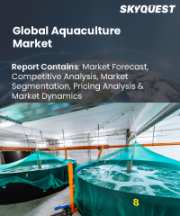
양식 시장은 2024년 2,853억 달러에서 2034년까지 4,653억 달러로 확대될 전망이며, CAGR 약 5%를 나타낼 것으로 예측됩니다. 양식 시장은 어류, 연체 동물, 갑각류 등의 수생 생물을 관리되는 환경 하에서 육성하는 산업을 의미합니다. 이 분야는 세계의 수산물 수요에 대응하고, 번식 기술, 영양 관리, 질병 대책에 있어서의 지속가능성과 혁신성을 중시하고 있습니다. 건강 의식 증가 및 남획에 대한 우려가 시장 성장을 가속하고 생산성과 환경 관리를 향상시키기 위해 아쿠아 포닉스, 순환 시스템 및 생명 공학의 진보가 촉진되고 있습니다.
세계의 관세 및 지정학적 긴장은 일본, 한국, 중국, 대만의 양식 시장 동향을 복잡하게 형성하고 있습니다. 이 나라들은 무역 장벽을 완화하기 위해 기술 혁신 및 지속 가능한 실천에 초점을 맞추고 전략을 재조정하고 있습니다. 일본과 한국은 수입 의존도를 줄이기 위해 국내 양식 기술을 강화하고 중국은 기술 혁신과 내륙 양식 확대를 통해 자급률 향상을 추진하고 있습니다. 대만은 정교한 양식 기술을 가지고 있으며 중요한 지위를 유지하지만, 지정학적 불안정성은 신중한 자세를 보여줍니다. 상위 시장인 일본 시장은 수산물 수요 증가 및 지속가능성의 동향에 견인되어 견조한 성장을 이어가고 있습니다. 2035년까지 지역 간 협력과 기술 통합을 통해 시장은 더욱 발전할 것으로 예측됩니다. 중동 분쟁은 에너지 가격 변동을 통해 사료 비용과 물류에 영향을 미칠 수 있으며 세계 공급망에도 파급될 수 있습니다.
| 시장 세분화 | |
|---|---|
| 유형별 | 해양 양식, 담수 양식, 기수 양식 |
| 제품별 | 어류, 갑각류, 연체 동물, 해초, 미세 조류, 수생 식물 |
| 서비스별 | 양식 컨설팅, 수질 관리, 건강 및 질병 관리 |
| 기술별 | 순환식 양식 시스템, 케이지 시스템, 유수식 시스템, 통합형 다영양 단계 양식 |
| 컴포넌트별 | 사료, 장비, 화학제품, 백신 |
| 용도별 | 식품 산업, 의약품, 영양 보조 식품, 화장품 |
| 프로세스별 | 번식, 부화장, 육성, 수확 |
| 최종 사용자별 | 상업, 가정, 조사 기관 |
| 장비별 | 수도 펌프, 폭기 장치, 여과 시스템, 모니터링 장치 |
양식 시장은 지속가능한 수산물 생산과 혁신적인 양식 기술에 대한 수요 증가에 힘입어 견조한 성장을 이루고 있습니다. 어류 부문은 가장 높은 성장률을 나타내며, 소비자의 높은 기호성과 영양가로부터 연어와 틸라피아가 견인역이 되고 있습니다. 갑각류, 특히 새우와 굴은 소비량 증가와 요리의 다양성에 의해 2위의 성장 부문으로서 대두하고 있습니다.
순환식 양식 시스템(RAS)과 앞바다 양식과 같은 기술 혁신으로 생산성과 환경 지속가능성이 향상되었습니다. 사료 분야에서는 곤충 밀과 조류와 같은 대체 단백질 공급원이 지속 가능한 기술을 따라 주목을 받고 있으며, 큰 혁신이 일어나고 있습니다.
유전자 개량 및 선발 육종 프로그램에 의해 양식종의 성장률과 질병 저항성이 더욱 최적화되고 있습니다. IoT와 AI를 양식업에 통합하면 모니터링 및 관리 개선, 운영 비용 절감, 수량 품질 향상, 이해관계자에게 유리한 기회를 제공합니다.
수산 양식 시장에서는 신흥 지역의 대두에 의해 시장 점유율의 역동적인 변화가 발생하고 있습니다. 지속 가능한 방법과 기술 진보의 영향을 받아 가격 전략도 진화를 계속하고 있습니다. 신제품 투입은 혁신적인 사료 솔루션과 질병 관리 기술에 초점을 맞추었습니다. 이러한 동향은 경쟁 구도를 촉진하고 기존 기업은 지위 유지를 위해 적응을 촉구하고 있습니다. 환경 친화적이고 효율적인 생산 방법에 중점을 두어 업계의 가격 모델과 제품 제공 형태를 재구성하고 있습니다.
수산 양식 시장에서의 경쟁은 격화되고 있으며, 주요 기업은 혁신 및 시장 확대를 추구하고 있습니다. 벤치마킹은 지속가능한 기술과 기술 통합에 대한 주력을 분명히 보여줍니다. 규제의 영향은 특히 유럽과 북미에서 두드러지며, 엄격한 기준이 세계 사업 운영의 벤치마크를 설정합니다. 아시아태평양은 유리한 정책 및 수요 증가에 힘입어 중요한 기지로 자리잡고 있습니다. 이 규제 상황 및 기술 진보가 함께 양식 시장의 경쟁 역학과 미래의 성장을 형성하고 있습니다.
주요 동향 및 촉진요인 :
양식 시장은 수산물 및 지속가능한 단백질원에 대한 수요 증가를 배경으로 견조한 성장을 이루고 있습니다. 세계 인구가 증가함에 따라 효율적이고 지속 가능한 식량 생산 시스템의 필요성이 매우 중요해지고 있습니다. 이에 따라 수산 양식의 실천이 급증하고 천연 어 자원에 대한 부하를 경감하면서 수산물 수요를 충족시키는 현실적인 해결책을 제공합니다.
기술 혁신은 양식업의 변화에 있어 매우 중요한 역할을 하고 있습니다. 자동 공급 시스템, 수질 모니터링, 질병 관리 기술 등의 혁신으로 생산성과 지속가능성이 향상되었습니다. 이러한 발전으로 생산자는 운영 최적화, 비용 절감 및 수확 품질 개선이 가능합니다.
또한 환경 지속성에 대한 의식이 높아짐에 따라 책임있는 양식 수산물에 대한 소비자 선호도가 변화하고 있습니다. 이 변화는 환경 부하를 최소화하는 순환식 양식 시스템 등 환경 친화적인 방법의 도입을 생산자에게 촉구하고 있습니다. 그 결과 사업 운영에서 지속 가능한 기술 및 기술 통합을 우선하는 기업에는 많은 기회가 탄생했습니다.
또한 양식업의 발전과 인프라 투자를 지원하는 정부 정책이 시장 확대를 추진하고 있습니다. 특히 개발도상 지역에서는 양식 부문의 현대화를 도모하는 가운데 현저한 성장이 보입니다. 혁신적인 솔루션을 제공하고 지역의 요구에 적응할 수 있는 기업은 이러한 새로운 기회를 활용하는 데 유리한 입장에 있습니다.
성장 억제요인 및 과제 :
양식 시장은 몇 가지 심각한 제약 및 과제에 직면하고 있습니다. 환경 문제는 큰 과제로, 양식업이 서식지 파괴와 오염을 일으켜 생물 다양성에 영향을 미칠 수 있습니다. 규제의 복잡성도 시장 확대를 더욱 어렵게 하고 있으며, 지역마다 다른 기준과 컴플라이언스 요건이 원활한 사업 운영을 방해하고 있습니다. 질병의 발생은 지속적인 위협이며 물고기의 건강에 영향을 미치며 양식업에 상당한 경제적 손실을 초래합니다. 게다가 지속가능성에 대한 요구가 커지고 있는 가운데, 소비자가 책임 있는 조달된 수산물을 요구하는 경향이 강해지고 있으며, 지속가능한 수법에 대한 엄청난 투자가 요구되고 있습니다. 마지막으로, 고품질 사료 원료의 부족과 같은 자원 제약도 과제가 되고 있어 생산 효율이나 비용 대 효과에 영향을 미칠 가능성이 있습니다. 이러한 과제는 종합적으로 양식 시장의 성장과 지속가능성을 저해하고 전략적 적응과 혁신이 필수적입니다.
목차
제1장 주요 요약
제2장 시장 하이라이트
제3장 시장 역학
- 거시경제 분석
- 시장 동향
- 시장 성장 촉진요인
- 시장 기회
- 시장 성장 억제요인
- CAGR : 성장 분석
- 영향 분석
- 신흥 시장
- 기술 로드맵
- 전략적 프레임워크
제4장 부문 분석
- 시장 규모 및 예측 : 유형별
- 해양 양식
- 담수 양식
- 기수 양식
- 시장 규모 및 예측 : 제품별
- 어류
- 갑각류
- 연체동물
- 해초
- 미세조류
- 수생식물
- 시장 규모 및 예측 : 서비스별
- 양식 컨설팅
- 수질 관리
- 건강 관리 및 질병 대책
- 시장 규모 및 예측 : 기술별
- 순환식 양식 시스템
- 케이지 시스템
- 유수식 시스템
- 통합형 다영양 단계 양식
- 시장 규모 및 예측 : 컴포넌트별
- 사료
- 설비
- 화학약품
- 백신
- 시장 규모 및 예측 : 용도별
- 식품 산업
- 의약품
- 뉴트라슈티컬
- 화장품
- 시장 규모 및 예측 : 프로세스별
- 종묘 생산
- 부화장
- 육성 양식
- 수확
- 시장 규모 및 예측 : 최종 사용자별
- 상업용
- 가정용
- 연구기관
- 시장 규모 및 예측 : 장비별
- 수도 펌프
- 폭기 장치
- 여과 시스템
- 모니터링 장치
제5장 지역별 분석
- 북미
- 미국
- 캐나다
- 멕시코
- 라틴아메리카
- 브라질
- 아르헨티나
- 기타 라틴아메리카
- 아시아태평양
- 중국
- 인도
- 한국
- 일본
- 호주
- 대만
- 기타 아시아태평양
- 유럽
- 독일
- 프랑스
- 영국
- 스페인
- 이탈리아
- 기타 유럽
- 중동 및 아프리카
- 사우디아라비아
- 아랍에미리트(UAE)
- 남아프리카
- 서브 사하라 아프리카
- 기타 중동 및 아프리카
제6장 시장 전략
- 수요 및 공급의 갭 분석
- 무역 및 물류 상의 제약
- 가격, 비용 및 마진의 동향
- 시장 침투
- 소비자 분석
- 규제 개요
제7장 경쟁 정보
- 시장 포지셔닝
- 시장 점유율
- 경쟁 벤치마킹
- 주요 기업의 전략
제8장 기업 프로파일
- Mowi ASA
- Leroy Seafood Group
- Grieg Seafood
- Sal Mar ASA
- Bakkafrost
- Cermaq Group AS
- Cooke Aquaculture
- Tassal Group Limited
- Marine Harvest
- Nireus Aquaculture
- Aqua Chile
- Austevoll Seafood
- Thai Union Group
- Huon Aquaculture
- Camanchaca
- Multiexport Foods
- Stolt Sea Farm
- Pescanova
- Benchmark Holdings
- Blue Ridge Aquaculture
제9장 당사에 대해서
AJY 26.04.10Aquaculture Market is anticipated to expand from $285.3 billion in 2024 to $465.3 billion by 2034, growing at a CAGR of approximately 5%. The Aquaculture Market encompasses the cultivation of aquatic organisms, including fish, mollusks, and crustaceans, in controlled environments. This sector addresses global seafood demand, emphasizing sustainability and innovation in breeding, nutrition, and disease management. Rising health consciousness and overfishing concerns propel market growth, fostering advancements in aquaponics, recirculating systems, and biotechnology to enhance productivity and environmental stewardship.
Global tariffs and geopolitical tensions are intricately shaping the aquaculture market's trajectory in Japan, South Korea, China, and Taiwan. These nations are recalibrating strategies to mitigate trade barriers, focusing on technological advancements and sustainable practices. Japan and South Korea are enhancing domestic aquaculture technologies to reduce reliance on imports, while China is boosting its self-sufficiency through innovation and expansion of inland aquaculture. Taiwan, with its advanced aquaculture techniques, remains pivotal but is cautious of geopolitical instability. The parent market is witnessing robust growth, driven by rising seafood demand and sustainability trends. By 2035, the market is expected to flourish through regional collaborations and technological integration. Middle East conflicts could indirectly affect feed costs and logistics via energy price fluctuations, influencing global supply chains.
| Market Segmentation | |
|---|---|
| Type | Marine Aquaculture, Freshwater Aquaculture, Brackish Water Aquaculture |
| Product | Fish, Crustaceans, Mollusks, Seaweed, Microalgae, Aquatic Plants |
| Services | Aquaculture Consulting, Water Quality Management, Health and Disease Management |
| Technology | Recirculating Aquaculture Systems, Cage Systems, Flow-Through Systems, Integrated Multi-Trophic Aquaculture |
| Component | Feed, Equipment, Chemicals, Vaccines |
| Application | Food Industry, Pharmaceuticals, Nutraceuticals, Cosmetics |
| Process | Breeding, Hatchery, Grow-Out, Harvesting |
| End User | Commercial, Household, Research Institutes |
| Equipment | Water Pumps, Aeration Devices, Filtration Systems, Monitoring Devices |
The Aquaculture Market is experiencing robust growth, propelled by increasing demand for sustainable seafood production and innovative farming techniques. The finfish segment is the top-performing category, with salmon and tilapia leading due to their high consumer preference and nutritional value. Shellfish, particularly shrimp and oysters, emerge as the second-highest performing segment, driven by rising consumption and culinary versatility.
Technological advancements in aquaculture systems, such as recirculating aquaculture systems (RAS) and offshore farming, are enhancing productivity and environmental sustainability. The feed segment is witnessing significant innovation, with alternative protein sources like insect meal and algae gaining momentum, aligning with sustainable practices.
Genetic advancements and selective breeding programs are further optimizing growth rates and disease resistance in farmed species. The integration of IoT and AI in aquaculture operations is improving monitoring and management, reducing operational costs, and enhancing yield quality, thus presenting lucrative opportunities for stakeholders.
The aquaculture market is witnessing a dynamic shift in market share, with emerging regions gaining prominence. Pricing strategies are evolving, influenced by sustainable practices and technological advancements. New product launches are focusing on innovative feed solutions and disease management techniques. These developments are fostering a competitive landscape, where traditional players are adapting to maintain their foothold. The emphasis on eco-friendly and efficient production methods is reshaping the industry's pricing models and product offerings.
Competition in the aquaculture market is intense, with key players striving for innovation and market expansion. Benchmarking reveals a focus on sustainable practices and technological integration. Regulatory influences are significant, especially in Europe and North America, where stringent standards are setting benchmarks for global operations. The Asia-Pacific region is emerging as a vital hub, driven by favorable policies and increasing demand. This regulatory landscape, coupled with technological advancements, is shaping the competitive dynamics and future growth of the aquaculture market.
Geographical Overview:
The aquaculture market is witnessing a robust expansion across various regions, each exhibiting unique growth dynamics. In Asia-Pacific, the market leads, driven by technological advancements and supportive government policies. China and India are top emerging countries, leveraging their vast coastlines and favorable climates to boost production. These nations are investing heavily in sustainable aquaculture practices to meet rising seafood demand.
Europe follows, with a strong focus on sustainability and innovation. Norway and Scotland are key players, benefiting from advanced aquaculture technologies and stringent environmental regulations. These countries are setting benchmarks in sustainable fish farming. North America is also experiencing growth, led by the United States and Canada, where investments in research and development are enhancing productivity and efficiency.
Latin America and Africa are emerging as new growth pockets. Brazil and Nigeria are making significant strides, capitalizing on their natural resources and increasing investments. These regions offer untapped potential for aquaculture expansion, driven by growing domestic consumption and export opportunities.
Recent Developments:
The aquaculture market has experienced noteworthy developments in recent months, reflecting its dynamic nature and growing significance. In a significant move, Cargill announced a strategic partnership with a leading aquaculture firm in Vietnam to enhance sustainable aquafeed production, aiming to reduce environmental impact while boosting productivity.
Meanwhile, Mowi ASA, a global leader in salmon farming, unveiled its ambitious expansion plans in the Chilean aquaculture market, focusing on sustainable practices and advanced technology integration to meet increasing demand. This move underscores the growing importance of sustainable aquaculture in global seafood supply chains.
On the innovation front, a breakthrough was achieved in aquaculture technology as a startup in Norway developed a cutting-edge water filtration system, promising to significantly improve water quality and fish health in aquaculture operations. This innovation is poised to set new standards in the industry.
In regulatory developments, the European Union introduced new guidelines aimed at promoting sustainable aquaculture practices, emphasizing the need for environmental stewardship and resource efficiency. These guidelines are expected to shape the future of aquaculture in the region.
Finally, the financial landscape of the aquaculture sector witnessed a major investment as a consortium of investors injected substantial capital into a leading aquaculture company in Southeast Asia, signaling strong confidence in the market's growth potential and profitability.
Key Trends and Drivers:
The aquaculture market is experiencing robust growth, driven by the rising demand for seafood and sustainable protein sources. As global populations increase, the need for efficient and sustainable food production systems becomes paramount. This has led to a surge in aquaculture practices, which offer a viable solution to meet seafood demand while reducing pressure on wild fish stocks.
Technological advancements are playing a pivotal role in transforming the aquaculture landscape. Innovations such as automated feeding systems, water quality monitoring, and disease management technologies are enhancing productivity and sustainability. These advancements enable producers to optimize operations, reduce costs, and improve yield quality.
Furthermore, the increasing awareness of environmental sustainability is influencing consumer preferences towards responsibly farmed seafood. This shift is encouraging producers to adopt eco-friendly practices, such as recirculating aquaculture systems, which minimize environmental impact. As a result, opportunities abound for companies that prioritize sustainable practices and technological integration in their operations.
In addition, government policies supporting aquaculture development and investment in infrastructure are driving market expansion. Developing regions, in particular, are witnessing significant growth as they seek to modernize their aquaculture sectors. Companies that can provide innovative solutions and adapt to regional needs are well-positioned to capitalize on these emerging opportunities.
Restraints and Challenges:
The aquaculture market encounters several significant restraints and challenges. Environmental concerns pose a substantial challenge, as aquaculture operations can lead to habitat destruction and pollution, impacting biodiversity. Regulatory complexities further complicate market expansion, with varying standards and compliance requirements across regions hindering seamless operations. Disease outbreaks remain a persistent threat, affecting fish health and leading to substantial economic losses for aquaculture businesses. Additionally, the market faces pressure from sustainability demands, as consumers increasingly seek responsibly sourced seafood, requiring significant investments in sustainable practices. Finally, the industry grapples with resource limitations, such as the scarcity of high-quality feed ingredients, which can affect production efficiency and cost-effectiveness. These challenges collectively impede the growth and sustainability of the aquaculture market, necessitating strategic adaptations and innovations.
Key Companies:
Mowi ASA, Leroy Seafood Group, Grieg Seafood, Sal Mar ASA, Bakkafrost, Cermaq Group AS, Cooke Aquaculture, Tassal Group Limited, Marine Harvest, Nireus Aquaculture, Aqua Chile, Austevoll Seafood, Thai Union Group, Huon Aquaculture, Camanchaca, Multiexport Foods, Stolt Sea Farm, Pescanova, Benchmark Holdings, Blue Ridge Aquaculture
Research Scope:
- Estimates and forecasts the overall market size across type, application, and region.
- Provides detailed information and key takeaways on qualitative and quantitative trends, dynamics, business framework, competitive landscape, and company profiling.
- Identifies factors influencing market growth and challenges, opportunities, drivers, and restraints.
- Identifies factors that could limit company participation in international markets to help calibrate market share expectations and growth rates.
- Evaluates key development strategies like acquisitions, product launches, mergers, collaborations, business expansions, agreements, partnerships, and R&D activities.
- Analyzes smaller market segments strategically, focusing on their potential, growth patterns, and impact on the overall market.
- Outlines the competitive landscape, assessing business and corporate strategies to monitor and dissect competitive advancements.
Our research scope provides comprehensive market data, insights, and analysis across a variety of critical areas. We cover Local Market Analysis, assessing consumer demographics, purchasing behaviors, and market size within specific regions to identify growth opportunities. Our Local Competition Review offers a detailed evaluation of competitors, including their strengths, weaknesses, and market positioning. We also conduct Local Regulatory Reviews to ensure businesses comply with relevant laws and regulations. Industry Analysis provides an in-depth look at market dynamics, key players, and trends. Additionally, we offer Cross-Segmental Analysis to identify synergies between different market segments, as well as Production-Consumption and Demand-Supply Analysis to optimize supply chain efficiency. Our Import-Export Analysis helps businesses navigate global trade environments by evaluating trade flows and policies. These insights empower clients to make informed strategic decisions, mitigate risks, and capitalize on market opportunities.
TABLE OF CONTENTS
1 Executive Summary
- 1.1 Market Size and Forecast
- 1.2 Market Overview
- 1.3 Market Snapshot
- 1.4 Regional Snapshot
- 1.5 Strategic Recommendations
- 1.6 Analyst Notes
2 Market Highlights
- 2.1 Key Market Highlights by Type
- 2.2 Key Market Highlights by Product
- 2.3 Key Market Highlights by Services
- 2.4 Key Market Highlights by Technology
- 2.5 Key Market Highlights by Component
- 2.6 Key Market Highlights by Application
- 2.7 Key Market Highlights by Process
- 2.8 Key Market Highlights by End User
- 2.9 Key Market Highlights by Equipment
3 Market Dynamics
- 3.1 Macroeconomic Analysis
- 3.2 Market Trends
- 3.3 Market Drivers
- 3.4 Market Opportunities
- 3.5 Market Restraints
- 3.6 CAGR Growth Analysis
- 3.7 Impact Analysis
- 3.8 Emerging Markets
- 3.9 Technology Roadmap
- 3.10 Strategic Frameworks
- 3.10.1 PORTER's 5 Forces Model
- 3.10.2 ANSOFF Matrix
- 3.10.3 4P's Model
- 3.10.4 PESTEL Analysis
4 Segment Analysis
- 4.1 Market Size & Forecast by Type (2020-2035)
- 4.1.1 Marine Aquaculture
- 4.1.2 Freshwater Aquaculture
- 4.1.3 Brackish Water Aquaculture
- 4.2 Market Size & Forecast by Product (2020-2035)
- 4.2.1 Fish
- 4.2.2 Crustaceans
- 4.2.3 Mollusks
- 4.2.4 Seaweed
- 4.2.5 Microalgae
- 4.2.6 Aquatic Plants
- 4.3 Market Size & Forecast by Services (2020-2035)
- 4.3.1 Aquaculture Consulting
- 4.3.2 Water Quality Management
- 4.3.3 Health and Disease Management
- 4.4 Market Size & Forecast by Technology (2020-2035)
- 4.4.1 Recirculating Aquaculture Systems
- 4.4.2 Cage Systems
- 4.4.3 Flow-Through Systems
- 4.4.4 Integrated Multi-Trophic Aquaculture
- 4.5 Market Size & Forecast by Component (2020-2035)
- 4.5.1 Feed
- 4.5.2 Equipment
- 4.5.3 Chemicals
- 4.5.4 Vaccines
- 4.6 Market Size & Forecast by Application (2020-2035)
- 4.6.1 Food Industry
- 4.6.2 Pharmaceuticals
- 4.6.3 Nutraceuticals
- 4.6.4 Cosmetics
- 4.7 Market Size & Forecast by Process (2020-2035)
- 4.7.1 Breeding
- 4.7.2 Hatchery
- 4.7.3 Grow-Out
- 4.7.4 Harvesting
- 4.8 Market Size & Forecast by End User (2020-2035)
- 4.8.1 Commercial
- 4.8.2 Household
- 4.8.3 Research Institutes
- 4.9 Market Size & Forecast by Equipment (2020-2035)
- 4.9.1 Water Pumps
- 4.9.2 Aeration Devices
- 4.9.3 Filtration Systems
- 4.9.4 Monitoring Devices
5 Regional Analysis
- 5.1 Global Market Overview
- 5.2 North America Market Size (2020-2035)
- 5.2.1 United States
- 5.2.1.1 Type
- 5.2.1.2 Product
- 5.2.1.3 Services
- 5.2.1.4 Technology
- 5.2.1.5 Component
- 5.2.1.6 Application
- 5.2.1.7 Process
- 5.2.1.8 End User
- 5.2.1.9 Equipment
- 5.2.2 Canada
- 5.2.2.1 Type
- 5.2.2.2 Product
- 5.2.2.3 Services
- 5.2.2.4 Technology
- 5.2.2.5 Component
- 5.2.2.6 Application
- 5.2.2.7 Process
- 5.2.2.8 End User
- 5.2.2.9 Equipment
- 5.2.3 Mexico
- 5.2.3.1 Type
- 5.2.3.2 Product
- 5.2.3.3 Services
- 5.2.3.4 Technology
- 5.2.3.5 Component
- 5.2.3.6 Application
- 5.2.3.7 Process
- 5.2.3.8 End User
- 5.2.3.9 Equipment
- 5.2.1 United States
- 5.3 Latin America Market Size (2020-2035)
- 5.3.1 Brazil
- 5.3.1.1 Type
- 5.3.1.2 Product
- 5.3.1.3 Services
- 5.3.1.4 Technology
- 5.3.1.5 Component
- 5.3.1.6 Application
- 5.3.1.7 Process
- 5.3.1.8 End User
- 5.3.1.9 Equipment
- 5.3.2 Argentina
- 5.3.2.1 Type
- 5.3.2.2 Product
- 5.3.2.3 Services
- 5.3.2.4 Technology
- 5.3.2.5 Component
- 5.3.2.6 Application
- 5.3.2.7 Process
- 5.3.2.8 End User
- 5.3.2.9 Equipment
- 5.3.3 Rest of Latin America
- 5.3.3.1 Type
- 5.3.3.2 Product
- 5.3.3.3 Services
- 5.3.3.4 Technology
- 5.3.3.5 Component
- 5.3.3.6 Application
- 5.3.3.7 Process
- 5.3.3.8 End User
- 5.3.3.9 Equipment
- 5.3.1 Brazil
- 5.4 Asia-Pacific Market Size (2020-2035)
- 5.4.1 China
- 5.4.1.1 Type
- 5.4.1.2 Product
- 5.4.1.3 Services
- 5.4.1.4 Technology
- 5.4.1.5 Component
- 5.4.1.6 Application
- 5.4.1.7 Process
- 5.4.1.8 End User
- 5.4.1.9 Equipment
- 5.4.2 India
- 5.4.2.1 Type
- 5.4.2.2 Product
- 5.4.2.3 Services
- 5.4.2.4 Technology
- 5.4.2.5 Component
- 5.4.2.6 Application
- 5.4.2.7 Process
- 5.4.2.8 End User
- 5.4.2.9 Equipment
- 5.4.3 South Korea
- 5.4.3.1 Type
- 5.4.3.2 Product
- 5.4.3.3 Services
- 5.4.3.4 Technology
- 5.4.3.5 Component
- 5.4.3.6 Application
- 5.4.3.7 Process
- 5.4.3.8 End User
- 5.4.3.9 Equipment
- 5.4.4 Japan
- 5.4.4.1 Type
- 5.4.4.2 Product
- 5.4.4.3 Services
- 5.4.4.4 Technology
- 5.4.4.5 Component
- 5.4.4.6 Application
- 5.4.4.7 Process
- 5.4.4.8 End User
- 5.4.4.9 Equipment
- 5.4.5 Australia
- 5.4.5.1 Type
- 5.4.5.2 Product
- 5.4.5.3 Services
- 5.4.5.4 Technology
- 5.4.5.5 Component
- 5.4.5.6 Application
- 5.4.5.7 Process
- 5.4.5.8 End User
- 5.4.5.9 Equipment
- 5.4.6 Taiwan
- 5.4.6.1 Type
- 5.4.6.2 Product
- 5.4.6.3 Services
- 5.4.6.4 Technology
- 5.4.6.5 Component
- 5.4.6.6 Application
- 5.4.6.7 Process
- 5.4.6.8 End User
- 5.4.6.9 Equipment
- 5.4.7 Rest of APAC
- 5.4.7.1 Type
- 5.4.7.2 Product
- 5.4.7.3 Services
- 5.4.7.4 Technology
- 5.4.7.5 Component
- 5.4.7.6 Application
- 5.4.7.7 Process
- 5.4.7.8 End User
- 5.4.7.9 Equipment
- 5.4.1 China
- 5.5 Europe Market Size (2020-2035)
- 5.5.1 Germany
- 5.5.1.1 Type
- 5.5.1.2 Product
- 5.5.1.3 Services
- 5.5.1.4 Technology
- 5.5.1.5 Component
- 5.5.1.6 Application
- 5.5.1.7 Process
- 5.5.1.8 End User
- 5.5.1.9 Equipment
- 5.5.2 France
- 5.5.2.1 Type
- 5.5.2.2 Product
- 5.5.2.3 Services
- 5.5.2.4 Technology
- 5.5.2.5 Component
- 5.5.2.6 Application
- 5.5.2.7 Process
- 5.5.2.8 End User
- 5.5.2.9 Equipment
- 5.5.3 United Kingdom
- 5.5.3.1 Type
- 5.5.3.2 Product
- 5.5.3.3 Services
- 5.5.3.4 Technology
- 5.5.3.5 Component
- 5.5.3.6 Application
- 5.5.3.7 Process
- 5.5.3.8 End User
- 5.5.3.9 Equipment
- 5.5.4 Spain
- 5.5.4.1 Type
- 5.5.4.2 Product
- 5.5.4.3 Services
- 5.5.4.4 Technology
- 5.5.4.5 Component
- 5.5.4.6 Application
- 5.5.4.7 Process
- 5.5.4.8 End User
- 5.5.4.9 Equipment
- 5.5.5 Italy
- 5.5.5.1 Type
- 5.5.5.2 Product
- 5.5.5.3 Services
- 5.5.5.4 Technology
- 5.5.5.5 Component
- 5.5.5.6 Application
- 5.5.5.7 Process
- 5.5.5.8 End User
- 5.5.5.9 Equipment
- 5.5.6 Rest of Europe
- 5.5.6.1 Type
- 5.5.6.2 Product
- 5.5.6.3 Services
- 5.5.6.4 Technology
- 5.5.6.5 Component
- 5.5.6.6 Application
- 5.5.6.7 Process
- 5.5.6.8 End User
- 5.5.6.9 Equipment
- 5.5.1 Germany
- 5.6 Middle East & Africa Market Size (2020-2035)
- 5.6.1 Saudi Arabia
- 5.6.1.1 Type
- 5.6.1.2 Product
- 5.6.1.3 Services
- 5.6.1.4 Technology
- 5.6.1.5 Component
- 5.6.1.6 Application
- 5.6.1.7 Process
- 5.6.1.8 End User
- 5.6.1.9 Equipment
- 5.6.2 United Arab Emirates
- 5.6.2.1 Type
- 5.6.2.2 Product
- 5.6.2.3 Services
- 5.6.2.4 Technology
- 5.6.2.5 Component
- 5.6.2.6 Application
- 5.6.2.7 Process
- 5.6.2.8 End User
- 5.6.2.9 Equipment
- 5.6.3 South Africa
- 5.6.3.1 Type
- 5.6.3.2 Product
- 5.6.3.3 Services
- 5.6.3.4 Technology
- 5.6.3.5 Component
- 5.6.3.6 Application
- 5.6.3.7 Process
- 5.6.3.8 End User
- 5.6.3.9 Equipment
- 5.6.4 Sub-Saharan Africa
- 5.6.4.1 Type
- 5.6.4.2 Product
- 5.6.4.3 Services
- 5.6.4.4 Technology
- 5.6.4.5 Component
- 5.6.4.6 Application
- 5.6.4.7 Process
- 5.6.4.8 End User
- 5.6.4.9 Equipment
- 5.6.5 Rest of MEA
- 5.6.5.1 Type
- 5.6.5.2 Product
- 5.6.5.3 Services
- 5.6.5.4 Technology
- 5.6.5.5 Component
- 5.6.5.6 Application
- 5.6.5.7 Process
- 5.6.5.8 End User
- 5.6.5.9 Equipment
- 5.6.1 Saudi Arabia
6 Market Strategy
- 6.1 Demand-Supply Gap Analysis
- 6.2 Trade & Logistics Constraints
- 6.3 Price-Cost-Margin Trends
- 6.4 Market Penetration
- 6.5 Consumer Analysis
- 6.6 Regulatory Snapshot
7 Competitive Intelligence
- 7.1 Market Positioning
- 7.2 Market Share
- 7.3 Competition Benchmarking
- 7.4 Top Company Strategies
8 Company Profiles
- 8.1 Mowi ASA
- 8.1.1 Overview
- 8.1.2 Product Summary
- 8.1.3 Financial Performance
- 8.1.4 SWOT Analysis
- 8.2 Leroy Seafood Group
- 8.2.1 Overview
- 8.2.2 Product Summary
- 8.2.3 Financial Performance
- 8.2.4 SWOT Analysis
- 8.3 Grieg Seafood
- 8.3.1 Overview
- 8.3.2 Product Summary
- 8.3.3 Financial Performance
- 8.3.4 SWOT Analysis
- 8.4 Sal Mar ASA
- 8.4.1 Overview
- 8.4.2 Product Summary
- 8.4.3 Financial Performance
- 8.4.4 SWOT Analysis
- 8.5 Bakkafrost
- 8.5.1 Overview
- 8.5.2 Product Summary
- 8.5.3 Financial Performance
- 8.5.4 SWOT Analysis
- 8.6 Cermaq Group AS
- 8.6.1 Overview
- 8.6.2 Product Summary
- 8.6.3 Financial Performance
- 8.6.4 SWOT Analysis
- 8.7 Cooke Aquaculture
- 8.7.1 Overview
- 8.7.2 Product Summary
- 8.7.3 Financial Performance
- 8.7.4 SWOT Analysis
- 8.8 Tassal Group Limited
- 8.8.1 Overview
- 8.8.2 Product Summary
- 8.8.3 Financial Performance
- 8.8.4 SWOT Analysis
- 8.9 Marine Harvest
- 8.9.1 Overview
- 8.9.2 Product Summary
- 8.9.3 Financial Performance
- 8.9.4 SWOT Analysis
- 8.10 Nireus Aquaculture
- 8.10.1 Overview
- 8.10.2 Product Summary
- 8.10.3 Financial Performance
- 8.10.4 SWOT Analysis
- 8.11 Aqua Chile
- 8.11.1 Overview
- 8.11.2 Product Summary
- 8.11.3 Financial Performance
- 8.11.4 SWOT Analysis
- 8.12 Austevoll Seafood
- 8.12.1 Overview
- 8.12.2 Product Summary
- 8.12.3 Financial Performance
- 8.12.4 SWOT Analysis
- 8.13 Thai Union Group
- 8.13.1 Overview
- 8.13.2 Product Summary
- 8.13.3 Financial Performance
- 8.13.4 SWOT Analysis
- 8.14 Huon Aquaculture
- 8.14.1 Overview
- 8.14.2 Product Summary
- 8.14.3 Financial Performance
- 8.14.4 SWOT Analysis
- 8.15 Camanchaca
- 8.15.1 Overview
- 8.15.2 Product Summary
- 8.15.3 Financial Performance
- 8.15.4 SWOT Analysis
- 8.16 Multiexport Foods
- 8.16.1 Overview
- 8.16.2 Product Summary
- 8.16.3 Financial Performance
- 8.16.4 SWOT Analysis
- 8.17 Stolt Sea Farm
- 8.17.1 Overview
- 8.17.2 Product Summary
- 8.17.3 Financial Performance
- 8.17.4 SWOT Analysis
- 8.18 Pescanova
- 8.18.1 Overview
- 8.18.2 Product Summary
- 8.18.3 Financial Performance
- 8.18.4 SWOT Analysis
- 8.19 Benchmark Holdings
- 8.19.1 Overview
- 8.19.2 Product Summary
- 8.19.3 Financial Performance
- 8.19.4 SWOT Analysis
- 8.20 Blue Ridge Aquaculture
- 8.20.1 Overview
- 8.20.2 Product Summary
- 8.20.3 Financial Performance
- 8.20.4 SWOT Analysis
9 About Us
- 9.1 About Us
- 9.2 Research Methodology
- 9.3 Research Workflow
- 9.4 Consulting Services
- 9.5 Our Clients
- 9.6 Client Testimonials
- 9.7 Contact Us