|
시장보고서
상품코드
1721481
하이브리드 개폐 장치 시장 기회, 성장 촉진요인, 산업 동향 분석 및 예측(2025-2034년)Hybrid Switchgear Market Opportunity, Growth Drivers, Industry Trend Analysis, and Forecast 2025 - 2034 |
||||||

세계의 하이브리드 개폐 장치 시장 규모는 2024년에는 46억 달러로 평가되었고, 청정 에너지 솔루션에 대한 수요 증가와 자연 에너지의 국내 송전망에의 통합으로 CAGR 6%를 나타내 2034년에는 81억 달러에 달할 것으로 예측되고 있습니다. 탄소 배출량을 줄이고 증가하는 에너지 수요에 대응할 수 있는 첨단 개폐 장치 시스템을 선호하고 있습니다. 전기 및 디지털 변혁이 진행되는 지역에서는 신재생 에너지 입력의 기술적 복잡성에 대응하면서 신뢰성 높은 전력 공급을 유지하기 위해 이러한 시스템의 도입이 진행되고 있습니다. 수요를 더욱 확대하고 있는 컴팩트한 모듈형 시스템으로의 세계 변화는 특히 공간적 제약과 높은 에너지 밀도 요건에 직면한 도시와 산업지역에서 하이브리드 개폐 장치의 보급에 열려 있습니다.

하이브리드 개폐 장치는 간헐적 인 에너지 발전 문제를 해결하면서 안정적이고 효율적인 배전을 보장하는 데 중요한 역할을 수행합니다. 고도의 첨단 개폐 장치 시스템에 대한 필요성이 점차 커지고 있습니다. 최신 변전소는 공간 최적화와 시스템 성능의 중요성을 높이고 하이브리드 개폐 장치 기술에 대한 투자가 증가하고 있습니다.
| 시장 범위 | |
|---|---|
| 시작 연도 | 2024년 |
| 예측 연도 | 2025-2034년 |
| 시작 금액 | 46억 달러 |
| 예측 금액 | 81억 달러 |
| CAGR | 6% |
스위치기어의 진보는 전력 시스템의 관리 방법을 일변시켰습니다. 하이브리드 개폐 장치는 현재 디지털 감시 툴과 스마트 그리드 호환성을 짜넣어, 운용의 신뢰성과 리얼타임의 시스템 제어를 대폭 개선하고 있습니다.
72.5kV에서 245kV의 전압 부문에서 하이브리드 개폐 장치 시장은 2034년까지 34억 달러 시장 규모에 달할 것으로 전망되고 있습니다. 높은 전력 신뢰성과 송전망의 안정성이 요구되는 급속히 도시화하는 지역이나 공업지역에서는 차세대 변전소에 있어서 필수적인 존재가 되고 있습니다.
송전용 변전설비 분야는 2034년까지 연평균 복합 성장률(CAGR) 6.1%를 나타낼 것으로 예측됩니다. 전력 회사가 송전 능력을 향상시키고 재생 가능 에너지의 투입을 지원하려고 하기 때문에 변전소에의 하이브리드 개폐 장치의 채용이 바람직한 솔루션이 되고 있습니다. 컴팩트한 설치면적, 고도의 안전기능, 비용효율이 뛰어난 성능을 갖추고 있어, 공간에 제약이 있는 고 수요의 송전망환경에 최적입니다.
미국의 하이브리드 개폐 장치 시장은 2024년에 7억 3,120만 달러를 창출했습니다. 또한 이러한 업그레이드는 악천후 및 사이버 보안 위협과 같은 증가 위험으로부터 보호하기 위해 설계되었습니다.
세계의 하이브리드 개폐 장치 업계에서 사업을 전개하고 있는 주요 기업으로는 슈나이더 일렉트릭, 도시바, 제너럴 일렉트릭, 라센 & 투브로 리미티드, 히타치 에너지, 스위치기어 컴퍼니(SGC), ABB, 지멘스, Sieyuan Electric Co.Ltd., Eaton. 등이 있습니다. 하이브리드 개폐 장치 시장에서 발판을 굳히기 위해 주요 기업은 디지털 기술의 통합, 모듈식 시스템 설계, 환경 효율적인 솔루션에 투자하고 있습니다. 전략적 제휴, 지역 확대, 자동화 및 감시 툴의 끊임없는 혁신도 대기업이 규제 준수를 유지하면서 진화하는 고객의 요구에 대응하는 데 도움이 됩니다.
목차
제1장 조사 방법과 범위
제2장 주요 요약
제3장 업계 인사이트
- 생태계 분석
- 규제 상황
- 업계에 미치는 영향요인
- 성장 촉진요인
- 업계의 잠재적 위험 및 과제
- 트럼프 정권의 관세가 무역과 산업 전체에 미치는 영향
- 성장 가능성 분석
- Porter's Five Forces 분석
- 공급기업의 협상력
- 구매자의 협상력
- 신규 참가업체의 위협
- 대체품의 위협
- PESTEL 분석
제4장 경쟁 구도
- 전략적 대시보드
- 혁신 및 지속가능성 환경
제5장 시장 규모와 예측 : 전압별(2021-2034년)
- 주요 동향
- 72.5 kV 미만
- 72.5 kV-245 kV
- 245 kV-550 kV
제6장 시장 규모와 예측 : 설비별(2021-2034년)
- 주요 동향
- 실내
- 실외
제7장 시장 규모와 예측 : 용도별(2021-2034년)
- 주요 동향
- 송전 변전소
- 배전 변전소
- 발전 장치
제8장 시장 규모와 예측 : 최종 용도별(2021-2034년)
- 주요 동향
- 산업
- 유틸리티
제9장 시장 규모와 예측 : 지역별(2021-2034년)
- 주요 동향
- 북미
- 미국
- 캐나다
- 멕시코
- 유럽
- 영국
- 프랑스
- 독일
- 이탈리아
- 러시아
- 스페인
- 아시아태평양
- 중국
- 호주
- 인도
- 일본
- 한국
- 중동 및 아프리카
- 사우디아라비아
- 아랍에미리트(UAE)
- 튀르키예
- 남아프리카
- 이집트
- 라틴아메리카
- 브라질
- 아르헨티나
제10장 기업 프로파일
- ABB
- Eaton
- General Electric
- Hitachi Energy
- Larsen &Toubro Limited
- Schneider Electric
- Siemens
- Toshiba
- Switchgear Company(SGC)
- Sieyuan Electric Co. Ltd.
The Global Hybrid Switchgear Market was valued at USD 4.6 billion in 2024 and is estimated to grow at a CAGR of 6% to reach USD 8.1 billion by 2034, driven by the rising demand for clean energy solutions and the integration of renewables into national grids. As the global energy landscape shifts toward decarbonization and grid modernization, hybrid switchgear technologies are gaining unprecedented traction. Power utilities and industrial sectors are now prioritizing advanced switchgear systems that can enhance operational efficiency, reduce carbon emissions, and accommodate growing energy demands. The rising need for flexible and scalable solutions has made hybrid switchgear indispensable across modern substations. In regions witnessing rapid electrification and digital transformation, these systems are increasingly deployed to maintain reliable power delivery while addressing the technical complexities of renewable energy inputs. Government initiatives to boost smart grid infrastructure and upgrade aging electrical networks are further amplifying the demand. The global shift toward compact, modular systems is paving the way for widespread hybrid switchgear deployment, especially in urban and industrial zones facing spatial constraints and high energy density requirements.
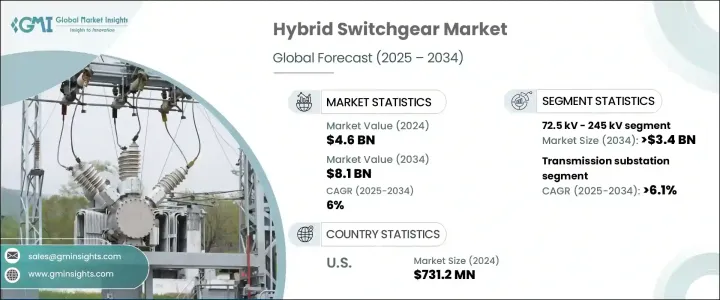
Hybrid switchgear plays a key role in ensuring stable and efficient power distribution while addressing the challenges of intermittent energy generation. As utilities transition toward sustainable energy, the need for compact, reliable, and advanced switchgear systems becomes more pressing. The growing importance of space optimization and system performance across modern substations encourages increased investment in hybrid switchgear technologies.
| Market Scope | |
|---|---|
| Start Year | 2024 |
| Forecast Year | 2025-2034 |
| Start Value | $4.6 billion |
| Forecast Value | $8.1 billion |
| CAGR | 6% |
Advancements in switchgear have transformed how power systems are managed. Hybrid switchgear now incorporates digital monitoring tools and smart grid compatibility, significantly improving operational reliability and real-time system control. These intelligent features enable better fault detection, predictive maintenance, and streamlined grid operations.
The hybrid switchgear market in the 72.5 kV - 245 kV voltage segment is expected to generate USD 3.4 billion in value by 2034. These systems are witnessing significant adoption across global transmission and distribution networks due to their ability to handle large-scale power loads efficiently. They are becoming essential in next-generation substations, especially in rapidly urbanizing regions and industrial zones that demand higher power reliability and grid stability. Their compact design, improved safety features, and ease of integration into existing infrastructure make them ideal for retrofit and greenfield projects.
The transmission substation segment is forecasted to grow at a CAGR of 6.1% through 2034. As power utilities seek to improve transmission capabilities and support renewable inputs, the adoption of hybrid switchgear in substations is becoming a preferred solution. These systems offer compact footprints, advanced safety features, and cost-effective performance, making them ideal for space-constrained, high-demand grid environments. With power demand increasing and grids becoming more decentralized, hybrid switchgear continues to support seamless and secure electricity distribution.
The United States Hybrid Switchgear Market generated USD 731.2 million in 2024. Growth across the region is fueled by investments in smart grid technology, grid hardening, and the replacement of aging substations. In addition to enhancing reliability, these upgrades are designed to protect against rising risks, including severe weather events and cybersecurity threats. These factors collectively support the rising adoption of next-generation switchgear in the U.S. power sector.
Leading companies operating in the Global Hybrid Switchgear Industry include Schneider Electric, Toshiba, General Electric, Larsen & Toubro Limited, Hitachi Energy, Switchgear Company (SGC), ABB, Siemens, Sieyuan Electric Co. Ltd., and Eaton. To gain a stronger foothold in the hybrid switchgear market, key companies are investing in digital technology integration, modular system designs, and eco-efficient solutions. Businesses focus on expanding production capabilities and forming alliances with utilities for large-scale grid upgrade projects. Strategic collaborations, regional expansion, and continuous innovation in automation and monitoring tools are also helping major players meet evolving customer needs while maintaining regulatory compliance.
Table of Contents
Chapter 1 Methodology & Scope
- 1.1 Market definitions
- 1.2 Base estimates & calculations
- 1.3 Forecast calculation
- 1.4 Data sources
- 1.4.1 Primary
- 1.4.2 Secondary
- 1.4.2.1 Paid
- 1.4.2.2 Public
Chapter 2 Executive Summary
- 2.1 Industry synopsis, 2021 - 2034
Chapter 3 Industry Insights
- 3.1 Industry ecosystem analysis
- 3.2 Regulatory landscape
- 3.3 Industry impact forces
- 3.3.1 Growth drivers
- 3.3.2 Industry pitfalls & challenges
- 3.4 Impact of Trump Administration Tariffs on trade & overall industry
- 3.5 Growth potential analysis
- 3.6 Porter's analysis
- 3.6.1 Bargaining power of suppliers
- 3.6.2 Bargaining power of buyers
- 3.6.3 Threat of new entrants
- 3.6.4 Threat of substitutes
- 3.7 PESTEL analysis
Chapter 4 Competitive landscape, 2024
- 4.1 Strategic dashboard
- 4.2 Innovation & sustainability landscape
Chapter 5 Market Size and Forecast, By Voltage, 2021 - 2034 (USD Million, Units)
- 5.1 Key trends
- 5.2 < 72.5 kV
- 5.3 72.5 kV - 245 kV
- 5.4 245 kV - 550 kV
Chapter 6 Market Size and Forecast, By Installation, 2021 - 2034 (USD Million, Units)
- 6.1 Key trends
- 6.2 Indoor
- 6.3 Outdoor
Chapter 7 Market Size and Forecast, By Application, 2021 - 2034 (USD Million, Units)
- 7.1 Key trends
- 7.2 Transmission substation
- 7.3 Distribution substation
- 7.4 Power generation units
Chapter 8 Market Size and Forecast, By End Use, 2021 - 2034 (USD Million, Units)
- 8.1 Key trends
- 8.2 Industrial
- 8.3 Utility
Chapter 9 Market Size and Forecast, By Region, 2021 - 2034 (USD Million, Units)
- 9.1 Key trends
- 9.2 North America
- 9.2.1 U.S.
- 9.2.2 Canada
- 9.2.3 Mexico
- 9.3 Europe
- 9.3.1 UK
- 9.3.2 France
- 9.3.3 Germany
- 9.3.4 Italy
- 9.3.5 Russia
- 9.3.6 Spain
- 9.4 Asia Pacific
- 9.4.1 China
- 9.4.2 Australia
- 9.4.3 India
- 9.4.4 Japan
- 9.4.5 South Korea
- 9.5 Middle East & Africa
- 9.5.1 Saudi Arabia
- 9.5.2 UAE
- 9.5.3 Turkey
- 9.5.4 South Africa
- 9.5.5 Egypt
- 9.6 Latin America
- 9.6.1 Brazil
- 9.6.2 Argentina
Chapter 10 Company Profiles
- 10.1 ABB
- 10.2 Eaton
- 10.3 General Electric
- 10.4 Hitachi Energy
- 10.5 Larsen & Toubro Limited
- 10.6 Schneider Electric
- 10.7 Siemens
- 10.8 Toshiba
- 10.9 Switchgear Company (SGC)
- 10.10 Sieyuan Electric Co. Ltd.