|
시장보고서
상품코드
1750359
원격의료 서비스 시장 : 시장 기회, 성장 촉진요인, 산업 동향 분석, 예측(2025-2034년)Telehealth Services Market Opportunity, Growth Drivers, Industry Trend Analysis, and Forecast 2025 - 2034 |
||||||

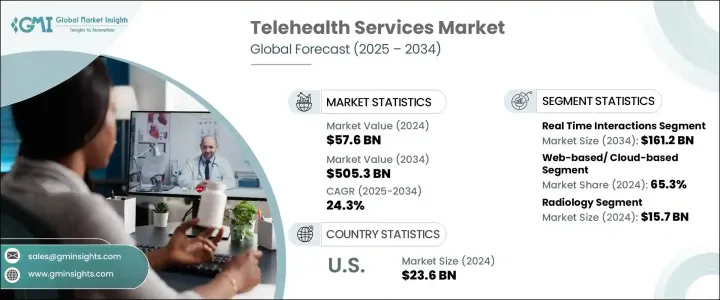
세계의 원격의료 서비스 시장 규모는 2024년에는 576억 달러로 평가되었고, CAGR 24.3%로 성장할 전망이며, 2034년에는 5,053억 달러에 이를 것으로 예측됩니다.
헬스케어의 디지털화가 진행됨에 따라, 환자는 대면 진료를 필요로 하지 않는 보다 신속하고 효율적인 의료에 대한 액세스를 기대하게 되어 왔습니다. 모바일 헬스 플랫폼과 디지털 웨어러블의 진보는 환자가 의료 제공자를 어떻게 대하는지를 변화시키고, 참여를 높이고, 가상 케어 제공을 합리화하고 있습니다. 헬스케어 시스템이 지속적인 모니터링과 예방 의료에 중점을 두면서 가상 진찰의 수요는 증가 일로를 걷고 있습니다.
디지털 플랫폼의 보급과 인터넷의 보급이 이 동향을 크게 가속해, 환자가 어디에 있어도 의료를 가까이에 느끼게 되었습니다. 만성질환의 증가는 일관된 원격 모니터링의 필요성을 조장하며, 의사는 디지털 채널을 통해 환자의 상태를 보다 효율적으로 추적하고 관리할 수 있게 됩니다. 환자는 지금 장소나 기존 진료 시간에 얽매이지 않는 개별화된 온디맨드 케어를 기대하고 있습니다. 이 시프트에 의해 케어 제공 모델이 재구축되어 1차 서비스, 전문 의료, 후속 서비스에 걸친 가상 솔루션에 대한 투자가 증가하고 있습니다.
| 시장 범위 | |
|---|---|
| 시작 연도 | 2024년 |
| 예측 연도 | 2025-2034년 |
| 시작 금액 | 576억 달러 |
| 예측 금액 | 5,053억 달러 |
| CAGR | 24.3% |
실시간 커뮤니케이션 솔루션은 2024년에 181억 달러로 평가되었고, 2034년에는 1,612억 달러에 달할 것으로 예상되는 주요 용도 부문으로 부상하고 있습니다. 이 수요에 박차를 가하고 있는 것은, 특히 만성 질환의 관리 및 긴급 치료의 필요성으로부터, 헬스케어 전문가에 대한 즉시 액세스를 요구하는 환자입니다. 모바일 이용 및 인터넷 접속이 확대됨에 따라 실시간 화상 진찰, 인스턴트 메시지, 안전한 데이터 공유가 필수적인 기능이 되어 환자의 전귀 및 임상 워크플로우가 개선되고 있습니다. AI와 기계학습 기술을 통합함으로써 이러한 실시간 대화의 응답성과 정확도가 더욱 향상됩니다.
전개 측면에서 웹 기반 및 클라우드 기반 플랫폼은 2024년에 65.3%의 압도적인 점유율을 차지하며 시장을 독점했으며, 예측 기간 동안에도 24.2%의 성장률로 이 지위를 유지할 것으로 예측됩니다. 확장성, 비용 효율성, 접근 용이성 등이 헬스케어 공급자에게 매력적입니다. 이러한 플랫폼은 원격진료, 원활한 EHR 통합을 지원하며 안전하고 준수한 데이터 교환을 가능하게 하기 때문에 의료 제공자는 클라우드 기반 원격 의료 모델을 채택하게 됩니다.
미국의 원격의료 서비스 시장 규모는 2024년에 236억 달러였습니다. 유리한 상환 구조, 강력한 디지털 인프라, 광범위한 기술 도입이 모두 이 성장에 기여하고 있습니다. 지원적인 정부 규제와 메디케어와 메디케이드의 원격의료보험 적용 확대가 장기적인 원격의료 투자에 대한 공급자들의 신뢰를 높이고 있습니다. 가상 헬스케어로의 급속한 전환과 소비자 행동의 지속적인 진화는 혁신을 위한 비옥한 토양을 만들어 내고 있습니다. 소비자는 디지털 헬스 도구를 사용하기 쉬워지고, 의료 제공자는 분석과 AI를 활용해 케어를 개별화합니다.
Teladoc Health, Siemens Healthineers, Philips 및 Medtronic과 같은 기업은 경쟁력을 유지하기 위해 전략적 파트너십, 기술 업그레이드 및 지리적 확장에 주력하고 있습니다. 시스코 시스템즈와 헬스 카탈리스트는 데이터 분석과 AI를 활용해 가상 케어의 질을 높이고 있습니다. American Well과 Access TeleCare는 공급자에게 확장 가능한 솔루션을 제공하는 통합 플랫폼을 구축하고 있습니다. Athenahealth와 Veradigm은 안전한 환자 데이터 교환을 지원하는 클라우드 기능을 향상시키고 있습니다. 한편, McKesson Medical-Surgical과 Eagle Telemedicine은 M&A를 통해 서비스 포트폴리오를 확대하고 시장으로의 리치를 넓히고 있습니다.
목차
제1장 조사 방법 및 범위
제2장 주요 요약
제3장 업계 인사이트
- 생태계 분석
- 업계에 미치는 영향요인
- 성장 촉진요인
- 만성질환의 유병률 상승
- 디지털 헬스 기술의 진보
- 정부의 대처 및 상환 정책
- 편리한 원격 헬스케어 액세스 수요 증가
- 업계의 잠재적 위험 및 과제
- 데이터 프라이버시 및 보안에 대한 우려
- 지방에서의 한정된 인터넷 접속
- 성장 촉진요인
- 성장 가능성 분석
- 원격의료 프로젝트 및 이니셔티브
- 원격의료의 장래 동향
- 규제 상황
- 트럼프 정권의 관세에 대한 영향
- 무역에 미치는 영향
- 무역량의 혼란
- 보복 조치
- 업계에 미치는 영향
- 공급측의 영향(원재료)
- 주요 원재료의 가격 변동
- 공급망 재구성
- 생산 비용에 미치는 영향
- 수요측의 영향(판매가격)
- 최종 시장에 대한 가격 전달
- 시장 점유율 동향
- 소비자의 반응 패턴
- 공급측의 영향(원재료)
- 영향을 받는 주요 기업
- 전략적인 업계 대응
- 공급망 재구성
- 가격 설정 및 제품 전략
- 정책관여
- 전망 및 향후 검토 사항
- 무역에 미치는 영향
- Porter's Five Forces 분석
- PESTEL 분석
제4장 경쟁 구도
- 서문
- 기업 매트릭스 분석
- 주요 시장 기업의 경쟁 분석
- 경쟁 포지셔닝 매트릭스
- 전략 대시보드
제5장 시장 추계 및 예측 : 서비스 유형별(2021-2034년)
- 주요 동향
- 원격 환자 모니터링
- 실시간 인터랙션
- 저장하고 전송
- 비디오 및 오디오 상담
- 기타 서비스 유형
제6장 시장 추계 및 예측 : 전개별(2021-2034년)
- 주요 동향
- 웹 기반 및 클라우드 기반
- 온프레미스
제7장 시장 추계 및 예측 : 용도별(2021-2034년)
- 주요 동향
- 방사선과
- 정신 건강
- 만성 질환 관리
- 피부과
- 심장병학
- 기타 용도
제8장 시장 추계 및 예측 : 최종 용도별(2021-2034년)
- 주요 동향
- 의료 제공자
- 환자
- 지불자
제9장 시장 추계 및 예측 : 지역별(2021-2034년)
- 주요 동향
- 북미
- 미국
- 캐나다
- 유럽
- 독일
- 영국
- 프랑스
- 스페인
- 이탈리아
- 네덜란드
- 아시아태평양
- 중국
- 인도
- 일본
- 호주
- 한국
- 라틴아메리카
- 브라질
- 멕시코
- 아르헨티나
- 중동 및 아프리카
- 남아프리카
- 사우디아라비아
- 아랍에미리트(UAE)
제10장 기업 프로파일
- Access TeleCare
- American Well
- Apollo TeleHealth
- athenahealth
- Cisco Systems
- Eagle Telemedicine
- Health Catalyst
- Koninklijke Philips
- McKesson Medical-Surgical
- Medtronic
- Omnia TeleHealth
- Siemens Healthineers
- Teladoc Health
- Veradigm(Allscripts Healthcare Solutions)
The Global Telehealth Services Market was valued at USD 57.6 billion in 2024 and is estimated to grow at a CAGR of 24.3% to reach USD 505.3 billion by 2034, driven by the growing need for remote healthcare access, particularly in underserved and rural regions. As healthcare becomes increasingly digital, patients now expect quicker, more efficient access to care without the need for in-person visits. Advancements in mobile health platforms and digital wearables have reshaped how patients interact with healthcare providers, boosting engagement and streamlining virtual care delivery. With healthcare systems focusing on continuous monitoring and preventative care, the demand for virtual consultations continues to climb.
The widespread adoption of digital platforms and growing internet penetration have significantly accelerated this trend, bringing medical care closer to the patient, wherever they are. The rising prevalence of chronic illnesses contributes to the need for consistent remote monitoring, allowing physicians to track and manage patient conditions more efficiently through digital channels. Patients now expect personalized, on-demand care not bound by location or traditional clinical hours. This shift is reshaping care delivery models and increasing investment in virtual solutions across primary, specialty, and follow-up services.
| Market Scope | |
|---|---|
| Start Year | 2024 |
| Forecast Year | 2025-2034 |
| Start Value | $57.6 Billion |
| Forecast Value | $505.3 Billion |
| CAGR | 24.3% |
Real-time communication solutions have emerged as the leading application segment, valued at USD 18.1 billion in 2024 and expected to generate USD 161.2 billion by 2034. This demand is fueled by patients seeking immediate access to healthcare professionals, particularly for managing chronic conditions and urgent care needs. As mobile usage and internet accessibility grow, real-time video consultations, instant messaging, and secure data sharing have become vital features, improving patient outcomes and clinical workflows. Integrating AI and machine learning technologies further enhances the responsiveness and precision of these real-time interactions.
In terms of deployment, web-based and cloud-based platforms dominate the market with a commanding 65.3% share in 2024, and they are expected to maintain this position throughout the forecast period at a 24.2% growth rate. Their scalability, cost-efficiency, and ease of access make them attractive to healthcare providers. These platforms support remote consultations, seamless EHR integration, and enable secure, compliant data exchange, encouraging providers to embrace cloud-based telehealth models.
U.S. Telehealth Services Market generated USD 23.6 billion in 2024. Favorable reimbursement structures, strong digital infrastructure, and widespread tech adoption have all contributed to this growth. Supportive government regulations and expanded Medicare and Medicaid telehealth coverage have boosted provider confidence in long-term telehealth investment. The rapid shift toward virtual healthcare and the continued evolution of consumer behavior create fertile ground for innovation. Consumers are now more comfortable using digital health tools, while providers leverage analytics and AI to personalize care.
Companies like Teladoc Health, Siemens Healthineers, Philips, and Medtronic focus on strategic partnerships, technology upgrades, and geographic expansion to stay competitive. Cisco Systems and Health Catalyst leverage data analytics and AI to enhance virtual care quality. American Well and Access TeleCare are building integrated platforms that offer scalable solutions for providers. Athenahealth and Veradigm are improving cloud capabilities to support secure patient data exchange. Meanwhile, McKesson Medical-Surgical and Eagle Telemedicine are expanding their service portfolios through mergers and acquisitions to widen their market reach.
Table of Contents
Chapter 1 Methodology and Scope
- 1.1 Market scope and definition
- 1.2 Research design
- 1.2.1 Research approach
- 1.2.2 Data collection methods
- 1.3 Base estimates and calculations
- 1.3.1 Base year calculation
- 1.3.2 Key trends for market estimation
- 1.4 Forecast model
- 1.5 Primary research and validation
- 1.5.1 Primary sources
- 1.5.2 Data mining sources
Chapter 2 Executive Summary
- 2.1 Industry 360° synopsis
Chapter 3 Industry Insights
- 3.1 Industry ecosystem analysis
- 3.2 Industry impact forces
- 3.2.1 Growth drivers
- 3.2.1.1 Rising prevalence of chronic disease
- 3.2.1.2 Growing advancement in digital health technology
- 3.2.1.3 Government initiatives and reimbursement policies
- 3.2.1.4 Increased demand for convenient remote healthcare access
- 3.2.2 Industry pitfalls and challenges
- 3.2.2.1 Data privacy and security concerns
- 3.2.2.2 Limited internet connectivity in rural areas
- 3.2.1 Growth drivers
- 3.3 Growth potential analysis
- 3.4 Telehealth projects/ initiatives
- 3.5 Telehealth future trends
- 3.6 Regulatory landscape
- 3.7 Trump administration tariffs
- 3.7.1 Impact on trade
- 3.7.1.1 Trade volume disruptions
- 3.7.1.2 Retaliatory measures
- 3.7.2 Impact on the Industry
- 3.7.2.1 Supply-side impact (raw materials)
- 3.7.2.1.1 Price volatility in key materials
- 3.7.2.1.2 Supply chain restructuring
- 3.7.2.1.3 Production cost implications
- 3.7.2.2 Demand-side impact (selling price)
- 3.7.2.2.1 Price transmission to end markets
- 3.7.2.2.2 Market share dynamics
- 3.7.2.2.3 Consumer response patterns
- 3.7.2.1 Supply-side impact (raw materials)
- 3.7.3 Key companies impacted
- 3.7.4 Strategic industry responses
- 3.7.4.1 Supply chain reconfiguration
- 3.7.4.2 Pricing and product strategies
- 3.7.4.3 Policy engagement
- 3.7.5 Outlook and future considerations
- 3.7.1 Impact on trade
- 3.8 Porter's analysis
- 3.9 PESTEL analysis
Chapter 4 Competitive Landscape, 2024
- 4.1 Introduction
- 4.2 Company matrix analysis
- 4.3 Competitive analysis of major market players
- 4.4 Competitive positioning matrix
- 4.5 Strategy dashboard
Chapter 5 Market Estimates and Forecast, By Service Type, 2021 – 2034 ($ Mn)
- 5.1 Key trends
- 5.2 Remote patient monitoring
- 5.3 Real time interactions
- 5.4 Store and forward
- 5.5 Video/ audio consultations
- 5.6 Other service types
Chapter 6 Market Estimates and Forecast, By Delivery Mode, 2021 – 2034 ($ Mn)
- 6.1 Key trends
- 6.2 Web-based/ cloud-based
- 6.3 On-premises
Chapter 7 Market Estimates and Forecast, By Application, 2021 – 2034 ($ Mn)
- 7.1 Key trends
- 7.2 Radiology
- 7.3 Mental health
- 7.4 Chronic disease management
- 7.5 Dermatology
- 7.6 Cardiology
- 7.7 Other applications
Chapter 8 Market Estimates and Forecast, By End Use, 2021 – 2034 ($ Mn)
- 8.1 Key trends
- 8.2 Healthcare providers
- 8.3 Patients
- 8.4 Payers
Chapter 9 Market Estimates and Forecast, By Region, 2021 – 2034 ($ Mn)
- 9.1 Key trends
- 9.2 North America
- 9.2.1 U.S.
- 9.2.2 Canada
- 9.3 Europe
- 9.3.1 Germany
- 9.3.2 UK
- 9.3.3 France
- 9.3.4 Spain
- 9.3.5 Italy
- 9.3.6 Netherlands
- 9.4 Asia Pacific
- 9.4.1 China
- 9.4.2 India
- 9.4.3 Japan
- 9.4.4 Australia
- 9.4.5 South Korea
- 9.5 Latin America
- 9.5.1 Brazil
- 9.5.2 Mexico
- 9.5.3 Argentina
- 9.6 Middle East and Africa
- 9.6.1 South Africa
- 9.6.2 Saudi Arabia
- 9.6.3 UAE
Chapter 10 Company Profiles
- 10.1 Access TeleCare
- 10.2 American Well
- 10.3 Apollo TeleHealth
- 10.4 athenahealth
- 10.5 Cisco Systems
- 10.6 Eagle Telemedicine
- 10.7 Health Catalyst
- 10.8 Koninklijke Philips
- 10.9 McKesson Medical-Surgical
- 10.10 Medtronic
- 10.11 Omnia TeleHealth
- 10.12 Siemens Healthineers
- 10.13 Teladoc Health
- 10.14 Veradigm (Allscripts Healthcare Solutions)