|
시장보고서
상품코드
1755292
지속 가능한 포장 장비 시장 : 기회, 성장 촉진요인, 산업 동향 분석 및 예측(2025-2034년)Sustainable Packaging Equipment Market Opportunity, Growth Drivers, Industry Trend Analysis, and Forecast 2025 - 2034 |
||||||

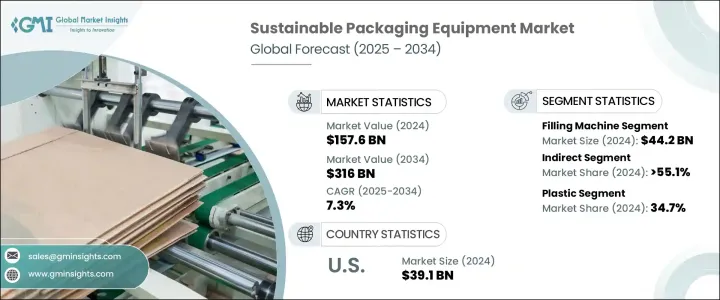
세계의 지속 가능한 포장 장비 시장 규모는 2024년에 1,576억 달러로 평가되었고, 2034년에는 3,160억 달러에 이를 것으로 예측되며, CAGR 7.3%로 성장할 전망입니다.
이러한 성장은 규제 시행과 함께 전 세계적으로 환경에 대한 책임에 대한 인식이 높아짐에 따라 촉진되고 있습니다. 전 세계 국가들은 일회용 플라스틱에 대한 규제를 강화하고 있으며, 이는 산업계가 친환경 포장 운영으로 전환하도록 촉진하고 있습니다. 이러한 규제는 생분해성 플라스틱, 재활용 원료, 퇴비화 가능한 포장재 등 지속 가능한 재료 처리 능력을 갖춘 기계로의 전환을 가속화하고 있습니다. 지속 가능성이 경쟁 우위로 부상함에 따라 제조업체들은 에너지 효율성, 폐기물 감소, 녹색 규제를 준수하는 스마트 자동화 기능을 갖춘 차세대 포장 솔루션을 도입하고 있습니다.
포장 기술은 운영 효율성과 환경 친화성을 동시에 달성하기 위해 진화하고 있습니다. 기업들은 재활용 가능하고 퇴비화 가능한 소재를 지원하는 시스템을 도입하며, 예측 유지보수 및 에너지 추적과 같은 스마트 기능을 통합하고 있습니다. 규제 프레임워크는 기계 혁신을 재편하고 있으며, 기업들은 순환 경제 이니셔티브를 지원하기 위해 지속 가능한 포장 기술에 투자하고 있습니다. 다양한 친환경 소재에 적응하면서도 속도나 품질을 희생하지 않는 고급 장비에 대한 수요가 증가하고 있습니다. 이러한 발전은 제조업체들이 엄격한 법규를 준수하면서 생산 과정의 지속 가능성을 향상시키는 데 도움을 주고 있습니다.
| 시장 범위 | |
|---|---|
| 시작 연도 | 2024년 |
| 예측 연도 | 2025-2034년 |
| 시작 금액 | 1,576억 달러 |
| 예측 금액 | 3,160억 달러 |
| CAGR | 7.3% |
충전 기계 부문은 2024년에 442억 달러의 매출을 올렸으며, 2034년까지 연평균 7.9%의 성장률을 보일 것으로 예상됩니다. 이 기계는 친환경 소재에 대한 적응성과 폐기물을 최소화하는 효율성으로 인해 지속 가능한 생산 라인에서 필수적인 요소가 되고 있습니다. 식품 및 음료, 개인 위생 용품, 의약품 및 가정용 제품들은 깨끗하고 정확하며 효율적인 운영을 위해 이 기계에 의존하고 있습니다. 현대 시스템은 재활용 가능한 필름, 생분해성 포켓, 종이 기반 용기 등 유연한 포맷을 지원합니다. 제품 포장재가 경량화 및 생분해성 소재로 진화함에 따라 충전 장비도 이에 맞춰 발전해 제조업체가 환경 영향을 줄이면서 성능 기준을 충족할 수 있도록 지원합니다.
간접 판매 채널은 2024년 55.1%의 시장 점유율을 차지했으며, 2034년까지 7.6%의 CAGR로 성장할 것으로 전망됩니다. 지속 가능한 솔루션에 대한 전 세계의 수요가 증가함에 따라 많은 중소기업들이 제3자 대리점, 유통업체 및 통합업체로 눈을 돌리고 있습니다. 이러한 파트너들은 필수적인 현지 정보, 설치 지원 및 서비스 전문 지식을 제공합니다. 이러한 정보는 생분해성 필름 실러 또는 종이 기반 포장재와 같은 틈새 장비를 배포할 때 특히 중요합니다. 간접 채널은 직접적인 공급업체의 존재가 제한적이지만 지속 가능성 규제가 빠르게 진행되고 있는 라틴 아메리카, 동남아시아 및 동유럽과 같은 신흥 시장에서 특히 효과적입니다.
미국의 지속 가능한 포장 장비 시장은 87.3%의 점유율을 차지하고 2024년에 391억 달러의 매출을 올렸습니다. 미국은 강력한 규제 지원, 소비자 중심의 지속 가능성 목표, 자동화 및 스마트 기술의 빠른 채택을 통해 채택을 주도하고 있습니다. 포장 폐기물을 줄이기 위한 지속적인 노력으로 제조업체와 소매업체들은 친환경 기계에 투자하고 있습니다. 국가? 주 차원의 인센티브, 연구 자금 지원, 성숙한 디지털 인프라 덕분에 미국은 지속 가능한 포장 솔루션의 혁신 허브로 자리매김하며 장비 수요를 더욱 촉진하고 있습니다.
이 진화하는 시장을 형성하는 주요 기업으로는 Fuji Machinery, Amcor, GEA, Syntegon, Wipak, Smurfit Kappa, IMA, Sealed Air, Rockwell Automation, KHS, Sappi, Buhler, Tetra Pak, Mondi, Krones 등이 있습니다. 지속 가능한 포장 장비 기업들은 시장 점유율을 확대하기 위해 AI 기반 자동화 통합, 생분해성 및 재활용 가능 소재와의 기계 호환성 강화, 확장성을 위한 모듈형 시스템 개발에 집중하고 있습니다. 연구 개발(R&D)에 대한 전략적 투자, 친환경 소재 공급업체와의 협력, 지역 파트너십은 브랜드들이 규제 요구사항에 맞는 솔루션을 맞춤형으로 개발하는 데 기여하고 있습니다. 탄소 배출량을 줄이고 친환경 포장 라인에 적응할 수 있는 고성능 장비를 제공함으로써, 이러한 기업들은 시장 점유율을 확대하고 장기적인 기후 목표와 일치하는 전략을 수립하고 있습니다.
목차
제1장 조사 방법과 범위
제2장 주요 요약
제3장 업계 인사이트
- 생태계 분석
- 밸류체인에 영향을 주는 요인
- 이익률 분석
- 혁신
- 장래의 전망
- 제조업자
- 리셀러
- 영향요인
- 성장 촉진요인
- 엄격한 환경 규제
- 친환경 제품에 대한 소비자 선호도
- 전자상거래 및 포장 제품의 성장
- 업계의 잠재적 위험 및 과제
- 높은 초기 자본 투자
- 지속 가능한 원자재의 제한된 공급
- 성장 촉진요인
- 성장 가능성 분석
- Porter's Five Forces 분석
- PESTEL 분석
제4장 경쟁 구도
- 소개
- 기업의 시장 점유율 분석
- 경쟁 포지셔닝 매트릭스
- 전략적 전망 매트릭스
제5장 시장 추계 및 예측 : 기종별(2021-2034년)
- 주요 동향
- 충전 기계
- 밀봉 기계
- 라벨링 기계
- 포장 기계
- 성형-충진-밀봉 기계
- 기타
제6장 시장 추계 및 예측 : 포장재별(2021-2034년)
- 주요 동향
- 플라스틱
- 종이 및 판지
- 유리
- 금속
- 기타(바이오플라스틱, 식물 기반 소재)
제7장 시장 추계 및 예측 : 용도별(2021-2034년)
- 주요 동향
- 상자 및 판지
- 가방 및 파우치
- 병과 캔
- 필름&랩
- 트레이
- 우편물 포장재
- 기타
제8장 시장 추계 및 예측 : 최종 용도별(2021-2034년)
- 주요 동향
- 음식
- 헬스케어 및 의약품
- 퍼스널케어 및 화장품
- 소매 및 전자상거래
- 산업용 포장
제9장 시장 추계 및 예측 : 유통 채널별(2021-2034년)
- 주요 동향
- 직접 판매
- 간접 판매
제10장 시장 추계 및 예측 : 지역별(2021-2034년)
- 주요 동향
- 북미
- 미국
- 캐나다
- 유럽
- 영국
- 독일
- 프랑스
- 이탈리아
- 스페인
- 러시아
- 아시아태평양
- 중국
- 인도
- 일본
- 호주
- 한국
- 라틴아메리카
- 브라질
- 멕시코
- 중동 및 아프리카
- 아랍에미리트(UAE)
- 남아프리카
- 사우디아라비아
제11장 기업 프로파일
- Amcor
- Buhler
- Fuji Machinery
- GEA
- IMA
- KHS
- Krones
- Mondi
- Rockwell Automation
- Sappi
- Sealed Air
- Smurfit Kappa
- Syntegon
- Tetra Pak
- Wipak
The Global Sustainable Packaging Equipment Market was valued at USD 157.6 billion in 2024 and is estimated to grow at a CAGR of 7.3% to reach USD 316 billion by 2034. The growth is driven by the rising global awareness of environmental responsibility, alongside regulatory enforcement. Nations worldwide are tightening their restrictions on single-use plastics, prompting industries to shift toward greener packaging operations. These regulations accelerate the shift to machinery capable of handling sustainable materials such as biodegradable plastics, recycled inputs, and compostable formats. As sustainability becomes a competitive differentiator, manufacturers are deploying next-gen packaging solutions with energy efficiency, reduced waste, and smarter automation that complies with green mandates.
Packaging technologies are evolving to meet the dual goals of operational efficiency and environmental compatibility. Companies are rolling out systems that support recyclable and compostable materials while integrating smart features such as predictive maintenance and energy tracking. Regulatory frameworks continue to reshape machinery innovation, as businesses invest in sustainable packaging to support circular economy initiatives. Demand is rising for advanced equipment that can adapt to varying eco-materials without sacrificing speed or quality. These developments are helping manufacturers align with stricter laws while enhancing sustainability in production.
| Market Scope | |
|---|---|
| Start Year | 2024 |
| Forecast Year | 2025-2034 |
| Start Value | $157.6 Billion |
| Forecast Value | $316 Billion |
| CAGR | 7.3% |
The filling machines segment generated USD 44.2 billion in 2024 and is expected to grow at a CAGR of 7.9% through 2034. These machines are becoming essential in sustainable production lines due to their adaptability to green materials and efficiency in minimizing waste. Food and beverage, personal care, pharmaceuticals, and household products rely on these machines for clean, accurate, and efficient operations. Modern systems now support flexible formats, including recyclable films, compostable pouches, and paper-based containers. As product packaging evolves toward lightweight and biodegradable materials, filling equipment keeps pace, offering manufacturers the ability to meet performance benchmarks while reducing environmental impact.
The indirect sales channel accounted for 55.1% share in 2024 and is projected to grow at 7.6% CAGR through 2034. As global demand rises for sustainable solutions, many small and mid-sized manufacturers turn to third-party agents, distributors, and integrators. These partners provide essential local insights, installation support, and service expertise-especially important when deploying niche equipment like biodegradable film sealers or paper-based packagers. Indirect channels are particularly effective in emerging markets such as Latin America, Southeast Asia, and Eastern Europe, where direct vendor presence is limited but sustainability regulations are quickly advancing.
United States Sustainable Packaging Equipment Market held an 87.3% share and generated USD 39.1 billion in 2024. The country is leading adoption through strong regulatory backing, consumer-driven sustainability goals, and rapid uptake of automation and smart technologies. Ongoing efforts to reduce packaging waste are prompting manufacturers and retailers to invest in eco-compliant machinery. National and state-level incentives, research funding, and a maturing digital infrastructure have made the US a hub for innovation in sustainable packaging solutions, further driving equipment demand.
Leading players shaping this evolving market include Fuji Machinery, Amcor, GEA, Syntegon, Wipak, Smurfit Kappa, IMA, Sealed Air, Rockwell Automation, KHS, Sappi, Buhler, Tetra Pak, Mondi, and Krones. To expand their presence, companies in sustainable packaging equipment focus on integrating AI-powered automation, enhancing machine compatibility with compostable and recyclable substrates, and developing modular systems for better scalability. Strategic investments in R&D, collaborations with eco-material providers, and local partnerships are also helping brands tailor solutions to regulatory needs. By offering high-performance machines that lower carbon output and adapt to eco-friendly packaging lines, these firms capture a larger market share and align with long-term climate targets.
Table of Contents
Chapter 1 Methodology & Scope
- 1.1 Research design
- 1.1.1 Research Approach
- 1.1.2 Data collection methods
- 1.2 Base estimates and calculations
- 1.2.1 Base year calculation
- 1.2.2 Key trends for market estimates
- 1.3 Forecast model
- 1.4 Primary research & validation
- 1.4.1 Primary sources
- 1.4.2 Data mining sources
- 1.5 Market definitions
Chapter 2 Executive Summary
- 2.1 Industry synopsis, 2021 - 2034
Chapter 3 Industry Insights
- 3.1 Industry ecosystem analysis
- 3.1.1 Factors affecting the value chain
- 3.1.2 Profit margin analysis
- 3.1.3 Disruptions
- 3.1.4 Future outlook
- 3.1.5 Manufacturers
- 3.1.6 Distributors
- 3.2 Impact forces
- 3.2.1 Growth drivers
- 3.2.1.1 Stringent environmental regulations
- 3.2.1.2 Consumer preference for eco-friendly products
- 3.2.1.3 Growth in e-commerce and packaged goods
- 3.2.2 Industry pitfalls & challenges
- 3.2.2.1 High initial capital investment
- 3.2.2.2 Limited availability of sustainable raw materials
- 3.2.1 Growth drivers
- 3.3 Growth potential analysis
- 3.4 Porter's analysis
- 3.5 PESTEL analysis
Chapter 4 Competitive Landscape, 2024
- 4.1 Introduction
- 4.2 Company market share analysis
- 4.3 Competitive positioning matrix
- 4.4 Strategic outlook matrix
Chapter 5 Market Estimates & Forecast, By Equipment Type, 2021 - 2034 ($ Bn, Units)
- 5.1 Key trends
- 5.2 Filling machines
- 5.3 Sealing machines
- 5.4 Labeling machines
- 5.5 Wrapping machines
- 5.6 Form-fill-seal machines
- 5.7 Others
Chapter 6 Market Estimates & Forecast, By Packaging Materials, 2021 - 2034 ($ Bn, Units)
- 6.1 Key trends
- 6.2 Plastic
- 6.3 Paper and cardboard
- 6.4 Glass
- 6.5 Metal
- 6.6 Others (Bioplastics, Plant-Based Materials)
Chapter 7 Market Estimates & Forecast, By Application, 2021 - 2034 ($ Bn, Units)
- 7.1 Key trends
- 7.2 Boxes & cartons
- 7.3 Bags & pouches
- 7.4 Bottles & cans
- 7.5 Films & wraps
- 7.6 Trays
- 7.7 Mailers
- 7.8 Others
Chapter 8 Market Estimates & Forecast, By End Use, 2021 - 2034 ($ Bn, Units)
- 8.1 Key trends
- 8.2 Food & beverage
- 8.3 Healthcare & pharmaceuticals
- 8.4 Personal care & cosmetics
- 8.5 Retail & e-commerce
- 8.6 Industrial packaging
Chapter 9 Market Estimates & Forecast, By Distribution Channel, 2021 - 2034 ($ Bn, Units)
- 9.1 Key trends
- 9.2 Direct
- 9.3 Indirect
Chapter 10 Market Estimates & Forecast, By Region, 2021 - 2034 ($ Bn, Units)
- 10.1 Key trends
- 10.2 North America
- 10.2.1 U.S.
- 10.2.2 Canada
- 10.3 Europe
- 10.3.1 UK
- 10.3.2 Germany
- 10.3.3 France
- 10.3.4 Italy
- 10.3.5 Spain
- 10.3.6 Russia
- 10.4 Asia Pacific
- 10.4.1 China
- 10.4.2 India
- 10.4.3 Japan
- 10.4.4 Australia
- 10.4.5 South Korea
- 10.5 Latin America
- 10.5.1 Brazil
- 10.5.2 Mexico
- 10.6 MEA
- 10.6.1 UAE
- 10.6.2 South Africa
- 10.6.3 Saudi Arabia
Chapter 11 Company Profiles
- 11.1 Amcor
- 11.2 Buhler
- 11.3 Fuji Machinery
- 11.4 GEA
- 11.5 IMA
- 11.6 KHS
- 11.7 Krones
- 11.8 Mondi
- 11.9 Rockwell Automation
- 11.10 Sappi
- 11.11 Sealed Air
- 11.12 Smurfit Kappa
- 11.13 Syntegon
- 11.14 Tetra Pak
- 11.15 Wipak