|
시장보고서
상품코드
1871220
계산생물학 시장 : 기회, 성장 요인, 업계 동향 분석 및 예측(2025-2034년)Computational Biology Market Opportunity, Growth Drivers, Industry Trend Analysis, and Forecast 2025 - 2034 |
||||||

세계의 계산생물학 시장은 2024년 71억 달러로 평가되었으며, 2034년까지 연평균 복합 성장률(CAGR) 12.3%로 성장하여 227억 달러에 이를 것으로 예측됩니다.

임상 연구에서 계산 모델의 통합 진전, 의약품 개발 비용 및 복잡성 증가, 바이오 정보학 및 인공지능의 지속적인 발전이 이러한 성장을 가속하고 있습니다. 오믹스 데이터 증가, 정부의 지원 정책, AI 구동형 분석의 응용 확대가 계산생물학 솔루션의 도입을 가속화하고 있습니다. 기존의 의약 과정은 여전히 시간과 비용이 필요하며 10년 이상이 소요되는 경우도 적지 않습니다. 이 때문에 제약기업은 연구개발의 효율화, 실험적 실패의 삭감, 유망한 치료 후보의 조기 식별을 실현하는 계산 툴의 도입을 추진하고 있습니다. 이러한 기술은 생물학적 시뮬레이션, 약물 표적 상호작용 모델링, 오믹스 연구로부터의 데이터 구동식 지견을 지원해, 실험실에서의 시간을 대폭 단축함과 동시에 임상시험의 성과를 향상시킵니다. 효과적인 치료법을 보다 빠르고 저비용으로 개발한다는 제약 업계에 대한 상승 압력은 계산생물학의 정세를 계속 진행하고 있습니다. 또한 임상시험의 설계, 환자층별화, 바이오마커 발견에 대한 영향력이 증대됨에 따라 치료법의 개발과 검증 방법이 변화되고 있습니다.
| 시장 범위 | |
|---|---|
| 시작 연도 | 2024년 |
| 예측 기간 | 2025-2034년 |
| 시작 금액 | 71억 달러 |
| 예측 금액 | 227억 달러 |
| CAGR | 12.3% |
분석 소프트웨어 및 서비스 분야는 2024년 41.7%의 점유율을 차지했습니다. 오믹스 데이터의 급속한 확대, 복잡한 모델링 플랫폼의 필요성 증가, 창약 및 정밀의료에서 AI를 활용한 지식에 대한 의존도의 상승으로 이러한 솔루션에 대한 수요가 급증하고 있습니다. 오믹스 기반의 연구가 지속적으로 증가하는 가운데, 고도의 분석·모델링 툴의 도입이 가속되어, 제약 연구 개발, 임상시험, 맞춤형 치료 개발에 불가결한, 보다 신속하고 정확한 생물학적 해석이 가능해지고 있습니다.
전임상 약물 개발 분야는 2024년에 11억 달러 규모에 이르렀으며, 인간 시험 전 약물 후보의 약물동태학, 약력학, 독성 특성을 시뮬레이션하기 위해 계산생물학이 꾸준히 활용되고 있습니다. 이러한 도구는 생물학적 시스템에서 약물의 거동을 예측할 수 있으며 전임상 연구에서 동물 모델의 사용을 최소화하고 임상시험으로의 성공적인 전환 가능성을 높이는 데 기여합니다.
미국의 계산생물학 시장은 2024년 32억 달러에 달했습니다. 이 나라에서는 최첨단의 계산수법 도입에 의한 의약품 개발의 가속화에 주력하고 있으며, 이것이 시장 확대를 계속 견인하고 있습니다. 미국은 견고한 생명공학 생태계, 첨단 연구 능력, 정부, 학술계, 민간 부문 간의 강력한 협력을 통해 여전히 주도적인 지위를 유지하고 있습니다. 주요 기술 기업 및 제약 기업은 AI 주도의 창약, 유전체학, 정밀의료에 많은 투자를 하고 있습니다.
세계 계산생물학 시장에서 활동하는 주요 기업으로는 BIO-RAD, Schrodinger, Thermo Fisher SCIENTIFIC, DNAnexus, Illumina, Dassault SYSTEMES, Compugen, QIAGEN, GINKGO, Instem, FIos GENOMICS, Strand, Aganitha, BenevolentAI, Deep Genomics, Certara, Cadence, BIODIGITAL, Atomwise, and Genedata (Danaher) 등이 포함됩니다. 계산생물학 시장의 각 회사는 시장에서의 지위를 강화하기 위해 제품 혁신, AI 통합, 전략적 제휴에 주력하고 있습니다. 많은 기업들이 시뮬레이션 정밀도 향상, 오믹스 데이터 분석 능력 확대, 바이오인포매틱스 플랫폼의 상호 운용성 개선을 목적으로 한 연구 개발에 투자하고 있습니다. 바이오테크놀러지 기업, 학술기관, 소프트웨어 개발자 간의 연계는 창약과 맞춤형 의료에 특화된 견고한 계산 모델의 개발을 촉진하고 있습니다. 또한 기술 포트폴리오와 지리적 존재를 확대하기 위해 합병과 인수도 진행되고 있습니다.
자주 묻는 질문
목차
제1장 조사 방법과 범위
제2장 주요 요약
제3장 업계 인사이트
- 생태계 분석
- 업계에 미치는 영향요인
- 성장 촉진요인
- 바이오인포매틱스 및 데이터 사이언스의 지속적인 발전
- 계산 설계를 이용한 임상시험 활동 증가
- 의약품 개발 비용의 상승과 타임라인의 압력
- 유리한 정부 정책
- 오믹스 데이터 및 바이오인포매틱스 조사 증가
- 업계의 잠재적 위험 및 과제
- 데이터의 단편화와 관리 부전
- 데이터 프라이버시 및 보안 컴플라이언스
- 숙련된 전문가의 부족
- 기회
- 규제 대응이 끝난 AI 검증 솔루션
- 실시간 웨어러블 데이터 통합 플랫폼
- 성장 촉진요인
- 성장 가능성 분석
- 규제 상황
- 북미
- 유럽
- 기술과 혁신의 상황
- 현재의 기술 동향
- 신흥기술
- 투자 상황
- 파괴적 기술의 영향 평가
- 도입 모델의 전망
- 인재육성 요건
- 리스크 평가 및 경감 전략
- Porter's Five Forces 분석
- PESTEL 분석
- 갭 분석
- 장래 시장 동향
제4장 경쟁 구도
- 소개
- 기업 매트릭스 분석
- 기업의 시장 점유율 분석
- 세계
- 북미
- 유럽
- 주요 시장 기업의 경쟁 분석
- 경쟁 포지셔닝 매트릭스
- 전략 대시보드
- 주요 발전
- 인수합병
- 제휴 및 협업
- 신제품 발매
- 확대 계획
제5장 시장 추계 및 예측 : 툴별, 2021-2034년
- 주요 동향
- 분석 소프트웨어 및 서비스
- 데이터베이스
- 하드웨어
제6장 시장 추계 및 예측 : 용도별, 2021-2034년
- 주요 동향
- 세포 및 생물학적 시뮬레이션
- 계산 유전체학
- 계산 단백질체학
- 파마코유전체학
- 기타 시뮬레이션
- 신약개발 및 질환 모델링
- 표적 동정
- 표적 검증
- 리드 발견
- 리드 최적화
- 비임상 단계의 의약품 개발
- 약물동태학
- 약역학
- 임상시험
- 제I상
- 제II상
- 제III상
- 제IV상
- 인체 시뮬레이션 소프트웨어
제7장 시장 추계 및 예측 : 서비스별, 2021-2034년
- 주요 동향
- 계약
- 사내
제8장 시장 추계 및 예측 : 최종 용도별, 2021-2034년
- 주요 동향
- 상업용
- 학술 및 조사 분야
제9장 시장 추계 및 예측 : 지역별, 2021-2034년
- 주요 동향
- 북미
- 미국
- 캐나다
- 유럽
- 독일
- 영국
- 프랑스
- 스페인
- 이탈리아
- 네덜란드
- 아시아태평양
- 중국
- 일본
- 인도
- 호주
- 한국
- 라틴아메리카
- 브라질
- 멕시코
- 아르헨티나
- 중동 및 아프리카
- 남아프리카
- 사우디아라비아
- 아랍에미리트(UAE)
제10장 기업 프로파일
- aganitha
- Atomwise
- Benevolent AI
- BIODIGITAL
- BIO-RAD
- cadence
- CERTARA
- compugen
- DASSAULT SYSTEMES
- deep genomics
- DNAnexus
- fios GENOMICS
- Genedata(Danaher)
- GINKGO
- Illumina
- instem
- QIAGEN
- Schrodinger
- strand
- Thermo Fisher SCIENTIFIC
The Global Computational Biology Market was valued at USD 7.1 Billion in 2024 and is estimated to grow at a CAGR of 12.3% to reach USD 22.7 Billion by 2034.
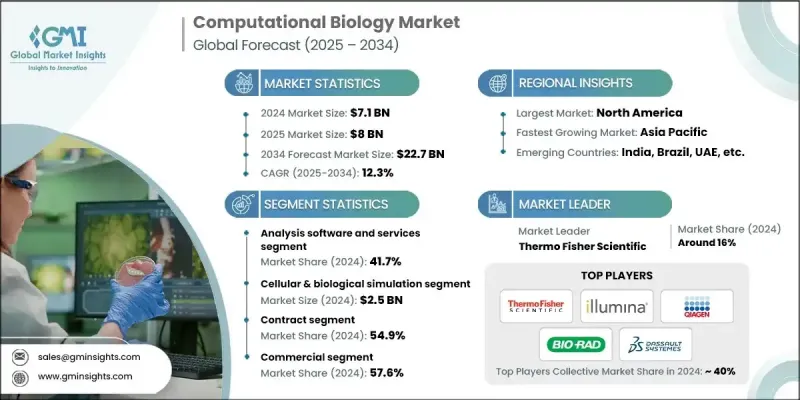
The growing integration of computational models in clinical research, the rising cost and complexity of drug development, and ongoing advancements in bioinformatics and artificial intelligence are fueling this growth. Increasing omics data volume, supportive government policies, and expanding applications of AI-driven analytics are accelerating the adoption of computational biology solutions. Traditional drug discovery remains time-intensive and costly, often taking over a decade, which has pushed pharmaceutical companies to embrace computational tools that streamline R&D, reduce experimental failures, and identify promising therapeutic candidates early in the process. These technologies support biological simulations, drug-target interaction modeling, and data-driven insights from omics research, significantly cutting down laboratory time and improving clinical trial outcomes. The mounting pressure on the pharmaceutical industry to develop effective therapies faster and at a lower cost continues to propel the computational biology landscape forward. Moreover, its growing influence on clinical trial design, patient stratification, and biomarker discovery is transforming the way therapies are developed and validated.
| Market Scope | |
|---|---|
| Start Year | 2024 |
| Forecast Year | 2025-2034 |
| Start Value | $7.1 Billion |
| Forecast Value | $22.7 Billion |
| CAGR | 12.3% |
The analysis software and services segment held a 41.7% share in 2024. The demand for these solutions is surging due to the rapid expansion of omics data, the growing necessity for complex modeling platforms, and the increasing dependence on AI-enabled insights across drug discovery and precision medicine. With the continuous rise in omics-based research, the adoption of advanced analytical and modeling tools is accelerating, enabling faster and more precise biological interpretations that are vital for pharmaceutical R&D, clinical testing, and tailored treatment development.
The preclinical drug development segment was valued at USD 1.1 Billion in 2024 and is witnessing consistent utilization of computational biology to simulate pharmacokinetic, pharmacodynamic, and toxicity characteristics of drug candidates before human testing. These tools can anticipate a drug's behavior in biological systems, helping minimize the use of animal models in preclinical studies and improving the likelihood of progressing to clinical trials successfully.
United States Computational Biology Market reached USD 3.2 Billion in 2024. The country's strong focus on accelerating drug development through the adoption of cutting-edge computational methods continues to drive market expansion. The U.S. remains a dominant force due to its robust biotechnology ecosystem, advanced research capabilities, and strong collaboration between government, academia, and the private sector. Major technology and pharmaceutical players are heavily investing in AI-led drug discovery, genomics, and precision medicine.
Leading companies operating within the Global Computational Biology Market include BIO-RAD, Schrodinger, Thermo Fisher SCIENTIFIC, DNAnexus, Illumina, Dassault SYSTEMES, Compugen, QIAGEN, GINKGO, Instem, FIos GENOMICS, Strand, Aganitha, BenevolentAI, Deep Genomics, Certara, Cadence, BIODIGITAL, Atomwise, and Genedata (Danaher). To strengthen their foothold, companies in the Computational Biology Market are focusing on product innovation, AI integration, and strategic partnerships. Many are investing in R&D to enhance simulation accuracy, expand omics data analytics capabilities, and improve the interoperability of bioinformatics platforms. Collaborations between biotech firms, academic institutions, and software developers are fostering the development of robust computational models tailored for drug discovery and personalized medicine. Firms are also pursuing mergers and acquisitions to broaden their technology portfolios and geographic presence.
Table of Contents
Chapter 1 Methodology and Scope
- 1.1 Market scope and definition
- 1.2 Research design
- 1.2.1 Research approach
- 1.2.2 Data collection methods
- 1.3 Data mining sources
- 1.3.1 Global
- 1.3.2 Regional/Country
- 1.4 Base estimates and calculations
- 1.4.1 Base year calculation
- 1.4.2 Key trends for market estimation
- 1.5 Primary research and validation
- 1.5.1 Primary sources
- 1.6 Forecast model
- 1.7 Research assumptions and limitations
Chapter 2 Executive Summary
- 2.1 Industry 360° synopsis
- 2.2 Key market trends
- 2.2.1 Regional trends
- 2.2.2 Tool trends
- 2.2.3 Application trends
- 2.2.4 Services trends
- 2.2.5 End use trends
- 2.3 CXO perspectives: Strategic imperatives
- 2.3.1 Key decision points for industry executives
- 2.3.2 Critical success factors for market players
- 2.4 Future outlook and strategic recommendations
Chapter 3 Industry Insights
- 3.1 Industry ecosystem analysis
- 3.2 Industry impact forces
- 3.2.1 Growth drivers
- 3.2.1.1 Ongoing advancements in bioinformatics and data science
- 3.2.1.2 Increasing clinical trial activities using computational designs
- 3.2.1.3 Rising drug development costs & timeline pressures
- 3.2.1.4 Favorable government policies
- 3.2.1.5 Rising volume of omics data & bioinformatics research
- 3.2.2 Industry pitfalls and challenges
- 3.2.2.1 Disintegration and mismanagement of data
- 3.2.2.2 Data privacy & security compliance
- 3.2.2.3 Lack of skilled professional
- 3.2.3 Opportunities
- 3.2.3.1 Regulatory-ready AI validation solutions
- 3.2.3.2 Real-time wearable data integration platforms
- 3.2.1 Growth drivers
- 3.3 Growth potential analysis
- 3.4 Regulatory landscape
- 3.4.1 North America
- 3.4.2 Europe
- 3.5 Technology and innovation landscape
- 3.5.1 Current technological trends
- 3.5.2 Emerging technologies
- 3.6 Investment landscape
- 3.7 Disruptive technology impact assessment
- 3.8 Deployment model outlook
- 3.9 Workforce development requirements
- 3.10 Risk assessment & mitigation strategies
- 3.11 Porter's analysis
- 3.12 PESTEL analysis
- 3.13 Gap analysis
- 3.14 Future market trends
Chapter 4 Competitive Landscape, 2024
- 4.1 Introduction
- 4.2 Company matrix analysis
- 4.3 Company market share analysis
- 4.3.1 Global
- 4.3.2 North America
- 4.3.3 Europe
- 4.4 Competitive analysis of major market players
- 4.5 Competitive positioning matrix
- 4.6 Strategy dashboard
- 4.7 Key developments
- 4.7.1 Mergers & acquisitions
- 4.7.2 Partnerships & collaborations
- 4.7.3 New product launches
- 4.7.4 Expansion plans
Chapter 5 Market Estimates and Forecast, By Tool, 2021 - 2034 ($ Mn)
- 5.1 Key trends
- 5.2 Analysis software and services
- 5.3 Databases
- 5.4 Hardware
Chapter 6 Market Estimates and Forecast, By Application, 2021 - 2034 ($ Mn)
- 6.1 Key trends
- 6.2 Cellular & biological simulation
- 6.2.1 Computational genomics
- 6.2.2 Computational proteomics
- 6.2.3 Pharmacogenomics
- 6.2.4 Other simulations
- 6.3 Drug discovery & disease modelling
- 6.3.1 Target identification
- 6.3.2 Target validation
- 6.3.3 Lead discovery
- 6.3.4 Lead optimization
- 6.4 Preclinical drug development
- 6.4.1 Pharmacokinetics
- 6.4.2 Pharmacodynamics
- 6.5 Clinical trials
- 6.5.1 Phase I
- 6.5.2 Phase II
- 6.5.3 Phase III
- 6.5.4 Phase IV
- 6.6 Human body simulation software
Chapter 7 Market Estimates and Forecast, By Services, 2021 - 2034 ($ Mn)
- 7.1 Key trends
- 7.2 Contract
- 7.3 In-house
Chapter 8 Market Estimates and Forecast, By End Use, 2021 - 2034 ($ Mn)
- 8.1 Key trends
- 8.2 Commercial
- 8.3 Academics & research
Chapter 9 Market Estimates and Forecast, By Region, 2021 - 2034 ($ Mn)
- 9.1 Key trends
- 9.2 North America
- 9.2.1 U.S.
- 9.2.2 Canada
- 9.3 Europe
- 9.3.1 Germany
- 9.3.2 UK
- 9.3.3 France
- 9.3.4 Spain
- 9.3.5 Italy
- 9.3.6 Netherlands
- 9.4 Asia Pacific
- 9.4.1 China
- 9.4.2 Japan
- 9.4.3 India
- 9.4.4 Australia
- 9.4.5 South Korea
- 9.5 Latin America
- 9.5.1 Brazil
- 9.5.2 Mexico
- 9.5.3 Argentina
- 9.6 MEA
- 9.6.1 South Africa
- 9.6.2 Saudi Arabia
- 9.6.3 UAE
Chapter 10 Company Profiles
- 10.1 aganitha
- 10.2 Atomwise
- 10.3 Benevolent AI
- 10.4 BIODIGITAL
- 10.5 BIO-RAD
- 10.6 cadence
- 10.7 CERTARA
- 10.8 compugen
- 10.9 DASSAULT SYSTEMES
- 10.10 deep genomics
- 10.11 DNAnexus
- 10.12 fios GENOMICS
- 10.13 Genedata (Danaher)
- 10.14 GINKGO
- 10.15 Illumina
- 10.16 instem
- 10.17 QIAGEN
- 10.18 Schrodinger
- 10.19 strand
- 10.20 Thermo Fisher SCIENTIFIC