
|
시장보고서
상품코드
1876655
애디슨병 치료제 시장 : 시장 기회, 성장 요인, 업계 동향 분석 및 예측(2025-2034년)Addisons Disease Drugs Market Opportunity, Growth Drivers, Industry Trend Analysis, and Forecast 2025 - 2034 |
||||||

세계의 애디슨병 치료제 시장은 2024년 5억 9,290만 달러로 평가되었고, 2034년까지 연평균 복합 성장률(CAGR) 5.2%로 성장할 전망이며, 9억 8,910만 달러에 이를 것으로 예측되고 있습니다.
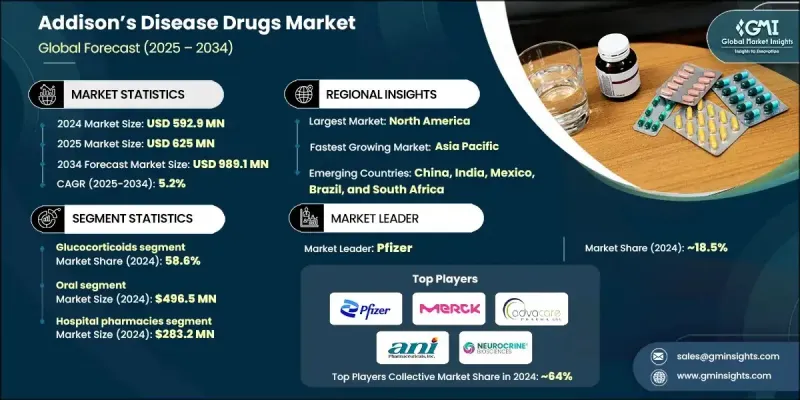
부신기능부전과 관련된 자가면역질환 증가와 헬스케어에서의 희소질환 프로그램 및 계발활동의 확충에 따라 시장 성장은 견조하게 추이하고 있습니다. 부신 피질의 진행성 손상으로 인한 원발성 부신 부전의 진단 사례가 증가하고 있으며 일반적으로 평생 코르티코 스테로이드 보충 요법이 필요합니다. 또한, 뇌하수체 질환 및 장기 코르티코스테로이드 사용에 의한 호르몬 균형의 혼란에 대한 진단 정밀도가 향상됨으로써, 속발성 부신부전의 증례 수도 증가 경향에 있습니다. 장기적인 호르몬 요법에 의존하는 환자가 증가함에 따라 신뢰할 수 있는 치료법에 대한 수요는 계속 증가하고 있습니다. 제약 제조업체는 이에 대응하여 약물 전달 시스템의 강화 및 코르티솔과 알도스테론의 안정된 수준을 유지하도록 설계된 제제의 개량을 추진하고 있어 궁극적으로는 만성 부신 질환을 앓고 있는 분들의 일상적인 관리를 개선하는 것을 목표로 하고 있습니다. 애디슨병 치료제에는 부신이 충분한 필수 호르몬을 생산할 수 없는 환자를 돕기 위해 사용되는 치료법이 포함됩니다.
| 시장 범위 | |
|---|---|
| 시작 연도 | 2024년 |
| 예측 연도 | 2025-2034년 |
| 시작 시 가치 | 5억 9,290만 달러 |
| 예측 금액 | 9억 8,910만 달러 |
| CAGR | 5.2% |
글루코 코르티코이드 카테고리는 2024년에 58.6%의 점유율을 차지했으며, 부신부전 환자에서 코르티솔 보충의 중요한 역할을 반영합니다. 광범위한 가용성, 다양한 투여 형태 및 생명을 위협하는 부신 위기 예방에서 높은 임상적 신뢰성으로 인해 주도적 지위가 더욱 강화되고 있습니다. 서방형 기술의 진보와 투여 프로토콜의 최적화는 복약 준수율과 치료 성과를 향상시켜, 원발성 및 속발성 부신부전의 치료 계획에서의 지위가 확고해집니다.
주사제 부문은 2024년에 9,640만 달러의 매출을 창출하였고, 2025-2034년 4.4%의 연평균 복합 성장률(CAGR)로 성장할 전망입니다. 급성 부신 긴급 사태에 대한 속효성 주사용 코르티코스테로이드의 채용 증가가 이 동향의 주요 요인입니다. 자기 투여 키트의 인지도 향상과 중증 호르몬 결핍 시 신속한 대응제의 필요성이 높아지고 있는 것이 응급의료 및 임상 환경에서의 주사제 수요를 계속 지원하고 있습니다.
북미의 애디슨병 치료제 시장은 2024년 40.7%의 점유율을 차지했습니다. 미국과 캐나다의 종합적인 호르몬 보충 요법에 대한 접근과 화이자 및 머크와 같은 확립된 기업의 존재는 지역 성장을 뒷받침합니다. 자가면역 질환 및 만성 감염과 관련된 부신부전의 보고 사례가 증가하고 있으며, 이용 가능한 치료법의 활용 확대를 촉진하고 있습니다. 희귀질환 지원 자금과 ATRS-1902 등 신흥 치료제에 대한 신속한 승인 제도가 지역적인 급속한 확대에 기여하고 있습니다. 맞춤형 치료 계획 및 디지털 모니터링 툴에 대한 강한 주력이 북미 전역에서의 보급 촉진이 기대됩니다.
세계의 애디슨병 치료제 시장에서 주요 기업으로는 NEUROCRINE BIOSCIENCES, Hikma, ani Pharmaceuticals, Inc., OMICRON PHARMA, Advacare PHARMA, Merck, Pfizer, Cayman CHEMICAL, GNB PHARMACEUTICALS 및 SimSon Pharma Limited 등이 있습니다. 애디슨 병 치료제 시장에서 사업을 전개하는 기업은 경쟁 우위를 확대하기 위해 타겟 전략을 적용하고 있습니다. 많은 기업들은 안정적인 호르몬 수준을 유지하고 투여 문제를 완화하는 개선 제형을 통한 호르몬 보충 요법의 진전을 우선 과제로 삼고 있습니다. 여러 기업은 서방형 코르티코스테로이드의 개선 조사와 만성 관리와 긴급 사용 모두에 적합한 혁신적인 전달 시스템 개발에 투자하고 있습니다. 제조 능력의 확대 및 유통 네트워크의 최적화는 구명약에 대한 확실한 접근 확보에 기여합니다. 임상연구자와의 전략적 제휴는 진행 중인 임상시험을 지원하고 치료 포트폴리오의 확충으로 이어지고 있습니다.
자주 묻는 질문
목차
제1장 조사 방법 및 범위
제2장 주요 요약
제3장 업계 인사이트
- 생태계 분석
- 업계에 미치는 영향요인
- 성장 촉진요인
- 자가면역질환의 유병률 상승(애디슨병과 병발하는 경우가 많다)
- 유리한 정부지원 및 희소질환용 자금 조달 이니셔티브
- 호르몬 보충 요법의 진보
- 부신부전에 대한 인식 증가
- 업계의 잠재적 위험 및 과제
- 비특이적 증상에 의한 과소진단 및 오진
- 장기적인 코르티코스테로이드 사용의 부작용
- 시장 기회
- 지속성 및 경피 코르티코스테로이드의 개발
- 치료를 개별화하는 정밀의료 및 유전자 프로파일링
- 성장 촉진요인
- 성장 가능성 분석
- 투자 환경
- 파이프라인 분석
- 장래 시장 동향
- 상환 시나리오
- 규제 상황
- 기술 동향
- 현행 기술
- 신흥 기술
- 갭 분석
- Porter's Five Forces 분석
- PESTEL 분석
제4장 경쟁 구도
- 서문
- 기업 매트릭스 분석
- 기업의 시장 점유율 분석
- 북미
- 유럽
- 아시아태평양
- LAMEA
- 주요 시장 기업의 경쟁 분석
- 경쟁 포지셔닝 매트릭스
- 주요 발전
- 합병 및 인수
- 제휴 및 협력관계
- 신약 발매
- 확대 계획
제5장 시장 추계 및 예측 : 약제 유형별(2021-2034년)
- 주요 동향
- 글루코 코르티코이드
- 미네랄 코르티코이드
- 기타 약제 유형
제6장 시장 추계 및 예측 : 투여 경로별(2021-2034년)
- 주요 동향
- 경구 투여
- 주사제
제7장 시장 추계 및 예측 : 유통 채널별(2021-2034년)
- 주요 동향
- 병원 약국
- 소매 약국
- 온라인 약국
제8장 시장 추계 및 예측 : 지역별(2021-2034년)
- 주요 동향
- 북미
- 미국
- 캐나다
- 유럽
- 독일
- 영국
- 프랑스
- 스페인
- 이탈리아
- 네덜란드
- 아시아태평양
- 중국
- 일본
- 인도
- 호주
- 한국
- 라틴아메리카
- 브라질
- 멕시코
- 아르헨티나
- 중동 및 아프리카
- 남아프리카
- 사우디아라비아
- 아랍에미리트(UAE)
제9장 기업 프로파일
- advacare PHARMA
- ani Pharmaceuticals, Inc.
- Cayman CHEMICAL
- GNB PHARMACEUTICALS
- hikma
- Merck
- NEUROCRINE BIOSCIENCES
- OMICRON PHARMA
- Pfizer
- SimSon Pharma Limited
The Global Addisons Disease Drugs Market was valued at USD 592.9 million in 2024 and is estimated to grow at a CAGR of 5.2% to reach USD 989.1 million by 2034.
Growth remains strong as autoimmune disorders tied to adrenal gland failure become more common and healthcare systems expand rare disease programs and awareness initiatives. A rising number of individuals are being diagnosed with primary adrenal insufficiency, which stems from progressive damage to the adrenal cortex and typically requires lifelong corticosteroid replacement. Cases of secondary adrenal insufficiency are also climbing as diagnosis improves for hormonal imbalances caused by pituitary issues or prolonged corticosteroid use. With more patients relying on long-term hormone therapy, demand for dependable treatment options continues to climb. Pharmaceutical manufacturers are responding by enhancing drug delivery systems and refining formulations designed to maintain stable cortisol and aldosterone levels, ultimately improving daily management for those living with chronic adrenal disorders. Addison's disease drugs encompass therapies used to support patients whose adrenal glands are unable to produce adequate essential hormones.
| Market Scope | |
|---|---|
| Start Year | 2024 |
| Forecast Year | 2025-2034 |
| Start Value | $592.9 Million |
| Forecast Value | $989.1 Million |
| CAGR | 5.2% |
The glucocorticoids category held a 58.6% share in 2024, reflecting its essential role in replacing cortisol in individuals with adrenal insufficiency. Their continued lead is reinforced by broad availability, multiple dosing formats, and strong clinical reliability in helping prevent life-threatening adrenal crises. Advances in extended-release technology and optimized dosing protocols have strengthened adherence and therapeutic outcomes, reinforcing their position in both primary and secondary adrenal insufficiency treatment plans.
The injectable drug segment generated USD 96.4 million in 2024 and is projected to grow at a 4.4% CAGR from 2025 to 2034. Increasing adoption of fast-acting injectable corticosteroids for acute adrenal emergencies is a major contributor to this trend. Greater recognition of self-administration kits and the need for rapid-response medication during severe hormone deficits continues to support demand for injectables across emergency and clinical environments.
North America Addisons Disease Drugs Market held a 40.7% share in 2024. Access to comprehensive hormone replacement therapies across the U.S. and Canada, combined with the presence of established companies such as Pfizer and Merck, bolsters regional growth. Reported cases of adrenal insufficiency associated with autoimmune conditions and chronic infections are increasing, driving higher utilization of available treatments. Supportive rare disease funding and accelerated pathways for emerging drugs, including therapies such as ATRS-1902, contribute to rapid regional expansion. A strong emphasis on personalized drug regimens and digital monitoring tools is expected to enhance adoption across North America.
Leading companies active in the Global Addisons Disease Drugs Market include NEUROCRINE BIOSCIENCES, Hikma, ani Pharmaceuticals, Inc., OMICRON PHARMA, Advacare PHARMA, Merck, Pfizer, Cayman CHEMICAL, GNB PHARMACEUTICALS, and SimSon Pharma Limited. Companies operating in the Addison's disease drugs market apply targeted strategies to expand their competitive reach. Many prioritize advancing hormone replacement therapies through improved formulations that deliver steady hormone levels and reduce dosing complications. Several firms invest in research to refine modified-release corticosteroids and develop innovative delivery systems suited for both chronic management and emergency use. Expanding manufacturing capabilities and optimizing distribution networks help ensure reliable access to life-saving medications. Strategic collaborations with clinical researchers support ongoing trials and broaden therapeutic portfolios.
Table of Contents
Chapter 1 Methodology and Scope
- 1.1 Market scope and definition
- 1.2 Research design
- 1.2.1 Research approach
- 1.2.2 Data collection methods
- 1.3 Data mining sources
- 1.3.1 Global
- 1.3.2 Regional/Country
- 1.4 Base estimates and calculations
- 1.4.1 Base year calculation
- 1.4.2 Key trends for market estimation
- 1.5 Primary research and validation
- 1.5.1 Primary sources
- 1.6 Forecast model
- 1.7 Research assumptions and limitations
Chapter 2 Executive Summary
- 2.1 Industry 3600 synopsis
- 2.2 Key market trends
- 2.2.1 Regional trends
- 2.2.2 Drug type trends
- 2.2.3 Route of administration trends
- 2.2.4 Distribution channel trends
- 2.3 CXO perspectives: Strategic imperatives
- 2.3.1 Key decision points for industry executives
- 2.3.2 Critical success factors for market players
- 2.4 Future outlook and strategic recommendations
Chapter 3 Industry Insights
- 3.1 Industry ecosystem analysis
- 3.2 Industry impact forces
- 3.2.1 Growth drivers
- 3.2.1.1 Rising prevalence of autoimmune disorders, which are often comorbid with Addison’s disease
- 3.2.1.2 Favourable government support and rare disease funding initiatives
- 3.2.1.3 Advancements in hormone replacement therapies
- 3.2.1.4 Increased awareness about adrenal insufficiency
- 3.2.2 Industry pitfalls & challenges
- 3.2.2.1 Underdiagnosis and misdiagnosis due to non-specific symptoms
- 3.2.2.2 Side effects of long-term corticosteroid use
- 3.2.3 Market opportunities
- 3.2.3.1 Development of sustained-release and transdermal corticosteroids
- 3.2.3.2 Precision medicine and genetic profiling to tailor treatments
- 3.2.1 Growth drivers
- 3.3 Growth potential analysis
- 3.4 Investment landscape
- 3.5 Pipeline analysis
- 3.6 Future market trends
- 3.7 Reimbursement scenario
- 3.8 Regulatory landscape
- 3.9 Technology landscape
- 3.9.1 Current technologies
- 3.9.2 Emerging technologies
- 3.10 Gap analysis
- 3.11 Porter's analysis
- 3.12 PESTEL analysis
Chapter 4 Competitive Landscape, 2024
- 4.1 Introduction
- 4.2 Company matrix analysis
- 4.3 Company market share analysis
- 4.3.1 North America
- 4.3.2 Europe
- 4.3.3 Asia Pacific
- 4.3.4 LAMEA
- 4.4 Competitive analysis of major market players
- 4.5 Competitive positioning matrix
- 4.6 Key developments
- 4.6.1 Mergers & acquisitions
- 4.6.2 Partnerships & collaborations
- 4.6.3 New drug launches
- 4.6.4 Expansion plans
Chapter 5 Market Estimates and Forecast, By Drug Type, 2021 - 2034 ($ Mn)
- 5.1 Key trends
- 5.2 Glucocorticoids
- 5.3 Mineralocorticoids
- 5.4 Other drug types
Chapter 6 Market Estimates and Forecast, By Route of Administration, 2021 - 2034 ($ Mn)
- 6.1 Key trends
- 6.2 Oral
- 6.3 Injectable
Chapter 7 Market Estimates and Forecast, By Distribution Channel, 2021 - 2034 ($ Mn)
- 7.1 Key trends
- 7.2 Hospital pharmacies
- 7.3 Retail pharmacies
- 7.4 Online pharmacies
Chapter 8 Market Estimates and Forecast, By Region, 2021 - 2034 ($ Mn)
- 8.1 Key trends
- 8.2 North America
- 8.2.1 U.S.
- 8.2.2 Canada
- 8.3 Europe
- 8.3.1 Germany
- 8.3.2 UK
- 8.3.3 France
- 8.3.4 Spain
- 8.3.5 Italy
- 8.3.6 Netherlands
- 8.4 Asia Pacific
- 8.4.1 China
- 8.4.2 Japan
- 8.4.3 India
- 8.4.4 Australia
- 8.4.5 South Korea
- 8.5 Latin America
- 8.5.1 Brazil
- 8.5.2 Mexico
- 8.5.3 Argentina
- 8.6 Middle East and Africa
- 8.6.1 South Africa
- 8.6.2 Saudi Arabia
- 8.6.3 UAE
Chapter 9 Company Profiles
- 9.1 advacare PHARMA
- 9.2 ani Pharmaceuticals, Inc.
- 9.3 Cayman CHEMICAL
- 9.4 GNB PHARMACEUTICALS
- 9.5 hikma
- 9.6 Merck
- 9.7 NEUROCRINE BIOSCIENCES
- 9.8 OMICRON PHARMA
- 9.9 Pfizer
- 9.10 SimSon Pharma Limited