
|
시장보고서
상품코드
2027485
HVAC : 시장 기회, 성장 촉진요인, 업계 동향 분석 및 예측(2026-2035년)HVAC Market Opportunity, Growth Drivers, Industry Trend Analysis, and Forecast 2026 - 2035 |
||||||

세계의 HVAC 시장은 2025년에 5,249억 달러로 평가되었고 CAGR 8.1%를 나타내 2035년까지 1조 2,000억 달러에 이를 것으로 예측됩니다.
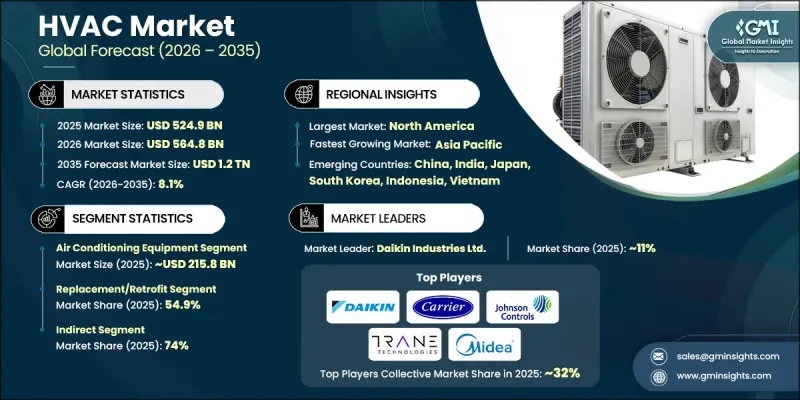
급속한 도시 개발이 성장을 주도하는 주요 요인이 되고 있으며, 건물 증가에 따라 신뢰할 수 있는 난방, 환기, 공조 솔루션이 요구되고 있습니다. 소비자도 기업도 마찬가지로 실내 환경의 쾌적성, 공기질, 에너지 효율을 중요시하고 있습니다. 최신 건설 프로젝트에서는 안정적인 온도와 기류를 유지하기 위해 HVAC 시스템이 점점 더 많이 도입되고 있으며, 개조 공사도 시장 수요에 기여하고 있습니다. 에너지 성능 향상과 시스템 수명 연장에 대한 요구가 높아짐에 따라 첨단 HVAC 기술의 채택이 증가하고 있습니다. 또한, 다양한 분야의 인프라 확대로 인해 안정적인 환경 조건을 보장하는 시스템에 대한 수요가 발생하고 있습니다. 실내 공기질 기준과 지속 가능한 건축 방식에 대한 관심이 높아지면서 세계 HVAC 시장은 더욱 강화되고 있으며, 현대 인프라 개발의 중요한 요소로 자리매김하고 있습니다.
| 시장 범위 | |
|---|---|
| 시작 연도 | 2025년 |
| 예측 기간 | 2026-2035년 |
| 개시 연도 시장 규모 | 5,249억 달러 |
| 예측액 | 1조 2,000억 달러 |
| CAGR | 8.1% |
HVAC 시장은 다양한 시설에서 환경 조건을 제어할 필요성이 증가함에 따라 더욱 활성화되고 있습니다. 인프라 개발이 진행됨에 따라 안정적인 온도 조절과 공기질을 보장하는 첨단 시스템에 대한 수요가 증가하고 있습니다. 고성능 환경에서 효율적인 냉각 솔루션에 대한 요구가 증가함에 따라, 운영상의 신뢰성과 효율성을 지원하는 기술적으로 진보된 HVAC 시스템의 도입이 증가하고 있습니다.
공조기기 부문은 2025년 2,158억 달러 시장 규모를 기록했으며, 2026년부터 2035년까지 연평균 10.3%의 성장률을 나타낼 것으로 전망됩니다. 이 부문은 다양한 용도에서 실내 쾌적성을 유지하는 데 필수적인 역할을 하기 때문에 HVAC 시장 내에서 지배적인 위치를 차지하고 있습니다. 다양한 냉각 요구 사항을 충족하는 다양한 시스템을 사용할 수 있으며, 에너지 절약 솔루션에 대한 인식이 높아짐에 따라 그 도입이 더욱 가속화되고 있습니다. 스마트 기술과 친환경 냉매를 포함한 지속적인 혁신을 통해 시스템 성능을 향상시키고 장기적인 성장을 지원하고 있습니다.
간접 판매 채널은 2025년 74%의 점유율을 차지했으며, 2026년부터 2035년까지 연평균 10.1%의 성장률을 나타낼 것으로 전망됩니다. 이 채널은 제품 가용성과 고객 지원을 촉진하는 광범위한 유통업체 및 서비스 제공업체 네트워크를 통해 시장을 주도하고 있습니다. 간접 판매를 통해 제조업체는 복잡한 HVAC 시스템에 필수적인 설치 서비스, 유지보수 및 기술 전문 지식을 제공할 수 있습니다. 공식 판매 채널을 통한 구매가 선호되는 배경에는 전문적인 지원과 신뢰할 수 있는 서비스에 대한 접근이 보장되기 때문에 이 유통 모델의 중요성이 더욱 커지고 있습니다.
미국의 HVAC 시장은 2025년 1,569억 달러 규모에 달했으며, 2026년부터 2035년까지 연평균 10.2%의 성장률을 나타낼 것으로 전망됩니다. 시장 성장은 다양한 분야에서 에너지 절약 시스템에 대한 수요가 증가함에 따라 주도되고 있습니다. 도시화의 진전, 기후 조건의 변화, 노후화된 인프라의 갱신 요구는 최신 HVAC 솔루션의 도입을 촉진하고 있습니다. 주거 분야 수요는 스마트홈 기술의 보급으로 뒷받침되고 있으며, 상업 및 산업 분야에서는 공기질 및 에너지 효율에 대한 규제 요건을 충족하는 시스템에 대한 투자가 계속되고 있습니다.
자주 묻는 질문
목차
제1장 조사 방법과 범위
제2장 주요 요약
제3장 업계 인사이트
제4장 경쟁 구도
제5장 시장 추산 및 예측 : 제품 유형별(2022-2035년)
제6장 시장 추산 및 예측 : 설치 형태별(2022-2035년)
제7장 시장 추산 및 예측 : 용도별(2022-2035년)
제8장 시장 추산 및 예측 : 유통 채널별(2022-2035년)
제9장 시장 추산 및 예측 : 지역별(2022-2035년)
제10장 기업 개요
KTH 26.05.20The Global HVAC Market was valued at USD 524.9 billion in 2025 and is estimated to grow at a CAGR of 8.1% to reach USD 1.2 trillion by 2035.
Rapid urban development is a key factor driving growth, as the increasing number of buildings requires reliable heating, ventilation, and air conditioning solutions. Consumers and businesses alike are prioritizing comfort, air quality, and energy efficiency in indoor environments. Modern construction projects increasingly incorporate HVAC systems to maintain consistent temperature and airflow, while renovation activities are also contributing to market demand. The need for improved energy performance and longer system lifespan is encouraging the adoption of advanced HVAC technologies. Additionally, expanding infrastructure across various sectors is creating demand for systems that ensure stable environmental conditions. The growing emphasis on indoor air quality standards and sustainable building practices is further strengthening the global HVAC market, positioning it as a critical component of modern infrastructure development.
| Market Scope | |
|---|---|
| Start Year | 2025 |
| Forecast Year | 2026-2035 |
| Start Value | $524.9 Billion |
| Forecast Value | $1.2 Trillion |
| CAGR | 8.1% |
The HVAC market is further supported by the rising need for controlled environmental conditions across a wide range of facilities. Increasing infrastructure development is driving demand for advanced systems that ensure consistent temperature regulation and air quality. The need for efficient cooling solutions in high-performance environments is encouraging the adoption of technologically advanced HVAC systems that support operational reliability and efficiency.
The air conditioning equipment segment generated USD 215.8 billion in 2025 and is expected to grow at a CAGR of 10.3% from 2026 to 2035. This segment holds a dominant position within the HVAC market due to its essential role in maintaining indoor comfort across various applications. A wide range of systems is available to meet diverse cooling requirements, and growing awareness of energy-efficient solutions is further driving adoption. Continuous innovation, including smart technologies and environmentally friendly refrigerants, is enhancing system performance and supporting long-term growth.
The indirect distribution channel accounted for 74% share in 2025 and is projected to grow at a CAGR of 10.1% during 2026-2035. This channel leads the market due to the extensive network of distributors and service providers that facilitate product availability and customer support. Indirect sales enable manufacturers to deliver installation services, maintenance, and technical expertise, which are essential for complex HVAC systems. The preference for purchasing through authorized channels ensures access to professional support and reliable service, reinforcing the importance of this distribution model.
United States HVAC Market captured USD 156.9 billion in 2025 and is expected to grow at a CAGR of 10.2% from 2026 to 2035. Market growth is driven by increasing demand for energy-efficient systems across multiple sectors. Rising urbanization, changing climate conditions, and the need to upgrade aging infrastructure are encouraging the adoption of modern HVAC solutions. Residential demand is supported by the growing use of smart home technologies, while commercial and industrial sectors continue to invest in systems that meet regulatory requirements for air quality and energy efficiency.
Key companies operating in the Global HVAC Market include Bosch Thermotechnology, Carrier Global Corporation, Daikin Industries, Ltd., Fujitsu General Limited, GREE Electric Appliances Inc., Haier Smart Home Co., Ltd., Johnson Controls International plc, Lennox International Inc., LG Electronics, Midea Group, Mitsubishi Electric Corporation, Panasonic Corporation, Rheem Manufacturing Company, Samsung Electronics, and Trane Technologies plc. Companies in the Global HVAC Market are implementing a variety of strategies to strengthen their competitive position and expand their global presence. A key focus is placed on technological innovation, particularly in developing energy-efficient and environmentally sustainable systems. Manufacturers are investing in research and development to enhance system performance and integrate smart features such as automation and remote monitoring. Strategic partnerships and collaborations are being pursued to expand distribution networks and improve market reach. Companies are also focusing on expanding their product portfolios to cater to diverse customer needs across different sectors. Strengthening after-sales services, including maintenance and technical support, is helping build long-term customer relationships.
Table of Contents
Chapter 1 Methodology & Scope
- 1.1 Market scope and definition
- 1.2 Research design
- 1.2.1 Research approach
- 1.2.2 Data collection methods
- 1.3 Data mining sources
- 1.3.1 Global
- 1.3.2 Regional/Country
- 1.4 Base estimates and calculations
- 1.4.1 Base year calculation
- 1.4.2 Key trends for market estimation
- 1.5 Primary research and validation
- 1.5.1 Primary sources
- 1.6 Forecast model
- 1.7 Research assumptions and limitations
Chapter 2 Executive Summary
- 2.1 Industry 360° synopsis
- 2.2 Key market trends
- 2.2.1 Regional
- 2.2.2 Product type
- 2.2.3 Installation
- 2.2.4 End use
- 2.2.5 Distribution channel
Chapter 3 Industry Insights
- 3.1 Industry ecosystem analysis
- 3.1.1 Supplier landscape
- 3.1.2 Profit margin
- 3.1.3 Value addition at each stage
- 3.1.4 Factor affecting the value chain
- 3.2 Industry impact forces
- 3.2.1 Growth drivers
- 3.2.1.1 Rapid urbanization and growth in residential and commercial construction
- 3.2.1.2 Expansion of data centers, healthcare facilities, and industrial infrastructure
- 3.2.1.3 Rising demand for indoor thermal comfort and air quality
- 3.2.2 Pitfalls & Challenges
- 3.2.2.1 High installation and maintenance costs of HVAC systems
- 3.2.2.2 Volatility in raw material prices such as copper, aluminum, and steel
- 3.2.3 Opportunities
- 3.2.3.1 Growing adoption of smart HVAC systems with IoT integration
- 3.2.3.2 Retrofit and upgrade of aging HVAC infrastructure in developed markets
- 3.2.1 Growth drivers
- 3.3 Growth potential analysis
- 3.4 Future market trends
- 3.5 Technology and innovation landscape
- 3.5.1 Current technological trends
- 3.5.2 Emerging technologies
- 3.6 Price trends
- 3.6.1 By region
- 3.6.2 By product
- 3.7 Regulatory landscape
- 3.7.1 Standards and compliance requirements
- 3.7.2 Regional regulatory frameworks
- 3.7.3 Certification standards
- 3.8 Porter's analysis
- 3.9 PESTEL analysis
- 3.10 Pricing analysis (driven by primary research)
- 3.10.1 Historical price trend analysis (driven by primary research)
- 3.10.2 Pricing strategy by player type (premium / value / cost-plus) (driven by primary research)
- 3.11 Trade data analysis (driven by paid database)
- 3.11.1 Import/export volume & value trends (driven by paid database)
- 3.11.2 Key trade corridors & tariff impact (driven by paid database)
- 3.11.3 Trade flow analysis by equipment type
- 3.12 Capacity & production landscape (driven by primary research)
- 3.12.1 Installed capacity by region & key producer (driven by primary research)
- 3.12.2 Capacity utilization rates & expansion pipelines (driven by primary research)
Chapter 4 Competitive Landscape, 2025
- 4.1 Introduction
- 4.2 Company market share analysis
- 4.2.1 By Region
- 4.2.1.1 North America
- 4.2.1.2 Europe
- 4.2.1.3 Asia Pacific
- 4.2.1.4 Latin America
- 4.2.1.5 Middle East & Africa
- 4.2.1 By Region
- 4.3 Company matrix analysis
- 4.4 Competitive analysis of major market players
- 4.5 Competitive positioning matrix
- 4.6 Key developments
- 4.6.1 Mergers & acquisitions
- 4.6.2 Partnerships & collaborations
- 4.6.3 New product launches
- 4.6.4 Expansion plans
Chapter 5 Market Estimates & Forecast, By Product Type, 2022 - 2035, (USD Billion) (Thousand Units)
- 5.1 Key trends
- 5.2 Heating equipment
- 5.3 Ventilation equipment
- 5.4 Air conditioning equipment
- 5.5 Chillers
- 5.6 Cooling towers
Chapter 6 Market Estimates & Forecast, By Installation, 2022 - 2035, (USD Billion) (Thousand Units)
- 6.1 Key trends
- 6.2 New construction
- 6.3 Replacement/Retrofit
Chapter 7 Market Estimates & Forecast, By End Use, 2022 - 2035, (USD Billion) (Thousand Units)
- 7.1 Key trends
- 7.2 Residential
- 7.3 Commercial
- 7.4 Industrials
Chapter 8 Market Estimates & Forecast, By Distribution Channel, 2022 - 2035, (USD Billion) (Thousand Units)
- 8.1 Key trends
- 8.2 Direct
- 8.3 Indirect
Chapter 9 Market Estimates & Forecast, By Region, 2022 - 2035, (USD Billion) (Thousand Units)
- 9.1 Key trends
- 9.2 North America
- 9.2.1 U.S.
- 9.2.2 Canada
- 9.3 Europe
- 9.3.1 Germany
- 9.3.2 UK
- 9.3.3 France
- 9.3.4 Italy
- 9.3.5 Spain
- 9.4 Asia Pacific
- 9.4.1 China
- 9.4.2 India
- 9.4.3 Japan
- 9.4.4 South Korea
- 9.4.5 Australia
- 9.5 Latin America
- 9.5.1 Brazil
- 9.5.2 Mexico
- 9.5.3 Argentina
- 9.6 MEA
- 9.6.1 Saudi Arabia
- 9.6.2 UAE
- 9.6.3 South Africa
Chapter 10 Company Profiles
- 10.1 Bosch Thermotechnology
- 10.2 Carrier Global Corporation
- 10.3 Daikin Industries, Ltd.
- 10.4 Fujitsu General Limited
- 10.5 GREE Electric Appliances Inc.
- 10.6 Haier Smart Home Co., Ltd.
- 10.7 Johnson Controls International plc
- 10.8 Lennox International Inc.
- 10.9 LG Electronics
- 10.10 Midea Group
- 10.11 Mitsubishi Electric Corporation
- 10.12 Panasonic Corporation
- 10.13 Rheem Manufacturing Company
- 10.14 Samsung Electronics
- 10.15 Trane Technologies plc