|
시장보고서
상품코드
1675701
좌심방이 폐색술(LAAC) 디바이스 시장 : 제품별, 최종사용자별, 지역별(2025-2033년)Left Atrial Appendage Closure Devices Market Report by Product (Endocardial LAA Devices, Epicardial LAA Devices), End User (Hospitals, Ambulatory Surgery Centers, and Others), and Region 2025-2033 |
||||||

세계의 좌심방이 폐색술(LAAC) 디바이스 시장 규모는 2024년에 17억 달러에 달했습니다. 향후 IMARC Group은 시장이 2033년까지 67억 달러에 달하며, 2025-2033년에 16.17%의 성장률(CAGR)을 보일 것으로 예측하고 있습니다. 심방세동(AFib)의 유병률 상승, 심혈관 장애(CVDs)로 이환하기 쉬운 고령자 인구의 증가, 지속적 제품의 진보와 기술 혁신은 시장을 촉진하는 주요 요인의 일부입니다.
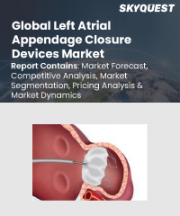
좌심방이 폐색술(LAAC)은 비판막성 심방세동(AFib) 환자의 뇌졸중 위험을 낮추기 위해 심장에 이식하는 의료기기입니다. 좌심방(LAAC)은 심장의 근육벽에 있는 작은 주머니 모양의 구조물로, 심방세동 환자에서 혈전 발생의 원인이 되어 뇌졸중을 유발할 수 있으며, LAAC 장비는 혈전 형성을 방지하고 뇌졸중 위험을 줄이기 위해 LAAC를 영구적으로 폐쇄하도록 설계되어 있습니다. MI) 시술로 이식되며, 보통 팔이나 살서제에 작은 절개창을 만들어 카테터를 삽입합니다. 이 장비는 항응고제를 복용할 수 없거나 항응고제로 인한 출혈 합병증 위험이 높은 심방세동 환자들 사이에서 널리 사용되고 있습니다.
좌심방이 폐색술(LAAC) 디바이스 시장 동향 :
건강에 해로운 식습관, 흡연, 음주, 좌식 생활습관의 확산으로 인한 심방세동 유병률 증가가 세계 시장 성장을 주도하고 있습니다. 이 외에도 심혈관 질환(CVDs)에 취약한 노인 인구 증가, 심방세동과 관련된 위험 및 합병증에 대한 소비자의 우려 증가, 대체 치료 옵션의 가용성에 대한 인식 확대가 시장 성장을 가속하고 있습니다. 또한 제품의 안전성과 유효성 측면에서 폐쇄장비의 기술적 진보가 두드러지고, 회복 시간을 단축하고 환자의 편안함을 개선하기 위한 저침습적 폐쇄장비 개발에 중점을 두고 있는 것은 시장에 유익한 성장 기회를 제공합니다. 이와 동시에 전기생리학적 시술의 등장과 중재적 치료 및 진단 경로의 대폭적인 개선이 시장 성장에 기여하고 있습니다. 이 외에도 의료 인프라의 급속한 확장, 의료 서비스에 대한 접근성 향상, 최소침습적 폐쇄기구의 인기 급상승, 각국 정부의 수많은 인식 개선 캠페인 시작, 상환 정책의 가용성 등이 시장 확대에 기여하고 있습니다. 또한 제품 혁신을 위한 광범위한 연구개발(R&D) 활동, 심방중재술 제품 승인 수 증가, 임상시험 수 증가, 로봇 보조 폐쇄 장비와 같은 신기술 채택이 시장 성장에 긍정적인 영향을 미치고 있습니다.
이 보고서에서 다룬 주요 질문
- 세계 좌심방이 폐색술(LAAC) 디바이스 시장은 지금까지 어떻게 추이해 왔는가?
- 세계 좌심방이 폐색술(LAAC) 디바이스 시장 성장 촉진요인, 저해요인, 기회요인은 무엇인가?
- 각 촉진요인, 억제요인, 기회가 세계 좌심방이 폐색술(LAAC) 디바이스 시장에 미치는 영향은?
- 주요 지역 시장은?
- 가장 매력적인 좌심방이 폐색술(LAAC) 기기 시장은 어느 국가에서 가장 매력적인가?
- 제품별 시장 분석은?
- 좌심방이 폐색술형(LAAC) 장비 시장에서 가장 매력적인 제품은?
- 최종사용자별 시장 분석은?
- 좌심방이 폐색술형(LAAC) 장비 시장에서 가장 매력적인 최종사용자는?
- 전 세계 좌심방이 폐색술(LAAC) 디바이스 시장의 경쟁 구도는?
- 세계 좌심방이 폐색술(LAAC) 디바이스 시장의 주요 플레이어/기업은?
목차
제1장 서문
제2장 조사 범위와 조사 방법
- 조사의 목적
- 이해관계자
- 데이터 소스
- 1차 정보
- 2차 정보
- 시장 추정
- 보텀업 어프로치
- 톱다운 어프로치
- 조사 방법
제3장 개요
제4장 서론
- 개요
- 주요 업계 동향
제5장 세계의 좌심방이 폐색술(LAAC) 디바이스 시장
- 시장 개요
- 시장 실적
- COVID-19의 영향
- 시장 예측
제6장 시장 내역 : 제품별
- 심내막
- 심외막
제7장 시장 내역 : 최종사용자별
- 병원
- 외래 수술 센터
- 기타
제8장 시장 내역 : 지역별
- 북미
- 미국
- 캐나다
- 아시아태평양
- 중국
- 일본
- 인도
- 한국
- 호주
- 인도네시아
- 기타
- 유럽
- 독일
- 프랑스
- 영국
- 이탈리아
- 스페인
- 러시아
- 기타
- 라틴아메리카
- 브라질
- 멕시코
- 기타
- 중동 및 아프리카
- 시장 내역 : 국가별
제9장 촉진요인·억제요인·기회
- 개요
- 촉진요인
- 억제요인
- 기회
제10장 밸류체인 분석
제11장 Porter's Five Forces 분석
- 개요
- 바이어의 교섭력
- 공급 기업의 교섭력
- 경쟁의 정도
- 신규 진출업체의 위협
- 대체품의 위협
제12장 가격 분석
제13장 경쟁 구도
- 시장 구조
- 주요 기업
- 주요 기업의 개요
- Abbott Laboratories
- AtriCure Inc.
- Boston Scientific Corporation
- Cardia Inc.
- Lepu Medical Technology(Beijing) Co. Ltd.
- LifeTech Scientific
The global left atrial appendage closure devices market size reached USD 1.7 Billion in 2024. Looking forward, IMARC Group expects the market to reach USD 6.7 Billion by 2033, exhibiting a growth rate (CAGR) of 16.17% during 2025-2033. The escalating prevalence of atrial fibrillation (AFib), the growing geriatric population prone to cardiovascular disorders (CVDs), and ongoing product advancements and innovations represent some of the key factors driving the market.
Left atrial appendage closure devices (LAAC) are medical devices that are implanted in the heart to lower the risk of stroke in patients with non-valvular atrial fibrillation (AFib). The left atrial appendage (LAA) is a small pouch-like structure located in the muscle wall of the heart, which can be a source of blood clots, leading to stroke in AFib patients. LAAC devices are designed to permanently close off the LAA to prevent the formation of blood clots and reduce the risk of stroke. They are implanted via minimally invasive (MI) procedures, typically using a catheter that is inserted through a small incision placed in the arm or groin region. These devices are widely popular among AFib patients who cannot take anticoagulant medications or are at high risk of bleeding complications from these medications.
Left Atrial Appendage Closure Devices Market Trends:
The rising prevalence of AFib, on account of the widespread adoption of unhealthy eating habits, smoking, drinking, and sedentary lifestyles, is primarily driving the global market growth. Besides this, the growing geriatric population prone to cardiovascular disorders (CVDs), the escalating consumer concerns regarding risks and complications associated with AFib, and the expanding awareness about the availability of alternative treatment options are impelling the market growth. Moreover, significant technological advancements in closure devices in terms of the safety and efficacy of the product and the intensive emphasis on developing minimally invasive closure devices to reduce recovery time and improve patient comfort are presenting remunerative growth opportunities for the market. Concurrent with this, the advent of electrophysiology procedures, combined with considerable improvements in interventional treatments and the diagnosis pathway, is contributing to the market growth. In addition to this, rapid expansion in the healthcare infrastructure, better access to healthcare services, the surging popularity of minimally invasive closure devices, the launch of numerous awareness campaigns by governments of various countries, and the availability of reimbursement policies are aiding in market expansion. Furthermore, extensive research and development (R&D) activities for product innovation, a rising number of atrial intervention product approvals, an increasing number of clinical trials, and the adoption of new technologies, such as robotic-assisted closure devices, are positively impacting the market growth.
Key Market Segmentation:
Product Insights:
- Endocardial LAA Devices
- Epicardial LAA Devices
End User Insights:
- Hospitals
- Ambulatory Surgery Centers
- Others
Regional Insights:
- North America
- United States
- Canada
- Asia Pacific
- China
- Japan
- India
- South Korea
- Australia
- Indonesia
- Others
- Europe
- Germany
- France
- United Kingdom
- Italy
- Spain
- Russia
- Others
- Latin America
- Brazil
- Mexico
- Others
- Middle East and Africa
- The report has also provided a comprehensive analysis of all the major regional markets, which include North America (the United States and Canada); Asia Pacific (China, Japan, India, South Korea, Australia, Indonesia, and others); Europe (Germany, France, the United Kingdom, Italy, Spain, Russia, and others); Latin America (Brazil, Mexico, and others); and the Middle East and Africa. According to the report, North America was the largest market for left atrial appendage closure devices. Some of the factors driving the North America left atrial appendage closure devices market included a growing number of atrial fibrillation (Afib) cases, a rise in the geriatric population, and innovative technological advancements.
Competitive Landscape:
- The report has also provided a comprehensive analysis of the competitive landscape in the global left atrial appendage closure devices market. Competitive analysis such as market structure, market share by key players, player positioning, top winning strategies, competitive dashboard, and company evaluation quadrant has been covered in the report. Also, detailed profiles of all major companies have been provided. Some of the companies covered include Abbott Laboratories, AtriCure Inc., Boston Scientific Corporation, Cardia Inc., Lepu Medical Technology (Beijing) Co. Ltd., LifeTech Scientific, etc.
Key Questions Answered in This Report:
- How has the global left atrial appendage closure devices market performed so far, and how will it perform in the coming years?
- What are the drivers, restraints, and opportunities in the global left atrial appendage closure devices market?
- What is the impact of each driver, restraint, and opportunity on the global left atrial appendage closure devices market?
- What are the key regional markets?
- Which countries represent the most attractive left atrial appendage closure devices market?
- What is the breakup of the market based on the product?
- Which is the most attractive product in the left atrial appendage closure devices market?
- What is the breakup of the market based on the end user?
- Which is the most attractive end user in the left atrial appendage closure devices market?
- What is the competitive structure of the global left atrial appendage closure devices market?
- Who are the key players/companies in the global left atrial appendage closure devices market?
Table of Contents
1 Preface
2 Scope and Methodology
- 2.1 Objectives of the Study
- 2.2 Stakeholders
- 2.3 Data Sources
- 2.3.1 Primary Sources
- 2.3.2 Secondary Sources
- 2.4 Market Estimation
- 2.4.1 Bottom-Up Approach
- 2.4.2 Top-Down Approach
- 2.5 Forecasting Methodology
3 Executive Summary
4 Introduction
- 4.1 Overview
- 4.2 Key Industry Trends
5 Global Left Atrial Appendage Closure Devices Market
- 5.1 Market Overview
- 5.2 Market Performance
- 5.3 Impact of COVID-19
- 5.4 Market Forecast
6 Market Breakup by Product
- 6.1 Endocardial LAA Devices
- 6.1.1 Market Trends
- 6.1.2 Market Forecast
- 6.2 Epicardial LAA Devices
- 6.2.1 Market Trends
- 6.2.2 Market Forecast
7 Market Breakup by End User
- 7.1 Hospitals
- 7.1.1 Market Trends
- 7.1.2 Market Forecast
- 7.2 Ambulatory Surgery Centers
- 7.2.1 Market Trends
- 7.2.2 Market Forecast
- 7.3 Others
- 7.3.1 Market Trends
- 7.3.2 Market Forecast
8 Market Breakup by Region
- 8.1 North America
- 8.1.1 United States
- 8.1.1.1 Market Trends
- 8.1.1.2 Market Forecast
- 8.1.2 Canada
- 8.1.2.1 Market Trends
- 8.1.2.2 Market Forecast
- 8.1.1 United States
- 8.2 Asia-Pacific
- 8.2.1 China
- 8.2.1.1 Market Trends
- 8.2.1.2 Market Forecast
- 8.2.2 Japan
- 8.2.2.1 Market Trends
- 8.2.2.2 Market Forecast
- 8.2.3 India
- 8.2.3.1 Market Trends
- 8.2.3.2 Market Forecast
- 8.2.4 South Korea
- 8.2.4.1 Market Trends
- 8.2.4.2 Market Forecast
- 8.2.5 Australia
- 8.2.5.1 Market Trends
- 8.2.5.2 Market Forecast
- 8.2.6 Indonesia
- 8.2.6.1 Market Trends
- 8.2.6.2 Market Forecast
- 8.2.7 Others
- 8.2.7.1 Market Trends
- 8.2.7.2 Market Forecast
- 8.2.1 China
- 8.3 Europe
- 8.3.1 Germany
- 8.3.1.1 Market Trends
- 8.3.1.2 Market Forecast
- 8.3.2 France
- 8.3.2.1 Market Trends
- 8.3.2.2 Market Forecast
- 8.3.3 United Kingdom
- 8.3.3.1 Market Trends
- 8.3.3.2 Market Forecast
- 8.3.4 Italy
- 8.3.4.1 Market Trends
- 8.3.4.2 Market Forecast
- 8.3.5 Spain
- 8.3.5.1 Market Trends
- 8.3.5.2 Market Forecast
- 8.3.6 Russia
- 8.3.6.1 Market Trends
- 8.3.6.2 Market Forecast
- 8.3.7 Others
- 8.3.7.1 Market Trends
- 8.3.7.2 Market Forecast
- 8.3.1 Germany
- 8.4 Latin America
- 8.4.1 Brazil
- 8.4.1.1 Market Trends
- 8.4.1.2 Market Forecast
- 8.4.2 Mexico
- 8.4.2.1 Market Trends
- 8.4.2.2 Market Forecast
- 8.4.3 Others
- 8.4.3.1 Market Trends
- 8.4.3.2 Market Forecast
- 8.4.1 Brazil
- 8.5 Middle East and Africa
- 8.5.1 Market Trends
- 8.5.2 Market Breakup by Country
- 8.5.3 Market Forecast
9 Drivers, Restraints, and Opportunities
- 9.1 Overview
- 9.2 Drivers
- 9.3 Restraints
- 9.4 Opportunities
10 Value Chain Analysis
11 Porters Five Forces Analysis
- 11.1 Overview
- 11.2 Bargaining Power of Buyers
- 11.3 Bargaining Power of Suppliers
- 11.4 Degree of Competition
- 11.5 Threat of New Entrants
- 11.6 Threat of Substitutes
12 Price Analysis
13 Competitive Landscape
- 13.1 Market Structure
- 13.2 Key Players
- 13.3 Profiles of Key Players
- 13.3.1 Abbott Laboratories
- 13.3.1.1 Company Overview
- 13.3.1.2 Product Portfolio
- 13.3.1.3 Financials
- 13.3.1.4 SWOT Analysis
- 13.3.2 AtriCure Inc.
- 13.3.2.1 Company Overview
- 13.3.2.2 Product Portfolio
- 13.3.2.3 Financials
- 13.3.2.4 SWOT Analysis
- 13.3.3 Boston Scientific Corporation
- 13.3.3.1 Company Overview
- 13.3.3.2 Product Portfolio
- 13.3.3.3 Financials
- 13.3.3.4 SWOT Analysis
- 13.3.4 Cardia Inc.
- 13.3.4.1 Company Overview
- 13.3.4.2 Product Portfolio
- 13.3.5 Lepu Medical Technology (Beijing) Co. Ltd.
- 13.3.5.1 Company Overview
- 13.3.5.2 Product Portfolio
- 13.3.5.3 Financials
- 13.3.6 LifeTech Scientific
- 13.3.6.1 Company Overview
- 13.3.6.2 Product Portfolio
- 13.3.1 Abbott Laboratories
Kindly note that this only represents a partial list of companies, and the complete list has been provided in the report.