|
시장보고서
상품코드
1941587
IGBT용 핀 핀 히트싱크 시장 보고서 : 재질 유형별, 용도별, 지역별(2026-2034년)Pin Fin Heat Sink for IGBT Market Report by Material Type (Aluminium, Copper), Application (Automotive Field, Consumer Electronics), and Region 2026-2034 |
||||||

IGBT용 핀 핀 히트싱크 세계 시장 규모는 2025년에 10억 6,890만 달러에 달했습니다. 향후 IMARC Group은 2034년까지 이 시장이 14억 4,890만 달러에 달하고, 2026년부터 2034년까지 CAGR 3.44%로 성장할 것으로 예측하고 있습니다. 현대 소비자 전자제품의 효과적인 냉각 솔루션에 대한 수요 증가, 전기자동차(EV) 및 하이브리드 자동차(HEV)를 위한 자동차 산업에서 IGBT 모듈의 사용 확대, 다중 장치 냉각을 위한 하이브리드 핀핀 히트싱크의 보급 확대 등이 시장을 주도하는 주요 요인 중 일부입니다. 시장을 견인하는 주요 요인 중 하나입니다.
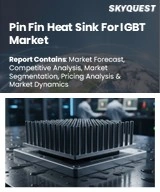
핀핀 히트싱크가란 평평한 베이스와 다수의 핀 모양의 구조물을 갖춘 소형 히트싱크으로, 주변 공기로 열을 방출하도록 설계된 히트싱크입니다. 일반적으로 구리 또는 알루미늄 합금을 사용하여 제조되며, 여러 개의 지느러미가 내장된 고체 블록과 같은 모양입니다. 핀핀은 열부하, 기류, 설치공간에 따라 다양한 용도에 맞게 쉽게 커스터마이징이 가능합니다. 이 히트싱크는 열교환기 역할을 하며, 열전달 면적과 열전달 계수를 증가시키는 기하학적 설계 및 구조를 채택하고 있습니다. 높은 기류(200 LFM 이상)에서 베이스에서 핀까지 낮은 열 저항을 실현하여 기류 방향이 불확실한 환경에서도 높은 효과를 발휘합니다. 둥근 공기역학적 핀 모양과 간격 설계로 핀 배열에 유입되는 주변 기류에 대한 저항을 감소시키는 동시에 기류의 난류를 증가시킵니다. 이를 통해 표면을 덮고 있는 정지된 공기의 경계층이 파괴되어 높은 대류 열효율을 실현합니다. 이러한 특성으로 인해 핀 핀 히트싱크는 절연 게이트 바이폴라 트랜지스터(IGBT)의 냉각에 널리 채택되고 있습니다.
IGBT용 핀핀 히트싱크 시장 동향:
핀핀 히트싱크는 제한된 공간과 열 부하가 큰 애플리케이션의 복잡한 열 문제에 대한 해결책으로 매우 높은 인기를 얻고 있습니다. 현재, 적절한 방열 방법을 통해 현대 전자기기의 요구 사항을 충족하는 효과적인 냉각 솔루션에 대한 수요가 급증하고 있으며, 이는 핀 핀 히트싱크의 채택을 가속화하고 있습니다. 여기에 더해 세계 인구의 증가와 급속한 디지털화에 따른 대규모 전력 공급 수요 증가가 시장 성장을 견인하는 주요 요인으로 작용하고 있습니다. 또한, 높은 체적 효율, 컴팩트한 크기, 경량화, 우수한 냉각 능력, 저렴한 비용 등의 장점에 대한 인식이 높아지면서 다른 유형의 히트싱크에서 핀 핀 히트싱크으로 전환하는 추세가 두드러지게 나타나고 있습니다. 이에 따라 하이브리드 전기자동차(HEV) 및 전기자동차(EV)를 위한 자동차 산업에서 IGBT 모듈의 채택이 증가하면서 시장 성장을 촉진하고 있습니다. 또한, 부품 밀도 증가와 전자기기의 소형화 추세에 따라 핀 핀 히트싱크와 같은 컴팩트하고 비용 효율적인 냉각 솔루션에 대한 요구가 증가하고 있습니다. 또한, 주요 제조업체들의 다양한 제품 혁신, 예를 들어 표준 알루미늄 및 구리 히트싱크보다 열 성능이 우수하고 여러 장치를 냉각할 수 있는 하이브리드 핀 핀 히트싱크 개발 등이 시장 성장의 원동력이 되고 있습니다.
본 보고서에서 답변하는 주요 질문
- IGBT용 핀핀 히트싱크 시장 규모는 어느 정도일까?
- IGBT용 핀핀 히트싱크의 향후 전망은 어떻게 될까?
- IGBT용 핀핀 히트싱크 시장의 주요 성장 요인은 무엇인가?
- IGBT용 핀핀 히트싱크 시장에서 가장 큰 점유율을 차지하는 지역은 어디인가?
- IGBT용 핀핀 히트싱크 세계 시장에서 주요 업체는 어디인가?
목차
제1장 서문
제2장 조사 범위와 조사 방법
제3장 주요 요약
제4장 소개
제5장 세계의 IGBT용 핀 핀 히트싱크 시장
제6장 시장 내역 : 재질별
제7장 시장 내역 : 용도별
제8장 시장 내역 : 지역별
제9장 촉진요인, 억제요인, 기회
제10장 밸류체인 분석
제11장 Porter's Five Forces 분석
제12장 가격 분석
제13장 경쟁 구도
KSM 26.03.10The global pin fin heat sink for IGBT market size reached USD 1,068.9 Million in 2025. Looking forward, IMARC Group expects the market to reach USD 1,448.9 Million by 2034, exhibiting a growth rate (CAGR) of 3.44% during 2026-2034. The surging need for effective cooling solutions for modern consumer electronics, the rising use of IGBT modules in the automotive industry for EVs and HEVs, and the growing popularity of hybrid pin fin heat sinks for multi-device cooling represent some of the key factors driving the market.
Pin fin heat sinks refer to compact sinks with a flat base and a large number of pin-like structures designed to dissipate heat out into the surrounding air. They are usually manufactured using copper or aluminum alloys and appear as a solid block embedded with multiple fins. The pin fins can be easily customized for various applications based on the heat load, airflow, and available space. These sinks serve as heat exchangers and are designed and structured geometrically to increase the surface area and coefficient for heat transfer, provide low thermal resistance from base to fins at high airflow (200-plus LFM), and work in environments with ambiguous airflow direction, making them highly effective. The round aerodynamic pin design and spacing reduce resistance to surrounding airstreams that enter the pin array while simultaneously increasing air turbulence. This, in turn, breaks the boundary layers of still air wrapped around its surface, creating high convective thermal efficiencies. As a result, pin fin heat sinks are widely used to cool insulated-gate bipolar transistors (IGBT).
Pin Fin Heat Sink for IGBT Market Trends:
Pin fin heat sinks are gaining immense popularity in solving complex thermal problems in applications with limited space and substantial heat loads. At present, the surging need for effective cooling solutions to meet the requirements of modern electronics via proper heat dissipation methods is accelerating the adoption of pin fin heat sinks. This, coupled with the escalating demand for huge power supply due to the expanding global population and rapid digitization, represents the primary factor driving the market growth. Moreover, there has been a significant shift from other types of heat sinks toward pin fin heat sinks owing to the growing awareness about their benefits, such as higher volumetric efficiency, compact size, lightweight, better cooling capacity, and low cost. In line with this, the rising adoption of IGBT modules in the automotive industry for hybrid electric vehicles (HEVs) and electric vehicles (EVs) has catalyzed market growth. In addition, the augmenting demand for component density and the increasing miniaturization of electronic devices has strengthened the need for compact and cost-effective cooling solutions, such as pin fin heat sinks. Furthermore, various product innovations by key players, such as the development of the hybrid pin fin heat sink that offers better thermal performance than standard aluminum and copper sinks and can be used for multi-device cooling, are providing a positive thrust to the market growth.
Key Market Segmentation:
Material Type Insights:
- Aluminium
- Copper
Application Insights:
- Automotive Field
- Consumer Electronics
Regional Insights:
- North America
- United States
- Canada
- Asia-Pacific
- China
- Japan
- India
- South Korea
- Australia
- Indonesia
- Others
- Europe
- Germany
- France
- United Kingdom
- Italy
- Spain
- Russia
- Others
- Latin America
- Brazil
- Mexico
- Others
- Middle East and Africa
- The report has also provided a comprehensive analysis of all the major regional markets, which include North America (the United States and Canada); Asia-Pacific (China, Japan, India, South Korea, Australia, Indonesia, and others); Europe (Germany, France, the United Kingdom, Italy, Spain, Russia and others); Latin America (Brazil, Mexico, and others); and the Middle East and Africa. According to the report, Asia-Pacific was the largest market for pin fin heat sink for IGBT. Some of the factors driving the Asia-Pacific Pin Fin Heat Sink for IGBT market included the rapid growth in the automotive sector, increasing demand for power supply devices, emerging trend of home remodeling, etc.
Competitive Landscape:
- The report has also provided a comprehensive analysis of the competitive landscape in the global pin fin heat sink for IGBT market. Competitive analysis such as market structure, market share by key players, player positioning, top winning strategies, competitive dashboard, and company evaluation quadrant has been covered in the report. Also, detailed profiles of all major companies have been provided. Some of the companies covered include Advanced Thermal Solutions Inc., Wellste Aluminum, etc. Kindly note that this only represents a partial list of companies, and the complete list has been provided in the report.
Key Questions Answered in This Report
- 1.How big is the pin fin heat sink for IGBT market?
- 2.What is the future outlook of pin fin heat sink for IGBT market?
- 3.What are the key factors driving the pin fin heat sink for IGBT market?
- 4.Which region accounts for the largest pin fin heat sink for IGBT market share?
- 5.Which are the leading companies in the global pin fin heat sink for IGBT market?
Table of Contents
1 Preface
2 Scope and Methodology
- 2.1 Objectives of the Study
- 2.2 Stakeholders
- 2.3 Data Sources
- 2.3.1 Primary Sources
- 2.3.2 Secondary Sources
- 2.4 Market Estimation
- 2.4.1 Bottom-Up Approach
- 2.4.2 Top-Down Approach
- 2.5 Forecasting Methodology
3 Executive Summary
4 Introduction
- 4.1 Overview
- 4.2 Key Industry Trends
5 Global Pin Fin Heat Sink for IGBT Market
- 5.1 Market Overview
- 5.2 Market Performance
- 5.3 Impact of COVID-19
- 5.4 Market Forecast
6 Market Breakup by Material Type
- 6.1 Aluminium
- 6.1.1 Market Trends
- 6.1.2 Market Forecast
- 6.2 Copper
- 6.2.1 Market Trends
- 6.2.2 Market Forecast
7 Market Breakup by Application
- 7.1 Automotive Field
- 7.1.1 Market Trends
- 7.1.2 Market Forecast
- 7.2 Consumer Electronics
- 7.2.1 Market Trends
- 7.2.2 Market Forecast
8 Market Breakup by Region
- 8.1 North America
- 8.1.1 United States
- 8.1.1.1 Market Trends
- 8.1.1.2 Market Forecast
- 8.1.2 Canada
- 8.1.2.1 Market Trends
- 8.1.2.2 Market Forecast
- 8.1.1 United States
- 8.2 Asia-Pacific
- 8.2.1 China
- 8.2.1.1 Market Trends
- 8.2.1.2 Market Forecast
- 8.2.2 Japan
- 8.2.2.1 Market Trends
- 8.2.2.2 Market Forecast
- 8.2.3 India
- 8.2.3.1 Market Trends
- 8.2.3.2 Market Forecast
- 8.2.4 South Korea
- 8.2.4.1 Market Trends
- 8.2.4.2 Market Forecast
- 8.2.5 Australia
- 8.2.5.1 Market Trends
- 8.2.5.2 Market Forecast
- 8.2.6 Indonesia
- 8.2.6.1 Market Trends
- 8.2.6.2 Market Forecast
- 8.2.7 Others
- 8.2.7.1 Market Trends
- 8.2.7.2 Market Forecast
- 8.2.1 China
- 8.3 Europe
- 8.3.1 Germany
- 8.3.1.1 Market Trends
- 8.3.1.2 Market Forecast
- 8.3.2 France
- 8.3.2.1 Market Trends
- 8.3.2.2 Market Forecast
- 8.3.3 United Kingdom
- 8.3.3.1 Market Trends
- 8.3.3.2 Market Forecast
- 8.3.4 Italy
- 8.3.4.1 Market Trends
- 8.3.4.2 Market Forecast
- 8.3.5 Spain
- 8.3.5.1 Market Trends
- 8.3.5.2 Market Forecast
- 8.3.6 Russia
- 8.3.6.1 Market Trends
- 8.3.6.2 Market Forecast
- 8.3.7 Others
- 8.3.7.1 Market Trends
- 8.3.7.2 Market Forecast
- 8.3.1 Germany
- 8.4 Latin America
- 8.4.1 Brazil
- 8.4.1.1 Market Trends
- 8.4.1.2 Market Forecast
- 8.4.2 Mexico
- 8.4.2.1 Market Trends
- 8.4.2.2 Market Forecast
- 8.4.3 Others
- 8.4.3.1 Market Trends
- 8.4.3.2 Market Forecast
- 8.4.1 Brazil
- 8.5 Middle East and Africa
- 8.5.1 Market Trends
- 8.5.2 Market Breakup by Country
- 8.5.3 Market Forecast
9 Drivers, Restraints, and Opportunities
- 9.1 Overview
- 9.2 Drivers
- 9.3 Restraints
- 9.4 Opportunities
10 Value Chain Analysis
11 Porters Five Forces Analysis
- 11.1 Overview
- 11.2 Bargaining Power of Buyers
- 11.3 Bargaining Power of Suppliers
- 11.4 Degree of Competition
- 11.5 Threat of New Entrants
- 11.6 Threat of Substitutes
12 Price Analysis
13 Competitive Landscape
- 13.1 Market Structure
- 13.2 Key Players
- 13.3 Profiles of Key Players
- 13.3.1 Advanced Thermal Solutions Inc.
- 13.3.1.1 Company Overview
- 13.3.1.2 Product Portfolio
- 13.3.2 Wellste Aluminum
- 13.3.2.1 Company Overview
- 13.3.2.2 Product Portfolio
- 13.3.1 Advanced Thermal Solutions Inc.