|
시장보고서
상품코드
2014992
의료용 영상 팬텀 시장 : 제품 유형, 소재, 용도, 최종 사용자별 - 세계 예측(2026-2032년)Medical Imaging Phantoms Market by Product Type, Material, Application, End User - Global Forecast 2026-2032 |
||||||
 360iResearch
의료용 영상 팬텀 시장은 2025년에 1억 6,322만 달러로 평가되었습니다. 2026년에는 1억 7,853만 달러로 성장하고 CAGR 8.37%를 나타내, 2032년까지 2억 8,666만 달러에 이를 것으로 예측됩니다.
| 주요 시장 통계 | |
|---|---|
| 기준 연도(2025년) | 1억 6,322만 달러 |
| 추정 연도(2026년) | 1억 7,853만 달러 |
| 예측 연도(2032년) | 2억 8,666만 달러 |
| CAGR(%) | 8.37% |
의료용 영상 팬텀에 대한 종합적인 기본 개요, 기술의 진화, 임상적 역할, 검증 요건, 이해관계자를 위한 전략적 우선순위를 파악할 수 있습니다.
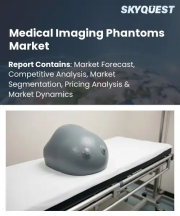
의료용 영상 팬텀은 진단 및 인터벤션 워크플로우 전반에 걸쳐 기술 개발, 임상 검증 및 운영자 교육을 연결하는 필수적인 도구로 활용됩니다. 이러한 설계 구조는 해부학적 구조, 조직 특성 및 방사선학적 반응을 재현하고, 장비 교정, 영상 프로토콜 검증 및 다직종 팀 교육을 위해 재현 가능하고 검증 가능한 조건을 제공합니다. 영상진단의 해상도, 속도, 기능이 발전함에 따라 팬텀의 역할은 단순한 기하학적 타겟에서 현대 임상 현장의 요구를 반영하는 복잡한 멀티모달 검사 대상으로 확대되고 있습니다.
적층제조, AI, 검증, 재료과학, 규제 수렴 등 팬텀 산업의 판도를 뒤바꿀 주요 변혁적 변화에 대한 심층 분석
몇 가지 혁신적인 변화가 의료용 영상 팬텀 분야를 적극적으로 재구성하고 있으며, 기술적 방향과 상업적 우선순위를 모두 바꾸고 있습니다. 적층 가공를 통해 이전에는 불가능했던 복잡한 형상과 내부 구조를 빠르게 반복할 수 있게 되었고, 개발자들은 보다 빠르게 프로토타입을 제작하고 검증할 수 있게 되었습니다. 동시에 고급 재료, 특히 유전체 특성, 음향 특성 또는 방사선 밀도 특성을 보다 충실하게 재현하는 재료를 통해 팬텀은 하이브리드 이미징 플랫폼에 필요한 다물리 현상의 거동을 나타낼 수 있습니다.
2025년 이후 미국의 관세 조치가 팬텀 생태계 전반 공급망, 조달 전략 및 제조 현지화 결정에 미치는 누적 영향 검증
2025년 미국의 관세 조치의 도입은 이미징 팬텀 제조업체와 구매자의 세계 공급망 및 조달 전략에 즉각적인 압력을 가했습니다. 특정 수입 부품 및 원자재에 대한 관세 인상으로 인해 기업들은 공급업체 배치를 재검토하고, 니어쇼어링(near-shoring) 옵션을 평가하고, 대체 공급업체 인증 절차를 가속화해야 하는 상황에 직면했습니다. 실제로 구매자가 추가 컴플라이언스 점검을 실시하고 기존 조달 계약이 총 착륙 비용에 미치는 영향을 파악하기 위해 구매자가 추가 컴플라이언스 점검을 실시함에 따라 조달 주기가 일시적으로 연장되었습니다.
제품 유형, 재료 과학, 응용 분야, 최종 사용자 행동이 어떻게 교차하고, 엔지니어링 선택, 조달 역학, 서비스 모델을 결정하는지를 보여주는 상세한 세분화 분석을 제공합니다.
세분화 분석은 제품 유형 차별화, 재료 선택, 용도 중점, 최종 사용자 특성이 개발 우선순위와 구매 행동을 어떻게 형성하는지 파악할 수 있습니다. 제품 유형별로 살펴보면, 컴퓨터단층촬영(CT) 전용 팬텀은 고대비 병변의 시뮬레이션과 감쇠 정확도를 우선시하는 반면, 자기공명(MRI) 팬텀은 완화 파라미터의 충실도와 자화율 제어를 중시합니다. 핵의학 영상 팬텀은 정확한 방사능 분포와 감쇠 특성이 요구되며, PET 팬텀은 동시 발생률과 양전자 비행거리 효과를 고려해야 합니다. 초음파 팬텀은 재현성 있는 음향 임피던스와 후방 산란 특성이 요구되며, X선 팬텀은 기하학적 충실도와 방사선 밀도 교정 요구 사항의 균형을 유지해야 합니다. 따라서 각 제품 유형마다 고유한 기술적 트레이드오프와 검증 프로토콜이 존재하며, 제조업체는 이에 대응해야 합니다.
미주, 유럽, 중동 및 아프리카, 아시아태평양의 전략적 지역 인사이트. 이는 도입 촉진요인, 규제 우선순위, 제조 강점, 조달 패턴을 강조합니다.
지역별 동향은 전체 팬텀 시장의 기술 채택, 규제 기대치, 제조 전략에 큰 영향을 미치고 있습니다. 북미와 남미에서는 혁신 센터와 확립된 임상 인프라가 의료기기 검증 및 임상 교육 프로그램을 지원하는 고정밀, 규제 준수 팬텀에 대한 수요를 주도하고 있습니다. 이 지역의 조달 프로세스에서는 컴플라이언스 문서, 국내 공급의 연속성 및 공급업체의 투명성이 점점 더 중요시되고 있으며, 이는 인증된 제품과 신속한 애프터 서비스를 제공하는 제조업체에게 유리하게 작용합니다.
경쟁 우위와 장기적인 고객 관계를 주도하는 혁신 우선순위, 파트너십 전략, 인증 및 서비스 차별화를 이끌어내는 주요 기업의 인사이트
기업 차원의 동향에서 시장 진출기업들 사이에 공통적으로 나타나는 몇 가지 전략적 테마가 있습니다. 첫째, 혁신 사이클은 재료공학과 제조의 유연성을 중심으로 전개되는 경향이 강해지고 있습니다. 업계 선도 기업들은 검증의 무결성을 유지하면서 신속한 커스터마이징을 가능하게 하는 독자적인 복합재료와 제조 방식에 투자하고 있습니다. 둘째, 임상 센터 및 의료기기 OEM과의 파트너십을 통해 제품 개선을 가속화하고 실제 환경에서의 성능을 입증하는 검증 데이터에 쉽게 접근할 수 있습니다. 이러한 협업의 길은 개발과 임상 수용 사이의 피드백 루프를 단축시킵니다.
업계 리더가 공급망 복원력을 강화하고, 재료 혁신을 가속화하며, 임상 파트너십을 확대하고, 서비스 기반 차별화를 확장하기 위한 실용적이고 실행 가능한 제안
업계 리더는 지속 가능한 성장을 보장하고 새로운 위험을 줄이기 위해 몇 가지 측면에서 단호한 조치를 취할 수 있습니다. 첫째, 보완적인 지역에 걸쳐 여러 공급업체를 인증하고, 미션 크리티컬한 부품에 대해서는 선택적으로 니어쇼어 역량에 투자함으로써 공급망 다변화를 우선시해야 합니다. 이러한 조치를 통해 개발의 민첩성을 유지하면서 무역 정책 변동에 따른 위험에 대한 노출을 줄일 수 있습니다. 둘째, 재료 연구 개발 및 적층 가공(AM) 역량에 대한 투자를 가속화하고, 고충실도 및 양식에 구애받지 않는 팬텀을 개발할 수 있으며, 맞춤형 용도의 설계 주기를 단축할 수 있습니다.
신뢰성과 타당성을 보장하기 위해 1차 인터뷰, 기술적 검증, 문헌 통합, 전문가 검토, 삼각측량 방법론에 대한 설명이 포함된 투명하고 엄격한 조사방법을 사용했습니다.
본 분석의 기반이 되는 조사방법은 엄밀성과 타당성을 확보하기 위해 정성적 접근과 기술적 접근을 병행하고 있습니다. 1차 데이터는 임상의, 조달 담당자, 엔지니어링 책임자, 재료 과학자를 대상으로 한 구조화된 인터뷰를 통해 얻은 것으로, 성능에 대한 기대치 및 운영상의 제약에 대한 맥락적 이해를 제공합니다. 2차 자료에는 검증 사례와 재료의 성능 특성을 밝히는 피어 리뷰 문헌, 표준 문서, 기술 백서 등이 포함됩니다.
재료 검증, 공급망 탄력성, 규제 준수 및 임상 파트너십에 대한 통합적 투자의 필요성을 강조한 간결한 결론의 통합
결론적으로, 의료용 영상 팬텀 분야는 재료 혁신, 제조 민첩성, 서비스 중심의 차별화가 전략적 성과를 결정하는 전환점에 서 있습니다. 팬텀은 의료기기 검증, 임상 훈련 및 알고리즘 성능 평가에서 점점 더 중요한 역할을 하고 있습니다. 또한, 제품 설계를 양식별 요구사항과 최종 사용자의 워크플로우에 맞게 조정하는 이해관계자는 더 높은 채택률을 달성하고 있습니다. 공급망의 탄력성과 규제 준수 여부는 기술적 우수성을 보완하고 규모 확장에 필요한 운영 기반을 형성합니다.
자주 묻는 질문
목차
제1장 서문
제2장 조사 방법
제3장 주요 요약
제4장 시장 개요
제5장 시장 인사이트
제6장 미국의 관세 누적 영향(2025년)
제7장 AI의 누적 영향(2025년)
제8장 의료용 영상 팬텀 시장 : 제품 유형별
제9장 의료용 영상 팬텀 시장 : 소재별
제10장 의료용 영상 팬텀 시장 : 용도별
제11장 의료용 영상 팬텀 시장 : 최종 사용자별
제12장 의료용 영상 팬텀 시장 : 지역별
제13장 의료용 영상 팬텀 시장 : 그룹별
제14장 의료용 영상 팬텀 시장 : 국가별
제15장 미국의 의료용 영상 팬텀 시장
제16장 중국의 의료용 영상 팬텀 시장
제17장 경쟁 구도
KTH 26.05.04The Medical Imaging Phantoms Market was valued at USD 163.22 million in 2025 and is projected to grow to USD 178.53 million in 2026, with a CAGR of 8.37%, reaching USD 286.66 million by 2032.
| KEY MARKET STATISTICS | |
|---|---|
| Base Year [2025] | USD 163.22 million |
| Estimated Year [2026] | USD 178.53 million |
| Forecast Year [2032] | USD 286.66 million |
| CAGR (%) | 8.37% |
Comprehensive foundational overview of medical imaging phantoms that clarifies technological evolution clinical roles validation requirements and strategic priorities for stakeholders
Medical imaging phantoms serve as indispensable instruments bridging technology development, clinical validation, and operator training across diagnostic and interventional workflows. These engineered constructs replicate anatomical structures, tissue properties, and radiological responses to provide repeatable, verifiable conditions for calibrating devices, validating imaging protocols, and educating multidisciplinary teams. As imaging modalities evolve in resolution, speed, and functionality, the role of phantoms expands beyond simple geometric targets to complex, multimodal test objects that reflect the demands of contemporary clinical practice.
Within this context, stakeholders ranging from device manufacturers to clinical end users rely on phantoms to reduce risk, accelerate regulatory clearance, and optimize performance at scale. Over the past decade, improvements in materials science and manufacturing techniques have enabled higher-fidelity simulation of tissue heterogeneity, molecular contrast behavior, and acoustic properties. Consequently, phantoms now support deeper integration into research pipelines and routine quality assurance programs. The following analysis synthesizes these dynamics to provide a succinct orientation for leaders seeking to understand immediate priorities, emerging opportunities, and operational considerations in the phantom ecosystem.
Detailed analysis of the major transformative shifts reshaping the phantom landscape including additive manufacturing AI validation materials science and regulatory convergence
Several transformative shifts are actively reshaping the landscape for medical imaging phantoms, altering both technological trajectories and commercial priorities. Additive manufacturing now enables rapid iteration of complex geometries and internal structures that were previously infeasible, and as a result, developers can prototype and validate modality-specific features with greater speed. At the same time, advanced materials-particularly those that better mimic dielectric, acoustic, or radiodensity properties-allow phantoms to exhibit multi-physics behavior required for hybrid imaging platforms.
Concurrently, data-driven approaches influence validation processes; machine learning models used in image reconstruction and interpretation demand diverse, annotated datasets for robust training and performance evaluation. This requirement incentivizes phantoms designed to produce reproducible, quantifiable ground truth across modalities. Regulatory and clinical stakeholders are also converging on standardized test protocols, which increases the value of certified, repeatable phantoms. Finally, supply chain transparency and sustainability considerations now guide procurement decisions, encouraging manufacturers to optimize material sourcing and lifecycle impacts. Taken together, these shifts create a landscape in which innovation, validation rigor, and operational resiliency determine competitive advantage.
Examination of the cumulative effects of United States tariff actions from 2025 on supply chains procurement strategies and manufacturing localization decisions across the phantom ecosystem
The introduction of United States tariff measures in 2025 created immediate pressure on global supply chains and procurement strategies for imaging phantom manufacturers and their purchasers. Elevated duties on certain imported components and raw materials prompted firms to reassess supplier footprints, evaluate nearshoring options, and accelerate qualification processes for alternative vendors. In practice, procurement cycles lengthened temporarily as buyers implemented additional compliance checks and sought to understand the total landed cost implications of existing sourcing arrangements.
In response, manufacturers intensified efforts to localize critical processes, particularly those involving high-precision machining, molding, and materials compounding where tariff exposure was most acute. These adjustments often required investments in domestic capacity or the qualification of secondary suppliers in lower-risk jurisdictions. Importantly, the tariff environment has emphasized contractual flexibility and inventory strategy as tactical levers; organizations that maintain responsive logistics and diversified supplier relationships tend to preserve continuity of supply and protect product development timelines. Moving forward, tariffs serve as a catalyst for more robust supply chain design rather than a permanent shift toward protectionism.
In-depth segmentation synthesis revealing how product type material science application focus and end-user behavior converge to dictate engineering choices procurement dynamics and service models
Segmentation analysis illuminates how product type differentiation, material selection, application focus, and end user characteristics shape development priorities and purchasing behavior. Within product typologies, computed tomography-specific phantoms prioritize high-contrast lesion simulation and attenuation accuracy while magnetic resonance phantoms emphasize relaxation parameter fidelity and susceptibility control. Nuclear imaging phantoms require precise activity distribution and attenuation characteristics, whereas PET phantoms must account for coincident event rates and positron range effects. Ultrasound phantoms demand reproducible acoustic impedance and backscatter properties, and X-ray phantoms balance geometric fidelity with radiodensity calibration needs. Each product type therefore drives unique engineering trade-offs and validation protocols that manufacturers must accommodate.
Material choices further influence performance envelopes and lifecycle characteristics. Acrylic and epoxy systems provide stable, machinable platforms suitable for long-term QA tasks, while hydrogel formulations offer tissue-like softness and frequency-dependent acoustic behavior for ultrasound applications. Plastic composites and elastomeric rubbers enable flexible geometries and repeatable mechanical responses, which can be essential for training and simulation modules. The interplay between material properties and intended application-whether equipment testing, quality assurance, research, or training and education-determines acceptable tolerances, aging characteristics, and maintenance requirements.
Application-driven segmentation highlights distinct value propositions. Equipment testing and quality assurance demand rigorous repeatability and traceable calibration standards, emphasizing long-term stability and certifiable performance. Research applications often need customizable, modular phantoms that permit controlled variation of parameters to support hypothesis-driven studies. Training and education prioritize ergonomic realism, cost-effective reproducibility, and safe handling for repeated use. Finally, end users exhibit differentiated procurement behaviors: academic and research institutes typically value configurability and data access for experimentation, diagnostic centers focus on operational reliability and throughput, hospitals emphasize cross-specialty applicability and regulatory compliance, and pharmaceutical companies require phantoms that support imaging biomarker validation and trial reproducibility. Understanding these intersecting segmentation axes enables targeted product strategies and service models that align with stakeholder-specific priorities.
Strategic regional insights across the Americas Europe Middle East and Africa and Asia-Pacific that highlight adoption drivers regulatory priorities manufacturing strengths and procurement patterns
Regional dynamics exert a profound influence on technology adoption, regulatory expectations, and manufacturing strategy across the phantom landscape. In the Americas, innovation centers and established clinical infrastructures drive demand for high-fidelity, regulatory-aligned phantoms that support both device validation and clinical training programs. Procurement processes in this region increasingly emphasize compliance documentation, domestic supply continuity, and vendor transparency, which benefit manufacturers offering certified products and responsive aftermarket services.
Across Europe, the Middle East and Africa, regulatory harmonization efforts and a strong emphasis on clinical standardization create opportunities for phantoms that support cross-border validation and multi-center studies. European markets often prioritize sustainability and lifecycle reporting, encouraging suppliers to document material provenance and end-of-life pathways. In contrast, the Middle East and Africa present a diverse set of clinical maturity levels and infrastructure needs, where scalable, cost-efficient phantoms tailored to training and basic QA programs find strong demand.
Asia-Pacific combines rapid clinical adoption with substantial manufacturing capability, positioning the region as both a major consumer and producer of phantom technologies. Local capabilities in precision manufacturing and materials processing support regional supply chains, while investments in large-scale imaging networks and research initiatives stimulate demand for advanced, modality-specific phantoms. Regional policy priorities, including emissions reduction and supply chain resilience, increasingly shape procurement frameworks and encourage manufacturers to demonstrate both technical performance and environmental stewardship.
Key company insights capturing innovation priorities partnership strategies certification and service differentiation that drive competitive advantage and long-term customer relationships
Company-level dynamics reveal several recurring strategic themes among market participants. First, innovation cycles increasingly revolve around materials engineering and manufacturing flexibility; leaders invest in proprietary composites and fabrication methods that enable rapid customization while preserving validation integrity. Second, partnerships with clinical centers and device OEMs accelerate product refinement and facilitate access to validation data that demonstrate real-world performance. These collaborative pathways shorten feedback loops between development and clinical acceptance.
Third, services and certification pathways offer meaningful differentiation. Companies that couple products with comprehensive calibration services, technical training programs, and documented validation protocols strengthen customer retention and generate recurring revenue streams. Finally, operational excellence in supply chain management and quality systems-especially in regulated jurisdictions-remains a critical factor. Firms that maintain clear traceability, robust change control, and responsive after-sales support tend to secure long-term contracts with large healthcare systems and multinational research consortia.
Practical actionable recommendations for industry leaders to strengthen supply chain resilience accelerate materials innovation expand clinical partnerships and scale service-based differentiation
Industry leaders can act decisively on several fronts to secure sustainable growth and mitigate emerging risks. First, prioritize diversification of supply chains by qualifying multiple suppliers across complementary geographies and by investing selectively in nearshore capabilities for mission-critical components. Such steps reduce exposure to trade policy volatility while preserving development agility. Second, accelerate investment in materials R&D and additive manufacturing capacity to enable higher-fidelity, modality-agnostic phantoms and to shorten design cycles for bespoke applications.
Third, deepen clinical partnerships to co-develop validation protocols and to embed phantoms into early-stage device testing and training curricula; this approach fosters product-market fit and supports adoption. Fourth, enhance service offerings by bundling technical training, calibration, and data packages that demonstrably reduce onboarding time and operational complexity for end users. Fifth, engage proactively with regulatory and standards bodies to influence test methodologies and to ensure that new products align with evolving requirements. Finally, adopt measurable sustainability practices across material sourcing and packaging to meet increasing procurement expectations and to reduce lifecycle environmental impacts.
Transparent and rigorous research methodology describing primary interviews technical validation literature synthesis expert review and triangulation techniques used to ensure reliability and relevance
The research methodology underpinning this analysis combines qualitative and technical approaches to ensure rigor and relevance. Primary evidence comes from structured interviews with clinicians, procurement officers, engineering leads, and materials scientists, which provide contextual understanding of performance expectations and operational constraints. Secondary sources include peer-reviewed literature, standards documentation, and technical white papers that illuminate validation practices and material performance characteristics.
Technical validation involved laboratory evaluations and supplier capability assessments to verify claims about material stability, dimensional accuracy, and modality compatibility. Triangulation across data streams-interviews, technical tests, and literature-supported robust interpretation of trends and reduced single-source bias. Throughout the process, expert panels reviewed draft findings to ensure practical relevance and to highlight areas requiring further investigation. The methodology acknowledges limitations inherent to fast-evolving technologies and recommends periodic reassessment to capture rapid innovation cycles.
Concise concluding synthesis stressing the imperative for integrated investment in materials validation supply chain resilience regulatory alignment and clinical partnerships
In conclusion, the medical imaging phantom sector stands at an inflection point where materials innovation, manufacturing agility, and service-led differentiation determine strategic outcomes. Phantoms increasingly serve as critical enablers for device validation, clinical training, and algorithmic performance assessment, and stakeholders that align product design with modality-specific needs and end-user workflows realize greater adoption. Supply chain resilience and regulatory alignment complement technical excellence, forming the operational foundation necessary for scale.
Decision-makers should therefore focus on integrated strategies that combine technical innovation with robust validation, responsive supply chain design, and strong clinical partnerships. By doing so, organizations can not only manage near-term disruptions but also position themselves to capture the long-term value that accrues to solutions demonstrating repeatable performance, regulatory readiness, and clear operational benefit.
Table of Contents
1. Preface
- 1.1. Objectives of the Study
- 1.2. Market Definition
- 1.3. Market Segmentation & Coverage
- 1.4. Years Considered for the Study
- 1.5. Currency Considered for the Study
- 1.6. Language Considered for the Study
- 1.7. Key Stakeholders
2. Research Methodology
- 2.1. Introduction
- 2.2. Research Design
- 2.2.1. Primary Research
- 2.2.2. Secondary Research
- 2.3. Research Framework
- 2.3.1. Qualitative Analysis
- 2.3.2. Quantitative Analysis
- 2.4. Market Size Estimation
- 2.4.1. Top-Down Approach
- 2.4.2. Bottom-Up Approach
- 2.5. Data Triangulation
- 2.6. Research Outcomes
- 2.7. Research Assumptions
- 2.8. Research Limitations
3. Executive Summary
- 3.1. Introduction
- 3.2. CXO Perspective
- 3.3. Market Size & Growth Trends
- 3.4. Market Share Analysis, 2025
- 3.5. FPNV Positioning Matrix, 2025
- 3.6. New Revenue Opportunities
- 3.7. Next-Generation Business Models
- 3.8. Industry Roadmap
4. Market Overview
- 4.1. Introduction
- 4.2. Industry Ecosystem & Value Chain Analysis
- 4.2.1. Supply-Side Analysis
- 4.2.2. Demand-Side Analysis
- 4.2.3. Stakeholder Analysis
- 4.3. Porter's Five Forces Analysis
- 4.4. PESTLE Analysis
- 4.5. Market Outlook
- 4.5.1. Near-Term Market Outlook (0-2 Years)
- 4.5.2. Medium-Term Market Outlook (3-5 Years)
- 4.5.3. Long-Term Market Outlook (5-10 Years)
- 4.6. Go-to-Market Strategy
5. Market Insights
- 5.1. Consumer Insights & End-User Perspective
- 5.2. Consumer Experience Benchmarking
- 5.3. Opportunity Mapping
- 5.4. Distribution Channel Analysis
- 5.5. Pricing Trend Analysis
- 5.6. Regulatory Compliance & Standards Framework
- 5.7. ESG & Sustainability Analysis
- 5.8. Disruption & Risk Scenarios
- 5.9. Return on Investment & Cost-Benefit Analysis
6. Cumulative Impact of United States Tariffs 2025
7. Cumulative Impact of Artificial Intelligence 2025
8. Medical Imaging Phantoms Market, by Product Type
- 8.1. CT Phantom
- 8.2. MRI Phantom
- 8.3. Nuclear Imaging Phantom
- 8.4. Pet Phantom
- 8.5. Ultrasound Phantom
- 8.6. X-Ray Phantom
9. Medical Imaging Phantoms Market, by Material
- 9.1. Acrylic
- 9.2. Epoxy
- 9.3. Hydrogel
- 9.4. Plastic
- 9.5. Rubber
10. Medical Imaging Phantoms Market, by Application
- 10.1. Equipment Testing
- 10.2. Quality Assurance
- 10.3. Research
- 10.4. Training & Education
11. Medical Imaging Phantoms Market, by End User
- 11.1. Academic & Research Institutes
- 11.2. Diagnostic Centers
- 11.3. Hospitals
- 11.4. Pharmaceutical Companies
12. Medical Imaging Phantoms Market, by Region
- 12.1. Americas
- 12.1.1. North America
- 12.1.2. Latin America
- 12.2. Europe, Middle East & Africa
- 12.2.1. Europe
- 12.2.2. Middle East
- 12.2.3. Africa
- 12.3. Asia-Pacific
13. Medical Imaging Phantoms Market, by Group
- 13.1. ASEAN
- 13.2. GCC
- 13.3. European Union
- 13.4. BRICS
- 13.5. G7
- 13.6. NATO
14. Medical Imaging Phantoms Market, by Country
- 14.1. United States
- 14.2. Canada
- 14.3. Mexico
- 14.4. Brazil
- 14.5. United Kingdom
- 14.6. Germany
- 14.7. France
- 14.8. Russia
- 14.9. Italy
- 14.10. Spain
- 14.11. China
- 14.12. India
- 14.13. Japan
- 14.14. Australia
- 14.15. South Korea
15. United States Medical Imaging Phantoms Market
16. China Medical Imaging Phantoms Market
17. Competitive Landscape
- 17.1. Market Concentration Analysis, 2025
- 17.1.1. Concentration Ratio (CR)
- 17.1.2. Herfindahl Hirschman Index (HHI)
- 17.2. Recent Developments & Impact Analysis, 2025
- 17.3. Product Portfolio Analysis, 2025
- 17.4. Benchmarking Analysis, 2025
- 17.5. BARTEC Top Holding GmbH
- 17.6. Biodex Medical Systems, Inc.
- 17.7. Carville Limited
- 17.8. Computerized Imaging Reference Systems (CIRS), Inc.
- 17.9. Dielectric Corporation
- 17.10. Gammex, Inc.
- 17.11. Gold Standard Phantoms
- 17.12. Kyoto Kagaku Co., Ltd.
- 17.13. Leeds Test Objects Ltd.
- 17.14. Modus Medical Devices Inc.
- 17.15. PTW Freiburg GmbH
- 17.16. Pure Imaging Phantoms
- 17.17. QUART GmbH
- 17.18. The Phantom Laboratory, Inc.
- 17.19. True Phantom Solutions