|
시장보고서
상품코드
2018610
접선 유동 여과 시장 : 막재료, 제품 유형, 규모, 구멍 지름, 용도, 최종 사용자별 예측(2026-2032년)Tangential Flow Filtration Market by Membrane Material, Product Type, Scale, Pore Size, Application, End User - Global Forecast 2026-2032 |
||||||
 360iResearch
접선 유동 여과 시장은 2025년에 24억 2,000만 달러로 평가되었고 2026년에는 27억 달러로 성장하여 CAGR 12.12%로 성장을 지속하여, 2032년까지 54억 달러에 이를 것으로 예측됩니다.
| 주요 시장 통계 | |
|---|---|
| 기준 연도 : 2025년 | 24억 2,000만 달러 |
| 추정 연도 : 2026년 | 27억 달러 |
| 예측 연도 : 2032년 | 54억 달러 |
| CAGR(%) | 12.12% |
현대 바이오프로세스 및 산업 응용 분야에서 접선 유동 여과의 진화와 중요한 역할에 대한 이해
접선 유동 여과(교차 흐름 여과라고도 함)는 바이오 의약품, 식음료, 수처리 공정 등 다양한 분야에서 매우 중요한 분리 기술로 부상하고 있습니다. 이 방식은 멤브레인 표면을 가로지르는 공급 흐름의 접선 흐름을 이용하여 처리 능력을 극대화하고, 파울링을 감소시켜 제품 회수율과 공정 효율을 향상시킬 수 있습니다. 높은 유지율을 유지하면서 섬세한 생체 분자를 부드럽게 처리할 수 있는 능력으로 TFF는 현대의 다운스트림 공정에서 핵심 기술로 자리매김하고 있습니다.
산업 전반에 걸친 접선 유동 여과 응용을 형성하고, 혁신적인 기술 개발 및 시장 변화를 검증합니다.
새로운 프로세스 집약화 요구가 업스트림 및 하류 워크플로우를 재구성하는 가운데, 접선 유동 여과 시스템은 급속한 변화를 겪었습니다. 최근 멤브레인 제조 기술의 획기적인 발전으로 기공 형태를 정밀하게 제어할 수 있게 되어 파울링의 위험을 줄이면서 더 높은 선택성과 처리 능력을 실현할 수 있게 되었습니다. 이러한 기술적 모멘텀은 디지털 센서와 자동 제어 플랫폼의 완벽한 통합으로 더욱 증폭되어 막간 압력 및 투과 유속을 실시간으로 모니터링할 수 있게 되었습니다. 그 결과, 공정 개발자는 여과 사이클을 보다 효과적으로 최적화하고 변동성을 줄여 궁극적으로 보다 예측 가능한 공정 결과를 얻을 수 있게 되었습니다.
2025년 미국의 무역 관세가 접선 유동 여과 공급망과 비용 구조에 미치는 복합적인 영향에 대한 평가
2025년 미국의 새로운 무역 관세가 도입되면서 접선 여과 공급망 전체에 파급되어 원료 조달과 완성된 시스템 가격 책정 모두에 압력을 가하고 있습니다. 멤브레인 제조에 필수적인 고분자 수지에 대한 관세 인상과 더불어 스테인리스 및 기타 금속 부품에 대한 과세로 인해 생산비용이 상승했습니다. 여과 모듈 공급업체와 최종 사용자 모두 수익률 하락을 완화하고 안정적인 재고 수준을 유지하기 위해 공급업체 포트폴리오를 재검토하고 장기 계약을 협상할 수밖에 없는 상황입니다.
접선 유동 여과의 재료, 제품, 규모, 기공 크기, 용도, 최종 사용자에 따른 상세한 분석을 통한 시장 역학 동향 분석
상세한 시장 세분화 분석은 접선 유동 여과 시장의 다면적인 특성을 드러내고 도입을 촉진하는 구체적인 성능 특성을 강조합니다. 멤브레인 재료를 고려할 때, 표준 정화 작업에서 셀룰로오스 아세테이트는 여전히 비용 효율적인 선택이지만, 열악한 공정 환경에서는 세라믹 멤브레인이 뛰어난 내화학성을 발휘합니다. 폴리 에테르 설폰계 폴리머는 우수한 생체 적합성과 낮은 단백질 결합 특성으로 인해 바이오 의약품 응용 분야에서 계속 주류가 되고 있습니다. 반면, 폴리비닐리덴불화비닐리덴(PVDF)계는 까다로운 다운스트림 공정에서 우수한 열 안정성과 넓은 내산성(pH) 특성을 가지고 있습니다.
여과 기술, 북미, 남미, 유럽, 중동 및 아프리카, 아시아태평양 시장 동향 및 도입 패턴 분석
지역별 분석은 주요 지역의 뚜렷한 도입 패턴과 규제 프레임워크를 강조하며, 시장 성숙도와 투자 우선순위의 차이를 반영하고 있습니다. 북미와 남미에서는 탄탄한 바이오 의약품 파이프라인과 확립된 수처리 규제로 인해 고도 여과 시스템에 대한 수요가 증가하고 있습니다. 이 지역의 혁신가들은 시장 출시 시간을 단축하고 공정 경제성을 개선하기 위해 임상 및 상업적 제조 환경에서 일회용 TFF 카세트를 빠르게 도입하고 있습니다. 한편, 생산자들이 엄격한 품질 기준을 충족하고 새로운 단백질 제제의 생산 규모를 확대하기 위해 노력하고 있는 가운데, 음료 및 식품 가공 부문의 새로운 용도도 주목받고 있습니다.
접선 유동 여과 시장 상황, 혁신, 파트너십, 경쟁 전략을 주도하는 주요 기업 프로파일링
접선 여과 부문의 주요 기업들은 타겟 제품 출시, 협업 파트너십, 기술 포트폴리오를 강화하는 인수를 통해 전략적 기동성을 발휘하고 있습니다. 한 유명 시스템 공급업체는 한외여과용으로 설계된 고성능 멤브레인을 사용하여 일회용 카세트 라인업을 확장하여 치료용 단백질 농축 작업과 바이러스 제거 용도 모두에 대응할 수 있도록 했습니다. 또한, 주요 기업들은 통합 여과 및 크로마토그래피 시스템에 투자하여 다운스트림 공정의 워크플로우를 간소화하고, 시설 면적을 줄일 수 있는 턴키 솔루션을 제공합니다.
산업 리더 시장 지위와 운영 효율성을 강화하기 위한 전략적 행동 계획 및 전술적 권장 사항 제공
진화하는 접선 유동 여과 트렌드를 활용하고자 하는 업계 리더는 새로운 분자 유형과 처리 용량 요구 사항을 충족하는 첨단 막 화학 기술 및 모듈식 설계에 대한 투자를 우선적으로 고려해야 합니다. 공급망 복원력을 강화하기 위해서는 여러 벤더를 인증하고, 무역 정책의 변동에 영향을 덜 받는 대체 멤브레인 기판을 모색하여 재료 조달처를 다변화하는 것이 좋습니다. 동시에 디지털 공정 제어와 분석 플랫폼을 통합하여 막간 압력 및 투과 유량을 실시간으로 조정할 수 있어 변동성을 줄이고 막의 수명을 연장할 수 있습니다.
접선 유동 여과에 관한 연구를 뒷받침하는 연구 설계, 데이터 수집, 분석 절차를 상세하게 기술한 연구 방법론
본 주요 요약의 조사 프레임워크는 정성적 및 정량적 방법을 결합하여 확고한 시장 정보를 담고 있습니다. 2차 조사에서는 산업 간행물, 학술지, 규제 가이드라인, 기업 백서 등을 종합적으로 검토하여 접선 유동 여과 기술에 대한 기초적인 지식을 확립했습니다. 이러한 정보원 외에도 특허 출원 및 생산 능력에 대한 자체 데이터를 보완적으로 활용하여 혁신의 궤적과 경쟁 구도를 파악했습니다.
접선 유동 여과 산업의 동향과 전략적 성장에 대한 핵심 지식과 미래 전망에 대한 인사이트 통합
접선 유동 여과 시장 환경이 계속 성숙해지면서 기술 혁신, 규제 영향, 전략적 공급망 적응이 결합하여 미래의 성장 궤도를 형성할 것이 분명합니다. 멤브레인 소재의 발전과 디지털 통합은 여러 분야에서 공정 효율성과 제품 품질을 크게 향상시키고 있습니다. 동시에 무역 정책의 변화로 인해 강력한 조달 전략과 현지 생산 능력의 중요성이 부각되고 있습니다.
자주 묻는 질문
목차
제1장 서문
제2장 조사 방법
제3장 주요 요약
제4장 시장 개요
제5장 시장 인사이트
제6장 미국 관세의 누적 영향, 2025년
제7장 AI의 누적 영향, 2025년
제8장 접선 유동 여과 시장 : 막 재료별
제9장 접선 유동 여과 시장 : 제품 유형별
제10장 접선 유동 여과 시장 : 규모별
제11장 접선 유동 여과 시장 : 구멍 지름별
제12장 접선 유동 여과 시장 : 용도별
제13장 접선 유동 여과 시장 : 최종 사용자별
제14장 접선 유동 여과 시장 : 지역별
제15장 접선 유동 여과 시장 : 그룹별
제16장 접선 유동 여과 시장 : 국가별
제17장 미국의 접선 유동 여과 시장
제18장 중국의 접선 유동 여과 시장
제19장 경쟁 구도
JHS 26.05.14The Tangential Flow Filtration Market was valued at USD 2.42 billion in 2025 and is projected to grow to USD 2.70 billion in 2026, with a CAGR of 12.12%, reaching USD 5.40 billion by 2032.
| KEY MARKET STATISTICS | |
|---|---|
| Base Year [2025] | USD 2.42 billion |
| Estimated Year [2026] | USD 2.70 billion |
| Forecast Year [2032] | USD 5.40 billion |
| CAGR (%) | 12.12% |
Unveiling the Evolution and Critical Role of Tangential Flow Filtration in Modern Bioprocessing and Industrial Applications
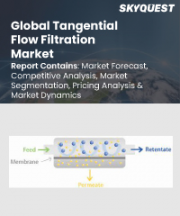
Tangential flow filtration, also known as crossflow filtration, has emerged as a pivotal separation technique in a wide array of biopharmaceutical, food and beverage, and water treatment processes. This method leverages a tangential flow of feed streams across membrane surfaces to maximize throughput and reduce fouling, offering enhanced product recovery and process efficiency. The ability to gently process sensitive biomolecules while maintaining high retention rates has positioned TFF as a cornerstone technology in modern downstream processing.
Over the past decade, advances in membrane chemistry and module design have propelled TFF beyond conventional applications. Innovations in membrane materials, such as polyethersulfone and ceramic variants, have extended chemical compatibility and improved cleaning cycles, thereby lowering operating costs. At the same time, the adoption of single-use cassette systems has simplified scale-up from laboratory to manufacturing settings, enabling more agile process development and reducing turnaround times for validation.
This executive summary distills the core findings of an in-depth market analysis, offering actionable insights into the evolving tangential flow filtration landscape. It outlines key technological shifts, regulatory influences, and strategic considerations that inform capital investments, product development, and supply chain optimization. Ultimately, readers will gain a comprehensive understanding of the critical drivers shaping both current practices and future opportunities in this high-value filtration sector.
Examining the Transformative Technological Developments and Market Shifts Shaping Tangential Flow Filtration Applications Across Industries
As emerging process intensification demands reshape upstream and downstream workflows, tangential flow filtration systems have undergone rapid transformation. Recent breakthroughs in membrane fabrication techniques now allow for precisely controlled pore geometries, unlocking higher selectivity and throughput while mitigating fouling risks. This technological momentum has been further amplified by seamless integration of digital sensors and automated control platforms, enabling real-time monitoring of transmembrane pressure and permeate flux. As a result, process developers are better equipped to optimize filtration cycles and reduce variability, ultimately driving more predictable process outcomes.
Concurrently, sustainability considerations have spurred the development of eco-friendly membrane materials and energy-efficient pumps that lower the environmental footprint of filtration operations. Continuous processing paradigms have gained prominence as manufacturers seek to diverge from traditional batch workflows and embrace streamlined, end-to-end production models. These shifts reflect a broader transition toward modular manufacturing architectures, where compact and flexible TFF units can be rapidly deployed to address fluctuating demand and emerging therapeutic modalities.
Taken together, these transformative developments underscore the dynamic nature of tangential flow filtration technology. From the adoption of single-use consumables to the refinement of digital process analytics, market players are redefining best practices and setting new performance benchmarks for separation efficiency and operational excellence.
Assessing the Combined Effects of United States Trade Tariffs Implemented in 2025 on Tangential Flow Filtration Supply Chains and Cost Structures
In 2025, the implementation of new trade tariffs in the United States has reverberated across the tangential flow filtration supply chain, exerting pressure on both raw material sourcing and finished system pricing. Increased duties on polymer resins essential for membrane manufacturing, in addition to levies targeting stainless steel and other metallic components, have elevated production costs. Filtration module vendors and end users alike have been compelled to reassess supplier portfolios and negotiate long-term agreements to mitigate margin erosion and maintain stable inventory levels.
Amid these commercial adjustments, procurement teams have turned to localized manufacturing and nearshoring strategies to reduce exposure to cross-border tariffs and logistical bottlenecks. While some membrane producers have shifted operations closer to key markets in North America, others have accelerated the adoption of alternative materials less affected by duty changes. These adaptations have not only alleviated immediate cost burdens but also reinforced supply chain resilience against future trade policy fluctuations.
Looking beyond the tariff effects, the industry remains mindful of the potential downstream implications for end users. Pass-through costs may influence project budgets in biopharmaceutical development and water treatment infrastructure, prompting a reexamination of capital expenditure cycles. Nevertheless, the proactive responses observed across the value chain illustrate a collective commitment to sustaining innovation and ensuring uninterrupted access to critical filtration solutions.
Unlocking Market Dynamics Through Detailed Examination of Material, Product, Scale, Pore Size, Application, and End User Segmentation in Tangential Flow Filtration
Detailed segmentation analysis reveals the multifaceted nature of the tangential flow filtration market and highlights the specific performance attributes driving adoption. When considering membrane material, cellulose acetate remains a cost-effective alternative for standard clarification tasks while ceramic membranes deliver exceptional chemical resistance in harsh process environments. Polyethersulfone polymers continue to dominate biopharmaceutical applications due to their superior biocompatibility and low protein-binding properties, whereas polyvinylidene fluoride options offer enhanced thermal stability and wide pH tolerance for demanding downstream operations.
Product type distinctions further delineate market dynamics, with cassette configurations favored for high-throughput manufacturing and flat sheet setups employed in scalable process development. Hollow fiber modules provide a compact footprint ideal for pilot-scale investigations and multistep upstream integrations. Scale considerations span laboratory-scale units used for early-stage method screening to robust manufacturing-scale installations that support large-volume production, alongside pilot-scale plants that bridge the gap between benchtop trials and full-scale rollout.
Pore size segmentation underscores the interplay between microfiltration, nanofiltration, and ultrafiltration capabilities, enabling precise molecule separation based on particle dimensions and target purity thresholds. Application-driven requirements span biopharmaceutical processes such as cell harvest clarification, concentration and diafiltration, downstream polishing, and upstream conditioning, as well as food and beverage operations that demand stringent quality control. In water treatment environments, the technology underpins industrial effluent polishing, municipal water purification, and advanced wastewater reuse schemes. End-user categories encompass academic and research institutes pioneering formulation studies, biotech companies scaling novel therapeutics, contract research organizations providing specialized services, and established pharmaceutical firms driving commercial launch activities.
Analyzing Regional Market Trends and Adoption Patterns Across the Americas, Europe Middle East & Africa, and Asia-Pacific for Filtration Technologies
Regional analysis highlights distinct adoption patterns and regulatory frameworks across major geographies, reflecting varying market maturities and investment priorities. In the Americas, robust biopharmaceutical pipelines and established water treatment mandates have propelled demand for advanced filtration systems. Innovators in this region are quickly integrating single-use TFF cassettes within clinical and commercial manufacturing environments to accelerate time-to-market and improve process economics. Meanwhile, emerging applications in food and beverage processing are gaining traction as producers seek to meet stringent quality standards and scale novel protein formulations.
Across Europe, the Middle East and Africa, diversity in economic development and policy landscapes shapes the uptake of tangential flow filtration solutions. Western Europe has set ambitious sustainability targets that prioritize energy-efficient membrane operations and water conservation, whereas pockets of growth in the Middle East are driven by investments in desalination and industrial treatment infrastructure. In select African nations, public-private partnerships are catalyzing wastewater reuse projects, fostering incremental deployment of crossflow technologies in municipal and industrial settings.
In the Asia-Pacific region, rapid expansion of contract manufacturing organizations and rising research expenditure have positioned this market as a key growth frontier. Manufacturers are investing heavily in filtration hardware tailored for high-volume drug substance production, while regulatory harmonization initiatives in major markets like China and India are streamlining approval pathways for biopharma consumables. Concurrently, increasing demand for safe drinking water and sustainable food processing methods underscores the expanding role of tangential flow filtration in addressing complex quality and environmental challenges within the region.
Profiling Leading Organizations Driving Innovation, Partnerships, and Competitive Strategies in Tangential Flow Filtration Market Landscape
Leading corporations within the tangential flow filtration arena have demonstrated strategic agility through targeted product launches, collaborative partnerships, and acquisitions that bolster their technological portfolios. A prominent system supplier has extended its single-use cassette lineup with high-performance membranes engineered for ultrafiltration, thereby catering to both therapeutic protein concentration tasks and viral clearance applications. Another key player has invested in integrated filtration and chromatography systems, offering turnkey solutions that streamline downstream processing workflows and reduce facility footprint.
Collaborative ventures between membrane manufacturers and digital analytics firms are driving novel sensor integrations to enable predictive maintenance and adaptive control across filtration cycles. These alliances reflect a broader industry trend toward data-driven operations, where real-time process insight translates into reduced downtime and improved yield consistency. In parallel, strategic acquisitions of niche membrane producers have enabled major filtration suppliers to diversify their material offerings and strengthen global manufacturing networks, ensuring broader geographic reach and localized support.
Furthermore, several organizations are leveraging their channel networks to provide modular training programs and instrumentation services, enhancing end-user capabilities and fostering stronger customer relationships. This customer-centric approach is reinforced by dedicated research initiatives that explore emerging modalities, such as exosome enrichment and continuous virus inactivation, underscoring the commitment to expand the frontiers of tangential flow filtration technology.
Strategic Action Plans and Tactical Recommendations to Enhance Market Positioning and Operational Efficiency for Industry Leaders
Industry leaders seeking to capitalize on the evolving tangential flow filtration landscape should prioritize investments in advanced membrane chemistries and module designs that address emerging molecule classes and throughput requirements. To bolster supply chain resilience, it is advisable to diversify material sourcing by qualifying multiple vendors and exploring alternative membrane substrates less susceptible to trade policy fluctuations. Concurrently, integrating digital process controls and analytics platforms will empower real-time adjustments to transmembrane pressure and permeate flux, thereby reducing variability and extending membrane life cycles.
Expanding footprint in emerging markets requires a tailored approach that navigates local regulatory frameworks and aligns with regional infrastructure initiatives. Forming strategic partnerships with contract research organizations and academic institutions can accelerate technology adoption by tapping into localized expertise and facilitating co-development projects. Moreover, embedding sustainability metrics within filtration operations-such as energy consumption per cycle and water reuse rates-will enhance corporate responsibility profiles and aid in meeting global environmental targets.
Finally, continuous workforce training and knowledge transfer programs are essential to maintain operational excellence and ensure that technical personnel are adept at deploying next-generation TFF modules. By fostering a culture of innovation and agility, organizations can secure competitive differentiation and unlock new application opportunities across biopharma, food and beverage, and water treatment domains.
Methodological Framework Detailing Research Design, Data Collection, and Analytical Procedures Underpinning the Tangential Flow Filtration Study
The research framework for this executive summary combines both qualitative and quantitative methods to deliver robust market intelligence. Secondary research entailed comprehensive review of industry publications, peer-reviewed journals, regulatory guidelines, and corporate white papers to establish foundational insights into tangential flow filtration technologies. These sources were augmented by proprietary data on patent filings and production capacities to map innovation trajectories and competitive landscapes.
Primary research involved structured interviews with filtration equipment manufacturers, membrane developers, process engineers, and end-user organizations. These discussions provided nuanced perspectives on technology adoption drivers, material preferences, and supply chain strategies. Data triangulation techniques were applied to reconcile disparate data points and validate findings, ensuring a high degree of confidence in the resulting analysis.
Analytical procedures encompassed comparative benchmarking of key performance metrics, such as permeate flux rates and fouling indices, alongside scenario modeling to assess the impact of policy changes on cost structures. Methodological rigor was maintained through peer review by subject matter experts, enhancing the credibility and applicability of the insights.
All findings are contextualized within clearly defined temporal and geographic parameters to ensure relevance, and methodological limitations are transparently documented. This multi-layered approach ensures that the conclusions drawn are well-grounded and actionable for decision-makers.
Synthesis of Core Insights and Forward-Looking Perspectives on Tangential Flow Filtration Industry Dynamics and Strategic Growth Implications
As the tangential flow filtration landscape continues to mature, it is evident that technological innovation, regulatory influences, and strategic supply chain adaptations will collectively shape future growth trajectories. Advances in membrane materials and digital integration are driving significant gains in process efficiency and product quality across multiple sectors. At the same time, evolving trade policies have highlighted the importance of resilient sourcing strategies and localized manufacturing capabilities.
Segmentation analysis underscores the necessity of tailoring solutions to specific material types, module formats, pore size requirements, and end-user applications. Regional variation in adoption patterns further emphasizes the value of understanding local market dynamics and regulatory frameworks. Moreover, competitive benchmarking reveals that companies engaging in targeted collaborations and acquisitions are best positioned to lead market development and deliver comprehensive filtration solutions.
Ultimately, organizations that embrace modular, data-driven approaches and invest in sustainable practices will secure long-term advantages in both operational performance and market differentiation. Through a balanced focus on innovation, strategic partnerships, and workforce development, stakeholders can navigate the complexities of the filtration landscape and capitalize on emerging opportunities.
This summary provides the strategic context necessary to drive informed decision-making and set a course for resilient, future-oriented growth.
Table of Contents
1. Preface
- 1.1. Objectives of the Study
- 1.2. Market Definition
- 1.3. Market Segmentation & Coverage
- 1.4. Years Considered for the Study
- 1.5. Currency Considered for the Study
- 1.6. Language Considered for the Study
- 1.7. Key Stakeholders
2. Research Methodology
- 2.1. Introduction
- 2.2. Research Design
- 2.2.1. Primary Research
- 2.2.2. Secondary Research
- 2.3. Research Framework
- 2.3.1. Qualitative Analysis
- 2.3.2. Quantitative Analysis
- 2.4. Market Size Estimation
- 2.4.1. Top-Down Approach
- 2.4.2. Bottom-Up Approach
- 2.5. Data Triangulation
- 2.6. Research Outcomes
- 2.7. Research Assumptions
- 2.8. Research Limitations
3. Executive Summary
- 3.1. Introduction
- 3.2. CXO Perspective
- 3.3. Market Size & Growth Trends
- 3.4. Market Share Analysis, 2025
- 3.5. FPNV Positioning Matrix, 2025
- 3.6. New Revenue Opportunities
- 3.7. Next-Generation Business Models
- 3.8. Industry Roadmap
4. Market Overview
- 4.1. Introduction
- 4.2. Industry Ecosystem & Value Chain Analysis
- 4.2.1. Supply-Side Analysis
- 4.2.2. Demand-Side Analysis
- 4.2.3. Stakeholder Analysis
- 4.3. Porter's Five Forces Analysis
- 4.4. PESTLE Analysis
- 4.5. Market Outlook
- 4.5.1. Near-Term Market Outlook (0-2 Years)
- 4.5.2. Medium-Term Market Outlook (3-5 Years)
- 4.5.3. Long-Term Market Outlook (5-10 Years)
- 4.6. Go-to-Market Strategy
5. Market Insights
- 5.1. Consumer Insights & End-User Perspective
- 5.2. Consumer Experience Benchmarking
- 5.3. Opportunity Mapping
- 5.4. Distribution Channel Analysis
- 5.5. Pricing Trend Analysis
- 5.6. Regulatory Compliance & Standards Framework
- 5.7. ESG & Sustainability Analysis
- 5.8. Disruption & Risk Scenarios
- 5.9. Return on Investment & Cost-Benefit Analysis
6. Cumulative Impact of United States Tariffs 2025
7. Cumulative Impact of Artificial Intelligence 2025
8. Tangential Flow Filtration Market, by Membrane Material
- 8.1. Cellulose Acetate
- 8.2. Ceramic
- 8.3. Polyethersulfone
- 8.4. Polyvinylidene Fluoride
9. Tangential Flow Filtration Market, by Product Type
- 9.1. Cassettes
- 9.2. Flat Sheet
- 9.3. Hollow Fiber
10. Tangential Flow Filtration Market, by Scale
- 10.1. Lab Scale
- 10.2. Manufacturing Scale
- 10.3. Pilot Scale
11. Tangential Flow Filtration Market, by Pore Size
- 11.1. Microfiltration
- 11.2. Nanofiltration
- 11.3. Ultrafiltration
12. Tangential Flow Filtration Market, by Application
- 12.1. Biopharmaceutical
- 12.1.1. Cell Harvest Clarification
- 12.1.2. Concentration & Diafiltration
- 12.1.3. Downstream Processing
- 12.1.4. Upstream Processing
- 12.2. Food & Beverage
- 12.3. Water Treatment
- 12.3.1. Industrial Treatment
- 12.3.2. Municipal Treatment
- 12.3.3. Wastewater Treatment
13. Tangential Flow Filtration Market, by End User
- 13.1. Academic & Research Institutes
- 13.2. Biotech Companies
- 13.3. Contract Research Organizations
- 13.4. Pharmaceutical Companies
14. Tangential Flow Filtration Market, by Region
- 14.1. Americas
- 14.1.1. North America
- 14.1.2. Latin America
- 14.2. Europe, Middle East & Africa
- 14.2.1. Europe
- 14.2.2. Middle East
- 14.2.3. Africa
- 14.3. Asia-Pacific
15. Tangential Flow Filtration Market, by Group
- 15.1. ASEAN
- 15.2. GCC
- 15.3. European Union
- 15.4. BRICS
- 15.5. G7
- 15.6. NATO
16. Tangential Flow Filtration Market, by Country
- 16.1. United States
- 16.2. Canada
- 16.3. Mexico
- 16.4. Brazil
- 16.5. United Kingdom
- 16.6. Germany
- 16.7. France
- 16.8. Russia
- 16.9. Italy
- 16.10. Spain
- 16.11. China
- 16.12. India
- 16.13. Japan
- 16.14. Australia
- 16.15. South Korea
17. United States Tangential Flow Filtration Market
18. China Tangential Flow Filtration Market
19. Competitive Landscape
- 19.1. Market Concentration Analysis, 2025
- 19.1.1. Concentration Ratio (CR)
- 19.1.2. Herfindahl Hirschman Index (HHI)
- 19.2. Recent Developments & Impact Analysis, 2025
- 19.3. Product Portfolio Analysis, 2025
- 19.4. Benchmarking Analysis, 2025
- 19.5. ABEC Inc.
- 19.6. Alfa Laval AB
- 19.7. Andritz AG
- 19.8. Bionet Servicios Tecnicos SL
- 19.9. BPE Biotree India Pvt.Ltd.
- 19.10. Cobetter Filtration Equipment Co. Ltd.
- 19.11. Cole-parmer Instrument Company, Llc
- 19.12. Cytiva
- 19.13. Donaldson Company, Inc.
- 19.14. Formulatrix International Holding Limited
- 19.15. Koch Separation Solutions, Inc.
- 19.16. Mantec Technical Ceramics Ltd
- 19.17. Meissner Filtration Products, Inc.
- 19.18. Merck KGaA
- 19.19. Metso Corporation
- 19.20. Microfilt India Pvt. Ltd.
- 19.21. Optimal Biotech Group, LLC
- 19.22. Parker Hannifin Corporation
- 19.23. PendoTECH
- 19.24. Repligen Corporation
- 19.25. Sartorius Ag
- 19.26. SmartFlow Technologies, Inc.
- 19.27. Solaris by Donaldson Company
- 19.28. SPF Technologies, LLC
- 19.29. Sterlitech Corporation
- 19.30. Synder Filtration, Inc.
- 19.31. Sysbiotech Gmbh
- 19.32. TAMI Industries
- 19.33. YMC America's Inc.