|
시장보고서
상품코드
1624585
라틴아메리카의 화장품 포장 시장: 시장 점유율 분석, 산업 동향 및 통계, 성장 예측(2025-2030년)Latin America Cosmetic Packaging - Market Share Analysis, Industry Trends & Statistics, Growth Forecasts (2025 - 2030) |
||||||
 Mordor Intelligence
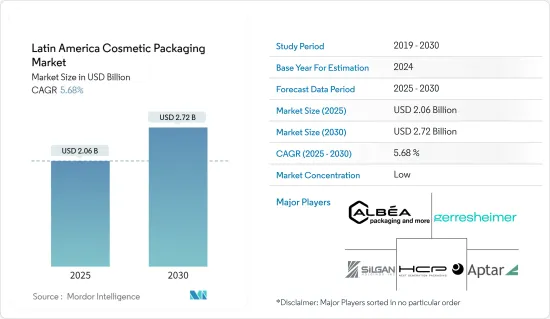
라틴아메리카의 화장품 포장 시장 규모는 2025년 20억 6,000만 달러로 추정되며, 예측 기간(2025-2030년) 동안 5.68%의 연평균 복합 성장률(CAGR)로 2030년에는 27억 2,000만 달러에 달할 전망입니다.

주요 하이라이트
- 멕시코와 브라질의 인구 증가는 소규모 도시의 도시화 및 고령화와 같은 인구 통계학적 변화와 함께 이 지역 시장 성장을 견인할 것으로 예상됩니다. 노동 인구에 합류하는 여성 증가는 멕시코의 미용 및 퍼스널케어 시장 확대에 기여할 것으로 예상됩니다. 또한, 멕시코경쟁 구도를 고려할 때, 기업이 경쟁사와 차별화하기 위해서는 기술 혁신이 필수적이라는 점은 변함이 없습니다.
- 최근 몇 년동안 라틴아메리카의 화장품 포장은 큰 성장을 이루었습니다. 모든 산업 중에서 화장품은 가장 다양한 포장 수요를 가지고 있습니다. 최근 몇 년동안 업계는 플라스틱 오염에 대처하고 혁신적인 포장 전략을 채택하고 포뮬러를 강화하기 위해 함께 노력하고 있습니다. 오래된 포장 재료인 유리는 비다공성, 불침투성 특성을 자랑합니다. 그 내구성으로 인해 화학적으로 불활성이며 시간이 지나도 열화되지 않습니다. 기능적 장점뿐만 아니라 유리는 제품에 고급스러운 느낌을 주며, 소비자는 내용물과 색상을 볼 수 있습니다. 이러한 투명성은 화장품 포장에 널리 사용되는 결정적인 이유입니다.
- 라틴아메리카는 화장품과 향수 공장 생산의 거점이 되었습니다. 이 시대는 천연 성분에서 화학 성분으로의 전환을 의미했습니다. 향기에 대한 화학적 해명이 진행되면서 합성 향수가 탄생하여 전통적인 향수 산업에 혁명을 일으켰습니다. 기업이들은 브랜드를 구축하기 시작했고, 매력적인 포장, 유명인 추천, 소비자와의 정서적 유대감 형성에 주력했습니다. 이러한 브랜드 제품은 순수한 기능성 제품에서 희망과 동경의 그릇으로 진화했습니다.
- 소비자들이 미용 및 미용 제품에 대한 지출이 증가함에 따라 고급 제품에 대한 수요가 증가하여 유리 병 및 용기 시장을 촉진하고 있습니다. 이러한 추세는 특히 화장품 및 향수 산업에서 두드러지며, 포장은 제품 인지도와 브랜드 이미지에 중요한 역할을 하고 있습니다. 유리 포장은 품질, 재활용성, 제품의 무결성을 유지하는 능력으로 인해 고급 제품에 선호되는 경우가 많습니다.
- 페루, 코스타리카, 파나마 등 시장은 화장품 포장재에 특히 유리한 것으로 입증되어 유리 포장 산업의 성장에 더욱 영향을 미치고 있습니다. 이들 국가는 급속한 경제 발전과 중산층 확대로 인해 퍼스널케어 및 미용 제품 소비가 증가하고 있습니다. 이에 따라 국내외 화장품 브랜드들이 이들 시장에서 입지를 넓혀가고 있으며, 유리병과 용기를 포함한 고품질 포장 솔루션에 대한 수요를 주도하고 있습니다.
- 라틴아메리카에서는 플라스틱 포장에 대한 정부 규제가 강화되어 시장을 제한하고 있습니다. 그러나 이러한 규제는 특히 화장품 포장에 있어서는 지속가능성을 실천할 수 있는 기회로 작용하고 있습니다. 규제에 대한 압박과 친환경 제품에 대한 소비자 수요는 친환경 소재로 전환을 촉진하고 있습니다. 이 지역의 기업들은 연구개발에 투자하여 시장의 요구를 충족하고 새로운 규제에 부합하는 혁신적이고 지속 가능한 포장 솔루션을 개발하고 있습니다.
중남미 화장품 포장 시장 동향
중남미 화장품 포장 시장 동향유리병과 용기가 큰 시장 점유율을 차지합니다.
- 유리 용기 포장은 다양한 산업에서 액체 의약품, 화장품, 향수 등을 보관하는 데 널리 사용되고 있습니다. 이 용기는 고품질 유리로 만들어졌으며, 플라스틱 드롭퍼가 장착되어 있어 기존의 약병과 차별화됩니다. 스포이트를 사용하면 액체를 정확하게 분배할 수 있어 낭비를 최소화할 수 있습니다. 이러한 용기에 유리를 사용하면 화학적 불활성, 투명성, 재활용성 등 몇 가지 장점이 있습니다.
- 유리병은 액체 의약품, 스킨케어 제품, 향수 및 기타 정확한 용량 관리가 필요한 용도의 보존에 널리 사용되고 있습니다. 특히 제약 산업은 제품의 무결성을 유지하고 보존 기간을 연장할 수 있기 때문에 유리 포장의 이점을 누릴 수 있습니다. 화장품 및 퍼스널케어 업계에서도 유리병의 미적 매력과 인지된 품질을 활용하여 고급 제품에 유리병을 사용하고 있습니다. 유리병의 다용도성과 스포이드의 기능성은 에센셜 오일, 아로마테라피 제품 등 다양한 틈새 시장에서 유리병의 채택으로 이어지고 있습니다.
- 유리병 시장은 합성 향료보다 천연 향료에 대한 수요 증가와 고급 향수의 인기 상승으로 인해 예측 기간 동안 크게 성장할 것으로 예상됩니다. 이러한 추세에 따라 기업들은 향수 유리병의 혁신적인 디자인에 투자하고 독특한 모양, 질감 및 장식을 탐구하여 제품의 매력을 높이기 위해 노력하고 있습니다. 향수 유리병은 균형 잡힌 모양과 우수한 반사율로 인해 고급 제품으로 간주되어 향기의 전반적인 감각에 기여합니다.
- 유리 소재는 또한 향기의 무결성을 유지하고 보존 기간을 연장하는 데 도움이되며, 2023년 멕시코의 화장품, 향수 및 세면 용품 생산량은 82 억 5,000만 달러 이상으로 2022년의 76 억 9,000만 달러에서 증가했습니다. 이러한 성장은 고급 미용 및 향수 제품에 대한 소비자 수요 증가와 세계 화장품 및 향수 산업에서 멕시코의 입지가 강화되고 있음을 반영합니다.
- 환경에 미치는 영향에 대한 소비자의 인식이 높아짐에 따라 폐기물을 줄이는 지속 가능한 제품에 대한 수요가 증가하고 있습니다. 이러한 추세는 향수 업계에서 리필용 유리병의 인기를 크게 높이고 있습니다. 리필용 향수병은 일회용 포장의 필요성을 없애고 플라스틱 폐기물을 크게 줄임으로써 환경 친화적인 가치관에 부합합니다. 품질 저하 없이 무한히 재활용할 수 있는 유리는 리필용 향수 용기에 선호되는 재료로 부상하고 있습니다.
- 리필 가능한 유리 병으로의 전환은 환경 문제를 해결하고 소비자에게 더 고급스럽고 오래 지속되는 제품 경험을 제공합니다. 향수 브랜드는 이러한 추세에 대응하기 위해 인기있는 향수에 리필용을 도입하여 고객이 원래의 병을 재사용 할 수 있도록하여 전체 포장 폐기물을 줄입니다. 또한 리필용 유리병을 사용하면 같은 양의 향수를 담은 새 병을 구입하는 것보다 리필용 병의 가격이 일반적으로 저렴하기 때문에 장기적으로 소비자의 비용 절감으로 이어질 수 있습니다.
눈에 띄는 성장세를 기록하는 브라질
- 브라질의 여성 인구 증가는 이 지역의 화장품 수요를 크게 견인하고 있습니다. 이러한 인구 통계학적 변화는 국가 전체 화장품 시장을 끌어올릴 것으로 예상됩니다. 노동력으로 일하는 여성 증가와 가처분 소득 증가는 화장품 산업의 성장에 기여하고 있습니다. 브라질 여성들은 미적 감각이 뛰어나고 퍼스널케어 제품에 대한 투자 의향이 높은 것으로 알려져 시장 확대에 더욱 박차를 가하고 있습니다.
- 또한 브라질은 삶의 질을 유지하려는 소비자의 의식에 힘입어 스킨케어 제품 개발 및 신흥 시장으로서 유망한 시장으로 부상하고 있습니다. 브라질의 다양한 기후와 환경적 조건은 독특한 스킨케어 니즈를 창출하고 있으며, 제조업체들이 전문 제품을 개발하도록 장려하고 있습니다. 브라질 소비자들은 노화 방지, 자외선 차단, 보습 등 다양한 고민을 동시에 해결할 수 있는 다기능 스킨케어 솔루션을 원하고 있습니다.
- 또한, 브라질의 젊은 층과 노년층 사이에서 채식주의가 확산됨에 따라 유기농 및 비건 스킨케어 제품에 대한 수요도 증가하고 있습니다. 이러한 추세는 보다 지속 가능하고 윤리적으로 생산된 화장품으로의 광범위한 변화입니다. 소비자들은 원료 조달과 환경에 미치는 영향에 대한 인식이 높아지면서 천연, 식물성, 무농약 제품에 대한 관심이 높아지고 있습니다. 국내외 브랜드들은 브라질 소비자들의 변화하는 취향에 발맞추어 친환경 비건 제품 라인을 확대하며 이러한 수요에 부응하고 있습니다.
- 브라질은 아르헨티나, 콜롬비아, 칠레에서 향수, 화장품, 목욕용품을 수입하고 있습니다. 또한 프랑스와 미국에서도 화장품을 조달하고 있습니다. 브라질은 완제품 생산을 수입에 의존하고 있습니다. 현지 생산을 장려하기 위해 브라질 정부는 수입세를 도입했습니다. 알베아와 같은 기업들은 브라질에서 화장품 포장 사업의 현지화에 주력하고 있으며, 2023년에는 브라질의 미용 및 개인 위생 제품 수출이 수입을 초과하여 무역 흑자를 기록했습니다. 이 해 브라질은 9억 1,100만 달러 상당의 화장품 및 위생 용품을 국제 시장에 수출하여 전년 대비 크게 증가했으며, 2020년 이전에는 이 시장에서 무역 적자를 기록했었습니다. 브라질 미용 및 퍼스널케어 시장의 주요 제품 분야에는 스킨케어 제품, 자외선 차단제, 브론저, 헤어케어 등이 포함됩니다.
- 고품질의 다양한 헤어케어 제품으로 유명한 브라질은 현재 스킨케어 시장에서도 존재감을 높이고 있습니다. 브라질 화장품 업계는 다양한 스킨케어 제품과 지속 가능한 패키징을 도입하여 소비자의 취향 변화에 대응하고 있습니다. 브라질의 스킨케어 브랜드들은 지속가능성과 디지털 혁신에 중점을 두고 브라질 사람들의 다양한 피부색과 고유한 뷰티 니즈에 맞는 제품을 개발하고 있습니다. 이 제품들은 브라질의 풍부한 생물 다양성을 활용하고 광활한 생태계 자원에서 조달한 천연 성분을 함유하고 있습니다.
- 브라질의 프랜차이즈 산업은 세계에서 가장 크고 선진적인 산업 중 하나이며, 이 산업을 관리하는 특별법도 마련되어 있습니다. 프랜차이즈 체인 수는 세계 5위입니다. 화장품 시장에서는 향수 분야가 꾸준한 성장세를 보이며 디스펜싱 시스템, 스프레이 캡 등 관련 제품 수요를 견인하고 있습니다. 가격에 민감하지만 브라질 소비자들은 고급 화장품에 대한 투자를 아끼지 않습니다.
라틴아메리카의 화장품 포장 산업 개요
라틴아메리카의 화장품 포장 시장은 단편화되어 있으며, Albea Group, Hcp Packaging, Aptar Group, Silgan Holdings Inc. 등 여러 세계 및 지역 기업들이 치열한 시장 경쟁에서 주목받고 있습니다. 이 시장 특징은 제품 차별화가 낮고, 제품 침투도가 높으며, 경쟁이 치열하다는 것입니다.
- 2024년 5월 디스펜서 패키징 솔루션 제공업체인 Aptar Beauty는 새로운 향수 펌프를 출시했습니다. 이 회사는 기계식 PCR(Post-Consumer Recycled Resin) 플러스 소재를 최대 67%까지 통합한 최초의 제품이라고 밝혔습니다.
- 2023년 10월 제약, 생명공학 및 화장품 산업을 위한 혁신적인 시스템과 솔루션을 전 세계에 제공하는 Gerresheimer는 바이오 소재 전문 스타트업인 Rezemo와 파트너십을 체결했습니다. 이 제휴는 화장품, 식음료 및 제약 산업의 1차 포장에 지속 가능한 마감을 제공하는 것을 목표로 하고 있습니다.
기타 혜택
- 엑셀 형식 시장 예측(ME) 시트
- 3개월간의 애널리스트 지원
목차
제1장 서론
- 조사 상정과 시장 정의
- 조사 범위
제2장 조사 방법
제3장 주요 요약
제4장 시장 인사이트
- 시장 개요
- 업계 공급망 분석
- 업계의 매력 - Porter의 Five Forces 분석
- 공급 기업의 교섭력
- 소비자의 교섭력
- 신규 진출업체의 위협
- 대체품의 위협
- 경쟁 기업간 경쟁 관계
제5장 시장 역학
- 시장 성장 촉진요인
- 시장이 해결해야 할 과제
제6장 시장 세분화
- 재료 유형별
- 플라스틱
- 유리
- 금속
- 종이 및 판지
- 화장품 유형별
- 헤어케어
- 색조 화장품
- 스킨케어
- 남성용 그루밍 제품
- 데오드란트
- 기타 화장품 유형(향수, 제모제, 베이비&차일드 케어, 썬케어)
- 제품 유형별
- 플라스틱병 및 용기
- 유리병 및 용기
- 금속 용기
- 폴딩 카톤
- 골판지 상자
- 튜브&스틱
- 뚜껑 및 마개
- 펌프 및 디스펜서
- 스포이드
- 앰플
- 연질 플라스틱 포장
- 국가별
- 브라질
- 멕시코
- 콜롬비아
제7장 경쟁 구도
- 기업 개요
- Albea SA
- HCP Packaging Co. Ltd
- RPC Group PLC(Berry Global Group)
- Silgan Holdings Inc.
- DS Smith PLC
- Graham Packaging LP
- Libo Cosmetics Company Ltd
- AptarGroup Inc.
- Amcor Group GmbH
- Cosmopak Ltd
- Quadpack Industries SA
- Rieke Corp.
- Gerresheimer AG
- Raepak Ltd
제8장 투자 분석
제92장 시장의 미래
LSH 25.01.15The Latin America Cosmetic Packaging Market size is estimated at USD 2.06 billion in 2025, and is expected to reach USD 2.72 billion by 2030, at a CAGR of 5.68% during the forecast period (2025-2030).
Key Highlights
- The growing populations of Mexico and Brazil, coupled with demographic shifts such as urbanization in smaller cities and an aging population, are expected to drive the region's market growth. The increasing number of women joining the workforce is expected to contribute to expanding the Mexican beauty and personal care market. Moreover, given Mexico's competitive landscape, innovation remains critical for businesses to differentiate themselves from competitors.
- In recent years, cosmetic packaging in Latin America has experienced significant growth. Among all industries, cosmetics have the most diverse packaging needs. Recently, the industry has come together to address plastic pollution, adopting innovative packaging strategies and enhancing formulations. Glass, a time-honored packaging material, boasts nonporous and impermeable qualities. Its durability ensures it remains chemically inert and does not degrade over time. Beyond its functional benefits, glass lends a premium appeal to products, allowing consumers to see its content and color. This transparency is a crucial reason for its prevalent use in cosmetic packaging.
- Latin America became a hub for the factory-based production of cosmetics and perfumes. This era marked a shift from natural ingredients to chemical formulations. Advancements in understanding scent chemistry led to the creation of synthetic perfumes, revolutionizing the traditional fragrance industry. Entrepreneurs began establishing brands, focusing on attractive packaging, celebrity endorsements, and creating emotional connections with consumers. These branded products evolved from purely functional items to vessels of hope and aspiration.
- The increasing consumer expenditure on grooming and beauty products drives the demand for premium items, boosting the market for glass bottles and containers. This trend is particularly evident in the cosmetics and perfume industries, where packaging plays a crucial role in product perception and brand image. Glass packaging is often preferred for high-end products due to its perceived quality, recyclability, and ability to preserve product integrity.
- Markets such as Peru, Costa Rica, and Panama are proving to be particularly lucrative for cosmetics packaging, further influencing the growth of the glass packaging industry. These countries are experiencing rapid economic development and a growing middle class, leading to increased consumption of personal care and beauty products. As a result, local and international cosmetics brands are expanding their presence in these markets, driving the demand for high-quality packaging solutions, including glass bottles and containers.
- Increasing government regulations on plastic packaging in Latin America constrain the market. However, these regulations also present an opportunity for sustainable practices, particularly in cosmetic packaging. Regulatory pressures and consumer demand for environmentally responsible products drive the shift toward eco-friendly materials. The region's companies invest in research and development to create innovative, sustainable packaging solutions that comply with new regulations while meeting market needs.
Latin America Cosmetic Packaging Market Trends
Glass Bottles and Containers to Hold Significant Market Share
- Glass packaging has gained popularity for storing liquid medicines, cosmetics, and perfumes across various industries. These containers are crafted from high-quality glass and feature a plastic dropper, distinguishing them from traditional medicine bottles. The dropper enables precise dispensing of liquids and minimizes waste. Using glass for these containers offers several advantages, including chemical inertness, transparency, and recyclability.
- Glass bottles are widely used for storing liquid medicines, skincare products, perfumes, and other applications requiring accurate dosage control. The pharmaceutical industry, in particular, benefits from glass packaging because it maintains product integrity and extends shelf life. The cosmetics and personal care industries also utilize glass bottles for premium products, leveraging their aesthetic appeal and perceived quality. The versatility of glass packaging and the functionality of droppers has led to its adoption in various niche markets, such as essential oils and aromatherapy products.
- The market for glass bottles is expected to grow significantly during the forecast period, driven by the increasing demand for natural fragrances over synthetic-based ingredients and the rising popularity of luxury perfumes. This trend has prompted companies to invest in innovative designs for perfume glass bottles, exploring unique shapes, textures, and embellishments to enhance product appeal. Perfume glass bottles are considered high-end luxury items due to their well-rounded shapes and excellent reflectivity, which contribute to the overall sensory experience of the fragrance.
- The glass material also helps preserve the scent's integrity and extends its shelf life. In 2023, Mexico's production of cosmetics, perfumes, and toiletries reached over USD 8.25 billion, an increase from USD 7.69 billion in 2022. This growth reflects the increasing consumer demand for premium beauty and fragrance products and Mexico's strengthening position in the global cosmetics and perfume industry.
- Increasing consumer awareness of environmental impact has driven a growing demand for sustainable products that reduce waste. This trend has significantly boosted the popularity of refillable glass bottles in the perfume industry. Refillable perfume bottles align with eco-conscious values by eliminating the need for disposable packaging and substantially reducing plastic waste. Being infinitely recyclable without quality degradation, glass has emerged as the preferred material for refillable perfume containers.
- This shift toward refillable glass bottles addresses environmental concerns and offers consumers a more luxurious and long-lasting product experience. Perfume brands respond to this trend by introducing refill options for their popular fragrances, allowing customers to reuse their original bottles and reducing overall packaging waste. Additionally, using refillable glass bottles often results in cost savings for consumers in the long run, as refills are typically priced lower than purchasing a new bottle with the same amount of perfume.
Brazil to Register Significant Growth
- The expanding female population in Brazil significantly drives the demand for cosmetic products in the region. This demographic shift is expected to boost the makeup market across the country. The increasing number of women in the workforce and rising disposable incomes contribute to the growth of the cosmetics industry. Brazilian women are known for their beauty consciousness and willingness to invest in personal care products, further fueling market expansion.
- Additionally, Brazil presents a promising market for skin care product developments and launches, driven by consumer attitudes towards maintaining quality of life. The country's diverse climate and environmental conditions create unique skincare needs, prompting manufacturers to develop specialized products. Brazilian consumers are increasingly seeking multifunctional skincare solutions that address various concerns simultaneously, such as anti-aging, sun protection, and hydration.
- The demand for organic and vegan skin care products is also rising as veganism gains traction among young and older adults in Brazil. This trend is a broader shift towards more sustainable and ethically produced cosmetics. Consumers are becoming more aware of ingredient sourcing and environmental impact, leading to increased interest in natural, plant-based, and cruelty-free products. Local and international brands are responding to this demand by expanding their eco-friendly and vegan product lines, catering to the evolving preferences of Brazilian consumers.
- Brazil imports perfumes, cosmetics, and bath products from Argentina, Colombia, and Chile. The country also sources cosmetics from France and the United States. Brazil continues to rely on imports for the production of finished products. To encourage local production, the Brazilian government has implemented import taxes. Companies like Albea are focusing on localizing their cosmetic packaging operations in Brazil. In 2023, Brazil's exports of beauty and personal care products surpassed imports, resulting in a trade surplus. That year, Brazil exported cosmetics and hygiene products worth over USD 911 million to international markets, a significant increase from the previous year. Before 2020, Brazil recorded trade deficits in this market. Key product segments in the Brazilian beauty and personal care market include skin care products, sunscreen, bronzers, and hair care.
- Brazil, renowned for its high-quality and diverse hair products, is now expanding its presence in the skincare market. The country's cosmetics industry responds to changing consumer preferences by introducing a wider range of skincare products and sustainable packaging options. Brazilian skincare brands emphasize sustainability and digital innovation, developing products tailored to the diverse skin tones and unique beauty needs of the Brazilian population. These products leverage the country's rich biodiversity, incorporating natural ingredients sourced from its vast ecological resources.
- Brazil's franchising industry is among the world's largest and most advanced, with specific legislation governing the sector. The country ranks fifth globally in terms of franchise chain numbers. In the cosmetics market, the perfume segment shows consistent growth, driving demand for related products like dispensing systems and spray caps. Despite price sensitivity, Brazilian consumers are willing to invest in premium cosmetic products.
Latin America Cosmetic Packaging Industry Overview
The Latin American cosmetic packaging market is fragmented, with several global and regional players, such as Albea Group, Hcp Packaging Co. Ltd, Aptar Group, and Silgan Holdings Inc., vying for attention in a contested market space. This market is characterized by low product differentiation, growing levels of product penetration, and high levels of competition.
- May 2024: Aptar Beauty, a provider of dispensing packaging solutions, launched a new fragrance pump. The company claims it is the first to incorporate up to 67% mechanical PCR (post-consumer recycled resin) Plus material.
- October 2023: Gerresheimer, a global provider of innovative systems and solutions for the pharmaceutical, biotech, and cosmetics industries, partnered with Rezemo, a start-up specializing in bio-based materials. This collaboration aims to offer sustainable closures for primary packaging in the cosmetics, food and beverage, and pharmaceutical industries.
Additional Benefits:
- The market estimate (ME) sheet in Excel format
- 3 months of analyst support
TABLE OF CONTENTS
1 INTRODUCTION
- 1.1 Study Assumption and Market Definition
- 1.2 Scope of the Study
2 RESEARCH METHODOLOGY
3 EXECUTIVE SUMMARY
4 MARKET INSIGHT
- 4.1 Market Overview
- 4.2 Industry Supply Chain Analysis
- 4.3 Industry Attractiveness - Porter's Five Forces Analysis
- 4.3.1 Bargaining Power of Suppliers
- 4.3.2 Bargaining Power of Consumers
- 4.3.3 Threat of New Entrants
- 4.3.4 Threat of Substitute Products
- 4.3.5 Intensity of Competitive Rivalry
5 MARKET DYNAMICS
- 5.1 Market Drivers
- 5.1.1 Increasing Consumption of Cosmetic Products
- 5.1.2 Increasing Focus on Innovation and Attractive Packaging
- 5.2 Market Challenges
- 5.2.1 Growing Sustainability Concerns due to Government Regulations
6 MARKET SEGMENTATION
- 6.1 By Material Type
- 6.1.1 Plastic
- 6.1.2 Glass
- 6.1.3 Metal
- 6.1.4 Paper and Paperboard
- 6.2 By Cosmetic Type
- 6.2.1 Hair Care
- 6.2.2 Color Cosmetics
- 6.2.3 Skin Care
- 6.2.4 Mens Grooming
- 6.2.5 Deodorants
- 6.2.6 Other Cosmetic Types (Fragrances, Depilatories, Baby and Child Care, and Sun Care)
- 6.3 By Product Type
- 6.3.1 Plastic Bottles and Containers
- 6.3.2 Glass Bottles and Containers
- 6.3.3 Metal Containers
- 6.3.4 Folding Cartons
- 6.3.5 Corrugated Boxes
- 6.3.6 Tubes and Sticks
- 6.3.7 Caps and Closures
- 6.3.8 Pump and Dispenser
- 6.3.9 Droppers
- 6.3.10 Ampoules
- 6.3.11 Flexible Plastic Packaging
- 6.4 By Country
- 6.4.1 Brazil
- 6.4.2 Mexico
- 6.4.3 Colombia
7 COMPETITIVE LANDSCAPE
- 7.1 Company Profiles
- 7.1.1 Albea SA
- 7.1.2 HCP Packaging Co. Ltd
- 7.1.3 RPC Group PLC (Berry Global Group)
- 7.1.4 Silgan Holdings Inc.
- 7.1.5 DS Smith PLC
- 7.1.6 Graham Packaging LP
- 7.1.7 Libo Cosmetics Company Ltd
- 7.1.8 AptarGroup Inc.
- 7.1.9 Amcor Group GmbH
- 7.1.10 Cosmopak Ltd
- 7.1.11 Quadpack Industries SA
- 7.1.12 Rieke Corp.
- 7.1.13 Gerresheimer AG
- 7.1.14 Raepak Ltd