|
시장보고서
상품코드
1911325
인도의 시니어 리빙 시장 : 점유율 분석, 업계 동향 및 통계, 성장 예측(2026-2031년)India Senior Living - Market Share Analysis, Industry Trends & Statistics, Growth Forecasts (2026 - 2031) |
||||||
 Mordor Intelligence
인도의 시니어 리빙 시장은 2025년에 35억 5,000만 달러로 평가되었으며, 2026년 44억 7,000만 달러에서 2031년까지 141억 4,000만 달러에 이를 것으로 예측됩니다.
예측기간(2026-2031년)의 CAGR은 25.92%로 전망되고 있습니다.
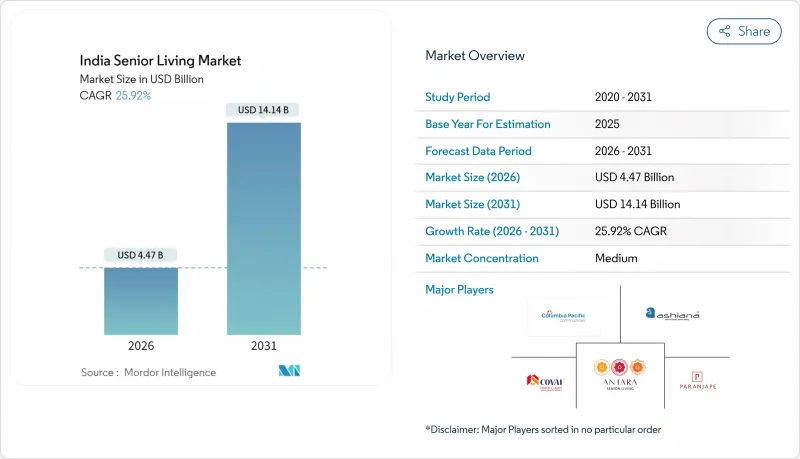
60세 이상 인구 비율이 증가하고 다세대 가구가 감소함에 따라 수요가 가속화되고 있습니다. 중산층 및 부유층이 증가함에 따라 의료시설과 건강증진 프로그램을 갖춘 고급 은퇴 커뮤니티에 대한 접근성이 확대되고 있습니다. 개발자는 노인 구매자의 거래 비용을 줄이는 국가 차원의 우대 조치에 힘입어 전통적인 남부 거점에서 북부와 서부 대도시 지역으로 진출하고 있습니다. 경쟁환경은 소규모 지역사업자에서 예방의료 및 원격의료의 사회참가 서비스를 통합한 부동산 및 의료연계기업으로 이행하고 있습니다.
인도의 시니어 리빙 시장의 동향 및 인사이트
급속한 고령화가 진행됨에 따라 시니어 리빙 솔루션에 대한 수요가 높아지고 있습니다.
인도의 인구 곡선은 가파른 경사를 보이고 있습니다. 60세 이상 인구는 2020년의 1억 5,300만명에서 2050년에는 3억 4,700만명으로 배 이상 증가하고 고령화율은 11%에서 21%로 상승할 전망입니다. 국가 예측에 따르면 노인 부양 비율은 2020년 16%에서 2050년까지 34%에 이를 것으로 예측됩니다. 이 변화를 먼저 체감하는 곳은 남부주입니다. 케랄라 주에서는 이미 고령자 비율이 16.5%에 달하고 있으며, 시니어 리빙에 대한 즉각적인 수요가 발생하고 있습니다. 시니어 리빙 커뮤니티의 현재 보급률은 1%이며 이는 미국의 11%에 비해 큰 성장 여지가 있음을 시사합니다. 예상 수요를 충족시키기 위해서는 2030년까지 고령자를 위해 설계된 약 240만 호의 신규 주택이 필요합니다.
핵가족화의 진전은 자립형 노인 커뮤니티의 필요성을 촉진
장기적인 도시화로 성인이 독립하는 경향이 강해지면서, 기존 대가족에 의한 간병 시스템이 약화되고 있습니다. 인도의 고령자 조사에 의하면, 도시의 고령자의 26.7%가 현재 독립생활을 하고 있습니다. 가족 네트워크 내에서의 교류나 일상적인 지원이 감소하는 가운데, 커뮤니티 지향 은퇴 복합시설에 대한 관심이 높아지고 있습니다. 많은 노인들이 같은 세대와의 교류 기회, 안전성, 부지 내 건강 모니터링을 결정적인 요인으로 꼽고 있습니다. 피어 리뷰를 통해 독거 생활과 노인 우울증 증가와의 연관성이 밝혀졌으며, 이는 조직형 사회적 환경의 매력을 뒷받침합니다. 가장 큰 기세는 뭄바이, 델리 도심, 방갈로르에서 나타나고 있으며 부동산 가격과 임대 비용이 여러 세대의 동거를 방해하고 있습니다.
가족 중심의 노인 간호를 중시하는 문화적 경향이 보급을 늦춥니다.
효의 정신은 인도에 여전히 깊이 뿌리를 두고 있습니다. 2007년 제정된 '부모 및 고령자 부양 복지법'은 성인에게 부모의 생활비를 부담하는 의무를 부과하여 가정 내 간병에 대한 기대를 강화하고 있습니다. 대부분의 가족의 경우 노인은 조직형 커뮤니티로 옮겨질 때 버려진 것으로 느낍니다. 이 편견은 공동 가구가 여전히 주류인 지방과 중규모 도시에서 더 강하게 나타나고 있습니다. 학술연구에 따르면 가족의 지원이 부족하다고 느끼는 노인들은 시설 입소를 검토할 때 더욱 강한 불안을 느끼고 있습니다. 인구동태의 현실이 이러한 규범을 서서히 무너뜨리고 있지만, 그 이행은 완만하며 주에 따라 다릅니다.
부문 분석
2025년 인도의 시니어 리빙 시장에서 자립생활형 시설은 64.50%의 점유율을 차지했습니다. 이 카테고리의 거주자는 표준 아파트와 유사한 유닛을 구입하거나 임대하여 긴급 신고 시스템, 하우스키핑, 레크리에이션 프로그램 등의 편의를 누릴 수 있습니다. 많은 프로젝트는 사교 클럽, 도서관 및 산책 코스를 집중적으로 배치하여 액티브 라이프스타일을 뒷받침합니다. 간병인이 있는 생활시설은 규모가 작지만 27.35%의 연평균 복합 성장률(CAGR)을 유지하고 있습니다.
건설업체는 현재 자립생활, 간병 생활 및 치매 케어의 각 동이 인접하는 '연속 케어형 캠퍼스'를 개발하고 있습니다. 이 배치를 통해 입주자는 익숙한 환경을 떠나지 않고도 관리 수준을 변경할 수 있습니다. 또, 간병 시설로 옮겨지는 고령자가 비운 주택을 신속하게 재임대할 수 있기 때문에 가동율 향상에도 기여합니다. 또한 3차 의료기관과의 제휴에 의해 전문의의 방문 진료를 실현하며 원격 진단 기술은 긴급 의료 상황 시에 대응 시간을 단축합니다. 기술 도입과 구체적으로는 혈압과 혈당 데이터를 전송하는 웨어러블 기기의 도입은 리스크 관리를 개선해 배상 책임 보험료의 절감으로 이어집니다.
기타 혜택
- 시장 예측(ME) 엑셀 시트
- 3개월 애널리스트 서포트
자주 묻는 질문
목차
제1장 서론
- 조사 전제조건 및 시장 정의
- 조사 범위
제2장 조사 방법
제3장 주요 요약
제4장 시장 상황
- 시장 개요
- 촉진요인
- 급속한 고령화에 의해 시니어 리빙 솔루션에 대한 수요 증가
- 핵가족화의 진전에 의해 자립생활형 시니어 리빙 커뮤니티 수요 증가
- 중산층의 자산 증가에 의해 고급 시니어 리빙의 비용 대비 효과 상승
- 의료 통합과 웰니스 중시의 설비가 주요 차별화 요인으로 상승
- 시니어 리빙 프로젝트에 대한 민간 개발업자와 의료 사업자의 참여 증가
- 억제요인
- 가족 중심의 고령자 간병에 대한 문화적 기호로 도입 지연
- 시설형 노인 생활 시설에 대한 인지도와 사회적 수용성이 낮음
- 특정 부문의 저렴한 가격 설정을 제한하는 높은 개발 및 운영 비용
- 가치 및 공급망 분석
- 시책 및 규제 프레임워크(주 가이드라인, 라이선싱, 인센티브)
- 진행 중과 향후의 프로젝트에 관한 인사이트
- 디지털 기술 지원 수단에 관한 인사이트(원격 의료, 스마트 설비)
- 비즈니스 모델과 사업자 진화에 관한 인사이트
- 투자 및 자금 조달 동향에 관한 인사이트
- 지속가능성과 디자인 혁신에 대한 인사이트
- Porter's Five Forces
- 공급자의 협상력
- 구매자 및 소비자의 협상력
- 신규 참가업체의 위협
- 대체품의 위협
- 경쟁 기업 간 경쟁 관계
제5장 시장 규모 및 성장 예측
- 유형별
- 간병 생활 시설
- 자립생활
- 치매 케어
- 간병 서비스
- 비즈니스 모델별
- 완전 소유자 매각(프리 홀드)
- 장기임대차계약 및 임대차계약
- 하이브리드(매각+임대)
- 연령층별
- 55-64세
- 65-74세
- 75-85세
- 85세 이상
- 지역별
- 뭄바이 도심 지역
- 델리 도심 지역
- 푸네
- 벵갈루
- 하이데라바드
- 첸나이
- 콜카타
제6장 경쟁 구도
- 시장 집중도
- 전략적 동향
- 기업 프로파일
- Antara Senior Care
- Columbia Pacific Communities
- Ashiana Housing Ltd
- Paranjape Schemes(Construction) Ltd
- Covai Property Centre(I) Pvt Ltd
- Oasis Senior Living
- Primus Lifespaces Pvt Ltd
- The Golden Estate
- Vedaanta Retirement Communities
- Bahri Realty Management Services Pvt Ltd
- Ananya's Nana Nani Homes
- Athashri(Paranjape)
- Casagrand Communities
- Tata Housing-Riva
- Brigade Group-Parkside
- Mahindra Lifespaces-Happinest Senior
- Godrej Properties-Godrej Seasons Senior Living
- Vardaan Senior Living
- Athulya Senior Care
- Ananta Living
- Gracias Living
제7장 시장 기회 및 미래 전망
CSM 26.02.04The India senior living market was valued at USD 3.55 billion in 2025 and estimated to grow from USD 4.47 billion in 2026 to reach USD 14.14 billion by 2031, at a CAGR of 25.92% during the forecast period (2026-2031).
Demand accelerates as the share of citizens aged >=60 years rises and multi-generation households decline. Rising middle-class wealth is widening access to premium retirement communities with on-site health care and wellness programs. Developers are moving beyond southern strongholds into northern and western metros, encouraged by state incentives that cut transaction costs for older buyers. Competition is shifting from small local operators to integrated real-estate and health-care alliances that bundle preventive care, telemedicine, and social engagement services.
India Senior Living Market Trends and Insights
Rapidly Aging Population Creating Rising Demand for Senior-Focused Housing Solutions
India's demographic curve is steepening. Citizens aged >=60 years will more than double from 153 million in 2020 to 347 million in 2050, lifting the old-age share of the population from 11% to 21. The old-age dependency ratio is forecast to move from 16% in 2020 to 34% by 2050 as per national projections. Southern states feel the shift first; Kerala already records a 16.5% elderly share, creating immediate demand for purpose-built homes. Current penetration of senior living communities is at 1%, versus 11% in the United Kingdom, suggesting vast headroom. Meeting anticipated demand will require roughly 2.4 million new units designed for older residents by 2030.
Increasing Nuclear Family Structures Driving Need for Independent Senior Living Communities
Long-term urbanization pulls adult children away from parental homes, undercutting traditional joint-family care systems. The Longitudinal Ageing Study of India reports that 26.7% of urban elders now live alone. As companionship and daily assistance decline within family networks, interest in community-oriented retirement complexes climbs. Many seniors cite opportunities for peer engagement, safety, and on-site health monitoring as decisive factors. Peer-reviewed studies confirm a link between living alone and elevated geriatric depression, reinforcing the appeal of structured social settings. The greatest momentum is visible in Mumbai, Delhi NCR, and Bengaluru, where real-estate values and rental costs hinder multi-generation living.
Cultural Preference for Family-Based Elderly Care Slowing Adoption
Filial piety remains deeply ingrained. The Maintenance and Welfare of Parents and Senior Citizens Act 2007 obliges adult children to fund parental living expenses, reinforcing the expectation of at-home care. For many families, moving elders into organized communities feels akin to abandonment. The stigma is stronger in rural areas and mid-sized cities, where joint households still predominate. Academic research shows that older adults who perceive low family support experience higher anxiety when contemplating institutional options. While demographic reality is eroding these norms, the transition is gradual and varies by state.
Other drivers and restraints analyzed in the detailed report include:
- Growing Middle-Class Wealth Enabling Affordability of Premium Retirement Homes
- Health-Care Integration and Wellness-Focused Amenities Becoming Key Differentiators
- Limited Awareness and Social Acceptance of Institutional Senior Living
For complete list of drivers and restraints, kindly check the Table Of Contents.
Segment Analysis
Independent living accounted for 64.50% of the India senior living market share in 2025. Residents in this category purchase or rent units that resemble standard apartments yet benefit from emergency call systems, housekeeping, and recreational programs. Many projects cluster clubhouses, libraries, and walking tracks to support active lifestyles. Assisted living, though smaller, carries a 27.35% CAGR.
Developers are now creating continuum-of-care campuses where independent, assisted, and memory-care wings sit side by side. This arrangement allows residents to shift care levels without leaving familiar surroundings. It also lifts utilization ratios because apartments vacated by seniors moving to assisted facilities can be re-leased swiftly. Partnerships with tertiary hospitals provide visiting specialists, while tele-diagnostics reduce response time during medical events. Technology adoption, wearables that transmit blood-pressure and glucose levels, improves risk management and reduces liability insurance premiums.
The India Senior Living Market Report is Segmented by Property Type (Assisted Living, Independent Living, Memory Care, Nursing Care), by Business Model (Outright Sale (Freehold), Long-Lease / Rental, and More), by Age (55 To 64 Years, 65 To 74 Years, and More), and by Geography (Mumbai Metropolitan Region, Delhi NCR, Pune, Bengaluru, Hyderabad, Chennai, Kolkata). The Market Forecasts are Provided in Terms of Value (USD).
List of Companies Covered in this Report:
- Antara Senior Care
- Columbia Pacific Communities
- Ashiana Housing Ltd
- Paranjape Schemes (Construction) Ltd
- Covai Property Centre (I) Pvt Ltd
- Oasis Senior Living
- Primus Lifespaces Pvt Ltd
- The Golden Estate
- Vedaanta Retirement Communities
- Bahri Realty Management Services Pvt Ltd
- Ananya's Nana Nani Homes
- Athashri (Paranjape)
- Casagrand Communities
- Tata Housing - Riva
- Brigade Group - Parkside
- Mahindra Lifespaces - Happinest Senior
- Godrej Properties - Godrej Seasons Senior Living
- Vardaan Senior Living
- Athulya Senior Care
- Ananta Living
- Gracias Living
Additional Benefits:
- The market estimate (ME) sheet in Excel format
- 3 months of analyst support
TABLE OF CONTENTS
1 Introduction
- 1.1 Study Assumptions & Market Definition
- 1.2 Scope of the Study
2 Research Methodology
3 Executive Summary
4 Market Landscape
- 4.1 Market Overview
- 4.2 Market Drivers
- 4.2.1 Rapidly aging population creating rising demand for senior-focused housing solutions
- 4.2.2 Increasing nuclear family structures driving need for independent senior living communities
- 4.2.3 Growing middle-class wealth enabling affordability of premium retirement homes
- 4.2.4 Healthcare integration and wellness-focused amenities becoming key differentiators
- 4.2.5 Rising participation of private developers and healthcare operators in senior housing projects
- 4.3 Market Restraints
- 4.3.1 Cultural preference for family-based elderly care slowing adoption
- 4.3.2 Limited awareness and social acceptance of institutional senior living
- 4.3.3 High development and operating costs restricting affordability in certain segments
- 4.4 Value / Supply-Chain Analysis
- 4.5 Policy & Regulatory Framework (state guidelines, licensing, incentives)
- 4.6 Insight on Upcoming and Ongoing Projects
- 4.7 Insights on Digital & Tech Enablers (telemedicine, smart amenities)
- 4.8 Insights on Business Model & Operator Evolution
- 4.9 Insights on Investment & Financing Trends
- 4.10 Insights Sustainability & Design Innovation
- 4.11 Porter's Five Forces
- 4.11.1 Bargaining Power of Suppliers
- 4.11.2 Bargaining Power of Buyers/Consumers
- 4.11.3 Threat of New Entrants
- 4.11.4 Threat of Substitutes
- 4.11.5 Competitive Rivalry
5 Market Size & Growth Forecasts (Value)
- 5.1 By Property Type
- 5.1.1 Assisted Living
- 5.1.2 Independent Living
- 5.1.3 Memory Care
- 5.1.4 Nursing Care
- 5.2 By Business Model
- 5.2.1 Outright Sale (Freehold)
- 5.2.2 Long-Lease / Rental
- 5.2.3 Hybrid (Sale + Lease)
- 5.3 By Age
- 5.3.1 55 to 64 years
- 5.3.2 65 to 74 years
- 5.3.3 75 to 85 years
- 5.3.4 Above 85 years
- 5.4 By Region
- 5.4.1 Mumbai Metropolitan Region
- 5.4.2 Delhi NCR
- 5.4.3 Pune
- 5.4.4 Bengaluru
- 5.4.5 Hyderabad
- 5.4.6 Chennai
- 5.4.7 Kolkata
6 Competitive Landscape
- 6.1 Market Concentration
- 6.2 Strategic Moves
- 6.3 Company Profiles (includes Global level Overview, Market level overview, Core Segments, Financials as available, Strategic Information, Products & Services, and Recent Developments)
- 6.3.1 Antara Senior Care
- 6.3.2 Columbia Pacific Communities
- 6.3.3 Ashiana Housing Ltd
- 6.3.4 Paranjape Schemes (Construction) Ltd
- 6.3.5 Covai Property Centre (I) Pvt Ltd
- 6.3.6 Oasis Senior Living
- 6.3.7 Primus Lifespaces Pvt Ltd
- 6.3.8 The Golden Estate
- 6.3.9 Vedaanta Retirement Communities
- 6.3.10 Bahri Realty Management Services Pvt Ltd
- 6.3.11 Ananya's Nana Nani Homes
- 6.3.12 Athashri (Paranjape)
- 6.3.13 Casagrand Communities
- 6.3.14 Tata Housing - Riva
- 6.3.15 Brigade Group - Parkside
- 6.3.16 Mahindra Lifespaces - Happinest Senior
- 6.3.17 Godrej Properties - Godrej Seasons Senior Living
- 6.3.18 Vardaan Senior Living
- 6.3.19 Athulya Senior Care
- 6.3.20 Ananta Living
- 6.3.21 Gracias Living
7 Market Opportunities & Future Outlook
- 7.1 White-space & Unmet-Need Assessment