|
시장보고서
상품코드
2066459
미국의 당뇨병용 의료기기 : 시장 점유율 분석, 업계 동향 및 통계, 성장 예측(2026-2031년)United States Diabetes Devices - Market Share Analysis, Industry Trends & Statistics, Growth Forecasts (2026 - 2031) |
||||||
 Mordor Intelligence
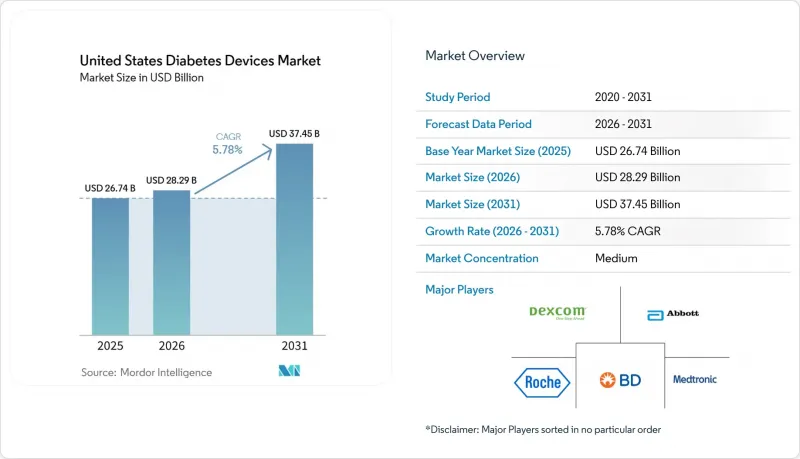
Mordor Intelligence에 의하면, 미국의 당뇨병용 의료기기 시장 규모는 2025년 267억 4,000만 달러로 평가되었습니다. 2026년 282억 9,000만 달러에서 2031년까지 374억 5,000만 달러에 이를 것으로 예상되며 2026년부터 2031년까지 연평균 복합 성장률(CAGR)은 5.78%를 나타낼 전망입니다.
본 보고서는 기기 유형별(모니터링 기기 및 관리 기기), 환자 유형별(1형 당뇨병 및 2형 당뇨병), 최종 사용자(병원 및 진료소, 재택 간호 환경, 기타 최종 사용자), 유통 채널(병원 약국, 소매 약국, 전자상거래)별로 분류되어 있습니다. 본 보고서에서는 상기 각 부문 시장 규모(달러)를 제시하고 있습니다.
미국의 당뇨병용 의료기기 시장 동향 및 분석
메디케어의 보상 범위 확대에 따라 실시간 CGM 도입이 급증하고 있습니다.
2023년 4월 메디케어 정책 개정으로 인해 CGM 이용 대상이 모든 인슐린 사용자 및 중증 저혈당을 겪는 개인으로 확대됨에 따라, 중요한 접근 장벽이 해소되었습니다. 손가락 채혈에 대한 기록이 보험 적용 요건에서 제외됨에 따라, 처방전의 미사용률이 급격히 감소했습니다. 의료진은 현재 자동 알림 기능을 활용하여 혈당 수치의 비정상적인 변동을 미연에 방지하고 있으며, 많은 정기적인 전화 연락이 데이터에 기반한 개입으로 대체되고 있습니다. 이러한 업무 부담 경감 덕분에 진료소는 인력을 증원하지 않고도 더 많은 환자를 수용할 수 있게 되어, 생산성 향상이 뚜렷하게 실현되고 있습니다.
젊은 층의 비만 유병률 증가가 당뇨병의 조기 발병을 늘리고 있습니다.
소아기 비만의 급격한 증가는 사춘기 2형 당뇨병 진단 건수 증가로 이어지고 있으며, 이로 인해 의료기기 치료에 노출되는 평생 기간이 길어지고 있습니다. 각 제조업체들은 소형 착용형 송신기나 다채로운 사용자 인터페이스 등 젊은 층을 겨냥한 디자인을 적용한 제품을 출시하고 있으며, 이는 학교 내에서 의료기기에 대한 편견을 완화하는 데 일조하고 있습니다. 이 사용자들은 향후 수십년동안 기술적 지원이 필요할 가능성이 있으므로, 10대 시절에 형성된 제품에 대한 충성도는 매우 안정적인 수익원을 창출할 가능성이 있습니다. 이러한 인구 동향의 변화는 장기적인 보험 수리 모델이 첨단 펌프 및 센서의 최종 도입 대수를 과소평가하고 있을 가능성을 시사합니다.
높은 관련 비용
비용은 여전히 기술 보급에 있어 가장 큰 장벽으로 남아 있습니다. 2024년 보험 청구 분석에 따르면, 소매 약국에서 CGM 처방전을 받은 환자는 의료용 내구 의료기기 공급 경로를 이용한 환자에 비해 연간 의료비가 53% 더 높았던 것으로 보고되었습니다. 보완적인 보험 적용이 있더라도, 메디케어의 표준 본인 부담금 비율인 20%는 예산에 제약이 있는 고령자들에게는 장벽이 될 수 있습니다. 그 결과, 가격에 대한 민감성으로 인해 도입이 고소득층 사용자에게 편중되면서, 혈당 관리의 격차가 확대되고 있습니다.
부문별 분석
2025년 기준으로, 모니터링 기기는 미국의 당뇨병용 의료기기 시장 점유율의 57.64%를 차지하며, 제품 분류 중 가장 큰 수익원을 이루었습니다. 연속 혈당 모니터링 시스템 시장은 2026년부터 2031년까지 연평균 성장률(CAGR) 7.41%를 나타낼 것으로 전망되며, 이는 업계 평균을 현저히 상회하는 성장세입니다. 이러한 차이는 이익률이 높은 일회용 제품의 비중이 점진적으로 증가하고 있음을 시사합니다. 현재 많은 공급업체들이 목표 범위 내 체류 시간을 그래프로 자동 생성해 주는 스마트폰 앱과 스타터 키트를 세트로 판매하고 있어, 수기 기록부의 필요성을 줄이고 제품의 부가가치를 높이고 있습니다. CGM 데이터는 5분마다 실행 가능한 인사이트를 제공하므로, 임상의들은 일회성 손가락 채혈 수치보다는 추이에 따라 치료를 미세 조정하는 데 점점 더 익숙해지고 있으며, 이로 인해 해당 기기의 필수성이 더욱 강화되고 있습니다. 주목할 만한 파급 효과로는 SMBG 테스트 스트립 시장의 축소가 꼽힙니다. 한 번 전환한 환자가 다시 원래대로 돌아가는 경우는 거의 없기 때문에 기존 측정기에 대한 의존도가 높은 기업에게는 매출 내부의 경쟁이 가속화될 것입니다.
FDA가 2024년에 인슐린 비사용자를 대상으로 한 시판용 바이오센서를 승인함에 따라, 단기적인 수익 창출은 본인 부담 구매에 의존하게 되었으며, 대상 성인층이 사실상 수천만 명이나 확대되었습니다. 초기 시범 사업 결과, 소매 약국 직원이 10분 이내에 도입 절차를 완료할 수 있는 것으로 밝혀졌으며, 이는 처방전 기반 워크플로우와는 현저히 다른, 확장성이 뛰어난 판매 시점(POS) 모델의 가능성을 시사하고 있습니다. 또한, 혈당 수치의 추이가 광범위한 웰니스 대시보드에 자연스럽게 통합됨에 따라, 이러한 흐름에 힘입어 가전 제조업체들도 이 분야에 진출하게 되었습니다. 경쟁의 관점에서 볼 때, 주요 모니터링 기업들은 의학적 주장과 라이프스타일 브랜딩 간의 균형을 맞추어야 하는 전략적 딜레마에 직면해 있습니다. 왜냐하면 메시지를 지나치게 의학적으로 다룰 경우, 대중 시장에 대한 호소력이 떨어질 우려가 있기 때문입니다.
2025년 미국의 당뇨병용 의료기기 시장 규모의 92.05%를 2형 당뇨병 환자가 차지했으며, 이 막대한 환자 수 덕분에 1인당 지출액이 1형 당뇨병 환자군에 미치지 못했더라도 절대적인 판매 대수의 성장을 견인했습니다. 2형 당뇨병 성인 환자를 위해 최적화된 자동 인슐린 투여 알고리즘이 2024년에 규제 당국의 승인을 받은 것은 환자 집단 간의 기술적 격차가 해소되는 전환점을 보여줍니다. 보험사가 응급진료 건수 감소를 보여주는 초기 실세계 데이터를 검토함에 따라, 보험 적용 범위가 확대되고 기존의 의료 접근성 격차가 더욱 줄어들 것으로 예측됩니다. 2형 당뇨병은 대개 인생의 후반기에 발병하기 때문에 기기 설계 시 우선순위에는 인터페이스의 단순화와 유지보수 부담 감소가 포함되며, 이러한 요인들로 인해 튜브식 시스템보다 패치형 펌프가 선호되고 있습니다.
환자 수의 7.95%를 차지하는 1형 당뇨병 환자들은 여러 유형의 기기를 병행하여 사용하며, 펌웨어의 발전에 따라 하드웨어를 더 신속하게 교체하기 때문에 6.61%라는 더 높은 예측 연평균 성장률(CAGR)을 유지하고 있습니다. 1형 당뇨병 환자 10명 중 8명 가까이가 이미 CGM과 펌프 요법을 병행하고 있으며, 소프트웨어의 점진적인 혁신을 통해 측정 가능한 임상적 이점을 얻을 수 있는 환경이 조성되어 있습니다. 또한, 이 환자 집단에서는 학술적으로 주목받는 고밀도 데이터 세트가 생성되므로, 알고리즘을 활용한 투여량 조정에 관한 ‘인간을 대상으로 한 최초의 임상시험’에 가장 적합한 대상이 됩니다. 1형 당뇨병 임상시험을 통해 얻은知見은 대부분의 경우 2형 당뇨병 환자를 대상으로 한 후기 단계 프로토콜에 활용되므로, 이처럼 규모가 작은 부문은 차세대 제품의 시험장으로서 역할을 효과적으로 수행하고 있습니다.
기타 혜택 :
- 엑셀 형식 시장 예측(ME) 시트
- 3개월간의 애널리스트 지원
자주 묻는 질문
목차
제1장 서론
제2장 조사 방법
제3장 주요 요약
제4장 시장 구도
제5장 시장 규모 및 성장 예측
제6장 시장 지표
제7장 경쟁 구도
제8장 시장 기회 및 향후 전망
KTH 26.06.29According to Mordor Intelligence, the united states diabetes devices market size is projected to expand from USD 26.74 billion in 2025 and USD 28.29 billion in 2026 to USD 37.45 billion by 2031, registering a CAGR of 5.78% between 2026 to 2031.
This report is Segmented Into Device Type (Monitoring Devices and Management Devices), Patient Type (Type-1 Diabetes, and Type-2 Diabetes), End User (Hospitals & Clinics, Home-Care Settings, and Other End Users), Distribution Channel (Hospital Pharmacies, Retail Pharmacies, and E-Commerce). The Report Provides the Value (in USD) for the Segments Above.
United States Diabetes Devices Market Trends and Insights
Surge in Adoption of Real-Time CGM Driven by Medicare Reimbursement Expansion
Medicare's April 2023 policy update extended CGM eligibility to all insulin users and individuals with problematic hypoglycemia, removing a critical access barrier . Prescription abandonment rates fell sharply as finger-stick documentation disappeared from coverage requirements. Providers now use automated alerts to intercept glucose excursions, replacing many routine phone calls with data-driven interventions. This operational relief enables clinics to enroll more patients without expanding staffing, a clear productivity dividend.
Rising Prevalence of Obesity Among Youth Increasing Earlier Onset Diabetes
The sharp climb in childhood obesity is translating into more type 2 diagnoses during adolescence, expanding lifetime exposure to device therapy. Manufacturers are releasing youth-oriented form factors, such as smaller on-body transmitters and colorful user interfaces, which help mitigate device stigma in school settings. Because these users may require technology for several decades, product loyalty established in teenage years could create unusually sticky revenue streams. This demographic shift also suggests that long-horizon actuarial models may underestimate the eventual installed base of advanced pumps and sensors.
High Associated Costs
Cost remains the single biggest brake on technology penetration. A 2024 claims analysis reported that patients filling CGM prescriptions at retail pharmacies incurred 53 % higher annual medical costs than those using durable medical equipment channels . Even with supplemental coverage, the typical 20 % Medicare co-insurance can deter budget-constrained seniors. Price sensitivity thus skews adoption toward higher-income users, widening glycemic control disparities.
Other drivers and restraints analyzed in the detailed report include:
- Integration of Diabetes Devices with Smartphone Ecosystem Boosting Patient Engagement
- Growing Usage of Insulin Delivery Devices
- Insurance Coverage Limitations
For complete list of drivers and restraints, kindly check the Table Of Contents.
Segment Analysis
Monitoring devices account for 57.64% US Diabetes Devices market share in 2025, creating the single largest revenue block within the product taxonomy. Continuous glucose monitoring systems exhibit a forecast 7.41% CAGR from 2026 to 2031, markedly faster than the sector average, and this spread implies progressive mix shift toward higher-margin disposables. Many suppliers now bundle starter kits with smartphone apps that auto-generate time-in-range charts, reducing the need for manual logbooks and boosting perceived value. Because CGM data provide actionable insights every five minutes, clinicians are increasingly comfortable titrating therapy based on trends rather than isolated finger-stick values, reinforcing device indispensability. A notable spillover is the shrinking SMBG strip market, as patients who transition seldom revert, which accelerates revenue cannibalization for firms still heavily exposed to legacy meters.
The FDA's 2024 clearance of an over-the-counter biosensor specifically aimed at non-insulin users effectively widened the addressable pool by tens of millions of adults, even if near-term monetization relies on cash-pay purchases. Early commercial pilots reveal that retail pharmacy staff can complete onboarding in under 10 minutes, hinting at a scalable point-of-sale model that differs markedly from prescription-based workflows. The move has also introduced consumer electronics players into the conversation, as glucose trend lines fit naturally within broader wellness dashboards. From a competitive standpoint, monitoring giants face the strategic dilemma of balancing medical claims with lifestyle branding, because over-medicalizing messaging may dampen mass-market appeal.
Type 2 patients account for 92.05% of US Diabetes Devices market size in 2025, and their sheer numbers ensure they drive absolute unit growth even if per-capita spend lags type 1 cohorts. The 2024 regulatory nod for an automated insulin dosing algorithm tailored to adults with type 2 diabetes signals a turning point in technology parity between patient groups. As payers study early real-world data showing fewer emergency visits, coverage policies are expected to broaden, further eroding historical access gaps. Because type 2 onset often occurs later in life, device design priorities include simplified interfaces and low maintenance, factors that favor patch-style pumps over tubed systems.
Type 1 patients, representing 7.95% of volume, sustain a higher 6.61% forecast CAGR because they adopt multiple device classes in tandem and replace hardware more rapidly as firmware advances. Nearly eight out of ten people with type 1 diabetes already combine CGM with pump therapy, creating an environment where incremental software innovation can unlock measurable clinical gains. This cohort also generates dense data sets that attract academic scrutiny, making them prime candidates for first-in-human studies of algorithmic dosing. The knowledge spillovers from type 1 trials often inform later-stage protocols for type 2 users, effectively positioning this smaller segment as a proving ground for next-generation products.
List of Companies Covered in this Report:
- Abbott Laboratories
- Medtronic
- Dexcom
- Insulet
- Roche
- Beckton Dickinson
- Tandem Diabetes Care
- Novo Nordisk
- Eli Lilly and Company
- Sanofi
- Ypsomed
- Senseonics
- Ascensia
- Glooko Inc.
- AgaMatrix
- Bigfoot Biomedical
- Terumo
- Owen Mumford
Additional Benefits:
- The market estimate (ME) sheet in Excel format
- 3 months of analyst support
TABLE OF CONTENTS
1 Introduction
- 1.1 Study Assumptions & Market Definition
- 1.2 Scope of the Study
2 Research Methodology
3 Executive Summary
4 Market Landscape
- 4.1 Market Overview
- 4.2 Market Drivers
- 4.2.1 Surge in Adoption of Real-Time CGM Driven by Medicare Reimbursement Expansion
- 4.2.2 Rising Prevalence of Obesity Among Youth Increasing Earlier Onset Diabetes
- 4.2.3 Integration of Diabetes Devices with Smartphone Ecosystem Boosting Patient Engagement
- 4.2.4 Growing Usage of Insulin Delivery Devices
- 4.2.5 Shift Toward Value-Based Care Incentivizing Remote Monitoring Penetration
- 4.2.6 Increasing Prevalence of Diabetes
- 4.3 Market Restraints
- 4.3.1 High Associated Costs
- 4.3.2 Insurance Coverage Limitations
- 4.3.3 Sustainability Pressure on Single-Use Plastic Pens
- 4.3.4 Stringent Regulatory Requirements
- 4.4 Supply-Chain Analysis
- 4.5 Regulatory Outlook
- 4.6 Technological Outlook
- 4.7 Porter's Five Forces Analysis
- 4.7.1 Bargaining Power of Suppliers
- 4.7.2 Bargaining Power of Buyers
- 4.7.3 Threat of New Entrants
- 4.7.4 Threat of Substitutes
- 4.7.5 Intensity of Competitive Rivalry
- 4.8 Market Indicators
- 4.8.1 Type-1 Diabetes Population
- 4.8.2 Type-2 Diabetes Population
5 Market Size & Growth Forecasts (Value & Volume)
- 5.1 By Device Type
- 5.1.1 Monitoring Devices
- 5.1.1.1 Self-Monitoring Blood Glucose (SMBG)
- 5.1.1.1.1 Glucometers
- 5.1.1.1.2 Test Strips
- 5.1.1.1.3 Lancets
- 5.1.1.2 Continuous Glucose Monitoring (CGM)
- 5.1.1.2.1 Sensors
- 5.1.1.2.2 Durables (Transmitters & Readers)
- 5.1.1.1 Self-Monitoring Blood Glucose (SMBG)
- 5.1.2 Management Devices
- 5.1.2.1 Insulin Pumps
- 5.1.2.1.1 Pump Device
- 5.1.2.1.2 Reservoir
- 5.1.2.1.3 Infusion Set
- 5.1.2.2 Insulin Pens
- 5.1.2.2.1 Disposable Pens
- 5.1.2.2.2 Cartridges for Re-usable Pens
- 5.1.2.3 Insulin Syringes
- 5.1.2.4 Jet Injectors
- 5.1.2.1 Insulin Pumps
- 5.1.1 Monitoring Devices
- 5.2 By Patient Type
- 5.2.1 Type-1 Diabetes
- 5.2.2 Type-2 Diabetes
- 5.3 By End User
- 5.3.1 Homecare Settings
- 5.3.2 Hospitals & Specialty Clinics
- 5.3.3 Others
- 5.4 By Distribution Channel
- 5.4.1 Hospital Pharmacies
- 5.4.2 Retail Pharmacies
- 5.4.3 E-commerce
- 5.5 By US Region
- 5.5.1 Northeast
- 5.5.2 Midwest
- 5.5.3 South
- 5.5.4 West
6 Market Indicators
- 6.1 Type-1 Diabetes Populaton
- 6.2 Type-2 Diabetes Populaton
7 Competitive Landscape
- 7.1 Market Concentration
- 7.2 Market Share Analysis
- 7.3 Company Profiles (includes Global-level Overview, Market-level Overview, Core Segments, Financials as available, Strategic Information, Market Rank/Share, Products & Services, and Recent Developments)
- 7.3.1 Abbott Laboratories
- 7.3.2 Medtronic plc
- 7.3.3 Dexcom Inc.
- 7.3.4 Insulet Corporation
- 7.3.5 F. Hoffmann-La Roche AG
- 7.3.6 Becton, Dickinson and Company
- 7.3.7 Tandem Diabetes Care Inc.
- 7.3.8 Novo Nordisk A/S
- 7.3.9 Eli Lilly and Company
- 7.3.10 Sanofi
- 7.3.11 Ypsomed Holding AG
- 7.3.12 Senseonics Holdings Inc.
- 7.3.13 Ascensia Diabetes Care
- 7.3.14 Glooko Inc.
- 7.3.15 AgaMatrix Inc.
- 7.3.16 Bigfoot Biomedical
- 7.3.17 Terumo Corporation
- 7.3.18 Owen Mumford Ltd.
8 Market Opportunities & Future Outlook
- 8.1 White-space & Unmet-Need Assessment