

|
시장보고서
상품코드
2072838
독일의 의약품 물류 시장 : 점유율 분석, 업계 동향과 통계, 성장 예측(2026-2031년)Germany Pharmaceutical Logistics - Market Share Analysis, Industry Trends & Statistics, Growth Forecasts (2026 - 2031) |
||||||
 Mordor Intelligence
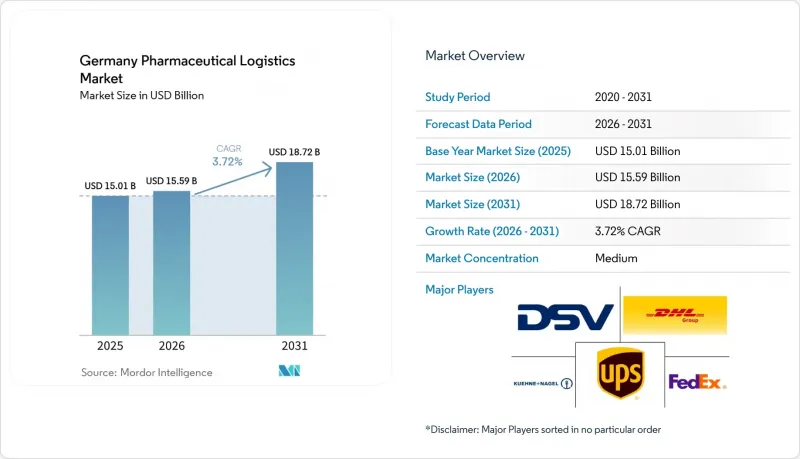
Mordor Intelligence에 의하면, 독일 의약품 물류 시장 규모는 2025년 150억 1,000만 달러에서 2026년에는 155억 9,000만 달러로 확대되어 2031년까지 187억 2,000만 달러에 이를 것으로 예상되고 있어 2026년부터 2031년까지 CAGR 3.72%로 성장할 전망입니다.
독일의 의약품 물류 시장은 해당국의 경제 전반이 여전히 침체된 상황 속에서도 성장하고 있습니다. 2025년 GDP 성장률은 고작 0.2%에 그쳤으며, 에너지 가격 리스크가 여전히 단기적인 산업 생산에 큰 부담으로 작용하고 있습니다. 본 보고서는 물류 기능별(수송, 창고·유통, 부가가치 서비스), 운영 형태별(콜드체인 물류 및 비콜드체인 물류), 제품 유형별(처방약, 일반의약품, 생물학적 제제, 백신 및 혈액 제제 등), 지역별(노르트라인-베스트팔렌주 등)로 분류되어 있습니다. 시장 전망치는 금액(달러)으로 표시되어 있습니다.
독일 의약품 물류 시장 동향과 인사이트
확대되는 바이오의약품 및 바이오시밀러 파이프라인 도입
독일의 의약품 물류 시장에서는 바이오의약품과 바이오시밀러가 일상적인 조제에 깊이 자리 잡으면서 콜드체인의 복잡화가 가속화되고 있습니다. 독일에서 바이오시밀러의 약국 내 대체 처방 체계가 2026년 4월 1일부터 시행됨에 따라, 약국 차원에서의 정확한 로트 추적, 관리된 인도, 그리고 명확한 보관 이력 기록의 필요성이 높아졌습니다. 이러한 변화가 중요한 이유는 단순히 기존 도매 경로의 취급량이 증가하는 것뿐만 아니라, 표준적인 네트워크로는 관리가 어려운 소규모이며 빈도가 높은 약국 수준의 소량 운송으로 더 많은 출하가 이동하고 있기 때문입니다. 따라서 독일의 의약품 물류 시장에서는 검증된 단일 운영 모델 내에서 +2°C-+8°C, 냉동 및 초저온 등 각 온도대를 관리할 수 있는 공급업체가 높이 평가받고 있습니다. 이는 특히 바이에른주와 바덴뷔르템베르크주에서 두드러지는데, 이 지역에서는 바이오의약품 생산, 혈장 취급 및 특수 의약품 제조로 인해 보다 전문적인 보관 및 운송에 대한 수요가 증가하고 있습니다. 또한, 첨단 치료법의 상용화를 위한 파이프라인에 대한 기준도 강화되었으며, 사업자는 EU의 GDP 요건에 따라 모든 인도 과정을 문서화하고, 전체 운송 경로를 통해 온도 관리의 무결성을 유지할 수 있음을 입증해야 합니다.
독일의 전자 처방전 시스템(eRezept)의 전국 확대
독일의 의약품 물류 시장은 eRezept를 통해 재편되고 있습니다. 처방전 조제가 더욱 디지털화되고 신속해졌으며, 택배나 통신판매 채널로의 유통 경로 설정이 용이해졌기 때문입니다. 독일에서는 2025년 10월 17일, eRezept의 누적 이용 건수가 10억 건을 돌파했으며, 이는 2024년 의무화 시행 이후 이 디지털 처방전 시스템이 얼마나 급속도로 확대되었는지를 보여줍니다. 이러한 변화로 인해 출하 구조가 대규모의 정기적인 도매 배송에서 여전히 GDP 기준에 따른 처리가 필요한 고빈도의 소량 배송으로 전환되고 있습니다. 또한, 약국 및 처방전 데이터를 종이 기반 모델에 비해 발주 주기의 훨씬 더 이른 단계에서 확보할 수 있게 됨에 따라, 수요의 가시성도 향상되었습니다. 이러한 조기 신호를 통해 물류 업체와 전문 약국은 수요가 높은 도시 지역에 재고를 미리 배치하여 보충 리드타임을 단축할 수 있게 됩니다. 따라서 독일의 의약품 물류 시장에서는 처방 데이터와 재고 계획, 배송 경로 일정 수립, 그리고 온도 조건에 따른 재고 배분을 연계할 수 있는 창고 관리 시스템의 가치가 점점 더 높아지고 있습니다.
콜드체인 창고의 에너지 비용 급등
독일의 의약품 물류 시장은 콜드체인 창고가 상온 시설보다 훨씬 더 많은 전력을 소비하기 때문에 여전히 치솟는 에너지 가격의 영향을 계속 받고 있습니다. 독일의 산업용 전력 비용은 유럽 내에서도 최고 수준에 달하고, 냉장·냉동 의약품 시설 운영자들에게 직접적인 부담을 주고 있습니다. 이 비용 문제는 시설 측이 냉매 전환 요건에 대응하기 위한 조치를 진행 중이기 때문에 더욱 심각해지고 있습니다. 이에 따라 저 GWP(지구온난화지수) 시스템 및 관련 설비의 업그레이드를 위한 설비 투자가 증가하고 있습니다. 동 업계의 보고 사례에 따르면, 풍력 발전의 PPA(전력 구매 계약)를 포함한 혼합 전력 조달 모델로 전환함으로써, 특정 보고 기간 동안 비용 절감과 1,900톤의 CO2 배출 감축을 달성했습니다. 그렇긴 하지만, 헤지 및 에너지 전환 프로그램에는 GDP(의약품 유통 기준) 업그레이드, 감시 시스템, 새로운 냉장실 등에 필요한 자본과 자금이 경쟁하고 있습니다. 따라서 독일의 의약품 물류 시장에서는 재무 기반이 탄탄한 공급업체가 뚜렷한 우위를 점하고 있습니다. 왜냐하면 이러한 기업들은 에너지 대응과 규정 준수에 대한 투자를 동시에 위한 자금을 조달할 수 있기 때문입니다.
부문별 분석
2025년, 운송 부문은 독일 의약품 물류 시장 점유율의 58.14%를 차지하며, 독일 의약품 물류 시장에서 가장 큰 물류 기능으로서의 위상을 유지했습니다. 독일의 약국, 병원, 도매업체, 제조업체로 구성된 네트워크에서는 국내 전역에 걸친 촘촘한 서비스 범위와 빈번한 재고 보충 배송이 요구되기 때문에 도로 운송이 여전히 핵심적인 역할을 담당하고 있습니다. 항공 화물은 첨단 치료제, 임상시험용 자재, 공항에서 의료 현장으로의 신속한 운송이 필요한 유통 기한이 짧은 바이오의약품 등, 고부가가치이면서 시간적 제약이 엄격한 화물의 운송에서 그 역할을 유지해 왔습니다. 철도 및 해상 운송을 통한 물류는 벌크 자재나 특정 업스트림 의약품 원료의 수입 측 취급에 있어 계속해서 중요한 역할을 수행하고 있습니다.
창고·유통 부문은 안정적인 중간 위치를 유지했습니다. 이는 아우토반을 따라 위치한 GDP 인증을 받은 다온도대 시설이 여전히 국내 서비스 설계의 중심을 이루고 있기 때문입니다. 가장 급격한 변화가 나타난 분야는 부가가치 서비스 분야로, 연평균 성장률(CAGR) 6.55%로 확대될 것으로 예측되며, 2031년까지 독일 의약품 물류 시장에서 가장 높은 성장률을 보일 것으로 전망됩니다. 제약 기업의 화주들은 규정 준수 체계와 물리적 취급 업무를 결합할 수 있는 서비스 제공업체에 대해, 일련번호 통합, 반품 관리, 불량품 처리, 아트워크 지원 및 환자별 키트 제작을 점점 더 많이 외주화하고 있습니다. DHL이 헬스케어 물류에 20억 유로(23억 5,000만 달러)를 투자한 것은 대형 기업들이 독일 의약품 물류 시장에서 임상, 바이오의약품 및 첨단 치료 지원 서비스를 얼마나 강력하게 뒷받침하고 있는지를 여실히 보여주었습니다.
기타 혜택:
- 엑셀 형식 시장 예측(ME) 시트
- 3개월간의 애널리스트 지원
자주 묻는 질문
목차
제1장 서론
제2장 조사 방법
제3장 주요 요약
제4장 시장 구도
제5장 시장 규모와 성장 예측
제6장 경쟁 구도
제7장 시장 기회와 향후 전망
JHS 26.07.03According to Mordor Intelligence, the germany pharmaceutical logistics market size is expected to increase from USD 15.01 billion in 2025 to USD 15.59 billion in 2026 and reach USD 18.72 billion by 2031, growing at a CAGR of 3.72% over 2026-2031.
The Germany pharmaceutical logistics market is expanding in a period when Germany's wider economy remains subdued, with GDP rising only 0.2% in 2025 and energy price risks still weighing on near-term industrial output. This report is Segmented by Logistics Function (Transportation, Warehousing and Distribution, and Value-Added Services), by Mode of Operation (Cold-Chain Logistics and Non-Cold-Chain Logistics), by Product Type (Prescription Drugs, OTC Drugs, Biologics, Vaccines and Blood Products, and More), and by Region (North Rhine-Westphalia, and More). The Market Forecasts are Provided in Value (USD).
Germany Pharmaceutical Logistics Market Trends and Insights
Expanding Biologics and Biosimilars Pipeline Adoption
The Germany pharmaceutical logistics market is seeing a sharper shift toward cold-chain complexity as biologics and biosimilars move deeper into routine dispensing. Germany's pharmacy substitution framework for biosimilars took effect from April 1, 2026, which increased the need for precise lot tracking, controlled handovers, and clear chain-of-custody records at the pharmacy level. That change matters because it does not simply add volume to established wholesale lanes, it shifts more shipments into smaller and more frequent pharmacy-level consignments that are harder to manage with standard networks. The Germany pharmaceutical logistics market is therefore rewarding providers that can manage +2 °C to +8 °C, frozen, and cryogenic ranges inside one validated operating model. This is especially relevant in Bavaria and Baden-Wurttemberg, where biologics production, plasma handling, and specialty manufacturing are pushing demand for more specialized storage and transport. The commercial pipeline for advanced therapies is also raising the bar, as operators must demonstrate they can document every handoff and maintain temperature integrity throughout the full route in line with EU GDP requirements.
Nation-Wide Roll-Out of Germany's E-Prescription System (eRezept)
The Germany pharmaceutical logistics market is being reshaped by eRezept because prescription fulfillment is now more digital, faster, and easier to route into home delivery and mail-order channels. Germany crossed 1 billion cumulative eRezept redemptions on October 17, 2025, demonstrating how quickly the digital prescription system had scaled since the mandatory rollout began in 2024. This shift is changing the mix of shipments from larger scheduled wholesale drops toward higher-frequency parcel flows that still need GDP-compliant handling. It is also improving demand visibility because pharmacy and prescription data are now available much earlier in the ordering cycle than they were in the paper-based model. That earlier signal allows logistics operators and specialty pharmacies to pre-position stock nearer to high-demand urban districts and reduce replenishment lead times. The Germany pharmaceutical logistics market is therefore seeing stronger value in warehouse management systems that can connect prescription data with stock planning, route scheduling, and temperature-specific inventory allocation.
Escalating Energy Costs for Cold-Chain Warehousing
The Germany pharmaceutical logistics market remains exposed to high energy prices because cold-chain warehouses consume far more electricity than ambient facilities. Germany continues to have some of the highest industrial power costs in Europe, placing a direct burden on operators of refrigerated and frozen pharmaceutical sites. This cost issue is becoming more serious as facilities also prepare for refrigerant transition requirements, which add capital spending for low-GWP systems and related equipment upgrades. A reported example from the sector showed that switching to a blended power procurement model with wind PPA exposure reduced costs and avoided 1,900 tons of CO2 in one reporting period. Even so, hedging and energy transition programs compete for the same capital that operators need for GDP upgrades, monitoring systems, and new cold rooms. The Germany pharmaceutical logistics market, therefore, gives a clear edge to providers with stronger balance sheets, because they can fund energy adaptation and compliance investment at the same time.
Other drivers and restraints analyzed in the detailed report include:
- Stringent Enforcement of EU GDP 2022/993 Compliance Audits
- Growth of Specialty Pharmacies Pushing Same-Day Delivery Models
- Shortage of GDP-Certified Drivers and Warehouse Technicians
For complete list of drivers and restraints, kindly check the Table Of Contents.
Segment Analysis
Transportation held 58.14% of Germany pharmaceutical logistics market share in 2025, which kept it as the largest logistics function in the Germany pharmaceutical logistics market. Road distribution remained the core because Germany's pharmacy, hospital, wholesale, and manufacturing networks require dense domestic coverage and frequent replenishment runs. Air freight kept its role in high-value and time-critical shipments such as advanced therapies, clinical trial materials, and short-stability biologics that need rapid airport-to-care-site movement. Rail and sea-linked flows remained more relevant for import-side handling of bulk materials and selected upstream pharmaceutical inputs.
Warehousing and distribution continued to hold a stable middle position because GDP-certified multi-temperature sites near Autobahn corridors are still central to national service design. The fastest shift came from value-added services, which are projected to expand at a 6.55% CAGR and therefore show the fastest growth in the Germany pharmaceutical logistics market through 2031. Pharmaceutical shippers are increasingly outsourcing serialization aggregation, returns control, deviation handling, artwork support, and patient-specific kitting to providers that can combine compliance systems with physical handling. DHL's EUR 2 billion (USD 2.35 billion) investment in the health logistics underlined how strongly large operators are backing clinical, biopharma, and advanced therapy support services inside the Germany pharmaceutical logistics market.
Complete Report Scope:
- By Logistics Function
- Transportation
- Road
- Air
- Sea and Inland Waterways
- Rail
- Warehousing and Distribution
- Value-added Services and Others
- Transportation
- By Mode of Operation
- Cold-Chain Logistics
- Non-Cold-Chain Logistics
- By Product Type
- Prescription Drugs
- OTC Drugs
- Biologics and Biosimilars
- Vaccines and Blood Products
- Clinical Trail Materials
- Cell and Gene Therapies
- Medical Devices and Diagnostics
- Veterinary Medicine
- Others
- By Region
- North Rhine-Westphalia
- Bavaria (Bayern)
- Baden-Wurttemberg
- Rest of States
List of Companies Covered in this Report:
- DHL Group
- Kuehne+Nagel
- DSV A/S (Including DB Schenker)
- United Parcel Service of America, Inc. (UPS)
- FedEx
- World Courier
- NYK Line (Including Yusen Logistics)
- CMA CGM Group (Including CEVA Logistics)
- GEODIS
- DACHSER
- Hellmann Worldwide Logistics
- Fiege Logistics
- Cencora
- LOXXESS Pharma
- UNITAX-PHARMALOGISTIK GMBH
- PharmLog Pharma Logistik GmbH
- Transpharm Logistik GmbH
- Pharmaserv GmbH and Co. KG
- Arvato SE
- Lufthansa Cargo
- Noerpel Group
Additional Benefits:
- The market estimate (ME) sheet in Excel format
- 3 months of analyst support
TABLE OF CONTENTS
1 Introduction
- 1.1 Study Assumptions and Market Definition
- 1.2 Scope of the Study
2 Research Methodology
3 Executive Summary
4 Market Landscape
- 4.1 Market Overview and Role of Logistics in Pharmaceutical
- 4.2 Pharmaceutical Spending Trends
- 4.3 Market Drivers
- 4.3.1 Expanding Biologics and Biosimilars Pipeline Adoption
- 4.3.2 Nation-Wide Roll-Out of Germany's E-Prescription System (eRezept)
- 4.3.3 Stringent Enforcement of EU GDP 2022/993 Compliance Audits
- 4.3.4 Growth of Specialty Pharmacies Pushing Same-Day Delivery Models
- 4.3.5 Hydrogen-Powered Temperature-Controlled Truck Pilots on Autobahn
- 4.3.6 Blockchain-Enabled Serialization Pilots Beyond FMD Mandates
- 4.4 Market Restraints
- 4.4.1 Escalating Energy Costs for Cold-Chain Warehousing
- 4.4.2 Complex Multi-Agency Permitting for Last-Mile Urban Deliveries
- 4.4.3 Shortage of GDP-Certified Drivers and Warehouse Technicians
- 4.4.4 Limited Regulatory Pathways for Medical-Grade Drone Corridors
- 4.5 Regulatory Framework
- 4.6 Value Chain and Distribution Channel Architecture Analysis
- 4.7 Technology Innovations Outlook
- 4.8 Porter's Five Forces Analysis
- 4.8.1 Threat of New Entrants
- 4.8.2 Bargaining Power of Suppliers
- 4.8.3 Bargaining Power of Buyers
- 4.8.4 Threat of Substitutes
- 4.8.5 Rivalry Among Competitors
- 4.9 Evolution of Pharmaceutical Logistics Requirements
- 4.10 Impact of Geo-Political Events on Supply Chain Shifts
5 Market Size and Growth Forecasts
- 5.1 By Logistics Function
- 5.1.1 Transportation
- 5.1.1.1 Road
- 5.1.1.2 Air
- 5.1.1.3 Sea and Inland Waterways
- 5.1.1.4 Rail
- 5.1.2 Warehousing and Distribution
- 5.1.3 Value-added Services and Others
- 5.1.1 Transportation
- 5.2 By Mode of Operation
- 5.2.1 Cold-Chain Logistics
- 5.2.2 Non-Cold-Chain Logistics
- 5.3 By Product Type
- 5.3.1 Prescription Drugs
- 5.3.2 OTC Drugs
- 5.3.3 Biologics and Biosimilars
- 5.3.4 Vaccines and Blood Products
- 5.3.5 Clinical Trail Materials
- 5.3.6 Cell and Gene Therapies
- 5.3.7 Medical Devices and Diagnostics
- 5.3.8 Veterinary Medicine
- 5.3.9 Others
- 5.4 By Region
- 5.4.1 North Rhine-Westphalia
- 5.4.2 Bavaria (Bayern)
- 5.4.3 Baden-Wurttemberg
- 5.4.4 Rest of States
6 Competitive Landscape
- 6.1 Market Concentration
- 6.2 Key Strategic Moves
- 6.3 Market Share Analysis
- 6.4 Company Profiles (Includes Global Level Overview, Market Level Overview, Core Segments, Financials as Available, Strategic Information, Market Rank/Share for Key Companies, Products and Services, and Recent Developments)
- 6.4.1 DHL Group
- 6.4.2 Kuehne+Nagel
- 6.4.3 DSV A/S (Including DB Schenker)
- 6.4.4 United Parcel Service of America, Inc. (UPS)
- 6.4.5 FedEx
- 6.4.6 World Courier
- 6.4.7 NYK Line (Including Yusen Logistics)
- 6.4.8 CMA CGM Group (Including CEVA Logistics)
- 6.4.9 GEODIS
- 6.4.10 DACHSER
- 6.4.11 Hellmann Worldwide Logistics
- 6.4.12 Fiege Logistics
- 6.4.13 Cencora
- 6.4.14 LOXXESS Pharma
- 6.4.15 UNITAX-PHARMALOGISTIK GMBH
- 6.4.16 PharmLog Pharma Logistik GmbH
- 6.4.17 Transpharm Logistik GmbH
- 6.4.18 Pharmaserv GmbH and Co. KG
- 6.4.19 Arvato SE
- 6.4.20 Lufthansa Cargo
- 6.4.21 Noerpel Group
7 Market Opportunities and Future Outlook
- 7.1 White-space and Unmet-Need Assessment


