|
시장보고서
상품코드
2072853
미국의 치과용 엘리베이터 및 럭세이터 시장 : 시장 점유율 분석, 업계 동향 및 통계, 성장 예측(2026-2031년)United States Dental Elevator and Luxator - Market Share Analysis, Industry Trends & Statistics, Growth Forecasts (2026 - 2031) |
||||||
 Mordor Intelligence
Mordor Intelligence에 의하면, 미국의 치과용 엘리베이터 및 럭세이터 시장 규모는 2025년 3억 3,762만 달러로 평가되었고, 2026년에는 3억 5,898만 달러로 추정되고, 2031년까지 5억 227만 달러에 이를 것으로 예상되며, 2026-2031년 CAGR 6.95%로 성장할 전망입니다.
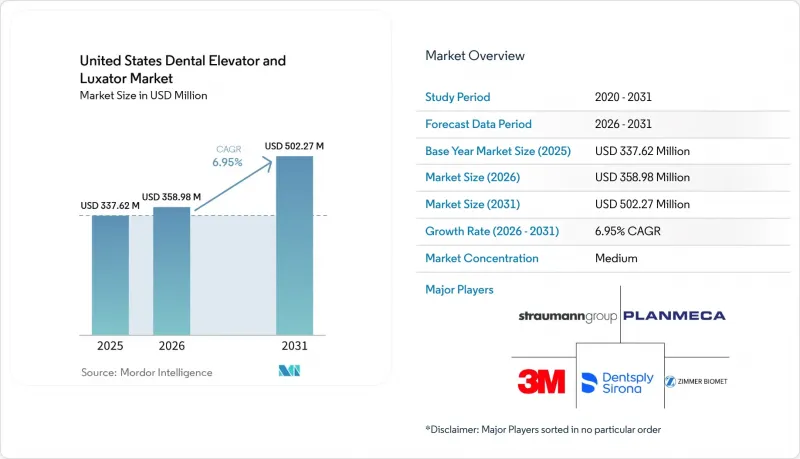
본 보고서는 제품 유형별(치과용 엘리베이터, 치과용 럭세이터), 크기별(5 mm, 3 mm, 2 mm, 4 mm, 10 mm), 최종 사용자별(치과 병원, 병원 및 진료소, 연구 및 학술 기관)로 분류되어 있습니다. 시장 전망은 금액(달러) 기준으로 제시되어 있습니다.
미국의 치과용 엘리베이터 및 럭세이터 시장 동향 및 인사이트
고령층의 발치 건수 증가 : 고령화 사회가 기구 수요를 구조적으로 뒷받침
미국의 치과용 엘리베이터 및 럭세이터 시장은 전미의 고령 인구 급증과 밀접한 관련이 있습니다. 2024년, 미국의 65세 이상 인구는 6,120만 명에 달했고, 전체 인구의 18%를 차지했으며, 2023-2024년 연평균 3.1%의 성장률을 기록했습니다. 고령자의 경우 치아 상실로 인한 부담이 더 크며, NIDCR 보고서에 따르면 65세 이상 인구의 평균 잔존 치아 수는 20.7개인 반면, 17.3%는 완전 무치악 상태였습니다. 치아를 유지하고 있는 고령자라도 평균 10.7개의 결손 치아가 있는 것으로 보아, 치근이나 취약해진 뼈, 치주질환의 영향을 받은 부위가 동반된 까다로운 발치 사례가 계속해서 발생하고 있음을 시사합니다. 따라서 미국 치과용 엘리베이터 및 럭세이터 시장 수요는 선택적 지출이 아니라 필수적인 시술과 밀접한 관련이 있습니다. 또한, 장기적인 전망이 있다는 점도 중요한 요소입니다. 『Frontiers in Dental Medicine』 저널의 2025년 기사에서는 2060년까지 미국의 65세 이상 인구가 9,800만 명에 달할 것으로 예측하고 있으며, 이는 현재의 예측 기간을 훨씬 뛰어넘어 발치 관련 기구에 대한 수요가 지속될 것임을 뒷받침하고 있습니다.
외래 치과 의료 네트워크의 확대 : DSO의 규모 확대가 표준화된 조달 수요를 창출합니다.
미국의 치과용 엘리베이터 및 럭세이터 시장은 대규모 외래 진료 네트워크의 확대로 인해 혜택을 보고 있습니다. 2024년 현재, DSO(치과 서비스 조직)에 소속된 치과의사는 전미 치과의사의 16.1%를 차지하고 있으며, 이는 2015년의 7.4%에서 2배 이상 증가한 수치로, 그룹 진료에 참여하는 치과의사 수도 계속해서 증가하고 있습니다. DSO의 확대에 따라 구매 결정이 개별 치과의사의 선택에서 승인된 공급업체 목록에 기반한 방식으로 전환되고 있으며, 이로 인해 구강외과용 수기구에 대한 지속적인 발주가 이루어지고 있습니다. 보험 적용 범위가 확대됨에 따라 치료 대상이 되는 환자층이 넓어지고 있습니다. 이는 CMS가 2024년에, 각 주가 2027년 1월부터 성인을 대상으로 한 정기 치과 진료 서비스를 필수 의료 혜택으로 추가할 수 있도록 최종 결정했기 때문입니다. 2025년 12월 메디케이드 치과 급여 보고서에 따르면, 2025년에는 38개 주와 컬럼비아 특별구가 성인 대상 치과 급여를 확대했으며, 2021년 이후 18개 주가 성인 대상 치과 급여를 확대한 반면, 급여를 축소한 주는 단 한 곳도 없었습니다. 이러한 보험 적용을 배경으로 외래 진료 네트워크가 확대됨에 따라, 미국의 치과용 엘리베이터 및 럭세이터 시장에서는 처방 목록에 등재된 소규모 브랜드가 감소하고, 품질과 처리량 두 가지 요건을 동시에 충족할 수 있는 승인 공급업체 목록으로의 집중이 가속화될 것으로 전망됩니다.
일상적인 발치 기구에 대한 불균등한 보험 급여: 급여 범위의 미비로 인해 의료기관의 예산이 압박받고 있습니다.
미국의 치과용 엘리베이터 및 럭세이터 시장은 시술에 대한 지불이 기기별 비용 회수로 직접 이어지지 않기 때문에 여전히 보험 급여 문제에 직면해 있습니다. CareQuest는 2025년 미국 성인의 26%(6,900만 명에 해당)가 치과 보험에 가입하지 않을 것이라고 보고했으며, 이로 인해 많은 의료 제공업체들이 불안정한 수요 환경 속에서 운영할 수밖에 없는 상황에 처해 있습니다. 안전망 진료소나 FQHC(연방 자격 인증 보건 센터)는 일반적으로 보험 적용 대상인 시술, 인력 배치 및 필수 소모품을 중심으로 예산을 관리하기 때문에 수기구는 보다 시급한 운영상의 필요 사항과 자금을 놓고 경쟁하게 됩니다. CMS(미국 의료보험·의료서비스센터)의 방침 변경에 따라 장기적인 보험 적용 환경은 개선되고 있지만, 특정 엘리베이터나 럭서터의 구입 비용을 별도의 청구 항목으로 상환해 주지는 않습니다. 이로 인해 주마다 기구 교체 주기에 차이가 발생하고 있습니다. 보험 적용 범위가 넓은 시장에서는 트레이를 더 정기적으로 교체할 수 있는 반면, 보험 적용 범위가 좁은 시장에서는 기구의 수명을 연장할 수밖에 없기 때문입니다. 그 결과, 미국의 치과용 엘리베이터 및 럭세이터 시장에서 예산에 가장 민감한 지역에서는 프리미엄 제품의 도입이 주춤하고 있습니다.
부문별 분석
2025년, 치과용 엘리베이터는 미국 치과용 엘리베이터 및 럭세이터 시장에서 63.48%의 점유율을 차지했습니다. 이는 미국 치과에서 일상적인 발치 업무 과정에서 오랫동안 중요한 역할을 해왔음을 반영합니다. 전치, 소구치, 대구치 치료에 폭넓게 사용되고 있기 때문에 많은 일반 치과 및 구강외과 진료실에서 여전히 기본 선택지로 자리 잡고 있습니다. 스트레이트형, 클라이어형, 그리고 아피컬형 디자인은 연수, 증례 준비, 기본적인 재고 계획에 깊이 뿌리내리고 있어 임상의들에게 친숙한 형태입니다. 이러한 확고한 입지 덕분에, 시술 기술이 지속적으로 발전하는 가운데서도 엘리베이터는 미국 치과용 엘리베이터 및 럭세이터 시장에서 안정적인 수요 기반을 유지하고 있습니다.
치과용 럭세이터 시장은 2031년까지 연평균 성장률(CAGR) 7.36%를 나타낼 것으로 예측되며, 이는 미국 치과용 엘리베이터 및 럭세이터 시장 전체의 성장률인 7%를 상회하는 속도입니다. 이러한 강력한 성장은 락사터가 뼈 보존이 직접적인 경제적 및 임상적 가치를 지닌, 저침습 발치 및 임플란트 준비 워크플로우와 밀접하게 연관되어 있음을 반영합니다. 2024년 저침습 발치에 관한 전문가 합의문에서는 특히 치주 인대용 기구가 첫 번째 선택 도구로 지지받았습니다. 이를 통해 공급업체는 제품 트레이에 해당 제품을 포함시키거나 프리미엄 포지셔닝을 할 때 보다 명확한 임상적 근거를 확보할 수 있습니다. 또한, 이러한 변화는 제조업체 입장에서는 제품 구성 개선으로 이어집니다. 왜냐하면 룩사터, 특히 인체공학에 기반한 디자인이나 고급 마감 처리된 모델들은 일반적으로 표준 엘리베이터보다 높은 평균 가격에 판매되기 때문입니다.
기타 혜택 :
- 엑셀 형식 시장 예측(ME) 시트
- 3개월간의 애널리스트 지원
자주 묻는 질문
목차
제1장 서론
제2장 조사 방법
제3장 주요 요약
제4장 시장 구도
제5장 시장 규모 및 성장 예측
제6장 경쟁 구도
제7장 시장 기회 및 향후 전망
AJY 26.07.07According to Mordor Intelligence, the united states dental elevator and luxator market size is expected to increase from USD 337.62 million in 2025 to USD 358.98 million in 2026 and reach USD 502.27 million by 2031, growing at a CAGR of 6.95% over 2026-2031.
This report is Segmented by Product Type (Dental Elevators, Dental Luxators), Size (5 Mm, 3 Mm, 2 Mm, 4 Mm, 10 Mm), End User (Dental Clinics, Hospitals and Clinics, Research and Academic Institutes). The Market Forecasts are Provided in Terms of Value (USD).
United States Dental Elevator and Luxator Market Trends and Insights
Rising Geriatric Dental Extractions: Aging Demographics Structurally Underpin Instrument Demand
The United States dental elevator and luxator market is closely linked to the fast rise in older adults across the country. The U.S. population aged 65 and older reached 61.2 million in 2024 and accounted for 18% of the total population, with annual growth of 3.1% from 2023 to 2024. Older adults carry heavier tooth loss burdens, and NIDCR reports that people aged 65 and older had 20.7 remaining teeth on average, while 17.3% were fully edentulous. Even among seniors who still retain teeth, the average of 10.7 missing teeth points to a continuing flow of difficult extractions that often involve roots, brittle bone, and periodontally compromised sites. This keeps demand in the United States dental elevator and luxator market tied to necessary procedures rather than optional spending. The long runway also matters because a 2025 article in Frontiers in Dental Medicine projects the U.S. population aged 65 and older to reach 98 million by 2060, which supports sustained extraction-related instrument demand well beyond the current forecast period.
Expansion of Outpatient Dental Care Networks: DSO Scale Generates Standardized Procurement Demand
The United States dental elevator and luxator market is also gaining from the growth of larger outpatient care networks. DSO-affiliated dentists represented 16.1% of all U.S. dentists in 2024, more than double the 7.4% recorded in 2015, and group practice participation has continued to rise. As DSOs expand, purchasing decisions move away from single-clinician choice and toward approved supplier lists, which creates repeatable order flows for oral-surgery hand instruments. Coverage expansion is widening the treatable patient base, because CMS finalized in 2024 that states may add routine adult dental services as an essential health benefit starting in January 2027. A December 2025 Medicaid dental benefits report showed that 38 states and the District of Columbia offered enhanced adult dental benefits in 2025, and 18 states had expanded adult dental benefits since 2021 without any state rolling back benefits. As outpatient care networks scale against this coverage backdrop, the United States dental elevator and luxator market is likely to see fewer minor brands on formularies and greater concentration in approved vendor lists that can support quality and volume at the same time.
Inconsistent Reimbursement for Routine Extraction Instruments: Coverage Gaps Constrain Facility Budgets
The United States dental elevator and luxator market still faces a reimbursement problem because procedure payment does not directly translate into instrument-specific recovery. CareQuest reported in 2025 that 26% of U.S. adults, equal to 69 million people, lacked dental coverage, which leaves many providers operating in unstable demand environments. Safety-net clinics and FQHCs usually manage budgets around reimbursable procedures, staffing, and essential consumables, so hand instruments compete for funds with more immediate operating needs. CMS policy changes improve the long-term coverage environment, but they do not reimburse the purchase of specific elevators or luxators as separate billable items. This creates uneven replacement cycles across states, because better-covered markets can refresh trays more regularly while low-coverage markets stretch instrument life. The result is slower premium adoption in the parts of the United States dental elevator and luxator market that are most budget-sensitive.
Other drivers and restraints analyzed in the detailed report include:
- High Burden of Periodontal Disease and Tooth Loss: Disease Prevalence Generates Recurring Procedure Volume
- Shift Toward Minimally Traumatic Extraction Techniques: Socket Preservation Science Differentiates Luxators from Forceps
- Price Pressure From Standardized Low-Cost Imports: Commodity Tier Erodes Pricing Power for Premium Manufacturers
For complete list of drivers and restraints, kindly check the Table Of Contents.
Segment Analysis
Dental elevators held 63.48% of the United States dental elevator and luxator market share in 2025, which reflected their long-standing role in routine extraction workflows across U.S. practices. Their wide use across incisor, premolar, and molar procedures keeps them as the default choice in many general dentistry and oral-surgery trays. Straight, cryer, and apical designs remain familiar to clinicians because they are deeply embedded in training, case setup, and basic inventory planning. This entrenched position gives elevators a stable demand base inside the United States dental elevator and luxator market, even as procedural techniques continue to evolve.
Dental luxators are forecast to grow at 7.36% CAGR through 2031, which is faster than the 7% overall pace of the United States dental elevator and luxator market. Their stronger growth reflects the fact that luxators sit closer to atraumatic extraction and implant-preparatory workflows, where bone preservation has direct financial and clinical value. The 2024 expert consensus on minimally invasive extraction specifically supported periodontal ligament instruments as first-line tools, which gives suppliers a clearer clinical basis for tray inclusion and premium positioning. This shift also improves product mix for manufacturers, because luxators, especially ergonomic and premium-finish variants, usually sell at higher average prices than standard elevators.
Complete Report Scope:
- By Product Type
- Dental Elevators
- Dental Luxators
- By Size
- 5 mm
- 3 mm
- 2 mm
- 4 mm
- 10 mm
- By End User
- Dental Clinics
- Hospitals and Clinics
- Research and Academic Institutes
List of Companies Covered in this Report:
- 3M
- Aesculap
- Biolase, Inc.
- B. Braun
- Brasseler Holdings, LLC
- Brasseler USA
- DentalEZ Group
- Dentsply Sirona
- Henry Schein
- Hu-Friedy Mfg
- Kerr Dental
- KLS Martin Group
- Medesy S.r.l.
- Nordent Manufacturing, Inc.
- Otto Leibinger GmbH
- Patterson Companies
- Planmeca
- Straumann Group
- Titan Instruments, Inc.
- Zimmer Biomet
Additional Benefits:
- The market estimate (ME) sheet in Excel format
- 3 months of analyst support
TABLE OF CONTENTS
1 Introduction
- 1.1 Study Assumptions & Market Definition
- 1.2 Scope of the Study
2 Research Methodology
3 Executive Summary
4 Market Landscape
- 4.1 Market Overview
- 4.2 Market Drivers
- 4.2.1 Rising Geriatric Dental Extractions
- 4.2.2 Expansion of Outpatient Dental Care Networks
- 4.2.3 High Burden of Periodontal Disease and Tooth Loss
- 4.2.4 Shift Toward Minimally Traumatic Extraction Techniques
- 4.2.5 Ergonomic Tool Design and Material Innovation
- 4.2.6 Sterile, Single-Use, and Clinic-Specific Instrument Bundling
- 4.3 Market Restraints
- 4.3.1 Inconsistent Reimbursement for Routine Extraction Instruments
- 4.3.2 Price Pressure From Standardized Low-Cost Imports
- 4.3.3 Clinical Preference for Multi-Use Alternatives and Conventional Forceps
- 4.3.4 Limited Procedure Differentiation in a Mature Hand Instrument Category
- 4.4 Value / Supply-Chain Analysis
- 4.5 Regulatory Landscape
- 4.6 Technological Outlook
- 4.7 Porter's Five Forces Analysis
- 4.7.1 Threat of New Entrants
- 4.7.2 Bargaining Power of Suppliers
- 4.7.3 Bargaining Power of Buyers
- 4.7.4 Threat of Substitutes
- 4.7.5 Industry Rivalry
5 Market Size & Growth Forecasts
- 5.1 By Product Type
- 5.1.1 Dental Elevators
- 5.1.2 Dental Luxators
- 5.2 By Size
- 5.2.1 5 mm
- 5.2.2 3 mm
- 5.2.3 2 mm
- 5.2.4 4 mm
- 5.2.5 10 mm
- 5.3 By End User
- 5.3.1 Dental Clinics
- 5.3.2 Hospitals and Clinics
- 5.3.3 Research and Academic Institutes
6 Competitive Landscape
- 6.1 Market Concentration
- 6.2 Market Share Analysis
- 6.3 Company Profiles (includes Global level Overview, Market-level Overview, Core Segments, Financials, Strategic Information, Market Rank/Share, Products & Services, Recent Developments)
- 6.3.1 3M
- 6.3.2 Aesculap, Inc.
- 6.3.3 Biolase, Inc.
- 6.3.4 B. Braun SE
- 6.3.5 Brasseler Holdings, LLC
- 6.3.6 Brasseler USA
- 6.3.7 DentalEZ Group
- 6.3.8 Dentsply Sirona Inc.
- 6.3.9 Henry Schein, Inc.
- 6.3.10 Hu-Friedy Mfg. Co., LLC
- 6.3.11 Kerr Dental
- 6.3.12 KLS Martin Group
- 6.3.13 Medesy S.r.l.
- 6.3.14 Nordent Manufacturing, Inc.
- 6.3.15 Otto Leibinger GmbH
- 6.3.16 Patterson Companies, Inc.
- 6.3.17 PLANMECA OY
- 6.3.18 Straumann Group
- 6.3.19 Titan Instruments, Inc.
- 6.3.20 Zimmer Biomet Holdings, Inc.
7 Market Opportunities & Future Outlook
- 7.1 White-space & Unmet-need Assessment