

|
시장보고서
상품코드
2072862
미국의 울토미리스 의약품 시장 : 점유율 분석, 업계 동향과 통계, 성장 예측(2026-2031년)United States Ultomiris Drug - Market Share Analysis, Industry Trends & Statistics, Growth Forecasts (2026 - 2031) |
||||||
 Mordor Intelligence
Mordor Intelligence에 의하면, 미국 울토미리스 의약품 시장 규모는 2025년에 21억 9,000만 달러로 평가되었고 2026년 27억 1,000만 달러에서 2031년까지 77억 6,000만 달러에 이를 것으로 예측되며, 예측 기간(2026-2031년) CAGR은 23.45%를 나타낼 전망입니다.
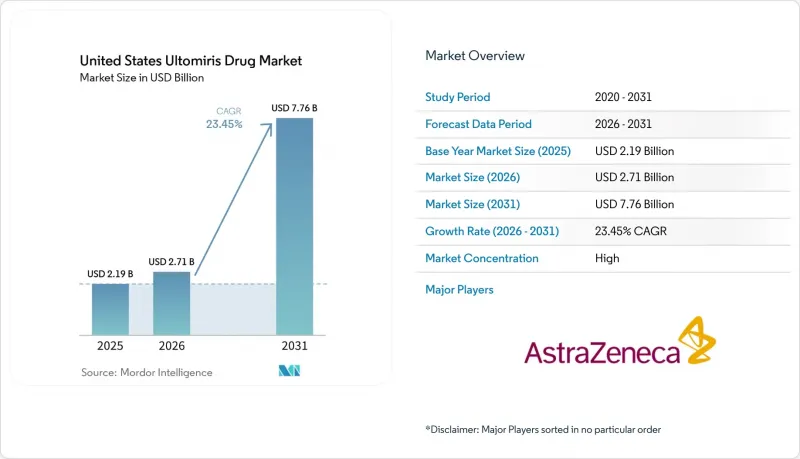
본 보고서는 적응증(발작성 야간 혈색소뇨증, 비정형 용혈성 요독 증후군, 전신성 중증 근력 약화증, 시신경척수염 스펙트럼 장애), 최종 사용자(성인, 소아), 유통 채널(병원 약국, 소매 약국, 온라인 약국, 기타 유통 채널)별로 분류되어 있습니다. 시장 전망은 금액(달러) 기준으로 제시되어 있습니다.
미국 울토미리스 의약품 시장 동향 및 인사이트
투여 간격 연장 및 치료 부담 경감
미국 울토미리스 의약품 시장은 라브리즈마브의 8주마다 실시하는 정맥 내 유지 투여 일정에 힘입어 혜택을 보고 있습니다. 이에 따라, 격주 투여법을 채택한 에크리주맙의 연간 치료 횟수 26회에 비해, 연간 치료 횟수는 6-7회로 감소합니다. 이러한 변화는 일상 진료에서 중요한 의미를 지닙니다. 치료 횟수가 줄어들면, 희귀하고 복잡한 증례를 이미 관리하고 있는 환자, 간병인, 정맥주사 센터 및 진료소의 일정 조정 부담이 줄어들기 때문입니다. 미국의 울토미리스 의약품 시장에서 이러한 치료 부담의 경감은 치료의 지속을 뒷받침합니다. 이는 치료 기간이 길고, 치료를 중단할 경우 심각한 임상적 결과를 초래할 수 있는 질환의 경우 특히 중요합니다. 이러한 편의성의 가치는 근로 연령층에서 더욱 두드러지는데, 보험 청구 데이터를 바탕으로 한 미국의 분석에 따르면 PNH 치료를 받고 있는 환자의 중앙 연령은 40세로 추정됩니다. 따라서 투여 빈도의 장점은 단순한 제품의 특징에서 벗어나, 일상 진료에서 새로운 C5 억제 요법이 어떻게 평가되는지를 보여주는 실용적인 기준으로 변화했습니다.
혈액학 및 신경학 분야의 승인 적응증 확대
미국 내 울토미리스 의약품 시장은 PNH, aHUS, gMG, NMOSD라는 4가지 FDA 승인 적응증에 힘입어 성장하고 있으며, 이에 따라 라브리즈마브는 미국 내 다른 어떤 단일 C5 억제제보다 더 광범위한 적응증을 보유하고 있습니다. 이러한 폭이 넓은 점은 중요한 의미를 지닙니다. 왜냐하면, 초희귀질환용 바이오의약품의 성장은 기초가 되는 역학적 요인만으로는 설명할 수 없으며, 인접 적응증으로의 진출에 크게 좌우되기 때문입니다. gMG의 경우, CHAMPION MG 임상 프로그램에서 확인된 지속적인 치료 성과와 일관성을 유지하는 현재 진행 중인 실세계 등록 연구의 최신 데이터를 바탕으로 승인 후 도입이 촉진되고 있습니다. NMOSD의 경우, 임상시험 결과 위약에 비해 상대적 재발 위험이 98.9% 감소한 것으로 나타났으며, 단 한 번의 재발만으로도 영구적인 장애를 초래할 가능성이 있는 이 질환에 있어, 이는 처방 의사 및 보험사에게 강력한 근거가 되고 있습니다. 미국 내 울토미리스 의약품 시장 전체를 놓고 볼 때, 혈액학 및 신경학 두 분야를 아우르는 적응증이 향후 환자 수 증가를 이끄는 주요 원동력이 되고 있습니다.
높은 연간 치료비와 지급 기관의 철저한 심사
치료를 받은 환자는 공적 보험과 민간 보험 모두에서 매우 높은 연간 의료비를 발생시키기 때문에 비용은 여전히 미국의 울토밀리스 시장에 있어 직접적인 걸림돌이 되고 있습니다. 분석에 따르면, PNH 관련 총 비용은 첫 해에 66만 533달러, 다음 해부터는 63만 3,984달러로 보고되었으며, 약제비, 모니터링 비용 및 집중 치료가 합쳐져 지불 주체에게 큰 부담이 되고 있는 것으로 나타났습니다. 각 민간 보험사는 이용 제한을 강화함으로써 이에 대응하고 있으며, 유나이티드 헬스케어의 2026년 보체 억제제 지침에 따르면 바이오시밀러인 에크리주맙 제품이 신규 치료 시작 결정 과정에 포함되었습니다. 이로 인해 해당 약물군에 대한 수요가 사라지는 것은 아니지만, 치료 시작이 지연되거나 보험 연도 내 수익 인식 시기가 어긋날 가능성이 있습니다. 따라서, 미국의 울토미리스 의약품 시장은 근본적인 임상적 수요가 여전히 강함에도 불구하고, 지불 주체의 재정적 부담 능력으로 인해 한계에 직면해 있습니다.
부문별 분석
2025년 기준으로 PNH는 적응증 구성의 48.31%를 차지하고 있으며, 적응증 수준에서 미국의 울토미리스 의약품 시장 점유율에서 1위를 차지했습니다. 이러한 우위는 보체 억제 요법 분야에서 가장 오랜 보험 급여 실적, 처방 의사의 가장 깊은 이해, 그리고 가장 확립된 치료 워크플로우를 반영하고 있습니다. 또한, 본 분석에 따르면 미국 내 PNH 확진 환자 수는 6,200명으로 추정되며, 보험에 가입된 환자 중 보체 억제제 치료를 받고 있는 비율은 역사적으로 고작 30%에 불과한 것으로 지적되었습니다. 이는 PNH의 수익이 환자 수의 많음이 아니라, 치료를 받는 환자 1인당 비용에 의해 지속적으로 견인되고 있는 이유를 보여줍니다. 미국의 울토미리스 의약품 업계에서 이러한 높은 집중도로 인해 PNH는 상업적으로 중요하지만, 새로운 적응증에 비해 바이오시밀러와 관련하여 지불 주체로부터의 압력을 받기 쉬운 상황에 놓여 있습니다.
전신성 중증근무력증(gMG)은 2026년부터 2031년까지 연평균 성장률(CAGR) 24.38%를 기록하며, 적응증 분야 중 가장 빠른 성장세를 보일 것으로 전망됩니다. 이러한 추세는 FDA 승인 후 적응증 기준이 확대되고, 신경과 전문의들의 이 약물에 대한 이해도가 높아지고 있음을 반영하고 있습니다. gMG에 대한 미국의 Ultomiris 의약품 시장 규모가 확대되고 있는 것은 실세계 등록 자료의 최신 데이터가 임상 프로그램 AAN2025에 따른 지속적인 치료 성과를 계속해서 입증하고 있기 때문입니다. NMOSD는 치료 대상이 AQP4 항체 양성 질환으로 한정되어 있어 환자 수는 여전히 적지만, 임상적 중증도가 높기 때문에 재발 예방을 통해 장기적인 기능을 유지할 수 있는 경우, 본 제품에는 강력한 가치 제안이 창출됩니다. 미국 내 울토미리스 의약품 시장 전체를 보면, 희귀질환 치료제 독점권(오펀 독점권)에 더해, gMG 및 NMOSD 분야에서 단기적으로 바이오시밀러와의 경쟁이 예상되지 않는 점이 신경학 분야의 지속적인 매출 확대를 뒷받침하고 있습니다.
기타 혜택:
- 엑셀 형식 시장 예측(ME) 시트
- 3개월간의 애널리스트 지원
자주 묻는 질문
목차
제1장 서론
제2장 조사 방법
제3장 주요 요약
제4장 시장 구도
제5장 시장 규모와 성장 예측
제6장 경쟁 구도
제7장 시장 기회와 향후 전망
JHS 26.07.03According to Mordor Intelligence, the united states ultomiris drug market size was valued at USD 2.19 billion in 2025 and is estimated to grow from USD 2.71 billion in 2026 to reach USD 7.76 billion by 2031, at a CAGR of 23.45% during the forecast period (2026-2031).
This report is Segmented by Indication (Paroxysmal Nocturnal Hemoglobinuria, Atypical Hemolytic Uremic Syndrome, Generalized Myasthenia Gravis, Neuromyelitis Optica Spectrum Disorder), End Use (Adult, Pediatric), and Distribution Channel (Hospital Pharmacies, Retail Pharmacies, Online Pharmacies, Other Distribution Channels). The Market Forecasts are Provided in Terms of Value (USD).
United States Ultomiris Drug Market Trends and Insights
Extended Dosing Interval and Lower Treatment Burden
The United States Ultomiris drug market benefits from ravulizumab's every-8-week intravenous maintenance schedule, which reduces annual treatment visits to 6 to 7 compared with 26 for eculizumab under a biweekly approach. That change matters in daily practice because fewer visits reduce scheduling strain for patients, caregivers, infusion centers, and physician offices that already manage rare and complex cases. In the United States Ultomiris drug market, this lower treatment burden supports persistence, which is especially important in diseases where therapy is long term and discontinuation can have serious clinical consequences. The value of that convenience is stronger in working-age populations, and the claims-based U.S. analysis placed the median age for treated PNH patients at 40 years. The dosing advantage has therefore moved from being a product attribute to a practical benchmark for how new C5 therapies are judged in routine care.
Expanding Approved Indications in Hematology and Neurology
The United States Ultomiris drug market is supported by 4 active FDA-approved indications, PNH, aHUS, gMG, and NMOSD, which gives ravulizumab broader label coverage than any other single C5 inhibitor in the country. This breadth matters because growth in ultra-rare biologics depends more on moving into adjacent indications than on underlying epidemiology alone. In gMG, post-approval uptake is being reinforced by ongoing real-world registry updates that remain consistent with the durable outcomes seen in the CHAMPION MG clinical program. In NMOSD, trial results showed a 98.9% relative relapse risk reduction versus placebo, which gives prescribers and payers a strong rationale in a condition where a single relapse can cause lasting disability. Across the United States Ultomiris drug market, the combined hematology and neurology label now acts as the main engine for future patient additions.
High Annual Therapy Cost and Payer Scrutiny
Cost remains a direct brake on the United States Ultomiris drug market because treated patients generate very high annual spending under both public and commercial coverage. The analysis reported total PNH-related costs of USD 660,533 in year 1 and USD 633,984 in subsequent years, which shows how drug, monitoring, and care intensity combine into a difficult payer burden. Commercial plans are responding by tightening utilization controls, and UnitedHealthcare's 2026 complement inhibitor policy places biosimilar eculizumab products inside the decision path for new treatment starts. That does not eliminate class demand, but it can delay therapy initiation and shift the timing of revenue recognition inside a plan year. The United States Ultomiris drug market therefore faces a ceiling from payer affordability even while underlying clinical demand remains strong.
Other drivers and restraints analyzed in the detailed report include:
- Conversion From Soliris to Ultomiris in Established Patients
- SC Self-Administration Expands Site-of-Care Flexibility
- Serious Meningococcal Infection Risk and REMS Burden
For complete list of drivers and restraints, kindly check the Table Of Contents.
Segment Analysis
PNH held 48.31% of the indication mix in 2025, which gave it the largest position in the United States Ultomiris drug market share at the indication level. That lead reflects the longest reimbursement history, the deepest prescriber familiarity, and the most established treatment workflows for complement inhibition. The analysis also described a diagnosed prevalent U.S. PNH population of 6,200 cases and noted that only 30% of insured patients had historically been captured on complement inhibitor therapy, which shows why PNH revenue remains driven by price per treated patient rather than by large patient numbers. Within the United States Ultomiris drug industry, that concentration leaves PNH commercially important but also more exposed to biosimilar-related payer pressure than newer uses.
Generalized myasthenia gravis is projected to record the fastest indication growth at a 24.38% CAGR from 2026 to 2031, and that pace reflects broader eligibility and growing neurologist familiarity after FDA approval. The United States Ultomiris drug market size for gMG is rising because real-world registry updates continue to support durable outcomes aligned with the clinical program AAN2025. NMOSD remains smaller on patient volume because treatment is limited to AQP4 antibody-positive disease, yet its clinical severity gives the product a strong value case when relapse prevention can preserve long-term function. Across the United States Ultomiris drug industry, orphan exclusivity and the lack of near-term biosimilar competition in gMG and NMOSD support continued expansion of neurology-based revenue.
Complete Report Scope:
- By Indication
- Paroxysmal Nocturnal Hemoglobinuria
- Atypical Hemolytic Uremic Syndrome
- Generalized Myasthenia Gravis
- Neuromyelitis Optica Spectrum Disorder
- By End Use
- Adult
- Pediatric
- By Distribution Channel
- Hospital Pharmacies
- Retail Pharmacies
- Online Pharmacies
- Other Distribution Channels
List of Companies Covered in this Report:
- AstraZeneca
Additional Benefits:
- The market estimate (ME) sheet in Excel format
- 3 months of analyst support
TABLE OF CONTENTS
1 Introduction
- 1.1 Study Assumptions & Market Definition
- 1.2 Scope of the Study
2 Research Methodology
3 Executive Summary
4 Market Landscape
- 4.1 Market Overview
- 4.2 Market Drivers
- 4.2.1 Extended Dosing Interval and Lower Treatment Burden
- 4.2.2 Expanding Approved Indications in Hematology and Neurology
- 4.2.3 Conversion From Soliris to Ultomiris in Established Patients
- 4.2.4 SC Self-Administration Expands Site-of-Care Flexibility
- 4.2.5 Broader Diagnostic Capture in Rare Complement-Mediated Diseases
- 4.2.6 Near-Term Pipeline Readouts Could Expand Nephrology Use Cases
- 4.3 Market Restraints
- 4.3.1 High Annual Therapy Cost and Payer Scrutiny
- 4.3.2 Serious Meningococcal Infection Risk and REMS Burden
- 4.3.3 Small Patient Pool Across Approved Orphan Indications
- 4.3.4 Infusion and Prior Authorization Friction in Specialty Care
- 4.4 Supply Chain Analysis
- 4.5 Regulatory Landscape
- 4.6 Porter's Five Forces Analysis
- 4.6.1 Bargaining Power of Suppliers
- 4.6.2 Bargaining Power of Buyers
- 4.6.3 Threat of New Entrants
- 4.6.4 Threat of Substitutes
- 4.6.5 Industry Rivalry
5 Market Size & Growth Forecasts (Value, USD)
- 5.1 By Indication
- 5.1.1 Paroxysmal Nocturnal Hemoglobinuria
- 5.1.2 Atypical Hemolytic Uremic Syndrome
- 5.1.3 Generalized Myasthenia Gravis
- 5.1.4 Neuromyelitis Optica Spectrum Disorder
- 5.2 By End Use
- 5.2.1 Adult
- 5.2.2 Pediatric
- 5.3 By Distribution Channel
- 5.3.1 Hospital Pharmacies
- 5.3.2 Retail Pharmacies
- 5.3.3 Online Pharmacies
- 5.3.4 Other Distribution Channels
6 Competitive Landscape
- 6.1 Pipeline Analysis
- 6.2 Company Profiles (includes Global Level Overview, Market Level Overview, Core Segments, Financials as available, Strategic Information, Products, Recent Developments)
- 6.2.1 AstraZeneca PLC
7 Market Opportunities & Future Outlook
- 7.1 White-space & unmet-need assessment


