

|
시장보고서
상품코드
2097295
변실금 : 시장 점유율 분석, 업계 동향 및 통계, 성장 예측(2025-2030년)Fecal Incontinence - Market Share Analysis, Industry Trends & Statistics, Growth Forecasts (2025 - 2030) |
||||||
 Mordor Intelligence
Mordor Intelligence에 의하면, 변실금 시장 규모는 2025년에 34억 1,000만 달러로 평가되었고, 2030년까지 43억 8,000만 달러에 이를 것으로 예상되며, 예측 기간 중 연평균 복합 성장률(CAGR)은 5.11%를 나타낼 전망입니다.
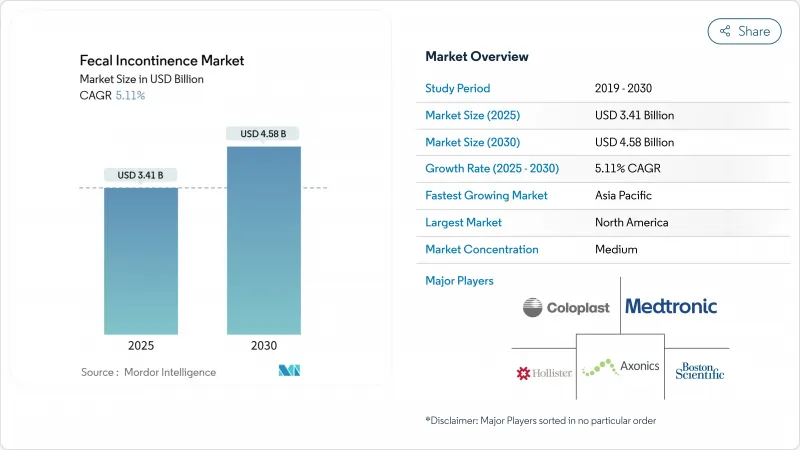
본 보고서는 제품별(패드·라이너, 배변 관리 시스템, 항문 플러그, 증량제, 천골 신경 자극 임플란트, 바이오피드백 장치), 환자 유형별(성인, 소아), 최종 사용자별(병원, 외래수술센터(ASC), 재택 간호, 장기 요양 시설) 및 지역별로 분류되어 있습니다. 시장 전망은 입수 가능한 데이터를 바탕으로 금액(달러) 단위로 제시되어 있습니다.
세계의 변실금 시장 동향 및 인사이트
급속히 진행되는 전 세계 고령화
65세 이상 성인의 변실금 유병률은 15%로, 전체 성인의 유병률 8%에 비해 높으며, 평균 수명의 연장에 따라 대상 환자층은 확대되고 있습니다. 환자 1인당 연간 경제적 부담은 평균 4,110달러로, 이는 직접적인 간병 비용과 생산성 손실로 나뉘며, 지불 주체에 대한 부담을 가중시키고 있습니다. 요양 시설 내 유병률이 50-70%에 달하는 만큼, 첨단 배변 관리 시스템에 대한 시설 측 수요가 증가하고 있습니다. 당뇨병이나 신경 질환 등 노화에 따른 동반 질환은 위험을 더욱 높입니다. 장기 요양 제공업체들은 첨단 배설 관리 및 신경 조절 솔루션이 인력 배치의 효율화를 가져오기 때문에 비용 대비 효과가 높다는 점을 점점 더 인식하고 있습니다. 그 결과, 변실금 시장은 고소득 국가의 고령화 추세와 밀접한 관련이 있습니다.
만성 소화기 질환 유병률의 상승
염증성 장 질환 환자의 변실금 발생률은 54%로 보고되고 있으며, 이는 일반 인구의 기준치를 크게 상회하여 충족되지 않은 치료 수요를 여실히 드러내고 있습니다. 과민성 대장 증후군의 평생 유병률은 52%에 달하여 체계적인 관리 프로토콜에 대한 수요를 높이고 있습니다. 증상 조절의 어려움으로 인한 심리적 고통은 지원을 구하려는 행동을 가속화하고 있으며, 최근 설문조사에서 응답자의 56%가 피로와 배변 조절을 최우선 과제로 꼽았습니다. 수술 후 합병증, 특히 직장암 절제술 후의 합병증은 경항문 세척 키트나 신경 조절 임플란트 등의 의료기기가 필요한 새로운 환자층을 만들어내고 있습니다. 이러한 요인들이 복합적으로 작용하여 광범위한 변실금 시장에서 두 자릿수 성장이 예상되는 분야가 유지되고 있습니다.
사회적 편견과 보고 부족
진료 현장에서 변실금 증상을 정확히 밝히는 환자는 고작 23%에 불과하여, 인식의 격차가 매우 크다는 사실이 드러나고 있습니다. 문화적 규범에 따라 이 증상은 노화나 출산에 따른 피할 수 없는 결과로 간주되어 적극적인 진료를 방해하고 있습니다. 임상의가 스스로 이 주제를 꺼내는 경우는 드물어 조기 개입의 기회를 놓치고 있습니다. 지원 단체나 동료 지원 플랫폼을 통한 인식 제고 캠페인이 시작되었지만, 행동의 변화는 여전히 더딘 임베디드니다. 집에서 눈에 띄지 않게 치료할 수 있는 디지털 치료제는 수치심을 덜어주지만, 사회적 편견이 여전히 변실금 시장의 발전을 가로막고 있습니다.
부문 분석
2024년, 변실금 시장에서 패드 및 라이너가 최대 매출 점유율을 차지하며 시장의 37.42%를 차지했습니다. 제품에 대한 친숙함, 소매점에서의 폭넓은 유통, 그리고 증상의 즉각적인 억제가 이러한 우위를 뒷받침하고 있습니다. 대조적으로, 천골 신경 자극 임플란트는 가장 빠르게 성장하는 카테고리로, 보험 적용 범위 확대와 지속적인 배변 기능 회복에 대한 우위를 뒷받침하는 임상 데이터가 축적됨에 따라 연평균 성장률(CAGR) 9.31%로 성장하고 있습니다. 각 제조업체가 MRI 호환 발전기 및 장수명 배터리를 도입함에 따라, 신경 조절 제품의 변실금 시장 규모는 더욱 확대될 전망입니다. 센서와 밀폐형 배액 장치를 통합한 신흥 배변 관리 시스템은 간호 시간을 59% 단축하여 병원의 효율 향상에 기여하고 있습니다. 바이오피드백 기기는 디지털화를 통해 부활하고 있으며, 클라우드 연동 플랫폼을 통해 원격 지도 및 치료 준수 현황 추적이 가능해졌습니다. 팽창제는 규제상의 복잡성으로 인해 여전히 보급이 제한적이지만, 항문 플러그는 수술 후 틈새 용도로 사용되고 있습니다.
보스턴 사이언티피크와 액소닉스의 합병은 지적 재산권 포트폴리오 통합, 유통망 확대, 파이프라인 확충을 위한 자금 조달을 가져와 첨단 제품에 대한 수요를 촉진하고 있습니다. 현재 경쟁사와의 차별화는 기기의 소형화, 배터리 수명, 그리고 실제 임상 증거를 수집하는 소프트웨어 생태계를 중심으로 전개되고 있습니다. 이러한 동향을 종합해 볼 때, 신경 조절 요법이 변실금 시장에서 혁신의 원동력이라는 점이 더욱 확고해지고 있습니다.
지역별 분석
북미는 2024년, 성숙한 보험 환급 제도, 높은 시술 건수, 그리고 NIH(미국 국립보건원)가 자금을 지원하는 신경조절 연구의 지속에 힘입어 변실금 시장에서 41.23%의 점유율을 유지했습니다. 매사추세츠 종합병원·브리검 헬스플랜의 골반 건강 이니셔티브와 같은 보험사 주도 시범 프로그램에서는 센서가 탑재된 제품과 온라인 지도를 결합하여 환자의 참여도를 높이고, 후속 비용을 절감하고 있습니다.
유럽은 성숙하고 고도로 체계화된 시장 환경을 보이고 있습니다. 독일, 영국, 프랑스는 전문적인 골반저 재활센터와 연계된 케어 네트워크를 통해 이 기술의 도입을 주도하고 있습니다. EU의 규제 절차가 통일됨에 따라 의료기기 승인이 신속화되고 있지만, 가격 측면의 압박으로 인해 비용 대비 효과(COE) 프레임워크의 도입이 진행되고 있습니다. 전방 저위 절제 증후군에 대한 경항문 관류 요법을 평가하는 다기관 공동 임상시험을 통해 환자 선정 기준의 미세 조정이 지속되고 있으며, 이는 지역 전체의 지속적인 성장을 뒷받침하고 있습니다.
아시아태평양은 가장 빠르게 성장하는 시장으로, 의료비 증가와 인식 제고 캠페인의 확대를 배경으로 연평균 성장률(CAGR) 7.63%로 확대되고 있습니다. 중국의 횡단면 조사에서는 골반저 기능 장애의 유병률이 높은 반면, 일반 시민의 지식은 제한적인 것으로 밝혀져, 교육이 성장의 중요한 원동력임을 부각시키고 있습니다. 태국 비뇨기과·산부인과 학회는 서양의학과 전통 치료법을 융합한 전문 연수 프로그램을 확대하여 의사 인력 풀을 확충하고 있습니다. 일본에서는 초고령화 사회와 충실한 보험 제도를 배경으로 고급 의료기기의 조기 도입이 진행되고 있는 반면, 신흥국에서는 의료 관광을 활용하여 선진적인 치료를 받는 움직임이 나타나고 있습니다. 이러한 동향이 맞물려 수익원의 다각화가 진행되며, 전 세계 배변 실금 시장이 확대되고 있습니다.
기타 혜택 :
- 엑셀 형식 시장 예측(ME) 시트
- 3개월간의 애널리스트 지원
자주 묻는 질문
목차
제1장 서론
제2장 조사 방법
제3장 주요 요약
제4장 시장 구도
제5장 시장 규모 및 성장 예측
제6장 경쟁 구도
제7장 시장 기회 및 향후 전망
KTH 26.08.05According to Mordor Intelligence, the fecal incontinence market size stands at USD 3.41 billion in 2025 and is projected to reach USD 4.38 billion by 2030, registering a 5.11% CAGR over the forecast period.
This report is Segmented by Product (Pads & Liners, Bowel Management Systems, Anal Plugs, Bulking Agents, Sacral Nerve Stimulation Implants, Biofeedback Equipment), Patient Type (Adult, Paediatric), End User (Hospitals, Ambulatory Surgical Centres, Home-Care Settings, Long-Term Care Facilities), and Geography. The Market Forecasts are Provided in Terms of Value (USD), Based On Availability.
Global Fecal Incontinence Market Trends and Insights
Rapidly aging global population
Adults aged 65 and older exhibit a 15% fecal-incontinence prevalence compared with 8% among all adults, expanding the addressable base as longevity rises. Annual economic burden per patient averages USD 4,110, split between direct care costs and productivity losses, escalating pressure on payers. Nursing-home prevalence of 50-70% drives institutional demand for advanced bowel-management systems. Age-related comorbidities such as diabetes and neurological disorders further elevate risk. Long-term care providers increasingly view advanced containment and neuromodulation solutions as cost-effective given the staffing efficiencies they create. Consequently, the fecal incontinence market is tightly coupled to aging trends in high-income economies.
Rising prevalence of chronic GI disorders
Inflammatory bowel disease patients report 54% fecal-incontinence incidence, far exceeding population baselines and underscoring unmet therapeutic needs. Irritable bowel syndrome carries a 52% lifetime incidence, amplifying demand for structured management pathways. Psychological distress linked to uncontrolled symptoms accelerates help-seeking behavior, with 56% of respondents in recent surveys prioritizing fatigue and continence control. Post-surgical complications, especially after rectal-cancer resections, introduce additional patient pools that require devices such as transanal irrigation kits and neuromodulation implants. Together these factors sustain double-digit growth pockets within the broader fecal incontinence market.
Social stigma and under-reporting
Only 23% of patients accurately disclose fecal-incontinence episodes during clinical encounters, highlighting a substantial recognition gap. Cultural norms frame the condition as an inevitable result of aging or childbirth, discouraging proactive care seeking. Clinicians seldom initiate dialogue, missing early intervention windows. Advocacy groups and peer-support platforms have begun public-awareness campaigns, yet behavior change remains gradual. Digital therapeutics that allow discreet home treatment lessen embarrassment, but stigma continues to constrain the fecal incontinence market.
Other drivers and restraints analyzed in the detailed report include:
- Growing adoption of minimally-invasive bowel-management devices
- Favorable reimbursement for sacral neuromodulation
- High cost of advanced implants and procedures
For complete list of drivers and restraints, kindly check the Table Of Contents.
Segment Analysis
Pads and liners generated the largest revenue slice, holding 37.42% of the fecal incontinence market in 2024. Device familiarity, wide retail distribution, and immediate symptom containment sustain their prominence. In contrast, sacral-nerve-stimulation implants are the fastest-growing category, advancing at a 9.31% CAGR as payers widen coverage and clinical data consolidate their superiority in durable continence restoration. The fecal incontinence market size for neuromodulation products is set to widen further as manufacturers introduce MRI-safe generators and longer-lasting batteries. Emerging bowel-management systems that integrate sensors with closed drainage have cut nursing time by 59%, improving hospital efficiency. Biofeedback equipment is enjoying a digital renaissance, with cloud-linked platforms enabling remote coaching and adherence tracking. Bulking agents remain confined by regulatory complexity, whereas anal plugs serve niche postoperative applications.
Demand for advanced products is being catalyzed by the Boston Scientific-Axonics merger, which consolidates IP portfolios, enhances distribution reach, and funds pipeline expansions. Competitive differentiation now revolves around device miniaturization, battery longevity, and software ecosystems that capture real-world evidence. Taken together, these dynamics reinforce neuromodulation as the innovation engine within the fecal incontinence market.
Complete Report Scope:
- By Product
- Pads & Liners
- Bowel Management Systems
- Anal Plugs
- Bulking Agents
- Sacral Nerve Stimulation Implants
- Biofeedback Equipment
- By Patient Type
- Adult
- Paediatric
- By End User
- Hospitals
- Ambulatory Surgical Centres
- Home-care Settings
- Long-term Care Facilities
- By Geography
- North America
- United States
- Canada
- Mexico
- Europe
- Germany
- United Kingdom
- France
- Italy
- Spain
- Rest of Europe
- Asia-Pacific
- China
- Japan
- India
- Australia
- South Korea
- Rest of Asia-Pacific
- Middle East and Africa
- GCC
- South Africa
- Rest of Middle East and Africa
- South America
- Brazil
- Argentina
- Rest of South America
- North America
Geography Analysis
North America retained a 41.23% fecal incontinence market share in 2024, supported by mature reimbursement systems, high procedure volumes, and ongoing NIH-funded neuromodulation research. Payer pilots such as Mass General Brigham Health Plan's pelvic-health initiative bundle sensor-enabled products with virtual coaching, enhancing patient engagement and reducing downstream costs.
Europe represents a mature and highly structured landscape. Germany, the United Kingdom, and France spearhead adoption through specialized pelvic-floor rehabilitation centers and coordinated care networks. Harmonized EU regulatory pathways expedite device approvals, although pricing pressures encourage adoption of cost-effectiveness frameworks. Multicenter clinical trials evaluating transanal irrigation for low anterior resection syndrome continue to fine-tune patient-selection criteria, supporting sustainable growth across the region.
Asia-Pacific is the fastest-growing territory, expanding at 7.63% CAGR on the back of rising health-care expenditure and improved awareness campaigns. Cross-sectional surveys in China reveal elevated pelvic-floor dysfunction prevalence coupled with limited public literacy, highlighting education as a key growth lever. Thailand's urogynecology associations are scaling professional-training programs that integrate Western and traditional modalities, enlarging the physician talent pool. Japan's super-aged demographic and robust insurance coverage underpin early adoption of premium devices, while emerging economies leverage medical tourism to access advanced treatments. These developments collectively diversify revenue streams and amplify the global fecal incontinence market.
- Axonics Inc.
- B. Braun
- Boston Scientific
- Coloplast
- Consure Medical
- ConvaTec Group plc
- Dentsply Sirona
- Hollister
- Laborie
- Laborie Medical Technologies
- Medtronic
- Renew Medical Inc.
- Solventum
- SRS Medical
- Teleflex
- TG Eakin Ltd
- Zyno Medical
Additional Benefits:
- The market estimate (ME) sheet in Excel format
- 3 months of analyst support
TABLE OF CONTENTS
1 Introduction
- 1.1 Study Assumptions and Market Definition
- 1.2 Scope of the Study
2 Research Methodology
3 Executive Summary
4 Market Landscape
- 4.1 Market Overview
- 4.2 Market Drivers
- 4.2.1 Rapidly Aging Global Population
- 4.2.2 Rising Prevalence Of Chronic GI Disorders
- 4.2.3 Growing Adoption Of Minimally-Invasive Bowel Management Devices
- 4.2.4 Favourable Reimbursement For Sacral Neuromodulation
- 4.2.5 AI-Enabled Biofeedback Therapy Platforms
- 4.2.6 Expansion Of Pelvic-Floor Neuromodulation Clinics In Emerging Markets
- 4.3 Market Restraints
- 4.3.1 Social Stigma & Under-Reporting Of The Condition
- 4.3.2 High Cost Of Advanced Implants & Procedures
- 4.3.3 Fragmented Regulatory Pathways For Bio-Absorbable Bulking Agents
- 4.3.4 Shortage Of Colorectal Specialists Trained In Latest Therapies
- 4.4 Value / Supply-Chain Analysis
- 4.5 Regulatory Landscape
- 4.6 Technology Outlook
- 4.7 Porter's Five Forces Analysis
- 4.7.1 Bargaining Power of Suppliers
- 4.7.2 Bargaining Power of Buyers
- 4.7.3 Threat of New Entrants
- 4.7.4 Threat of Substitutes
- 4.7.5 Intensity of Competitive Rivalry
5 Market Size and Growth Forecasts (Value-USD)
- 5.1 By Product
- 5.1.1 Pads & Liners
- 5.1.2 Bowel Management Systems
- 5.1.3 Anal Plugs
- 5.1.4 Bulking Agents
- 5.1.5 Sacral Nerve Stimulation Implants
- 5.1.6 Biofeedback Equipment
- 5.2 By Patient Type
- 5.2.1 Adult
- 5.2.2 Paediatric
- 5.3 By End User
- 5.3.1 Hospitals
- 5.3.2 Ambulatory Surgical Centres
- 5.3.3 Home-care Settings
- 5.3.4 Long-term Care Facilities
- 5.4 By Geography
- 5.4.1 North America
- 5.4.1.1 United States
- 5.4.1.2 Canada
- 5.4.1.3 Mexico
- 5.4.2 Europe
- 5.4.2.1 Germany
- 5.4.2.2 United Kingdom
- 5.4.2.3 France
- 5.4.2.4 Italy
- 5.4.2.5 Spain
- 5.4.2.6 Rest of Europe
- 5.4.3 Asia-Pacific
- 5.4.3.1 China
- 5.4.3.2 Japan
- 5.4.3.3 India
- 5.4.3.4 Australia
- 5.4.3.5 South Korea
- 5.4.3.6 Rest of Asia-Pacific
- 5.4.4 Middle East and Africa
- 5.4.4.1 GCC
- 5.4.4.2 South Africa
- 5.4.4.3 Rest of Middle East and Africa
- 5.4.5 South America
- 5.4.5.1 Brazil
- 5.4.5.2 Argentina
- 5.4.5.3 Rest of South America
- 5.4.1 North America
6 Competitive Landscape
- 6.1 Market Concentration
- 6.2 Market Share Analysis
- 6.3 Company Profiles (includes Global level Overview, Market level overview, Core Segments, Financials as available, Strategic Information, Market Rank/Share for key companies, Products and Services, and Recent Developments)
- 6.3.1 Axonics Inc.
- 6.3.2 B. Braun Melsungen AG
- 6.3.3 Boston Scientific Corp.
- 6.3.4 Coloplast A/S
- 6.3.5 Consure Medical
- 6.3.6 ConvaTec Group plc
- 6.3.7 Dentsply Sirona
- 6.3.8 Hollister Inc.
- 6.3.9 Laborie
- 6.3.10 Laborie Medical Technologies
- 6.3.11 Medtronic plc
- 6.3.12 Renew Medical Inc.
- 6.3.13 Solventum
- 6.3.14 SRS Medical
- 6.3.15 Teleflex Inc.
- 6.3.16 TG Eakin Ltd
- 6.3.17 Zyno Medical
7 Market Opportunities & Future Outlook
- 7.1 White-space & Unmet-Need Assessment


