

|
시장보고서
상품코드
2098571
천연 스펀지 : 시장 점유율 분석, 업계 동향 및 통계, 성장 예측(2026-2031년)Natural Sponge - Market Share Analysis, Industry Trends & Statistics, Growth Forecasts (2026 - 2031) |
||||||
 Mordor Intelligence
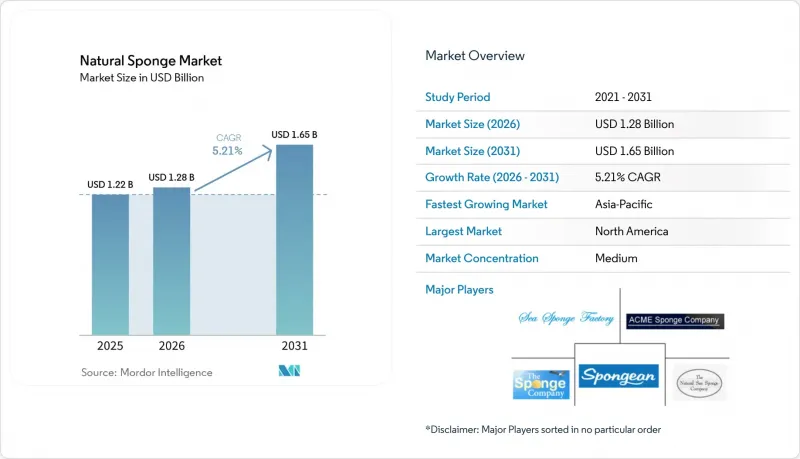
Mordor Intelligence에 의하면, 천연 스펀지 시장 규모는 2025년 12억 2,000만 달러로 평가되었습니다. 2026년에는 12억 8,000만 달러로 확대되어 2026년부터 2031년에 걸쳐 CAGR 5.21%로 성장을 지속하여, 2031년에는 16억 5,000만 달러에 이를 것으로 예측됩니다.
본 보고서는 제품 유형(실크 스펀지, 허니콤 스펀지, 울 스펀지, 옐로우 스펀지, 기타), 유통 채널(오프라인 매장, 온라인 스토어), 지역(북미, 유럽, 아시아태평양, 남미, 중동 및 아프리카)별로 분류되어 있습니다. 시장 전망은 금액(달러) 기준으로 제시되어 있습니다.
세계의 천연 스펀지 시장 동향 및 인사이트
천연 및 친환경 퍼스널케어 제품에 대한 소비자 선호도 증가
더 깨끗하고 안전하며 환경을 고려한 퍼스널케어 제품에 대한 소비자 수요가 증가함에 따라 천연 스펀지 시장에 강력한 성장 기회가 창출되고 있습니다. 소비자들이 일상생활에서 사용하는 성분과 소재에 대한 의식을 높여감에 따라, 천연 스펀지는 생분해성, 재생 가능한 원료, 화학 물질을 포함하지 않는 구성 등의 특징 덕분에 합성 소재의 대체품보다 점점 더 선호되고 있습니다. 미국 위생재단(NSF)의 2024년 조사에 따르면, 미국인의 74%가 퍼스널케어 제품에서 유기농 성분을 선호하며, 65%는 잠재적으로 유해한 물질을 피하기 위해 투명성 높은 성분 표기를 적극적으로 요구하고 있습니다. 이처럼 천연이며 투명성이 높은 제품에 대한 관심 증가는 인공 첨가물이나 미세 플라스틱을 포함하지 않는 천연 스펀지의 특성과 잘 부합합니다. 또한, 지속 가능한 소비와 친환경적인 뷰티 습관에 대한 인식이 높아짐에 따라 소비자들은 스킨케어, 목욕, 화장품 용도로 천연 스펀지를 활용하도록 유도되고 있으며, 이는 장기적인 시장 확대를 뒷받침하고 있습니다.
합성 스펀지를 대체하는 생분해성 제품에 대한 수요 증가
플라스틱 폐기물 및 미세 플라스틱 오염에 대한 환경적 우려가 높아짐에 따라, 퍼스널케어 제품 및 가정용품 전반에 걸쳐 생분해성 대체품으로의 전환이 가속화되고 있습니다. 재생 가능한 해양 자원에서 채취되며 수명 주기가 끝날 때 자연적으로 분해되는 천연 스펀지는 석유 유래 합성 스펀지를 대체할 친환경적인 대안이 됩니다. 소비자들은 제품의 성능과 내구성을 유지하면서도 환경에 미치는 부담을 줄이기 위해 생분해성 제품을 선택하는 경향이 강해지고 있습니다. 이러한 추세는 브랜드와 소매업체의 더욱 엄격한 지속가능성 노력에 의해 더욱 뒷받침되고 있으며, 이들 중 다수는 플라스틱 미사용 또는 천연 유래 제품으로 상품 라인업을 확충하고 있습니다. 또한, 제로 웨이스트 라이프스타일과 순환형 경제 실천이 인기를 끌고 있는 점도 목욕, 스킨케어, 화장 용도로 천연 스펀지의 채택을 촉진하고 있습니다.
합성 스펀지 제품에 비해 가격이 비쌉니다.
합성 스펀지에 비해 천연 스펀지의 가격이 상대적으로 높은 점은 시장 보급 확대에 있어 주요 과제로 대두되고 있습니다. 천연 해면은 신중한 채취, 세척, 선별, 가공이 필요하기 때문에 저렴한 석유 유래 소재로 대량 생산되는 합성 스펀지보다 제조 비용이 높습니다. 그 결과, 천연 스펀지는 종종 프리미엄 제품으로 자리매김하게 되어, 가격에 민감한 소비자들에게는 매력이 떨어지게 됩니다. 이러한 가격 차이는 구매 결정에 있어 합리적인 가격이 큰 역할을 하는 개발도상국 시장에서 특히 두드러집니다. 또한, 소매업체들은 합성 스펀지를 대용량 팩이나 저가 형태로 자주 판매하여 일상적인 가정용 사용에 대한 매력을 높이고 있습니다. 천연 스펀지는 뛰어난 내구성, 생분해성, 그리고 피부 친화적인 특성을 갖추고 있지만, 초기 비용이 높다는 점이 처음 구매하는 소비자들의 망설임을 유발하는 요인이 되고 있습니다.
부문 분석
허니콤 스펀지는 천연 스펀지 시장에서 가장 큰 점유율을 차지하며, 2025년에는 총 매출의 32.47%를 차지했습니다. 이러한 선도적 지위는 주로 뛰어난 흡수성, 내구성, 부드러운 질감에 힘입은 것으로, 목욕, 스킨케어, 화장품 용도로 높은 인기를 얻고 있습니다. 소비자들은 허니콤 스펀지가 풍부한 거품을 만들어내면서도 민감한 피부에 자극이 적다는 점을 높이 평가하고 있으며, 이는 퍼스널케어 및 웰니스 분야 모두에서 광범위한 보급을 뒷받침하고 있습니다. 또한, 이 제품은 고품질의 천연 목욕 용품을 선호하는 고급 스파, 미용실, 고급 호텔 등의 환경에서도 강력한 수요를 바탕으로 하고 있습니다. 게다가 긴 수명과 뛰어난 보습 특성 덕분에 다른 여러 유형의 스펀지에 비해 소비자에게 더 큰 가치를 제공합니다.
실크 스펀지 시장은 2031년까지 6.71%라는 가장 높은 연평균 성장률(CAGR)을 보일 것으로 예상되며, 이는 프리미엄급이며 피부에 자극이 적은 천연 목욕 제품에 대한 수요가 증가하고 있음을 반영합니다. 실크 스펀지는 매우 섬세한 질감으로 널리 알려져 있으며, 섬세한 세안, 유아 관리, 민감성 피부 관리에 사용하기에 최적입니다. 피부에 자극이 적은 스킨케어 루틴에 대한 소비자의 인식이 높아지고, 클린 뷰티 제품의 인기가 확대되면서 이 제품 유형에 대한 수요가 가속화되고 있습니다. 프리미엄 스킨케어 브랜드와 럭셔리 웰니스 서비스의 확대로 인해 선진국 및 신흥 시장에서 실크 스펀지의 보급은 더욱 강화되고 있습니다.
지역별 분석
2025년, 북미는 전 세계 천연 스펀지 시장 점유율의 34.56%를 차지하며 최대 지역 시장이 되었습니다. 이 지역의 우위는 지속 가능하고 생분해 가능한 퍼스널케어 제품에 대한 소비자의 높은 인식과 더불어, 프리미엄 스킨케어 및 목욕 용품에 대한 견조한 소비 지출에 힘입은 것입니다. 미국과 캐나다에는 미용, 웰니스, 스파 산업이 확고히 자리 잡고 있어 고품질 천연 스펀지에 대한 안정적인 수요를 지속적으로 견인하고 있습니다. 화학 물질을 포함하지 않은 각질 제거 제품과 합성 목욕 용품을 대체할 친환경 제품에 대한 소비자의 선호도가 높아지면서 시장 성장을 더욱 뒷받침하고 있습니다.
아시아태평양은 가처분 소득 증가, 급속한 도시화, 그리고 프리미엄 퍼스널케어 제품에 대한 인식 제고에 힘입어 2031년까지 연평균 성장률(CAGR) 6.3%라는 가장 높은 성장률을 기록하며 확대될 것으로 전망됩니다. 전 세계 도시 인구의 약 54%, 22억 명 이상이 아시아에 거주하고 있습니다. 2050년까지 아시아의 도시 인구는 50% 증가하여 12억 명이 더 늘어날 것으로 예측됩니다. 중국, 일본, 한국, 인도, 호주 등의 국가에서는 소비자들이 웰빙 지향적인 라이프스타일을 점점 더 받아들이면서 천연 원료의 스킨케어 제품에 대한 수요가 높아지고 있습니다. 중산층 인구 증가와 특히 K-뷰티, J-뷰티와 같은 미용 트렌드의 영향으로, 천연 스펀지를 포함한 피부에 순하고 천연 유래의 클렌징 제품 사용이 촉진되고 있습니다.
유럽은 엄격한 환경 규제, 지속 가능한 제품에 대한 강한 수요, 그리고 유기농 퍼스널케어 제품의 보급에 힘입어 천연 스펀지의 성숙한 시장으로서 주도적인 위치를 차지하고 있습니다. 독일, 프랑스, 이탈리아, 영국에서는 확립된 뷰티, 웰니스, 고급 스킨케어 산업을 통해 수요가 유지되고 있습니다. 남미에서는 특히 브라질과 아르헨티나에서 친환경 퍼스널케어 제품에 대한 인식 제고와 소매 네트워크 확장에 힘입어 시장이 서서히 성장하고 있습니다. 중동 및 아프리카는 가처분 소득 증가, 호텔 및 스파에서 수요, 그리고 프리미엄 퍼스널케어 제품의 소매 채널 확대를 배경으로 유망한 시장으로 부상하고 있습니다.
기타 혜택 :
- 엑셀 형식 시장 예측(ME) 시트
- 3개월간의 애널리스트 지원
자주 묻는 질문
목차
제1장 서론
제2장 조사 방법
제3장 주요 요약
제4장 시장 구도
제5장 시장 규모 및 성장 예측
제6장 경쟁 구도
제7장 시장 기회 및 향후 전망
KTH 26.08.10According to Mordor Intelligence, the natural sponge market size is expected to grow from USD 1.22 billion in 2025 to USD 1.28 billion in 2026 and is forecast to reach USD 1.65 billion by 2031 at 5.21% CAGR over 2026-2031.
This report is Segmented by Product Type (Silk Sponge, Honeycomb Sponge, Wool Sponge, Yellow Sponge, Other Product Types), Distribution Channel (Offline Stores and Online Stores), and Geography (North America, Europe, Asia-Pacific, South America, Middle East and Africa). The Market Forecasts are Provided in Terms of Value (USD).
Global Natural Sponge Market Trends and Insights
Rising consumer preference for natural and eco-friendly personal care products
Consumer demand for cleaner, safer, and environmentally responsible personal care products is creating strong growth opportunities for the natural sponge market. As buyers become more conscious of the ingredients and materials used in their daily routines, natural sponges are increasingly favored over synthetic alternatives due to their biodegradable nature, renewable origin, and chemical-free composition. According to a 2024 survey by the National Sanitation Foundation (NSF), 74% of Americans prefer organic ingredients in personal care products, while 65% actively seek transparent ingredient labeling to avoid potentially harmful substances. This growing emphasis on natural and transparent products aligns well with the characteristics of natural sea sponges, which are free from artificial additives and microplastics. In addition, expanding awareness of sustainable consumption and eco-friendly beauty practices is encouraging consumers to incorporate natural sponges into skincare, bathing, and cosmetic applications, supporting long-term market expansion.
Growing demand for biodegradable alternatives to synthetic sponges
Increasing environmental concerns over plastic waste and microplastic pollution are accelerating the shift toward biodegradable alternatives across personal care and household products. Natural sponges, which are harvested from renewable marine sources and decompose naturally at the end of their lifecycle, offer an eco-friendly substitute to petroleum-based synthetic sponges. Consumers are increasingly choosing biodegradable products to reduce their environmental footprint while maintaining product performance and durability. This trend is further supported by stricter sustainability commitments from brands and retailers, many of which are expanding their portfolios with plastic-free and naturally sourced products. The growing popularity of zero-waste lifestyles and circular economy practices is also encouraging the adoption of natural sponges for bathing, skincare, and cosmetic applications.
Higher prices compared to synthetic sponge alternatives
The relatively high cost of natural sponges compared to synthetic alternatives remains a key challenge for broader market adoption. Natural sea sponges require careful harvesting, cleaning, grading, and processing, resulting in higher production costs than mass-produced synthetic sponges made from inexpensive petroleum-based materials. As a result, natural sponges are often positioned as premium products, making them less attractive to price-sensitive consumers. The price difference is particularly noticeable in developing markets, where affordability plays a major role in purchasing decisions. In addition, retailers frequently offer synthetic sponges in multi-pack, low-cost formats, increasing their appeal for everyday household use. Although natural sponges provide superior durability, biodegradability, and skin-friendly properties, their higher upfront cost can discourage first-time buyers.
Other drivers and restraints analyzed in the detailed report include:
- Expanding use of natural sponges in premium skincare and cosmetics
- Increasing awareness of sustainable marine-sourced products
- Competition from low-cost synthetic and cellulose sponges
For complete list of drivers and restraints, kindly check the Table Of Contents.
Segment Analysis
Honeycomb sponge accounted for the largest share of the natural sponge market, representing 32.47% of total revenue in 2025. Its leading position is primarily driven by its superior absorbency, durability, and soft texture, making it highly preferred for bathing, skincare, and cosmetic applications. Consumers value honeycomb sponges for their ability to produce a rich lather while remaining gentle on sensitive skin, supporting widespread adoption across both personal care and wellness segments. The product also benefits from strong demand in premium spa, beauty salon, and luxury hospitality settings where high-quality natural bathing accessories are preferred. In addition, its long service life and excellent water retention characteristics provide greater value to consumers compared to several alternative sponge varieties.
The silk sponge segment is projected to register the fastest CAGR of 6.71% through 2031, reflecting increasing demand for premium and skin-friendly natural bathing products. Silk sponges are widely recognized for their exceptionally fine texture, making them ideal for delicate facial cleansing, baby care, and sensitive skin applications. Rising consumer awareness regarding gentle skincare routines and the growing popularity of clean beauty products are accelerating demand for this product type. The expansion of premium skincare brands and luxury wellness services has further strengthened the adoption of silk sponges across developed and emerging markets.
Complete Report Scope:
- By Product Type
- Silk Sponge
- Honeycomb Sponge
- Wool Sponge
- Yellow Sponge
- Other Product Types
- By Distribution Channel
- Offline Stores
- Online Stores
- By Geography
- North America
- United States
- Canada
- Mexico
- Rest of North America
- Europe
- United Kingdom
- Germany
- Spain
- France
- Italy
- Sweden
- Ireland
- Austria
- Rest of Europe
- Asia-Pacific
- China
- Japan
- India
- South Korea
- New Zealand
- Australia
- Rest of Asia-Pacific
- South America
- Brazil
- Argentina
- Rest of South America
- Middle East and Africa
- United Arab Emirates
- Saudi Arabia
- South Africa
- Rest of Middle East and Africa
- North America
Geography Analysis
North America accounted for 34.56% of the global natural sponge market share in 2025, making it the largest regional market. The region's dominance is supported by high consumer awareness regarding sustainable and biodegradable personal care products, coupled with strong spending on premium skincare and bath accessories. The United States and Canada have well-established beauty, wellness, and spa industries that continue to drive consistent demand for high-quality natural sponges. Growing consumer preference for chemical-free exfoliation products and eco-friendly alternatives to synthetic bath accessories has further strengthened market growth.
Asia-Pacific is projected to expand at the fastest CAGR of 6.3% through 2031, driven by rising disposable incomes, rapid urbanization, and increasing awareness of premium personal care products. Around 54% of the global urban population, more than 2.2 billion people, live in Asia. By 2050, the urban population in Asia is expected to grow by 50% - an additional 1.2 billion people. Countries such as China, Japan, South Korea, India, and Australia are witnessing growing demand for natural skincare accessories as consumers increasingly adopt wellness-oriented lifestyles. The expanding middle-class population and the influence of beauty trends, particularly K-beauty and J-beauty, are encouraging greater use of gentle and natural cleansing products, including natural sponges.
Europe leads as a mature market for natural sponges, driven by stringent environmental regulations, strong demand for sustainable products, and the adoption of organic personal care solutions. Germany, France, Italy, and the United Kingdom sustain demand through established beauty, wellness, and luxury skincare industries. South America is growing gradually, supported by rising awareness of eco-friendly personal care products and expanding retail networks, particularly in Brazil and Argentina. The Middle East and Africa is emerging as a promising market, driven by higher disposable incomes, hotel and spa demand, and expanding premium personal care retail channels.
- The Natural Sea Sponge Company
- Sea Sponge Factory
- SPONGEAN
- Acme Sponge Company
- The Sponge Company
- Ideal Eponge SAS
- Setalg SA
- Swissco LLC
- Baby Buddy, Inc.
- Baudelaire, Inc.
- TOP SPONGE (Tsokis Christos)
- Bellini S.r.l.
- Mediterranean Natural Sponges
- Caribbean Sea Sponge Company
- Sponges Direct Inc.
- Natural Sponge Company
- Natural Bath & Body Products, LLC
- Sponge Wholesale
- Oceanic Natural Sponges
- Greek Natural Sponges
Additional Benefits:
- The market estimate (ME) sheet in Excel format
- 3 months of analyst support
TABLE OF CONTENTS
1 INTRODUCTION
- 1.1 Study Assumptions and Market Definition
- 1.2 Scope of the Study
2 RESEARCH METHODOLOGY
3 EXECUTIVE SUMMARY
4 MARKET LANDSCAPE
- 4.1 Market Overview
- 4.2 Market Drivers
- 4.2.1 Rising consumer preference for natural and eco-friendly personal care products
- 4.2.2 Growing demand for biodegradable alternatives to synthetic sponges
- 4.2.3 Expanding use of natural sponges in premium skincare and cosmetics
- 4.2.4 Increasing awareness of sustainable marine-sourced products
- 4.2.5 Growth in spa, wellness, and luxury hospitality industries
- 4.2.6 Rising demand for natural cleaning products in households
- 4.3 Market Restraints
- 4.3.1 Higher prices compared to synthetic sponge alternatives
- 4.3.2 Competition from low-cost synthetic and cellulose sponges
- 4.3.3 Vulnerability of sponge harvesting to climate change and ocean pollution
- 4.3.4 Limited consumer awareness in developing markets
- 4.4 Consumer Behavior Analysis
- 4.5 Regulatory Landscape
- 4.6 Technological Outlook
- 4.7 Porter's Five Forces Analysis
- 4.7.1 Bargaining Power of Suppliers
- 4.7.2 Bargaining Power of Buyers
- 4.7.3 Threat of New Entrants
- 4.7.4 Threat of Substitutes
- 4.7.5 Intensity of Competitive Rivalry
5 MARKET SIZE AND GROWTH FORECASTS (VALUE)
- 5.1 By Product Type
- 5.1.1 Silk Sponge
- 5.1.2 Honeycomb Sponge
- 5.1.3 Wool Sponge
- 5.1.4 Yellow Sponge
- 5.1.5 Other Product Types
- 5.2 By Distribution Channel
- 5.2.1 Offline Stores
- 5.2.2 Online Stores
- 5.3 By Geography
- 5.3.1 North America
- 5.3.1.1 United States
- 5.3.1.2 Canada
- 5.3.1.3 Mexico
- 5.3.1.4 Rest of North America
- 5.3.2 Europe
- 5.3.2.1 United Kingdom
- 5.3.2.2 Germany
- 5.3.2.3 Spain
- 5.3.2.4 France
- 5.3.2.5 Italy
- 5.3.2.6 Sweden
- 5.3.2.7 Ireland
- 5.3.2.8 Austria
- 5.3.2.9 Rest of Europe
- 5.3.3 Asia-Pacific
- 5.3.3.1 China
- 5.3.3.2 Japan
- 5.3.3.3 India
- 5.3.3.4 South Korea
- 5.3.3.5 New Zealand
- 5.3.3.6 Australia
- 5.3.3.7 Rest of Asia-Pacific
- 5.3.4 South America
- 5.3.4.1 Brazil
- 5.3.4.2 Argentina
- 5.3.4.3 Rest of South America
- 5.3.5 Middle East and Africa
- 5.3.5.1 United Arab Emirates
- 5.3.5.2 Saudi Arabia
- 5.3.5.3 South Africa
- 5.3.5.4 Rest of Middle East and Africa
- 5.3.1 North America
6 COMPETITIVE LANDSCAPE
- 6.1 Market Concentration
- 6.2 Strategic Moves
- 6.3 Market Share Analysis
- 6.4 Company Profiles (Includes Company Highlights, Strategic Information, Core Segments, Financials, Products & Services, Recent Developments)
- 6.4.1 The Natural Sea Sponge Company
- 6.4.2 Sea Sponge Factory
- 6.4.3 SPONGEAN
- 6.4.4 Acme Sponge Company
- 6.4.5 The Sponge Company
- 6.4.6 Ideal Eponge SAS
- 6.4.7 Setalg SA
- 6.4.8 Swissco LLC
- 6.4.9 Baby Buddy, Inc.
- 6.4.10 Baudelaire, Inc.
- 6.4.11 TOP SPONGE (Tsokis Christos)
- 6.4.12 Bellini S.r.l.
- 6.4.13 Mediterranean Natural Sponges
- 6.4.14 Caribbean Sea Sponge Company
- 6.4.15 Sponges Direct Inc.
- 6.4.16 Natural Sponge Company
- 6.4.17 Natural Bath & Body Products, LLC
- 6.4.18 Sponge Wholesale
- 6.4.19 Oceanic Natural Sponges
- 6.4.20 Greek Natural Sponges


