

|
시장보고서
상품코드
2099077
유럽의 인재 관리 소프트웨어 시장 : 시장 점유율 분석, 업계 동향 및 통계, 성장 예측(2026-2031년)Europe Talent Management Software - Market Share Analysis, Industry Trends & Statistics, Growth Forecasts (2026 - 2031) |
||||||
 Mordor Intelligence
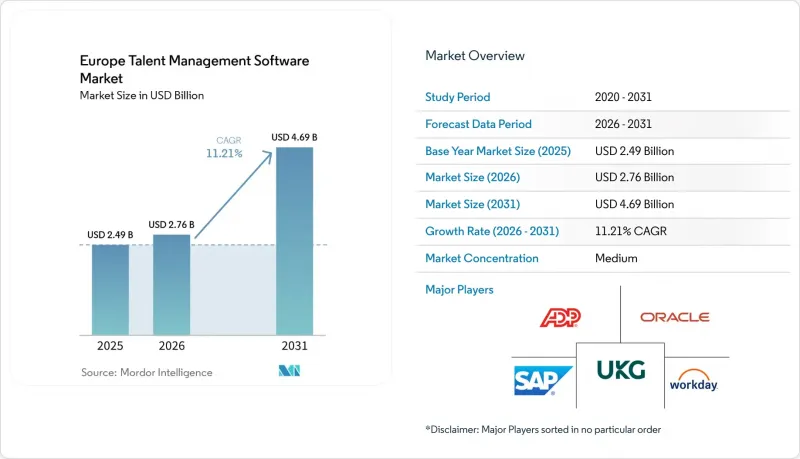
Mordor Intelligence에 의하면, 유럽의 인재 관리 소프트웨어 시장 규모는 2025년에 24억 9,000만 달러로 평가되었고, 2031년까지 46억 9,000만 달러에 이를 것으로 예측되며, 2026-2031년 CAGR 11.21%로 성장할 전망입니다.
본 보고서는 구성 요소별(소프트웨어 및 서비스), 용도별(성과 관리, 승계 계획 등), 배포 방식별(온프레미스 및 클라우드), 최종 사용자 기업 규모별(대기업 및 중소기업(SME)), 최종 이용 산업별(소매 및 전자상거래, 제조업 등), 그리고 지역별로 분류되어 있습니다. 시장 전망은 금액(달러) 기준으로 제시되어 있습니다.
유럽의 인재 관리 소프트웨어 시장 동향 및 인사이트
AI를 활용한 사내 인재 마켓플레이스의 부상
유럽의 인재 관리 소프트웨어 시장에서 사내 인재 마켓플레이스는 플랫폼의 가치를 높이기 위한 가장 명확한 경로 중 하나로 자리 잡고 있습니다. 이러한 도구는 검증된 기술 프로파일과 경력 이력을 활용하여 고용주가 직원을 공석인 직책, 프로젝트, 멘토십 및 도전적인 업무에 매칭하는 데 도움을 줍니다. 그 매력은 채용 효율성 향상에 그치지 않고, 외부 채용에 대한 의존도를 낮추고, 채용까지 걸리는 시간을 단축하며, 직원이 자신의 경력 경로를 파악하기 쉽게 해준다는 점에 있습니다. Workday의 2025년 봄 릴리스에서는 Career Hub 및 Opportunity Marketplace 내에 지능형 채용 추천 기능이 추가되어, 사내 이동 기능이 직원의 일상 업무 흐름에 점점 더 밀접하게 통합되고 있음을 보여주었습니다. 조직이 이러한 시스템을 더 빈번하게 이용할수록, 인재 계획, 후계자 육성 및 맞춤형 학습을 지원할 수 있는 더욱 풍부한 기술 데이터도 축적됩니다. 이를 통해 사내 인재 마켓플레이스는 단순한 독립 기능이라기보다 유럽의 인재 관리 소프트웨어 시장에서 핵심적인 운영 계층으로서의 입지를 강화하고 있습니다.
기술 기반 채용 모델로의 전환 가속화
유럽의 인재 관리 소프트웨어 시장에서 기술 기반 채용은 제한적인 활용 단계에서 표준적인 채용 관행으로 전환되고 있습니다. LinkedIn은 2024년에 채용 담당자의 73%가 자격보다 스킬을 우선시한다고 보고했으며, 이는 상세한 스킬 프로파일을 평가, 저장, 매칭할 수 있는 소프트웨어에 대한 수요가 증가하고 있음을 뒷받침합니다. 고용주가 체계화된 기술 인벤토리를 구축하면 역량 격차를 조기에 파악하고, 사후 대응형 채용에서 계획적인 인재 개발로 전환할 수 있게 됩니다. 이는 보상 투명성 측면에서도 중요합니다. 객관적인 기술 및 역량 프레임워크가 있다면 직급에 관계없이 보상 결정의 근거를 설명하고 정당화하기가 쉬워지기 때문입니다. 유럽연합 집행위원회의 스킬 어젠다와 ESCO 프레임워크 역시 다국적 기업이 국경을 넘어 보다 일관된 용어를 사용할 수 있도록 지원하고 있으며, 이를 통해 국가를 넘나드는 인재 매칭 및 사내 이동이 개선됩니다. 그 결과, 유럽의 인재 관리 소프트웨어 시장에서 기술 아키텍처는 단순한 선택적 부가 기능이 아닌 핵심 요건으로 자리 잡고 있습니다.
레거시 인사 시스템 통합의 복잡성
레거시 시스템의 파편화는 여전히 유럽 인재 관리 소프트웨어 시장에서 가장 큰 걸림돌 중 하나입니다. 많은 대기업들은 최신 API 기반 인재 관리 도구를 위해 설계되지 않은 구식 ERP 환경 내에 신뢰할 수 있는 직원 데이터를 여전히 보유하고 있어, 이로 인해 마이그레이션 및 동기화가 구매자의 기대보다 더디게 진행되고 있습니다. 이 문제는 거버넌스 절차, 노동 협의회와의 협의, 그리고 긴 승인 주기가 추가적인 지연 요인이 되는 제조업 및 공공 부문에서 특히 두드러집니다. 각 벤더들은 보다 긴밀한 통합과 플랫폼 기능 확장을 통해 이러한 부담을 줄이려고 노력하고 있지만, 기존 데이터 구조와 새로운 워크플로우 간의 격차로 인해 주요 프로젝트가 진행될 때마다 여전히 맞춤화 작업이 발생하고 있습니다. 그 결과, 도입 기간이 소프트웨어 선정 단계를 훨씬 넘어 길어지는 경우가 많으며, 그로 인해 모듈 도입이 지연되고 이후 수익 성장세도 둔화되고 있습니다. 클라우드의 보급이 확대되고 있음에도 불구하고, 통합 위험은 여전히 구매자가 조달 과정에서 가장 먼저 검증하는 과제 중 하나이기 때문에 레거시 아키텍처는 유럽 인재 관리 소프트웨어 시장의 성장을 계속해서 무겁게 짓누르고 있습니다.
부문 분석
2025년, 소프트웨어는 유럽 인재 관리 소프트웨어 시장 점유율의 77.19%를 차지했으며, 해당 시장의 주요 수익 기반으로 자리매김했습니다. 이러한 우위는 성과, 후계자 육성, 보상, 채용에 관한 기록을 하나의 시스템에서 연동하는 통합 제품군에 대한 수요를 반영한 것입니다. 일단 이 제품군이 핵심 인사 워크플로우에 통합되면, 데이터와 권한의 연속성이 새로운 기능만큼 중요해지기 때문에 개별 모듈을 교체하려는 유인은 줄어듭니다. 이로 인해 주요 공급업체들은 신규 고객 확보에만 의존하지 않고, 기존 고객과의 계약 규모를 확대할 수 있게 되었습니다. 또한, 도입 시 서비스의 비중이 높아지더라도 조달 협상의 중심에 소프트웨어 계층이 계속 자리 잡게 되는 요인이 되고 있습니다.
서비스 분야는 2031년까지 연평균 성장률(CAGR) 13.71%를 나타낼 것으로 예측되며, 유럽의 인재 관리 소프트웨어 시장에서 가장 빠르게 성장하는 분야입니다. AI 기능의 출시 속도가 가속화됨에 따라, 본 가동 후의 설정, 거버넌스 설계, 교육 및 도입 지원에 대한 수요가 높아지고 있습니다. 기업들은 기술 분류 체계, 평가 주기, 보상 규칙이 사업 부문 전체에 걸쳐 적절하게 설정되어야만 새로운 도구가 가치를 창출할 수 있다는 사실을 깨닫기 시작했습니다. 또한, 벤더들이 워크플로우, 권한, 보고서 로직에 영향을 미치는 업데이트를 지속적으로 출시함에 따라 지속적인 지원의 중요성도 높아지고 있습니다. 그 결과, 서비스가 확대되고 있는 것은 소프트웨어의 중요성이 떨어지고 있기 때문이 아니라, 유럽 인재 관리 소프트웨어 시장 전체에서 구매자들이 소프트웨어 기능을 재현 가능한 운영 관행으로 전환하기 위해 더 많은 지원을 필요로 하고 있기 때문입니다.
2025년, 성과 관리는 23.01%라는 가장 큰 용도 점유율을 차지했으며, 유럽 인재 관리 소프트웨어 시장에서 가장 확고하게 자리 잡은 이용 사례 중 하나로 남아 있었습니다. 목표 설정, 평가 주기, 관리자의 피드백, 보상과 연계 등은 이미 연간 인사 업무에 통합되어 있기 때문에 고용주는 일반적으로 이 분야를 조기에 도입합니다. 이로 인해, 특히 국가나 사업 부문을 가로지르는 표준화된 평가 체계를 추구하는 대기업에서 이 부문은 견고한 도입 기반을 구축하고 있습니다. 또한 이는 성과 데이터가 후계자 계획 및 급여 결정을 포함한 보다 광범위한 인재 워크플로의 기반이 되는 경우가 많음을 의미합니다. 이러한 확고한 역할이야말로 구매 우선순위가 변화하기 시작했음에도 불구하고 성과 관리가 여전히 가장 큰 용도으로 남아 있는 이유를 설명해 줍니다.
학습 및 개발 분야는 2031년까지 연평균 성장률(CAGR) 12.68%를 나타낼 것으로 예측되며, 유럽의 인재 관리 소프트웨어 시장에서 가장 빠르게 성장하는 용도으로 자리매김하고 있습니다. 코너스톤(Cornerstone)의 ‘Sapient Insights’ 조사에 따르면, 대기업 응답자 중 기술 관리 소프트웨어에 할당된 예산 비율은 2024년 6%에서 2025년 11%로 거의 두 배로 증가했으며, 이는 평가 단계에서 실제 지출 단계로 명확하게 전환되고 있음을 보여줍니다. AI 네이티브 학습 플랫폼이 주목받고 있는 이유는 컨텐츠를 개인화하고, 기술 향상 상황을 추적하며, 사내 이동 및 후계자 계획과 보다 직접적으로 연계할 수 있기 때문입니다. 또한, 역량 기반 채용에서는 후보자 매칭부터 직원의 성장 경로에 이르기까지 동일한 역량 데이터를 일관되게 관리할 수 있는 플랫폼이 요구되므로, 채용, 참여도, 경력 개발 각 모듈도 그 혜택을 누리고 있습니다. 이에 따라 유럽의 인재 관리 소프트웨어 시장은 프로세스 중심의 범주에서 역량 개발 및 사내 이동을 더욱 중시하는 범주로 서서히 변화하고 있습니다.
기타 혜택 :
- 엑셀 형식 시장 예측(ME) 시트
- 3개월간의 애널리스트 지원
자주 묻는 질문
목차
제1장 서론
제2장 조사 방법
제3장 주요 요약
제4장 시장 구도
제5장 시장 규모 및 성장 예측
제6장 경쟁 구도
제7장 시장 기회 및 향후 전망
AJY 26.08.07According to Mordor Intelligence, the Europe talent management software market size stood at USD 2.49 billion in 2025 and is forecast to reach USD 4.69 billion by 2031, growing at a CAGR of 11.21% from 2026 to 2031.
This report is Segmented by Component (Software, and Services), Application (Performance Management, Succession Planning, and More), Deployment (On-Premise, and Cloud), End-Use Enterprise Size (Large Enterprises, and Small and Medium Enterprises [SMEs]), End-Use Industry (Retail and E-Commerce, Manufacturing, and More), and Region. The Market Forecasts are Provided in Terms of Value (USD).
Europe Talent Management Software Market Trends and Insights
Emergence of AI-Driven Internal Talent Marketplaces
In the Europe talent management software market, internal talent marketplaces are becoming one of the clearest paths to higher platform value. These tools help employers match employees to open roles, projects, mentorships, and stretch assignments by using verified skill profiles and career histories. Their appeal goes beyond recruiting efficiency because they lower dependence on external hiring, reduce time-to-fill, and make career paths easier for employees to see. Workday's 2025 Spring Release added intelligent job recommendations inside Career Hub and Opportunity Marketplace, which showed how internal mobility functions are moving closer to daily employee workflows. As organizations use these systems more often, they also build richer skills data that can support workforce planning, succession, and personalized learning. That makes the internal marketplace less of a stand-alone feature and more of a central operating layer in the Europe talent management software market.
Accelerating Shift toward Skills-Based Hiring Models
In the Europe talent management software market, skills-based hiring is moving from selective use into standard recruiting practice. LinkedIn reported in 2024 that 73% of recruiting professionals prioritized skills over credentials, which supports stronger demand for software that can assess, store, and match detailed skill profiles. Once employers create structured skill inventories, they can identify capability gaps earlier and shift from reactive hiring toward planned development. This matters for pay transparency as well because objective skill and competency frameworks make compensation decisions easier to explain and defend across roles. The European Commission's skills agenda and ESCO framework are also helping multinational employers use more consistent terminology across borders, which improves cross-country talent matching and internal mobility. As a result, skills architecture is becoming a core requirement rather than an optional add-on in the Europe talent management software market.
Complexity in Integrating Legacy HR Systems
Legacy fragmentation remains one of the hardest brakes on the Europe talent management software market. Many large employers still keep authoritative employee data inside older ERP environments that were not designed for modern API-based talent tools, which makes migration and synchronization slower than buyers expect. The problem is most visible in manufacturing and public-sector settings, where governance procedures, works council consultation, and long approval cycles add another layer of delay. Vendors are trying to reduce the burden through tighter integrations and broader platform releases, but the gap between old data structures and new workflows still creates custom work during every major project. That means implementation time often stretches well beyond software selection, which delays module adoption and slows follow-on revenue. Even as cloud penetration rises, legacy architecture continues to weigh on growth in the Europe talent management software market because integration risk is still one of the first issues buyers test during procurement.
Other drivers and restraints analyzed in the detailed report include:
- Growing Adoption of Cloud-Native HR Architectures
- Rising Compliance Pressure from EU Equal Pay and ESG Rules
- Persistent Data Privacy Concerns under GDPR
For complete list of drivers and restraints, kindly check the Table Of Contents.
Segment Analysis
Software accounted for 77.19% of Europe talent management software market share in 2025 and remained the main revenue base of the Europe talent management software market. That lead reflected the preference for integrated suites that connect performance, succession, compensation, and recruiting records in one system. Once a suite is embedded in core HR workflows, replacing single modules becomes less attractive because continuity in data and permissions matters as much as new functionality. This has helped major vendors expand contract value inside existing accounts instead of depending only on new customer wins. It has also kept the software layer at the center of procurement discussions even when service intensity rises during implementation.
Services are projected to grow at 13.71% CAGR through 2031, making them the fastest-moving component in the Europe talent management software market. The pace of AI feature releases is creating more demand for configuration, governance design, training, and adoption support after go-live. Enterprises are finding that new tools only deliver value when skills taxonomies, review cycles, and compensation rules are set up correctly across business units. Ongoing support is also gaining importance because vendors continue to release updates that affect workflows, permissions, and reporting logic. As a result, services are rising not because software is losing relevance, but because buyers need more help turning software features into repeatable operating practice across the Europe talent management software market.
Performance management held the largest application share at 23.01% in 2025 and remained one of the most established use cases in the Europe talent management software market. Employers usually implement this area early because goal setting, review cycles, manager feedback, and compensation links are already embedded in annual HR operations. That gives the segment a durable installed base, especially in larger enterprises that want standardized review structures across countries and business units. It also means performance data often becomes the anchor for broader talent workflows, including succession and pay decisions. This installed role helps explain why performance management stayed the largest application even as buying priorities began to shift.
Learning and development is projected to grow at 12.68% CAGR through 2031, which makes it the fastest-rising application in the Europe talent management software market. Cornerstone's Sapient Insights survey showed that skills management software budget commitments nearly doubled among enterprise respondents from 6% in 2024 to 11% in 2025, which points to a clear move from evaluation to spending. AI-native learning platforms are gaining traction because they personalize content, track skill development, and connect more directly to internal mobility and succession plans. Recruitment, engagement, and career development modules are also benefiting because skills-based hiring requires platforms that can carry the same skill data from candidate matching into employee growth paths. This is gradually changing the Europe talent management software market from a process-first category into one that places more weight on capability development and internal mobility.
Complete Report Scope:
- By Component
- Software
- Services
- Professional Services
- Support and Maintenance Services
- By Application
- Performance Management
- Learning and Development
- Succession Planning
- Compensation Management
- Recruitment and Talent Acquisition
- Workforce Planning
- Employee Engagement and Career Development
- Other Talent Management Applications
- By Deployment
- On-Premise
- Cloud
- By End-Use Enterprise Size
- Large Enterprises
- Small and Medium Enterprises (SMEs)
- By End-Use Industry
- IT and Telecommunications
- Banking, Financial Services and Insurance
- Healthcare and Life Sciences
- Retail and E-Commerce
- Manufacturing
- Government and Public Sector
- Other End-Use Industries
- By Region
- United Kingdom
- Germany
- France
- Italy
- Spain
- Russia
- Rest of Europe
List of Companies Covered in this Report:
- SAP SE
- Oracle Corporation
- Workday Inc.
- Cornerstone OnDemand Inc.
- ADP Inc.
- UKG Inc.
- Ceridian HCM Holding Inc.
- Cegid SAS
- Talentsoft S.A.S.
- PeopleFluent Holdings Corp.
- Saba Software Inc.
- IBM Corporation
- Infor Inc.
- Zoho Corporation Pvt. Ltd.
- BambooHR LLC
- Bullhorn Inc.
- Learning Technologies Group plc
- SumTotal Systems LLC
- Paycom Software Inc.
- ClearCompany Inc.
Additional Benefits:
- The market estimate (ME) sheet in Excel format
- 3 months of analyst support
TABLE OF CONTENTS
1 INTRODUCTION
- 1.1 Study Assumptions and Market Definition
- 1.2 Scope of the Study
2 RESEARCH METHODOLOGY
3 EXECUTIVE SUMMARY
4 MARKET LANDSCAPE
- 4.1 Market Overview
- 4.2 Market Drivers
- 4.2.1 Accelerating Shift Toward Skills-Based Hiring Models
- 4.2.2 Growing Adoption of Cloud-Native HR Architectures
- 4.2.3 Rising Compliance Pressure From EU Equal Pay and ESG Rules
- 4.2.4 Emergence of AI-Driven Internal Talent Marketplaces
- 4.2.5 Expansion of Learning Experience Platforms Into Talent Suites
- 4.2.6 Vendor-Led Consumption-Based Pricing Innovation
- 4.3 Market Restraints
- 4.3.1 Complexity in Integrating Legacy HR Systems
- 4.3.2 Persistent Data Privacy Concerns Under GDPR
- 4.3.3 Limited Analytics Skills Inside Mid-Market Enterprises
- 4.3.4 Macroeconomic-Driven Hiring Freezes in Key Industries
- 4.4 Industry Value Chain Analysis
- 4.5 Regulatory Landscape
- 4.6 Technological Outlook
- 4.7 Porter's Five Forces Analysis
- 4.7.1 Threat of New Entrants
- 4.7.2 Bargaining Power of Buyers
- 4.7.3 Bargaining Power of Suppliers
- 4.7.4 Threat of Substitutes
- 4.7.5 Competitive Rivalry
- 4.8 Impact of Macroeconomic Factors on the Market
5 MARKET SIZE AND GROWTH FORECASTS (VALUE)
- 5.1 By Component
- 5.1.1 Software
- 5.1.2 Services
- 5.1.2.1 Professional Services
- 5.1.2.2 Support and Maintenance Services
- 5.2 By Application
- 5.2.1 Performance Management
- 5.2.2 Learning and Development
- 5.2.3 Succession Planning
- 5.2.4 Compensation Management
- 5.2.5 Recruitment and Talent Acquisition
- 5.2.6 Workforce Planning
- 5.2.7 Employee Engagement and Career Development
- 5.2.8 Other Talent Management Applications
- 5.3 By Deployment
- 5.3.1 On-Premise
- 5.3.2 Cloud
- 5.4 By End-Use Enterprise Size
- 5.4.1 Large Enterprises
- 5.4.2 Small and Medium Enterprises (SMEs)
- 5.5 By End-Use Industry
- 5.5.1 IT and Telecommunications
- 5.5.2 Banking, Financial Services and Insurance
- 5.5.3 Healthcare and Life Sciences
- 5.5.4 Retail and E-Commerce
- 5.5.5 Manufacturing
- 5.5.6 Government and Public Sector
- 5.5.7 Other End-Use Industries
- 5.6 By Region
- 5.6.1 United Kingdom
- 5.6.2 Germany
- 5.6.3 France
- 5.6.4 Italy
- 5.6.5 Spain
- 5.6.6 Russia
- 5.6.7 Rest of Europe
6 COMPETITIVE LANDSCAPE
- 6.1 Market Concentration
- 6.2 Strategic Moves
- 6.3 Market Share Analysis
- 6.4 Company Profiles (includes Global Level Overview, Market Level Overview, Core Segments, Financials as available, Strategic Information, Market Rank/Share, Products and Services, Recent Developments)
- 6.4.1 SAP SE
- 6.4.2 Oracle Corporation
- 6.4.3 Workday Inc.
- 6.4.4 Cornerstone OnDemand Inc.
- 6.4.5 ADP Inc.
- 6.4.6 UKG Inc.
- 6.4.7 Ceridian HCM Holding Inc.
- 6.4.8 Cegid SAS
- 6.4.9 Talentsoft S.A.S.
- 6.4.10 PeopleFluent Holdings Corp.
- 6.4.11 Saba Software Inc.
- 6.4.12 IBM Corporation
- 6.4.13 Infor Inc.
- 6.4.14 Zoho Corporation Pvt. Ltd.
- 6.4.15 BambooHR LLC
- 6.4.16 Bullhorn Inc.
- 6.4.17 Learning Technologies Group plc
- 6.4.18 SumTotal Systems LLC
- 6.4.19 Paycom Software Inc.
- 6.4.20 ClearCompany Inc.
7 MARKET OPPORTUNITIES AND FUTURE OUTLOOK
- 7.1 White-Space and Unmet-Need Assessment


