|
시장보고서
상품코드
2099747
크로마토그래피 소프트웨어 : 시장 점유율 분석, 업계 동향 및 통계, 성장 예측(2026-2031년)Chromatography Software - Market Share Analysis, Industry Trends & Statistics, Growth Forecasts (2026 - 2031) |
||||||
 Mordor Intelligence
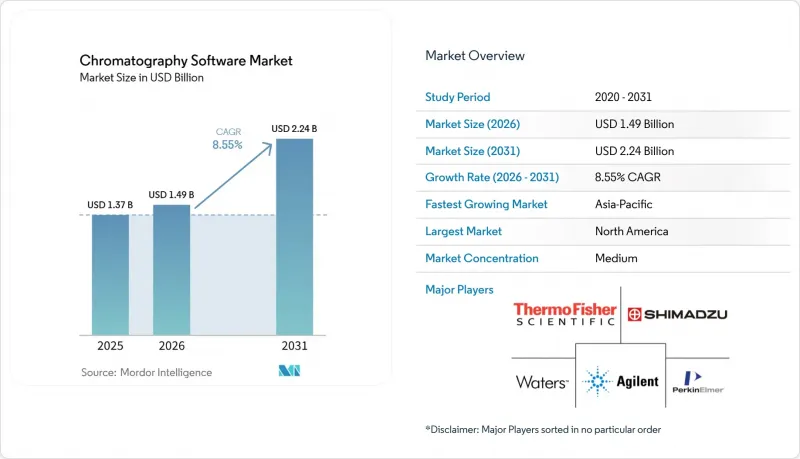
Mordor Intelligence에 의하면, 크로마토그래피 소프트웨어 시장 규모는 2025년 13억 7,000만 달러로 평가되었습니다. 2026년 14억 9,000만 달러에서 2031년까지 22억 4,000만 달러로 확대되어 2026년부터 2031년까지 연평균 복합 성장률(CAGR)은 8.55%를 나타낼 것으로 예측됩니다.
본 보고서는 소프트웨어 유형(독립형, 통합형), 배포 모델(On-Premise, 웹 및 클라우드 기반), 용도(CDS, 전문 모듈, 오프라인/데이터 검토, 오픈소스/클라우드), 최종 사용자(제약·바이오기술, CRO, 학술 기관, 환경 분야 등) 및 지역(북미, 유럽, 아시아태평양 등)별로 분류되어 있습니다. 시장 전망은 금액(달러) 기준으로 제시되어 있습니다.
세계의 크로마토그래피 소프트웨어 시장 동향 및 인사이트
제약·바이오기술 분야의 워크플로우 디지털화
크로마토그래피 소프트웨어 시장은 제약 및 바이오기술 연구소의 워크플로우를 완전히 디지털화하는 방향으로 더욱 깊이 진전되고 있습니다. 분석법 이관, 실행 지침, 검토 및 출시 지원이 하나의 연계된 프로세스 내의 디지털 단계로 자리 잡고 있기 때문에 기업들은 더 이상 데이터 수집만을 목적으로 소프트웨어를 사용하는 것이 아닙니다. 애질런트(Agilent)의 'OpenLab Sync'는 기계 판독 가능한 USP 분석법 컨텐츠와 안내형 디지털 실행을 연계함으로써 이러한 변화를 명확히 보여주고 있습니다. 이를 통해 수작업이 줄어들고, 사업장 간 워크플로우 표준화가 용이해집니다. 그 결과, 시간이 지남에 따라 전환 비용이 증가합니다. 검증된 기계 판독 가능한 분석법을 단일 플랫폼에 구축한 연구소는 해당 분석법을 다른 시스템으로 이전하는 데 소극적이 되기 때문입니다. 유사한 변화는 바이오의약품 품질 관리 분야에서도 두드러지며, 애지런트사의 LC/HRMS용 ‘Multi-Attribute Method’ 워크플로는 복잡한 제품이 증가함에 따라 일상 업무에서 규제 준수를 충족하는 고컨텐츠 분석을 지원할 수 있는 소프트웨어에 대한 수요가 높아지고 있음을 반영하고 있습니다.
규제상 데이터 무결성 요건
크로마토그래피 소프트웨어 시장은 안전한 전자 기록, 접근 제어, 감사 추적 및 전자 서명을 의무화하는 규제 프레임워크에 의해 지속적으로 뒷받침되고 있습니다. 기본적인 워크스테이션 도구나 종이 기반 프로세스는 규제 환경에서 요구되는 관리 기준을 충족하지 못하기 때문에 FDA 21 CFR Part 11은 여전히 중심적인 위치를 차지하고 있습니다. 이와 유사한 추세는 유럽에서는 Annex 11을 통해, 아시아에서는 ICH 기반 요건을 준수하고 있는 규제 당국을 통해 확산되고 있으며, 주요 의약품 생산 지역 전반에 걸쳐 시스템 업그레이드에 대한 압박이 커지고 있습니다. 워터스(Waters)는 이러한 요구에 부응하기 위해 ‘Alliance iS HPLC System Software 2.0’을 개발했습니다. 이 소프트웨어는 인증된 터치스크린을 통한 접근 확인을 Empower의 감사 추적 기능과 연동하여, 추적성 체인 내에서 발생하는 일반적인 사용자 오류를 최대 40%까지 줄여줍니다. 규제 당국의 요건이 계속해서 엄격해지는 가운데, 크로마토그래피 소프트웨어 시장에서는 선택적인 생산성 향상보다는 최소한의 규정 준수 기준을 충족하는 데 주안점을 둔 필수적인 투자 사이클이 앞으로도 지속될 것으로 보입니다.
높은 검증 및 변경 관리 부담
크로마토그래피 소프트웨어 시장은 GMP 환경에서의 신규 도입이나 대규모 업그레이드에 수반되는 검증 부담이라는 여전히 큰 제약에 직면해 있습니다. FDA 및 EU 요건에 따라 설치, 운영, 성능 적합성 평가 작업을 문서화해야 하므로, 이로 인해 유익한 업그레이드조차 품질 관리 팀이나 인포매틱스 팀에게는 수개월에 걸친 프로젝트가 되어 버립니다. 이러한 부담으로 인해 크로마토그래피 소프트웨어 시장에서는 보수적인 구매 패턴이 형성되어 있으며, 많은 연구소에서는 빈번한 기능 도입보다는 긴 버전 주기를 선호하는 경향이 있습니다. 워터스(Waters)사의 ‘Empower CDS’는 2010년 기본 릴리스 이후 수많은 버전 업데이트를 거쳤지만, 각 연구소에서는 새로운 기능을 대규모로 활용하기 전에 사내 절차에 따라 이미 도입된 버전을 개별적으로 검증해야 합니다. 이 때문에 벤더가 출시하는 내용과 많은 규제 대상 연구소가 실제로 운용하고 있는 내용 사이에 격차가 발생하고 있으며, 특히 전담 검증 팀을 보유하지 않은 소규모 조직에서는 이러한 경향이 두드러집니다.
부문 분석
2025년 시점에서 통합형 소프트웨어는 크로마토그래피 소프트웨어 시장 점유율의 75.31%를 차지했으며, 2031년까지 연평균 성장률(CAGR)이 9.38%로 가장 빠르게 성장하고 있는 소프트웨어 유형이기도 합니다. 이러한 조합은 크로마토그래피 소프트웨어 시장이 통합형 플랫폼에 의해 주도되고 있을 뿐만 아니라, 각 연구소가 사일로화된 기기용 소프트웨어를 통합된 환경으로 대체해 나감에 따라 그 방향으로 더욱 나아가고 있음을 보여줍니다. 이러한 변화는 LC, GC, IC 및 질량 분석 워크플로우를 단일 감사 추적, 단일 사용자 구조, 단일 검토 체계 하에서 통합하고자 하는 다중 기법을 다루는 연구소에서 두드러지게 나타납니다. 애질런트(Agilent)의 ‘OpenLab CDS 버전 3.0’은 고분해능 질량 분석 기능을 기존의 LC 및 GC 워크플로우에 사용되고 있는 것과 동일한 광범위한 플랫폼으로 확장함으로써 이러한 추세를 뒷받침하고 있습니다.
크로마토그래피 소프트웨어 시장에서는 규제 요건이 비교적 완만하고 장비 수준의 유연성이 여전히 매력적인 학술 연구소나 독립 연구 기관에서 독립형 제품에 대한 수요가 여전히 남아 있습니다. 광범위한 장비와의 호환성은 이러한 도구들에 있어 여전히 실용적인 판매 포인트이며, 특히 기업 전체에 대한 전면적인 도입이 아닌, 다양한 하드웨어를 지원하는 저비용의 단일 시스템을 필요로 하는 소규모 환경에서 중요합니다. 그러나 크로마토그래피 소프트웨어 시장의 핵심 비교 기준은 독립형 제품의 유연성과 통합형 거버넌스 간의 대조로 점점 더 이동하고 있습니다. 규제 대상 사용자들이 공유된 감사 추적, 중앙 집중식 권한 관리, 그리고 여러 기법을 아우르는 통합된 검토에 대한 요구를 확대함에 따라, 그 균형은 통합형 도입 쪽으로 계속 이동하고 있습니다. 따라서 크로마토그래피 소프트웨어 시장에서는 분산 상태를 유지하는 것보다 이를 완화하는 플랫폼이 명확히 선호되고 있습니다.
2025년 기준으로 On-Premise형 소프트웨어는 크로마토그래피 소프트웨어 시장 규모의 55.24%를 차지했으며, 이는 검증된 로컬 인프라가 여전히 규제 대상 도입 사례의 대부분을 뒷받침하고 있음을 보여줍니다. 많은 GMP 실험실이 이미 적합성이 확인된 환경이나 확립된 내부 통제 프로세스에 부합하는 시스템을 선호하기 때문에 크로마토그래피 소프트웨어 시장은 이러한 대규모 도입 기반을 유지하고 있습니다. 그럼에도 불구하고, CRO 및 여러 거점을 보유한 제약 기업들이 거점 간 가시성 향상과 보다 확장 가능한 도입 모델을 요구함에 따라, 웹 및 클라우드 기반 소프트웨어는 2031년까지 연평균 성장률(CAGR) 9.52%를 나타낼 것으로 예측됩니다. 워터스(Waters)사의 ‘waters_connect’ 사례는 워크스테이션에 국한된 도구뿐만 아니라, 규정 준수 구조 내에서 원격 액세스, 모니터링 및 검토를 어떻게 실현할 수 있는지를 보여줍니다.
크로마토그래피 소프트웨어 시장의 이러한 움직임은 On-Premise에서 클라우드로의 직접적인 전면 전환을 의미하는 것은 아닙니다. 많은 연구소가 우선 하이브리드형 모델을 채택하고 있기 때문입니다. 전환 초기 단계에서는 데이터 열람, 협업 및 감독 업무를 웹 환경으로 이전하는 한편, 데이터 수집 및 일부 처리 업무는 On-Premise에 남겨둘 수 있습니다. 여기서 중요한 것이 부속서 11입니다. 이는 규제 대상 사용자에게 컴퓨터화된 시스템의 접근, 복구, 지속성 및 백업과 관련된 공급업체 관리에 대한 구체적인 체크리스트를 제공하는 것입니다. 벤더가 이러한 요건을 충족하면, 아키텍처가 변경된 후에도 검증된 마이그레이션은 여전히 어렵기 때문에 클라우드 도입이 정착되기 쉬워집니다. 따라서 크로마토그래피 소프트웨어 시장에서는 연구소에 불필요한 규정 준수 리스크를 안겨주지 않으면서 하이브리드 도입을 지원할 수 있는 벤더가 점점 더 유리한 입지를 차지하고 있습니다.
지역별 분석
2025년, 북미는 크로마토그래피 소프트웨어 시장 점유율의 46.61%를 차지하며 여전히 가장 규모가 큰 지역별 수익 기반을 형성했습니다. 이 지역에서 크로마토그래피 소프트웨어 시장이 가장 견고한 이유는 미국의 제약 제조 규모와 FDA의 데이터 무결성 요건이 맞물려, 규정 준수 소프트웨어가 선택적 구매 품목이 아닌 일상적인 운영에 필수적인 요소로 자리 잡았기 때문입니다. 캐나다는 바이오의약품에 대한 투자와 학술 연구 활동을 통해 크로마토그래피 소프트웨어 시장을 뒷받침하고 있는 반면, 멕시코는 수출 지향적인 의약품 제조를 통해 꾸준한 수요를 창출하고 있습니다. 이 지역의 또 다른 강점은 미국의 주요 생명과학 클러스터에 크로마토그래피 정보학 인력이 집중되어 있다는 점으로, 이를 통해 대기업은 엔터프라이즈 플랫폼을 보다 신속하게 도입할 수 있고, 소규모 구매자에게는 참고할 만한 사례가 만들어지고 있습니다.
유럽은 크로마토그래피 소프트웨어 시장에서 여전히 2위 지역 거점으로, 독일, 영국, 프랑스, 스위스가 주요 수요 거점입니다. 유럽에서는 의약품 사업 전반에 걸친 규제 요건에 검증된 컴퓨터화 시스템, 전자 기록, 사업 연속성 계획이 포함되어 있기 때문에 부속서 11이 계속해서 크로마토그래피 소프트웨어 시장을 형성하고 있습니다. 또한, 유럽은 개방형 표준 이니셔티브에서도 두드러진 역할을 수행하고 있으며, 피스토이아 얼라이언스(Pistoia Alliance) 프로젝트에서는 Allotrope 기반 온톨로지를 활용하여 애질런트(Agilent)와 워터스(Waters)의 CDS 플랫폼 간 벤더 독립적인 디지털 전송을 입증했습니다. 독일은 분석 기술의 중요한 발표 무대로 자리 잡고 있으며, 퍼킨엘머(PerkinElmer)의 ‘Analytica 2026’ 전시회는 해당 지역 생태계 내에서의 위상을 반영하고 있습니다.
아시아태평양은 크로마토그래피 소프트웨어 시장에서 가장 빠르게 성장하는 지역 부문이며, 2031년까지 연평균 성장률(CAGR)은 9.15%를 나타낼 것으로 예측됩니다. 데이터 무결성에 대한 기대가 높아지고, 국내 바이오의약품 제조업체들이 국내 및 수출용 신청 시 규정 준수에 부합하는 전자 기록을 필요로 하는 가운데, 중국은 크로마토그래피 소프트웨어 시장에서 그 역할을 확대되고 있습니다. 인도는 CRO 및 CDMO의 확장에 따라 아웃소싱 파트너가 규제 대상 워크플로우 전반에 걸쳐 스폰서의 기대에 부응하는 소프트웨어 관리 기능을 사용해야 하므로, 추가적인 성장 기반을 형성하고 있습니다. 일본은 구매자이자 혁신 기업으로서 크로마토그래피 소프트웨어 시장을 뒷받침하고 있으며, 시마즈 제작소의 ‘PeakIntelligence’는 AI를 활용한 피크 처리가 일상적인 크로마토그래피 소프트웨어 환경에 어떻게 스며들고 있는지를 보여주고 있습니다. 중동 및 아프리카 및 남미는 여전히 소규모 시장이지만, 의약품 제조, 인증 시험 및 현지 규정 준수 체계에 힘입어 시간이 지남에 따라 도입 기반이 확대되고 있으며, 시장은 지속적으로 발전하고 있습니다.
기타 혜택 :
- 엑셀 형식 시장 예측(ME) 시트
- 3개월간의 애널리스트 지원
자주 묻는 질문
목차
제1장 서론
제2장 조사 방법
제3장 주요 요약
제4장 시장 구도
제5장 시장 규모 및 성장 예측
제6장 경쟁 구도
제7장 시장 기회 및 향후 전망
KTH 26.08.10According to Mordor Intelligence, the chromatography software market size is projected to expand from USD 1.37 billion in 2025 and USD 1.49 billion in 2026 to USD 2.24 billion by 2031, registering a CAGR of 8.55% between 2026 to 2031.
This report is Segmented by Software Type (Standalone, Integrated), Deployment Model (On-Premise, Web and Cloud-Based), Purpose (CDS, Specialist Modules, Offline/Data Review, Open-Source/Cloud), End User (Pharma & Biotech, CRO, Academic, Environmental, and More), and Geography (North America, Europe, Asia-Pacific, and More). The Market Forecasts are Provided in Terms of Value (USD).
Global Chromatography Software Market Trends and Insights
Pharmaceutical And Biotech Workflow Digitization
The chromatography software market is moving deeper into full workflow digitization inside pharmaceutical and biotechnology laboratories. Companies are no longer using software only for data capture, because method transfer, execution guidance, review, and release support are becoming digital steps inside one connected process. Agilent's OpenLab Sync shows this change clearly because it links machine-readable USP method content with guided digital execution, which reduces manual handling and makes workflows easier to standardize across sites. This raises switching costs over time, since a laboratory that builds validated, machine-readable methods into one platform becomes less willing to move those methods into another system. The same shift is reinforced by biologics quality control, where Agilent's Multi-Attribute Method workflow for LC/HRMS reflects how complex products are increasing demand for software that can support regulated, high-content analysis in routine operations.
Regulatory Data-Integrity Requirements
The chromatography software market continues to be supported by regulatory frameworks that require secure electronic records, controlled access, audit trails, and electronic signatures. FDA 21 CFR Part 11 remains central because basic workstation tools and paper-heavy processes do not meet the control standards expected in regulated environments. The same pattern extends into Europe through Annex 11 and into Asia through regulators that are aligning with ICH-driven expectations, which creates upgrade pressure across the main pharmaceutical production regions. Waters addressed this need with Alliance iS HPLC System Software 2.0, which links authenticated touchscreen access checks with Empower audit trails and reduces common user errors by up to 40% inside the traceability chain. As regulators continue to tighten expectations, the chromatography software market is likely to keep seeing mandatory spending cycles tied less to optional productivity gains and more to minimum compliance thresholds.
High Validation And Change-Control Burden
The chromatography software market still faces a meaningful brake from the validation burden attached to new implementations and major upgrades in GMP environments. FDA and EU expectations require documented installation, operation, and performance qualification work, which turns even beneficial upgrades into multi-month projects for quality and informatics teams. That burden creates a conservative buying pattern in the chromatography software market, where laboratories often prefer long version cycles instead of frequent feature adoption. Waters' Empower CDS has moved through many version updates since its 2010 base release, and each laboratory still has to validate its own deployed version under internal procedures before using newer capabilities at scale. This leaves a gap between what vendors release and what many regulated laboratories actually operate, especially in smaller organizations that do not have dedicated validation teams.
Other drivers and restraints analyzed in the detailed report include:
- Laboratory Automation And High-Throughput Analysis Needs
- Cloud-Enabled Remote Collaboration And Access
- Legacy Instrument And Data-Format Lock-In
For complete list of drivers and restraints, kindly check the Table Of Contents.
Segment Analysis
Integrated Software held 75.31% of the chromatography software market share in 2025, and it is also the fastest-growing software type with a 9.38% CAGR through 2031. That combination shows that the chromatography software market is not only led by integrated platforms, but is also moving further in that direction as laboratories replace siloed instrument software with unified environments. This change is visible in multi-technique laboratories that want LC, GC, IC, and mass spectrometry workflows under one audit trail, one user structure, and one review framework. Agilent's OpenLab CDS version 3.0 supports that move by extending high-resolution mass spectrometry capability into the same broader platform used for existing LC and GC workflows.
The chromatography software market still leaves space for standalone products in academic laboratories and independent research settings where regulatory demands are lighter and instrument-level flexibility remains attractive. Wider instrument compatibility remains a practical selling point for these tools, especially in smaller environments that want one lower-cost system to support diverse hardware rather than a full enterprise rollout. That said, the core comparison in the chromatography software market is increasingly between standalone flexibility and integrated governance. As regulated users expand their need for shared audit trails, centralized permissions, and harmonized review across techniques, the balance continues to move toward integrated deployments. The chromatography software market therefore shows a clear preference for platforms that reduce fragmentation rather than preserve it.
On-Premise Software represented 55.24% of the chromatography software market size in 2025, which shows that validated local infrastructure still anchors most regulated deployments. The chromatography software market keeps this large installed base because many GMP laboratories prefer systems that fit into already qualified environments and established internal control processes. Even so, Web and Cloud-Based Software is projected to grow at a 9.52% CAGR through 2031 as CROs and multi-site pharmaceutical companies look for easier cross-site visibility and more scalable deployment models. Waters' waters_connect example shows how remote access, monitoring, and review can be delivered in a compliant structure rather than only through workstation-bound tools.
The move in the chromatography software market is not a direct jump from all local to all cloud, because many laboratories are adopting hybrid patterns first. Data viewing, collaboration, and oversight can move into web environments while acquisition and some processing activities remain on site during the earlier stages of migration. Annex 11 matters here because it gives regulated users a concrete checklist for supplier controls around access, recovery, continuity, and backup in computerized systems. Once vendors satisfy those expectations, cloud deployments can become very sticky because validated migrations remain difficult even after the architecture changes. The chromatography software market is therefore becoming more favorable to vendors that can support hybrid adoption without asking laboratories to accept unnecessary compliance risk.
Complete Report Scope:
- By Software Type
- Standalone Software
- Integrated Software
- By Deployment Model
- On-Premise Software
- Web and Cloud-Based Software
- By Purpose
- Chromatography Data Systems (CDS)
- Specialist and Application-Specific Modules
- Offline and Data Review Software
- Open-Source and Cloud Platforms
- By End User
- Pharmaceutical and Biotechnology Companies
- Contract Research Organizations
- Academic and Research Institutes
- Environmental Testing Laboratories
- Food and Beverage Companies
- Other End Users
- By Geography
- North America
- United States
- Canada
- Mexico
- Europe
- Germany
- United Kingdom
- France
- Italy
- Spain
- Rest of Europe
- Asia-Pacific
- China
- Japan
- India
- Australia
- South Korea
- Rest of Asia-Pacific
- Middle East and Africa
- GCC
- South Africa
- Rest of Middle East and Africa
- South America
- Brazil
- Argentina
- Rest of South America
- North America
Geography Analysis
North America held 46.61% of the chromatography software market share in 2025, which keeps it as the largest regional revenue base. The chromatography software market is strongest in the region because U.S. pharmaceutical manufacturing scale and FDA data integrity expectations combine to make compliant software a routine operating need rather than a discretionary purchase. Canada supports the chromatography software market through biopharma investment and academic research activity, while Mexico adds steady demand through export-oriented pharmaceutical manufacturing. Another advantage for the region is the concentration of chromatography informatics talent in major U.S. life sciences clusters, which helps larger organizations adopt enterprise platforms faster and creates reference cases for smaller buyers.
Europe remains the second-largest regional base in the chromatography software market, with Germany, the United Kingdom, France, and Switzerland forming the main demand centers. Annex 11 continues to shape the chromatography software market in Europe because validated computerized systems, electronic records, and business continuity planning are built into regulatory expectations across pharmaceutical operations. Europe also stands out for its role in open-standard work, as the Pistoia Alliance project used Allotrope-based ontologies to demonstrate vendor-agnostic digital transfer between Agilent and Waters CDS platforms. Germany remains an important launch venue for analytical technologies, and PerkinElmer's Analytica 2026 showcase reflects that position in the regional ecosystem.
Asia-Pacific is the fastest-growing regional segment in the chromatography software market with a 9.15% CAGR through 2031. China is expanding its role in the chromatography software market as data integrity expectations rise and domestic biopharma producers need compliant electronic records for both local and export-facing submissions. India adds a second growth layer because CRO and CDMO expansion requires outsourcing partners to use software controls that match sponsor expectations across regulated workflows. Japan supports the chromatography software market as both a buyer and an innovator, with Shimadzu's PeakIntelligence showing how AI-assisted peak handling is moving into routine chromatography software environments. Middle East and Africa and South America remain smaller markets, but they are still developing as pharmaceutical manufacturing, accredited testing, and local compliance frameworks create a broader installed base over time.
- Advanced Chemistry Development, Inc.
- Agilent Technologies
- Bio-Rad Laboratories
- Bruker
- Chromperfect Chromatography Software
- ChromSword AG
- Danaher
- DataApex Ltd.
- eNovalys SAS
- Gilson Incorporated
- JASCO Corporation
- KNAUER Wissenschaftliche Gerate GmbH
- Lablicate GmbH
- PerkinElmer
- Scion Instruments
- Shimadzu
- S-Matrix Corporation
- Thermo Fisher Scientific
- Waters Corporation
Additional Benefits:
- The market estimate (ME) sheet in Excel format
- 3 months of analyst support
TABLE OF CONTENTS
1 Introduction
- 1.1 Study Assumptions & Market Definition
- 1.2 Scope of the Study
2 Research Methodology
3 Executive Summary
4 Market Landscape
- 4.1 Market Overview
- 4.2 Market Drivers
- 4.2.1 Pharmaceutical And Biotech Workflow Digitization
- 4.2.2 Regulatory Data-Integrity Requirements
- 4.2.3 Laboratory Automation and High-Throughput Analysis Needs
- 4.2.4 Cloud-Enabled Remote Collaboration and Access
- 4.2.5 Multi-Vendor Interoperability Pressure in Mixed Instrument Fleets
- 4.2.6 Validation-Ready AI-Assisted Peak Review and Exception Handling
- 4.3 Market Restraints
- 4.3.1 High Validation and Change-Control Burden
- 4.3.2 Legacy Instrument and Data-Format Lock-In
- 4.3.3 Shortage of Chromatography-Informatics Talent
- 4.3.4 Cybersecurity and Audit-Trail Exposure in Connected Labs
- 4.4 Value Chain Analysis
- 4.5 Technology Outlook
- 4.6 Regulatory Landscape
- 4.7 Porter's Five Forces Analysis
- 4.7.1 Bargaining Power of Suppliers
- 4.7.2 Bargaining Power of Buyers
- 4.7.3 Threat of New Entrants
- 4.7.4 Threat of Substitutes
- 4.7.5 Competitive Rivalry
5 Market Size & Growth Forecasts (Value, USD)
- 5.1 By Software Type
- 5.1.1 Standalone Software
- 5.1.2 Integrated Software
- 5.2 By Deployment Model
- 5.2.1 On-Premise Software
- 5.2.2 Web and Cloud-Based Software
- 5.3 By Purpose
- 5.3.1 Chromatography Data Systems (CDS)
- 5.3.2 Specialist and Application-Specific Modules
- 5.3.3 Offline and Data Review Software
- 5.3.4 Open-Source and Cloud Platforms
- 5.4 By End User
- 5.4.1 Pharmaceutical and Biotechnology Companies
- 5.4.2 Contract Research Organizations
- 5.4.3 Academic and Research Institutes
- 5.4.4 Environmental Testing Laboratories
- 5.4.5 Food and Beverage Companies
- 5.4.6 Other End Users
- 5.5 By Geography
- 5.5.1 North America
- 5.5.1.1 United States
- 5.5.1.2 Canada
- 5.5.1.3 Mexico
- 5.5.2 Europe
- 5.5.2.1 Germany
- 5.5.2.2 United Kingdom
- 5.5.2.3 France
- 5.5.2.4 Italy
- 5.5.2.5 Spain
- 5.5.2.6 Rest of Europe
- 5.5.3 Asia-Pacific
- 5.5.3.1 China
- 5.5.3.2 Japan
- 5.5.3.3 India
- 5.5.3.4 Australia
- 5.5.3.5 South Korea
- 5.5.3.6 Rest of Asia-Pacific
- 5.5.4 Middle East and Africa
- 5.5.4.1 GCC
- 5.5.4.2 South Africa
- 5.5.4.3 Rest of Middle East and Africa
- 5.5.5 South America
- 5.5.5.1 Brazil
- 5.5.5.2 Argentina
- 5.5.5.3 Rest of South America
- 5.5.1 North America
6 Competitive Landscape
- 6.1 Market Concentration
- 6.2 Market Share Analysis
- 6.3 Company Profiles (includes Global Level Overview, Market Level Overview, Core Segments, Financials as available, Strategic Information, Market Rank/Share, Products and Services, Recent Developments)
- 6.3.1 Advanced Chemistry Development, Inc.
- 6.3.2 Agilent Technologies, Inc.
- 6.3.3 Bio-Rad Laboratories, Inc.
- 6.3.4 Bruker Corporation
- 6.3.5 Chromperfect Chromatography Software
- 6.3.6 ChromSword AG
- 6.3.7 Danaher Corporation
- 6.3.8 DataApex Ltd.
- 6.3.9 eNovalys SAS
- 6.3.10 Gilson Incorporated
- 6.3.11 JASCO Corporation
- 6.3.12 KNAUER Wissenschaftliche Gerate GmbH
- 6.3.13 Lablicate GmbH
- 6.3.14 PerkinElmer Inc.
- 6.3.15 Scion Instruments
- 6.3.16 Shimadzu Corporation
- 6.3.17 S-Matrix Corporation
- 6.3.18 Thermo Fisher Scientific Inc.
- 6.3.19 Waters Corporation
7 Market Opportunities & Future Outlook
- 7.1 White-Space and Unmet-Need Assessment