|
시장보고서
상품코드
2100036
Z세대 정신건강 시장 : 점유율 분석, 업계 동향 및 통계, 성장 예측(2025-2030년)Gen Z Mental Health - Market Share Analysis, Industry Trends & Statistics, Growth Forecasts (2025 - 2030) |
||||||
 Mordor Intelligence
Mordor Intelligence에 의하면, Z세대 정신건강 시장 규모는 2025년에 334억 4,000만 달러로 추정되고 있어 예측 기간(2025-2030년)에서 CAGR 8.25%로 확대되어 2030년에는 497억 달러에 이를 전망입니다.
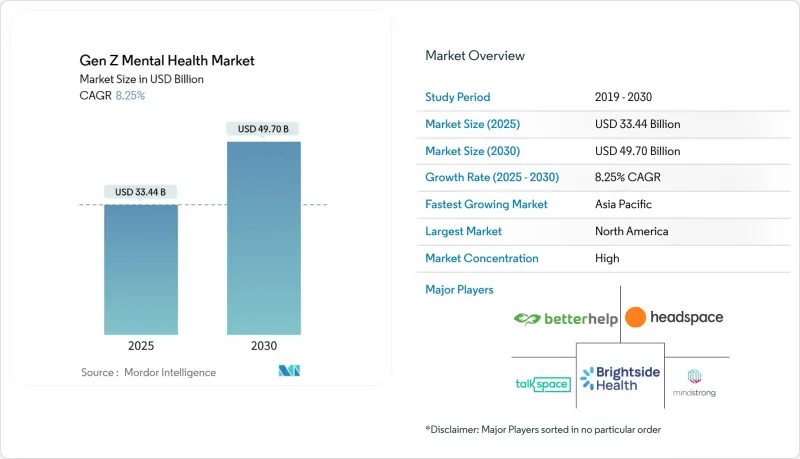
본 보고서는 제품 유형(명상·마음챙김 앱, 디지털 치료 플랫폼 등), 제공 형태(모바일 앱, 웹 기반 등), 정신 질환(불안·스트레스, 우울증 등), 최종 사용자(개인 소비자, 기업·고용주 등), 지역(북미, 유럽 등)별로 분류되어 있습니다. 시장 전망은 금액(달러) 기준으로 제시되어 있습니다.
전 세계 Z세대 정신 건강 시장 동향 및 인사이트
AI를 활용한 CBT 플랫폼
챗봇 및 적응형 학습 모듈을 통해 제공되는 AI 가이드형 인지행동치료(CBT)는 온디맨드 행동 지침을 반영하고 컨텐츠를 실시간으로 최적화함으로써 Z세대 정신건강 시장을 혁신하고 있습니다. 2024년 Rejoyn이 FDA 승인을 획득함에 따라, CBT와 머신러닝 알고리즘을 융합한 처방전 대상 디지털 치료제의 길이 열렸으며, 오츠카 제약 등의 기업이 규제 준수 및 임상적 가치를 입증할 수 있게 되었습니다. Feel Therapeutics사의 ‘Emotion AI’는 웨어러블 기기에서 수집된 데이터를 이러한 플랫폼에 통합하여 기분 추적 정확도를 높이고 있습니다. Z세대의 70%가 기존 치료법보다 디지털 도구를 선호함에 따라 수용도는 높지만, 장기적인 유효성에 대한 연구는 여전히 부족하여 보험사 측의 신뢰를 저해하고 있습니다.
기업 내 웰니스 정책 의무화
Z세대 직원들의 직장 기대에 따라, 고용주는 기존의 직원 지원 프로그램(EAP)을 넘어선 체계적인 정신 건강 프로그램 도입을 요구받고 있습니다. 조사 데이터에 따르면, Z세대 직원의 61%가 더 나은 복리후생을 위해 이직할 의향을 보이고 있습니다. 이에 대응하여 기업들은 건강 보험 플랜과 원활하게 통합된 앱 구독 번들 및 하이브리드형 코칭을 도입하고 있습니다. 정신 건강에 관한 ‘파리티 규정’의 확대에 따라, 보험사는 디지털 치료에 대해 신체 건강과 동등한 수준의 보험금 지급을 의무화하게 되었으며, 이로 인해 엔터프라이즈급 플랫폼의 급속한 도입이 촉진되고, 공급업체에게는 급성장 중인 수익 채널이 형성되고 있습니다.
임상적 근거의 부족
많은 인기 앱이 무작위 대조 시험이 아닌 참여 지표에 의존하고 있기 때문에 보험사들은 광범위한 보험 적용에 신중한 태도를 보이고 있습니다. Rejoyn의 승인은 실현 가능성을 입증했지만, 그 소극적인 성과 데이터는 이 분야의 근거 부족을 여실히 드러내고 있습니다. 동료 심사를 거친 학술지에 게재된 체계적 문헌 고찰에 따르면, AI 기반 도구의 대부분은 종단적 데이터가 부족하여 지속적인 효과를 주장하는 데 제약이 되고 있습니다. 약속된 결과가 실현되지 않으면 Z세대의 디지털 헬스 솔루션에 대한 신뢰가 훼손될 가능성이 있으며, 엄격한 검증이 상업적 시급 과제로 대두되고 있습니다.
부문 분석
2024년, Z세대 정신건강 시장에서 명상·마음챙김 앱이 38.12%로 가장 큰 점유율을 차지했습니다. 이는 자가 지도형 호흡법이나 일기 쓰기가 모바일 우선 라이프스타일에 부합했기 때문입니다. 이 부문은 성숙기에 접어들어 포화 상태에 직면해 있습니다. 반면, VR/AR 정신 건강 솔루션은 규모는 작지만, 하드웨어 비용의 하락과 불안 장애 및 PTSD에 대한 노출 요법의 유효성을 뒷받침하는 연구에 힘입어 연평균 성장률(CAGR) 9.78%로 확대될 것으로 예측됩니다. 대학과 기업이 스트레스 내성 향상을 위해 몰입형 모듈을 도입함에 따라, VR/AR 용도 분야의 Z세대 정신 건강 시장 규모는 예측 기간 동안 꾸준히 확대될 것으로 전망됩니다. 디지털 테라피 플랫폼은 일반 소비자용과 임상 분야 중간에 위치하며, 안전한 포털을 통해 자격을 갖춘 임상의가 진행하는 체계적인 세션을 제공합니다. 감정 감지 웨어러블은 여전히 신흥 분야이지만, Feel Therapeutics사의 미국 특허 제11,967,339호 등의 특허는 생리학적 지표를 앱에 지속적으로 전송하는 수동적인 기분 감지로의 전환을 시사하고 있으며, 폐쇄 루프형 행동 개입이 기대되고 있습니다. AI 챗봇과 컴패니언 앱이 이 카테고리를 마무리하며, Z세대가 요구하는 즉각성에 부응하는 연중무휴 24시간 대화형 지원을 제공합니다. 지불 기관과 규제 당국이 환급 조건으로 성과 기반 지표를 요구함에 따라, 경쟁의 초점은 기본 기능의 차별화가 아닌 증거 창출로 이동하고 있습니다.
다음 성장의 물결은 제품 카테고리를 통합하여 일관된 생태계를 구축하는 데 달려 있습니다. Meta와 Headspace의 ‘Headspace XR’ 협업은 플랫폼 제공업체가 하드웨어를 제공하고, 정신 건강 전문가가 컨텐츠를 제공하는 모델을 보여주고 있습니다. 대학에서는 VR을 활용해 대중 앞에서 연설하는 등의 스트레스 상황을 시뮬레이션하여 학생들에게 안전한 리허설 공간을 제공합니다. 이는 향후 실제 사회에서의 회복력으로 이어질 것입니다. 몰입형 도구가 성숙해짐에 따라, 명상 컨텐츠와의 제품 번들링이 교차 판매의 시너지 효과를 창출하고, 감각 입력을 변화시켜 디지털 피로를 완화하는 다중 모드 참여를 실현할 것입니다. 가격은 여전히 장벽으로 작용하고 있지만 하락 추세를 보이고 있으며, 특히 고용주에 의한 하드웨어 지원 프로그램이 도입된다면 2020년대 후반에는 가정 내 보급이 더욱 확대될 것으로 예측됩니다.
2024년에는 모바일 애플리케이션이 Z세대의 정신 건강 시장에서 69.45%의 점유율을 차지하며 시장을 휩쓸었습니다. 상시 연결된 스마트폰은 기분 점검, 단시간 명상, 코치와의 비동기식 문자 메시지 교환을 용이하게 하고 있습니다. 그러나 모바일 전용 모델은 지속적인 이용에 어려움을 겪고 있어, 서비스 제공업체들은 하이브리드형 서비스로 전환하고 있습니다. '대면 하이브리드형' 접근 방식(디지털을 통한 첫 상담에 더해, 선택 사항으로 대면 치료를 진행하는 방식)은 편의성과 인간관계의 깊이를 모두 충족시키기 때문에 연평균 성장률(CAGR) 10.43%로 가장 빠르게 성장할 것으로 예측됩니다. 하이브리드 모델을 기반으로 한 Z세대의 정신 건강 시장 규모는 결근률을 낮추는 알찬 서비스 패키지에 대해 고용주가 비용을 부담할 의향이 있다는 점에서 혜택을 보고 있습니다. 웹 기반 포털 사이트는 장시간의 상담 세션이나 그룹 워크숍에서 계속해서 중요한 역할을 수행하는 한편, 기존의 대면 클리닉은 가상 선별 진료를 거쳐 대면 후속 조치로 전환함으로써 시설 가동률을 최적화하고 있습니다.
Z세대는 자율성을 선호하지만, 고립되기를 원하지는 않습니다. Headspace Health의 텍스트 기반 코칭은 일정 조정에 번거로움을 느끼지 않고도 필요에 따라 인간적인 교류를 제공할 수 있는 좋은 예입니다. 이와 유사한 추세는 커뮤니티 중심의 앱 내에서 진행되는 치료사 주도 그룹 세션에서도 볼 수 있으며, 이곳에서는 동료들끼리 대처 방법을 공유하고 있습니다. 서비스 제공업체의 보고에 따르면, 인간관계를 통한 유대감이 참여도를 높이기 때문에 하이브리드 이용자의 이탈률은 앱만 사용하는 사용자보다 낮다고 합니다. 투자는 옴니채널 인프라로 전환되고 있으며, 앱, 브라우저, 클리닉 간에 데이터가 흐르면서 임상의는 각 클라이언트의 기분 변화를 통합적으로 파악할 수 있게 되었습니다.
지역별 분석
북미는 디지털 치료법 승인에 있어 FDA의 주도적 역할, 메디케어의 보험 적용 시범 프로그램, 그리고 풍부한 벤처 자금 덕분에 2024년에도 43.46%의 점유율을 유지했습니다. 조기 도입자에는 웰빙을 직원 유지 수단으로 여기는 기업, 정신 건강과 신체 건강에 대한 보험 적용을 동등하게 취급하도록 요구하는 규제상의 평등 규칙에 직면한 보험사가 포함됩니다. 지방 지역의 광대역 격차는 여전히 접근성을 저해하고 있으며, 연결 환경이 제한적인 카운티에서는 자원이 3분의 1 수준에 그치고 있어 연방 정부가 인프라 구축을 위한 보조금을 지급하고 있습니다. 시장 공급업체들은 서비스가 미치지 않는 Z세대에 도달하기 위해 SMS 기반의 인지행동치료(CBT) 등 저대역폭에서도 이용할 수 있는 기법을 활용하고 있습니다.
유럽은 엄격한 개인정보 보호법이 규정 준수 비용을 부과하는 한편, 사용자의 신뢰를 높이는 대규모 시장을 형성하고 있습니다. 영국 의약품·보건제품규제청(MHRA)은 디지털 치료제의 증거 기준을 정의하는 지침을 발표하며, 보다 명확한 상용화 경로를 제시했습니다. EU의 일반 데이터 보호 규정(GDPR(EU 개인정보보호규정))에 따라 Z세대에게 개인정보 보호는 여전히 중요한 우선순위이며, 73%가 정신건강 앱을 선택할 때 데이터 보호를 중시하고 있습니다. 정치적 관심도 높아지고 있습니다. 프랑스는 2025년 국가 중점 과제로 정신 건강을 내세우며, ‘모든 정책에 정신 건강(Mental Health in All Policies)’과 같은 분야 간 통합적 프레임워크를 통해 교통, 교육, 노동 각 정책에 복지 관점을 반영하고 있습니다. ‘프라이버시 바이 디자인(Privacy by Design)’ 아키텍처를 앱에 도입한 업체는 승인 절차가 원활하게 진행되며, 브랜드 신뢰도도 높아지고 있습니다.
아시아태평양은 2030년까지 연평균 성장률(CAGR) 10.87%를 나타낼 것으로 예측되며, 가장 빠르게 성장하는 지역 클러스터가 될 전망입니다. 스마트폰의 보급과 개인의 웰빙을 중시하는 문화적 변화가 맞물려 급속한 확산을 뒷받침하고 있습니다. 일본과 한국 등의 국가들은 마음챙김 앱에 바이오피드백 루프를 통합한 감정 감지형 웨어러블 기기 개발을 선도하고 있습니다. 인도네시아의 ‘힐링’ 동향은 셀프케어를 목적으로 한 단기 리트리트에 대한 수요가 급증하고 있음을 보여줍니다. 정신 건강에 대한 편견은 여전히 남아 있지만, 장애 조정 생명년(DALY)의 부담이 상당한 규모에 달하고 있다는 점(우울증으로 인한 것이 37.2%, 불안 장애로 인한 것이 21.5%)이 정부의 정책 과제로 대두되면서, 민관 협력의 기회가 생겨나고 있습니다. 국경을 초월한 규제 차이는 여전히 장벽으로 작용하고 있지만, 기업들은 국가별 현지화에 주력하고 있으며, 이로 인해 시장 진출은 다소 지연되더라도 문화에 부합하는 컨텐츠의 질은 향상되고 있습니다.
기타 혜택:
- 엑셀 형식 시장 예측(ME) 시트
- 3개월간의 애널리스트 지원
자주 묻는 질문
목차
제1장 서론
제2장 조사 방법
제3장 주요 요약
제4장 시장 구도
제5장 시장 규모와 성장 예측
제6장 경쟁 구도
제7장 시장 기회와 향후 전망
JHS 26.08.11According to Mordor Intelligence, the gen z mental health market size is estimated at USD 33.44 billion in 2025, and is expected to reach USD 49.70 billion by 2030, at a CAGR of 8.25% during the forecast period (2025-2030).
This report is Segmented by Product Type (Meditation & Mindfulness Apps, Digital Therapy Platforms, and More), Delivery Mode (Mobile Application, Web-Based, and More), Mental-Health Condition (Anxiety & Stress, Depression, and More), End-User (Individual Consumers, Enterprises & Employers, and More), and Geography (North America, Europe, and More). The Market Forecasts are Provided in Terms of Value (USD).
Global Gen Z Mental Health Market Trends and Insights
AI-enabled CBT platforms
AI-guided Cognitive Behavioral Therapy delivered through chatbots and adaptive lesson modules is reshaping the Gen Z mental health market by mirroring on-demand behavioral cues and tailoring content in real time. FDA clearance of Rejoyn in 2024 created a pathway for prescription digital therapeutics that merge CBT with machine-learning algorithms, allowing companies such as Otsuka to demonstrate regulatory compliance and clinical value. Emotion AI from Feel Therapeutics augments these platforms with wearable data, improving mood tracking accuracy. Gen Z acceptance is high because 70% prefer digital tools over traditional therapy settings, yet long-term efficacy studies remain scarce, tempering payer confidence.
Corporate wellness mandates
Workplace expectations from Gen Z employees push employers to incorporate structured mental health programs beyond legacy Employee Assistance models. Survey data indicate that 61% of Gen Z employees would switch jobs for better benefits. In response, enterprises adopt bundled app subscriptions and hybrid coaching that integrate seamlessly with health plans. Expanded mental-health parity regulation obliges insurers to reimburse digital therapies at parity with physical health, sparking rapid deployment of enterprise-grade platforms and forming a fast-growing revenue channel for vendors.
Clinical-evidence deficit
Many popular apps rely on engagement metrics rather than randomized controlled trials, leaving insurers wary of broad reimbursement. While Rejoyn's approval proved feasibility, its modest outcome data underline the field's evidence gap. Systematic reviews in peer-reviewed journals report that most AI-driven tools lack longitudinal data, limiting claims of durable effect. Gen Z's trust in digital health solutions can erode if promised results do not materialize, making rigorous validation an urgent commercial imperative.
Other drivers and restraints analyzed in the detailed report include:
- Gamified mindfulness for Gen Z
- Insurance reimbursement expansion
- Digital-fatigue churn
For complete list of drivers and restraints, kindly check the Table Of Contents.
Segment Analysis
Meditation & Mindfulness Apps held the largest slice of the Gen Z mental health market at 38.12% in 2024 as self-guided breathing and journaling resonated with mobile-first lifestyles. The segment is mature but faces saturation. By comparison, VR/AR Mental Wellness Solutions, though smaller, are forecast to expand at a 9.78% CAGR, fueled by hardware cost declines and research that validates exposure therapy for anxiety and PTSD. The Gen Z mental health market size for VR/AR applications is projected to climb steadily over the forecast period as universities and employers adopt immersive modules for stress inoculation. Digital Therapy Platforms sit between consumer and clinical realms, offering structured sessions with licensed clinicians via secure portals. Emotion-sensing Wearables remain emerging; patents such as Feel Therapeutics' US 11,967,339 suggest a move toward passive mood sensing that continuously feeds apps with physiological markers, promising closed-loop behavioral interventions. AI Chatbots & Companion Apps round out the category, providing 24 / 7 conversational support that appeals to Gen Z's immediacy expectations. Competition centers on evidence generation rather than basic feature differentiation as payers and regulators insist on outcome-based metrics for reimbursements.
The next growth wave relies on converging product categories into cohesive ecosystems. Meta's collaboration with Headspace on Headspace XR shows how platform providers supply hardware while mental-health specialists deliver content. Universities apply VR to simulate stress scenarios such as public speaking, giving students a safe rehearsal space that later translates to real-world resilience. As immersive tools mature, product bundling with meditation content will nurture cross-sell synergies, producing multi-modal engagement that reduces digital fatigue by varying sensory inputs. Price remains a barrier but is falling, suggesting wider household adoption by late decade, especially once employer subsidy programs include hardware.
Mobile Applications dominated in 2024 with 69.45% share of the Gen Z mental health market. Always-on smartphones facilitate quick mood check-ins, micro-meditations, and asynchronous texting with coaches. Yet pure-mobile models encounter retention challenges, driving providers toward hybrid offerings. The In-person Hybrid approach - digital intake plus optional face-to-face therapy - is expected to grow fastest at 10.43% CAGR because it blends convenience with relational depth. The Gen Z mental health market size attached to hybrid models benefits from employers' willingness to pay for richer service bundles that lower absenteeism. Web-based portals maintain relevance for longer counseling sessions and group workshops, while traditional in-person clinics pivot to virtual triage followed by on-site follow-ups, optimizing capacity utilization.
Gen Z prefers autonomy but not isolation. Headspace Health's text-based coaching illustrates how human interaction can be delivered on demand without scheduling friction. The same trend appears in therapist-led group sessions inside community-centric apps where peers share coping strategies. Providers report that hybrid users churn less than app-only users because relational anchors deepen engagement. Investment is shifting toward omnichannel infrastructure, allowing data to flow between app, browser, and clinic, giving clinicians a unified view of each client's mood trajectory.
Complete Report Scope:
- By Product Type
- Meditation & Mindfulness Apps
- Digital Therapy Platforms
- Emotion-sensing Wearables
- VR/AR Mental Wellness Solutions
- AI Chatbots & Companion Apps
- By Delivery Mode
- Mobile Application
- Web-based
- In-person Hybrid
- By Mental-health Condition
- Anxiety & Stress
- Depression
- Sleep Disorders
- PTSD & Trauma
- Others
- By End-user
- Individual Consumers
- Enterprises & Employers
- Healthcare Providers
- Educational Institutions
- By Geography
- North America
- United States
- Canada
- Mexico
- Europe
- United Kingdom
- Germany
- France
- Spain
- Italy
- Rest of Europe
- Asia-Pacific
- China
- India
- Japan
- South Korea
- Australia
- Rest of Asia-Pacific
- South America
- Brazil
- Argentina
- Rest of South America
- Middle East and Africa
- GCC
- South Africa
- Rest of Middle East and Africa
- North America
Geography Analysis
North America maintained 43.46% share in 2024 due to FDA leadership on digital-therapy approvals, Medicare reimbursement pilots, and abundant venture funding. Early adopters include corporations that view wellness as a retention lever and payers that face regulatory parity rules requiring equal mental and physical health coverage. Rural broadband gaps still hinder access; counties with limited connectivity hold three times fewer resources, prompting federal grants to subsidize infrastructure. Market vendors respond with low-bandwidth modalities such as SMS-based CBT to reach underserved Gen Z populations.
Europe forms a sizeable market where stringent privacy laws both impose compliance costs and elevate user trust. The UK Medicines and Healthcare products Regulatory Agency published guidance defining evidence thresholds for digital therapeutics, offering clearer commercial pathways. The EU's GDPR keeps privacy high on Gen Z priority lists, with 73% ranking data protection when choosing mental-health apps. Political attention is rising: France declared mental health a national cause for 2025, and cross-sector frameworks like "Mental Health in All Policies" embed welfare considerations into transport, education, and labor agendas. Vendors that bake privacy-by-design architectures into apps enjoy smoother approvals and stronger brand credibility.
Asia-Pacific is forecast to record a 10.87% CAGR through 2030, making it the fastest-growing regional cluster. Smartphone penetration combined with cultural shifts toward individual well-being fuels rapid uptake. Nations such as Japan and South Korea pioneer emotion-sensing wearables that feed biofeedback loops into mindfulness apps. Indonesia's "healing" trend signifies burgeoning demand for self-care micro-retreats. Mental-health stigma persists, yet the sizable disability-adjusted life year (DALY) burden - 37.2% from depressive disorders and 21.5% from anxiety - shapes government agendas, opening public-private collaboration opportunities. Cross-border regulatory divergence remains a barrier; companies rely on country-by-country localization, which slows rollout but elevates culturally tailored content quality.
- Headspace
- Calm
- BetterHelp
- Talkspace
- Youper
- Happify
- Woebot Health
- Mindstrong
- Sanvello
- Insight Timer
- Unmind
- Modern Health
- Koa Health
- Moodfit
- Aura Health
- Slingshot AI
- Muse
- Feel Therapeutics
- Spring Health
Additional Benefits:
- The market estimate (ME) sheet in Excel format
- 3 months of analyst support
TABLE OF CONTENTS
1 Introduction
- 1.1 Study Assumptions & Market Definition
- 1.2 Scope of the Study
2 Research Methodology
3 Executive Summary
4 Market Landscape
- 4.1 Market Overview
- 4.2 Market Drivers
- 4.2.1 AI-enabled CBT platforms
- 4.2.2 Corporate wellness mandates
- 4.2.3 Gamified mindfulness for Gen-Z
- 4.2.4 Insurance reimbursement expansion
- 4.2.5 Emotion-sensing wearables integration
- 4.2.6 Investor preference for neuro-tech
- 4.3 Market Restraints
- 4.3.1 Clinical-evidence deficit
- 4.3.2 Digital-fatigue churn
- 4.3.3 Data-sovereignty regulations
- 4.3.4 Unequal broadband access
- 4.4 Value / Supply-Chain Analysis
- 4.5 Regulatory Landscape
- 4.6 Technological Outlook
- 4.7 Porter's Five Forces
- 4.7.1 Buyer Power
- 4.7.2 Supplier Power
- 4.7.3 Threat of New Entrants
- 4.7.4 Threat of Substitutes
- 4.7.5 Competitive Rivalry
5 Market Size & Growth Forecasts (Value, USD)
- 5.1 By Product Type
- 5.1.1 Meditation & Mindfulness Apps
- 5.1.2 Digital Therapy Platforms
- 5.1.3 Emotion-sensing Wearables
- 5.1.4 VR/AR Mental Wellness Solutions
- 5.1.5 AI Chatbots & Companion Apps
- 5.2 By Delivery Mode
- 5.2.1 Mobile Application
- 5.2.2 Web-based
- 5.2.3 In-person Hybrid
- 5.3 By Mental-health Condition
- 5.3.1 Anxiety & Stress
- 5.3.2 Depression
- 5.3.3 Sleep Disorders
- 5.3.4 PTSD & Trauma
- 5.3.5 Others
- 5.4 By End-user
- 5.4.1 Individual Consumers
- 5.4.2 Enterprises & Employers
- 5.4.3 Healthcare Providers
- 5.4.4 Educational Institutions
- 5.5 By Geography
- 5.5.1 North America
- 5.5.1.1 United States
- 5.5.1.2 Canada
- 5.5.1.3 Mexico
- 5.5.2 Europe
- 5.5.2.1 United Kingdom
- 5.5.2.2 Germany
- 5.5.2.3 France
- 5.5.2.4 Spain
- 5.5.2.5 Italy
- 5.5.2.6 Rest of Europe
- 5.5.3 Asia-Pacific
- 5.5.3.1 China
- 5.5.3.2 India
- 5.5.3.3 Japan
- 5.5.3.4 South Korea
- 5.5.3.5 Australia
- 5.5.3.6 Rest of Asia-Pacific
- 5.5.4 South America
- 5.5.4.1 Brazil
- 5.5.4.2 Argentina
- 5.5.4.3 Rest of South America
- 5.5.5 Middle East and Africa
- 5.5.5.1 GCC
- 5.5.5.2 South Africa
- 5.5.5.3 Rest of Middle East and Africa
- 5.5.1 North America
6 Competitive Landscape
- 6.1 Market Concentration
- 6.2 Market Share Analysis
- 6.3 Company Profiles (includes Global level Overview, Market level overview, Core Segments, Financials as available, Strategic Information, Market Rank/Share for key companies, Products & Services, and Recent Developments)
- 6.3.1 Headspace
- 6.3.2 Calm
- 6.3.3 BetterHelp
- 6.3.4 Talkspace
- 6.3.5 Youper
- 6.3.6 Happify
- 6.3.7 Woebot Health
- 6.3.8 Mindstrong
- 6.3.9 Sanvello
- 6.3.10 Insight Timer
- 6.3.11 Unmind
- 6.3.12 Modern Health
- 6.3.13 Koa Health
- 6.3.14 Moodfit
- 6.3.15 Aura Health
- 6.3.16 Slingshot AI
- 6.3.17 Muse
- 6.3.18 Feel Therapeutics
- 6.3.19 Spring Health
7 Market Opportunities & Future Outlook
- 7.1 White-space & Unmet-need Assessment