

|
시장보고서
상품코드
2100284
말레이시아의 하이퍼스케일 데이터센터 시장 : 시장 점유율 분석, 업계 동향 및 통계, 성장 예측(2025-2030년)Malaysia Hyperscale Data Center - Market Share Analysis, Industry Trends & Statistics, Growth Forecasts (2025 - 2030) |
||||||
 Mordor Intelligence
Mordor Intelligence에 의하면, 말레이시아의 하이퍼스케일 데이터센터 시장 규모는 2025년에 60억 3,000만 달러로 평가되었고, 2031년까지 401억 6,000만 달러에 이를 전망이며, CAGR 37.15%로 확대될 것으로 예측됩니다.
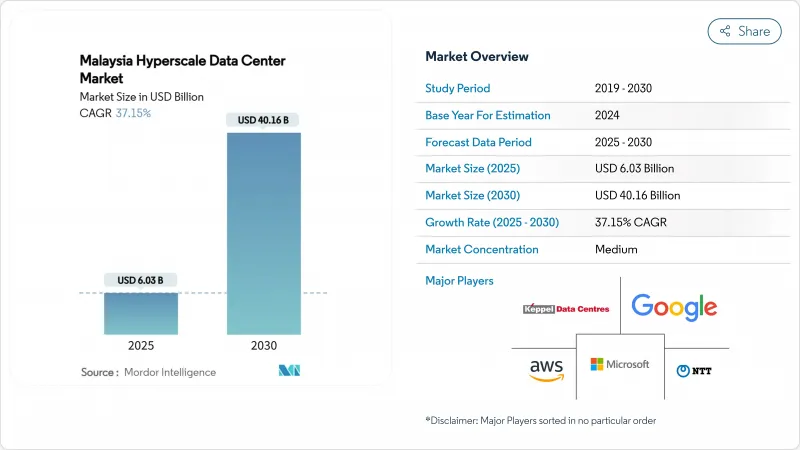
본 보고서는 데이터센터 유형별(하이퍼스케일 자체 건설형, 하이퍼스케일 코로케이션형), 구성 요소별(IT 인프라, 전기 인프라, 기타), 티어 기준별(티어 III, 티어 IV), 최종 사용자 산업별(클라우드·IT 서비스, 통신, 기타), 데이터센터 규모별(대규모 : 25 MW 이하, 기타)로 분류되어 있습니다. 시장 규모와 전망은 금액(달러)으로 제시되어 있습니다.
말레이시아의 하이퍼스케일 데이터센터 시장 동향 및 인사이트
각 하이퍼스케일러 기업의 설비 투자(CAPEX) 발표 급증으로 시장 확대 견인
구글, AWS, Oracle, 마이크로소프트의 전례 없는 147억 달러 투자 계획에 힘입어, 말레이시아의 하이퍼스케일 데이터센터 시장은 불과 18개월 만에 지역 최고 수준의 허브로서의 입지를 확립했습니다. 이러한 투자 규모는 싱가포르가 지난 10년 동안 축적해 온 총 투자액을 훨씬 웃돌며, 배전 설비, 액체 냉각 시스템, 캠퍼스 간 광섬유 링에 대한 병행 투자를 촉진하고 있습니다. ‘빅 4’ 간의 경쟁이 설계 기준을 높임에 따라, AI 훈련 클러스터를 위한 300MW 이상의 캠퍼스가 건설되는 계기가 되고 있습니다. 개폐 장치부터 냉각수 모듈에 이르기까지, 2차 공급업체들은 말레이시아 내 사업 확장을 가속화하고 있으며, 이 부문에서 선순환적인 공급망을 강화하고 있습니다.
전자상거래와 디지털 뱅킹의 변혁이 클라우드 도입을 가속화
2025년에는 전자상거래의 피크 수요와 10밀리초 이하의 지연 시간을 요구하는 신규 인가 디지털 은행에 힘입어, 디지털 경제 생산액이 국내총생산(GDP)의 25%를 넘어설 것으로 전망됩니다. '11.11'이나 '12.12'와 같은 쇼핑 축제는 하이퍼스케일 시설에서만 처리할 수 있을 정도의 거래량을 끌어올리고 있으며, TikTok Shop의 지역적 급성장은 AI 기반 컨텐츠 검토 노드의 중요성을 부각시키고 있습니다. GXBank 등 디지털 은행 신청 기업들은 중단 없는 원장 처리를 위해 티어 IV 규격 요건을 제시하고 있습니다. 5G 수익화는 기대치에 미치지 못하고 있지만, 국내 독립형 5G 구축과 연계된 향후 엣지 존을 통해 분산형 클러스터 전체의 가동률이 향상될 전망입니다.
재생에너지 공급 부족이 하이퍼스케일러의 확장을 제약
전력망에 연결된 재생에너지는 국내 발전량의 불과 19%에 불과하여, 하이퍼스케일러 각사가 내세우는 ‘100% 탄소 제로’ 목표를 크게 밑돌고 있습니다. 석탄과 가스가 여전히 공급량의 81%를 차지하고 있으며, 2024년 ‘녹색 전력 요금 제도’가 도입되었음에도 불구하고 기업 간 전력 구매 계약(PPA) 체결은 제한되고 있습니다. 테나가 나시오날 베르하드(Tenaga Nasional Berhad)의 103억 달러 규모 송전망 현대화 계획은 재생에너지의 추가 통합을 목표로 하고 있으나, 그 일정은 2026-2027년에 예정된 새로운 AI 워크로드를 따라잡지 못할 위험이 있습니다. 사라왁 주의 수력 발전 잉여 전력은 대안이 될 수 있지만, 반도 지역의 부하 센터로 전력을 송전하는 데 있어 병목 현상은 여전히 해결되지 않은 상태입니다.
부문 분석
2024년, 각 하이퍼스케일러 기업들이 맞춤형 레이아웃과 기계·전기·배관(MEP) 시스템에 대한 직접적인 관리를 우선시한 결과, 자체 건설형 캠퍼스가 말레이시아 하이퍼스케일 데이터센터 시장 점유율의 55%를 차지했습니다. 자체 건설 프로젝트와 관련된 말레이시아 하이퍼스케일 데이터센터 시장 규모는 구글의 20억 달러 규모 클란 밸리 캠퍼스와 AWS의 62억 달러 규모 3개 가용성 영역 구축 약속에 힘입어 성장하고 있습니다. Oracle(Oracle)의 65억 달러 투자 발표는 이 모델을 더욱 공고히 하고, 업스트림 전력 배전 설비 업그레이드에 활용된 주요 테넌트 확보를 확실시했습니다. 그러나 자체 건설 프로젝트는 토지 부족 및 송전망 연결까지의 리드타임이 길다는 과제에 직면해 있습니다.
연평균 성장률(CAGR) 38.4%로 확대되고 있는 코로케이션은 전력 및 냉각 블록을 공유함으로써 신속한 서비스 개시를 가능하게 합니다. 조호르주에 위치한 프린스턴 디지털 그룹의 150MW 규모 AI 지원 JH1 캠퍼스는 대규모 코로케이션이 하이퍼스케일러의 지속가능성 조항에 부합하는 그린 파이낸싱을 어떻게 확보할 수 있는지를 보여줍니다. 디지털 엣지와 STT GDC는 멀티테넌트에 의한 비용 상각을 활용하여 침지 냉각 랙을 대규모로 도입하고 있습니다. 2025-2031년 AI 추론 영역 수요 증가와 자본 예산의 유연성 증대로 인해 자체 건설의 비중은 축소될 것으로 예상되지만, 두 모델은 워크로드의 각 계층에서 계속해서 공존할 것으로 보입니다.
IT 스택(서버, 스토리지, 네트워크)은 GPU 고밀도 노드와 400G/800G 스위치가 AI 및 고주파수 분석을 뒷받침함에 따라 2024년 지출의 40%를 차지했습니다. 말레이시아의 하이퍼스케일 데이터센터 시장은 전자상거래 피크 부하 시 읽기 지연 시간을 줄여주는 퍼시스턴트 메모리 도입의 혜택을 받고 있습니다. 두 번째로 큰 비용 요인인 전기 시스템 분야에서는 구축 기간을 단축하기 위해 모듈식 및 컨테이너화된 UPS 스트링의 도입이 점점 더 확대되고 있습니다.
기계 인프라 부문은 연평균 성장률(CAGR) 38.1%로 가장 빠르게 성장하고 있으며, 이는 70kW를 초과하는 랙에서 액체 냉각 및 단상 침지 솔루션이 필수적이기 때문입니다. 사업자들은 시설의 PUE를 최대 0.15포인트 낮추는 ‘직접 투 칩(Direct-to-Chip)’형 콜드 플레이트 루프의 시험 운영을 진행하고 있습니다. Sustainable Metal Cloud는 비교 테스트를 통해 50%의 에너지 절감 효과를 입증했으며, 동종 업계 경쟁사들도 유사한 설계를 도입하는 움직임을 보이고 있습니다. 기계 설비에 대한 투자 증가 속에서 사라와크주의 수력발전을 기반으로 한 캠퍼스에서 채택된 냉매를 사용하지 않는 단열 시스템 등, 수명을 연장하는 전략이 주목받고 있습니다.
기타 혜택
- 엑셀 형식 시장 예측(ME) 시트
- 3개월간의 애널리스트 지원
자주 묻는 질문
목차
제1장 서론
제2장 조사 방법
제3장 주요 요약
제4장 시장 구도
제5장 하이퍼스케일 데이터센터 인공지능(AI) 도입(하위 부문은 데이터 입수 상황에 의해 변경되는 경우가 있습니다)
제6장 규제와 컴플라이언스 프레임워크
제7장 데이터센터 주요 통계
제8장 시장 규모 및 성장 예측
제9장 경쟁 구도
제10장 시장 기회 및 향후 전망
AJY 26.08.11According to Mordor Intelligence, the Malaysia hyperscale data center market size is valued at USD 6.03 Billion in 2025 and is forecast to reach USD 40.16 Billion by 2031, expanding at a 37.15% CAGR.
This report is Segmented by Data Center Type (Hyperscale Self-Build, Hyperscale Colocation), Component (IT Infrastructure, Electrical Infrastructure, and More), Tier Standard (Tier III, Tier IV), End-User Industry (Cloud and IT Services, Telecom, and More), Data Center Size (Large <=25 MW, and More). The Market Size and Forecasts are Provided in Terms of Value (USD).
Malaysia Hyperscale Data Center Market Trends and Insights
Surge in Hyperscaler CAPEX Announcements Drives Market Expansion
An unprecedented USD 14.7 billion pipeline from Google, AWS, Oracle and Microsoft has repositioned the Malaysia hyperscale data center market as a top-tier regional hub within 18 months. These investments dwarf Singapore's decade-long tally, sparking parallel spending on power distribution, liquid-cooling systems and inter-campus fiber rings. Competitive dynamics among the "big four" are elevating design standards, prompting 300 MW-plus campuses built for AI training clusters. Secondary suppliers-from switchgear to chilled-water modules-have accelerated footprint expansions inside Malaysia, reinforcing a virtuous supply-chain cycle for the sector.
E-commerce and Digital Banking Transformation Accelerates Cloud Adoption
Digital-economy output will exceed 25% of national GDP in 2025, propelled by e-commerce peaks and newly licensed digital banks that demand sub-10 ms latency. Shopping festivals 11.11 and 12.12 push transaction volumes that only hyperscale facilities can absorb, while TikTok Shop's regional surge underscores the importance of AI-driven content moderation nodes. Digital-bank applicants such as GXBank cite Tier IV mandates for uninterrupted ledger processing. Although 5G monetisation trails expectations, forthcoming edge-zones tied to national stand-alone 5G roll-outs will lift utilisation rates across distributed clusters.
Limited Renewable Energy Supply Constrains Hyperscaler Expansion
Grid renewables cover just 19% of national generation, well below hyperscalers' 100% carbon-free targets. Coal and gas still represent 81% of supply, limiting issuance of corporate PPAs despite the 2024 Green Electricity Tariff. Tenaga Nasional Berhad's USD 10.3 billion grid-modernisation plan aims to integrate more renewables, but timelines risk lagging new AI workloads scheduled for 2026-2027. Sarawak's hydropower surplus offers a workaround, yet transmission bottlenecks to Peninsular load centres remain unresolved.
Other drivers and restraints analyzed in the detailed report include:
- Government Policy Framework Provides Competitive Advantages
- International Subsea Cable Infrastructure Enhances Connectivity
- Rising Construction and Operational Costs Challenge Profitability
For complete list of drivers and restraints, kindly check the Table Of Contents.
Segment Analysis
Self-built campuses held 55% of the Malaysia hyperscale data center market share in 2024 as hyperscalers prioritised bespoke layouts and direct control over mechanical-electrical-plumbing systems. The Malaysia hyperscale data center market size linked to self-build projects is supported by Google's USD 2 billion Klang Valley campus and AWS's USD 6.2 billion tri-availability-zone commitment. Oracle's USD 6.5 billion pledge further entrenches the model, ensuring anchor tenants for upstream power-distribution upgrades. Yet self-builds face land scarcity and lengthy grid connection lead times.
Colocation, expanding at 38.4% CAGR, offers rapid turn-up through shared power and cooling blocks. Princeton Digital Group's 150 MW AI-ready JH1 campus in Johor illustrates how large-scale colocation can secure green financing aligned with hyperscaler sustainability clauses. Digital Edge and STT GDC leverage multi-tenant cost amortisation to deploy immersion-cooling racks at scale. Over 2025-2031, rising AI inference-zone demand and capital-budget flexibility are expected to erode the self-build share, although both models will coexist across workload tiers.
IT stacks-servers, storage and networking-absorbed 40% of 2024 spending as GPU-dense nodes and 400G/800G switches powered AI and high-frequency analytics. The Malaysia hyperscale data center market benefits from persistent-memory adoption that reduces read-latency for e-commerce peak loads. Electrical systems, the next largest cost block, increasingly employ modular, containerised UPS strings to shorten build times.
Mechanical infrastructure rises fastest at 38.1% CAGR because liquid-cooling and single-phase immersion solutions are essential for racks surpassing 70 kW. Operators trial direct-to-chip cold-plate loops that lower facility PUE by up to 0.15 points. Sustainable Metal Cloud demonstrates 50% energy savings in comparative trials, nudging peers toward similar designs. As mechanical capex rises, service-life extension strategies-such as refrigerant-free adiabatic systems for Sarawak's hydropower-backed campuses-gain traction.
Complete Report Scope:
- By Data Center Type
- Hyperscale Self-build
- Hyperscale Colocation
- By Component
- IT Infrastructure
- Server Infrastructure
- Storage Infrastructure
- Network Infrastructure
- Electrical Infrastructure
- UPS Systems
- Generators
- Power Distribution Units
- Transfer Switches and Switchgear
- Other Electrical Infrastructure
- Mechanical Infrastructure
- Cooling Systems
- Racks
- Other Mechanical Infrastructure
- General Construction
- Core and Shell Development
- Installation and Commissioning Services
- Design Engineering
- Fire Detection, Suppression and Physical Security
- DCIM / BMS Solutions
- IT Infrastructure
- By Tier Standard
- Tier III
- Tier IV
- By End-user Industry
- Cloud and IT Services
- Telecom
- Media and Entertainment
- Government
- BFSI
- Manufacturing
- E-Commerce
- Other End-users
- By Data Center Size
- Large ( Less than or equal to 25 MW)
- Massive (Greater than 25 MW and Less than equal to 60 MW)
- Mega (Greater than 60 MW)
List of Companies Covered in this Report:
- Amazon Web Services
- Microsoft Corporation
- Alphabet Inc. (Google)
- Meta Platforms Inc.
- Alibaba Cloud
- Tencent Cloud
- Oracle Cloud
- Digital Realty
- Equinix Inc.
- NTT Ltd.
- AirTrunk
- Keppel Data Centres
- YTL Data Center
- TM One / AIMS DC
- Princeton Digital Group
- EdgeConneX
- GDS Holdings
- SCALA Data Centers
- Iron Mountain Data Centers
- STACK Infrastructure
- Vantage Data Centers
- CoreWeave Inc.
- OVHcloud
Additional Benefits:
- The market estimate (ME) sheet in Excel format
- 3 months of analyst support
TABLE OF CONTENTS
1 INTRODUCTION
- 1.1 Study Assumptions and Market Definition
- 1.2 Scope of the Study
2 RESEARCH METHODOLOGY
3 EXECUTIVE SUMMARY
4 MARKET LANDSCAPE
- 4.1 Market Overview
- 4.2 Market Drivers
- 4.2.1 Surge in hyperscaler CAPEX announcements (AWS, Microsoft, Google)
- 4.2.2 Rapid adoption of e-commerce and digital banking requiring low-latency cloud zones
- 4.2.3 Government incentives under MyDIGITAL and Tax-free Green Lane schemes
- 4.2.4 New international subsea cable landings boosting bandwidth diversity
- 4.2.5 Green Electricity Tariff enabling 24x7 renewable PPAs (under-reported)
- 4.2.6 Hydropower surplus in Sarawak and Sabah lowering PUE for East-Malaysia campuses (under-reported)
- 4.3 Market Restraints
- 4.3.1 Limited on-grid renewable energy versus hyperscaler sustainability targets
- 4.3.2 High construction costs driven by imported MEP equipment and land premiums
- 4.3.3 Water-stress restrictions in Selangor limiting evaporative cooling deployments (under-reported)
- 4.3.4 Slow 5G DWN monetisation delaying edge-DC utilisation (under-reported)
- 4.4 Value / Supply-Chain Analysis
- 4.5 Technological Outlook
5 ARTIFICIAL INTELLIGENCE (AI) INCLUSION IN HYPERSCALE DATA CENTER (Sub-segments are subject to change depending on Availability of Data)
- 5.1 AI Workload Impact: Rise of GPU-Packed Racks and High Thermal Load Management
- 5.2 Rapid Shift toward 400G and 800G Ethernet Local OEM Integration and Compatibility Demands
- 5.3 Innovations in Liquid Cooling: Immersion and Cold Plate Trends
- 5.4 AI-Based Data Center Management (DCIM) Adoption Role of Cloud Providers
6 REGULATORY AND COMPLIANCE FRAMEWORK
7 KEY DATA CENTER STATISTICS
- 7.1 Existing Hyperscale Data Center Facilities in Malaysia (in MW) (Hyperscale Self build VS Colocation)
- 7.2 List of Upcoming Hyperscale Data Center in Malaysia
- 7.3 List of Hyperscale Data Center Operators in Malaysia
- 7.4 Analysis on Data Center CAPEX in Malaysia
8 MARKET SIZE AND GROWTH FORECASTS (VALUE AND VOLUME)
- 8.1 By Data Center Type
- 8.1.1 Hyperscale Self-build
- 8.1.2 Hyperscale Colocation
- 8.2 By Component
- 8.2.1 IT Infrastructure
- 8.2.1.1 Server Infrastructure
- 8.2.1.2 Storage Infrastructure
- 8.2.1.3 Network Infrastructure
- 8.2.2 Electrical Infrastructure
- 8.2.2.1 UPS Systems
- 8.2.2.2 Generators
- 8.2.2.3 Power Distribution Units
- 8.2.2.4 Transfer Switches and Switchgear
- 8.2.2.5 Other Electrical Infrastructure
- 8.2.3 Mechanical Infrastructure
- 8.2.3.1 Cooling Systems
- 8.2.3.2 Racks
- 8.2.3.3 Other Mechanical Infrastructure
- 8.2.4 General Construction
- 8.2.4.1 Core and Shell Development
- 8.2.4.2 Installation and Commissioning Services
- 8.2.4.3 Design Engineering
- 8.2.4.4 Fire Detection, Suppression and Physical Security
- 8.2.4.5 DCIM / BMS Solutions
- 8.2.1 IT Infrastructure
- 8.3 By Tier Standard
- 8.3.1 Tier III
- 8.3.2 Tier IV
- 8.4 By End-user Industry
- 8.4.1 Cloud and IT Services
- 8.4.2 Telecom
- 8.4.3 Media and Entertainment
- 8.4.4 Government
- 8.4.5 BFSI
- 8.4.6 Manufacturing
- 8.4.7 E-Commerce
- 8.4.8 Other End-users
- 8.5 By Data Center Size
- 8.5.1 Large ( Less than or equal to 25 MW)
- 8.5.2 Massive (Greater than 25 MW and Less than equal to 60 MW)
- 8.5.3 Mega (Greater than 60 MW)
9 COMPETITIVE LANDSCAPE
- 9.1 Market Share Analysis
- 9.2 Company Profiles {(includes Global level Overview, Market level overview, Core Segments, Financials as available, Strategic Information, Market Rank/Share for key companies, Products and Services, and Recent Developments)}
- 9.2.1 Amazon Web Services
- 9.2.2 Microsoft Corporation
- 9.2.3 Alphabet Inc. (Google)
- 9.2.4 Meta Platforms Inc.
- 9.2.5 Alibaba Cloud
- 9.2.6 Tencent Cloud
- 9.2.7 Oracle Cloud
- 9.2.8 Digital Realty
- 9.2.9 Equinix Inc.
- 9.2.10 NTT Ltd.
- 9.2.11 AirTrunk
- 9.2.12 Keppel Data Centres
- 9.2.13 YTL Data Center
- 9.2.14 TM One / AIMS DC
- 9.2.15 Princeton Digital Group
- 9.2.16 EdgeConneX
- 9.2.17 GDS Holdings
- 9.2.18 SCALA Data Centers
- 9.2.19 Iron Mountain Data Centers
- 9.2.20 STACK Infrastructure
- 9.2.21 Vantage Data Centers
- 9.2.22 CoreWeave Inc.
- 9.2.23 OVHcloud
10 MARKET OPPORTUNITIES AND FUTURE OUTLOOK
- 10.1 White-space and Unmet-Need Assessment


