

|
시장보고서
상품코드
2114611
내화 유리 시장 : 시장 점유율 분석, 업계 동향 및 통계, 성장 예측(2026-2031년)Fire-Resistant Glass - Market Share Analysis, Industry Trends & Statistics, Growth Forecasts (2026 - 2031) |
||||||
 Mordor Intelligence
Mordor Intelligence에 의하면, 내화 유리 시장 규모는 2025년 96억 7,000만 달러로 평가되었고, 2026년에는 105억 6,000만 달러로 추정되고, 2026-2031년 CAGR 9.22%로 성장을 지속할 전망이며, 2031년에는 164억 1,000만 달러에 이를 것으로 예측됩니다.
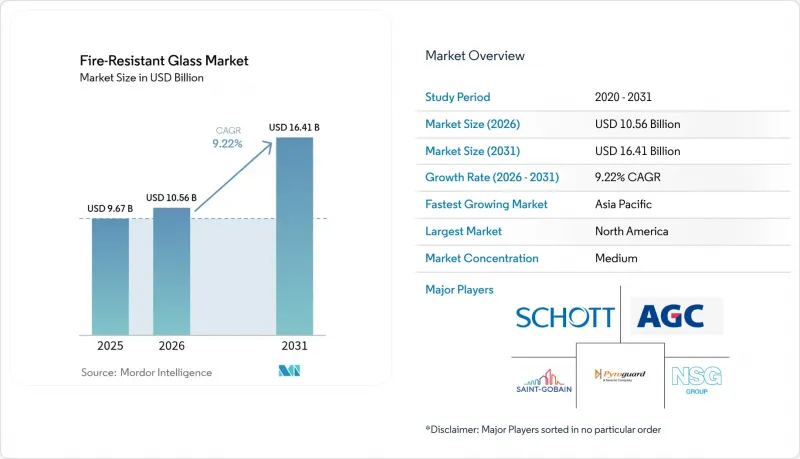
본 보고서는 내화 등급별(E(내화성), EW(내화성 및 내방사선성) 등), 제품 유형별(유선, 접합유리 등), 최종 사용자 산업별(건축 및 건설, 선박 등) 및 지역별(아시아태평양, 북미, 유럽, 남미, 중동 및 아프리카)로 분류되어 있습니다. 시장 예측은 금액(달러) 기준으로 제시되어 있습니다.
세계의 내화 유리 시장 동향 및 인사이트
아시아태평양 및 중동의 고층 상업용 건물 급증
급속한 수직 도시화로 인해 화재 안전은 경영진 차원의 최우선 과제로 자리 잡고 있습니다. 중국의 GB 55037-2022 규격에서는 높이 100m를 초과하는 모든 신축 고층 빌딩에 대해 인증된 내화 유리의 사용을 의무화하고 있어, 이에 따라 개발업자들은 사양 기준을 높여야 하는 압박을 받고 있습니다. 두바이의 개정 건축 기준법은 파사드의 유리 면적에 상한선을 설정하는 한편, 더 높은 단열 성능 및 방화 성능을 요구하고 있으며, 이는 걸프 지역 내 프리미엄 제품에 대한 수요를 촉진하고 있습니다. 현재 개발업자들은 단일 유리로 여러 성능 목표를 충족하는 통합 솔루션을 찾고 있으며, 이에 따라 공급업체는 일반 제품 수준을 상회하는 가격 책정이 가능해지는 한편, 내화 유리 시장 전체에서 인증 제품의 보급이 가속화되고 있습니다.
전 세계적으로 강화되는 방화 규제
2024년판 ‘국제건축기준(IBC)’에서는 벽의 연속성이 강화되었으며, 전 세계적으로 정격 개구부 밀폐 성능 기준을 준수하기 위해서는 시험 기관에서 시험을 거친 유리 어셈블리의 사용이 의무화되어 있습니다. UAE의 ‘10개 항목 접근법’에서는 파사드 자재에 대한 시민방위국의 승인이 의무화되어, 저품질 수입품의 유통이 차단되고 있습니다. 유럽 내 유사한 규제의 조화로 인해 인증된 유리의 국경을 초월한 수용성이 높아지고 있습니다. 이러한 정책들이 맞물리면서 내화 유리 시장, 특히 EI 등급 제품의 대상 적격 시장 규모가 확대되고 있습니다.
인증 시공업체 및 제조업체의 부족
아무리 고성능인 유리라도 부적절하게 시공되면 내화 성능은 상실됩니다. 인도, 인도네시아 및 아프리카 일부 지역의 건설 수요가 급증하면서 인증 시공업체공급량을 초과하고 있어, 프로젝트 완공이 지연되고 비용 프리미엄이 치솟고 있습니다. 국제적인 공급업체들은 현장 교육 프로그램 및 턴키 서비스 제공을 통해 대응하고 있지만, 단기적인 공급 능력 제약으로 인해 내화 유리 시장의 성장은 계속해서 억제되고 있습니다.
부문 분석
E급 부문은 2025년 내화 유리 시장 규모의 47.20%를 차지하며 시장을 주도했으며, 사무실 건물 및 학교의 구획 분리를 위한 합리적인 가격의 표준으로서 확고한 입지를 구축하고 있습니다. 이 부문이 수량 면에서 우위를 차지하는 배경에는 단열 성능 요건을 부과하지 않고, 화염 및 연기 차단에 중점을 둔 단순한 성능 요건이 있습니다. 리모델링 프로젝트에서는 유선 유리에서 E급 유리로 직접 전환하는 경우가 많아, 기존 제조업체에게는 재구매 수요가 확보되고 있습니다. 그러나 EI 등급으로의 사양 전환이 가속화되고 있습니다. 중국과 싱가포르에서 발생한 사고에 대한 사후 분석 결과, 단열 성능이 높을수록 계단실과 대피 층을 보다 확실하게 보호할 수 있음이 밝혀졌으며, 이로 인해 비용이 증가함에도 불구하고 건축가들이 EI 등급을 채택하도록 유도하고 있습니다.
2031년까지 EI 등급의 연평균 성장률(CAGR) 10.11%는 이러한 ‘안전 제일’로의 전환을 반영할 전망입니다. 규제 당국이 종합적인 생명 안전 지표를 채택함에 따라, EI 인증을 받은 유리 패널은 아트리움, 교통 허브, 중요 인프라에서 필수적인 요소가 되고 있습니다. 방음 댐퍼 기능을 겸하는 하이드로겔·규산염 중간막 등 지속적인 제품 혁신이 다기능성을 높여 채택을 뒷받침하고 있습니다. EW 등급은 완전한 단열이 아닌 복사열 저감이 요구되는 틈새 시장 옵션에 그치고 있지만, 정부 프로젝트의 예산 제약을 완화하는 중가대 제품의 가교 역할로 기능하고 있습니다. 그 결과, 성능의 계층화가 진행되며 수요가 기본 등급에서 고급 등급으로 점차 이동하고 있어, 내화 유리 시장의 장기적인 전망을 공고히 하고 있습니다.
지역별 분석
북미는 2024년판 국제건축기준(IBC), 국제방화기준(IFC) 및 관대한 보험 우대 조치에 힘입어 2025년에는 매출 점유율 31.60%를 차지하며 내화 유리 시장을 주도했습니다. 시카고, 뉴욕, 토론토의 대규모 개보수 프로그램은 기존 건축물을 규제 기준에 부합하도록 하는 데 중점을 두고 있으며, 한편 섹션 179 세액 공제를 통해 인명 안전 대책 향상을 위한 민간 지출이 뒷받침되고 있습니다. 소유주들이 내화성과 에너지 절약이라는 두 가지 목표를 모두 추구하는 가운데, 하이브리드형 스마트 틴트 EI 유리가 주목을 받고 있으며, 이로 인해 평균 판매 가격이 상승하여 내화 유리 시장에서 이 지역의 주도적 입지가 더욱 공고해지고 있습니다.
유럽은 성숙해가고 있지만 혁신적인 시장 특성을 유지하고 있습니다. 엄격한 EN 13501 시험에 더해, 유럽 대륙의 탄소 가격 제도로 인해 수요는 저탄소 제조로 향하고 있습니다. CO₂ 배출량을 75% 감축하는 생고뱅(Saint-Gobain)의 하이브리드 용광로 시험은 이러한 방향성을 구현한 것으로, EU 공공 프로젝트의 사실상 조달 기준이 될 가능성이 있습니다(saint-gobain.com). 스칸디나비아에서는 내화성과 재생 가능 소재를 융합한 목재·유리 복합 파사드라는 틈새 성장 분야가 눈에 띕니다. 또한, 유럽의 구매자들은 EI 등급의 플러그 앤 플레이식 커튼월 카세트의 초기 도입자이기도 하며, 단일 판유리보다 완제품 조립품을 선호하는 경향을 엿볼 수 있습니다.
아시아태평양은 뚜렷한 성장 동력이며, 2031년까지 연평균 성장률(CAGR) 9.55%로 확대될 전망입니다. 2023년 중반부터 시행되고 있는 중국의 국가 기준에 따르면, 고층 건물의 대피용 복도나 엘리베이터 로비에 내화 유리를 사용해야 합니다. 인도의 국가 건축 기준 개정도 이를 따르고 있으며, 인도네시아는 2026년까지 2012년 건축 기준을 개정할 예정입니다. 한편, 두바이 및 걸프 지역 전체에서는 2015년 ‘아드레스’ 화재 사고를 계기로 기준 수준이 상향 조정되었으며, 고온 기후 하에서의 설계상의 과제가 있음에도 불구하고 EI-120 시스템에 대한 수요가 확대되고 있습니다. AGC는 건설 시장 전체가 침체되더라도 아시아 지역의 고단열 유리 출하량은 견조한 추세를 보일 것으로 전망하고 있습니다. 이러한 동향이 맞물리면서 전 세계 공급업체들은 지역 내 합작 투자 및 현지 생산으로 방향을 전환하고 있으며, 내화 유리 시장의 지리적 범위가 확대되고 있습니다.
기타 혜택 :
- 엑셀 형식 시장 예측(ME) 시트
- 3개월간의 애널리스트 지원
자주 묻는 질문
목차
제1장 서론
제2장 조사 방법
제3장 주요 요약
제4장 시장 구도
제5장 시장 규모 및 성장 예측
제6장 경쟁 구도
제7장 시장 기회 및 향후 전망
AJY 26.08.26According to Mordor Intelligence, the fire-Resistant glass market size is expected to grow from USD 9.67 billion in 2025 to USD 10.56 billion in 2026 and is forecast to reach USD 16.41 billion by 2031 at 9.22% CAGR over 2026-2031.
This report is Segmented by Fire-Resistance Class (E (Integrity), EW (Integrity and Radiation), and More), Product Type (Wired, Laminated, and More), End-User Industry (Building and Construction, Marine, and More), and Geography (Asia-Pacific, North America, Europe, South America, Middle East and Africa). The Market Forecasts are Provided in Terms of Value (USD).
Global Fire-Resistant Glass Market Trends and Insights
Surge in High-Rise Commercial Construction in Asia-Pacific and Middle East
Rapid vertical urbanisation has elevated fire safety to board-level priority. China's GB 55037-2022 requires qualified fire-resistant glazing in all new towers above 100 m height, prompting developers to upgrade specification baselines. Dubai's revised building code, which caps facade glazing area yet demands higher thermal and fire performance, is catalysing premium demand in the Gulf. Developers now seek integrated solutions that meet multiple performance targets in a single pane, enabling suppliers to price above commodity levels while accelerating overall adoption of certified products across the fire-resistant glass market.
Stricter Global Fire-Safety Regulations
The 2024 International Building Code strengthens wall continuity and requires lab-tested glazing assemblies for any rated opening-tightening compliance globally. The UAE "Ten-Point Approach" mandates Civil Defence approvals for facade materials and eliminates lower-grade imports. Similar rule harmonisation in Europe increases cross-border acceptance of certified panes. Together these policies expand the qualified addressable base for the fire-resistant glass market, especially for EI-class products.
Shortage of Certified Installers and Fabricators
Even the most advanced pane loses its rating if incorrectly installed. Rapid construction growth in India, Indonesia, and parts of Africa is outpacing the pool of certified installers, delaying project completions and elevating cost premiums. International suppliers are responding with on-site training programs and turnkey service bundles, yet near-term capacity constraints continue to temper growth in the fire-resistant glass market.
Other drivers and restraints analyzed in the detailed report include:
- Insurance Incentives for Using Fire-Rated Glazing
- Hybrid Smart-Tint and Fire-Resistant Glass Innovations
- Supply-Chain Risk for Sodium- / Boro-Silicate Feedstock
For complete list of drivers and restraints, kindly check the Table Of Contents.
Segment Analysis
The E class segment headlines the landscape with 47.20% of the fire-resistant glass market size in 2025, firmly positioned as the affordable baseline for compartmentation in office towers and schools. Volume dominance is rooted in simple performance requirements that target flame and smoke containment without thermal-insulation mandates. Upgrading projects often move directly from wired glass to E class panes, ensuring repeat business for incumbents. Yet specification drift toward EI class is accelerating. Post-incident reviews in China and Singapore show that insulation ratings better protect stairwells and refuge floors, nudging architects to embrace EI class despite higher cost.
EI class's 10.11% CAGR through 2031 reflects this safety-first pivot. As regulatory bodies adopt holistic life-safety metrics, EI-certified panes become indispensable in atria, transportation hubs, and critical infrastructure. Ongoing product innovation such as hydrogel-silicate interlayers that double as acoustic dampers adds multipurpose value, increasing adoption. EW class remains a niche choice where radiant-heat reduction rather than full insulation is required, yet it serves as a mid-price bridge that eases budget constraints on government projects. The upshot is a performance hierarchy that gradually migrates demand from basic to advanced ratings, fortifying the long-term outlook for the fire-resistant glass market.
Complete Report Scope:
- By Fire-Resistance Class
- E (Integrity)
- EW (Integrity and Radiation)
- EI (Integrity and Insulation)
- By Product Type
- Wired
- Laminated
- Ceramic
- Tempered
- Gel-filled
- Polycarbonate and Others
- By End-User Industry
- Building and Construction
- Marine
- Transportation (Rail, Aviation)
- Energy and Utilities
- Other End-User Industries
- By Geography
- Asia-Pacific
- China
- India
- Japan
- South Korea
- South-East Asia
- Rest of Asia-Pacific
- North America
- United States
- Canada
- Mexico
- Europe
- Germany
- United Kingdom
- France
- Italy
- Rest of Europe
- South America
- Brazil
- Argentina
- Rest of South America
- Middle East and Africa
- Saudi Arabia
- South Africa
- Rest of Middle East and Africa
- Asia-Pacific
Geography Analysis
North America leads the fire-resistant glass market with a 31.60% revenue share in 2025, supported by the 2024 International Building Code, the International Fire Code, and robust insurance incentives. Large retrofit programs in Chicago, New York, and Toronto focus on bringing existing stock to code, while the Section 179 tax deduction sustains private spending on life-safety upgrades. Hybrid smart-tint EI panes are gaining traction as owners pursue both fire and energy targets, raising average selling prices and reinforcing the regional leadership of the fire-resistant glass market.
Europe maintains a mature but innovative profile. Stringent EN 13501 testing, plus the continent's carbon-pricing regime, steer demand toward low-carbon manufacturing. Saint-Gobain's hybrid furnace trial that cuts 75% of CO2 emissions exemplifies this alignment and could become a de-facto procurement criterion for EU public projects saint-gobain.com. Niche growth appears in timber-glass composite facades in Scandinavia, which blend fire resistance with renewable materials. European buyers are also early adopters of EI-class plug-and-play curtain wall cassettes, illustrating a preference for complete assemblies versus single panes.
Asia-Pacific is the clear growth engine, expanding at 9.55% CAGR through 2031. China's national standard, in force since mid-2023, mandates fire-rated glazing for high-rise egress corridors and lift lobbies. India's National Building Code amendments are following suit, while Indonesia plans to update its 2012 code by 2026. Meanwhile, Dubai and the wider Gulf have raised standard levels after the 2015 Address incident, fuelling demand for EI-120 systems despite hot-climate design challenges. AGC forecasts shipments of high heat-insulating glass to remain resilient in Asia even as overall construction moderates. These developments collectively pull global suppliers toward regional joint ventures and local fabrication, widening the geographic footprint of the fire-resistant glass market.
- AGC Inc.
- Asahi India Glass Limited
- FireLite (Allegion)
- FUSO
- Nippon Sheet Glass Co. Ltd
- Press Glass S.A.
- Promat
- Pyroguard
- SAFTI FIRST
- Saint-Gobain
- SCHOTT AG
- Technical Glass Products
Additional Benefits:
- The market estimate (ME) sheet in Excel format
- 3 months of analyst support
TABLE OF CONTENTS
1 Introduction
- 1.1 Study Assumptions and Market Definition
- 1.2 Scope of the Study
2 Research Methodology
3 Executive Summary
4 Market Landscape
- 4.1 Market Overview
- 4.2 Market Drivers
- 4.2.1 Surge in high-rise commercial construction in Asia Pacicand Middle East.
- 4.2.2 Stricter global fire-safety regulations
- 4.2.3 Insurance incentives for using fire-rated glazing
- 4.2.4 Hybrid smart-tint and fire-resistant glass innovations
- 4.2.5 Modular prefab facades need lightweight fire glass
- 4.2.6 Hydrogen-ready industrial sites demand blast-plus-fire glass
- 4.3 Market Restraints
- 4.3.1 Shortage of certified installers and fabricators
- 4.3.2 Supply-chain risk for sodium-/boro-silicate feedstock
- 4.3.3 Rating-equivalence gaps for multi-material facades
- 4.4 Value Chain Analysis
- 4.5 Porter's Five Forces
- 4.5.1 Bargaining Power of Suppliers
- 4.5.2 Bargaining Power of Buyers
- 4.5.3 Threat of New Entrants
- 4.5.4 Threat of Substitutes
- 4.5.5 Degree of Competition
5 Market Size and Growth Forecasts (Value)
- 5.1 By Fire-Resistance Class
- 5.1.1 E (Integrity)
- 5.1.2 EW (Integrity and Radiation)
- 5.1.3 EI (Integrity and Insulation)
- 5.2 By Product Type
- 5.2.1 Wired
- 5.2.2 Laminated
- 5.2.3 Ceramic
- 5.2.4 Tempered
- 5.2.5 Gel-filled
- 5.2.6 Polycarbonate and Others
- 5.3 By End-User Industry
- 5.3.1 Building and Construction
- 5.3.2 Marine
- 5.3.3 Transportation (Rail, Aviation)
- 5.3.4 Energy and Utilities
- 5.3.5 Other End-User Industries
- 5.4 By Geography
- 5.4.1 Asia-Pacific
- 5.4.1.1 China
- 5.4.1.2 India
- 5.4.1.3 Japan
- 5.4.1.4 South Korea
- 5.4.1.5 South-East Asia
- 5.4.1.6 Rest of Asia-Pacific
- 5.4.2 North America
- 5.4.2.1 United States
- 5.4.2.2 Canada
- 5.4.2.3 Mexico
- 5.4.3 Europe
- 5.4.3.1 Germany
- 5.4.3.2 United Kingdom
- 5.4.3.3 France
- 5.4.3.4 Italy
- 5.4.3.5 Rest of Europe
- 5.4.4 South America
- 5.4.4.1 Brazil
- 5.4.4.2 Argentina
- 5.4.4.3 Rest of South America
- 5.4.5 Middle East and Africa
- 5.4.5.1 Saudi Arabia
- 5.4.5.2 South Africa
- 5.4.5.3 Rest of Middle East and Africa
- 5.4.1 Asia-Pacific
6 Competitive Landscape
- 6.1 Market Concentration
- 6.2 Strategic Moves
- 6.3 Market Share (%)/ Ranking Analysis
- 6.4 Company Profiles (includes Global level Overview, Market level overview, Core Segments, Financials as available, Strategic Information, Market Rank/Share for key companies, Products and Services, and Recent Developments)
- 6.4.1 AGC Inc.
- 6.4.2 Asahi India Glass Limited
- 6.4.3 FireLite (Allegion)
- 6.4.4 FUSO
- 6.4.5 Nippon Sheet Glass Co. Ltd
- 6.4.6 Press Glass S.A.
- 6.4.7 Promat
- 6.4.8 Pyroguard
- 6.4.9 SAFTI FIRST
- 6.4.10 Saint-Gobain
- 6.4.11 SCHOTT AG
- 6.4.12 Technical Glass Products
7 Market Opportunities and Future Outlook
- 7.1 White-space and Unmet-Need Assessment
- 7.2 Growing Demand from Marine Industry
- 7.3 Lightweight fire-glass for EV battery factories


