

|
시장보고서
상품코드
2116070
빈혈 치료 : 시장 점유율 분석, 업계 동향과 통계, 성장 예측(2026-2031년)Anemia Treatment - Market Share Analysis, Industry Trends & Statistics, Growth Forecasts (2026 - 2031) |
||||||
 Mordor Intelligence
Mordor Intelligence에 따르면 빈혈 치료 시장 규모는 2025년에 123억 1,000만 달러로 평가되며, 2026년 131억 3,000만 달러에서 2031년까지 180억 9,000만 달러에 달할 것으로 예측되며, 예측 기간(2026-2031년) 동안 CAGR은 6.65%가 될 전망입니다.
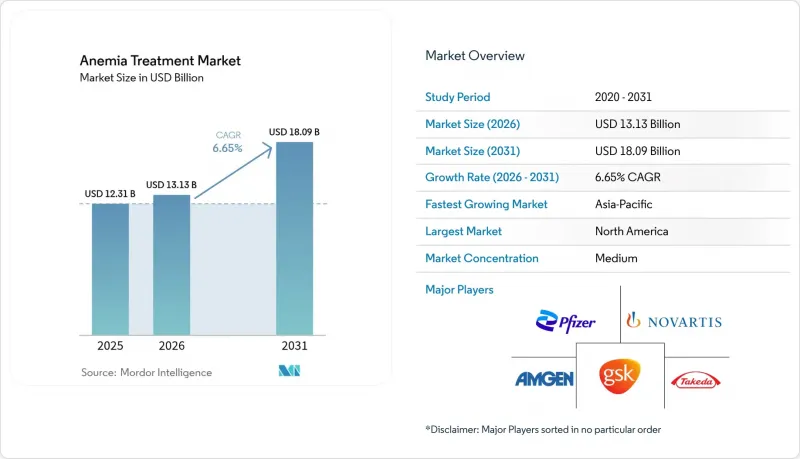
본 보고서는 질환 유형(철결핍성 빈혈, 만성 신장질환(CKD)에 수반되는 빈혈, 겸상적혈구 빈혈, 재생불량성 빈혈, 지중해빈혈, 기타 희귀 빈혈), 치료법(경구용 철제, 정맥주사용 철제, ESAS, 철 킬레이트제 등), 투여 경로(경구 및 주사), 그리고 지역(북미, 유럽 등)별로 분류되어 있습니다. 시장 전망은 금액(달러) 기준으로 제시되어 있습니다.
세계 빈혈 치료 시장의 동향 및 인사이트
세계 빈혈 유병률 증가 및 조기 진단
인구통계학적 변화, 선별 검사의 개선, AI를 활용한 영상 진단이 결합되어, 그동안 간과되었던 사례들이 각 인구 집단에서 드러나고 있습니다. 세계보건기구(WHO) 보고서에 따르면, 전 세계적으로 15-49세 여성의 29.9%, 6-59개월 영유아의 39.8%가 빈혈로 고통받고 있으며, 아프리카 지역에서는 5세 미만 영유아의 유병률이 60.2%로 가장 높습니다. 1분 이내에 헤모글로빈 수치를 산출하는 스마트폰 기반 검사를 통해 검사 접근성이 확대되고, 의료진이 더 조기에 개입할 수 있게 됨에 따라 빈혈 치료 시장의 환자 수가 증가하고 있습니다.
동반된 만성 질환의 유병률 증가
만성 신장질환, 암, 염증성 질환은 모두 빈혈 위험을 높이며, 철분 보충만으로는 불충분한 보다 복잡한 치료가 필요합니다. 2025년 KDIGO 지침에서는 신성 빈혈을 안전하게 관리하기 위해 ESA(적혈구 조혈 자극 인자)와 새로운 HIF-PH 억제제를 병용할 필요성이 인정되고 있습니다. 암 치료 건수가 증가하는 가운데, 빈혈에 대한 지지요법은 화학요법을 받고 있는 환자의 최대 70%의 삶의 질(QOL)을 유지하고 있으며, 이는 빈혈 치료 시장의 꾸준한 수요를 뒷받침하고 있습니다.
ESA 및 유전자 치료 분야의 비용 절감 압력
현재 보험사는 단계적 치료법을 의무화하고 있으며, 정맥내 투여 옵션을 선택하기 전에 경구용 철분제 사용을 먼저 시도하도록 강제하고 있습니다. 한편, 바이오시밀러 ESA는 브랜드 제품의 가격을 서서히 낮추고 있습니다. 근치적 유전자 치료는 초기 비용이 고액이기 때문에 보험 환급의 장벽에 직면해 있으며, 임상적 가치가 명확하더라도 접근을 제한하는 요인이 되고 있습니다. 보험사의 정책에서는 단계적 치료 요건이 점점 더 강조되고 있으며, 고가의 정맥 주사제를 승인하기 전에 경구용 철제제 사용을 의무화하고 있어 최적의 치료 시작이 지연되고 있습니다. 바이오시밀러 ESA의 등장으로 원개발품의 가격 책정에 대한 압박이 더욱 가중되고 있는 반면, HIF-PH 억제제의 경우 장기적인 심혈관계 안전성 프로파일과 관련하여 불확실성이 남아 있습니다.
부문 분석
2025년, 철분 결핍성 빈혈은 빈혈 치료 시장 규모의 44.68%를 차지하며, 가장 광범위한 임상 부문으로서의 위상을 강조하고 있습니다. 가임기 여성과 소아의 높은 유병률은 저비용 철분제 치료에 대한 대규모 수요를 보장하며, 선진국과 신흥 경제국 모두에서 판매량 주도 성장을 뒷받침하고 있습니다. 대량 공급 계획에 기반한 정부 조달로 인해, 표준 철분제는 안정적인 유통을 유지하고 있으며, 단가는 낮지만 시장에서 주도적인 위치를 유지하고 있습니다.
겸상 적혈구 빈혈은 연평균 성장률(CAGR) 8.15%로 확대될 것으로 예측되며, 빈혈 치료 시장 내의 다른 모든 질환 하위 유형을 능가하는 성장률을 보이고 있습니다. CASGEVY 및 관련 유전자 편집 후보 약물과 같은 획기적인 치료법은 전문적인 자금 조달과 ‘센터 오브 엑설런스(Center of Excellence)’ 모델을 유치하는 프리미엄 하위 부문을 창출하고 있습니다. 미국 및 일부 아프리카 국가에서 신생아 선별 검사가 확대됨에 따라 대상 환자층이 더욱 넓어지고, 진단이 가속화되며, 완화 치료보다 완치 치료에 대한 관심이 높아지고 있습니다. 그 결과, 빈혈 치료 업계에서는 대량 판매·저마진인 철결핍증 치료 제품에서 소량 판매·고마진인 헤모글로빈 질환에 대한 유전자 치료로 가치가 이동하는 현상이 나타나고 있습니다.
지역별 분석
북미는 2025년에 총 매출의 37.05%를 차지했으며, 이는 프리미엄 치료법의 조기 도입과 고비용의 유전자 편집, ESA 생물학적 제제, 주사용 철분제의 비용을 보상하는 보험 제도를 반영한 것입니다. 종합적인 신생아 선별 검사 및 정밀 의료 프로그램이 희귀성 빈혈의 각 부문에서 보급을 촉진하고 있습니다. 그러나 지불 기관의 면밀한 검토로 인해 ESA의 성장에는 상한선이 설정되고, 바이오시밀러 사용이 촉진되면서, 강력한 임상 결과가 입증된다면 여전히 혁신이 보상받는 가치 지향적인 조달 환경이 형성되고 있습니다.
유럽에서는 꾸준하지만 가격에 민감한 성장이 나타나고 있습니다. 규제 심사의 조화를 통해 바이오시밀러의 급속한 보급이 가능해졌으며, 비용을 절감하면서도 확립된 생물학적 제제에 대한 접근성이 확대되고 있습니다. 독일과 영국 등 일부 국가에서는 CRISPR 치료법에 대한 ‘패스웨이 펀딩(pathway funding)’을 도입하는 한편, 고액의 초기 지불금을 장기적인 임상적 이점과 연계하기 위해 성과 연계형 계약을 협상하고 있습니다. 철 킬레이트제의 병용요법은 안전성과 유효성에 관한 긍정적인 근거가 제시됨에 따라 수용되고 있으며, 각국의 국민보건서비스에서 치료법의 다양화를 뒷받침하고 있습니다.
아시아태평양은 보험 적용 범위 확대, 만성 질환 부담 증가, 정부 주도의 영양 개선 정책에 힘입어 2031년까지 연평균 성장률(CAGR) 8.02%를 기록하며 가장 빠르게 성장하는 지역입니다. 중국에서는 규제 개혁에 따라 HIF-PH 억제제의 승인이 가속화되고 있는 한편, 국내 제약사들이 제네릭 정맥내 철 제제의 생산을 확대하고 있어 평균 판매 가격 하락과 시장 침투율 향상으로 이어지고 있습니다. 스마트폰을 활용한 진단 기술로 검사 건수가 더욱 증가하여, 빈혈 치료 시장 전체의 처방 수요를 뒷받침하고 있습니다.
기타 혜택:
- 엑셀 형식의 시장 예측(ME) 시트
- 3개월간의 애널리스트 지원
자주 묻는 질문
목차
제1장 소개
제2장 조사 방법
제3장 주요 요약
제4장 시장 구도
제5장 시장 규모와 성장 예측
제6장 경쟁 구도
제7장 시장 기회와 향후 전망
KSM 26.08.26According to Mordor Intelligence, the anemia treatment market size was valued at USD 12.31 billion in 2025 and estimated to grow from USD 13.13 billion in 2026 to reach USD 18.09 billion by 2031, at a CAGR of 6.65% during the forecast period (2026-2031).
This report is Segmented by Disease Type (Iron Deficiency Anemia, CKD Anemia, Sickle Cell Anemia, Aplastic Anemia, Thalassemia and Other Rare Anemias), Therapy Class (Oral Iron Supplements, Intravenous Iron, Esas, Iron Chelators, and More), Route of Administration (Oral and Injectable), and Geography (North America, Europe, and More). The Market Forecasts are Provided in Terms of Value (USD).
Global Anemia Treatment Market Trends and Insights
Escalating Worldwide Incidence and Earlier Diagnosis of Anemia
The combined effects of demographic change, improved screening, and AI-supported imaging uncover previously hidden cases across populations. . The World Health Organization reports that 29.9% of women aged 15-49 and 39.8% of children aged 6-59 months suffered from anemia globally, with the African region showing the highest prevalence at 60.2% among children under five. Smartphone-based tests that deliver hemoglobin values in under one minute widen access and help providers intervene sooner, increasing patient volumes in the anemia treatment market.
Growing Prevalence of Comorbid Chronic Diseases
Chronic kidney disease, cancer, and inflammatory disorders each elevate anemia risk and require more complex interventions than iron replacement alone. The 2025 KDIGO guideline recognizes the need to combine ESAs and emerging HIF-PH inhibitors to manage renal anemia safely. As oncology treatment volumes rise, supportive anemia care preserves quality of life for up to 70% of patients receiving chemotherapy, supporting steady demand in the anemia treatment market.
ESA & Gene-Therapy Cost-Containment Pressures
Payers now require step-therapy, forcing oral iron trials ahead of intravenous options, while biosimilar ESAs chip away at branded pricing. Curative gene therapies face reimbursement hurdles given their high upfront cost, limiting access even where clinical value is clear. Payer policies increasingly emphasize step therapy requirements, mandating oral iron trials before approving expensive intravenous formulations, thereby delaying optimal treatment initiation. The emergence of biosimilar ESAs further pressures originator pricing while HIF-PH inhibitors face uncertainty regarding long-term cardiovascular safety profiles.
Other drivers and restraints analyzed in the detailed report include:
- Regulatory Approvals and Pipeline Progress for Novel Therapeutic Classes
- Government Nutrition Programs for Women of Reproductive Age
- Safety Concerns (Thrombo-embolism, Iron Overload) Curb Use
For complete list of drivers and restraints, kindly check the Table Of Contents.
Segment Analysis
Iron deficiency anemia accounted for 44.68% of the anemia treatment market size in 2025, underlining its status as the widest clinical segment. High prevalence among women of child-bearing age and children ensures large-scale demand for low-cost iron therapy and supports volume-driven growth across both developed and emerging economies. Government procurement under mass supplementation schemes keeps standard iron products in steady circulation, maintaining leadership despite lower per-unit pricing.
Sickle cell anemia is projected to advance at an 8.15% CAGR, outpacing every other disease subtype within the anemia treatment market. Breakthrough therapies such as CASGEVY and related gene-editing candidates create premium subsegments that attract specialized funding and center-of-excellence models. Growing newborn screening in the United States and selected African countries further enlarges the addressable patient pool and accelerates diagnosis, steering attention toward curative rather than palliative care. The anemia treatment industry therefore sees value migration from high-volume, low-margin iron deficiency products to low-volume, high-margin gene therapies for hemoglobinopathies.
Complete Report Scope:
- By Disease Type
- Iron Deficiency Anemia
- CKD Anemia
- Sickle Cell Anemia
- Aplastic Anemia
- Thalassemia
- Other Rare Anemias
- By Therapy Class
- Oral Iron Supplements
- Intravenous Iron
- ESAs
- Iron Chelators
- HIF-PH Inhibitors
- Others
- By Route of Administration
- Oral
- Injectable
- By Geography
- North America
- United States
- Canada
- Mexico
- Europe
- Germany
- United Kingdom
- France
- Italy
- Spain
- Rest of Europe
- Asia Pacific
- China
- Japan
- India
- Australia
- South Korea
- Rest of Asia Pacific
- Middle East and Africa
- GCC
- South Africa
- Rest of Middle East and Africa
- South America
- Brazil
- Argentina
- Rest of South America
- North America
Geography Analysis
North America generated 37.05% of total sales in 2025, reflecting early adoption of premium therapies and insurance frameworks that reimburse high-cost gene editing, ESA biologics, and injectable irons. Comprehensive newborn screening and precision-medicine programs bolster uptake across rare anemia segments. Payer scrutiny, however, caps ESA growth and encourages biosimilar use, shaping a value-oriented procurement environment that still rewards innovation when strong clinical outcomes are demonstrated.
Europe presents steady but more price-sensitive expansion. Harmonized regulatory reviews permit rapid biosimilar penetration, spreading access to established biologics while containing costs. Countries such as Germany and the United Kingdom have adopted pathway funding for CRISPR therapies, yet negotiate outcomes-based contracts to align high upfront payments with long-term clinical benefit. Iron chelation combinations receive acceptance after favorable safety and efficacy evidence, reinforcing diversified therapy mixes across national health services.
Asia Pacific is the fastest-growing region at 8.02% CAGR through 2031, driven by widening insurance coverage, rising chronic disease loads, and government-led nutrition drives. China's regulatory reforms speed approval of HIF-PH inhibitors, while domestic manufacturers scale generic IV iron, lowering average selling prices and boosting penetration. Smartphone-enabled diagnostics further lift test volumes, feeding prescription demand throughout the anemia treatment market.
- Akebia Therapeutics
- GlaxoSmithKline
- Pfizer (incl. GBT)
- Pieris Pharmaceuticals
- Sanofi
- Takeda Pharmaceuticals
- Abbvie
- Pharmacosmos
- Covis Pharma (AMAG)
- Amgen
- CSL Vifor
- Novartis
- Johnson & Johnson
- Roche
- Biocon Biologics
- Otsuka Pharma
- CRISPR Therapeutics AG
- Vertex Pharmaceuticals
Additional Benefits:
- The market estimate (ME) sheet in Excel format
- 3 months of analyst support
TABLE OF CONTENTS
1 Introduction
- 1.1 Study Assumptions & Market Definition
- 1.2 Scope of the Study
2 Research Methodology
3 Executive Summary
4 Market Landscape
- 4.1 Market Overview
- 4.2 Market Drivers
- 4.2.1 Escalating worldwide incidence and earlier diagnosis of anemia
- 4.2.2 Growing prevalence of comorbid chronic diseases
- 4.2.3 Regulatory approvals and pipeline progress for novel therapeutic classes
- 4.2.4 Government nutrition programs for women of reproductive age
- 4.2.5 AI-enabled PoC hematology devices expanding diagnosis reach
- 4.2.6 Precision-medicine advances in hematology
- 4.3 Market Restraints
- 4.3.1 ESA & gene-therapy cost-containment pressures
- 4.3.2 Safety concerns (thrombo-embolism, iron overload) curb use
- 4.3.3 Cold-chain biologic supply bottlenecks in LMICs
- 4.3.4 Low therapy adherence due to GI side-effects of orals
- 4.4 Regulatory Landscape
- 4.5 Pipeline Analysis
- 4.6 Porter's Five Forces Analysis
- 4.6.1 Threat of New Entrants
- 4.6.2 Bargaining Power of Buyers
- 4.6.3 Bargaining Power of Suppliers
- 4.6.4 Threat of Substitutes
- 4.6.5 Intensity of Rivalry
5 Market Size & Growth Forecasts (Value)
- 5.1 By Disease Type
- 5.1.1 Iron Deficiency Anemia
- 5.1.2 CKD Anemia
- 5.1.3 Sickle Cell Anemia
- 5.1.4 Aplastic Anemia
- 5.1.5 Thalassemia
- 5.1.6 Other Rare Anemias
- 5.2 By Therapy Class
- 5.2.1 Oral Iron Supplements
- 5.2.2 Intravenous Iron
- 5.2.3 ESAs
- 5.2.4 Iron Chelators
- 5.2.5 HIF-PH Inhibitors
- 5.2.6 Others
- 5.3 By Route of Administration
- 5.3.1 Oral
- 5.3.2 Injectable
- 5.4 By Geography
- 5.4.1 North America
- 5.4.1.1 United States
- 5.4.1.2 Canada
- 5.4.1.3 Mexico
- 5.4.2 Europe
- 5.4.2.1 Germany
- 5.4.2.2 United Kingdom
- 5.4.2.3 France
- 5.4.2.4 Italy
- 5.4.2.5 Spain
- 5.4.2.6 Rest of Europe
- 5.4.3 Asia Pacific
- 5.4.3.1 China
- 5.4.3.2 Japan
- 5.4.3.3 India
- 5.4.3.4 Australia
- 5.4.3.5 South Korea
- 5.4.3.6 Rest of Asia Pacific
- 5.4.4 Middle East and Africa
- 5.4.4.1 GCC
- 5.4.4.2 South Africa
- 5.4.4.3 Rest of Middle East and Africa
- 5.4.5 South America
- 5.4.5.1 Brazil
- 5.4.5.2 Argentina
- 5.4.5.3 Rest of South America
- 5.4.1 North America
6 Competitive Landscape
- 6.1 Market Concentration
- 6.2 Strategic Moves
- 6.3 Market Share Analysis
- 6.4 Company Profiles (includes Global Level Overview, Market Level Overview, Core Segments, Financials as available, Strategic Information, Market Rank/Share for key companies, Products & Services, and Recent Developments)
- 6.4.1 Akebia Therapeutics
- 6.4.2 GSK plc
- 6.4.3 Pfizer (incl. GBT)
- 6.4.4 Pieris Pharmaceuticals
- 6.4.5 Sanofi
- 6.4.6 Takeda
- 6.4.7 AbbVie (Allergan)
- 6.4.8 Pharmacosmos
- 6.4.9 Covis Pharma (AMAG)
- 6.4.10 Amgen
- 6.4.11 CSL Vifor
- 6.4.12 Novartis
- 6.4.13 Johnson & Johnson (Janssen)
- 6.4.14 Roche
- 6.4.15 Biocon Biologics
- 6.4.16 Otsuka Pharma
- 6.4.17 CRISPR Therapeutics AG
- 6.4.18 Vertex Pharmaceuticals
7 Market Opportunities & Future Outlook
- 7.1 White-space & Unmet-Need Assessment


