

|
시장보고서
상품코드
2116110
인도의 UPVC 창호 : 시장 점유율 분석, 업계 동향 및 통계, 성장 예측(2026-2031년)India UPVC Doors And Windows - Market Share Analysis, Industry Trends & Statistics, Growth Forecasts (2026 - 2031) |
||||||
 Mordor Intelligence
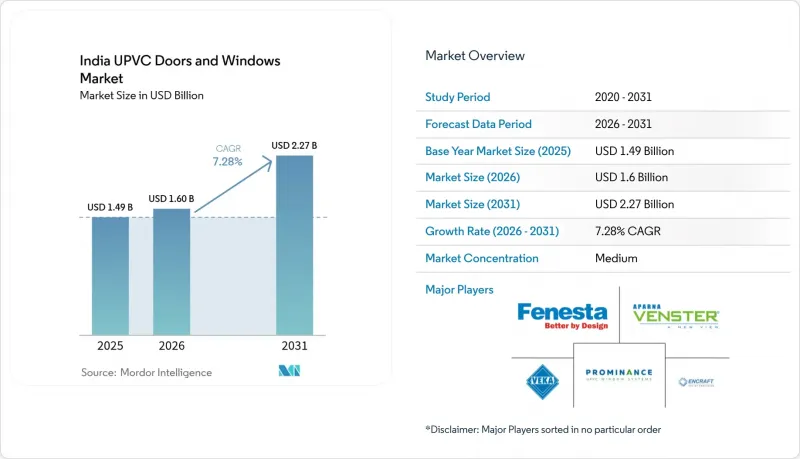
Mordor Intelligence에 의하면, 인도의 UPVC 창호 시장 규모는 2025년에 14억 9,000만 달러로 평가되었습니다. 2026년 16억 달러에서 2031년까지 22억 7,000만 달러에 이를 것으로 예상되며, 예측 기간(2026-2031년) CAGR은 7.28%를 나타낼 전망입니다.
본 보고서는 제품 유형(UPVC 창문, UPVC 문), 최종 사용자(주거용, 상업용, 기타), 디자인 유형(슬라이딩, 여닫이 창, 틸트 앤 턴, 기타), 설치 유형(신축, 교체·리모델링),유통 채널(제조업체 직접 판매, 딜러·유통업체), 지역별로 분류되어 있습니다. 시장 전망은 금액(달러) 기준으로 제시되어 있습니다.
인도의 UPVC 창호 시장 동향 및 인사이트
에너지 효율이 뛰어나고 친환경적이며 합리적인 가격의 주택 계획을 위한 정부의 추진
‘PM Surya Ghar Yojana’ 및 ‘Pradhan Mantri Awas Yojana-Urban 2.0’을 비롯한 여러 연방 정부의 이니셔티브에서는 주택 보조금과 UPVC 개구부를 권장하는 에너지 절약 건축 요건이 연계되어 있습니다. 2017년 ‘에너지 효율 건축 기준’ 개정으로 25%-50%의 에너지 절감을 달성할 경우 보상을 제공하는 자발적인 단계별 제도가 마련되었으며, UPVC 프로파일은 기준을 준수하는 솔루션으로 자리매김하고 있습니다. 『2024-25년도 경제 조사』에서 언급된, 향후 도입 예정인 「에너지 절약 및 지속 가능한 건축 기준」 지침에 따라 건축 허가 시 열 성능 지표가 더욱 반영될 예정입니다. 이러한 일련의 시책은 인도의 2070년 탄소중립 공약을 뒷받침하는 것으로, 개발업자들에게 고단열성 창문과 문 채택을 촉진하고 있습니다. 그 결과, 인도의 UPVC 창호 시장은 대도시권을 훨씬 넘어 확장되는 공공 부문의 주택 건설 계획에 힘입어 지속적인 호재를 누리고 있습니다.
2·3급 도시에서 유지보수 부담이 적은 개구부 제품에 대한 소비자 선호도 증가
2·3급 도시의 주택 거래는 2021년부터 2023년까지 연평균 성장률(CAGR) 14%로 확대되어 대도시권의 성장률을 상회했으며, 내구성이 뛰어난 문과 창문에 대한 새로운 수요 기반을 창출했습니다. 이 도시들의 맞벌이 가구는 유지 관리 부담을 최소화하는 제품을 우선시하고 있으며, UPVC가 지닌 흰개미, 부식, 풍화에 대한 내성은 이러한 기대에 부응합니다. 카르나타카주, 타밀나두주, 구자라트주의 해안 지역에서는 염분이 포함된 공기가 목재나 일반적인 알루미늄 대체재의 열화를 가속화하기 때문에 UPVC가 빠르게 보급되고 있습니다. 페네스타(Fenesta)사의 250개 이상의 딜러 네트워크와 같은 체계적인 소매 쇼룸은 신규 구매자에 대한 제품 인지도 제고와 기술적 조언에 기여하고 있습니다. 이러한 요인들이 결합되어, 한때 성능이 낮은 자재에 거의 전적으로 의존하던 지역으로 인도의 UPVC 창호 시장이 확대되고 있습니다.
높은 GST 세율(18%) 대 알루미늄·목재 대체재의 12%
HSN 3904로 분류되는 PVC 폴리머에는 18%의 GST가 부과되는 반면, 알루미늄이나 목재 프레임은 12% 세율 구간에 해당하기 때문에 UPVC 제품에는 6%의 가격적 불리함이 발생하고 있습니다. 이러한 차이는 가격에 민감한 부문, 특히 수명 주기 비용 절감에 대한 인식이 아직 제한적인 2급 및 3급 도시에서 초기 비용 격차를 더욱 확대시키고 있습니다. 이에 대응하여 각 제조업체는 제품 수명 기간 동안의 에너지 비용 절감을 강조하는 가치 공학 및 금융 계획을 전개하고 있습니다. 높은 세금 부담은 성능 면에서 우위를 점하고 있는 경우에도 급속한 보급을 저해하고 있습니다. 시장에 진출한 기업들은 향후 GST 재검토를 통해 인도의 UPVC 창호 시장이 더욱 급속한 성장을 이룰 것으로 예상하고 있습니다.
부문별 분석
2025년, UPVC 창문은 인도의 UPVC 창호 시장 점유율의 55.68%를 차지했으며, 에너지 절약형 개구부 제품으로의 주요 진입점으로서의 역할을 반영하고 있습니다. 이 부문은 교체 빈도가 높을 뿐만 아니라, 그린 빌딩 크레딧이 부여되는 정책 연계형 단열 성능 목표와 직접적으로 부합한다는 점에서 혜택을 받고 있습니다. 현재 프리미엄 제품 라인에는 대도시권과 2급 도시 모두에서 높아지는 미적 기대에 부응하는 멀티 챔버 프로파일과 라미네이트 마감이 채택되고 있습니다. 또한, 각 제조업체는 인도의 강한 햇볕 아래에서도 구조적 무결성을 확보하기 위해 자외선 저항성을 갖춘 수지 컴파운드를 현지화하고 있습니다(4). 이러한 요인들이 결합되어 창문은 인도의 UPVC 창호 시장에서 계속해서 가장 큰 수익원입니다.
UPVC 문은 가장 빠르게 성장하는 제품 부문으로, 2026년부터 2031년까지 연평균 성장률(CAGR) 8.12%로 확대되며 인도의 UPVC 창호 시장 규모에서 차지하는 비중을 꾸준히 높이고 있습니다. 멀티포인트 잠금 장치 및 강철 보강 프레임에 대한 인식이 높아짐에 따라, 보안이 중요한 구매 기준이 되는 프리미엄 및 중저가 주택 시장에서 채택이 촉진되고 있습니다. 문 교체 주기가 길어짐에 따라 가격에 대한 민감도가 낮아져, 디자이너 인필 패널 및 전자 출입 통제 시스템의 업셀링이 가능해졌습니다. 알루미늄 느낌의 호일이나 쿨 컬러 기술을 적용한 신제품 출시로, 단열 성능을 저해하지 않으면서도 금속적인 미관을 선호하는 건축가들에게 더욱 큰 호소력을 발휘하고 있습니다. 그 결과, 2030년까지 문은 창문과의 기존 판매량 격차를 좁힐 것으로 예측됩니다.
2025년, 인도의 UPVC 창호 시장에서 주택 부문은 66.55%의 점유율을 차지했습니다. 이는 연방 정부의 주택 건설 지원 사업과 첫 주택 구매자층의 가처분 소득 증가에 힘입은 결과입니다. 혁신적인 친환경 소재 사용을 의무화하는 정부의 보조금 제도 덕분에 저소득층 구매자들이 UPVC를 선택하게 되면서, 대도시권과 신흥 도시 모두에서 수요가 촉진되고 있습니다. 개발업자들은 수명 주기 비용이 구매 결정에 영향을 미치는 중산층 대상 프로젝트에서 UPVC의 높은 가격을 정당화하기 위해 유지보수 비용 절감과 에너지 절약 효과를 강조하고 있습니다. 급속한 도시화와 젊은 층 증가로 인해 리모델링 주기가 더욱 단축되고 있으며, 포화 상태에 이른 지역에서도 재구매 수요가 지속되고 있습니다. 그 결과, 주택 건설이 인도의 UPVC 창호 시장의 기반을 이루는 판매량을 뒷받침하고 있습니다.
상업용 부문은 2031년까지 연평균 성장률(CAGR) 8.57%로 증가할 것으로 예측되며, 인도의 UPVC 창호 시장 규모에서 가장 빠르게 매출을 견인할 부문이 될 전망입니다. 에너지 효율국(Bureau of Energy Efficiency)의 별점 평가 기준에 따라, 건축가들은 규정 준수 점수와 임차인으로부터의 임대료 프리미엄을 확보하기 위해 U값이 낮은 UPVC 프로파일을 채택하도록 권장받고 있습니다. 또한, 고밀도 비즈니스 지구에서 우려가 커지고 있는 방음 성능 측면에서도 개발업자들은 UPVC를 선호하고 있습니다. 다국적 기업들이 2선 도시의 위성 사무실을 확대함에 따라, 대도시권에서 확립된 사양 기준이 전국으로 확산되고 있습니다. 이러한 추세에 힘입어 2030년까지는 상업용 건축이 매출 증가에 가장 크게 기여할 것으로 전망됩니다.
기타 혜택
- 엑셀 형식 시장 예측(ME) 시트
- 3개월간의 애널리스트 지원
자주 묻는 질문
목차
제1장 서론
제2장 조사 방법
제3장 개요
제4장 시장 구도
제5장 시장 규모 및 성장 예측
제6장 경쟁 구도
제7장 시장 기회 및 향후 전망
KTH 26.08.31According to Mordor Intelligence, the India UPVC windows and doors market size was valued at USD 1.49 billion in 2025 and estimated to grow from USD 1.6 billion in 2026 to reach USD 2.27 billion by 2031, at a CAGR of 7.28% during the forecast period (2026-2031).
This report is Segmented by Product Type (UPVC Windows, UPVC Doors), End-Use Sector (Residential, Commercial, and More), Design Type (Sliding, Casement, Tilt-And-Turn, Others), Installation Type (New Construction, Replacement & Renovation), Distribution Channel (Direct From the Manufacturers, Dealers and Distributors) and Geography. The Market Forecasts are Provided in Terms of Value (USD).
India UPVC Doors And Windows Market Trends and Insights
Government Push for Energy-Efficient, Green & Affordable Housing Schemes
Multiple federal initiatives, including PM Surya Ghar Yojana and Pradhan Mantri Awas Yojana-Urban 2.0, link housing subsidies with energy-efficient construction requirements that favor UPVC fenestration. The Energy Conservation Building Code 2017 update created voluntary tiers that reward 25%-50% energy savings, positioning UPVC profiles as a compliant solution. Upcoming Energy Conservation & Sustainable Building Code guidelines referenced in the Economic Survey 2024-25 further embed thermal-performance metrics in building approvals. These policy layers support India's 2070 net-zero pledge, driving developers to specify high-insulation windows and doors. Consequently, the India UPVC windows and doors market receives a sustained boost from public-sector housing pipelines that extend well beyond metros.
Rising Consumer Preference for Low-Maintenance Fenestration in Tier-II & III Cities
Housing transactions in Tier-II and Tier-III cities expanded at 14% CAGR between 2021 and 2023, outpacing metro growth and creating new demand hubs for durable fenestration. Dual-income households in these cities prioritize products that minimize upkeep, and UPVC's resistance to termites, corrosion and weathering aligns with that expectation. Coastal zones in Karnataka, Tamil Nadu, and Gujarat adopt UPVC quickly because salt-laden air accelerates the degradation of wood and basic aluminum alternatives. Organized retail showrooms, such as Fenesta's 250-plus dealer network, improve product visibility and technical guidance for new buyers. These factors collectively expand the India UPVC windows and doors market into geographies that once relied almost entirely on lower-performance materials.
High GST Bracket (18%) Versus 12% on Aluminium & Wood Alternatives
PVC polymers classified under HSN 3904 attract 18% GST, while aluminum and wood frames fall into the 12% band, imposing a 6-percentage-point price handicap on UPVC products. The differential amplifies upfront cost gaps in price-sensitive segments, especially in Tier-II and Tier-III cities where awareness of lifecycle savings remains limited. Manufacturers respond with value-engineering and financing schemes that highlight energy-bill reductions over the product lifespan. Nonetheless, higher tax outlays constrain rapid adoption even when performance credentials are superior. Market participants anticipate that future GST rationalization could unlock faster growth for the India UPVC windows and doors market.
Other drivers and restraints analyzed in the detailed report include:
- Accelerated Real-Estate Renovations Post-COVID Unlocking Retrofit Demand
- Rapid Expansion of Organised Retail Showrooms & E-Commerce Configurators
- Persistent Skilled-Installer Deficit Causing Quality-Perception Issues
For complete list of drivers and restraints, kindly check the Table Of Contents.
Segment Analysis
UPVC windows captured 55.68% of the India UPVC windows and doors market share in 2025, reflecting their role as the primary entry point for energy-efficient fenestration. The segment benefits from higher replacement frequency and direct alignment with policy-linked thermal-performance goals that award green-building credits. Premium product lines now feature multi-chamber profiles and laminated finishes that meet evolving aesthetic expectations in metros and Tier-II cities alike. Manufacturers also localize resin compounds for UV resistance, ensuring structural integrity under intense Indian sunlight[4]. Together, these factors keep windows the largest revenue contributor within the India uPVC windows and doors market.
UPVC doors represent the fastest-growing product segment, advancing at an 8.12% CAGR for 2026-2031 and steadily raising their contribution to the India UPVC windows and doors market size. Increased awareness of multi-point locking and steel-reinforced frames boosts adoption in premium and mid-market housing, where security is a key purchase criterion. Longer door replacement cycles reduce price sensitivity, enabling upselling of designer infill panels and electronic access controls. Product launches featuring aluminium-look foils and cool-color technology further expand appeal to architects who prefer metallic aesthetics without thermal penalties. As a result, doors are expected to narrow the historical volume gap with windows by 2030.
The residential segment held 66.55% of the India UPVC windows and doors market in 2025, supported by federally subsidized housing pipelines and rising disposable incomes among first-time homeowners. Government grants that mandate innovative green materials steer low-income buyers toward UPVC, bolstering demand in both metros and emerging cities. Developers highlight reduced maintenance and energy savings to justify UPVC premiums in mid-income projects where lifecycle costs influence purchasing decisions. Rapid urbanization and a younger demographic further shorten renovation cycles, sustaining repeat demand even in saturated localities. Consequently, residential construction anchors baseline volume for the India UPVC windows and doors market.
Commercial applications are projected to rise at an 8.57% CAGR through 2031, making them the quickest revenue driver in the India uPVC windows and doors market size. Bureau of Energy Efficiency star-rating protocols influence architects to specify UPVC profiles with low U-values to earn compliance points and tenant leasing premiums. Developers also favor UPVC for acoustic insulation, a growing concern in high-density business districts. As multinational firms expand satellite offices in Tier-II hubs, specification norms established in metros replicate nationwide. This momentum positions commercial builds as the fastest contributor to incremental revenue through 2030.
Complete Report Scope:
- By Product Type
- UPVC Windows
- UPVC Doors
- By Design Type
- Sliding
- Casement
- Tilt-and-Turn
- Others (French, Awning, etc.)
- By Installation Type
- New Construction
- Replacement & Renovation
- By End-user
- Residential
- Commercial
- Industrial & Infrastructure
- By Distribution Channel
- Direct from the Manufacturers
- Dealers and Distributors
- By Region
- North
- West
- South
- East
List of Companies Covered in this Report:
- Fenesta Building Systems (DCM Shriram)
- Encraft India Pvt Ltd
- VEKA India
- Rehau India Pvt Ltd
- Deceuninck Profiles
- Prominance Window Systems
- Aparna Venster
- Window Magic India
- Koemmerling India
- LG Hausys India
- NCL VEKA Ltd
- Lesso India
- Lingel Windows & Doors Technologies
- Shani Corporation (CORA Windows)
- Aluplast India
- AIS Windows
- Welltech Systems
- KAKA Profiles Pvt Ltd
- Elite Window Factory
- Eurostar Fenestration
- Perfect Window Solutions
Additional Benefits:
- The market estimate (ME) sheet in Excel format
- 3 months of analyst support
TABLE OF CONTENTS
1 Introduction
- 1.1 Study Assumptions & Market Definition
- 1.2 Scope of the Study
2 Research Methodology
3 Executive Summary
4 Market Landscape
- 4.1 Market Overview
- 4.2 Market Drivers
- 4.2.1 Government Push For Energy-Efficient, Green & Affordable Housing Schemes
- 4.2.2 Rising Consumer Preference For Low-Maintenance Fenestration In Tier-Ii & Iii Cities
- 4.2.3 Accelerated Real-Estate Renovations Post-Covid Unlocking Retrofit Demand
- 4.2.4 Rapid Expansion Of Organised Retail Showrooms & E-Commerce Configurators
- 4.2.5 Domestic Pvc Capacity Additions (Reliance, Adani) Reducing Raw-Material Cost Volatility
- 4.2.6 Integration Of Smart-Home Sensors & Iot-Ready Locks Into Upvc Profiles
- 4.3 Market Restraints
- 4.3.1 High Gst Bracket (18%) Versus 12% On Aluminium & Wood Alternatives
- 4.3.2 Persistent Skilled-Installer Deficit Causing Quality-Perception Issues
- 4.3.3 Import Dependence For Premium Hardware & Multi-Chamber Profiles
- 4.3.4 Rising Competition From Thermally-Broken Aluminium Systems In Premium Segment
- 4.4 Industry Value Chain Analysis
- 4.5 Porter's Five Forces
- 4.5.1 Threat of New Entrants
- 4.5.2 Bargaining Power of Suppliers
- 4.5.3 Bargaining Power of Buyers
- 4.5.4 Threat of Substitutes
- 4.5.5 Competitive Rivalry
- 4.6 Insights into the Latest Trends and Innovations in the Market
- 4.7 Insights on Recent Developments (New Product Launches, Strategic Initiatives, Investments, Partnerships, JVs, Expansion, M&As, etc.) in the Industry
5 Market Size & Growth Forecasts (Value in USD)
- 5.1 By Product Type
- 5.1.1 UPVC Windows
- 5.1.2 UPVC Doors
- 5.2 By Design Type
- 5.2.1 Sliding
- 5.2.2 Casement
- 5.2.3 Tilt-and-Turn
- 5.2.4 Others (French, Awning, etc.)
- 5.3 By Installation Type
- 5.3.1 New Construction
- 5.3.2 Replacement & Renovation
- 5.4 By End-user
- 5.4.1 Residential
- 5.4.2 Commercial
- 5.4.3 Industrial & Infrastructure
- 5.5 By Distribution Channel
- 5.5.1 Direct from the Manufacturers
- 5.5.2 Dealers and Distributors
- 5.6 By Region
- 5.6.1 North
- 5.6.2 West
- 5.6.3 South
- 5.6.4 East
6 Competitive Landscape
- 6.1 Market Concentration
- 6.2 Strategic Moves
- 6.3 Market Share Analysis
- 6.4 Company Profiles (includes Global level Overview, Market level overview, Core Segments, Financials as available, Strategic Information, Market Rank/Share for key companies, Products & Services, and Recent Developments)
- 6.4.1 Fenesta Building Systems (DCM Shriram)
- 6.4.2 Encraft India Pvt Ltd
- 6.4.3 VEKA India
- 6.4.4 Rehau India Pvt Ltd
- 6.4.5 Deceuninck Profiles
- 6.4.6 Prominance Window Systems
- 6.4.7 Aparna Venster
- 6.4.8 Window Magic India
- 6.4.9 Koemmerling India
- 6.4.10 LG Hausys India
- 6.4.11 NCL VEKA Ltd
- 6.4.12 Lesso India
- 6.4.13 Lingel Windows & Doors Technologies
- 6.4.14 Shani Corporation (CORA Windows)
- 6.4.15 Aluplast India
- 6.4.16 AIS Windows
- 6.4.17 Welltech Systems
- 6.4.18 KAKA Profiles Pvt Ltd
- 6.4.19 Elite Window Factory
- 6.4.20 Eurostar Fenestration
- 6.4.21 Perfect Window Solutions
7 Market Opportunities & Future Outlook
- 7.1 Affordable Housing Projects Driving uPVC Adoption
- 7.2 Replacement of Wood and Aluminum Windows
- 7.3 Government Push for Energy-Efficient Buildings


