

|
시장보고서
상품코드
2116283
북미의 사이딩 및 데크 : 시장 점유율 분석, 업계 동향 및 통계, 성장 예측(2026-2031년)North America Siding And Decking - Market Share Analysis, Industry Trends & Statistics, Growth Forecasts (2026 - 2031) |
||||||
 Mordor Intelligence
Mordor Intelligence에 의하면, 북미의 사이딩 및 데크 시장 규모는 2025년에 191억 4,000만 달러로 평가되었습니다. 2026년에 196억 1,000만 달러에 달하고, 2031년까지 233억 3,000만 달러에 이를 것으로 예측되며, 2026-2031년에 걸쳐 CAGR 3.53%로 성장할 전망입니다.
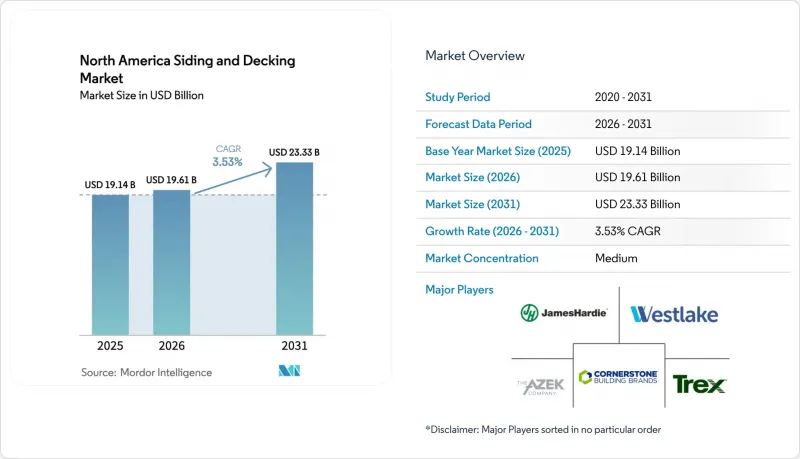
본 보고서는 제품별(사이딩 및 데크), 소재별(비닐, 섬유 시멘트, 기타), 최종 사용자별(주택 및 상업, 비주택·인프라),설치 방식별(현장 조립식 및 프리팹·모듈러 패널·데크 모듈), 국가별(미국, 캐나다, 멕시코)로 분류되어 있습니다. 시장 예측은 금액(미 달러) 기준으로 제시되어 있습니다.
북미의 사이딩 및 데크 시장 동향 및 인사이트
큰 개구부와 실내외가 일체화된 생활 방식로의 건축적 변화
큰 유리 개구부, 널찍한 파티오 도어, 데크로의 매끄러운 전환이 북미의 사이딩 및 데크 시장의 외장재 선택, 색상 팔레트, 부속 시스템에 영향을 미치고 있습니다. Trex는 2025년까지 견조한 소비자 수요가 예상된다고 보고했으며, 데크 면적 확대와 고부가가치 야외 레이아웃을 보완하는 난간 시장의 두 자릿수 성장세가 지속될 것으로 전망했습니다. James Hardie의 ‘Iron Gray 2026’ 올해의 컬러는 깊은 중성 색조로 넓은 개구부와 외관의 악센트를 돋보이게 하는 현대적인 외관 디자인과 조화를 이룹니다. 상업시설 및 공동 주택 프로젝트에서도 입주 유치를 목적으로 야외 편의 시설 공간과 표준화된 데크 모듈이 우선시되고 있으며, 이러한 추세는 공장 마감 외장재와 엔지니어링된 난간 패키지에 대한 수요를 뒷받침하고 있습니다. 며칠 만에 조립이 가능한 턴키 방식의 조립식 캐빈 셸은 실내와 실외를 통합한 설계 개념과 오프사이트 생산이 결합되어, 단기 임대 및 리조트 시설에서 예측 가능한 공사 기간을 실현하고 있음을 보여줍니다.
유지보수 부담이 적은 복합재 및 비닐 소재에 대한 선호도 증가
주택 소유자와 건설업자가 내구성, 장기 보증, 낮은 유지보수 비용을 중시하는 경향이 강해지는 가운데, 자재 전환이 시장 점유율 확대를 지속적으로 견인하고 있으며, 이러한 변화는 북미의 사이딩 및 데크 시장의 장기적인 성장을 뒷받침하고 있습니다. 트렉스(Trex)사는 재활용률이 높은 데크를 제조하고 있으며, 2025년에는 아칸소주에 플라스틱 가공 시설을 신설하여 비용 효율적인 재활용 원료 확보와 버지니아주 및 네바다주의 생산 능력 확충을 도모했습니다. 2024년 주요 사이딩 시장에서 비닐 소재가 26%의 점유율을 차지한 것은 비용 면에서의 매력, 최소한의 유지보수, 북미의 견고한 공급망의 중요성을 입증합니다. 2024년 섬유 시멘트의 23% 점유율은 목재와 같은 부패나 해충의 위험이 없으며 미관을 유지할 수 있는 난연성 외장재에 대한 수요가 증가하고 있음을 반영합니다. 불연성 또는 난연성 제품은 산불이 빈번히 발생하는 지역에서 FEMA(연방비상관리청)의 모범 사례에 의해 더욱 뒷받침되고 있어, 서부 지역에서의 전환 추세를 가속화하고 있습니다.
원자재 가격 변동(목재, 수지, 금속)
원자재 가격 변동은 이익률을 압박하고, 가격 고정 기간을 단축시킬 수밖에 없게 하여, 판매업체와 시공업체 전반에 걸쳐 입찰 및 예측을 복잡하게 만들고 있습니다. 관세 및 부과금 제도는 계속해서 목재 납품 비용에 영향을 미치고 있으며, 생산자들은 2025년 하반기 출하 조정 및 수요 둔화를 지적했습니다. 비닐 및 복합재용 수지 원자재 가격은 일시적으로 안정되었으나, 많은 공급업체가 단열재 및 관련 자재의 가격 고정 기간을 30일 이하로 제한하고 있어 지속적인 불확실성을 반영하고 있습니다. 2025년 중반까지 운임이 상승하고, 주택 소유자용 정가가 몇 달 전부터 고정되는 경향이 있는 시장에서 프로젝트 총비용을 끌어올렸습니다. 수직 통합형 재활용 업체와 제조업체는 자체 조달이나 전용 네트워크를 통해 원자재를 조달함으로써 현물 시장의 변동을 완화하고 있으며, 이를 통해 고급 데크의 가격을 보다 안정적으로 유지하고 있습니다.
부문별 분석
사이딩은 2025년 매출의 58.91%를 차지하며, 해당 기간 동안 북미의 사이딩 및 데크 시장에서 가장 큰 점유율을 기록했습니다. 한편, 데크 시장은 야외 생활에 대한 선호도가 높아짐에 따라 고급 난간 및 부속품에 대한 수요가 증가하여 2031년까지 연평균 성장률(CAGR) 3.98%를 나타낼 것으로 예측됩니다. 유지 관리가 간편한 디자인으로의 전환은 신축 및 리모델링 모두에서 상향 판매 기회를 촉진하고 있으며, 주택 소유자들은 종합적인 보증이 제공되고 유지 관리 부담을 줄여주는 통합형 시스템을 선호하고 있습니다. 북미의 사이딩 및 데크 시장에서 판매점들은 내구성과 수명 주기 비용 측면에서 명확한 가치 제안을 제공하는 복합재 중심의 제품 구색으로 계속해서 전환하고 있습니다. 사이딩 부문에서는 공장 마감 옵션이나 난연성 등의 성능 특성이 대량 생산형 주택 건설업체 및 공동 주택 소유자의 사양 선정 과정에서 입지를 강화하고 있습니다.
데크 시장의 성장 추세는 각 기업의 실적과 제품 로드맵 선택에도 명확하게 나타나고 있으며, 난간과 고정 장치가 데크를 보완함으로써 평균 주문 단가를 끌어올리는 데 기여하고 있습니다. 사이딩은 여전히 설치 기반에서 주력 제품이지만, 산불이 빈번한 지역의 건축 기준 및 보험 심사 기준이 엄격해짐에 따라 선택은 점차 불연성 및 난연성 소재로 이동하고 있습니다. 2025년 제조업체 전망에서는 사이딩 부문에서 견조한 수익성이 예상되며, 이는 건설업체에게 제품 구성상의 이점과 사이클 타임 단축을 가져다주는 프리피니시 제품 라인에 의해 뒷받침되고 있습니다. 전반적으로 북미의 사이딩 및 데크 시장은 사이딩의 판매량이 견조한 반면, 데크 부문에서는 브랜드화된 시스템이 선호되는 프리미엄화 추세가 나타나고 있습니다.
2025년에는 합리적인 가격과 유지보수의 용이성을 반영하여 비닐이 43.63%의 점유율을 차지했습니다. 한편, 지속가능성과 내구성이 북미의 사이딩 및 데크 시장의 소재 전환을 주도하고 있으며, 복합재·WPC·PVC가 연평균 성장률(CAGR) 4.56%로 성장을 이끌고 있습니다. 북미의 사이딩 및 데크 시장에서 복합재·WPC·PVC 시장 규모는 제조업체들이 재활용 재료의 배합 비율을 높이고, 혹독한 기후 조건에서도 일관된 성능을 발휘하고 있기 때문에 예측 기간 동안 연평균 성장률(CAGR) 4.56%로 확대될 것으로 전망됩니다. Trex가 2025년에 아칸소주에서 플라스틱 가공 시설을 가동함에 따라, 비용 효율적인 재생 원료에 대한 접근성이 더욱 높아져 투입 비용의 안정화와 수량 확대에 기여할 것으로 전망됩니다. AZEK은 2025년에 Northwest Polymers를 인수하여 순환 경제에 대응할 수 있는 역량을 확대했습니다. 이는 주요 시장에서 재활용 인프라를 확대하려는 산업 전반의 움직임을 보여줍니다.
섬유 시멘트는 내화 성능과 안정성 덕분에 계속해서 선호되고 있습니다. 이는 목재와 같은 외관을 재현하면서도 유지보수나 해충 피해의 위험이 없다는 설계상의 유연성에 힘입은 것입니다. 비닐은 설치 비용과 공급 확보가 신축이나 외벽 재시공 선택을 좌우하는 가치 중심 부문 및 지역에서 여전히 확고한 입지를 유지하고 있습니다. 알루미늄 및 강철을 포함한 금속 외장재는 불연성 및 에너지 성능이 우선시되는 화재 발생 위험이 높은 지역이나 상업용 건물에서 더욱 널리 사용되고 있습니다. 각 카테고리에서 표준화된 부속품과 마감 시스템을 통해 시공이 용이하고 통일감 있는 외장 패키지가 실현되고 있으며, 이는 북미의 사이딩 및 데크 시장에서 모든 가격대의 자재 전환을 촉진하고 있습니다.
기타 혜택
- 엑셀 형식 시장 예측(ME) 시트
- 3개월간의 애널리스트 지원
자주 묻는 질문
목차
제1장 서론
제2장 조사 방법
제3장 개요
제4장 시장 구도
제5장 시장 규모 및 성장 예측
제6장 경쟁 구도
제7장 시장 기회 및 향후 전망
KTH 26.08.31According to Mordor Intelligence, the North America siding and decking market size is projected to be USD 19.14 billion in 2025, USD 19.61 billion in 2026, and reach USD 23.33 billion by 2031, growing at a CAGR of 3.53% from 2026 to 2031.
This report is Segmented by Product (Siding and Decking), Material (Vinyl, Fiber Cement, and More), End-User (Residential and Commercial, Non-Residential/Infrastructure), Installation Method (On-Site Stick-Built and Prefabricated/Modular Panels & Deck Modules), and Geography (United States, Canada, Mexico). The Market Forecasts are Provided in Terms of Value (USD).
North America Siding And Decking Market Trends and Insights
Architectural Shift Toward Large Openings and Indoor-Outdoor Living Designs
Large glass openings, expansive patio doors, and seamless transitions to decks are influencing exterior choices, color palettes, and accessory systems in the North America siding and decking market. Trex reported resilient consumer demand through 2025, with double-digit railing momentum that complements larger deck footprints and higher-value outdoor layouts. James Hardie's Iron Gray 2026 Color of the Year aligns with modern elevations that frame wide openings and exterior focal points with deeper, neutral hues. Commercial and multifamily projects are also prioritizing outdoor amenity spaces and standardized deck modules to accelerate occupancy, a pattern that supports factory-finished cladding and engineered railing packages. Turnkey prefab cabin shells that assemble within days illustrate how an indoor-outdoor design brief pairs with off-site production for predictable timelines in short-term rental and resort applications.
Rising Preference for Low-Maintenance Composite & Vinyl Materials
Material conversion continues to steer share gains as homeowners and builders choose durability, long warranties, and low maintenance, a shift that supports long-run growth in the North America siding and decking market. Trex manufactures high recycled-content decking and expanded in 2025 with an Arkansas plastic processing facility to secure cost-effective recycled inputs and support capacity in Virginia and Nevada. Vinyl's 26% share of principal exterior wall materials in 2024 underscores the appeal of cost, minimal upkeep, and robust North American supply chains. Fiber cement's 2024 share at 23% reflects rising preference for ignition-resistant cladding that maintains aesthetics without the rot or insect risks of wood. Noncombustible or ignition-resistant options receive added support from FEMA best practices for wildfire-prone zones, strengthening conversion tailwinds in the West.
Raw-Material Price Volatility (Lumber, Resins, Metals)
Commodity swings are pressuring margins and forcing shorter price locks, complicating bids and forecasts across distributors and contractors. Tariff and duty regimes continue to influence delivered lumber costs, with producers highlighting shipment adjustments and demand moderation in the second half of 2025. Resin inputs for vinyl and composite have eased at points, yet many suppliers limit price holds to 30 days or less for insulation and related materials, reflecting ongoing uncertainty. Freight costs rose through mid-2025, adding to project totals in a market where sticker prices tend to be locked months ahead for homeowners. Vertically integrated recyclers and manufacturers mitigate spot volatility by sourcing in-house or through dedicated networks, which supports more stable pricing for premium decking lines.
Other drivers and restraints analyzed in the detailed report include:
- Energy-Efficiency Codes Boosting Insulated Siding Demand
- Outdoor-Living Culture Driving Deck Installations Post-Pandemic
- Skilled-Labor Shortage Inflating Installation Costs
For complete list of drivers and restraints, kindly check the Table Of Contents.
Segment Analysis
Siding captured 58.91% of 2025 revenue, the largest share of the North America siding and decking market for the period, while decking is projected to grow at a 3.98% CAGR through 2031 as outdoor-living preferences reinforce demand for premium railing and accessories. The mix shift into low-maintenance designs supports upselling opportunities in both new construction and remodeling, with homeowners favoring coordinated systems that carry strong warranties and reduce upkeep. The North America siding and decking market continues to see dealers convert to composite-oriented assortments where value propositions are clear on durability and lifecycle cost. In siding, factory-finished options and performance attributes such as ignition resistance are strengthening specification positions across production builders and multifamily owners.
Decking's growth tilt is evident in company results and product roadmap choices, with railing and fasteners complementing boards to lift average order values. Siding remains the installed-base workhorse, but rising code and insurance scrutiny in wildfire zones is gradually steering selections toward noncombustible and ignition-resistant materials. Producer guidance in 2025 pointed to solid profitability in siding, supported by prefinished lines that deliver mix benefits and faster cycle times for builders. In aggregate, the North America siding and decking market reflects steady siding volume with a premiumization drift in decking that favors branded systems.
Vinyl held a 43.63% share in 2025, reflecting affordability and low maintenance, while composite/WPC/PVC leads growth with a 4.56% CAGR as sustainability and durability drive conversion in the North America siding and decking market. The North America siding and decking market size for composite/WPC/PVC is projected to expand at a 4.56% CAGR through the forecast as manufacturers integrate more recycled content and demonstrate consistent performance in harsh climates. Trex's 2025 activation of a plastic-processing facility in Arkansas deepens access to cost-efficient recycled feedstock, helping stabilize input costs and support volume growth. AZEK expanded circular capabilities with the acquisition of Northwest Polymers in 2025, signaling an industry-wide push to scale recycling infrastructure in core markets.
Fiber cement continues to gain preference due to fire performance and stability, supported by design flexibility that mimics wood without its maintenance and pest exposure. Vinyl remains embedded in value segments and regions where installed cost and supply availability drive choices for new starts and re-siding. Metal cladding, including aluminum and steel, is finding greater use in fire-prone geographies and commercial applications where noncombustibility and energy performance are prioritized. Across categories, standardized accessories and finish systems are enabling cohesive exterior packages that are easier to install, which supports conversion across price tiers in the North America siding and decking market.
Complete Report Scope:
- By Product
- Siding
- Decking
- By Material
- Vinyl
- Fiber Cement
- Wood (Treated, Cedar, Redwood)
- Composite / WPC / PVC
- Metal / Aluminum / Steel
- By End-User
- Residential
- Commercial
- Non-Residential / Infrastructure
- By Installation Method
- On-Site Stick-Built
- Prefabricated / Modular Panels & Deck Modules
- By Country
- United States
- Canada
- Mexico
List of Companies Covered in this Report:
- Trex Company, Inc.
- The AZEK Company (TimberTech)
- James Hardie Industries plc
- Cornerstone Building Brands
- Westlake Corporation
- Louisiana-Pacific (LP Building Solutions)
- Fiberon LLC
- CertainTeed (Saint-Gobain)
- UFP Industries
- Boral North America
- Nichiha USA
- Kingspan Group
- Arconic Corporation
- Royal Building Products
- Kaycan Ltd.
- Maibec Inc.
- Duradek
- Deckorators
- MoistureShield
- Universal Forest Products
Additional Benefits:
- The market estimate (ME) sheet in Excel format
- 3 months of analyst support
TABLE OF CONTENTS
1 Introduction
- 1.1 Study Assumptions & Market Definition
- 1.2 Scope of the Study
2 Research Methodology
3 Executive Summary
4 Market Landscape
- 4.1 Market Overview
- 4.2 Market Drivers
- 4.2.1 Architectural Shift Toward Large Openings and Indoor-Outdoor Living Designs
- 4.2.2 Rising preference for low-maintenance composite & vinyl materials
- 4.2.3 Energy-efficiency codes boosting insulated siding demand
- 4.2.4 Outdoor-living culture driving deck installations post-pandemic
- 4.2.5 Wild-fire-zone building codes accelerating ignition-resistant cladding
- 4.2.6 Prefab light-steel framing fueling panelised siding/deck modules
- 4.3 Market Restraints
- 4.3.1 Raw-material price volatility (lumber, resins, metals)
- 4.3.2 killed-labor shortage inflating installation costs
- 4.3.3 High up-front cost of composites vs. traditional wood
- 4.3.4 End-of-life recycling gap for multi-material composites
- 4.4 Industry Value Chain Analysis
- 4.5 Regulatory Landscape
- 4.6 Porter's Five Forces
- 4.6.1 Threat of New Entrants
- 4.6.2 Bargaining Power of Suppliers
- 4.6.3 Bargaining Power of Buyers
- 4.6.4 Threat of Substitutes
- 4.6.5 Competitive Rivalry
- 4.7 Insights into the Latest Trends and Innovations in the Market
- 4.8 Insights into Recent Developments (New Product Launches, Strategic Initiatives, Investments, Partnerships, JVs, Expansion, M&As, etc.) in the Market
5 Market Size & Growth Forecasts
- 5.1 By Product
- 5.1.1 Siding
- 5.1.2 Decking
- 5.2 By Material
- 5.2.1 Vinyl
- 5.2.2 Fiber Cement
- 5.2.3 Wood (Treated, Cedar, Redwood)
- 5.2.4 Composite / WPC / PVC
- 5.2.5 Metal / Aluminum / Steel
- 5.3 By End-User
- 5.3.1 Residential
- 5.3.2 Commercial
- 5.3.3 Non-Residential / Infrastructure
- 5.4 By Installation Method
- 5.4.1 On-Site Stick-Built
- 5.4.2 Prefabricated / Modular Panels & Deck Modules
- 5.5 By Country
- 5.5.1 United States
- 5.5.2 Canada
- 5.5.3 Mexico
6 Competitive Landscape
- 6.1 Market Concentration
- 6.2 Strategic Moves
- 6.3 Market Share Analysis
- 6.4 Company Profiles (includes Global level Overview, Market level overview, Core Segments, Financials as available, Strategic Information, Market Rank/Share for key companies, Products & Services, and Recent Developments)
- 6.4.1 Trex Company, Inc.
- 6.4.2 The AZEK Company (TimberTech)
- 6.4.3 James Hardie Industries plc
- 6.4.4 Cornerstone Building Brands
- 6.4.5 Westlake Corporation
- 6.4.6 Louisiana-Pacific (LP Building Solutions)
- 6.4.7 Fiberon LLC
- 6.4.8 CertainTeed (Saint-Gobain)
- 6.4.9 UFP Industries
- 6.4.10 Boral North America
- 6.4.11 Nichiha USA
- 6.4.12 Kingspan Group
- 6.4.13 Arconic Corporation
- 6.4.14 Royal Building Products
- 6.4.15 Kaycan Ltd.
- 6.4.16 Maibec Inc.
- 6.4.17 Duradek
- 6.4.18 Deckorators
- 6.4.19 MoistureShield
- 6.4.20 Universal Forest Products
7 Market Opportunities & Future Outlook
- 7.1 Circular recycling infrastructure for composite boards
- 7.2 Smart IoT-integrated deck & siding systems


