

|
시장보고서
상품코드
2116363
인도의 소비자 직배송 물류 : 시장 점유율 분석, 업계 동향 및 통계, 성장 예측(2026-2031년)India Direct-to-Consumer Logistics - Market Share Analysis, Industry Trends & Statistics, Growth Forecasts (2026 - 2031) |
||||||
 Mordor Intelligence
Mordor Intelligence에 의하면, 인도의 소비자 직배송 물류 시장 규모는 2025년에 75억 5,000만 달러로 평가되었습니다. 2026년에는 80억 3,000만 달러에서 성장하여 2031년까지 109억 달러에 이를 것으로 예측됩니다.
예측 기간(2026-2031년) 동안 연평균 성장률(CAGR)은 6.31%가 될 것으로 전망됩니다.
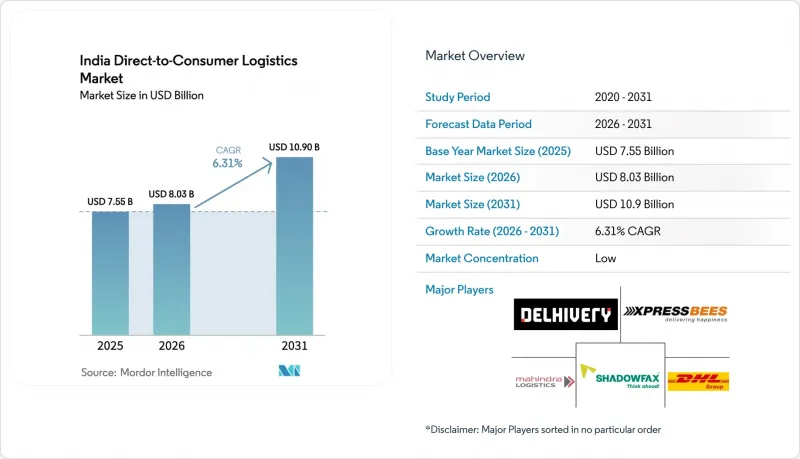
본 보고서는 서비스 유형별(운송, 창고·보관, 부가가치 서비스), 최종 사용자(패션·라이프스타일, 가전, FMCG, 홈·인테리어, 기타), 배송 속도(당일, 익일, 표준), 유통 채널(온라인, 오프라인)별로 분류되어 있습니다. 시장 예측은 금액(달러) 기준으로 제시되어 있습니다.
인도의 소비자 직배송 물류 시장 동향 및 인사이트
전자상거래의 급증과 디지털 인프라의 급속한 성장
2024년 전자상거래 결제액은 23.8% 증가하여 소포 네트워크로의 처리량 유입이 가속화되었습니다. 이에 대응하여 물류 사업자들은 분류 자동화를 통해 대응하고 있으며, 대형 통합 물류업체들은 현재 20곳의 분류 센터를 운영하며 하루 150만 개의 소포를 처리하고 있습니다. 정부가 지원하는 ULIP는 세관, 항만, 도로 데이터베이스를 단일 인터페이스로 통합하여 행정 절차를 간소화하는 동시에 실시간 추적 및 모니터링을 가능하게 하고 있습니다. AI 도입도 급속히 확산되고 있으며, 한 FMCG(일용소비재) 화주는 예측 경로 설정 도구를 도입한 후 수작업 개입을 80% 줄였습니다. 이러한 발전들이 결합되어 인도의 소비자 직배송 물류 시장 전반에 걸쳐 오류율 감소, 운송 시간 단축, 고객 서비스 기준 향상으로 이어지고 있습니다.
10분 이내의 퀵 커머스 주문 처리의 부상
퀵 커머스 플랫폼은 29개월 만에 연간 매출을 12억 달러까지 확대하며, 충동 구매에 따른 배송에 대한 소비자의 높은 수요를 입증했습니다. 사업자들은 다크 스토어(dark store) 확장을 확대했으나, 자금 소모가 심각해지고 있습니다. 한 대기업은 2024 회계연도에 5,747 카롤 루피(6억 7,200만 달러)를 지출했으나 4,454 카롤 루피(5억 2,000만 달러)의 수익만을 올리는 데 그쳐, 낮은 이익률이 부각되었습니다. 대도시권의 밀집 지역이 주문의 최대 85%를 차지하는 반면, 중소 도시의 기여도는 15-17%에 그치지만, 건당 배송 비용은 높은 임베디드니다. 지자체의 구역 지정 규제로 인해 다크 스토어의 밀도가 제한됨에 따라, 각 기업은 상품 라인업을 재검토하고 AI를 활용한 15분 이내 피킹 업무의 효율화를 추진하고 있습니다. 이러한 과제가 있음에도 불구하고, 장래의 규모의 경제가 평가액에 반영되어 있어 투자자들의 신뢰는 흔들림이 없습니다.
대형 전자상거래 사업자 및 3PL 간의 과도한 경쟁
대형 마켓플레이스가 규모의 경제를 활용해 소포 1개당 10루피(개당 0.11달러) 미만의 운임을 협상하고 있어, 적극적인 가격 인하로 인해 풀필먼트 각 분야의 이익률이 압박받고 있습니다. 1,407카롤 루피(1억 6,450만 달러) 규모의 인수 제안이 보여주듯이, 업계 재편이 진행 중이며, 이는 밀집도를 통한 비용 절감을 목표로 하는 움직임을 시사합니다. 퀵 커머스 앱은 수수료 인상 후에도 분기 EBITDA가 100카롤 루피(1,170만 달러)를 넘는 적자를 기록하고 있어, 단위당 수익성이 극히 어려운 상황임을 여실히 드러내고 있습니다. 따라서 중소 택배 업체들은 수익률을 지키기 위해 고부가가치 전자기기나 헬스케어 등 틈새 분야로 사업 축을 전환하고 있습니다. 경쟁위원회는 독점적인 배송 경로 형성을 막기 위해 제휴 상황을 감시하고 있지만, 단기적인 공급 과잉으로 인해 현물 요금은 계속 변동하고 있습니다.
부문별 분석
2025년, 인도의 소비자 직배송 물류 시장에서 운송 서비스가 47.35%의 점유율을 차지했습니다. 특급 소포 열차, 전기차(EV) 차량군, 자동 분류기가 결합되어 리드타임을 대폭 단축함으로써 화주들의 충성도를 공고히 하고 있습니다. 2025년 인도의 소비자 직배송 물류 시장에서 운송 부문 시장 규모는 35억 8,000만 달러에 달했으며, 모듈식 차량군의 확대와 동적 경로 설정을 통해 꾸준한 성장이 예상됩니다. 한편, 부가가치 서비스는 규모는 작지만 역물류, 설치 서비스, 실시간 가시화 대시보드와 같이 세심한 대응이 요구되는 수요를 배경으로, 2026년부터 2031년에 걸쳐 연평균 성장률(CAGR) 4.82%를 나타낼 것으로 예측됩니다.
창고·보관 업무는 소비 거점에 가까운 마이크로 허브로 진화하고 있습니다. 대개 3,000제곱피트 미만의 다크 스토어 거점을 통해 10분 이내에 주문을 처리할 수 있게 되었으며, AI를 활용한 재고 관리 시스템으로 재고 부족 현상이 줄어들고 있습니다. 식품 안전, 온도 관리, 데이터 개인정보 보호에 관한 규제 준수가 인증된 시설에 대한 투자를 촉진하고 있습니다. 통합형 서비스 패키지에서는 도시 간 간선 운송, 도시 내 배송, 포워딩이 융합되어, 인도의 소비자 직배송 물류 시장에서 기존 부서 간 경계가 더욱 모호해지고 있습니다.
2025년,인도 소비자 직배송 물류 시장 규모의 31.45%를 패션·라이프스타일 분야가 차지했으며, 옴니채널 확대로 인해 계절별 판매 성수기가 증가함에 따라 2026년부터 2031년까지 연평균 성장률(CAGR) 4.55%로 확대될 것으로 전망됩니다. 퀵 커머스 플랫폼에서는 충동 구매에 대응하기 위해 2시간 이내 프리미엄 의류 배송 시범 운영이 진행되고 있습니다. 각 브랜드는 판매 범위를 확대되고 있습니다. 한 란제리 전문 브랜드는 프랜차이즈 확장 및 D2C 포털을 통해 2024년 매출의 28%를 2·3선 도시에서 창출했습니다. 반품 관리 및 사이즈 교환 주기에 대한 수요가 높아짐에 따라 부가가치 서비스 도입이 진행되고 있습니다.
가전제품은 보험이 포함되고 위조 방지 기능을 갖춘 포장이 필요한 고가 상품이기 때문에 여전히 큰 시장 규모를 유지하고 있습니다. FMCG(일용소비재) 카테고리는 퀵커머스 유통 경로에서 3자리 수 성장을 보이고 있으며, 냉장 물류 거점 및 지속적인 보충 알고리즘 도입이 추진되고 있습니다. 홈 & 인테리어 용품은 내구성이 뛰어난 포장 기술의 혁신과 지정된 방으로의 배송 체계를 활용하고 있습니다. 카테고리별 규정 준수는 계속해서 다양화되고 있으며, 인도 표준국(BIS)의 규격, 배터리 재활용 의무화, 식품 안전 규정 등이 운영 매뉴얼 수립에 영향을 미치고 있습니다.
기타 혜택 :
- 엑셀 형식 시장 예측(ME) 시트
- 3개월간 애널리스트 지원
자주 묻는 질문
목차
제1장 서론
제2장 조사 방법
제3장 개요
제4장 시장 구도
제5장 시장 규모 및 성장 예측
제6장 경쟁 구도
제7장 시장 기회 및 향후 전망
KTH 26.08.31According to Mordor Intelligence, the India direct-to-Consumer logistics market size was valued at USD 7.55 billion in 2025 and estimated to grow from USD 8.03 billion in 2026 to reach USD 10.9 billion by 2031, at a CAGR of 6.31% during the forecast period (2026-2031).
This report is Segmented by Service Type (Transportation, Warehousing and Storage, and Value-Added Services), End User (Fashion & Lifestyle, Consumer Electronics, FMCG, Home & Decor, and Others), Delivery Speed (Same-Day, Next-Day, and Standard), Distribution Channel (Online and Offline). The Market Forecasts are Provided in Terms of Value (USD).
India Direct-to-Consumer Logistics Market Trends and Insights
Surge in E-Commerce & Digital Infrastructure Boom
E-commerce payments grew 23.8% in 2024, accelerating volume inflows into parcel networks. Logistics operators responded by automating sortation; a major integrator now runs 20 such centers and handles 1.5 million parcels daily. Government-backed ULIP knits customs, port, and road databases into a single interface, trimming paperwork and enabling real-time track-and-trace. AI adoption spreads quickly: one FMCG shipper cut manual interventions by 80% after deploying predictive routing tools. Collectively, these advances lower error rates, shorten transit windows, and raise customer service benchmarks across the India direct-to-consumer logistics market.
Rise of 10-Minute Quick-Commerce Fulfillment
Quick-commerce platforms scaled annualized sales to USD 1.2 billion within 29 months, validating consumer appetite for impulse delivery. Operators expanded dark-store footprints but face mounting cash burn; a leading player spent INR 5,747 crore (USD 672 million) to earn INR 4,454 crore (USD 520 million) in FY 24, underscoring thin margins. Dense metro clusters deliver up to 85% of orders, whereas smaller cities add only 15-17% yet incur a higher cost per drop. Municipal zoning curbs dark-store density, prompting firms to refine merchandise assortments and leverage AI for sub-15-minute picking routines. Despite hurdles, investor confidence stays firm as valuations factor in eventual scale economies.
Hyper-Competitive Pricing from E-Tail Majors & 3PLs
Aggressive discounting compresses margins across fulfilment lanes as leading marketplaces leverage scale to negotiate sub-INR 10 per-parcel rates (USD 0.11 per parcel). Consolidation, highlighted by an INR 1,407 crore (USD 164.5 million) acquisition filing, signals the hunt for density-driven cost dilution. Quick-commerce apps post quarterly EBITDA losses exceeding INR 100 crore (USD 11.7 million) even after fee hikes, underscoring razor-thin unit economics. Smaller couriers, therefore, pivot toward niche verticals such as high-value electronics and healthcare to defend yields. The Competition Commission monitors tie-ups to avert monopolistic routing, yet near-term oversupply keeps spot rates volatile.
Other drivers and restraints analyzed in the detailed report include:
- Expansion into Tier-2/3 Cities via Omni-Channel Models
- National Logistics Policy & ONDC Enablement
- Quick-Commerce Unit-Economics Pressure/Dark-Store Risk
For complete list of drivers and restraints, kindly check the Table Of Contents.
Segment Analysis
Transportation services controlled 47.35% of the India direct-to-consumer logistics market share in 2025. Express parcel trains, EV fleets, and automated sorters combine to slash lead times, anchoring shipper loyalty. The India direct-to-consumer logistics market size for transportation stood at USD 3.58 billion in 2025 and is forecast to post steady gains through modular fleet expansion and dynamic routing. In parallel, value-added services, though smaller, are expected to post a 4.82% CAGR (2026-2031) on the back of high-touch needs such as reverse logistics, installation, and real-time visibility dashboards.
Warehouse and storage activities evolve toward micro-hubs near consumption centers. Dark-store nodes, many under 3,000 sq ft, facilitate 10-minute fulfilment, while AI-powered inventory systems reduce stock-outs. Regulatory compliance around food safety, temperature control, and data privacy drives investment in certified facilities. Integrated service bundles now blend intercity line-haul, intra-city distribution, and freight-forwarding, further blurring traditional silos in the India direct-to-consumer logistics market.
Fashion & lifestyle generated 31.45% of the India direct-to-consumer logistics market size in 2025, rising at a 4.55% CAGR (2026-2031) as omnichannel launches multiply seasonal drops. Quick-commerce platforms pilot premium apparel delivery within two hours, catering to impulse purchases. Brands broaden reach: one lingerie specialist derived 28% of 2024 sales from Tier-II/III towns via franchise roll-outs and D2C portals. Demand for returns management and size-exchange cycles reinforces value-added service uptake.
Consumer electronics remain sizeable due to high-value ticket sizes that justify insured, tamper-proof packaging. FMCG categories show triple-digit growth on quick-commerce rails, pushing for chilled chain nodes and continuous replenishment algorithms. Home & decor items leverage durable packaging innovations and room-of-choice delivery set-ups. Category compliance continues to diversify, with Bureau of Indian Standards codes, battery recycling mandates, and food safety rules shaping operating playbooks.
Complete Report Scope:
- By Service Type
- Transportation
- Warehousing and Storage
- Value-added Services
- By End User
- Fashion & Lifestyle
- Consumer Electronics
- FMCG
- Home & Decor
- Others
- By Delivery Speed
- Same-Day (Within 24 h)
- Next-Day
- Standard
- By Distribution Channel
- Online
- Offline
List of Companies Covered in this Report:
- Delhivery
- DHL
- XpressBees
- Shadowfax
- Mahindra Logistics Ltd.
- Pickrr
- Shipyaari
- Shipway
- FedEx
- Gati Ltd (Subsidiary of Allcargo Logistics Ltd)
- Unicommerce
- Zippee
- Shiprocket
- EZ Logistics
- QuickShift
- Eshopbox
- NimbusPost
- Porter
- Emiza
- Loadshare Networks
Additional Benefits:
- The market estimate (ME) sheet in Excel format
- 3 months of analyst support
TABLE OF CONTENTS
1 Introduction
- 1.1 Study Assumptions & Market Definition
- 1.2 Scope of the Study
2 Research Methodology
3 Executive Summary
4 Market Landscape
- 4.1 Market Overview
- 4.2 Market Drivers
- 4.2.1 Surge in e-commerce & digital infrastructure boom
- 4.2.2 Rise of 10-minute quick-commerce fulfillment
- 4.2.3 Expansion into Tier-2/3 cities via omni-channel models
- 4.2.4 National Logistics Policy & ONDC enablement
- 4.2.5 Vande Bharat parcel trains for express D2C shipping
- 4.2.6 EV/bike-taxi adoption lowering last-mile cost & CO2
- 4.3 Market Restraints
- 4.3.1 Hyper-competitive pricing from e-tail majors & 3PLs
- 4.3.2 Infrastructure bottlenecks & supply-chain disruption
- 4.3.3 Quick-commerce unit-economics pressure/dark-store risk
- 4.3.4 Regulatory uncertainty over gig-economy workforce
- 4.4 E-commerce Industry Outlook
- 4.5 Value / Supply-Chain Analysis
- 4.6 Regulatory Landscape
- 4.7 Technological Outlook
- 4.8 Impact of COVID-19 and Geo-Political Events
- 4.9 Porter's Five Forces
- 4.9.1 Bargaining Power of Suppliers
- 4.9.2 Bargaining Power of Buyers
- 4.9.3 Threat of New Entrants
- 4.9.4 Threat of Substitutes
- 4.9.5 Intensity of Competitive Rivalry
5 Market Size & Growth Forecasts
- 5.1 By Service Type
- 5.1.1 Transportation
- 5.1.2 Warehousing and Storage
- 5.1.3 Value-added Services
- 5.2 By End User
- 5.2.1 Fashion & Lifestyle
- 5.2.2 Consumer Electronics
- 5.2.3 FMCG
- 5.2.4 Home & Decor
- 5.2.5 Others
- 5.3 By Delivery Speed
- 5.3.1 Same-Day (Within 24 h)
- 5.3.2 Next-Day
- 5.3.3 Standard
- 5.4 By Distribution Channel
- 5.4.1 Online
- 5.4.2 Offline
6 Competitive Landscape
- 6.1 Market Concentration
- 6.2 Strategic Moves
- 6.3 Market Share Analysis
- 6.4 Company Profiles (includes Global level Overview, Market level overview, Core Segments, Financials as available, Strategic Information, Market Rank/Share for key companies, Products & Services, and Recent Developments)
- 6.4.1 Delhivery
- 6.4.2 DHL
- 6.4.3 XpressBees
- 6.4.4 Shadowfax
- 6.4.5 Mahindra Logistics Ltd.
- 6.4.6 Pickrr
- 6.4.7 Shipyaari
- 6.4.8 Shipway
- 6.4.9 FedEx
- 6.4.10 Gati Ltd (Subsidiary of Allcargo Logistics Ltd)
- 6.4.11 Unicommerce
- 6.4.12 Zippee
- 6.4.13 Shiprocket
- 6.4.14 EZ Logistics
- 6.4.15 QuickShift
- 6.4.16 Eshopbox
- 6.4.17 NimbusPost
- 6.4.18 Porter
- 6.4.19 Emiza
- 6.4.20 Loadshare Networks
7 Market Opportunities & Future Outlook
- 7.1 White-space & Unmet-need Assessment


