

|
시장보고서
상품코드
2116412
인도의 윤활유 시장 : 점유율 분석, 업계 동향과 통계, 성장 예측(2026-2031년)India Lubricants - Market Share Analysis, Industry Trends & Statistics, Growth Forecasts (2026 - 2031) |
||||||
 Mordor Intelligence
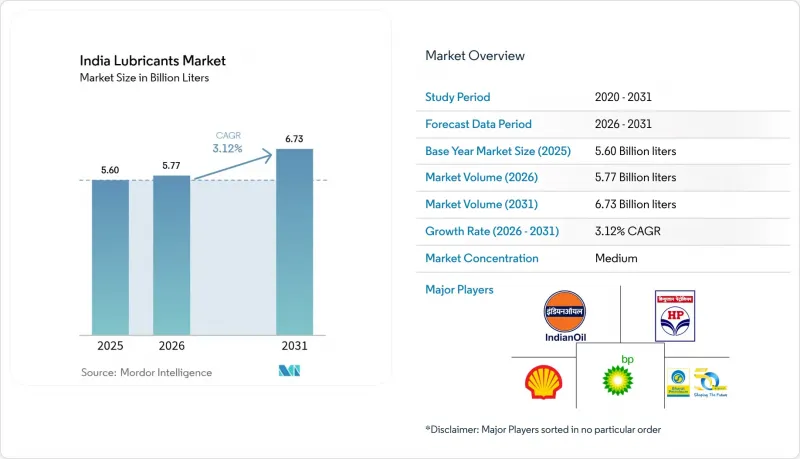
Mordor Intelligence에 의하면, 인도 윤활유 시장 규모는 2025년 56억 리터에서 2026년에는 57억 7,000만 리터로 확대되어 2026년부터 2031년까지 CAGR 3.12%로 성장을 지속하여, 2031년에는 67억 3,000만 리터에 이를 것으로 예측됩니다.
본 보고서는 제품 유형(자동차용 엔진오일, 산업용 엔진오일, 변속기 오일, 기어 오일, 브레이크 오일,작동유, 그리스 등), 최종 사용자 산업(자동차, 선박, 항공우주, 중장비, 산업용), 베이스스톡 유형(광물유계, 합성계, 반합성계, 바이오계)별로 분류되어 있습니다. 시장 예측은 판매량(리터) 단위로 제시되어 있습니다.
인도 윤활유 시장 동향 및 인사이트
차량 보유 대수 및 주행 거리 증가
서부 주들의 승용차 신규 등록 대수 증가는 전동화가 가속화되고 있음에도 불구하고 윤활유에 대한 지속적인 수요를 견인하고 있습니다. 전자상거래 물류 및 고속도로 확충으로 인해 상용차의 연간 주행 거리가 증가하고 있으며, 이는 윤활유 교환 빈도를 높이고 있습니다. 조직화된 차량 운영 사업자들은 가동 중지 시간을 최소화하면서 엔진을 보호하기 위한 오일 교환 일정을 텔레매틱스에 의존하고 있으며, 이로 인해 프리미엄 합성유에 대한 선호도가 높아지고 있습니다. 2024년에 자동차 부문이 54.72%의 점유율을 차지할 것이라는 점은 이러한 핵심 수요 기반을 여실히 보여줍니다. 노후화된 이륜차 및 소형 상용차 차량군 또한 광물유 판매량을 끌어올리며, 농촌 시장 전반에 걸쳐 폭넓은 고객 기반을 유지하고 있습니다.
‘메이크 인 인디아’ 정책 하의 산업 생산 성장
정부의 제조업 우대 조치에 힘입어 구자라트주, 마하라슈트라주, 타밀나두주의 화학, 금속, 중장비 산업 거점으로 자본이 지속적으로 유입되고 있습니다. 설비 가동률 상승에 따라 작동유, 기어 오일, 압축기용 윤활유의 소비량이 증가하고 있습니다. 자동차 및 항공우주 공장에서 정밀 가공이 확대됨에 따라 금속 가공유, 특히 브로치 가공 및 초경합금 연삭용으로 설계된 순수 절삭유 시장은 연평균 성장률(CAGR) 5.51%로 성장하고 있습니다. 석유화학 단지에 대한 투자 확대에 따라, 고온에서 작동하는 터빈 오일 및 압축기 오일에 대한 수요도 증가하고 있습니다. 용도에 특화된 배합이 선호되는 추세에 따라, 범용 등급에서 성능 중심의 합성유로의 전환이 진행되고 있으며, 이를 통해 오일 교환 주기 연장 및 예기치 못한 가동 중단을 억제하고 있습니다.
기유 및 첨가제 가격 변동
그룹 I 기유가 많은 완제품 블렌드의 대부분을 차지하고 있기 때문에 원유 가격 변동은 블렌더 업체의 이익률을 급격히 압박합니다. 인도는 국내 기유 생산 능력을 확대하고 있지만, 고품질의 그룹 III 및 IV 기유는 여전히 수입에 의존하고 있어, 이로 인해 배합 제조업체는 환율 변동 및 운임 급등 위험에 노출되어 있습니다. 첨가제 패키지, 특히 BS-VI 규격을 준수하는 합성유에 사용되는 분산제나 마찰 개량제도 세계적 사태 발생 시 공급망 혼란에 직면할 가능성이 있습니다. 소규모 지역 블렌더들은 재고 완충 장치 유지에 어려움을 겪고 있어, 원료 가격 변동을 보다 효과적으로 관리할 수 있는 통합형 정유사에게 시장 점유율을 빼앗길 위험이 있습니다. 잦은 가격 조정은 가격에 민감한 사용자들이 저급 제품으로 전환하거나 오일 교환 주기를 연장하도록 유도하여, 인도 윤활유 시장의 단기 판매량 증가세를 둔화시킬 우려가 있습니다.
부문 분석
2025년, 자동차 엔진오일은 인도 윤활유 시장 점유율의 41.95%를 차지했습니다. 이는 인도 내 방대한 운행 차량 수와 오일 열화를 가속화하는 먼지가 많은 운행 환경을 반영한 것입니다. 교통량이 많고 주변 온도가 높아 오일 교환 주기가 짧아지기 때문에 승용차, 상용 트럭, 이륜차 부문에서 재구매가 확실시되고 있습니다. 산업용 엔진오일은 항만 작업을 뒷받침하는 디젤 발전기, 토목 건설 기계, 선박용 엔진을 지원하며, 대량 판매를 위한 안정적인 기반을 제공합니다. 변속기 오일 및 기어 오일은 자동차 생산 증가에 따라 수요가 증가하고 있는 반면, 그리스는 중장비의 베어링을 보호함으로써 균형 잡힌 제품 구성을 유지하고 있습니다.
금속 가공용 유체는 자동차 및 항공우주 부품용 정밀 가공 증가에 힘입어, 전체 카테고리 중 가장 빠른 연평균 성장률(CAGR)인 5.29%를 나타낼 것으로 예측됩니다. 순수 절삭유는 기어 호빙 및 브로치 가공에서 뛰어난 윤활성과 방열성을 발휘하는 반면, 수용성 절삭유는 알루미늄의 고속 밀링 가공 시 공구를 보호합니다. 고무용 및 화이트 프로세스 오일은 타이어 및 식품 용도로 사용되며, 규제에 따른 순도 기준이 설정되어 있어 고가로 판매가 가능합니다. 브레이크 오일 수요는 회생 제동 시스템의 경우에도 비상 상황이나 주차 기능을 위해 유압 회로가 유지되고 있기 때문에 안정적입니다. 이러한 동향들이 결합되어 인도 윤활유 시장 전체에서 특수 윤활유는 전략적 성장의 원동력으로 자리매김하고 있습니다.
기타 혜택:
- 엑셀 형식 시장 예측(ME) 시트
- 3개월간의 애널리스트 지원
자주 묻는 질문
목차
제1장 서론
제2장 조사 방법
제3장 주요 요약
제4장 시장 구도
제5장 시장 규모와 성장 예측
제6장 경쟁 구도
제7장 시장 기회와 향후 전망
제8장 CEO을 위한 중요 전략적 과제
JHS 26.08.28According to Mordor Intelligence, the India lubricants market size is expected to grow from 5.60 billion liters in 2025 to 5.77 billion liters in 2026 and is forecast to reach 6.73 billion liters by 2031 at 3.12% CAGR over 2026-2031.
This report is Segmented by Product Type (Automotive Engine Oil, Industrial Engine Oil, Transmission Fluids, Gear Oil, Brake Fluids, Hydraulic Fluids, Greases, and More), End-User Industry (Automotive, Marine, Aerospace, Heavy Equipment, and Industrial), and Base Stock Type (Mineral Oil-Based, Synthetic, Semi-Synthetic, and Bio-Based). The Market Forecasts are Provided in Terms of Volume (Liters).
India Lubricants Market Trends and Insights
Rising Vehicle Parc and Miles-driven
Passenger vehicle capacity additions in the western states are driving sustained demand for lubricants, even as electrification accelerates. Commercial fleets clock higher annual mileage due to e-commerce logistics and highway upgrades, which increases the frequency of lubricant replacement. Organized fleet operators rely on telematics to schedule oil changes that protect engines while minimizing downtime, reinforcing preference for premium synthetics. The automotive segment's 54.72% share in 2024 illustrates this core demand anchor. Ageing two-wheeler and light-commercial fleets also bolster mineral oil volumes and maintain a broad customer base across rural markets.
Industrial Output Growth Under "Make in India"
Government manufacturing incentives continue to channel capital toward hubs for chemicals, metals, and heavy machinery in Gujarat, Maharashtra, and Tamil Nadu. Rising capacity utilization increases consumption of hydraulic fluids, gear oils, and compressor lubricants. The growth in precision machining at automotive and aerospace plants fuels a 5.51% CAGR in metalworking fluids, particularly neat cutting oils designed for broaching and carbide grinding. Investment in petrochemical complexes expands demand for turbine and compressor oils that operate under high temperatures. The preference for application-specific formulations supports the migration from commodity grades to performance-oriented synthetics, which extend drain intervals and limit unplanned shutdowns.
Volatility in Base oil and Additive Prices
Group I base oils constitute a major portion of many finished blends, so crude price swings quickly erode blender margins. India is ramping up its domestic base-oil capacity, yet premium Group III and IV stocks must still be imported, leaving formulators exposed to currency fluctuations and freight spikes. Additive packages, particularly dispersants and friction modifiers used in BS-VI compliant synthetics, also face supply chain disruptions during global events. Smaller regional blenders struggle to maintain inventory buffers and may cede market share to integrated refiners that manage feedstock volatility more effectively. Frequent price adjustments can nudge cost-sensitive users toward lower-grade products or extend drain intervals, shaving near-term volume growth for the India lubricants market.
Other drivers and restraints analyzed in the detailed report include:
- BS-VI and CAFE Norms Pushing Premium Lubricants
- Rapid CNG Fleet Expansion Needs Dedicated Engine Oils
- Accelerating EV Adoption Curbing ICE Lubricant Demand
For complete list of drivers and restraints, kindly check the Table Of Contents.
Segment Analysis
Automotive engine oil held 41.95% of the India lubricants market share in 2025, reflecting the country's large on-road fleet and dusty operating environment that accelerates oil degradation. Heavy traffic and high ambient temperatures shorten drain intervals, locking in repeat purchases for passenger cars, commercial trucks, and two-wheelers. Industrial engine oils support diesel generator sets, earth-moving equipment, and marine engines that power port operations, providing a stable base for high volumes. Transmission and gear oils accompany the rise in vehicle production, while greases secure bearings in heavy machinery, maintaining a balanced product mix.
Metalworking fluids are projected to grow at a 5.29% CAGR, the fastest among all categories, driven by an increase in precision machining for automotive and aerospace components. Neat cutting oils provide superior lubrication and heat dissipation in gear hobbing and broaching, while soluble oils protect tools during high-speed aluminium milling. Rubber and white process oils serve tire and food applications, with regulatory purity norms enabling premium pricing. Brake fluid requirements remain steady because even regenerative braking systems retain hydraulic circuits for emergency and parking functions. Collectively, these trends elevate specialty fluids as a strategic growth lever within the broader India lubricants market.
Complete Report Scope:
- By Product Type
- Automotive Engine Oil
- Industrial Engine Oil
- Transmission Fluids
- Gear Oil
- Brake Fluids
- Hydraulic Fluids
- Greases
- Process Oil (Including Rubber Process Oil and White Oil)
- Metalworking Fluids
- Turbine Oil
- Transformer Oil
- Other Product Types
- By End-user Industry
- Automotive
- Passenger Vehicles
- Commercial Vehicles
- Two-Wheelers
- Marine
- Aerospace
- Heavy Equipment
- Construction
- Mining
- Agriculture
- Industrial
- Power Generation
- Metallurgy and Metalworking
- Textiles
- Oil and Gas
- Other End-Use Industries
- Automotive
- By Base Stock Type
- Mineral Oil-Based Lubricants
- Synthetic Lubricants
- Semi-Synthetic Lubricants
- Bio-Based Lubricants
List of Companies Covered in this Report:
- Bharat Petroleum Corporation Limited
- BP p.l.c.
- Chevron Corporation
- Exxon Mobil Corporation
- FUCHS
- Gulf Oil International Ltd
- Hindustan Petroleum Corporation Limited
- Indian Oil Corporation Limited
- MOTUL
- PETRONAS Lubricants International
- Shell plc
- TotalEnergies
- VALVOLINE INC.
- Veedol Corporation Limited
Additional Benefits:
- The market estimate (ME) sheet in Excel format
- 3 months of analyst support
TABLE OF CONTENTS
1 Introduction
- 1.1 Study Assumptions and Market Definition
- 1.2 Scope of the Study
2 Research Methodology
3 Executive Summary
4 Market Landscape
- 4.1 Market Overview
- 4.2 Market Drivers
- 4.2.1 Rising Vehicle Parc and Miles-driven
- 4.2.2 Industrial Output Growth Under "Make in India"
- 4.2.3 BS-VI and CAFE Norms Pushing Premium Lubricants
- 4.2.4 Rapid CNG Fleet Expansion Needs Dedicated Engine Oils
- 4.2.5 Digital Condition-monitoring Enabling Predictive Lube Changes
- 4.3 Market Restraints
- 4.3.1 Volatility in Base-oil and Additive Prices
- 4.3.2 Accelerating EV Adoption Curbing ICE Lubricant Demand
- 4.3.3 Import Dependency on Group III/IV Base Oils
- 4.4 Value Chain Analysis
- 4.5 Regulatory Framework
- 4.6 End-User Trends
- 4.6.1 Automotive Industry
- 4.6.2 Manufacturing Industry
- 4.6.3 Power Generation Industry
- 4.7 Porter's Five Forces
- 4.7.1 Bargaining Power of Suppliers
- 4.7.2 Bargaining Power of Buyers
- 4.7.3 Threat of New Entrants
- 4.7.4 Threat of Substitutes
- 4.7.5 Degree of Competition
5 Market Size and Growth Forecasts (Volume)
- 5.1 By Product Type
- 5.1.1 Automotive Engine Oil
- 5.1.2 Industrial Engine Oil
- 5.1.3 Transmission Fluids
- 5.1.4 Gear Oil
- 5.1.5 Brake Fluids
- 5.1.6 Hydraulic Fluids
- 5.1.7 Greases
- 5.1.8 Process Oil (Including Rubber Process Oil and White Oil)
- 5.1.9 Metalworking Fluids
- 5.1.10 Turbine Oil
- 5.1.11 Transformer Oil
- 5.1.12 Other Product Types
- 5.2 By End-user Industry
- 5.2.1 Automotive
- 5.2.1.1 Passenger Vehicles
- 5.2.1.2 Commercial Vehicles
- 5.2.1.3 Two-Wheelers
- 5.2.2 Marine
- 5.2.3 Aerospace
- 5.2.4 Heavy Equipment
- 5.2.4.1 Construction
- 5.2.4.2 Mining
- 5.2.4.3 Agriculture
- 5.2.5 Industrial
- 5.2.5.1 Power Generation
- 5.2.5.2 Metallurgy and Metalworking
- 5.2.5.3 Textiles
- 5.2.5.4 Oil and Gas
- 5.2.5.5 Other End-Use Industries
- 5.2.1 Automotive
- 5.3 By Base Stock Type
- 5.3.1 Mineral Oil-Based Lubricants
- 5.3.2 Synthetic Lubricants
- 5.3.3 Semi-Synthetic Lubricants
- 5.3.4 Bio-Based Lubricants
6 Competitive Landscape
- 6.1 Market Concentration
- 6.2 Strategic Moves
- 6.3 Market Share (%)/Ranking Analysis
- 6.4 Company Profiles (includes Global level Overview, Market level overview, Core Segments, Financials as available, Strategic Information, Market Rank/Share, Products and Services, Recent Developments)
- 6.4.1 Bharat Petroleum Corporation Limited
- 6.4.2 BP p.l.c.
- 6.4.3 Chevron Corporation
- 6.4.4 Exxon Mobil Corporation
- 6.4.5 FUCHS
- 6.4.6 Gulf Oil International Ltd
- 6.4.7 Hindustan Petroleum Corporation Limited
- 6.4.8 Indian Oil Corporation Limited
- 6.4.9 MOTUL
- 6.4.10 PETRONAS Lubricants International
- 6.4.11 Shell plc
- 6.4.12 TotalEnergies
- 6.4.13 VALVOLINE INC.
- 6.4.14 Veedol Corporation Limited
7 Market Opportunities and Future Outlook
- 7.1 White-space and Unmet-need Assessment


