

|
시장보고서
상품코드
2116542
의약품 제조 소프트웨어 시장 : 점유율 분석, 업계 동향과 통계, 성장 예측(2026-2031년)Pharmaceutical Manufacturing Software - Market Share Analysis, Industry Trends & Statistics, Growth Forecasts (2026 - 2031) |
||||||
 Mordor Intelligence
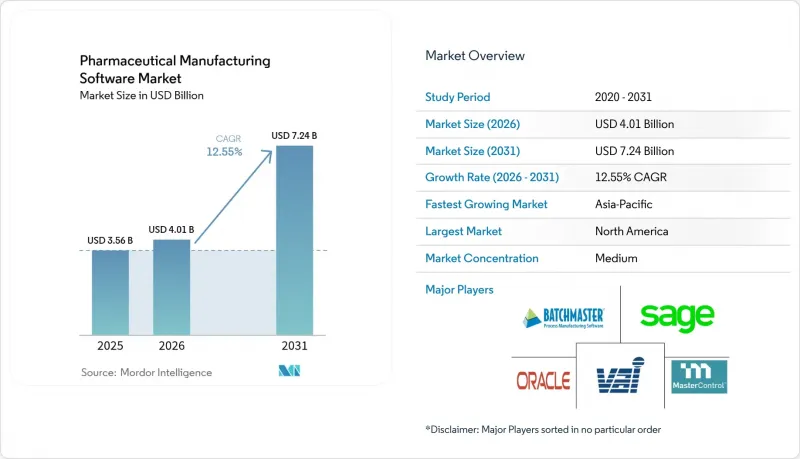
Mordor Intelligence에 의하면, 2026년 의약품 제조 소프트웨어 시장 규모는 40억 1,000만 달러로 추정되고 있어 2025년 35억 6,000만 달러에서 확대해, 2031년에는 72억 4,000만 달러에 이를 것으로 예측됩니다.
2026년부터 2031년까지의 연평균 성장률(CAGR)은 12.55%를 나타낼 것으로 전망됩니다.
본 보고서는 도입 모델(클라우드 기반, On-Premise형), 기업 규모(대기업, 중소기업(SME)), 최종 사용자(의약품 제조업체 등), 지역(북미, 유럽, 아시아태평양, 중동 및 아프리카, 남미)별로 분류되어 있습니다. 시장 예측은 금액(미 달러) 기준으로 제시되어 있습니다.
세계 의약품 제조 소프트웨어 시장 동향 및 인사이트
자동화 도입 확대
제조업체들은 인력 부족을 보완하고 일관된 품질을 확보하기 위해 로봇 공학 및 통합 제조 실행 시스템(MES)에 투자하고 있습니다. MES에 연결된 예측 유지보수 도구를 통해 검증된 시설에서는 예기치 않은 가동 중단 시간을 최대 25%까지 줄일 수 있습니다. 정적인 배치 처리를 동적인 흐름으로 대체하는 연속 제조에서는 레시피를 실시간으로 재계산하고 스트리밍되는 센서 데이터와 전자 배치 기록을 대조하는 소프트웨어가 필요합니다. 일본 기업들은 로봇 기술과 MES를 연계하여, 규정 준수를 유지하면서 사이클 타임을 단축하는 완전 자동화된 세포 치료용 스위트의 실증 실험을 진행하고 있습니다. 또한, 자동화는 공정 최적화를 위한 풍부한 데이터를 제공하는 디지털 트윈을 지원하며, 치료법이 임상 단계에서 상업적 생산으로 전환될 때의 규모 확대를 가속화합니다.
급등하는 의약품 제조 비용
고부가가치 생물학적 제제, 복잡한 제형, 그리고 변동이 심한 원자재 가격은 비용 측면의 압박을 가중시키고 있습니다. 고급 분석 플랫폼은 여러 생산 시나리오를 시뮬레이션하여 최적의 가동률과 원료 수율을 파악하는 데 도움을 줍니다. 이러한 모델을 도입한 공장에서는 가동 개시 6개월 후 원자재 폐기량이 15-20% 감소한 것으로 보고되었습니다. MES에 통합된 에너지 관리 모듈은 유틸리티를 실시간으로 모니터링하여, 우수 제조 기준(GMP)을 저해하지 않으면서 소비량을 줄입니다. 이러한 비용 절감을 통해 치솟는 특수 원료 비용을 상쇄하고, 시설이 기업의 지속가능성 관련 공약을 달성하는 데 기여합니다.
높은 도입 비용
모든 코드 변경에는 GMP 감사관의 요구 사항을 충족하는 문서화가 필요하기 때문에 검증 비용은 초기 라이선스 비용의 최대 300%까지 초과할 가능성이 있습니다. 중소규모 기업의 경우 도입 및 검증을 전문 통합 업체에 외주하는 경우가 많아, 그 결과 프로젝트 총 예산이 증가합니다. 생산성 향상과 규정 위반 감소로 인해 장기적인 투자 수익률은 25% 이상의 경우가 많지만, 단기적인 현금 흐름 제약으로 인해 여전히 일부 첫 구매자들은 주저하고 있습니다. 디지털 팩토리 투자에 대한 정부의 세제 혜택으로 인해 특정 시장에서는 이러한 장벽이 완화되기 시작하고 있습니다.
부문 분석
2025년, 의약품 제조 소프트웨어 시장에서 On-Premise형 플랫폼은 52.98%의 점유율을 유지했습니다. 이는 주요 제조업체들이 검증된 인프라를 직접 관리하는 것을 선호하기 때문입니다. 그러나 사이버 보안 인증 강화와 가상 사설 클라우드 환경에 대한 규제 당국의 수용을 반영하여, 클라우드 솔루션은 연평균 성장률(CAGR) 13.28%를 나타낼 것으로 예측됩니다. 신규 프로젝트에서는 하이브리드 모델이 주류를 이루고 있어, 마스터 배치 레코드를 On-Premise에 남겨두면서 일시적인 컴퓨팅 자원 수요에 대응하기 위해 분석 처리를 클라우드에서 실행할 수 있게 되었습니다.
클라우드 도입은 전용 데이터센터 리소스를 보유하지 않은 중소기업에게도 이점이 있습니다. 구독 방식의 요금 체계로 인해 설비 투자가 절감되고, 내장된 검증 템플릿을 통해 인증까지 걸리는 기간이 단축됩니다. 세계 기업들은 제품 라인 전체에서 프로세스를 통일하기 위해 멀티테넌트 아키텍처를 채택하고 있으며, 이에 따라 MES를 전사적 자원 관리(ERP) 및 실험실 정보 관리 시스템과 통합하는 개방형 애플리케이션 프로그래밍 인터페이스(API) 프레임워크에 대한 수요가 증가하고 있습니다. 각 벤더사는 현재 머신러닝을 활용한 운영 파이프라인을 통합하고, 품질 예측 모델을 지속적으로 개선함으로써 클라우드 MES의 가치 제안을 강화하고 있습니다.
지역별 분석
2025년, 북미는 의약품 제조 소프트웨어 시장 매출의 40.35%를 차지했습니다. FDA의 데이터 무결성 지침이 엄격하게 시행됨에 따라 전자 배치 기록 및 감사 대응형 편차 관리 모듈의 보급이 촉진되고 있습니다. Oracle이 최근 캐나다에서 AI 지원 헬스케어 용도를 확대한 것은 이 지역의 클라우드 인프라에 대한 수요가 높음을 보여주는 좋은 예이며, 이 회사는 2025년 관련 매출이 70% 증가할 것으로 예측했습니다. 미국의 제조 시설에서는 전사적 MES 도입을 활용하여 바이오의약품 공장과 저분자 의약품 공장 간의 생산을 동기화함으로써 설비 가동률을 높이고 로트 릴리스 시간을 단축하고 있습니다.
아시아태평양은 가장 빠르게 성장하는 지역으로, 2031년까지 연평균 성장률(CAGR)이 15.18%로 성장을 지속하고 있습니다. 중국과 인도에서는 세계 GMP 기준을 충족하기 위해 공장 개보수가 진행되고 있으며, 현지 규제 당국은 수출 라이선싱을 원활하게 하기 위해 데이터 무결성 체계를 조율하고 있습니다. 일본 제조업체들은 이 지역에서 자동화 시범 사업을 주도하고 있습니다. 주외제약은 통합형 디지털 팩토리 프로그램 도입을 통해 사이클 타임 단축을 달성했다고 보고한 반면, 아스테라스제약은 야스카와 전기와 합작회사를 설립하여 로봇 기술을 활용한 세포 치료제 제조 플랫폼을 구축했습니다. 인더스트리 4.0 도입을 지원하는 정부 보조금과 그린필드 바이오의약품 시설에 대한 외국인 직접 투자가 이 지역의 소프트웨어 수요를 더욱 부추기고 있습니다.
유럽에서는 EMA(유럽의약품청)의 지침이 ‘품질 설계(QbD)’와 지속가능성을 추진하고 있어 꾸준한 성장세를 유지하고 있습니다. 독일의 클러스터는 첨단 생산 생태계를 추구하는 다국적 기업들로부터 새로운 자본을 유치하고 있으며, 해당 지역 시장에서는 이산화탄소 배출량을 실시간으로 추적하는 플랫폼이 지지를 얻고 있습니다. 브렉시트로 인한 공급망의 복잡화를 배경으로, 채널 전반에 걸친 배치 문서 관리를 수행하는 가시화 솔루션의 도입이 진행되고 있습니다. 유럽에 기반을 둔 데이터센터의 틀 내에서 데이터 주권에 대한 우려가 완화됨에 따라, 클라우드 네이티브 도입이 탄력을 받고 있습니다.
중동 및 아프리카 및 남미는 여전히 발전 단계에 있지만, 국내 제조업체들이 국제 품질 인증 획득을 목표로 함에 따라 도입이 진행되고 있습니다. 사우디아라비아의 ‘국가 산업 전략’과 브라질의 디지털 헬스 로드맵에 따른 인센티브로 인해 검증된 MES에 대한 투자가 촉진되고 있지만, 자금적 제약과 숙련된 인력 부족이 단기적인 보급을 저해하고 있습니다. 모듈식 및 구독형 솔루션을 제공하는 벤더는 이러한 신흥 시장에서 얼리 어답터를 확보하는 데 유리한 입장에 있습니다.
기타 혜택:
- 엑셀 형식 시장 예측(ME) 시트
- 3개월간의 애널리스트 지원
자주 묻는 질문
목차
제1장 서론
제2장 조사 방법
제3장 주요 요약
제4장 시장 구도
제5장 시장 규모와 성장 예측
제6장 경쟁 구도
제7장 시장 기회와 향후 전망
JHS 26.08.28According to Mordor Intelligence, pharmaceutical manufacturing software market size in 2026 is estimated at USD 4.01 billion, growing from 2025 value of USD 3.56 billion with 2031 projections showing USD 7.24 billion, growing at 12.55% CAGR over 2026-2031.
This report is Segmented by Deployment Model (On-Cloud, On-Premises), Enterprise Size (Large Enterprise, and Small and Medium-Sized Enterprises (SMEs)), End User (Pharmaceutical Manufacturers, and More), and Geography (North America, Europe, Asia-Pacific, Middle East and Africa, South America). The Market Forecasts are Provided in Terms of Value (USD).
Global Pharmaceutical Manufacturing Software Market Trends and Insights
Increasing Adoption of Automation
Manufacturers invest in robotics and integrated manufacturing execution systems (MES) to offset labor shortages and drive consistent quality. Predictive maintenance tools connected to MES cut unplanned downtime by up to 25% in validated facilities. Continuous manufacturing, which replaces static batch runs with dynamic flows, demands software that recalculates recipes in real time and reconciles streaming sensor data with electronic batch records. Japanese firms have piloted fully automated cell therapy suites that link robotics with MES to trim cycle times while preserving compliance. Automation also supports data-rich digital twins for process optimization, enabling faster scale-up when therapies advance from clinic to commercial production.
Rising Drug Production Costs
High-value biologics, complex formulations, and volatile raw-material prices heighten cost pressures. Advanced analytics platforms simulate multiple production scenarios, helping identify optimal run rates and ingredient yields. Plants using such models have reported 15-20% reductions in material waste after six months in operation. Energy-management modules integrated into MES monitor utilities in real time, cutting consumption without compromising Good Manufacturing Practice (GMP) standards. These savings offset rising specialty-ingredient costs and help facilities meet corporate sustainability pledges.
High Implementation Costs
Validation expenses can exceed initial licensing fees by as much as 300% because every code change demands documentation that satisfies GMP auditors. Smaller firms frequently outsource implementation and validation to specialist integrators, increasing total project budgets. Although long-term returns often exceed 25% through productivity gains and fewer compliance findings, near-term cash-flow constraints still deter some first-time buyers. Government tax incentives for digital-factory investments have begun to ease the barrier in select markets.
Other drivers and restraints analyzed in the detailed report include:
- Regulatory Compliance Requirements
- Advancements in Cloud-Based Solutions
- Complex Integration with Legacy Systems
For complete list of drivers and restraints, kindly check the Table Of Contents.
Segment Analysis
On-premise platforms retained 52.98% share of the pharmaceutical manufacturing software market in 2025 because large manufacturers prefer direct control of validated infrastructure. However, cloud solutions are forecast to grow at a 13.28% CAGR, reflecting enhanced cybersecurity certifications and regulator acceptance of virtual private cloud environments. Hybrid models dominate new projects, allowing master batch records to remain on-premise while analytics run in the cloud for burst compute requirements.
Cloud adoption also benefits SMEs that lack dedicated data-center resources. Subscription pricing reduces capital expenditure, and built-in validation templates shorten qualification timelines. Global enterprises adopt multi-tenant architectures to harmonize processes across product lines, driving demand for open application programming interface frameworks that integrate MES with enterprise resource planning (ERP) and laboratory information management systems. Vendors now embed machine-learning operations pipelines to refine predictive-quality models continuously, strengthening the value proposition of cloud MES.
Complete Report Scope:
- By Deployment Model
- On-Cloud
- On-Premise
- By Enterprise Size
- Large Enterprises
- Small & Medium-Sized Enterprises (SMEs)
- By End User
- Pharmaceutical Manufacturers
- Biopharmaceutical Manufacturers
- Contract Development & Manufacturing Organisations (CDMOs)
- By Geography
- North America
- United States
- Canada
- Mexico
- Europe
- Germany
- United Kingdom
- France
- Italy
- Spain
- Rest of Europe
- Asia-Pacific
- China
- Japan
- India
- Australia
- South Korea
- Rest of Asia-Pacific
- Middle East & Africa
- GCC
- South Africa
- Rest of Middle East & Africa
- South America
- Brazil
- Argentina
- Rest of South America
- North America
Geography Analysis
North America held 40.35% of pharmaceutical manufacturing software market revenue in 2025. Strict FDA enforcement of data-integrity guidance drives universal adoption of electronic batch records and audit-ready deviation management modules. Oracle's recent expansion of AI-enabled health applications in Canada exemplifies regional appetite for cloud infrastructures, with the firm forecasting a 70% rise in related sales for 2025. United States facilities leverage enterprise-wide MES rollouts to synchronise production across biologics and small-molecule plants, improving capacity utilisation and reducing lot-release times.
Asia-Pacific is the fastest-growing region, registering a 15.18% CAGR through 2031. China and India upgrade plants to meet global GMP standards, with local regulators aligning data-integrity frameworks to facilitate export licensing. Japanese manufacturers lead regional automation pilots; Chugai Pharmaceutical reports cycle-time reductions after implementing an integrated digital-factory program, while Astellas formed a joint venture with Yaskawa Electric to create a robotics-based cell-therapy manufacturing platform. Government subsidies targeting Industry 4.0 adoption and foreign direct investment in greenfield biologics facilities further propel regional software demand.
Europe maintains steady momentum as EMA guidance promotes quality-by-design and sustainability. German clusters attract fresh capital from multinational firms seeking advanced production ecosystems, and the regional market favours platforms that track carbon emissions in real time. Brexit-driven supply-chain complexities boost adoption of visibility solutions to manage cross-channel batch documentation. Cloud-native deployments gain traction as data-sovereignty concerns ease within the confines of European-based data centres.
The Middle East & Africa and South America remain nascent but exhibit rising adoption as domestic producers seek international quality certifications. Incentives in Saudi Arabia's National Industrial Strategy and Brazil's digital-health roadmap encourage investment in validated MES, yet capital constraints and limited skilled labour temper short-term uptake. Vendors offering modular, subscription-based solutions are well positioned to capture early adopters in these emerging markets.
- Oracle
- SAP
- Siemens Healthineers
- ABB Ltd
- Korber Pharma
- Rockwell Automation
- Honeywell International
- Emerson Electric
- Infor
- Dassault Systemes
- AspenTech
- MasterControl
- BatchMaster Software
- Sage Group plc
- Deskera
- Intellect
- Fishbowl
- Datacor Chempax
- Aquilon Software
- Logic ERP Solutions
- Vormittag Associates
Additional Benefits:
- The market estimate (ME) sheet in Excel format
- 3 months of analyst support
TABLE OF CONTENTS
1 Introduction
- 1.1 Study Assumptions & Market Definition
- 1.2 Scope of the Study
2 Research Methodology
3 Executive Summary
4 Market Landscape
- 4.1 Market Overview
- 4.2 Market Drivers
- 4.2.1 Increasing Adoption of Automation
- 4.2.2 Rising Drug Production Costs
- 4.2.3 Regulatory Compliance Requirements
- 4.2.4 Advancements in Cloud-Based Solutions
- 4.2.5 Growing Demand for Data-Driven Decision Making
- 4.2.6 Expansion of Pharmaceutical Supply Chains
- 4.3 Market Restraints
- 4.3.1 High Implementation Costs
- 4.3.2 Complex Integration with Legacy Systems
- 4.3.3 Data Security and Privacy Concerns
- 4.3.4 Lack of Standardization
- 4.4 Porter's Five Forces Analysis
- 4.4.1 Threat of New Entrants
- 4.4.2 Bargaining Power of Buyers
- 4.4.3 Bargaining Power of Suppliers
- 4.4.4 Threat of Substitutes
- 4.4.5 Intensity of Rivalry
5 Market Size & Growth Forecasts (Value in USD)
- 5.1 By Deployment Model
- 5.1.1 On-Cloud
- 5.1.2 On-Premise
- 5.2 By Enterprise Size
- 5.2.1 Large Enterprises
- 5.2.2 Small & Medium-Sized Enterprises (SMEs)
- 5.3 By End User
- 5.3.1 Pharmaceutical Manufacturers
- 5.3.2 Biopharmaceutical Manufacturers
- 5.3.3 Contract Development & Manufacturing Organisations (CDMOs)
- 5.4 By Geography
- 5.4.1 North America
- 5.4.1.1 United States
- 5.4.1.2 Canada
- 5.4.1.3 Mexico
- 5.4.2 Europe
- 5.4.2.1 Germany
- 5.4.2.2 United Kingdom
- 5.4.2.3 France
- 5.4.2.4 Italy
- 5.4.2.5 Spain
- 5.4.2.6 Rest of Europe
- 5.4.3 Asia-Pacific
- 5.4.3.1 China
- 5.4.3.2 Japan
- 5.4.3.3 India
- 5.4.3.4 Australia
- 5.4.3.5 South Korea
- 5.4.3.6 Rest of Asia-Pacific
- 5.4.4 Middle East & Africa
- 5.4.4.1 GCC
- 5.4.4.2 South Africa
- 5.4.4.3 Rest of Middle East & Africa
- 5.4.5 South America
- 5.4.5.1 Brazil
- 5.4.5.2 Argentina
- 5.4.5.3 Rest of South America
- 5.4.1 North America
6 Competitive Landscape
- 6.1 Market Concentration
- 6.2 Market Share Analysis
- 6.3 Company Profiles (includes Global level Overview, Market level overview, Core Segments, Financials as available, Strategic Information, Market Rank/Share for key companies, Products & Services, and Recent Developments)
- 6.3.1 Oracle
- 6.3.2 SAP SE
- 6.3.3 Siemens AG
- 6.3.4 ABB Ltd
- 6.3.5 Korber Pharma
- 6.3.6 Rockwell Automation
- 6.3.7 Honeywell International
- 6.3.8 Emerson Electric
- 6.3.9 Infor
- 6.3.10 Dassault Systemes
- 6.3.11 AspenTech
- 6.3.12 MasterControl
- 6.3.13 BatchMaster Software
- 6.3.14 Sage Group plc
- 6.3.15 Deskera
- 6.3.16 Intellect
- 6.3.17 Fishbowl
- 6.3.18 Datacor Chempax
- 6.3.19 Aquilon Software
- 6.3.20 Logic ERP Solutions
- 6.3.21 Vormittag Associates
7 Market Opportunities & Future Outlook
- 7.1 White-Space & Unmet-Need Assessment


