

|
시장보고서
상품코드
2116794
PCR 포장 시장 : 점유율 분석, 업계 동향과 통계, 성장 예측(2026-2031년)PCR Packaging - Market Share Analysis, Industry Trends & Statistics, Growth Forecasts (2026 - 2031) |
||||||
 Mordor Intelligence
Mordor Intelligence에 의하면, PCR 포장 시장 규모는 2026년에 74억 3,000만 달러되어, 2031년까지 101억 1,000만 달러에 이를 것으로 예측되며, CAGR은 6.34%가 됩니다.
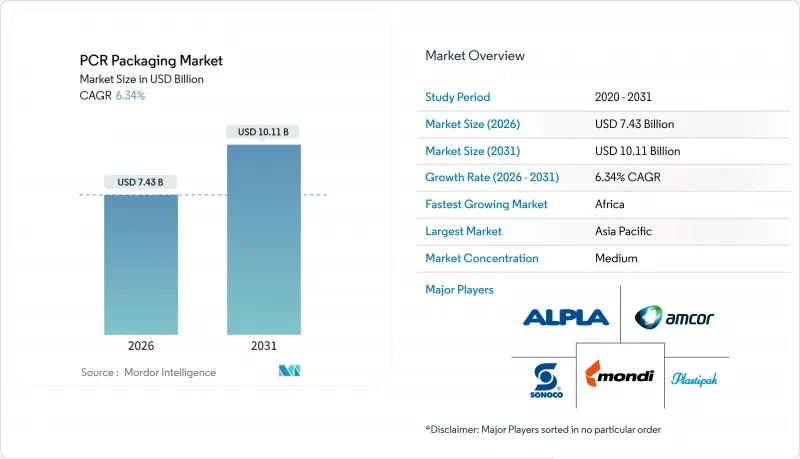
본 보고서는 소재 유형(PET, PE, PVC, PP, PS), 제품 유형(병, 트레이, 파우치), 최종 이용 산업(식품, 음료, 헬스케어, 화장품 및 퍼스널케어, 산업용), 재활용 원천(소비 후, 산업 후) 및 지역별로 분류되어 있습니다. 시장 전망은 금액(달러) 기준으로 제시되어 있습니다.
세계 PCR 포장 시장 동향 및 인사이트
FMCG 브랜드의 재생 소재 사용률에 대한 공약이 수요 증가를 가속화
세계 소비재 기업들은 전체 포장 제품군에 걸쳐 재생 소재의 최소 사용 비율을 의무화하는 공식적인 목표를 제시하고 있습니다. 네슬레 퓨리나는 2025년까지 ‘프리스키즈’ 캔 용기를 100% 기계적 재활용 플라스틱으로 전환하여 연간 500메트르톤의 버진 소재 사용을 줄였습니다. 이에 이어 마스 펫케어 호주는 ‘슈마코스’ 패키지에 60%의 ISCC PLUS 인증 수지를 적용함으로써, 간식 카테고리에서도 가격 면에서 허용 가능한 범위 내에서 도입이 가능함을 보여주었습니다. 이러한 공약을 바탕으로 한 다년간공급 계약을 통해 가공업체는 새로운 압출 라인 및 오염 제거 설비에 대한 투자에 필요한 수요의 확실성을 확보할 수 있습니다. 음료 및 퍼스널케어 브랜드는 소비자의 감시가 가장 엄격한 분야이지만, 스코프 3 배출량이 조달 평가 기준에 반영됨에 따라 산업용 필름 분야도 유사한 움직임을 보이기 시작했습니다. 전반적으로 이러한 움직임은 구조적인 견인력이 되어, 버진 폴리머 가격이 하락하더라도 재활용 수지 수요를 견고하게 뒷받침하는 요인이 되고 있습니다.
2025년 이후, 정부의 EPR(확대 생산자 책임) 및 재생 재료 함유율 의무화가 강화될 것입니다.
규제 당국은 자발적인 체계를 강제력 있는 할당량으로 전환하고 있습니다. 캘리포니아주의 ‘플라스틱 오염 방지 및 포장 생산자 책임법’은 2032년까지 일회용 플라스틱을 25% 감축하도록 규정하고 있으며, 기준을 충족하지 못하는 생산자에게는 톤당 과징금이 부과됩니다. 유럽연합(EU)의 개정된 ‘포장 및 포장 폐기물 규정’은 재생 소재 함유율 기준을 폴리에틸렌 테레프탈레이트(PET) 병에 국한하지 않고, 유연성 필름 및 뚜껑으로까지 확대되고 있습니다. 일본은 2024년에 재활용 목표를 개정했으며, 한국에서는 현재 폴리에틸렌 파우치를 대상으로 한 보증금 반환 제도의 시범 운영이 진행되고 있습니다. 이러한 정책을 통해 규정 준수의 최소 기준이 확립되었습니다. 브랜드 소유자는 버진 수지와 재생 수지의 가격 차이에 관계없이 인증된 사용 후 수지를 확보해야 합니다. 그 결과, ISCC PLUS나 RecyClass와 같은 인증 체계는 다국적 기업을 고객으로 둔 가공업체에게 시장 진입의 통로가 되고 있습니다.
PCR 수지의 품질 편차 및 오염
혼합 폴리머 베일, 접착제 잔여물, 식품 오염물은 용융 유동성이나 색상을 저하시키기 때문에 가공업체는 재활용 수지를 버진 원료와 30%-50%의 비율로 혼합할 수밖에 없습니다. 광학 선별기는 투명한 폴리에틸렌 테레프탈레이트(PET)에서는 98%의 정확도를 달성하지만, 흑색 안료나 다층 구조의 소형 봉지에서는 정확도가 떨어집니다. 고온 가성 세정을 통해 라벨은 제거되지만, 잔류 접착제는 압출 성형 시 젤 상태로 변하여 필름의 외관을 손상시키는 원인이 됩니다. 식품 오염으로 인해 발생하는 냄새의 원인이 되는 휘발성 물질로 인해, 유제품이나 제빵 제품 포장에 대한 사용이 제한되고 있습니다. 초고순도 세정 라인이나 반응성 압출 성형을 통해 버진 수지와 같은 품질을 회복하는 것은 가능하지만, 각 라인의 비용이 1,000만 달러 이상 소요되므로 안정적인 원료 공급이 확보된 대형 컨버터에만 도입이 제한되어 있습니다.
부문 분석
2025년 시점에서 폴리에틸렌 테레프탈레이트(PET)는 PCR 포장 시장 점유율의 46.50%를 차지했습니다. 견조한 ‘병에서 병으로(Bottle-to-Bottle)’ 재활용 루프, FDA 및 EFSA의 승인, 그리고 브랜드의 노력이 맞물려 2031년까지 연평균 성장률(CAGR)은 10.80%를 나타낼 것으로 예측됩니다. 크로크너 펜타플라스트(Klockner Pentaplast)사의 1만 5,000 미터톤 규모의 생산 능력 확장은 최대 100% 재활용 소재를 사용한 ‘kpNext’ 블리스터 필름 및 ‘kp Elite’ 트레이 생산을 뒷받침하고 있습니다. 폴리에틸렌은 산업용 및 농업용 필름 분야에서 수요가 증가하고 있지만, 진공 증류 기술의 발전에도 불구하고 식품 접촉 용도에서는 관능적 과제에 직면해 있습니다. 폴리프로필렌은 후타마키의 ‘Blueloop PP Retort’와 같은 단일 소재 레토르트 파우치를 통해 핫필 및 레토르트 포장 분야에서 성장세를 보이고 있지만, 재활용 인프라가 제한적이어서 가격 프리미엄이 높은 수준을 유지하고 있습니다. 폴리염화비닐과 폴리스티렌의 합계 점유율은 10% 미만에 그치고 있으며, 불리한 규제와 사용 후 처리 경로의 제한이 제약 요인으로 작용하고 있습니다.
단일 소재 설계의 동향은 모든 폴리머에 공통적이며, 알루미늄 포일이나 에틸렌-비닐 알코올 층을 배제하는 공압출 라인에 대한 투자를 촉진하고 있습니다. 첨단 배리어 코팅 기술 덕분에 현재는 폴리에틸렌이나 폴리프로필렌 파우치에서도 다층 라미네이트를 사용하지 않고도 산소 투과율 목표치를 충족할 수 있게 되어, 높은 재활용률을 자랑하는 솔루션의 적용 범위가 확대되고 있습니다. 규제 당국이 재활용률 기준을 높임에 따라, 이러한 소재에 대해서는 폴리에틸렌 테레프탈레이트(PET)의 확립된 식품 등급 처리 경로에 필적할 수 있도록 오염 제거 기술의 혁신이 필요할 것입니다.
병은 2025년에도 매출의 37.90%를 차지하며, 이는 고품질 원료를 확보하고 여러 폐쇄형 순환을 가능하게 하는 보증금 반환 제도에 힘입은 결과입니다. 트레이는 육류 제품 및 즉석식사 용도에서 여전히 매우 중요한 역할을 하고 있으며, Amcor와 kp는 조절된 분위기 포장에 대한 수요를 충족시키는 투명한 재생 폴리에틸렌 테레프탈레이트(PET) 열성형 제품의 출시를 확대되고 있습니다. 그러나 가장 눈부신 성장을 보이고 있는 것은 파우치이며, 2031년까지의 연평균 성장률(CAGR)은 11.50%로 예측됩니다. 후타마키의 ‘Blueloop PE’ 파우치는 다층 구조를 대체하여 탄소 발자국을 73% 줄이면서도 기계적 재활용성을 유지하고 있습니다.
컨버터의 투자가 이러한 변화를 뒷받침하고 있습니다. TC 트랜스콘티넨탈(TC Transcontinental)이 사우스캐롤라이나주에 건설한 6,000만 달러 규모의 이축 연신 폴리에틸렌 필름 생산 라인은 폼-필-씰(FFS) 공정의 효율성을 저해하지 않으면서 재활용성을 실현하고 있습니다. 캡, 마개, 클램쉘이 제품 라인업을 풍성하게 하고 있으며, 테이크아웃 시장에서는 성형 섬유 제품이 폴리스티렌 발포재를 대체하기 시작하고 있습니다.
지역별 분석
아시아태평양은 계속해서 가장 규모가 큰 지역 거점이며, 2025년에는 38.50%의 점유율을 차지했습니다. 중국의 개정된 포장 폐기물 규제와 일본의 성숙한 병 재활용 네트워크 덕분에 식품 등급 수지의 안정적인 공급이 확보되고 있습니다. 인도의 비공식 수거업자들이 공급량 부족을 보충하고 있지만, 품질이 들쑥날쑥하기 때문에 유제품이나 즉석식품에의 용도는 제한적입니다. 호주 및 뉴질랜드에서는 용기 보증금 제도로 인해 폴리에틸렌 테레프탈레이트(PET) 병의 회수율이 80%를 초과하여, 가공업체에 안정적인 원료 공급을 제공합니다.
아프리카는 연평균 성장률(CAGR) 14.10%를 기록할 전망이며, 이는 세계 최고 수준입니다. 남아프리카공화국의 보증금 반환 제도를 통해 폴리에틸렌 테레프탈레이트(PET) 회수율은 70% 이상을 확보하고 있으며, 이는 컨버터의 세척 라인 생산 능력에 대한 투자를 유도하고 있습니다. 나이지리아와 이집트에서는 민관 파트너십을 통해 광학 선별기를 도입하여 베일의 순도를 높이는 동시에, 퍼스널케어 제품 포장에 적합한 기계적 재활용 폴리에틸렌의 생산을 가능하게 하고 있습니다. 플렉서블 필름의 경우 인프라 격차가 여전히 존재하지만, 모듈식 세척 라인의 시범 도입이 탄력을 받고 있습니다.
북미에서는 캘리포니아주의 생산자 책임법과 확립된 폴리에틸렌 테레프탈레이트(PET) 재활용 인프라가 호재로 작용하고 있습니다. 연포장재의 회수율은 여전히 낮은 수준에 머물러 있지만, 노보렉스(Novorex)사의 플라스틱 필름 재활용 센터와 같은 투자를 통해 공급량은 증가하고 있습니다. 멕시코에서는 각 브랜드사가 공급망의 현지화를 추진함에 따라 모멘텀이 커지고 있지만, 회수율은 40% 미만의 수준에 머물고 있습니다. 유럽에서는 ‘포장 및 포장 폐기물 규정’에 따라 견조한 수요가 유지되고 있으며, 독일, 프랑스, 이탈리아, 스페인, 영국에서는 종합적인 문 앞 수거 및 보증금 환불 제도가 정비되어 있고, 재생 소재 함유율에 대해서도 엄격한 기준이 마련되어 있습니다.
기타 혜택:
- 엑셀 형식 시장 예측(ME) 시트
- 3개월간의 애널리스트 지원
자주 묻는 질문
목차
제1장 서론
제2장 조사 방법
제3장 주요 요약
제4장 시장 구도
제5장 시장 규모와 성장 예측
제6장 경쟁 구도
제7장 시장 기회와 향후 전망
JHS 26.08.28According to Mordor Intelligence, the PCR packaging market size stands at USD 7.43 billion in 2026 and is projected to reach USD 10.11 billion by 2031, reflecting a 6.34% CAGR.
This report is Segmented by Material Types (PET, PE, PVC, PP, and PS), Product Type (Bottles, Trays, and Pouches), End-Use Industry (Food, Beverage, Healthcare, Cosmetics and Personal Care, and Industrial), Recycling Source (Post-Consumer, and Post-Industrial), and Geography. The Market Forecasts are Provided in Terms of Value (USD).
Global PCR Packaging Market Trends and Insights
FMCG Brands' Recycled-Content Pledges Accelerate Volume Demand
Global consumer-goods companies have locked in public targets that require minimum recycled content across packaging portfolios. Nestle Purina converted its Friskies canisters to 100% mechanically recycled plastic in 2025, removing 500 metric tons of virgin material annually . Mars Petcare Australia followed with Schmackos packs that integrate 60% ISCC PLUS-certified resin, demonstrating price-tolerant adoption even in treat categories. Multi-year supply contracts arising from these pledges give converters the demand certainty needed to finance new extrusion lines and decontamination assets. Beverage and personal-care brands feel the greatest consumer scrutiny, yet industrial film categories are beginning to align as Scope 3 emissions enter procurement scorecards. The overall effect is a structural pull that disciplines recycled-resin demand even when virgin-polymer prices soften.
Government EPR and Recycled-Content Mandates Tighten After 2025
Regulators are translating voluntary frameworks into enforceable quotas. California's Plastic Pollution Prevention and Packaging Producer Responsibility Act sets a 25% cut in single-use plastics by 2032, subjecting non-compliant producers to per-ton fees. The European Union's updated Packaging and Packaging Waste Regulation widens recycled-content thresholds beyond polyethylene terephthalate bottles to include flexible films and closures. Japan revised its recycling targets in 2024, and South Korea now pilots deposit-return for polyethylene pouches. These policies create a compliance floor: brand owners must secure certified post-consumer resin regardless of the virgin-to-recycled price spread. Certification frameworks such as ISCC PLUS and RecyClass have consequently become market-access passports for converters serving multinational clients.
Quality Variability and Contamination of PCR Resins
Mixed-polymer bales, adhesive residues, and food soils degrade melt flow and color, compelling converters to blend recycled resin with virgin feedstock at 30%-50% ratios . Optical sorters reach 98% accuracy on clear polyethylene terephthalate but stumble on black pigments and multilayer sachets. Hot-caustic washes remove labels, yet residual adhesive manifests as gels during extrusion, limiting film aesthetics. Odor-causing volatiles generated from food soils restrict usage in dairy and bakery packaging. Super-clean wash lines and reactive extrusion can restore virgin-like quality, though each line costs upward of USD 10 million, restricting adoption to large converters with assured feedstock.
Other drivers and restraints analyzed in the detailed report include:
- Improved Global PCR Resin Supply Narrows Price Gap with Virgin Plastics
- Closed-Loop Brand Take-Back Programs Unlock New Feedstock Pools
- Under-Developed Collection and Sorting in Emerging Markets
For complete list of drivers and restraints, kindly check the Table Of Contents.
Segment Analysis
Polyethylene terephthalate accounted for 46.50% of PCR packaging market share in 2025. Strong bottle-to-bottle loops, FDA and EFSA approvals, and brand commitments collectively drive a forecast 10.80% CAGR to 2031. Klockner Pentaplast's 15,000-metric-ton expansion backs kpNext blister films and kp Elite trays made with up to 100% recycled content. Polyethylene follows on industrial and agricultural films but faces sensory hurdles in food-contact formats despite advances in vacuum distillation. Polypropylene gains traction in hot-fill and retort packaging via mono-material retort pouches such as Huhtamaki's Blueloop PP Retort, yet limited recycling infrastructure inflates price premiums. Polyvinyl chloride and polystyrene together remain below 10%, restricted by adverse regulations and limited end-of-life pathways.
Mono-material design trends cut across all polymers, spurring investment in co-extrusion lines that eliminate aluminum foil and ethylene-vinyl-alcohol layers. Advanced barrier coatings now enable polyethylene and polypropylene pouches to meet oxygen-transmission targets without multi-layer laminates, widening the addressable scope for high-recycled-content solutions. As regulators raise recycled-content thresholds, these materials will need decontamination innovations to match polyethylene terephthalate's established food-grade pathways.
Bottles retained 37.90% revenue contribution in 2025, bolstered by deposit-return systems that secure high-quality feedstock and permit multiple closed-loop cycles. Trays remain pivotal for meat and ready-meal applications, with Amcor and kp expanding clear recycled-polyethylene terephthalate thermoforms that satisfy modified-atmosphere packaging needs. The standout growth, however, comes from pouches, projected at an 11.50% CAGR through 2031. Huhtamaki's Blueloop PE pouch replaces multi-layer structures, cutting carbon footprint by 73% and retaining mechanical recyclability.
Converter investments support this shift. TC Transcontinental's USD 60 million biaxially oriented polyethylene film line in South Carolina delivers recyclability without sacrificing form-fill-seal efficiency. Caps, closures, and clamshells round out the portfolio, with molded-fiber formats beginning to displace polystyrene foam in takeaway channels.
Complete Report Scope:
- By Material Types
- Polyethylene Terephthalate (PET)
- Polyethylene (PE)
- Polyvinyl Chloride (PVC)
- Polypropylene (PP)
- Polystyrene (PS)
- Other Material Types
- By Product Type
- Bottles
- Trays
- Pouches
- Other Product Types
- By End-Use Industry
- Food
- Beverage
- Healthcare
- Cosmetics and Personal Care
- Industrial
- Other End-Use Industry
- By Recycling Source
- Post-Consumer
- Post-Industrial
- By Geography
- North America
- United States
- Canada
- Mexico
- Europe
- Germany
- United Kingdom
- France
- Italy
- Spain
- Russia
- Rest of Europe
- Asia-Pacific
- China
- Japan
- India
- South Korea
- Australia
- Rest of Asia-Pacific
- Middle East
- Saudi Arabia
- United Arab Emirates
- Turkey
- Rest of Middle East
- Africa
- South Africa
- Nigeria
- Rest of Africa
- South America
- Brazil
- Argentina
- Rest of South America
- North America
Geography Analysis
Asia-Pacific remained the largest regional hub, holding 38.50% share in 2025. China's updated packaging-waste rules and Japan's mature bottle-recycling networks ensure a steady supply of food-grade resin. India's informal aggregators fill volume gaps, although inconsistent quality constrains applications in dairy and ready meals. Australia and New Zealand achieve over 80% polyethylene terephthalate bottle recovery via container-deposit laws, giving converters reliable feedstock.
Africa is set to record a 14.10% CAGR, the highest globally. South Africa's deposit-return system secures more than 70% polyethylene terephthalate recovery, attracting converter investments in wash-line capacity. Nigeria and Egypt deploy optical sorters through public-private partnerships, lifting bale purity and enabling production of mechanically recycled polyethylene suitable for personal-care packaging. Infrastructure gaps persist for flexible films, yet pilot modular wash lines signal momentum.
North America benefits from California's producer-responsibility act and well-established polyethylene terephthalate recycling infrastructure. Flexible formats remain under-collected, but investments such as Novolex's plastic-film recycling centers elevate supply. Mexico gains traction as brands localize supply chains, yet collection rates hover below 40%. Europe sustains strong demand through the Packaging and Packaging Waste Regulation, with Germany, France, Italy, Spain, and the United Kingdom offering comprehensive curbside and deposit-return coverage and stringent thresholds for recycled content.
- Amcor plc
- ALPLA Group
- Mondi plc
- Sonoco Products Co.
- Transcontinental Inc.
- ePac Holdings
- Sealed Air Corporation
- Plastipak
- Huhtamaki Oyj
- Klockner Pentaplast
- Spectra Packaging
- IDEALPAK
- Genpak LLC
- PakTech
- Pactiv Evergreen
- Greiner Packaging
- AptarGroup
- Gerresheimer AG
- Logoplaste
- Consolidated Container Co.
Additional Benefits:
- The market estimate (ME) sheet in Excel format
- 3 months of analyst support
TABLE OF CONTENTS
1 INTRODUCTION
- 1.1 Study Assumptions and Market Definition
- 1.2 Scope of the Study
2 RESEARCH METHODOLOGY
3 EXECUTIVE SUMMARY
4 MARKET LANDSCAPE
- 4.1 Market Overview
- 4.2 Market Drivers
- 4.2.1 FMCG Brands Recycled-Content Pledges Accelerate Volume Demand
- 4.2.2 Government EPR and Recycled-Content Mandates Tighten After 2025
- 4.2.3 Improved Global PCR Resin Supply Narrows Price Gap with Virgin Plastics
- 4.2.4 Closed-Loop Brand Take-Back Programs Unlock New Feedstock Pools
- 4.2.5 Advanced Decontamination Technologies Enable Food-Grade PCR
- 4.2.6 Blockchain Traceability Platforms Boost Compliance Confidence
- 4.3 Market Restraints
- 4.3.1 Quality Variability and Contamination of PCR Resins
- 4.3.2 Under-Developed Collection and Sorting in Emerging Markets
- 4.3.3 Recycled-Resin Price Volatility from Oil-Price Swings
- 4.3.4 ESG-Audit Failures Cause Recalls and Brand-Equity Risk
- 4.4 Industry Value Chain Analysis
- 4.5 Regulatory Landscape
- 4.6 Technological Outlook
- 4.7 Impact of Macroeconomic Factors
- 4.8 Porter's Five Forces Analysis
- 4.8.1 Threat of New Entrants
- 4.8.2 Bargaining Power of Suppliers
- 4.8.3 Bargaining Power of Buyers
- 4.8.4 Threat of Substitutes
- 4.8.5 Competitive Rivalry
5 MARKET SIZE AND GROWTH FORECASTS (VALUE)
- 5.1 By Material Types
- 5.1.1 Polyethylene Terephthalate (PET)
- 5.1.2 Polyethylene (PE)
- 5.1.3 Polyvinyl Chloride (PVC)
- 5.1.4 Polypropylene (PP)
- 5.1.5 Polystyrene (PS)
- 5.1.6 Other Material Types
- 5.2 By Product Type
- 5.2.1 Bottles
- 5.2.2 Trays
- 5.2.3 Pouches
- 5.2.4 Other Product Types
- 5.3 By End-Use Industry
- 5.3.1 Food
- 5.3.2 Beverage
- 5.3.3 Healthcare
- 5.3.4 Cosmetics and Personal Care
- 5.3.5 Industrial
- 5.3.6 Other End-Use Industry
- 5.4 By Recycling Source
- 5.4.1 Post-Consumer
- 5.4.2 Post-Industrial
- 5.5 By Geography
- 5.5.1 North America
- 5.5.1.1 United States
- 5.5.1.2 Canada
- 5.5.1.3 Mexico
- 5.5.2 Europe
- 5.5.2.1 Germany
- 5.5.2.2 United Kingdom
- 5.5.2.3 France
- 5.5.2.4 Italy
- 5.5.2.5 Spain
- 5.5.2.6 Russia
- 5.5.2.7 Rest of Europe
- 5.5.3 Asia-Pacific
- 5.5.3.1 China
- 5.5.3.2 Japan
- 5.5.3.3 India
- 5.5.3.4 South Korea
- 5.5.3.5 Australia
- 5.5.3.6 Rest of Asia-Pacific
- 5.5.4 Middle East
- 5.5.4.1 Saudi Arabia
- 5.5.4.2 United Arab Emirates
- 5.5.4.3 Turkey
- 5.5.4.4 Rest of Middle East
- 5.5.5 Africa
- 5.5.5.1 South Africa
- 5.5.5.2 Nigeria
- 5.5.5.3 Rest of Africa
- 5.5.6 South America
- 5.5.6.1 Brazil
- 5.5.6.2 Argentina
- 5.5.6.3 Rest of South America
- 5.5.1 North America
6 COMPETITIVE LANDSCAPE
- 6.1 Market Concentration
- 6.2 Strategic Moves
- 6.3 Market Share Analysis
- 6.4 Company Profiles (includes Global level Overview, Market level overview, Core Segments, Financials as available, Strategic Information, Market Rank/Share for key companies, Products and Services, and Recent Developments)
- 6.4.1 Amcor plc
- 6.4.2 ALPLA Group
- 6.4.3 Mondi plc
- 6.4.4 Sonoco Products Co.
- 6.4.5 Transcontinental Inc.
- 6.4.6 ePac Holdings
- 6.4.7 Sealed Air Corporation
- 6.4.8 Plastipak
- 6.4.9 Huhtamaki Oyj
- 6.4.10 Klockner Pentaplast
- 6.4.11 Spectra Packaging
- 6.4.12 IDEALPAK
- 6.4.13 Genpak LLC
- 6.4.14 PakTech
- 6.4.15 Pactiv Evergreen
- 6.4.16 Greiner Packaging
- 6.4.17 AptarGroup
- 6.4.18 Gerresheimer AG
- 6.4.19 Logoplaste
- 6.4.20 Consolidated Container Co.
7 MARKET OPPORTUNITIES AND FUTURE OUTLOOK
- 7.1 White-Space and Unmet-Need Assessment


