

|
시장보고서
상품코드
2117275
디지털 피트니스 앱 시장 : 시장 점유율 분석, 업계 동향 및 통계, 성장 예측(2026-2031년)Digital Fitness Apps - Market Share Analysis, Industry Trends & Statistics, Growth Forecasts (2026 - 2031) |
||||||
 Mordor Intelligence
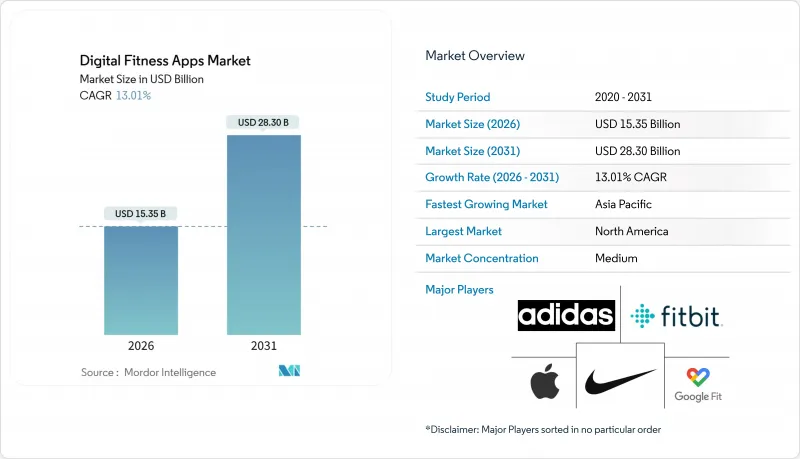
Mordor Intelligence에 의하면, 디지털 피트니스 앱 시장 규모는 2026년에 153억 5,000만 달러로 추정되고, 2031년까지 283억 달러에 이를 것으로 예측되며, 이것은 예측 기간 중 CAGR이 13.01%에 상당할 전망입니다.
본 보고서는 앱 유형별(피트니스 추적, 영양·다이어트, 명상·정신 건강, 기타), 플랫폼별(iOS, Android, 웹·프로그레시브 웹 앱, 기타), 구독 모델별(프리미엄, 구독 기반, 기타), 최종 사용자별(개인 소비자, 기업 웰니스 프로그램, 기타), 지역별로 분류되어 있습니다. 시장 예측은 금액(달러) 기준으로 제시되어 있습니다.
세계의 디지털 피트니스 앱 시장 동향 및 인사이트
GLP-1을 활용한 체중 감량 프로그램의 통합
세마글루타이드와 틸제파티드를 기반으로 한 병용 요법이 주요 플랫폼에 통합되면서, 복약 순응도 지원 도구와 활동 지도가 융합되고 있습니다. 웨이트 워처스는 앱 내에서 GLP-1 처방전 발급을 시작하여 회원을 원격 의료 제공업체에게 연결하는 동시에 택배 서비스를 효율화했습니다. Apple Fitness+는 약물 복용 일정에 동기화되는 운동 계획을 추가하여 내분비 전문의가 지적한 근육량 감소 위험을 완화했습니다. 오마다 헬스(Omada Health)는 GLP-1 지원을 포함한 당뇨병 예방 프로그램의 보험 적용 범위를 확대하여, 지불 책임을 사용자로부터 보험사로 이전했습니다. 약물 요법을 통합함으로써 앱은 하이브리드형 케어 코디네이터로 진화하여, 참여 주기를 일반적인 90일이라는 해지 기간을 훨씬 뛰어넘어 연장하는 동시에, 과거에는 진료 수진에 한정되었던 보험사의 자금 지원을 가능하게 합니다.
생성형 AI 음성 코치를 통한 차별화
대규모 언어 모델은 정적인 튜토리얼을 양방향 대화로 변화시켜, 운동 형태, 강도, 휴식 간격을 그 자리에서 조정할 수 있게 했습니다. WHOOP의 ‘Coach’는 GPT-4를 활용해 야간 회복 데이터를 분석하고, 운동 중에 실시간으로 지시를 내립니다. Fitbit의 Gemini 통합 기능은 대화형 Q&A를 추가하여, 동료 심사를 거친 과학적 근거에 기반한 답변을 제공합니다. Strava의 ‘Athlete Intelligence’는 코호트 비교를 활용해 경기 당일 페이스 배분을 추정합니다. 음성 기반 상호작용은 사용자가 화면을 확인해야 하는 번거로움을 덜어주고, 인간 트레이너와의 거리감을 좁히며, 코칭 비용을 절감하는 동시에 개인화 엔진을 강화하는 상세한 행동 데이터 세트를 생성합니다.
데이터 개인정보 보호 규제 강화
규제 당국은 기밀성이 높은 건강 원격 측정 데이터의 관리를 강화하고 있습니다. 아일랜드 데이터 보호 위원회는 2024년, 피트니스 데이터의 부적절한 취급을 이유로 Meta에 9,100만 유로(9,800만 달러)의 벌금을 부과했습니다. 유럽연합(EU)의 ‘디지털 시장법’은 게이트키퍼가 자사 앱을 자동으로 설치하는 것을 금지하고 있어, 애플과 구글에 실력에 따른 경쟁을 강요하고 있습니다. 미국에서 제안된 법안에서는 데이터 공유 시 명시적인 동의를 의무화하고 있는데, 이는 사용자에게 동의를 구할 때 40%가 거부하는 장벽이 되고 있습니다. 규정 준수 대응은 엔지니어링상의 부담을 가중시키고, 크로스 플랫폼에서의 개인화를 복잡하게 만들며, 소규모 개발자들을 인수합병으로 내몰고 있습니다.
부문 분석
불임 치료 및 피임 관련 앱은 디지털 피트니스 앱 시장 전체에서 차지하는 비중은 작지만, 연평균 성장률(CAGR) 13.88%로 확대되고 있으며, 2025년에 피트니스 트래커가 차지할 36.83%의 점유율을 상회하고 있습니다. CE 마크를 획득한 Flo Health의 배란 예측 엔진은 유럽 보험사의 구독료 환급을 가능하게 했으며, 한편 Natural Cycles의 FDA 승인 프로토콜은 2024년에 250만 명의 유료 사용자를 확보했습니다. Apple Watch 및 Samsung Galaxy Ring의 체온 센서와의 연동을 통해 예측 정확도는 95% 가까이 향상되었으며, 앱의 결과치가 임상 벤치마크와 일치하게 되었습니다. 고용주들이 이러한 도구를 생식 건강 지원 복리후생 예산에 포함시키고, 구독 수익을 기업 예산에 임베디드함에 따라 생식 건강 솔루션을 위한 디지털 피트니스 앱 시장 규모는 더욱 확대되고 있습니다. 범용 트래커 부문의 경쟁 심화로 인해 공급업체 통합이 진행되는 한편, 생식 건강 앱에 대한 규제 승인 절차는 타사와의 차별화를 도모하는 강력한 경쟁 우위를 창출하고 있습니다.
임상 기능은 다른 카테고리에서도 보험 환급 가능성을 높이고 있습니다. 영양 관리 앱은 GLP-1 체중 감량 프로그램을 다량 영양소 대시보드와 연동하고, Calm과 같은 명상 브랜드는 스트레스 관리 지표를 묶어 제공함으로써 기업용 계약을 확보하고 있습니다. 수면 및 자세 추적 앱은 생체 측정 목표 달성에 대해 보상을 제공하는 보험사의 프로그램을 활용하여, 사용자의 이용 기간을 일반적인 90일을 넘어 연장하고 있습니다. 반면, 임상적 요소가 없는 순수한 운동 기록 앱은 기기 판매로 구독 요금을 보전하는 생태계의 거대 기업들과 차별화하는 데 어려움을 겪고 있습니다. 전반적으로 규제 발전과 의료기기 연동을 통해 디지털 피트니스 앱 시장의 앱 유형 간 위계 구조가 재편되고 있습니다.
2025년 시점에서 iOS는 55.73%의 점유율을 유지했으나, 처리가 직접 손목 쪽으로 이동함에 따라 watchOS와 Wear OS의 점유율은 2031년까지 연평균 14.67%의 성장률을 기록할 전망입니다. 애플의 watchOS 11 탑재 앱 ‘Vitals’는 야간 심박 변이도(HRV)와 호흡수 변동을 표시하여, 스마트폰을 거치지 않고도 사용자에게 예방적 행동을 권장합니다. 구글의 ‘Wear OS 5’는 배터리 수명을 20% 향상시켜, 이를 통해 안드로이드 사용자에게 며칠에 걸친 추적 기능이 현실화되었습니다. 삼성의 ‘Energy Score’는 수면, 활동, 심박수 신호를 종합하여 ‘준비도 지수’로 산출함으로써, 복잡한 생체 데이터를 단일한 행동 지침이 되는 지표로 변환합니다.
디지털 피트니스 앱 시장 점유율은 이러한 OS 동향에 맞추어 변화하고 있습니다. 상시 작동하는 센서가 AI 모델을 통해 풍부한 데이터를 제공함으로써, 사용자를 특정 하드웨어 제품군에 묶어두는 개인화 사이클이 강화되고 있기 때문입니다. 반면, 비네이티브 웹 앱은 센서 접근 권한의 제한이나 백그라운드 처리 기능의 부재로 인해 이러한 흐름에 뒤처지고 있습니다. 개발자에게 네이티브 앱 개발은 기기 상에서 추론을 가능하게 하고, 원시 데이터를 로컬에 보관함으로써 개인정보 보호 규정 준수를 효율화합니다. 그 결과, 디지털 피트니스 앱 산업 내 수익화 논의에서 ‘웨어러블 퍼스트’ 로드맵이 점점 더 중심적인 위치를 차지하고 있습니다.
지역별 분석
북미는 메디케어 어드밴티지(Medicare Advantage) 보조금과 디지털 구독을 복리후생 패키지에 포함하도록 의무화하는 고용주 규정에 힘입어 2025년 매출의 38.73%를 차지했습니다. 미국의 고령자들은 SilverSneakers의 낙상 방지 모듈을 활용하고 있는 반면, Apple Fitness+는 유사한 환급 수입원을 확보하기 위해 ‘고령자’용 라이브러리를 확충하고 있습니다. 캐나다에서는 지방의 광대역 환경이 고르지 않아 성장은 여전히 도시 지역에 집중되어 있습니다. 한편, 멕시코에서는 확대되는 중산층이 모바일 우선 생태계를 통해 서비스를 이용하기 시작하고 있습니다.
아시아태평양은 2031년 연평균 성장률(CAGR)이 14.66%로 가장 빠른 성장을 보이고 있습니다. 인도와 인도네시아에서는 데스크톱 컴퓨팅을 건너뛰고, 저가형 안드로이드 단말기에서 활용되는 모바일 중심의 건강 플랫폼이 보급되고 있습니다. 중국의 ‘WeChat Sports’는 일상적으로 이용되는 슈퍼 앱 내에 활동 피드를 통합함으로써 월간 사용자 수 3억 명을 확보했습니다. 또한 한국에서는 Samsung Electronics가 주도하는 하드웨어 우위 덕분에 국내 기기의 3분의 2에 ‘삼성 헬스(Samsung Health)’가 사전 설치되어 있습니다. 태국이나 베트남 등 아세안(ASEAN) 신흥 시장에서는 4G 커버리지가 확대되고, 통신사 결제를 통해 신용카드 없이도 유료 앱으로 전환할 수 있게 됨에 따라 성장세가 가속화되고 있습니다.
유럽은 2025년 시장 규모의 22%를 차지했으며, 독일, 영국, 프랑스가 해당 지역의 지출의 60%를 주도하고 있습니다. ‘디지털 시장법(Digital Markets Act)’은 기본 설치 기능을 금지함으로써 중견 신생 기업의 진입 기회를 균등화하고, Strava와 같은 브랜드의 인지도 향상에 기여하고 있습니다. 중동 및 아프리카는 데이터 통신비라는 장벽으로 인해 뒤처져 있지만, 기회의 조짐도 보입니다. 특히, 사우디아라비아의 5억 달러 규모 ‘비전 2030’ 기금이 원격의료 시범 사업을 지원하고 있다는 점이 주목됩니다. 또한, 피트니스 앱을 포함한 통신사의 데이터 요금제를 묶어 제공하는 남아프리카공화국의 시도는 가격에 민감한 시장에서 새로운 비즈니스 모델의 사례를 보여주고 있습니다.
기타 혜택
- 엑셀 형식 시장 예측(ME) 시트
- 3개월간의 애널리스트 지원
자주 묻는 질문
목차
제1장 서론
제2장 조사 방법
제3장 개요
제4장 시장 구도
제5장 시장 규모 및 성장 예측
제6장 경쟁 구도
제7장 시장 기회 및 향후 전망
AJY 26.09.01According to Mordor Intelligence, the digital fitness apps market size stands at USD 15.35 billion in 2026 and is projected to reach USD 28.30 billion by 2031, translating into a 13.01% CAGR over the forecast period.
This report is Segmented by App Type (Fitness-Tracking, Nutrition and Diet, Meditation and Mind-Wellness, and More), Platform (iOS, Android, Web/Progressive-Web-App, and More), Subscription Model (Freemium, Subscription-Based, and More), End User (Individual Consumers, Corporate Wellness Programs, and More), and Geography. The Market Forecasts are Provided in Terms of Value (USD).
Global Digital Fitness Apps Market Trends and Insights
GLP-1 Weight-Loss Program Integrations
Prescription therapies built on semaglutide and tirzepatide are being stitched into leading platforms, blending medication adherence tools with activity coaching. WeightWatchers began issuing GLP-1 prescriptions inside its app, funneling members to telehealth providers and streamlining home delivery. Apple Fitness+ added workout plans that sync to dosing schedules, mitigating muscle-loss risk flagged by endocrinologists. Omada Health expanded its reimbursed diabetes-prevention pathway to include GLP-1 support, shifting payment liability from users to insurers. Embedding pharmacotherapy elevates apps into hybrid care coordinators, lengthens engagement cycles well beyond the typical 90-day churn horizon, and unlocks insurer funding once confined to clinical visits.
Generative-AI Voice-Coach Differentiation
Large-language models are morphing static tutorials into two-way dialogues that adjust form, intensity, and rest intervals on the fly. WHOOP's Coach leverages GPT-4 to parse overnight recovery data and issue real-time prompts during exercise. Fitbit's Gemini integration adds conversational Q&A, grounding answers in peer-reviewed science. Strava's Athlete Intelligence estimates race-day pacing using cohort comparisons. Voice interaction frees users from screen glances, narrows the gap with human trainers, and compresses coaching costs, all while generating granular behavioral datasets that enrich personalization engines.
Heightened Data-Privacy Regulations
Regulators are tightening stewardship around sensitive health telemetry. The Irish Data Protection Commission fined Meta EUR 91 million (USD 98 million) in 2024 for mishandling fitness data. The European Union's Digital Markets Act bars gatekeepers from auto-installing their own apps, forcing Apple and Google to compete on merit. Proposed U.S. legislation would mandate explicit consent for data sharing, a hurdle that 40% of users decline when prompted. Compliance raises engineering overhead, complicates cross-platform personalization, and pushes subscale developers toward consolidation.
Other drivers and restraints analyzed in the detailed report include:
- Rising Insurer and Employer Incentives for App-Based Wellness
- Explosive Smartphone and Wearable Penetration
- Post-Pandemic App-Fatigue and Retention Drop-Off
For complete list of drivers and restraints, kindly check the Table Of Contents.
Segment Analysis
Fertility and contraception titles, while a smaller slice of the digital fitness apps market, are expanding at a 13.88% CAGR, outstripping the 36.83% 2025 dominance held by fitness trackers. Flo Health's CE-marked ovulation engine lets European insurers reimburse subscriptions, while Natural Cycles' FDA-cleared protocol drew 2.5 million paying users in 2024. Integration with temperature sensors on Apple Watch and Samsung Galaxy Ring boosts prediction accuracy toward 95%, aligning app outputs with clinical benchmarks. The digital fitness apps market size for fertility solutions deepens as employers roll these tools into fertility-benefit budgets, attaching subscription revenue to corporate wallets. Competitive intensity in generic trackers is prompting vendor consolidation, whereas regulatory pathways in fertility apps create defensible moats.
Clinical functionality is elevating reimbursement potential across other categories too. Nutrition apps tie GLP-1 taper programs to macro dashboards, while meditation brands such as Calm secure enterprise contracts by bundling stress-management metrics. Sleep and posture trackers leverage insurer programs that reward biometric milestones, extending user journeys beyond the typical 90-day horizon. Conversely, pure workout-log apps without clinical hooks struggle for differentiation against ecosystem giants that subsidize subscriptions with device sales. Overall, regulatory progression and medical-device alignment are reshaping the app-type hierarchy inside the digital fitness apps market.
iOS retained a 55.73% share in 2025, but watchOS and Wear OS instances are compounding at 14.67% through 2031 as processing shifts directly onto the wrist. Apple's watchOS 11 Vitals app surfaces overnight HRV and respiratory-rate deviations, nudging users toward preventive behaviors without phone intervention. Google's Wear OS 5 improved battery life by 20%, a threshold that turns multi-day tracking into reality for Android cohorts. Samsung's Energy Score aggregates sleep, activity, and heart-rate signals into a readiness index, translating complex biometrics into a single actionable metric.
The digital fitness apps market share migrates alongside these OS trends because always-on sensors feed richer data to AI models, reinforcing personalization cycles that tether users to specific hardware lines. Non-native web apps lag, restricted by sensor permissions and absent background processing. For developers, building natively unlocks on-device inference and streamlines privacy compliance by keeping raw data local. Consequently, wearable-first roadmaps are increasingly central to monetization discussions inside the digital fitness apps industry.
Complete Report Scope:
- By App Type
- Fitness-Tracking Apps
- Nutrition and Diet Apps
- Meditation and Mind-wellness Apps
- Fertility and Contraception Apps
- Medication and Pill-Reminder Apps
- Other Wellness Apps (sleep, posture, etc.)
- By Platform
- iOS
- Android
- Web / Progressive-Web-App
- Wearable-OS Native (watchOS, Wear OS, etc.)
- By Subscription Model
- Freemium
- Subscription-based
- One-time Purchase
- Enterprise Licensing
- By End User
- Individual Consumers
- Corporate Wellness Programs
- Fitness Centres and Studios
- Healthcare Providers and Insurers
- By Geography
- North America
- United States
- Canada
- Mexico
- South America
- Brazil
- Argentina
- Rest of South America
- Europe
- Germany
- United Kingdom
- France
- Italy
- Spain
- Rest of Europe
- Asia-Pacific
- China
- Japan
- India
- South Korea
- ASEAN
- Rest of Asia-Pacific
- Middle East and Africa
- Middle East
- Saudi Arabia
- United Arab Emirates
- Rest of Middle East
- Africa
- South Africa
- Nigeria
- Rest of Africa
- Middle East
- North America
Geography Analysis
North America retained 38.73% of 2025 revenue, powered by Medicare Advantage subsidies and employer mandates that weave digital subscriptions into benefits packages. U.S. seniors engage with SilverSneakers' fall-prevention modules, while Apple Fitness+ populates its "Older Adults" library to capture the same reimbursement streams. Canada's growth remains urban-centric due to patchy rural broadband, and Mexico's expanding middle class is onboarding via mobile-first ecosystems.
Asia-Pacific is the fastest riser at a 14.66% CAGR through 2031. India and Indonesia leapfrog desktop computing, adopting mobile-centric health platforms that thrive on low-cost Android handsets. China's WeChat Sports amassed 300 million monthly users by embedding activity feeds within an everyday super-app, and South Korea's Samsung-led hardware dominance ensures pre-installation of Samsung Health on two-thirds of domestic devices. Emerging ASEAN markets such as Thailand and Vietnam gain momentum as 4G coverage widens and carrier billing unlocks paid-app conversion without credit cards.
Europe accounts for 22% of 2025 value, with Germany, the United Kingdom, and France driving 60% of regional spend. The Digital Markets Act levels the discovery field for midsize players by banning default installs, enhancing visibility for brands like Strava. Middle East and Africa trails due to data-cost frictions yet pockets of opportunity exist, notably Saudi Arabia's USD 500 million Vision 2030 fund that underwrites telehealth pilots. South Africa's carrier-bundled data packs that include fitness apps illustrate an emerging model for price-sensitive markets.
- Apple Inc.
- Alphabet Inc. (Google Fit)
- Fitbit LLC (Google)
- Samsung Electronics Co., Ltd.
- Nike, Inc.
- adidas AG
- Under Armour, Inc.
- Strava, Inc.
- Peloton Interactive, Inc.
- MyFitnessPal, Inc.
- Headspace Inc.
- Noom, Inc.
- Calm.com, Inc.
- Azumio, Inc.
- Sworkit Health
- Flo Health UK Ltd.
- Jefit, Inc.
- ASICS Digital, Inc. (Runkeeper)
- CureFit Healthcare Pvt. Ltd.
- Tencent Holdings Ltd. (WeChat Sports)
- Garmin Ltd.
- Zwift, Inc.
- WHOOP, Inc.
Additional Benefits:
- The market estimate (ME) sheet in Excel format
- 3 months of analyst support
TABLE OF CONTENTS
1 INTRODUCTION
- 1.1 Study Assumptions and Market Definition
- 1.2 Scope of the Study
2 RESEARCH METHODOLOGY
3 EXECUTIVE SUMMARY
4 MARKET LANDSCAPE
- 4.1 Market Overview
- 4.2 Market Drivers
- 4.2.1 Explosive smartphone and wearable penetration
- 4.2.2 Rising insurer and employer incentives for app-based wellness
- 4.2.3 Generative-AI voice-coach differentiation
- 4.2.4 GLP-1 weight-loss program integrations
- 4.2.5 Gamification and social-fitness network effects
- 4.2.6 Elder-fitness demand from 55+ cohort
- 4.3 Market Restraints
- 4.3.1 Heightened data-privacy regulations (GDPR, DMA, ADPPA)
- 4.3.2 Post-pandemic app-fatigue and retention drop-off
- 4.3.3 Rising customer-acquisition costs on saturated ad channels
- 4.3.4 Accuracy gaps vs. clinical-grade wearables
- 4.4 Indusy Value Chain Analysis
- 4.5 Regulatory Landscape
- 4.6 Technological Outlook
- 4.7 Porter's Five Forces Analysis
- 4.7.1 Bargaining Power of Suppliers
- 4.7.2 Bargaining Power of Consumers
- 4.7.3 Threat of New Entrants
- 4.7.4 Threat of Substitute Products
- 4.7.5 Intensity of Competitive Rivalry
5 MARKET SIZE AND GROWTH FORECASTS (VALUE)
- 5.1 By App Type
- 5.1.1 Fitness-Tracking Apps
- 5.1.2 Nutrition and Diet Apps
- 5.1.3 Meditation and Mind-wellness Apps
- 5.1.4 Fertility and Contraception Apps
- 5.1.5 Medication and Pill-Reminder Apps
- 5.1.6 Other Wellness Apps (sleep, posture, etc.)
- 5.2 By Platform
- 5.2.1 iOS
- 5.2.2 Android
- 5.2.3 Web / Progressive-Web-App
- 5.2.4 Wearable-OS Native (watchOS, Wear OS, etc.)
- 5.3 By Subscription Model
- 5.3.1 Freemium
- 5.3.2 Subscription-based
- 5.3.3 One-time Purchase
- 5.3.4 Enterprise Licensing
- 5.4 By End User
- 5.4.1 Individual Consumers
- 5.4.2 Corporate Wellness Programs
- 5.4.3 Fitness Centres and Studios
- 5.4.4 Healthcare Providers and Insurers
- 5.5 By Geography
- 5.5.1 North America
- 5.5.1.1 United States
- 5.5.1.2 Canada
- 5.5.1.3 Mexico
- 5.5.2 South America
- 5.5.2.1 Brazil
- 5.5.2.2 Argentina
- 5.5.2.3 Rest of South America
- 5.5.3 Europe
- 5.5.3.1 Germany
- 5.5.3.2 United Kingdom
- 5.5.3.3 France
- 5.5.3.4 Italy
- 5.5.3.5 Spain
- 5.5.3.6 Rest of Europe
- 5.5.4 Asia-Pacific
- 5.5.4.1 China
- 5.5.4.2 Japan
- 5.5.4.3 India
- 5.5.4.4 South Korea
- 5.5.4.5 ASEAN
- 5.5.4.6 Rest of Asia-Pacific
- 5.5.5 Middle East and Africa
- 5.5.5.1 Middle East
- 5.5.5.1.1 Saudi Arabia
- 5.5.5.1.2 United Arab Emirates
- 5.5.5.1.3 Rest of Middle East
- 5.5.5.2 Africa
- 5.5.5.2.1 South Africa
- 5.5.5.2.2 Nigeria
- 5.5.5.2.3 Rest of Africa
- 5.5.5.1 Middle East
- 5.5.1 North America
6 COMPETITIVE LANDSCAPE
- 6.1 Market Concentration
- 6.2 Strategic Moves and Developments
- 6.3 Market Share Analysis
- 6.4 Company Profiles (includes Global level Overview, Market level overview, Core Segments, Financials as available, Strategic Information, Market Rank/Share for key companies, Products and Services, and Recent Developments)
- 6.4.1 Apple Inc.
- 6.4.2 Alphabet Inc. (Google Fit)
- 6.4.3 Fitbit LLC (Google)
- 6.4.4 Samsung Electronics Co., Ltd.
- 6.4.5 Nike, Inc.
- 6.4.6 adidas AG
- 6.4.7 Under Armour, Inc.
- 6.4.8 Strava, Inc.
- 6.4.9 Peloton Interactive, Inc.
- 6.4.10 MyFitnessPal, Inc.
- 6.4.11 Headspace Inc.
- 6.4.12 Noom, Inc.
- 6.4.13 Calm.com, Inc.
- 6.4.14 Azumio, Inc.
- 6.4.15 Sworkit Health
- 6.4.16 Flo Health UK Ltd.
- 6.4.17 Jefit, Inc.
- 6.4.18 ASICS Digital, Inc. (Runkeeper)
- 6.4.19 CureFit Healthcare Pvt. Ltd.
- 6.4.20 Tencent Holdings Ltd. (WeChat Sports)
- 6.4.21 Garmin Ltd.
- 6.4.22 Zwift, Inc.
- 6.4.23 WHOOP, Inc.
7 MARKET OPPORTUNITIES AND FUTURE OUTLOOK
- 7.1 White-space and Unmet-Need Assessment


