

|
시장보고서
상품코드
2117352
온라인 식료품 시장 : 시장 점유율 분석, 업계 동향 및 통계, 성장 예측(2026-2031년)Online Grocery - Market Share Analysis, Industry Trends & Statistics, Growth Forecasts (2026 - 2031) |
||||||
 Mordor Intelligence
Mordor Intelligence에 의하면, 온라인 식료품 시장 규모는 2025년 9,600억 달러로 평가되었고, 2026년에는 1조 600억 달러로 확대될 것으로 추정되며, 2031년까지 1조 7,400억 달러에 이를 것으로 예측됩니다.
2026-2031년 연평균 성장률(CAGR) 10.47%로 성장할 것으로 전망됩니다.
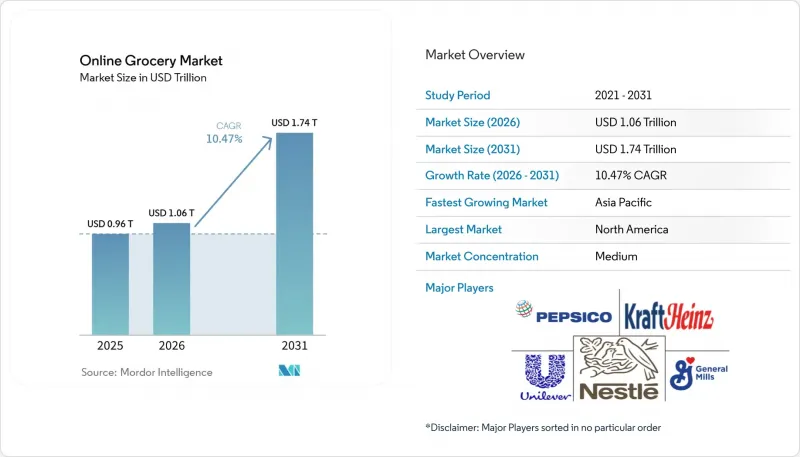
본 보고서는 상품 카테고리별(신선 식품·신선 상품, 상비 식품·조리 필수품, 기타), 배송 모델별(즉시 배송, 당일 배송, 정기 배송, 기타 모델), 플랫폼 유형별(자사 웹사이트/앱, 애그리게이터 플랫폼, 기타), 지역별(북미, 유럽, 아시아태평양, 기타)로 분류되어 있습니다. 시장 전망은 금액(달러) 기준으로 제시되어 있습니다.
세계의 온라인 식료품 시장 동향 및 인사이트
도시 생활 방식이 가져다주는 편의성
도시화가 가속화되고 맞벌이 가구가 증가함에 따라 전 세계적으로 식료품 구매 행태가 변화하고 있으며, 이것이 온라인 식료품 시장을 뒷받침하고 있습니다. 일본(92%), 아르헨티나(90%), 네덜란드(89%), 미국(83%) 등 도시화가 진행된 국가에서는 도시 주민들이 일상 생활 필수품을 조달하기 위해 편의성이 높은 솔루션을 점점 더 많이 이용하고 있습니다. 뭄바이나 뉴욕 등의 도시에서는 소비자들이 자신의 생활 리듬에 맞추어 배송 시간을 설정하고, 긴 줄이나 붐비는 매장을 피하고 있습니다. BigBasket(타타 그룹)이나 Instacart(미국의 다양한 소매업체와 제휴)와 같은 플랫폼은 유연한 배송 시간대, 저장된 쇼핑 목록, 자동 재주문 등의 기능을 통해 쇼핑 경험에 혁명을 일으키고 있습니다. Amazon(Amazon Fresh), Walmart(Great Value, Sam's Choice), Kroger(Simple Truth)와 같은 대형 소매업체들은 개인화된 상품 큐레이션, AI 기반 추천, 마이크로 풀필먼트 센터를 통해 온라인 식료품 산업을 강화하고 있습니다. 동시에 네슬레, 유니레버, 펩시코와 같은 일용소비재(FMCG) 거대 기업들도 이러한 플랫폼을 활용하여 상품 가시성을 최적화하고 번들 전략을 전개하는 한편, 디지털에 익숙한 소비자를 위한 배송 체계를 구축하고 있습니다.
구독을 통한 고객 충성도
온라인 식료품 구독 모델은 편의성, 일관성, 개인화를 점점 더 중시하는 소비자층에 부응하며, FMCG(일용소비재) 판매의 양상을 새롭게 바꾸고 있습니다. 소비자에게 있어 이러한 구독 서비스는 우유, 시리얼, 스낵 등 일상적인 구매를 재주문 과정을 자동화함으로써 효율화합니다. 이를 통해 번거로움을 최소화할 뿐만 아니라, 습관적인 브랜드 충성도도 함양됩니다. 예를 들어, Kroger의 ‘Boost’나 Albertson’s의 ‘Schedule &Save’를 들 수 있습니다. 이 서비스들은 소비자가 네슬레, 유니레버, 펩시코 등 주요 브랜드의 정기 배송에 번거로움 없이 등록할 수 있도록 하여, 반복 구매에 대한 고민 없이 상비품을 항상 확보할 수 있게 해줍니다. 단순히 무료 배송에 그치지 않고, 이러한 구독 모델에서는 추가 혜택, 한정 할인, 우선 배송 혜택, 나아가 주유비 적립 포인트까지 제공됩니다. 이러한 인센티브는 플랫폼에 대한 소비자의 충성도를 높일 뿐만 아니라, 구독 서비스에서 눈에 띄는 위치에 소개된 브랜드에 대한 충성도도 강화합니다. 신흥 시장에서는 ‘Blinkit’이나 ‘Zepto’와 같은 플랫폼이 이러한 추세를 활용하기 시작했습니다. 인도의 도시 지역에서는 특히 스낵이나 음료와 같이 충동 구매가 많고 회전율이 높은 상품에 대해, 구독 서비스나 즉시 배송 기능을 적극적으로 활용하는 소비자가 늘고 있습니다.
높은 배송비와 추가 요금이 가격 경쟁력을 저해
경제 상황이 어려워지는 가운데, 가격에 민감한 소비자들은 배송비를 점점 더 경계하게 되어 온라인 식료품 구매의 확산을 저해하고 있습니다. 소매업체들은 치솟는 운영 비용과 합리적인 가격의 서비스를 원하는 소비자 수요 사이에서 균형을 맞추는 과제에 직면해 있습니다. 예를 들어 Amazon Fresh의 경우, 최근 무료 배송 대상 주문 금액 하한선을 35달러에서 150달러로 대폭 상향 조정했습니다. 이 조치는 많은 충성 고객들의 반발을 불러일으켰으며, 이들 중 다수는 이것이 바람직하지 않은 장벽을 만들었습니다고 느끼고 있습니다. 대서양을 건너 영국에서는 테스코가 최소 주문 금액을 40유로에서 50유로로 인상하기로 한 결정이 업계 전반의 광범위한 추세를 여실히 보여주고 있습니다. 소매업체들은 평균 주문 금액 증가를 목표로 할 뿐만 아니라, 주문 건당 수익성을 높이는 것 또한 목표로 하고 있습니다. 배송에 대한 기대가 높아지는 가운데, 온라인 식료품 플랫폼은 합리적인 가격과 운영 효율성 사이의 균형을 맞추는 어려운 과제에 직면해 있습니다.
부문 분석
2025년 온라인 식료품 시장에서는 신선식품 및 부패하기 쉬운 상품이 주류를 이루며 시장 점유율의 40.92%를 차지했습니다. 이러한 추세는 콜드체인의 신뢰성과 배송 신속성에 대한 소비자의 신뢰가 높아지고 있음을 보여줍니다. FMCG(일용소비재) 기업, 특히 유제품, 청과물, 단백질 부문의 기업들은 이러한 기회를 포착하여, 기존에는 오프라인 소매의 영역이었던 소비자 직접 유통 채널에 진출하고 있습니다. Amul, Mother Dairy, Nestle과 같은 브랜드는 e-grocery 플랫폼과의 제휴를 통해 사업 영역을 확대되고 있습니다. 한편, Licious나 ITC Master Chef와 같은 육류·수산물 기업들은 다크 스토어 모델과 냉장 물류를 활용하고, 위생, 품질, 편의성을 중시함으로써 신선 FMCG 부문에서 온라인 입지를 확대되고 있습니다.
신선식품이 시장 점유율을 주도하는 한편, 포장식품과 편의식품은 급속히 부상하고 있으며, 2031년의 연평균 성장률(CAGR)은 18.85%로 예측됩니다. 이러한 급성장은 펩시코, ITC, 몬델리즈와 같은 브랜드에 유리한 상황이 되고 있습니다. 이 기업들의 즉석 스낵, 시리얼, 밀키트는 온라인 구매 빈도가 높기 때문입니다. 디지털 플랫폼을 활용함으로써 FMCG 기업들은 고객 맞춤형 프로모션, 세트 판매, 자동 재주문 기능 등을 전개할 수 있어 구매 빈도와 주문 금액 모두를 확대할 수 있게 됩니다. 특히 베이비케어와 같은 프리미엄 부문에서는 온라인 인기가 급상승하고 있습니다.
지역별 분석
2025년, 북미는 온라인 식료품 시장에서 35.98%라는 압도적인 점유율을 차지했으며, 이는 이 산업에서 가장 발전한 지역임을 입증합니다. 이러한 우위는 북미의 정교한 전자상거래 인프라, 디지털 결제의 광범위한 보급, 도시 지역의 뚜렷한 수요에 기인합니다. 주요 FMCG(일용소비재) 기업들은 Amazon Fresh, Walmart, Kroger와 같은 플랫폼을 능숙하게 활용하여, 시간적 제약이 있는 소비자의 요구에 부응하기 위한 견고한 옴니채널 전략을 구축하고 있습니다. 편의성과 속도가 특히 중시되는 이 지역의 도시권에서는 당일 배송 및 예약 배송 서비스를 통해 가공식품, 퍼스널케어 제품, 생활 필수품의 매출이 견조한 추세를 보이고 있습니다.
한편, 아시아태평양은 가장 빠른 성장세를 보이고 있으며, 2031년까지의 연평균 성장률(CAGR)은 20.95%로 예측됩니다. 급속한 도시화, 모바일 중심의 소비자층, 즉각적인 소매 서비스의 부상이 이러한 급성장을 뒷받침하고 있습니다. 인도, 인도네시아, 베트남 등의 국가에서는 FMCG(일용소비재)에 대한 관심이 높아지고 있으며, Blinkit, BigBasket, GrabMart, JD.com, Alibaba의 Freshippo, Pinduoduo와 같은 플랫폼이 활약하고 있습니다. 이러한 플랫폼들은 조리 필수품 및 건강 음료의 판매를 촉진할 뿐만 아니라, 알고리즘 기반 추천 및 신속한 재주문 기능을 활용하고 있어 FMCG 브랜드에 큰 이점을 제공합니다.
유럽에서의 꾸준한 성장은 지속 가능한 배송과 디지털 투명성에 대한 규제적 지원에 힘입어 이루어지고 있습니다. 네슬레나 다농과 같은 주요 기업들은 현지 지속가능성 및 포장 기준을 준수하면서 오카도(Ocado)나 까르푸 온라인(Carrefour Online)과 같은 플랫폼과의 제휴를 확대되고 있습니다. 남미에서는 스마트폰의 보급과 ‘Mercado Libre’와 같은 플랫폼의 부상으로 디지털 환경이 진화하고 있으며, FMCG 브랜드는 음료 및 건식 식품의 디지털 유통을 강화할 수 있게 되었습니다. 중동 및 아프리카에서는 도시 지역의 인구 밀도 증가와 모바일 결제 보급에 힘입어 유니레버(Unilever)나 펩시코(PepsiCo)와 같은 기업들이 디지털 플랫폼을 구축하고, 현지 전자상거래 사업자들과의 제휴를 확대되고 있습니다.
기타 혜택
- 엑셀 형식 시장 예측(ME) 시트
- 3개월간의 애널리스트 지원
자주 묻는 질문
목차
제1장 서론
제2장 조사 방법
제3장 개요
제4장 시장 구도
제5장 시장 규모 및 성장 예측
제6장 경쟁 구도
제7장 시장 기회 및 향후 전망
AJY 26.09.01According to Mordor Intelligence, the online grocery market size is estimated to grow from USD 0.96 trillion in 2025 to USD 1.06 trillion in 2026, and is projected to reach USD 1.74 trillion by 2031, expanding at a 10.47% CAGR during 2026-2031.
This report is Segmented by Product Category (Fresh and Perishable Goods, Pantry Staples and Cooking Essentials, and More), Delivery Model (Instant Delivery, Same-Day Delivery, Scheduled Delivery, Other Models), Platform Type (Own Website/App, Aggregator Platforms, Others), and Geography (North America, Europe, Asia-Pacific, and More). The Market Forecasts are Provided in Terms of Value (USD).
Global Online Grocery Market Trends and Insights
Convenience Driven by Urban Lifestyles
Urbanization is accelerating, and with the rise of dual-income households, grocery shopping behaviors are evolving worldwide, supporting the online grocery market. In urbanized nations such as Japan (92%), Argentina (90%), the Netherlands (89%), and the U.S. (83%), city dwellers are increasingly turning to convenient solutions for their daily essentials . In cities like Mumbai and New York, consumers schedule deliveries to align with their routines, avoiding long queues and crowded aisles. Platforms like BigBasket (Tata Group) and Instacart (in collaboration with various U.S. retailers) are revolutionizing the shopping experience with features like flexible delivery windows, saved shopping lists, and auto-reordering. Retail giants ssuch as Amazon (Amazon Fresh), Walmart (Great Value, Sam's Choice), and Kroger (Simple Truth) are enhancing the online grocery industry through personalized product curation, AI-driven recommendations, and micro-fulfillment centers. Concurrently, FMCG behemoths like Nestle, Unilever, and PepsiCo are capitalizing on these platforms, optimizing product visibility, bundling strategies, and ensuring delivery readiness for the digital-savvy consumer.
Customer Loyalty Through Subscriptions
Online grocery subscription models are reshaping the landscape of FMCG sales, catering to a consumer base that increasingly values convenience, consistency, and personalization. For consumers, these subscriptions streamline routine purchases like milk, cereals, or snacks by automating the reordering process. This not only minimizes effort but also fosters habitual brand loyalty. Take Kroger's Boost and Albertsons' Schedule & Save, for instance. They enable consumers to effortlessly subscribe to regular deliveries from major brands like Nestle, Unilever, and PepsiCo, ensuring their pantries are consistently stocked without the hassle of repeated decision-making. Beyond just free delivery, these subscription models offer added perks, exclusive discounts, priority delivery slots, and even fuel rewards. Such incentives not only bolster consumer loyalty to the platform but also to the brands prominently featured in their subscriptions. In emerging markets, platforms like Blinkit and Zepto are capitalizing on this trend. Urban Indian consumers are increasingly leveraging subscription and instant delivery features, especially for impulse buys and high-turnover items like snacks and beverages.
High Delivery Fees and Surcharges Impact Affordability
As economic conditions tighten, price-sensitive consumers are increasingly wary of delivery fees, hindering the adoption of online grocery shopping. Retailers grapple with the challenge of balancing soaring operational costs against consumers' demand for budget-friendly services. Take Amazon Fresh, for example: it recently upped its free delivery threshold from USD 35 to a hefty USD 150. This move drew ire from loyal users, many of whom felt it created an unwelcome barrier. Across the pond in the United Kingdom, Tesco's decision to raise its minimum order value from EUR 40 to EUR 50 underscores a broader industry trend. Retailers are not just aiming to boost average order sizes but also to enhance the economics of each order. With rising delivery expectations, online grocery platforms face the daunting task of balancing affordability with operational efficiency.
Other drivers and restraints analyzed in the detailed report include:
- Faster Delivery Through Dark Store Expansion
- Mobile-Optimized Shopping and Digital Payments
- Preference for In-Store Shopping
For complete list of drivers and restraints, kindly check the Table Of Contents.
Segment Analysis
In 2025, fresh and perishable goods dominate the online grocery landscape, commanding a 40.92% market share. This trend underscores a growing consumer trust in the integrity of cold chains and the promptness of deliveries. FMCG players, especially in the dairy, produce, and protein sectors, are seizing this opportunity, tapping into direct-to-consumer channels that were previously the domain of offline retail. Brands such as Amul, Mother Dairy, and Nestle are broadening their horizons, forging alliances with e-grocery platforms. Meanwhile, meat and seafood entities like Licious and ITC Master Chef are making strides with dark-store models and refrigerated logistics, emphasizing hygiene, quality, and convenience to scale their online presence in the perishable FMCG segment.
While fresh goods lead in market share, packaged and convenience foods are on a rapid ascent, boasting a projected CAGR of 18.85% through 2031. This surge is advantageous for brands like PepsiCo, ITC, and Mondelez, as their ready-to-eat snacks, cereals, and meal kits enjoy frequent online basket placements. Digital platforms empower FMCG companies to roll out tailored promotions, combo deals, and auto-reorder features, amplifying both purchase frequency and order size. Premium segments, notably baby care, are witnessing a surge in online traction.
Complete Report Scope:
- By Product Category
- Fresh and Perishable Goods
- Fresh Produce
- Dairy Products
- Meat, Poultry and Seafood
- Bakery
- Pantry Staples and Cooking Essentials
- Cereals, Grains, Pulses
- Cooking Oils
- Spices and Condiments
- Packaged and Convenience Foods
- Ready-to-Eat (RTE) and Ready-to-Cook (RTC) Foods
- Snacks
- Meat, Poultry and Seafood
- Confectionery
- Other Packaged Foods
- Beverages
- Personal Care Products
- Household Cleaning Products
- Baby Care Products
- Others
- Fresh and Perishable Goods
- By Delivery Model
- Instant Delivery
- Same-Day Delivery
- Scheduled Delivery
- Other Models
- By Platform Type
- Own Website/App
- Aggregator Platforms
- Others
- By Geography
- North America
- United States
- Canada
- Mexico
- Rest of North America
- Europe
- Germany
- United Kingdom
- Italy
- France
- Spain
- Netherlands
- Poland
- Belgium
- Rest of Europe
- Asia-Pacific
- China
- India
- Japan
- Australia
- Indonesia
- South Korea
- Thailand
- Singapore
- Rest of Asia-Pacific
- South America
- Brazil
- Argentina
- Colombia
- Rest of South America
- Middle East and Africa
- South Africa
- Saudi Arabia
- United Arab Emirates
- Turkey
- Rest of Middle East and Africa
- North America
Geography Analysis
In 2025, North America commands a dominant 35.98% share of the online grocery market, underscoring its status as the industry's most developed region. This supremacy is attributed to North America's sophisticated e-commerce framework, the widespread embrace of digital payments, and a pronounced urban demand. Major FMCG players have adeptly harnessed platforms like Amazon Fresh, Walmart, and Kroger, crafting robust omnichannel strategies to cater to the needs of time-sensitive consumers. The region's urban centers, with their heightened emphasis on convenience and speed, have bolstered consistent sales of packaged foods, personal care products, and household necessities, facilitated through both same-day and scheduled delivery services.
Meanwhile, the Asia-Pacific region is witnessing the most rapid expansion, boasting a CAGR of 20.95% projected through 2031. Swift urbanization, a mobile-centric consumer base, and the rise of instant retail services fuel this surge. Countries such as India, Indonesia, and Vietnam are experiencing heightened FMCG engagement, with platforms like Blinkit, BigBasket, and GrabMart,JD.com, Alibaba's Freshippo, and Pinduoduo These platforms not only facilitate the sale of cooking essentials and health beverages but also leverage algorithmic recommendations and expedited reordering, much to the advantage of FMCG brands.
Europe's steady growth is driven by regulatory support for sustainable deliveries and digital transparency. Major players like Nestle and Danone are aligning with local sustainability and packaging standards while partnering with platforms such as Ocado and Carrefour Online. South America's digital landscape is evolving due to smartphone adoption and the dominance of platforms like Mercado Libre, enabling FMCG brands to enhance digital distribution in beverages and dry groceries. In the Middle East and Africa, rising urban density and mobile payments are helping companies like Unilever and PepsiCo establish digital platforms and collaborate with local e-retailers.
- Nestle S.A.
- Unilever PLC
- The Kraft Heinz Company
- General Mills, Inc.
- PepsiCo, Inc.
- Danone S.A.
- Mondelez International, Inc.
- Mars, Incorporated
- The Coca-Cola Company
- The Procter & Gamble Company
- Colgate-Palmolive Company
- Reckitt Benckiser Group plc
- Grupo Bimbo, S.A.B. de C.V.
- Groupe Lactalis S.A.
- Arla Foods amba
- Gujarat Cooperative Milk Marketing Federation (GCMMF)
- Nissin Foods Holdings Co., Ltd.
- The Campbell's Company
- Conagra Brands, Inc.
- L'Oreal S.A.
Additional Benefits:
- The market estimate (ME) sheet in Excel format
- 3 months of analyst support
TABLE OF CONTENTS
1 INTRODUCTION
- 1.1 Study Assumptions and Market Definition
- 1.2 Scope of the Study
2 RESEARCH METHODOLOGY
3 EXECUTIVE SUMMARY
4 MARKET LANDSCAPE
- 4.1 Market Overview
- 4.2 Market Drivers
- 4.2.1 Convenience Driven by Urban Lifestyles
- 4.2.2 Customer Loyalty Through Subscriptions
- 4.2.3 Faster Delivery Through Dark Store Expansion
- 4.2.4 Personalized and Contactless Tech Integration
- 4.2.5 Mobile-Optimized Shopping and Digital Payments
- 4.2.6 Demand for Sustainable and Eco-Friendly Packaging
- 4.3 Market Restraints
- 4.3.1 High High Delivery Fees and Surcharges Impact Affordabilitys
- 4.3.2 Persistent Preference for In-Store Shopping
- 4.3.3 Concerns Over Freshness and Quality
- 4.3.4 Operational Complexities in Fulfillment
- 4.4 Supply-Chain Analysis
- 4.5 Technological Outlook
- 4.6 Regulatory Outlook
- 4.7 Porter's Five Forces
- 4.7.1 Threat of New Entrants
- 4.7.2 Bargaining Power of Suppliers
- 4.7.3 Bargaining Power of Buyers
- 4.7.4 Threat of Substitutes
- 4.7.5 Competitive Rivalry
5 MARKET SIZE AND GROWTH FORECASTS (VALUE)
- 5.1 By Product Category
- 5.1.1 Fresh and Perishable Goods
- 5.1.1.1 Fresh Produce
- 5.1.1.2 Dairy Products
- 5.1.1.3 Meat, Poultry and Seafood
- 5.1.1.4 Bakery
- 5.1.2 Pantry Staples and Cooking Essentials
- 5.1.2.1 Cereals, Grains, Pulses
- 5.1.2.2 Cooking Oils
- 5.1.2.3 Spices and Condiments
- 5.1.3 Packaged and Convenience Foods
- 5.1.3.1 Ready-to-Eat (RTE) and Ready-to-Cook (RTC) Foods
- 5.1.3.2 Snacks
- 5.1.3.3 Meat, Poultry and Seafood
- 5.1.3.4 Confectionery
- 5.1.3.5 Other Packaged Foods
- 5.1.4 Beverages
- 5.1.5 Personal Care Products
- 5.1.6 Household Cleaning Products
- 5.1.7 Baby Care Products
- 5.1.8 Others
- 5.1.1 Fresh and Perishable Goods
- 5.2 By Delivery Model
- 5.2.1 Instant Delivery
- 5.2.2 Same-Day Delivery
- 5.2.3 Scheduled Delivery
- 5.2.4 Other Models
- 5.3 By Platform Type
- 5.3.1 Own Website/App
- 5.3.2 Aggregator Platforms
- 5.3.3 Others
- 5.4 By Geography
- 5.4.1 North America
- 5.4.1.1 United States
- 5.4.1.2 Canada
- 5.4.1.3 Mexico
- 5.4.1.4 Rest of North America
- 5.4.2 Europe
- 5.4.2.1 Germany
- 5.4.2.2 United Kingdom
- 5.4.2.3 Italy
- 5.4.2.4 France
- 5.4.2.5 Spain
- 5.4.2.6 Netherlands
- 5.4.2.7 Poland
- 5.4.2.8 Belgium
- 5.4.2.9 Rest of Europe
- 5.4.3 Asia-Pacific
- 5.4.3.1 China
- 5.4.3.2 India
- 5.4.3.3 Japan
- 5.4.3.4 Australia
- 5.4.3.5 Indonesia
- 5.4.3.6 South Korea
- 5.4.3.7 Thailand
- 5.4.3.8 Singapore
- 5.4.3.9 Rest of Asia-Pacific
- 5.4.4 South America
- 5.4.4.1 Brazil
- 5.4.4.2 Argentina
- 5.4.4.3 Colombia
- 5.4.4.4 Rest of South America
- 5.4.5 Middle East and Africa
- 5.4.5.1 South Africa
- 5.4.5.2 Saudi Arabia
- 5.4.5.3 United Arab Emirates
- 5.4.5.4 Turkey
- 5.4.5.5 Rest of Middle East and Africa
- 5.4.1 North America
6 COMPETITIVE LANDSCAPE
- 6.1 Market Concentration
- 6.2 Strategic Moves
- 6.3 Market Share Analysis
- 6.4 Company Profiles (includes Global level Overview, Market level overview, Core Segments, Financials as available, Strategic Information, Market Rank/Share for key companies, Products and Services, and Recent Developments)
- 6.4.1 Nestle S.A.
- 6.4.2 Unilever PLC
- 6.4.3 The Kraft Heinz Company
- 6.4.4 General Mills, Inc.
- 6.4.5 PepsiCo, Inc.
- 6.4.6 Danone S.A.
- 6.4.7 Mondelez International, Inc.
- 6.4.8 Mars, Incorporated
- 6.4.9 The Coca-Cola Company
- 6.4.10 The Procter & Gamble Company
- 6.4.11 Colgate-Palmolive Company
- 6.4.12 Reckitt Benckiser Group plc
- 6.4.13 Grupo Bimbo, S.A.B. de C.V.
- 6.4.14 Groupe Lactalis S.A.
- 6.4.15 Arla Foods amba
- 6.4.16 Gujarat Cooperative Milk Marketing Federation (GCMMF)
- 6.4.17 Nissin Foods Holdings Co., Ltd.
- 6.4.18 The Campbell's Company
- 6.4.19 Conagra Brands, Inc.
- 6.4.20 L'Oreal S.A.


