

|
시장보고서
상품코드
2117472
차량용 인포테인먼트 시스템 시장 : 점유율 분석, 업계 동향과 통계, 성장 예측(2026-2031년)In-Vehicle Infotainment System - Market Share Analysis, Industry Trends & Statistics, Growth Forecasts (2026 - 2031) |
||||||
 Mordor Intelligence
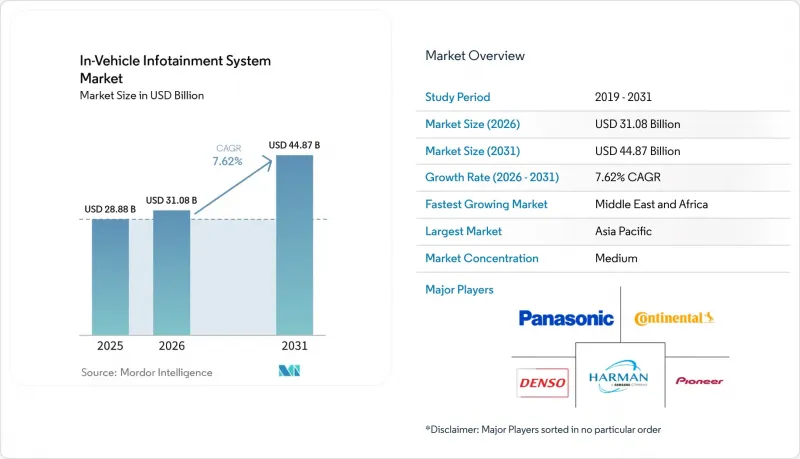
Mordor Intelligence에 의하면, 차량용 인포테인먼트 시스템 시장 규모는 2025년에 288억 8,000만 달러로 평가되었고 2026년 310억 8,000만 달러에서 2031년까지 448억 7,000만 달러로 확대되어 2026년부터 2031년까지 CAGR 7.62%를 나타낼 것으로 예측되고 있습니다.
본 보고서는 구성 요소별(오디오 유닛, 디스플레이 유닛, 내비게이션 유닛, 통신 유닛), 운영 체제별(Android, Linux, QNX, 기타), 설치 유형별(대시보드 내장형 인포테인먼트 및 뒷좌석용 인포테인먼트),차종별(승용차, 소형 상용차, 중형·대형 상용차), 지역별로 분류되어 있습니다. 시장 예측은 금액(미 달러) 기준으로 제시되어 있습니다.
전 세계 차량용 인포테인먼트 시스템 시장 동향 및 인사이트
생성형 AI 음성 비서의 부상
생성형 AI 음성 시스템은 자동차 제조업체들이 차량용 인포테인먼트 시스템 시장에서 제품의 역할을 정의하는 방식을 변화시키고 있습니다. 이러한 도구는 자연스러운 요청에 응답하며, 차량 조작을 내비게이션, 미디어 및 기타 디지털 서비스와 연동할 수 있습니다. BMW는 2026년 출시 예정인 iX3에 생성형 AI 어시스턴트를 도입했다고 발표했으며, 이 기술은 2026년 중 특정 차량 프로그램 전반으로 확대될 것이라고 밝혔습니다. 이러한 방향성에 따라, 특히 운전자가 도로에 주의를 기울여야 하는 상황에서 음성 제어가 차량 내 경험의 더욱 핵심적인 요소가 될 것입니다. 독자적인 AI 경험을 개발하는 자동차 제조업체는 고객 데이터 및 제품 설계에 대한 주도권을 더욱 공고히 할 수 있습니다. 또한 소프트웨어의 개발, 테스트 및 지속적인 지원에 대해서도 더 큰 책임을 지게 됩니다.
첨단 차량에 대한 수요 증가
전기차와 상위 트림 모델을 통해 더 큰 화면과 풍부한 디지털 기능이 더 많은 차종에 도입되고 있습니다. 이에 따라 차량용 인포테인먼트 시스템 시장 수요는 프리미엄 모델에만 국한되지 않고 확대되고 있습니다. 소프트웨어 정의형 차량 설계에서는 인포테인먼트가 다른 차량 소프트웨어와 연동되므로, 콕핏은 더욱 중요한 통합 거점이 됩니다. 파나소닉 오토모티브 시스템즈는 자사의 인포테인먼트 시스템이 신형 토요타 RAV4에 채택되었으며, 소프트웨어 업데이트는 ‘Arene’ 소프트웨어 플랫폼과 연동되어 작동한다고 발표했습니다. 이러한 구조로 인해 공급업체 입장에서는 자동차 제조업체가 선택한 소프트웨어 아키텍처에 대응할 수 있는 시스템을 제공하는 것이 중요해집니다. 또한, 독립형 하드웨어만을 제공하는 공급업체에게는 경쟁 장벽이 높아지게 됩니다.
커넥티드카의 사이버 보안 취약점
인포테인먼트 시스템이 커넥티드카 기능으로의 관문이 됨에 따라, 사이버 보안은 설계상의 필수 요건이 되었습니다. 보안상의 취약점은 고객의 신뢰, 소프트웨어 출시 일정 및 승인 절차에 영향을 미칠 수 있습니다. 차량용 인포테인먼트 시스템 시장에서는 안전한 소프트웨어 업데이트, 접근 제어, 그리고 엔터테인먼트 기능과 안전 관련 시스템의 분리를 지원해야 합니다. 유럽의 차량 사이버 보안 규정은 제조업체에게 해당 차종 및 전체 전자 시스템에 걸친 사이버 위험 관리를 의무화하고 있습니다. 이러한 의무로 인해 공급업체와 자동차 제조업체의 개발 업무가 증가할 가능성이 있습니다. 또한, 이미 보안 엔지니어링 및 테스트 프로세스를 확립한 기업에게는 유리하게 작용할 수 있습니다.
부문 분석
2025년, 디스플레이 유닛은 차량용 인포테인먼트 시스템 시장 점유율의 42.98%를 차지했습니다. 이러한 위상은 내비게이션, 미디어, 차량 설정에서 화면이 주요 조작 거점으로서 수행하는 핵심적인 역할을 반영합니다. 현재 대형 터치 디스플레이는 더 다양한 승용차에 채택되고 있습니다. 또한 공급업체들은 대시보드 디자인을 간소화하기 위해 디스플레이 기능과 오디오 및 조명 기능을 통합하고 있습니다. 대시보드 레이아웃이 깔끔해짐에 따라 자동차 제조업체는 일관된 디지털 인터페이스를 중심으로 차량 내 공간을 설계할 수 있는 자유도를 높일 수 있습니다. 오디오 유닛은 여전히 차량 내 경험에서 중요하지만, 내장형 내비게이션은 클라우드 기반 경로 안내의 경쟁 압력에 직면해 있습니다. 구성 요소의 구성은 더욱 정교한 데이터, 미디어, 연결성을 처리할 수 있는 시스템으로 전환되고 있습니다. 또한 자동차 제조업체 입장에서는 다양한 주행 상황에서도 가시성과 조작성이 보장된 디스플레이 시스템이 요구되고 있습니다.
통신 유닛은 2031년까지 연평균 성장률(CAGR) 13.12%를 나타낼 것으로 예측되며, 이는 모든 구성 요소 중 가장 높은 성장률입니다. 차량용 인포테인먼트 시스템 시장에서 이 분야는 셀룰러 통신, V2X(Vehicle-to-Everything) 통신 및 커넥티드 서비스를 뒷받침하고 있습니다. 또한, 새로운 eCall 네트워크로의 전환에 따라 현재 요구 사항을 충족하는 통신 하드웨어에 대한 수요도 증가하고 있습니다. 적절한 통신 유닛이 있다면, 자동차 제조업체는 공통 플랫폼을 통해 업데이트, 비상 기능, 서비스 연결을 관리할 수 있습니다. 또한 차량, 사용자 및 승인된 외부 서비스 간의 안정적인 정보 교환도 지원합니다. 모뎀 통합 실적이 있는 공급업체는 차량 설계 주기에서 유리한 입지를 확보할 수 있습니다. 수요는 네트워크 커버리지의 품질과 자동차 제조업체가 커넥티드 기능을 도입하는 속도에 따라 달라집니다.
2025년, 안드로이드는 차량용 인포테인먼트 시스템 시장에서 67.08%의 점유율을 차지했습니다. 이러한 위상은 소비자의 친숙도와 용도, 음성 서비스, 커넥티드 컨텐츠의 풍부함을 반영하고 있습니다. Android Automotive OS는 자동차 제조업체에 임베디드 운영 체제를 제공하며, Android Auto는 스마트폰 기반의 미러링 기능을 지원합니다. 구글은 자사의 자동차용 소프트웨어 제품이 각 차량 프로그램에서 더욱 폭넓게 채택되고 있다고 밝혔습니다. 이를 통해 모든 서비스를 자체적으로 구축하지 않고도, 인지도가 높은 사용자 경험을 추구하는 자동차 제조업체에게 현실적인 해결책이 마련됩니다. 또한 디지털 지도, 미디어, 앱 생태계와의 통합도 용이해집니다. 공통된 소프트웨어 기반이 있다면 모델 업데이트에 따라 사용자 교육 및 지원을 간소화할 수 있습니다. 그 결과, 차량 프로그램 계획에서 OS 선정이 더욱 중요한 역할을 하게 됩니다.
안드로이드는 2031년까지 연평균 성장률(CAGR) 15.84%를 나타낼 것으로 예측되며, 이는 OS 카테고리 내에서 가장 높은 성장률입니다. 이러한 성장은 소프트웨어 정의 차량 플랫폼 및 무선 업데이트(OTA)의 보급과 밀접한 관련이 있습니다. 차량용 인포테인먼트 시스템 시장은 더 많은 용도과 정기적인 기능 업데이트를 지원할 수 있는 운영 체제의 혜택을 받고 있습니다. 또한, 이러한 시스템을 통해 자동차 제조업체는 차량이 고객에게 인도된 후에도 특정 기능을 적절히 조정할 수 있게 됩니다. 리눅스는 맞춤화와 기술적 제어가 중요한 분야에서 계속해서 중요한 역할을 수행하고 있습니다. 또한 QNX 역시 확립된 안전 지원과 기능 간 분리가 필요한 아키텍처에서 여전히 중요한 위치를 차지하고 있습니다.
지역별 분석
2025년, 아시아태평양은 차량용 인포테인먼트 시스템 시장 점유율의 37.78%를 차지했습니다. 중국의 방대한 자동차 보유 대수와 디지털 콕핏 기능의 급속한 보급이 이 지역 수요를 뒷받침하고 있습니다. 일본과 한국에서는 확고한 입지를 다진 자동차 부품 공급업체와 국내 자동차 제조업체 간의 견고한 관계가 더해지고 있습니다. 인도에서는 승용차 보유 대수가 증가함에 따라 비용 효율성을 중시하는 콕핏 설계에 대한 수요가 높아지고 있습니다. 현지 자동차 제조업체와 공급업체 역시 개발 주기 단축 및 고객 취향의 차이를 통해 제품 설계에 영향을 미치고 있습니다. 따라서 세계 공급업체 입장에서는 각국에 맞추어 인터페이스, 컨텐츠, 커넥티비티 옵션을 조정하는 것이 중요합니다. 파나소닉 오토모티브 시스템즈가 도요타와 공동으로 개발한 신형 RAV4의 사례는 지역 공급업체가 국제적으로 광범위하게 전개되는 프로그램을 어떻게 수주할 수 있는지를 보여줍니다.
북미는 프리미엄 차량의 비중이 높고, 연결성 인프라가 성숙하며, 기술 제공업체의 존재감이 강하기 때문에 여전히 중요한 시장입니다. 이 지역의 자동차 제조업체들은 커넥티드 서비스를 지원하고, 익숙한 디지털 경험을 제공하는 시스템을 원하고 있습니다. 유럽도 유사한 수요 기반을 갖추고 있지만, 규제 요건의 존재가 텔레매틱스 지원 차량용 시스템의 개편에 독특한 이유를 더하고 있습니다. 유럽의 eCall 프레임워크는 최신 커넥티비티 기술의 도입 및 관련 차량 통합 작업을 촉진하고 있습니다. 독일, 영국, 프랑스는 확고한 자동차 제조거점과 프리미엄 브랜드를 통해 지속적으로 수요를 뒷받침하고 있습니다. 기타 유럽 시장은 일반 차량 프로그램 및 교체 수요를 통해 기여하고 있습니다.
중동 및 아프리카은 2031년까지 연평균 성장률(CAGR) 10.34%를 나타낼 것으로 예측되며, 이는 지역별로는 가장 높은 성장률입니다. 자동차 수입 증가와 사양이 풍부한 차량에 대한 수요 증가가 일부 국가의 차량용 인포테인먼트 시스템 시장을 뒷받침하고 있습니다. 특히 걸프 시장은 고급차의 기능 및 커넥티드 캐빈 서비스 분야에서 중요한 역할을 하고 있습니다. 남아프리카, 튀르키예, 이집트 역시 인근 시장에 대한 제조 또는 유통 거점으로 기능하고 있습니다. 이 지역은 소득 수준, 자동차 보유 대수, 네트워크 환경이 크게 다르기 때문에 수요 패턴에 일관성이 없습니다. 남미는 여전히 가격에 민감한 경향을 보이며, 브라질과 아르헨티나가 이 지역의 자동차 수요를 주도하고 있습니다. 연결 환경, 현지 서비스 이용 가능성, 그리고 자동차의 가격 경쟁력이 두 지역에서의 도입 속도를 좌우할 것입니다.
기타 혜택:
- 엑셀 형식 시장 예측(ME) 시트
- 3개월간의 애널리스트 지원
자주 묻는 질문
목차
제1장 서론
제2장 조사 방법
제3장 개요
제4장 시장 구도
제5장 시장 규모와 성장 예측
제6장 경쟁 구도
제7장 시장 기회와 향후 전망
JHS 26.09.01According to Mordor Intelligence, the in-vehicle infotainment system market size was valued at USD 28.88 billion in 2025 and is expected to increase from USD 31.08 billion in 2026 to USD 44.87 billion by 2031, growing at a CAGR of 7.62% over 2026-2031.
This report is Segmented by Component (Audio Unit, Display Unit, Navigation Unit, Communication Unit), Operating System (Android, Linux, QNX, Others), Installation Type (In-Dash Infotainment and Rear-Seat Infotainment), Vehicle Type (Passenger Cars, Light Commercial Vehicles, and Medium and Heavy Commercial Vehicles), and Geography. The Market Forecasts are Provided in Terms of Value (USD).
Global In-Vehicle Infotainment System Market Trends and Insights
Emergence of Generative-AI Voice Assistants
Generative AI voice systems are changing how automakers define the role of an in-vehicle infotainment system market product. These tools can support natural requests and connect vehicle controls with navigation, media, and other digital services. BMW stated that its 2026 iX3 introduced a generative AI assistant and that the technology will expand across specified vehicle programs during 2026. This direction makes voice control a more central part of the cabin experience, particularly when drivers need to keep their attention on the road. Automakers that develop their own AI experience can retain greater control over customer data and product design. They also take on more responsibility for software development, testing, and ongoing support.
Increasing Demand for Advanced Vehicles
Electric vehicles and higher-trim models are bringing larger screens and richer digital functions into more vehicle classes. This broadens demand in the in-vehicle infotainment system market beyond premium models. Software-defined vehicle designs connect infotainment with other vehicle software, making the cockpit a more important integration point. Panasonic Automotive Systems said its infotainment system was selected for the new Toyota RAV4 and works with the Arene software platform for software updates. Such arrangements make it important for suppliers to provide systems that can work with an automaker's chosen software architecture. They also raise the competitive threshold for suppliers that offer only standalone hardware.
Cybersecurity Vulnerabilities in Connected Vehicles
As infotainment systems become a gateway to connected vehicle functions, cybersecurity becomes a design requirement. A security weakness can affect customer trust, software launch schedules, and approval processes. The in-vehicle infotainment system market must support secure software updates, access controls, and separation between entertainment functions and safety-related systems. European vehicle cybersecurity rules require manufacturers to manage cyber risks across applicable vehicle types and electronic systems. These obligations can increase development work for suppliers and automakers. They can also favor firms that already have established security engineering and testing processes.
Other drivers and restraints analyzed in the detailed report include:
- Regulatory Mandates for eCall and Telematics
- Growing Adoption of Connected-Car Data Services
- Complexity in System Integration
For complete list of drivers and restraints, kindly check the Table Of Contents.
Segment Analysis
Display units held 42.98% of the in-vehicle infotainment system market share in 2025. Their position reflects the central role of the screen as the main point of interaction for navigation, media, and vehicle settings. Large touch displays are now used across a wider range of passenger vehicles. Suppliers are also combining display functions with audio and lighting features to simplify dashboard design. A cleaner dashboard layout can give automakers more freedom to shape the cabin around a consistent digital interface. Audio units remain important for cabin experience, while embedded navigation is facing pressure from cloud-based route guidance. The component mix is shifting toward systems that can handle higher levels of data, media, and connectivity. Automakers also need display systems that remain easy to read and operate in varied driving conditions.
Communication units are forecast to grow at a 13.12% CAGR through 2031, the fastest rate among components. This part of the in-vehicle infotainment system market supports cellular links, vehicle-to-everything communication, and connected services. The move toward newer eCall networks also increases the need for communication hardware that meets current requirements. A suitable communication unit helps an automaker manage updates, emergency functions, and service connections from a common platform. It also supports the steady exchange of information between the vehicle, the user, and approved external services. Suppliers with proven modem integration can be better positioned during vehicle design cycles. Demand also depends on the quality of network coverage and the pace at which automakers introduce connected features.
Android held 67.08% of the in-vehicle infotainment system market share in 2025. Its position reflects consumer familiarity and the availability of applications, voice services, and connected content. Android Automotive OS gives automakers an embedded operating system, while Android Auto supports phone-based mirroring. Google has described the wider use of its automotive software offerings across vehicle programs. This creates a practical route for automakers that want a recognizable user experience without building every service internally. It also makes integration with digital maps, media, and app ecosystems easier. A common software foundation can simplify user training and support as models are updated. The result is a stronger role for operating-system decisions in vehicle program planning.
Android is forecast to grow at a 15.84% CAGR through 2031, the fastest rate within the operating-system category. This expansion is tied to the wider use of software-defined vehicle platforms and over-the-air updates. The in-vehicle infotainment system market gains from operating systems that can support more applications and regular feature updates. These systems also allow automakers to adapt selected functions after the vehicle reaches the customer. Linux continues to have a role where customization and technical control are important. QNX also remains relevant in architectures that need established safety support or separation between functions.
Complete Report Scope:
- By Component
- Audio Unit
- Display Unit
- Navigation Unit
- Communication Unit
- By Operating System
- Android
- Linux
- QNX
- Others
- By Installation Type
- In-dash Infotainment
- Rear-seat Infotainment
- By Vehicle Type
- Passenger Cars
- Light Commercial Vehicles
- Medium and Heavy Commercial Vehicles
- By Geography
- North America
- United States
- Canada
- Rest of North America
- South America
- Brazil
- Argentina
- Rest of South America
- Europe
- Germany
- United Kingdom
- France
- Italy
- Spain
- Russia
- Rest of Europe
- Asia-Pacific
- China
- Japan
- India
- South Korea
- Indonesia
- Vietnam
- Philippines
- Australia
- Rest of Asia-Pacific
- Middle East and Africa
- Saudi Arabia
- United Arab Emirates
- Egypt
- Turkey
- South Africa
- Rest of Middle East and Africa
- North America
Geography Analysis
Asia-Pacific held 37.78% of the in-vehicle infotainment system market share in 2025. China's large vehicle base and rapid adoption of digital cockpit features support regional demand. Japan and South Korea add established automotive suppliers and strong domestic automaker relationships. India offers demand for more cost-conscious cockpit designs as its passenger-vehicle base expands. Local automakers and suppliers are also influencing product design through faster development cycles and different customer preferences. This makes it important for global suppliers to adapt interfaces, content, and connectivity choices to each country. Panasonic Automotive Systems' work with Toyota on the new RAV4 shows how regional suppliers can secure programs intended for wide international distribution.
North America remains important because of its premium vehicle mix, mature connectivity infrastructure, and strong presence of technology providers. Automakers in the region are looking for systems that support connected services and familiar digital experiences. Europe has a related demand base, but regulatory requirements add a distinct reason to refresh telematics-capable vehicle systems. The European eCall framework supports the adoption of newer connectivity technologies and related vehicle integration work. Germany, the United Kingdom, and France continue to support demand through established vehicle manufacturing and premium brands. Other European markets contribute through mainstream vehicle programs and replacement demand.
The Middle East and Africa is forecast to grow at a 10.34% CAGR through 2031, the fastest regional rate. Rising vehicle imports and demand for well-equipped vehicles support the in-vehicle infotainment system market across selected countries. Gulf markets are particularly relevant for premium vehicle features and connected cabin services. South Africa, Turkey, and Egypt also provide manufacturing or distribution links to nearby markets. The region does not have one uniform demand pattern because income levels, vehicle fleets, and network conditions vary widely. South America remains more price sensitive, with Brazil and Argentina serving as the main sources of regional vehicle demand. Connectivity conditions, local service availability, and vehicle affordability will shape the pace of adoption across both regions.
- Continental AG
- Denso Corporation
- Harman International
- Pioneer Corporation
- Panasonic Automotive Systems Co., Ltd.
- Robert Bosch GmbH
- Visteon Corporation
- Alpine Electronics Inc.
- Aptiv Plc
- Desay SV
- LG Electronics Inc.
- Garmin Ltd.
- TomTom International NV
- Mitsubishi Electric Corporation
- Nvidia Corporation
- Qualcomm Technologies Inc.
Additional Benefits:
- The market estimate (ME) sheet in Excel format
- 3 months of analyst support
TABLE OF CONTENTS
1 Introduction
- 1.1 Study Assumptions & Market Definition
- 1.2 Scope of the Study
2 Research Methodology
3 Executive Summary
4 Market Landscape
- 4.1 Market Overview
- 4.2 Market Drivers
- 4.2.1 Emergence of Generative-AI Voice Assistants
- 4.2.2 Increasing Demand for Advanced Vehicles
- 4.2.3 Regulatory Mandates for eCall and Telematics
- 4.2.4 Growing Adoption of Connected-Car Data Services
- 4.2.5 Rising Integration of Smartphone Mirroring (CarPlay, Android Auto)
- 4.2.6 Monetization of Cockpit Data and In-Car Commerce
- 4.3 Market Restraints
- 4.3.1 Cybersecurity Vulnerabilities in Connected Vehicles
- 4.3.2 Complexity in System Integration
- 4.3.3 High Upfront Cost and Price Sensitivity in Emerging Markets
- 4.3.4 Thermal and Power-Management Limits of High-Resolution OLED Displays
- 4.4 Value / Supply-Chain Analysis
- 4.5 Regulatory Landscape
- 4.6 Technological Outlook
- 4.7 Porter's Five Forces Analysis
- 4.7.1 Threat of New Entrants
- 4.7.2 Bargaining Power of Buyers/Consumers
- 4.7.3 Bargaining Power of Suppliers
- 4.7.4 Threat of Substitute Products
- 4.7.5 Intensity of Competitive Rivalry
5 Market Size & Growth Forecasts (Value (USD))
- 5.1 By Component
- 5.1.1 Audio Unit
- 5.1.2 Display Unit
- 5.1.3 Navigation Unit
- 5.1.4 Communication Unit
- 5.2 By Operating System
- 5.2.1 Android
- 5.2.2 Linux
- 5.2.3 QNX
- 5.2.4 Others
- 5.3 By Installation Type
- 5.3.1 In-dash Infotainment
- 5.3.2 Rear-seat Infotainment
- 5.4 By Vehicle Type
- 5.4.1 Passenger Cars
- 5.4.2 Light Commercial Vehicles
- 5.4.3 Medium and Heavy Commercial Vehicles
- 5.5 By Geography
- 5.5.1 North America
- 5.5.1.1 United States
- 5.5.1.2 Canada
- 5.5.1.3 Rest of North America
- 5.5.2 South America
- 5.5.2.1 Brazil
- 5.5.2.2 Argentina
- 5.5.2.3 Rest of South America
- 5.5.3 Europe
- 5.5.3.1 Germany
- 5.5.3.2 United Kingdom
- 5.5.3.3 France
- 5.5.3.4 Italy
- 5.5.3.5 Spain
- 5.5.3.6 Russia
- 5.5.3.7 Rest of Europe
- 5.5.4 Asia-Pacific
- 5.5.4.1 China
- 5.5.4.2 Japan
- 5.5.4.3 India
- 5.5.4.4 South Korea
- 5.5.4.5 Indonesia
- 5.5.4.6 Vietnam
- 5.5.4.7 Philippines
- 5.5.4.8 Australia
- 5.5.4.9 Rest of Asia-Pacific
- 5.5.5 Middle East and Africa
- 5.5.5.1 Saudi Arabia
- 5.5.5.2 United Arab Emirates
- 5.5.5.3 Egypt
- 5.5.5.4 Turkey
- 5.5.5.5 South Africa
- 5.5.5.6 Rest of Middle East and Africa
- 5.5.1 North America
6 Competitive Landscape
- 6.1 Market Concentration
- 6.2 Market Share Analysis
- 6.3 Company Profiles (Includes Global Level Overview, Market Level Overview, Core Segments, Financials as Available, Strategic Information, Market Rank/Share for Key Companies, Products and Services, SWOT Analysis, and Recent Developments)
- 6.3.1 Continental AG
- 6.3.2 Denso Corporation
- 6.3.3 Harman International
- 6.3.4 Pioneer Corporation
- 6.3.5 Panasonic Automotive Systems Co., Ltd.
- 6.3.6 Robert Bosch GmbH
- 6.3.7 Visteon Corporation
- 6.3.8 Alpine Electronics Inc.
- 6.3.9 Aptiv Plc
- 6.3.10 Desay SV
- 6.3.11 LG Electronics Inc.
- 6.3.12 Garmin Ltd.
- 6.3.13 TomTom International NV
- 6.3.14 Mitsubishi Electric Corporation
- 6.3.15 Nvidia Corporation
- 6.3.16 Qualcomm Technologies Inc.
7 Market Opportunities & Future Outlook
- 7.1 White-space & Unmet-need Assessment


