

|
시장보고서
상품코드
2117498
첨단 유리 시장 : 점유율 분석, 업계 동향과 통계, 성장 예측(2026-2031년)Advanced Glass - Market Share Analysis, Industry Trends & Statistics, Growth Forecasts (2026 - 2031) |
||||||
 Mordor Intelligence
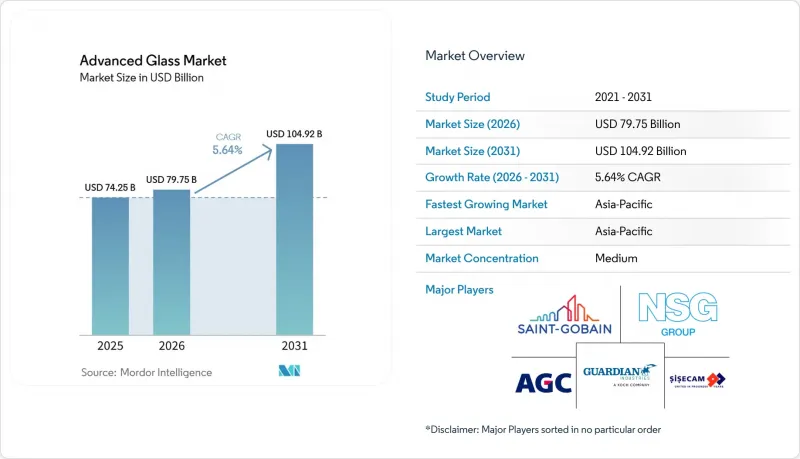
Mordor Intelligence에 의하면, 2025년 첨단 유리 시장 규모는 742억 5,000만 달러로 평가되었고 2026년 797억 5,000만 달러에서 2031년까지 1,049억 2,000만 달러에 이를 것으로 추정되고 있어 2026년부터 2031년까지의 예측 기간에서 CAGR은 5.64%를 나타낼 전망입니다.
본 보고서는 제품 유형(접합 유리, 강화 유리 등), 기능(일사 제어, 고성능 등), 최종 이용 산업(자동차, 전자제품 등), 지역(아시아태평양, 북미, 유럽, 남미, 중동 및 아프리카)별로 분류되어 있습니다. 시장 예측은 금액(달러) 기준으로 제시되어 있습니다.
세계 첨단 유리 시장 동향 및 인사이트
건축물에 대한 엄격한 에너지 효율 규제
개정된 ‘건축물의 에너지 성능에 관한 지침’이 2024년 5월에 발효됨에 따라, 창문 및 유리 시스템을 포함한 건축 외피가 에너지 성능 계산의 핵심 요소가 되었습니다. 이러한 변화로 인해 유럽 전역의 상업용 건축물 의사결정 과정에서 유리 선정은 건축적 선호에서 규제 준수를 위한 실천으로 전환되고 있습니다. 다른 주요 건설 시장에서도 유사한 성능 기준이 마련됨에 따라, 구매자들은 현재 외관이나 구조적 특성뿐만 아니라 인증된 단열 성능 및 일사 차단 성능 데이터를 바탕으로 유리를 평가했습니다. 2026년에 발표된 동료 심사를 거친 연구에 따르면, 일렉트로크로믹 창문은 건물의 에너지 소비를 최대 35.6%까지 줄일 수 있는 것으로 밝혀졌으며, 이로 인해 조달 팀에게 동적 유리 도입의 근거가 더욱 명확해졌습니다. 이에 따라 첨단 유리 시장에서 신축 및 리모델링 프로젝트 모두에서 저방사율 유리, 단열 유리, 스마트 유리의 채택이 더욱 확대될 전망입니다. 또한, 성능 데이터를 제시할 수 있는 제조업체는 사양서에 채택될 가능성이 확실한 반면, 이러한 기준을 충족하지 못하는 제품은 예고 없이 채택 대상에서 제외되므로, 인증 공급업체 목록은 점차 좁혀질 것입니다.
건축 및 건설 활동의 활성화
아시아태평양과 중동 및 아프리카의 도시화는 에너지 효율 규제뿐만 아니라 건축용 유리 수요를 지속적으로 견인하고 있습니다. 인도의 건설 활동과 걸프 국가 시장의 인프라 정비 사업으로 인해 안전 유리, 구조용 유리, 단열 유리에 대한 수요가 집중되고 있습니다. 최신 상업시설 설계에서는 더 큰 규모의 유리 파사드가 채택되고 있으며, 이로 인해 완공된 바닥 면적 1제곱미터당 유리 사용량이 증가하고 있습니다. 이에 따라 가치 구성이 변화하고 있으며, 개발업자들은 표준 투명 유리에 의존하기보다는 가공 처리된 유리, 코팅 처리된 유리 및 접합 유리를 더 많이 구매하는 추세입니다. 고온 기후에서는 냉방비가 건물 소유주에게 여전히 주요 운영 비용이므로, 일사열 유입을 억제하는 제품이 투자 회수 가능성이 더 높습니다. 그 결과, 건설업자가 프로젝트 총 지출에 대해 엄격한 태도를 유지하고 있음에도 불구하고, 첨단 유리 시장은 프로젝트 예산에서 더 큰 비중을 차지하게 되었습니다.
막대한 설비 투자가 필요
플로트 유리 용광로 건설 비용은 라인당 1억 달러에서 3억 달러 이상으로 폭이 넓으며, 더욱 정교한 코팅 라인에는 추가적인 설비 투자가 필요합니다. 이러한 높은 진입 장벽으로 인해 대규모 생산 능력 확충은 견고한 재무 기반과 장기적인 계획 비전을 갖춘 생산자로 제한되고 있습니다. 유럽 포장용 유리 연맹(FEVE)은 2025년 탈탄소화 보고서에서 유럽 유리 산업은 향후 수십 년에 걸쳐누적 200억 유로(214억 달러)의 투자가 필요할 뿐만 아니라, 150건 이상의 진행 중인 프로젝트와 연간 6억 유로(6억 4,200만 달러)의 투자가 필요할 것이라고 밝혔습니다. 인도 및 동남아시아의 중소 가공업체들은 설비 자금 조달이 여전히 제한적이기 때문에 코팅 제품이나 고사양 제품에 진출하려 할 때 더 큰 어려움에 직면하고 있습니다. 또한, 첨단 유리 시장에서도 용광로 건설 프로젝트는 일반적으로 관련 수익이 발생하기 3-5년 전에 착수되기 때문에 시기적 문제에 직면해 있습니다. 이러한 긴 자산 주기는 수요 변동에 대한 위험을 높이며, 첨단 유리 시장으로의 신규 진입 속도를 둔화시키고 있습니다.
부문별 분석
2025년, 강화유리는 첨단 유리 시장 점유율의 39.82%를 차지하고 있으며, 이는 파사드, 자동차 및 기타 안전성이 중시되는 용도에서 널리 사용되고 있음을 반영합니다. 이러한 위상은 규제 및 법적 책임에 대한 고려 사항에 의해 뒷받침되고 있습니다. 많은 건축 및 모빌리티 용도에서 고강도 유리는 단순한 업그레이드가 아닌 최소한의 필수 요건으로 간주되기 때문입니다. 이로 인해 강화 유리는 주로 외관이나 선택적 기능에 의해 주도되는 제품군보다 더 안정적인 수요 추세를 보이고 있습니다. 접합 유리는 방음성, 내충격성 및 보안성이 사양 선정의 중요한 요소로 계속 작용하고 있기 때문에 고층 상업 프로젝트 및 운송 용도에서 여전히 강력한 존재감을 보여주었습니다. 기타 카테고리에는 폴더블 디스플레이용 초박형 유리 및 반도체 패키징용 유리 기판이 포함되어 있어, 특수 용도가 기존의 판유리를 넘어 확대되고 있음을 보여줍니다.
코팅 유리는 2026년부터 2031년까지 연평균 성장률(CAGR) 6.33%를 기록하며, 첨단 유리 시장에서 가장 빠른 성장을 이룰 것으로 예측됩니다. 이러한 성장은 에너지 규제, 리모델링 공사, 태양광 발전의 보급이라는 복합적인 요인에 의해 주도되고 있으며, 이들 모두는 더 우수한 열적 또는 광학적 성능을 중시하는 경향을 보이고 있습니다. 개발업자들이 냉난방 성능을 수명 주기상의 과제로 인식하는 경향이 강해짐에 따라, 저방사율(Low-E) 유리는 상업 프로젝트에서 표준 사양에 가까워지고 있습니다. 또한, 반사 방지 코팅도 양면 수광형 태양전지 모듈의 보급으로 혜택을 보고 있으며, 제품 사양의 엄격화로 인해 기본 플로트 유리에 비해 지속적인 가격 프리미엄이 유지되고 있습니다. 이러한 제품 구성의 고부가가치화가 진행되는 가운데, 신뢰성 높은 코팅 기술과 대규모 가공 능력을 갖춘 제조업체는 첨단 유리 시장 전체에서 이익률을 유지하기 쉬운 입장에 있습니다.
지역별 분석
아시아태평양은 2025년에 첨단 유리 시장 점유율의 47.51%를 차지하며, 2031년까지 연평균 성장률(CAGR) 6.44%로 가장 빠른 성장을 기록할 것으로 전망됩니다. 이는 해당 지역의 건설, 태양광 발전 제조, 자동차 생산 분야의 강점을 반영한 것입니다. 중국에서는 건축 기준의 엄격화와 탈탄소화 목표를 배경으로, 주류 사양에서 코팅 유리 및 단열 유리의 채택이 확대되고 있습니다. 인도에서는 상업 및 주택 개발의 확대와 구매자들이 더 높은 부가가치를 지닌 유리 제품으로 전환하고 있는 점으로 인해 추가적인 수요가 예상됩니다. 동남아시아의 중요성도 커지고 있으며, 베트남과 인도네시아 등에서는 국내 건설 수요와 수출 공급을 모두 충족하기 위해 생산 능력을 확대되고 있습니다.
북미와 유럽은 서로 다른 성장 양상을 보이고 있지만, 여전히 첨단 유리 시장에 있어 중요한 지역입니다. 2025년 1월, 미국 상무부는 극자외선(EUV) 반도체 리소그래피용 고순도 용융 석영 및 초저팽창 유리의 생산 확대를 지원하기 위해 코닝사에 ‘반도체 생산 촉진 인센티브법(CHIPS)’에 따른 보조금을 지급했습니다. 이는 특수 유리가 국가적 기술 우선순위가 되었음을 보여주는 것입니다. 2026년 5월, 코닝(Corning)과 엔비디아(NVIDIA)는 노스캐롤라이나주와 텍사스주에 신설될 시설을 통해 미국의 광 연결 부품 제조 능력을 10배로 확대하고, 광섬유 생산량을 50% 이상 증산하는 다년간의 제휴를 발표했습니다. 유럽에서는 ‘건축물의 에너지 성능에 관한 지침(EPBD)’ 개정에 따라 노후 건축물의 개보수가 가속화되고 있어, 개보수 수요가 여전히 주를 이루고 있습니다. 생고뱅은 2025년 매출이 465억 유로(498억 달러), 영업이익률이 11.4%였습니다고 보고했으며, 이는 해당 기업의 유리 및 건설 관련 사업 포트폴리오 전반에 걸친 수요를 반영한 것입니다.
남미, 중동 및 아프리카는 절대적인 규모로 볼 때 비교적 작은 시장이지만, 프로젝트 사양이나 기후 요건을 충족할 수 있는 공급업체에게는 여전히 중요한 시장입니다. 남미에서는 브라질의 건설 활동과 태양광 발전 설비에 대한 관심 증가가 특정 프로젝트에서 건축용 유리 및 태양광 발전용 유리에 대한 수요를 뒷받침하고 있습니다. 중동 및 아프리카에서는 일사량이 높기 때문에 일사 제어 유리나 반사 코팅 유리는 단순한 선택적 지속가능성 기능이 아니라 많은 건물에서 운영상 필수적인 요소가 되고 있습니다. 또한, 이 지역의 대규모 도시 개발, 공항, 재생 에너지 프로젝트 역시 유리를 많이 사용하는 설계를 선호하는 경향이 있어, 조기에 입지를 확보한 공급업체에게 가치 창출을 뒷받침하고 있습니다.
기타 혜택:
- 엑셀 형식 시장 예측(ME) 시트
- 3개월간의 애널리스트 지원
자주 묻는 질문
목차
제1장 서론
제2장 조사 방법
제3장 개요
제4장 시장 구도
제5장 시장 규모와 성장 예측
제6장 경쟁 구도
제7장 시장 기회와 향후 전망
JHS 26.09.01According to Mordor Intelligence, the advanced glass market size was valued at USD 74.25 billion in 2025 and is estimated to grow from USD 79.75 billion in 2026 to reach USD 104.92 billion by 2031, at a CAGR of 5.64% during the forecast period 2026-2031.
This report is Segmented by Product Type (Laminated Glass, Tempered Glass, and More), Function (Solar Control, High Performance, and More), End-Use Industry (Automotive, Electronics, and More), and Geography (Asia-Pacific, North America, Europe, South America, and Middle-East and Africa). The Market Forecasts are Provided in Terms of Value (USD).
Global Advanced Glass Market Trends and Insights
Stringent Energy Efficiency Regulations for Buildings
The revised Energy Performance of Buildings Directive entered into force in May 2024, making the building envelope, including windows and glazing systems, a central part of energy performance calculations. That shift moved glazing selection away from architectural preference and into compliance practice for a growing share of commercial building decisions across Europe. Similar performance thresholds in other major construction markets mean buyers now evaluate glass using certified thermal and solar performance data, rather than visual or structural characteristics alone. Peer-reviewed research published in 2026 found that electrochromic windows can reduce building energy consumption by up to 35.6%, providing dynamic glazing with a clearer operating case for procurement teams. This supports wider adoption of low-emissivity, insulated, and smart glazing across both new construction and retrofit programs in the advanced glass market. It also narrows approved supplier lists, as producers that can demonstrate performance data are more likely to hold specification positions, while products that cannot meet these standards lose access with little notice.
Increasing Building and Construction Activity
Urbanization across Asia-Pacific, the Middle East, and Africa continues to drive architectural glass demand beyond energy-efficiency regulations alone. Construction activity in India and infrastructure programs across Gulf markets are creating concentrated demand for safety, structural, and insulating glass. Newer commercial designs use larger glazed facades, which raises glass intensity per square meter of completed space. This changes the value mix because developers purchase more processed, coated, and laminated formats instead of relying on standard clear glass. In hotter climates, products that limit solar heat gain have a stronger payback case because cooling costs remain a major operating expense for building owners. As a result, the advanced glass market captures a larger share of project budgets, even as builders remain disciplined about total project spending.
High Capital Investment Requirements
Float glass furnace construction costs range from USD 100 million to more than USD 300 million per line, and advanced coating lines require additional capital expenditure. These thresholds restrict major capacity additions to producers with strong balance sheets and long planning horizons. Federation Europeenne du Verre d'Emballage (FEVE) stated in its 2025 decarbonization report that the European glass industry will require EUR 20 billion, or USD 21.4 billion, of cumulative investment over the coming decades, alongside more than 150 active projects and an annual investment of EUR 600 million (USD 642 million). Smaller processors in India and Southeast Asia face greater difficulty when attempting to move into coated or higher-specification products, as equipment financing remains constrained. The advanced glass market also faces a timing challenge, as furnace projects are typically committed 3 to 5 years before the related revenue is generated. This long asset cycle increases exposure to demand fluctuations and slows the pace of new entry into the advanced glass market.
Other drivers and restraints analyzed in the detailed report include:
- Growing Integration of Smart Glass and Electrochromic Technologies
- Expanding Demand for Solar Energy Applications and Building-Integrated Photovoltaics (BIPV)
- Volatility in Energy and Raw Material Prices
For complete list of drivers and restraints, kindly check the Table Of Contents.
Segment Analysis
Tempered glass held 39.82% of the advanced glass market share in 2025, reflecting its widespread use in facades, vehicles, and other safety-focused applications. Its position is supported by regulatory and liability considerations, as many building and mobility applications treat higher-strength glass as a minimum requirement rather than an upgrade. This gives tempered glass a more stable demand profile than product groups driven primarily by appearance or optional features. Laminated glass retained strong relevance in high-rise commercial projects and transport applications, as sound reduction, impact resistance, and security continue to shape specification choices. The other category included ultra-thin glass for foldable displays and glass substrates for semiconductor packaging, indicating that specialty uses were expanding beyond traditional flat glass.
Coated glass is forecast to record the fastest growth in the advanced glass market, with a 6.33% CAGR from 2026 to 2031. This growth is driven by the combined effect of energy codes, retrofit activity, and photovoltaic adoption, all of which reward better thermal or optical performance. Low-emissivity variants are moving closer to standard specification in commercial projects as developers increasingly treat cooling and heating performance as a lifecycle issue. Anti-reflective coatings are also benefiting from bifacial solar modules, where tighter product specifications support a sustained premium over basic float glass. As this product mix shifts upward, producers with reliable coating capabilities and processing scale are better positioned to protect margins across the advanced glass market.
Complete Report Scope:
- By Product Type
- Laminated Glass
- Tempered Glass
- Coated Glass
- Others
- By Function
- Safety and Security
- Solar Control
- Optics and Lighting
- High Performance
- By End-Use Industry
- Building and Construction
- Aerospace and Defense
- Automotive
- Electronics
- Solar Energy
- Healthcare & Medical
- Other End-use Industry
- By Geography
- Asia-Pacific
- China
- India
- Japan
- South Korea
- Rest of Asia-Pacific
- North America
- United States
- Canada
- Mexico
- Europe
- Germany
- United Kingdom
- France
- Italy
- Russia
- Rest of Europe
- South America
- Brazil
- Argentina
- Rest of South America
- Middle-East and Africa
- Saudi Arabia
- South Africa
- Rest of Middle-East and Africa
- Asia-Pacific
Geography Analysis
Asia-Pacific held 47.51% of the advanced glass market share in 2025 and is expected to record the fastest growth at a 6.44% CAGR through 2031. This reflects the region's strength in construction, photovoltaic manufacturing, and vehicle production. In China, tighter building standards and decarbonization goals are driving greater adoption of coated and insulating glass in mainstream specifications. India adds further demand as commercial and residential development expands and buyers shift toward higher-value glass products. Southeast Asia is also growing in importance, with countries such as Vietnam and Indonesia adding capacity to serve both domestic construction demand and export supply.
North America and Europe present different growth profiles but remain important for the advanced glass market. In January 2025, the U.S. Department of Commerce awarded Creating Helpful Incentives to Produce Semiconductors (CHIPS) incentives to Corning to support expanded production of high-purity fused silica and ultra-low-expansion glass for Extreme Ultraviolet (EUV) semiconductor lithography, signaling that specialty glass had become a national technology priority. In May 2026, Corning and NVIDIA announced a multi-year partnership that will increase U.S. optical connectivity manufacturing capacity tenfold and expand fiber production by more than 50% through new facilities in North Carolina and Texas. In Europe, renovation demand remains central, as the Energy Performance of Buildings Directive (EPBD) recast accelerates upgrades to older building stock. Saint-Gobain reported 2025 revenue of EUR 46.5 billion (USD 49.8 billion) and an operating margin of 11.4%, reflecting demand across its glass and construction portfolio.
South America, the Middle East, and Africa are smaller markets in absolute terms but remain relevant for suppliers able to match project specifications and climate requirements. In South America, Brazil's construction activity and growing interest in solar installations are supporting demand for architectural and photovoltaic glass in selected projects. In the Middle East and Africa, high solar irradiance makes solar control and reflective-coated glass an operational necessity in many buildings rather than a discretionary sustainability feature. Large urban developments, airports, and renewable energy projects in the region also favor glass-intensive designs, supporting value capture for suppliers that secure approved positions early.
- AGC Inc.
- Asahi India Glass Limited
- Central Glass Co., Ltd.
- Corning Incorporated
- CSG Holding Co., Ltd.
- Fuyao Glass Industry Group Co. Ltd.
- Gentex Corporation
- Guardian Industries
- Nippon Electric Glass Co., Ltd.
- Nippon Sheet Glass Co., Ltd
- Saint-Gobain
- Schott AG
- Sisecam
- Tyneside Safety Glass
- Vitro, S.A.B. de C.V.
- Xinyi Glass Holdings Limited
Additional Benefits:
- The market estimate (ME) sheet in Excel format
- 3 months of analyst support
TABLE OF CONTENTS
1 Introduction
- 1.1 Study Assumptions and Market Definition
- 1.2 Scope of the Study
2 Research Methodology
3 Executive Summary
4 Market Landscape
- 4.1 Market Overview
- 4.2 Market Drivers
- 4.2.1 Rising Demand for Lightweight and High-Performance Glazing in Electric Vehicles
- 4.2.2 Stringent Energy Efficiency Regulations Driving Adoption of Low-E and Solar Control Glass
- 4.2.3 Increasing Building and Automotive Safety Standards Boosting Demand for Laminated and Tempered Glass
- 4.2.4 Growing Integration of Solar Glass in Building Facades, Skylights, and Photovoltaic Systems
- 4.2.5 Expanding Demand for High-Optical-Performance Glass in Consumer Electronics and Display Technologies
- 4.3 Market Restraints
- 4.3.1 High Capital Investment Requirements for Advanced Glass Manufacturing and Processing Facilities
- 4.3.2 Volatility in Energy and Raw Material Prices Increasing Production Costs
- 4.3.3 Quality Control Challenges and Glass Breakage Risks Increasing Manufacturing and Warranty Costs
- 4.4 Value Chain Analysis
- 4.5 Porter's Five Forces Analysis
- 4.5.1 Threat of New Entrants
- 4.5.2 Bargaining Power of Suppliers
- 4.5.3 Bargaining Power of Buyers
- 4.5.4 Threat of Substitutes
- 4.5.5 Competitive Rivalry
5 Market Size and Growth Forecasts (Value)
- 5.1 By Product Type
- 5.1.1 Laminated Glass
- 5.1.2 Tempered Glass
- 5.1.3 Coated Glass
- 5.1.4 Others
- 5.2 By Function
- 5.2.1 Safety and Security
- 5.2.2 Solar Control
- 5.2.3 Optics and Lighting
- 5.2.4 High Performance
- 5.3 By End-Use Industry
- 5.3.1 Building and Construction
- 5.3.2 Aerospace and Defense
- 5.3.3 Automotive
- 5.3.4 Electronics
- 5.3.5 Solar Energy
- 5.3.6 Healthcare & Medical
- 5.3.7 Other End-use Industry
- 5.4 By Geography
- 5.4.1 Asia-Pacific
- 5.4.1.1 China
- 5.4.1.2 India
- 5.4.1.3 Japan
- 5.4.1.4 South Korea
- 5.4.1.5 Rest of Asia-Pacific
- 5.4.2 North America
- 5.4.2.1 United States
- 5.4.2.2 Canada
- 5.4.2.3 Mexico
- 5.4.3 Europe
- 5.4.3.1 Germany
- 5.4.3.2 United Kingdom
- 5.4.3.3 France
- 5.4.3.4 Italy
- 5.4.3.5 Russia
- 5.4.3.6 Rest of Europe
- 5.4.4 South America
- 5.4.4.1 Brazil
- 5.4.4.2 Argentina
- 5.4.4.3 Rest of South America
- 5.4.5 Middle-East and Africa
- 5.4.5.1 Saudi Arabia
- 5.4.5.2 South Africa
- 5.4.5.3 Rest of Middle-East and Africa
- 5.4.1 Asia-Pacific
6 Competitive Landscape
- 6.1 Market Concentration
- 6.2 Strategic Moves
- 6.3 Market Share (%)/Ranking Analysis
- 6.4 Company Profiles (includes Global Overview, Market Overview, Core Segments, Financials as available, Strategic Information, Products and Services, and Recent Developments)
- 6.4.1 AGC Inc.
- 6.4.2 Asahi India Glass Limited
- 6.4.3 Central Glass Co., Ltd.
- 6.4.4 Corning Incorporated
- 6.4.5 CSG Holding Co., Ltd.
- 6.4.6 Fuyao Glass Industry Group Co. Ltd.
- 6.4.7 Gentex Corporation
- 6.4.8 Guardian Industries
- 6.4.9 Nippon Electric Glass Co., Ltd.
- 6.4.10 Nippon Sheet Glass Co., Ltd
- 6.4.11 Saint-Gobain
- 6.4.12 Schott AG
- 6.4.13 Sisecam
- 6.4.14 Tyneside Safety Glass
- 6.4.15 Vitro, S.A.B. de C.V.
- 6.4.16 Xinyi Glass Holdings Limited
7 Market Opportunities and Future Outlook
- 7.1 White-Space and Unmet-Need Assessment


