

|
시장보고서
상품코드
2118920
체부 백선 시장 : 시장 점유율 분석, 업계 동향 및 통계, 성장 예측(2026-2031년)Tinea Corporis - Market Share Analysis, Industry Trends & Statistics, Growth Forecasts (2026 - 2031) |
||||||
 Mordor Intelligence
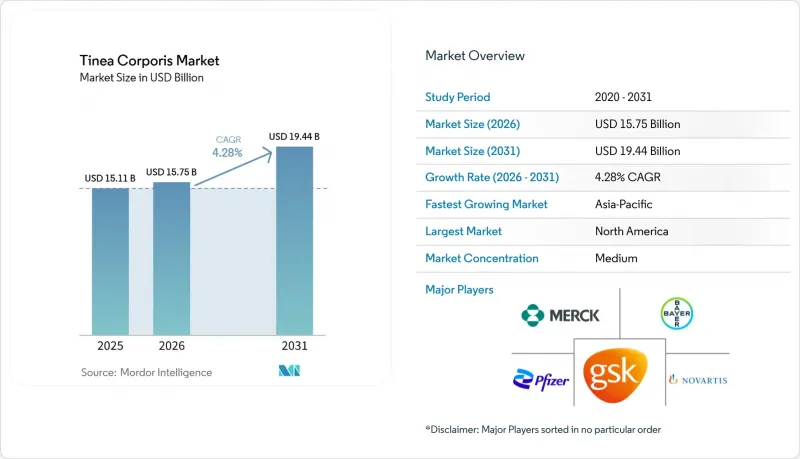
체부 백선(tinea corporis) 시장 규모는 2025년 151억 1,000만 달러로 평가되었고, 2026년에는 157억 5,000만 달러로 추정되고, 2031년까지 194억 4,000만 달러에 이를 것으로 예측되며, 2026-2031년 CAGR 4.28%로 성장할 전망입니다.
본 보고서는 약물 분류별(아졸계, 알릴아민계 및 벤질아민계 등), 제형별(크림·연고, 젤·로션 등), 환자층별(소아, 성인, 고령자), 유통 채널별(병원 약국, 소매 약국 및 드럭스토어, 기타), 그리고 지역별(북미, 유럽, 아시아태평양, 기타)로 분류되어 있습니다. 예측치는 금액(달러)으로 표시되어 있습니다.
세계의 체부 백선 시장 동향 및 인사이트
표재성 피부사상균증의 지속적인 부담
인도의 다기관 공동 연구에 따르면, 체부 백선은 가장 흔한 임상 양상으로 피부사상균증 사례의 41%를 차지하며, 이는 체부 백선 시장 수요를 뒷받침합니다. 또한, 살서제 백선이 31%, 발 백선이 15%를 차지하여, 몸통 백선 치료 수요의 상대적 중요성을 보여줍니다. 세계 질병 부담(GBD) 데이터에 따르면, 5세에서 9세 사이의 소아에서 절대 유병률이 가장 높았던 반면, 장애 조정 생명 연수(DALY) 비율은 95세 이상 인구에서 가장 높았습니다. 이러한 연령 분포는 인구의 양극단에서 수요가 있음을 뒷받침하며, 인구 고령화에 따라 치료 수요가 증가하고 있음을 보여줍니다. 2025년 세계보건총회 결의안은 진균성 피부 질환의 감시, 진단 및 치료 접근성을 개선하기 위한 국가 프로그램을 촉진할 가능성이 있습니다.
OTC(일반의약품) 접근성 확대 및 자가 관리 치료
체부 백선(Tinea corporis) 시장에서는 FDA의 OTC(일반의약품) 규격 개정에 따라 클로트리마졸 및 테르비나핀과 같은 외용 항진균 성분에 대한 규정이 합리화되었습니다. 이러한 체계 덕분에 관련 규격 조건을 충족하는 브랜드 제품 및 사설 브랜드 제품 시장 진입 장벽이 낮아집니다. 약국 체인은 특히 대도시권 이외의 지역에서 1차 의료 서비스 접근성이 제한된 사람들에게 서비스를 제공할 수 있습니다. 또한, 매장 내 구입 가능성이 높아짐에 따라 합병증이 없는 증상을 가진 사람들의 자가 치료가 용이해집니다. 원격 피부과 진료와 약국의 연계를 통해 화상 진료와 일반의약품 및 처방약의 직접 배송을 연계할 수 있습니다. 이 모델을 통해 진단부터 치료까지의 기간을 단축하고, 권장되는 치료 과정을 완수하도록 지원할 수 있습니다.
테르비나핀과 신종 피부사상균의 다제내성
체부 백선(Tinea corporis) 시장에서 2025년에 실시된 다국적 유전체 분석 결과, T. indotineae 분리주의 70%에서 테르비나핀 내성이 확인되었습니다. 이 연구에서 모든 분리주가 단일 계통군으로 집계된 것으로 밝혀져, 단일 진화적 기원과 지속적인 클론적 확산이 입증되었습니다. 영국에서 실시된 검토에 따르면, 기록된 사례의 31.8%에서 치료 실패가 확인되었으며, 4.5%의 사례에서 이트라코나졸에 대한 반응이 불충분한 것으로 밝혀졌습니다. 이로 인해 테르비나핀이 효과를 보이지 않을 경우 아졸계 약물을 대체 치료제로 사용하는 데 대한 신뢰도가 떨어지고 있습니다. 각국의 항진균제 적정 사용 체계는 발전하고 있지만, 많은 국가의 약전에서는 T. indotineae에 대한 표준화된 최소억제농도(MIC) 기준치가 여전히 정해져 있지 않습니다.
부문 분석
2025년, 아졸계 약물은 수요의 42.2%를 차지했으며, 체부 백선(Tinea corporis) 시장에서 주도적인 위치를 확립했습니다. 이러한 지위는 광범위한 항진균 활성, 확립된 일반의약품(OTC)으로서의 접근성, 그리고 클로트리마졸 및 미코나졸에 대한 임상적 선호도를 반영합니다. 이트라코나졸은 테르비나핀이 효과를 보이지 않는 T. indotineae 감염에 대해 다시 주목을 받고 있습니다. 이러한 용도로 인해, 기존에는 외용 자가 관리 제품과 오랫동안 연관되어 왔던 이 약물 군에 처방약으로서 수요가 추가될 것입니다. 알릴아민계 및 벤질아민계는 2031년까지 연평균 성장률(CAGR) 5.7%를 나타낼 것으로 예측됩니다.
테르비나핀 및 나프티핀은 항진균 활성을 가지고 있으며, 합병증이 없는 경우, 정균 작용을 하는 아졸계 약물보다 치료 기간이 짧을 수 있습니다. 치료 기간의 단축은 복약 순응도 향상 및 재발 위험이 있는 기간의 단축으로 이어집니다. 암포테리신 B를 포함한 폴리엔 계열 약물은 중증 피부 병변을 동반한 면역 결핍 환자를 위한 틈새 치료 옵션으로 여전히 자리 잡고 있습니다. 항감염제 복합제, 특히 고정 용량의 스테로이드·항진균제 복합 제품은 남아시아 및 동남아시아에서 여전히 널리 사용되고 있으나, 규제 당국의 감시가 강화되고 있습니다. 체부 백선(Tinea corporis) 시장은 제형에 관한 특허 및 투여 방법의 개선을 통해 형성되고 있으며, 이는 제네릭 유효 성분이 가격 압박에 직면한 상황에서 브랜드 제조업체가 가치를 지키는 데 도움이 되고 있습니다.
2025년에는 크림과 연고가 수요의 48.3%를 차지한 것으로 평가되었으며, 이는 처방 목록에 널리 등재되어 있을 뿐만 아니라 환자와 약사에게 익숙한 제형임을 반영합니다. 이 제형들은 다양한 부위에 도포하기에 적합하며, 브랜드 제품, 제네릭 의약품, 소매업체의 독자적인 제품 라인을 통해 구할 수 있습니다. 스프레이와 용액은 2031년까지 연평균 성장률(CAGR) 5.9%를 나타낼 것으로 예측됩니다. 체부 백선 시장에서 이러한 제형은 넓은 부위나 털이 난 부위, 크림을 고르게 바르기 어려운 피부 주름 부분 등에서 비접촉 방식으로 도포할 수 있게 해줍니다. 또한, 속건성이 있어 반복적으로 바르는 수고를 덜 수 있습니다.
2026년 동료 심사를 거친 연구에 따르면, 루리코나졸이 함유된 마이크로 스폰지 젤의 경우 91.4%의 봉입 효율과 12시간에 걸친 체외(in vitro)에서 83.7%의 약물 방출률이 보고되었습니다. 이 제제는 1일 1회 외용 투여에 적합하며, 피부 내에서의 지속적인 체류와 최소한의 자극성을 보였습니다. 2026년에 발표된 또 다른 비포나졸 함유 필름 형성 스프레이에 관한 연구에서는 11.1초 만에 필름이 형성되고, T80(80% 방출)이 8.7시간 만에 달성된 것으로 보고되었습니다. 젤과 로션은 중간 정도의 요구를 충족시키는 반면, 샴푸와 세정제는 액체와의 접촉을 통해 광범위한 도포가 가능한 두피나 피부가 밀착된 신체 부위에 사용됩니다.
지역별 분석
2025년, 북미는 체부 백선(Tinea corporis) 시장의 39.2%를 차지했습니다. 이 지역에서는 성숙한 OTC 제도, 약국에서의 접근성, 그리고 원격 피부과 진료의 이용 확대가 관찰됩니다. FDA의 OTC 모노그래프 개정은 외용 항진균 제품의 표시 및 판매에 관한 조건을 계속해서 규정하고 있습니다. 2025년 메디케이드 조사에 따르면, 약 680만 명의 가입자를 대상으로 한 조사에서 1만 인년당 79.1건의 발생률이 보고되었습니다. 이 조사에서는 진단된 사례 중 10% 미만이만 수산화칼륨 검사 또는 배양 검사를 통해 확인된 것으로 나타났습니다.
아시아태평양은 2031년까지 연평균 성장률(CAGR) 5.9%를 나타낼 것으로 예측되며, 체부 백선 시장에서 지역별 가장 높은 성장률을 보이고 있습니다. 인도의 경우, ‘Global Burden of Disease 2021’ 데이터셋에 따르면 진균성 피부 질환 사례 수가 2억 6,500만 건을 기록했습니다. 인도의 병원 조사에 따르면, 체부 백선은 피부사상균증의 주요 임상 양상으로 나타났으며, 3차 의료 기관에서 전체 사례의 41%에서 88%를 차지했습니다. 2025년 인도 연구에 따르면, 배양 검체의 60%에서 테르비나핀 내성이, 85.6%의 검체에서 플루코나졸 내성이 확인되었습니다. 중국과 일본도 처방 수요를 끌어올리고 있지만, 기본적인 클로트리마졸 크림 제품의 경우 국내 제네릭 의약품 제조업체들의 가격 압박에 직면해 있습니다.
유럽에서는 영국, 독일, 프랑스, 이탈리아, 스페인에서 체부 백선 시장 규모가 두드러지며, 이들 국가에서는 브랜드 아졸계 약제가 제네릭 의약품 및 자체 브랜드 제품과 경쟁하고 있습니다. 영국에서는 2018년부터 2024년 7월까지 피부사상균 분리주 중 T. indotineae가 차지하는 비율이 2%에서 38%로 증가했으며, 이후 런던에서 영국 및 아일랜드의 27개 도시로 확산되었습니다. 중동 및 아프리카에서도 성장 가능성이 있습니다. 그러나 사하라 이남 아프리카의 일부 지역에서는 경제적 부담과 공식 의료 서비스에 대한 접근성이 제한적이어서 치료의 보급이 제약을 받고 있습니다. 남미는 아직 초기 단계에 있는 지역적 기회로, 브라질에서는 2024년에 첫 T. indotineae 사례가 확인되었습니다.
기타 혜택 :
- 엑셀 형식 시장 예측(ME) 시트
- 3개월간의 애널리스트 지원
자주 묻는 질문
목차
제1장 서론
제2장 조사 방법
제3장 주요 요약
제4장 시장 구도
제5장 시장 규모 및 성장 예측
제6장 경쟁 구도
제7장 시장 기회 및 향후 전망
AJY 26.09.03According to Mordor Intelligence, the tinea corporis market size is expected to increase from USD 15.11 billion in 2025 to USD 15.75 billion in 2026 and reach USD 19.44 billion by 2031, growing at a CAGR of 4.28% over 2026-2031.
This report is Segmented by Drug Class (Azoles, Allylamines and Benzylamines, and More), by Formulation (Creams and Ointments, Gels and Lotions, and More), by Patient Demographics (Pediatrics, Adults, Geriatrics), by Distribution Channel (Hospital Pharmacies, Retail Pharmacies and Drug Stores, and More), and Geography (North America, Europe, Asia-Pacific, and More). Forecasts are in Value (USD).
Global Tinea Corporis Market Trends and Insights
Persistent Burden of Superficial Dermatophytosis
Tinea corporis was the most common presentation in a multicenter Indian study, representing 41% of dermatophytosis cases and supporting the Tinea corporis market demand. Moreover, tinea cruris at 31% and tinea pedis at 15%, which shows the relative importance of body-ringworm treatment demand. Global Burden of Disease data showed the highest absolute incidence among children aged 5 to 9 years, while disability-adjusted life-year rates were highest among people aged 95 years and older. This age pattern supports demand at both ends of the population and adds to treatment needs as populations age. The 2025 World Health Assembly resolution may encourage national programs to improve surveillance, diagnostics, and treatment access for fungal skin diseases.
Expanding OTC Access and Self-Care Treatment
Within the Tinea corporis market, FDA OTC monograph reform is streamlining the framework for topical antifungal ingredients such as clotrimazole and terbinafine. The framework can lower entry barriers for branded and private-label products that meet the relevant monograph conditions. Pharmacy chains can serve people who have limited access to primary care, particularly outside major urban centers. Wider shelf availability also makes self-treatment easier for people with uncomplicated symptoms. Tele-dermatology and pharmacy links can connect a video consultation with direct delivery of OTC or prescription treatment. This model can shorten the interval between diagnosis and treatment, which can support completion of the recommended course.
Terbinafine and Multidrug Resistance in Emerging Dermatophytes
The Tinea corporis market faces a 2025 multinational genomic finding of terbinafine resistance in 70% of T. indotineae isolates. The study found that all isolates clustered in one monophyletic lineage, supporting a single evolutionary origin and continuing clonal spread. A United Kingdom review found treatment failure in 31.8% of documented cases and inadequate itraconazole response in 4.5% of cases. This reduces the reliability of azoles as a fallback when terbinafine is ineffective. National antifungal stewardship frameworks are evolving, but standardized minimum inhibitory concentration breakpoints for T. indotineae remain absent in many national pharmacopeias.
Other drivers and restraints analyzed in the detailed report include:
- Rising Detection of Recalcitrant and Resistant Infections
- Hot-Humid Exposure, Occlusive Clothing, and Dense Contact Networks
- Diagnostic Misclassification and Steroid-Modified Tinea
For complete list of drivers and restraints, kindly check the Table Of Contents.
Segment Analysis
Azoles held 42.2% of demand in 2025, giving them the leading position in the Tinea corporis market. Their position reflects broad-spectrum activity, established OTC availability, and clinical familiarity with clotrimazole and miconazole. Itraconazole has drawn renewed attention for T. indotineae infections when terbinafine is ineffective. That use adds prescription demand to a class long associated with topical self-care products. Allylamines and benzylamines are forecast to grow at a 5.7% CAGR through 2031.
Terbinafine and naftifine have fungicidal activity that can support shorter treatment courses than fungistatic azoles in uncomplicated cases. Shorter courses can improve adherence and reduce the period in which recurrence may occur. Polyenes, including amphotericin B, remain a niche option for immunocompromised patients with severe cutaneous involvement. Anti-infective combinations, especially fixed-dose steroid-antifungal products, remain widely used in South Asia and Southeast Asia but face growing regulatory scrutiny. The Tinea corporis industry is shaped by formulation patents and delivery improvements, which help branded suppliers protect value where generic active ingredients face price pressure.
Creams and ointments held 48.3% of demand in 2025, reflecting their broad formulary presence and familiar use by patients and pharmacists. They remain practical for many body sites and are available across branded, generic, and retailer-owned product ranges. Sprays and solutions are forecast to grow at a 5.9% CAGR through 2031. In the Tinea corporis market, these formats can support no-touch application on large areas, hairy sites, and intertriginous areas where creams may be harder to spread consistently. Their fast-drying profile can also reduce the practical burden of repeated application.
A 2026 peer-reviewed study reported 91.4% entrapment efficiency for a luliconazole-loaded microsponge gel and 83.7% in vitro drug release over 12 hours. The formulation showed prolonged dermal retention and minimal irritation, which are relevant for once-daily topical use. A separate 2026 bifonazole film-forming spray study reported 11.1-second film formation and T80 release at 8.7 hours. Gels and lotions serve intermediate needs, while shampoos and washes are used for scalp and confluent body areas where liquid contact supports broader coverage.
Complete Report Scope:
- By Drug Class
- Azoles
- Allylamines and Benzylamines
- Polyenes
- Steroids
- Anti-Infective Combinations
- Other Antifungal Classes
- By Formulation
- Creams and Ointments
- Gels and Lotions
- Sprays and Solutions
- Powders
- Shampoos and Washes
- Other Formulations
- By Patient Demographics
- Pediatrics
- Adults
- Geriatrics
- By Distribution Channel
- Hospital Pharmacies
- Retail Pharmacies and Drug Stores
- Online Pharmacies
- Specialty Pharmacies
- By Geography
- North America
- United States
- Canada
- Mexico
- Europe
- Germany
- United Kingdom
- France
- Italy
- Spain
- Rest of Europe
- Asia-Pacific
- China
- Japan
- India
- Australia
- South Korea
- Rest of Asia-Pacific
- Middle East and Africa
- GCC
- South Africa
- Rest of Middle East and Africa
- South America
- Brazil
- Argentina
- Rest of South America
- North America
Geography Analysis
North America held 39.2% of the Tinea corporis market share in 2025. The region has a mature OTC system, pharmacy availability, and increasing tele-dermatology use. FDA OTC monograph reform continues to guide the conditions for labeling and marketing topical antifungal products. A 2025 Medicaid study reported an incidence of 79.1 cases per 10,000 person-years among approximately 6.8 million enrollees. The same study found that fewer than 10% of diagnosed cases received potassium hydroxide or culture confirmation.
Asia-Pacific is forecast to grow at a 5.9% CAGR through 2031, the fastest regional rate in the Tinea corporis market. India recorded 265 million cases of fungal skin disease in the Global Burden of Disease 2021 dataset. Hospital studies in India identified tinea corporis as the leading dermatophytosis presentation, representing 41% to 88% of cases at tertiary centers. A 2025 Indian study found terbinafine resistance in 60% of cultures and fluconazole resistance in 85.6% of samples. China and Japan add prescription demand, although basic clotrimazole cream products face price pressure from domestic generic suppliers.
Europe has a meaningful Tinea corporis market volume in the United Kingdom, Germany, France, Italy, and Spain, where branded azoles compete with generics and private-label products. In the United Kingdom, T. indotineae increased from 2% to 38% of dermatophyte isolates between 2018 and July 2024, then spread from London to 27 additional cities in the United Kingdom and Ireland. The Middle East and Africa also offer growth potential, but affordability and limited formal healthcare access constrain treatment penetration in parts of Sub-Saharan Africa. South America is an earlier-stage regional opportunity, with Brazil confirming its first T. indotineae case in 2024.
- Aurobindo Pharma
- Bausch Health
- Bayer
- Cipla
- Dr. Reddy's Laboratories
- GlaxoSmithKline
- Glenmark Pharmaceuticals
- Kaken Pharmaceutical Co., Ltd.
- Lupin
- Merck
- Novartis
- Perrigo Company
- Pfizer
- Sandoz Group AG
- Sebela Pharmaceuticals, Inc.
- Sun Pharmaceuticals Industries
- Taro Pharmaceutical Industries Ltd.
- Teva Pharmaceutical Industries
- Viatris
- Zydus Lifesciences Limited
Additional Benefits:
- The market estimate (ME) sheet in Excel format
- 3 months of analyst support
TABLE OF CONTENTS
1 INTRODUCTION
- 1.1 Study Assumptions and Market Definition
- 1.2 Scope of the Study
2 RESEARCH METHODOLOGY
3 EXECUTIVE SUMMARY
4 MARKET LANDSCAPE
- 4.1 Market Overview
- 4.2 Market Drivers
- 4.2.1 Persistent Burden of Superficial Dermatophytosis
- 4.2.2 Expanding OTC Access and Self-Care Treatment
- 4.2.3 Rising Detection of Recalcitrant and Resistant Infections
- 4.2.4 Hot-Humid Exposure, Occlusive Clothing, and Dense Contact Networks
- 4.2.5 Dermatology Telemedicine and Pharmacy-Led Case Finding
- 4.2.6 Short-Course and Skin-Retention Formulation Innovation
- 4.3 Market Restraints
- 4.3.1 Terbinafine and Multidrug Resistance in Emerging Dermatophytes
- 4.3.2 Diagnostic Misclassification and Steroid-Modified Tinea
- 4.3.3 Treatment Nonadherence and Premature Discontinuation
- 4.3.4 Generic Price Compression and Limited Differentiation
- 4.4 Supply Chain Analysis
- 4.5 Regulatory Landscape
- 4.6 Technological Outlook
- 4.7 Porter's Five Forces Analysis
- 4.7.1 Threat of New Entrants
- 4.7.2 Bargaining Power of Suppliers
- 4.7.3 Bargaining Power of Buyers
- 4.7.4 Threat of Substitutes
- 4.7.5 Competitive Rivalry
5 MARKET SIZE AND GROWTH FORECASTS (VALUE, USD)
- 5.1 By Drug Class
- 5.1.1 Azoles
- 5.1.2 Allylamines and Benzylamines
- 5.1.3 Polyenes
- 5.1.4 Steroids
- 5.1.5 Anti-Infective Combinations
- 5.1.6 Other Antifungal Classes
- 5.2 By Formulation
- 5.2.1 Creams and Ointments
- 5.2.2 Gels and Lotions
- 5.2.3 Sprays and Solutions
- 5.2.4 Powders
- 5.2.5 Shampoos and Washes
- 5.2.6 Other Formulations
- 5.3 By Patient Demographics
- 5.3.1 Pediatrics
- 5.3.2 Adults
- 5.3.3 Geriatrics
- 5.4 By Distribution Channel
- 5.4.1 Hospital Pharmacies
- 5.4.2 Retail Pharmacies and Drug Stores
- 5.4.3 Online Pharmacies
- 5.4.4 Specialty Pharmacies
- 5.5 By Geography
- 5.5.1 North America
- 5.5.1.1 United States
- 5.5.1.2 Canada
- 5.5.1.3 Mexico
- 5.5.2 Europe
- 5.5.2.1 Germany
- 5.5.2.2 United Kingdom
- 5.5.2.3 France
- 5.5.2.4 Italy
- 5.5.2.5 Spain
- 5.5.2.6 Rest of Europe
- 5.5.3 Asia-Pacific
- 5.5.3.1 China
- 5.5.3.2 Japan
- 5.5.3.3 India
- 5.5.3.4 Australia
- 5.5.3.5 South Korea
- 5.5.3.6 Rest of Asia-Pacific
- 5.5.4 Middle East and Africa
- 5.5.4.1 GCC
- 5.5.4.2 South Africa
- 5.5.4.3 Rest of Middle East and Africa
- 5.5.5 South America
- 5.5.5.1 Brazil
- 5.5.5.2 Argentina
- 5.5.5.3 Rest of South America
- 5.5.1 North America
6 COMPETITIVE LANDSCAPE
- 6.1 Market Concentration
- 6.2 Market Share Analysis
- 6.3 Company Profiles (includes Global Level Overview, Market Level Overview, Core Segments, Financials as available, Strategic Information, Market Rank/Share, Products and Services, Recent Developments)
- 6.3.1 Aurobindo Pharma Limited
- 6.3.2 Bausch Health Companies Inc.
- 6.3.3 Bayer AG
- 6.3.4 Cipla Limited
- 6.3.5 Dr. Reddy's Laboratories Limited
- 6.3.6 GlaxoSmithKline plc
- 6.3.7 Glenmark Pharmaceuticals Limited
- 6.3.8 Kaken Pharmaceutical Co., Ltd.
- 6.3.9 Lupin Limited
- 6.3.10 Merck & Co., Inc.
- 6.3.11 Novartis AG
- 6.3.12 Perrigo Company plc
- 6.3.13 Pfizer Inc.
- 6.3.14 Sandoz Group AG
- 6.3.15 Sebela Pharmaceuticals, Inc.
- 6.3.16 Sun Pharmaceutical Industries Limited
- 6.3.17 Taro Pharmaceutical Industries Ltd.
- 6.3.18 Teva Pharmaceutical Industries Ltd.
- 6.3.19 Viatris Inc.
- 6.3.20 Zydus Lifesciences Limited
7 MARKET OPPORTUNITIES AND FUTURE OUTLOOK
- 7.1 White-Space and Unmet-Need Assessment


