

|
시장보고서
상품코드
2119243
크리에이터 마케팅 서비스 : 시장 점유율 분석, 업계 동향 및 통계, 성장 예측(2026-2031년)Creator Marketing Services - Market Share Analysis, Industry Trends & Statistics, Growth Forecasts (2026 - 2031) |
||||||
 Mordor Intelligence
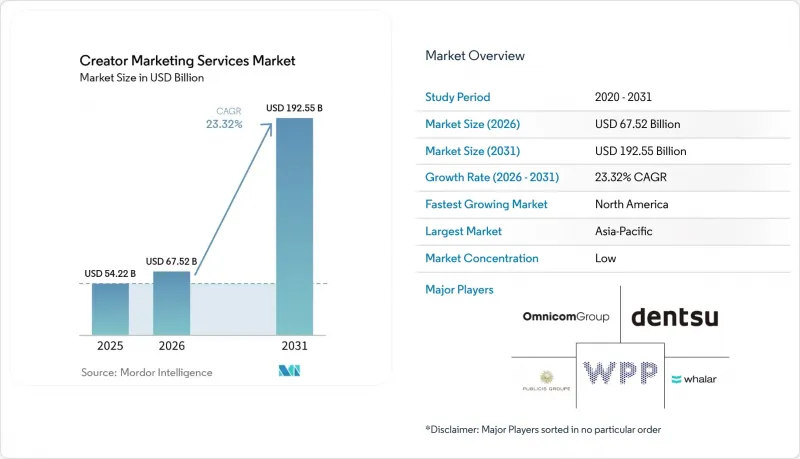
Mordor Intelligence에 의하면, 크리에이터 마케팅 서비스 시장 규모는 2025년에 542억 2,000만 달러로 평가되었습니다. 2026년 675억 2,000만 달러에서 2031년까지 1,925억 5,000만 달러에 이를 것으로 예상되며, 예측 기간(2026-2031년) CAGR은 23.32%를 나타낼 전망입니다.
본 보고서는 서비스 유형(크리에이터 발굴·선정 서비스, 캠페인 관리 서비스, 크리에이터 관계 관리 서비스 등), 최종 사용자 산업(패션·뷰티, 소비재, 식품 및 음료, 기술·전자, 헬스케어·웰니스, 여행 및 호스피탈리티 등) 및 지역별로 분류되어 있습니다. 시장 전망은 금액(달러) 기준으로 제시되어 있습니다.
세계의 크리에이터 마케팅 서비스 시장 동향 및 인사이트
크리에이터 주도 미디어로의 디지털 광고 예산 재분배가 진행 중
예산 출처의 변화는 크리에이터 마케팅 서비스 시장의 주요 동력이 되고 있습니다. 크리에이터 경제 분야의 광고 지출은 2025년에 370억 달러에 달하고, 2026년에는 439억 1,000만 달러에 이를 것으로 예측됩니다. IAB는 크리에이터 광고를 핵심 미디어 채널로 규정하고 있으며, 이에 따라 크리에이터 광고는 단순한 시행착오적인 시도라기보다는 계획적인 미디어 활동에 가까워지고 있습니다. 지출은 새로운 광고 예산만을 통한 자금 조달이라기보다는 기존 디지털 채널이나 유료 채널에서 재분배되는 경향이 강해지고 있습니다. 이러한 움직임에 따라 보고, 어트리뷰션, 성과 기반 계약에 대한 기대가 높아지고 있습니다. 또한, 확립된 미디어 채널에서 사용되는 관리 기법을 활용하여 크리에이터 프로그램을 운영할 수 있는 서비스 제공업체에 대한 수요도 증가하고 있습니다. 브랜드는 가끔씩 진행되는 캠페인에서 정기적인 계획과 콘텐츠 공급이 필요한 지속적인 크리에이터 프로그램으로 전환하고 있습니다. 이러한 변화로 인해 프로그램이 지속적인 상업적 가치를 입증하면 크리에이터를 위한 예산의 안정성이 높아집니다. 또한, 서비스 제공업체에게는 단순한 참여도뿐만 아니라 캠페인 활동과 비즈니스 지표를 연계할 수 있는 능력이 요구되고 있습니다. 광고주는 크리에이터 발굴, 계약 관리, 제작, 추적 및 크리에이터와의 관계 구축에 대한 지원을 필요로 하고 있으므로, 크리에이터 마케팅 서비스 시장은 이러한 변화의 혜택을 보고 있습니다. 측정 능력이 제한적인 대행사는 예산에 대한 설명 책임이 요구됨에 따라 수수료의 정당성을 주장하기 어려워질 가능성이 있습니다. 신뢰할 수 있는 데이터를 제공하는 플랫폼은 브랜드의 운영 모델에서 핵심적인 존재가 될 수 있습니다.
소셜 커머스 연동 확대가 구매 가능한 크리에이터 콘텐츠를 견인
소셜 커머스는 크리에이터 활동의 역할을 인지도 제고에서 거래 지원으로 확대합니다. 크리에이터 콘텐츠는 동일한 플랫폼 세션 내에서 소비자를 상품 발견 단계에서 구매 단계로 이끌 수 있게 되었습니다. 이 과정은 시연, 리뷰, 개인적인 추천이 전환율에 영향을 미치는 카테고리에서 특히 중요합니다. 대행사가 콘텐츠와 커머스가 연계된 크리에이터와의 관계를 모두 관리함으로써 크리에이터 마케팅 서비스 시장은 혜택을 얻습니다. 서비스 제공업체는 링크, 제휴 약관, 상품 재고 현황, 크리에이티브 승인 및 성과 보고서를 조정해야 합니다. 이러한 활동에는 기존의 스폰서 게시물 캠페인보다 더욱 유기적으로 연계된 워크플로가 요구됩니다. 이러한 효과는 소셜 및 커머스 시스템이 밀접하게 연계되어 있는 중국이나 인도에서 특히 중요합니다. 패션, 뷰티, 소비재, 식음료, 여행과 같은 분야에서는 크리에이터가 상품을 홍보하고 직접적인 구매 경로를 제공할 수 있으므로 명확한 활용 사례가 존재합니다. 브랜드 팀은 제휴 구조를 활용하여 보상과 판매 실적을 연계할 수 있습니다. 이를 통해 재무팀과 마케팅팀은 프로그램의 결과를 평가하기 위한 보다 명확한 기준을 확보할 수 있습니다. 또한 크리에이터가 고객 확보 프로세스의 일 부분이 되므로, 크리에이터 선정이 더욱 중요해집니다. 따라서 크리에이터 마케팅 서비스 시장에서는 커머스 데이터나 소매업체 및 플랫폼과의 확고한 연계망을 보유한 사업자가 우위를 점할 수 있습니다.
지속적인 측정 및 ROI 귀속의 과제가 예산 수립에 대한 확신을 저해
측정의 파편화는 크리에이터 마케팅 서비스 시장에 여전히 큰 제약 요인으로 작용하고 있습니다. 크리에이터 발굴, 계약, 지급 및 성과 보고는 대개 서로 다른 도구를 통해 처리되고 있습니다. 또한 플랫폼의 보고 시스템에서도 서로 다른 지표와 기여도 산정 규칙이 사용되고 있습니다. 이로 인해 광고주는 캠페인 간 직접적인 비교를 하기 어렵습니다. IAB는 측정 및 기여도 산정을 크리에이터에 대한 추가 투자를 저해하는 핵심 장벽으로 지목했습니다. 따라서 브랜드는 크리에이터의 활동과 비즈니스 성과를 연결할 수 없는 경우, 대리 지표에 의존할 수밖에 없는 경우가 있습니다. 이 문제는 구매 주기가 긴 제품이나 오프라인에서 판매되는 제품에서 더욱 두드러집니다. 이러한 경우 조회수나 클릭수만으로는 크리에이터의 콘텐츠가 이후 구매에 영향을 미쳤는지 판단할 수 없는 경우가 있습니다. 마케팅 팀은 TikTok, Meta, YouTube 및 기타 플랫폼을 아우르는 일관된 정의와 보고 방식이 필요합니다. 또한 대행사는 캠페인 시작 전에 상업적 목표, 콘텐츠, 측정 방법을 조율해야 합니다. 투명성이 높은 보고서를 작성할 수 있는 제공업체일수록 지속적인 예산 확보가 용이합니다. 공통된 측정 방법이 더 널리 채택되기 전까지는 크리에이터 마케팅 서비스 시장이 중기적으로 제약을 계속 겪을 것입니다.
부문별 분석
2025년, 크리에이터 발굴·선정 서비스는 크리에이터 마케팅 서비스 시장 점유율의 29.33%를 차지했습니다. 이러한 위상은 크리에이터를 적절한 타겟층, 브랜드 정체성 및 캠페인 목표와 연결하는 것의 중요성을 반영합니다. 브랜드가 크리에이터와 지속적으로 제휴하는 경우, 부적절한 선정은 여러 캠페인에 부정적인 영향을 미칠 수 있습니다. ‘캠페인 관리 서비스’ 및 ‘크리에이터 관계 관리 서비스’는 크리에이터 그룹의 조정, 승인, 지급과 같은 업무를 담당합니다. 이러한 서비스를 통해 브랜드는 사내 인력을 그만큼 늘리지 않고도 프로그램을 확대할 수 있습니다.
콘텐츠 제작 및 프로듀싱 서비스는 2026년부터 2031년까지 연평균 성장률(CAGR) 24.66%를 나타낼 것으로 예측됩니다. 이 서비스의 크리에이터 마케팅 시장 규모는 소셜 미디어의 유기적 게시물, 유료 파트너십 광고, 리테일 미디어, 커넥티드 TV 등에서 배포 가능한 콘텐츠에 대한 수요에 힘입고 있습니다. 브랜드들은 여러 미디어 채널에 재활용할 수 있는 크리에이터 콘텐츠를 점점 더 많이 찾고 있습니다. AI를 활용한 제작 도구는 각 플랫폼에 적합한 콘텐츠를 유지하면서 크리에이터의 제작량을 늘리는 데 도움이 됩니다. Agentio사는 자사의 인프라를 통해 브랜드가 창의적인 인사이트 도출부터 실제 파트너십 광고 공개까지 1주일도 채 걸리지 않는 시간 내에 실현할 수 있다고 밝혔습니다. 이는 제공 자료에 기재된 기존 에이전시의 제작 일정(6-10주)과 대비됩니다.
지역별 분석
2025년 크리에이터 마케팅 서비스 시장 규모 중 북미가 36.52%를 차지했습니다. 이 지역에는 주요 광고주, 플랫폼, 대행사, 크리에이터 네트워크가 집중되어 있어 미국이 주도적인 입지를 차지하고 있습니다. IAB(인터랙티브 광고 협회)가 크리에이터 광고를 주요 미디어 채널로 자리매김하고 있는 점은 보다 공식적인 예산 계획 수립을 뒷받침하고 있습니다. 연방거래위원회(FTC)의 지침에는 추천 광고, 인플루언서, 리뷰에 관한 규정이 명시되어 있습니다. ‘소비자 리뷰 및 추천 문구에 관한 규정’은 허위 표시나 오해를 유발하는 행위에 대한 추가적인 규정 준수 체계를 마련하고 있습니다.
캐나다는 국경을 초월한 캠페인을 지원할 수 있는 이중언어를 구사하는 크리에이터 인재를 배출하고 있습니다. 멕시코에서는 크리에이터 생태계와 전자상거래 활동이 발전함에 따라 그 중요성이 높아지고 있습니다. 미국의 광고주들은 2027년까지 크리에이터의 콘텐츠 제작과 유료 프로모션 간의 연계를 더욱 강화할 것으로 예측됩니다. 유럽에서는 정보 공개에 대한 기대, 데이터 개인정보 보호 요건, 그리고 AI 콘텐츠의 투명성에 관한 의무가 시장을 형성하고 있습니다. 독일, 영국, 프랑스, 이탈리아, 스페인은 크리에이터 마케팅 사업을 위한 성숙한 지역 기반을 형성하고 있습니다. 명확한 정보 공개는 스폰서십 활동에 대한 투명한 규칙을 정함으로써 광고주의 신뢰를 뒷받침할 수 있습니다.
아시아태평양은 2031년까지 연평균 성장률(CAGR) 24.34%를 기록하며 가장 빠르게 성장하는 지역이 될 것으로 예측됩니다. 중국의 라이브 커머스 시스템은 콘텐츠에서 구매로 이어지는 직접적인 경로를 가능하게 하고 있습니다. 인도의 크리에이터 경제는 모바일 이용의 보급과 국내 상거래 플랫폼과의 긴밀한 연계로 인해 혜택을 보고 있습니다. 한국은 K-뷰티 및 K-POP 크리에이터 네트워크와 세계적인 문화적 영향력을 결합하고 있습니다. 일본의 규정 준수 요건은 브랜드와 대행사 간의 공식적인 공개 절차를 촉진하고 있습니다. 남미, 중동 및 아프리카는 모바일 우선의 시청자와 크리에이터에 대한 신뢰를 바탕으로, 기존 미디어의 틀을 넘어 커머스 활동을 확대할 수 있는 추가적인 성장 경로를 제공합니다.
기타 혜택 :
- 엑셀 형식 시장 예측(ME) 시트
- 3개월간의 애널리스트 지원
자주 묻는 질문
목차
제1장 서론
제2장 조사 방법
제3장 개요
제4장 시장 구도
제5장 시장 규모 및 성장 예측
제6장 경쟁 구도
제7장 시장 기회 및 향후 전망
KTH 26.09.02According to Mordor Intelligence, the creator marketing services market size was valued at USD 54.22 billion in 2025 and is estimated to grow from USD 67.52 billion in 2026 to reach USD 192.55 billion by 2031, at a CAGR of 23.32% during the forecast period (2026-2031).
This report is Segmented by Service Type (Creator Discovery and Selection Services, Campaign Management Services, Creator Relationship Management Services, and More), End-User Industry (Fashion and Beauty, Consumer Goods, Food and Beverage, Technology and Electronics, Healthcare and Wellness, Travel and Hospitality, and More), and Geography. The Market Forecasts are Provided in Terms of Value (USD).
Global Creator Marketing Services Market Trends and Insights
Rising Reallocation of Digital Advertising Budgets Toward Creator-Led Media
The shift in budget source is a major force in the creator marketing services market. Creator-economy advertising spending reached USD 37 billion in 2025 and is expected to reach USD 43.91 billion in 2026. The IAB described creator advertising as a core media channel, which places it closer to planned media activity than discretionary experimentation. Spending is increasingly redirected from traditional digital and paid channels rather than funded only through new advertising budgets. That movement brings stronger expectations for reporting, attribution, and performance-based contracts. It also increases demand for service providers that can operate creator programs with the controls used in established media channels. Brands are moving from occasional activations to continuous creator programs that need regular planning and supply of content. This change can make creator budgets more durable when programs show consistent commercial value. It also puts pressure on providers to connect campaign activity with business measures rather than engagement alone. The creator marketing services market gains from this shift because advertisers need discovery, contract administration, production, tracking, and creator relationship support. Agencies with limited measurement capabilities may find it harder to defend their fees as budgets become more accountable. Platforms that provide reliable data can become central to a brand's operating model.
Expansion of Social Commerce Integrations Driving Shoppable Creator Content
Social commerce expands the role of creator activity from awareness building to transaction support. Creator content can now lead consumers from product discovery to a purchase within the same platform session. This process is especially relevant to categories where demonstrations, reviews, and personal recommendations influence conversion. The creator marketing services market benefits when agencies manage both content and commerce-linked creator relationships. Service providers must then coordinate links, affiliate terms, product availability, creative approvals, and performance reporting. These activities require a more connected workflow than a conventional sponsored post campaign. The effect is particularly important across China and India, where social and commerce systems are closely connected. Fashion, beauty, consumer goods, food and beverage, and travel have clear use cases because creators can showcase products and offer a direct purchase path. Brand teams can use affiliate structures to connect compensation with sales outcomes. This gives finance and marketing teams a clearer basis for assessing program results. It also makes creator selection more consequential because the creator becomes part of the customer acquisition process. The creator marketing services market can therefore reward operators with commerce data and established retailer or platform connections.
Persistent Measurement and ROI Attribution Challenges Limiting Budget Confidence
Measurement fragmentation remains a major restraint for the creator marketing services market. Discovery, contracting, payment, and performance reporting are often handled through separate tools. Platform reporting systems also use different measures and attribution rules. This makes direct comparisons between campaigns harder for advertisers. The IAB identified measurement and attribution as a central barrier to additional creator investment. Brands may therefore rely on proxy metrics when they cannot connect creator activity to a business outcome. The issue is more significant for products with long buying cycles or sales that occur offline. In these cases, a view or click alone may not show whether creator content influenced a later purchase. Marketing teams need consistent definitions and reporting methods across TikTok, Meta, YouTube, and other platforms. Agency operations must also align commercial objectives, content, and measurement before a campaign begins. Providers that can produce transparent reporting are better placed to retain recurring budgets. The creator marketing services market will continue to face a medium-term constraint until shared measurement practices become more widely adopted.
Other drivers and restraints analyzed in the detailed report include:
- AI-Enabled Creator Discovery, Matching, and Campaign Optimization
- Accelerating Adoption of Short-Form Video Formats by Brands Globally
- Influencer Fraud, Fake Engagement, and Brand Safety Incidents Eroding Advertiser Trust
For complete list of drivers and restraints, kindly check the Table Of Contents.
Segment Analysis
Creator Discovery and Selection Services held 29.33% of the creator marketing services market share in 2025. The position reflects the importance of matching a creator with the right audience, brand setting, and campaign objective. A poor selection can affect several campaigns when brands work with creators on an ongoing basis. Campaign Management Services and Creator Relationship Management Services address the operational work of coordinating creator groups, approvals, and payments. These services help brands scale programs without increasing internal staffing at the same pace.
Content Creation and Production Services is projected to record a 24.66% CAGR from 2026 to 2031. The creator marketing services market size for this service is supported by demand for content that can appear in organic social posts, paid partnership ads, retail media, and connected television. Brands increasingly seek creator material that can be adapted across several media placements. AI-assisted production tools can help creators increase output while keeping content suited to each platform. Agentio stated that its infrastructure allowed brands to move from creative insight to live partnership ads in less than 1 week. This compares with traditional agency production schedules of 6-10 weeks described in the supplied material.
Complete Report Scope:
- By Service Type
- Creator Discovery and Selection Services
- Campaign Management Services
- Creator Relationship Management Services
- Content Creation and Production Services
- Performance Tracking and Analytics Services
- Other Service Types
- By End-User Industry
- Fashion and Beauty
- Consumer Goods
- Food and Beverage
- Technology and Electronics
- Healthcare and Wellness
- Travel and Hospitality
- Gaming and Entertainment
- Other End-user Industries
- By Geography
- North America
- United States
- Canada
- Mexico
- South America
- Brazil
- Argentina
- Chile
- Rest of South America
- Europe
- Germany
- United Kingdom
- France
- Italy
- Spain
- Rest of Europe
- Asia-Pacific
- China
- Japan
- India
- South Korea
- Australia
- Rest of Asia-Pacific
- Middle East and Africa
- Saudi Arabia
- United Arab Emirates
- South Africa
- Rest of Middle East and Africa
- North America
Geography Analysis
North America accounted for 36.52% of the creator marketing services market size in 2025. The United States leads the region because large advertisers, platforms, agencies, and creator networks are concentrated there. The IAB's treatment of creator advertising as a core media channel supports more formal budget planning. Federal Trade Commission guidance provides rules for endorsements, influencers, and reviews. The Consumer Reviews and Testimonials Rule adds a further compliance framework for deceptive practices.
Canada contributes bilingual creator talent that can support cross-border campaigns. Mexico is becoming more important as its creator ecosystem and e-commerce activity develop. U.S. advertisers are expected to bring creator production and paid amplification closer together by 2027. Europe is shaped by disclosure expectations, data privacy requirements, and AI-content transparency obligations. Germany, the United Kingdom, France, Italy, and Spain form a developed regional base for creator marketing operations. Clear disclosure can support advertiser confidence by setting transparent rules for sponsored activity.
Asia-Pacific is expected to be the fastest-growing regional area at a 24.34% CAGR through 2031. China's live-commerce systems support direct paths from content to purchases. India's creator economy benefits from widespread mobile usage and closer links to domestic commerce platforms. South Korea combines K-beauty and K-pop creator networks with global cultural influence. Japan's compliance requirements have encouraged formal disclosure procedures among brands and agencies. South America and the Middle East and Africa provide additional growth paths where mobile-first audiences and creator trust can extend commerce activity beyond traditional media.
- Publicis Groupe S.A.
- WPP plc
- Interpublic Group of Companies, Inc.
- Omnicom Group Inc.
- Dentsu Inc.
- Daniel J. Edelman Holdings, Inc.
- Whalar Group Ltd.
- IZEA Worldwide, Inc.
- Viral Nation Inc.
- Billion Dollar Boy Ltd.
- Open Influence, Inc.
- Obviously Social LLC
- HireInfluence LLC
- Socially Powerful Ltd.
- The Influencer Marketing Factory LLC
- CreatorIQ Inc.
- Traackr, Inc.
- Upfluence SAS
- Onalytica Ltd.
- TopRank Marketing, Inc.
- NeoReach Inc.
- Linqia, Inc.
- LTK Co.
- AnyMind Group, Inc.
- Later, Inc.
- Meltwater NV
- Impact.com, Inc.
- Grin Technologies Inc.
Additional Benefits:
- The market estimate (ME) sheet in Excel format
- 3 months of analyst support
TABLE OF CONTENTS
1 INTRODUCTION
- 1.1 Study Assumptions and Market Definition
- 1.2 Scope of the Study
2 RESEARCH METHODOLOGY
3 EXECUTIVE SUMMARY
4 MARKET LANDSCAPE
- 4.1 Market Overview
- 4.2 Market Drivers
- 4.2.1 Rising Reallocation of Digital Advertising Budgets Toward Creator-Led Media
- 4.2.2 Expansion of Social Commerce Integrations Driving Shoppable Creator Content
- 4.2.3 AI-Enabled Creator Discovery, Matching, and Campaign Optimization
- 4.2.4 Accelerating Adoption of Short-Form Video Formats by Brands Globally
- 4.2.5 B2B Enterprise Adoption of Creator Marketing for Thought Leadership and Executive Positioning on LinkedIn
- 4.2.6 Agentic AI Deployment in Autonomous Creator Campaign Management Reducing Human Overhead
- 4.3 Market Restraints
- 4.3.1 Persistent Measurement and ROI Attribution Challenges Limiting Budget Confidence
- 4.3.2 Influencer Fraud, Fake Engagement, and Brand Safety Incidents Eroding Advertiser Trust
- 4.3.3 Creator Talent Burnout and High Attrition Rates Disrupting Long-Term Brand Partnership Continuity
- 4.3.4 Fragmented Global Regulatory Frameworks for Sponsored Content Disclosure Creating Compliance Complexity
- 4.4 Industry Value Chain Analysis
- 4.5 Regulatory Landscape
- 4.6 Technological Outlook
- 4.7 Porter's Five Forces Analysis
- 4.7.1 Threat of New Entrants
- 4.7.2 Bargaining Power of Buyers
- 4.7.3 Bargaining Power of Suppliers
- 4.7.4 Threat of Substitute Products and Services
- 4.7.5 Competitive Rivalry within the Industry
- 4.8 Impact of Macroeconomic Factors on the Market
5 MARKET SIZE AND GROWTH FORECASTS (VALUE)
- 5.1 By Service Type
- 5.1.1 Creator Discovery and Selection Services
- 5.1.2 Campaign Management Services
- 5.1.3 Creator Relationship Management Services
- 5.1.4 Content Creation and Production Services
- 5.1.5 Performance Tracking and Analytics Services
- 5.1.6 Other Service Types
- 5.2 By End-User Industry
- 5.2.1 Fashion and Beauty
- 5.2.2 Consumer Goods
- 5.2.3 Food and Beverage
- 5.2.4 Technology and Electronics
- 5.2.5 Healthcare and Wellness
- 5.2.6 Travel and Hospitality
- 5.2.7 Gaming and Entertainment
- 5.2.8 Other End-user Industries
- 5.3 By Geography
- 5.3.1 North America
- 5.3.1.1 United States
- 5.3.1.2 Canada
- 5.3.1.3 Mexico
- 5.3.2 South America
- 5.3.2.1 Brazil
- 5.3.2.2 Argentina
- 5.3.2.3 Chile
- 5.3.2.4 Rest of South America
- 5.3.3 Europe
- 5.3.3.1 Germany
- 5.3.3.2 United Kingdom
- 5.3.3.3 France
- 5.3.3.4 Italy
- 5.3.3.5 Spain
- 5.3.3.6 Rest of Europe
- 5.3.4 Asia-Pacific
- 5.3.4.1 China
- 5.3.4.2 Japan
- 5.3.4.3 India
- 5.3.4.4 South Korea
- 5.3.4.5 Australia
- 5.3.4.6 Rest of Asia-Pacific
- 5.3.5 Middle East and Africa
- 5.3.5.1 Saudi Arabia
- 5.3.5.2 United Arab Emirates
- 5.3.5.3 South Africa
- 5.3.5.4 Rest of Middle East and Africa
- 5.3.1 North America
6 COMPETITIVE LANDSCAPE
- 6.1 Market Concentration
- 6.2 Strategic Moves
- 6.3 Market Share Analysis
- 6.4 Company Profiles (includes Global Level Overview, Market Level Overview, Core Segments, Financials as available, Strategic Information, Market Rank/Share, Products and Services, Recent Developments)
- 6.4.1 Publicis Groupe S.A.
- 6.4.2 WPP plc
- 6.4.3 Interpublic Group of Companies, Inc.
- 6.4.4 Omnicom Group Inc.
- 6.4.5 Dentsu Inc.
- 6.4.6 Daniel J. Edelman Holdings, Inc.
- 6.4.7 Whalar Group Ltd.
- 6.4.8 IZEA Worldwide, Inc.
- 6.4.9 Viral Nation Inc.
- 6.4.10 Billion Dollar Boy Ltd.
- 6.4.11 Open Influence, Inc.
- 6.4.12 Obviously Social LLC
- 6.4.13 HireInfluence LLC
- 6.4.14 Socially Powerful Ltd.
- 6.4.15 The Influencer Marketing Factory LLC
- 6.4.16 CreatorIQ Inc.
- 6.4.17 Traackr, Inc.
- 6.4.18 Upfluence SAS
- 6.4.19 Onalytica Ltd.
- 6.4.20 TopRank Marketing, Inc.
- 6.4.21 NeoReach Inc.
- 6.4.22 Linqia, Inc.
- 6.4.23 LTK Co.
- 6.4.24 AnyMind Group, Inc.
- 6.4.25 Later, Inc.
- 6.4.26 Meltwater NV
- 6.4.27 Impact.com, Inc.
- 6.4.28 Grin Technologies Inc.
7 MARKET OPPORTUNITIES AND FUTURE OUTLOOK
- 7.1 White-Space and Unmet-Need Assessment


