

|
시장보고서
상품코드
2120297
북미의 에너지 관리 시스템 : 시장 점유율 분석, 업계 동향과 통계, 성장 예측(2026-2031년)North America Energy Management Systems - Market Share Analysis, Industry Trends & Statistics, Growth Forecasts (2026 - 2031) |
||||||
 Mordor Intelligence
Mordor Intelligence에 따르면 2026년 북미의 에너지 관리 시스템(EMS) 시장 규모는 175억 8,000만 달러로 추정되고 있으며, 2025년 153억 1,000만 달러에서 확대하며, 2031년에는 351억 4,000만 달러에 달할 것으로 예측됩니다.
2026-2031년에 연평균 성장률(CAGR) 14.85%로 성장할 것으로 전망됩니다.
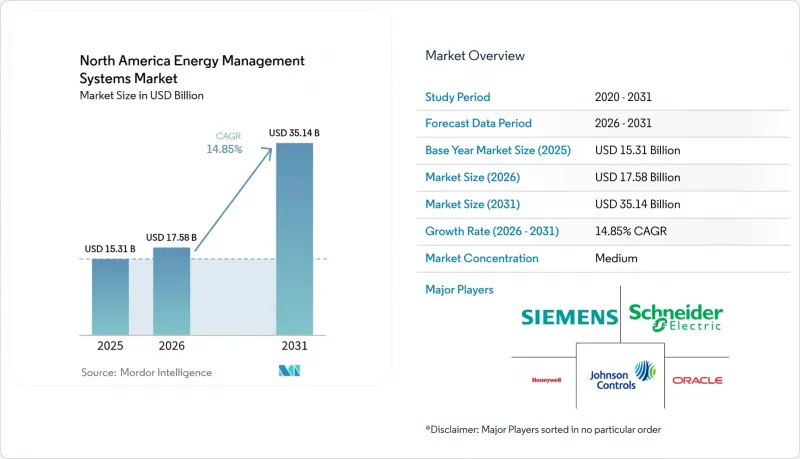
이 보고서는 EMS의 유형(빌딩용 에너지 관리 시스템(BEMS), 가정용 에너지 관리 시스템(HEMS) 등), 구성 요소(하드웨어, 소프트웨어, 서비스), 배포 방식(온프레미스, 클라우드 기반 등), 최종사용자 분야(상업, 주거 등), 통신 기술(유선, 무선),및 지역별로 분류되어 있습니다.
북미 에너지 관리 시스템 시장의 동향 및 인사이트
미국 ‘인플레이션 억제법’에 따른 개보수 인센티브
3,700억 달러 규모의 ‘인플레이션 감축법’에 따른 넉넉한 세액 공제 및 리베이트로 인해 개보수 공사의 투자 회수 기간이 단축되었으며, 네트워크화된 제어 시스템 및 분석 플랫폼의 즉각적인 도입이 촉진되고 있습니다. 상업용 건물의 경우, 요건을 충족하는 개보수 공사에 대해 1제곱피트당 최대 5달러의 공제가 가능하며, 캘리포니아주 등 일부 주에서는 20-35%의 에너지 절감을 목표로 주택 전체를 대상으로 한 리베이트 제도 시행을 위해 2억 9,100만 달러의 예산을 확보하고 있습니다. 국내 생산 세액 공제는 지역내 EMS 하드웨어 생산을 촉진하고, 공급망 안정화에 기여하고 있습니다. 그 실례로, 존슨 컨트롤즈(Johnson Controls)사는 연방 및 주 정부의 인센티브를 결합하여 활용한 성과 계약을 통해 고객에게 84억 달러의 절감 효과를 가져다주었다고 보고하고 있습니다.
스마트 그리드 구축 및 AMI 보급
유틸리티들은 2023년에 전력망 업그레이드에 3,200억 달러를 투자했으며, 그중 509억 달러는 첨단 계량 인프라(AMI)를 갖춘 배전 자산에 대한 투자였습니다. AMI 데이터는 최신 플랫폼에 통합된 AI 엔진에 상세한 부하 곡선을 제공하여 가상발전소(VPP) 참여를 가능하게 합니다. 미국 에너지부는 2030년까지 80-160기가와트의 VPP 용량이 예상된다고 전망하고 있습니다. 엣지 분석을 통해 응답 시간이 최대 92% 단축되어, 건물은 거주자의 쾌적함을 유지하면서 유연성을 수익화할 수 있게 됩니다. 멕시코의 230억 달러 규모의 송전망 프로그램은 호환 가능한 솔루션에 대한 국경을 초월한 수요를 창출하고 있습니다.
높은 초기 비용과 운영 및 유지보수(O&M) 비용
중규모 사무실용 턴키 시스템의 도입 비용은 유지 관리비를 제외하더라도 5만 달러를 초과할 수 있으며, 수명 주기 비용이 초기 투자액의 5배에 달하는 경우도 드물지 않습니다. 지역별 인센티브가 제한적인 경우, 주택 구매자는 이러한 부담을 더욱 크게 느낍니다. 에너지-어-서비스(EaaS) 계약은 이러한 위험을 완화해 줍니다. 코브 카운티의 710만 달러 규모의 계약에서는 20년 동안 200만 달러의 유틸리티 비용 절감이 보장되어 있습니다. 하지만 반도체 부족과 더 깨끗한 칩 제조에 필요한 자본 투입으로 인해 단기적으로는 하드웨어 가격이 상승할 전망입니다.
부문 분석
2025년, 건물용 에너지 관리 시스템은 운영의 투명성과 입주자의 쾌적성을 중시하는 대규모 상업용 부동산 포트폴리오에 힘입어 북미 에너지 관리 시스템 시장에서 61.40%라는 압도적인 점유율을 유지했습니다. 한편, 가정용 에너지 관리 시스템은 스마트 스피커의 보급, 전력 회사의 리베이트, 상호 운용성 기준의 성숙을 배경으로 급속히 확대되고 있습니다. 2031년까지 연평균 성장률(CAGR)이 16.72%에 달하는 이 부문은 북미 에너지 관리 시스템 시장에서 가장 혁신적인 분야로 자리매김하고 있습니다.
연간 데이터에 따르면 기계학습 알고리즘을 통해 공조(HVAC) 및 가전제품의 가동 일정이 조정될 경우, HEMS 도입으로 가정의 에너지 소비량이 20% 이상 감소하는 것으로 나타났습니다. ‘Matter’ 프로토콜의 채택으로 기기 페어링이 간소화되어 일반 소비자층으로의 보급이 가속화되고 있습니다. 산업용 EMS(에너지 관리 시스템)는 중간 규모의 틈새 시장을 차지하고 있으며, 중공업 고객을 대상으로 공정별 분석 기능과 규정 준수 대시보드를 제공하고 있습니다. 이러한 동향들이 결합되어 북미 에너지 관리 시스템 시장은 다양성과 회복탄력성을 유지하고 있습니다.
서비스 부문은 2025년에 42.60%의 점유율을 차지하며, 2031년까지 연평균 성장률(CAGR)이 16.55%로 가장 높은 수치를 기록하고 있으며, 일회성 하드웨어 거래에서 지속적인 최적화 계약으로의 결정적인 전환이 진행되고 있음을 보여줍니다. 지속적인 수입원에는 모니터링, 분석, 그리고 성과 위험을 공급자 측으로 이전하는 절감 보장 계약이 포함됩니다. 하드웨어는 필수적이지만 점차 상품화되는 반면, 클라우드 소프트웨어 계층은 예측 제어를 통해 가치를 창출하고 있습니다.
서비스 주도형 접근 방식에서는 대개 자금 조달, 리트로 커미셔닝, 운영자 교육이 패키지로 묶여 ‘에너지-어-서비스(EaaS)’ 제공을 위한 통합적인 로드맵을 형성하고 있습니다. 린백 홀딩스는 데이터베이스 검토를 통해 사이트별로 수백 가지의 실용적인 인사이트를 도출하고 있으며, 이는 분석 역량이 단순한 장비 노하우를 뛰어넘고 있음을 보여줍니다. 이러한 추세로 인해 자본 예산이 빠듯한 상황에서도 북미 에너지 관리 시스템 시장의 성장세는 유지되고 있습니다.
기타 혜택:
- 엑셀 형식의 시장 예측(ME) 시트
- 3개월간의 애널리스트 지원
자주 묻는 질문
목차
제1장 서론
제2장 조사 방법
제3장 개요
제4장 시장 구도
제5장 시장 규모와 성장 예측
제6장 경쟁 구도
제7장 시장 기회와 향후 전망
KSA 26.09.02According to Mordor Intelligence, North America energy management systems market size in 2026 is estimated at USD 17.58 billion, growing from 2025 value of USD 15.31 billion with 2031 projections showing USD 35.14 billion, growing at 14.85% CAGR over 2026-2031.
This report is Segmented by EMS Type (Building Energy Management Systems (BEMS), Home Energy Management Systems (HEMS), and More), Component (Hardware, Software, and Services), Deployment Mode (On-Premise, Cloud-Based, and More), End-User Sector (Commercial, Residential, and More), Communication Technology (Wired and Wireless), and Geography.
North America Energy Management Systems Market Trends and Insights
US Inflation Reduction Act Retrofit Incentives
Generous tax credits and rebates under the USD 370 billion Inflation Reduction Act cut retrofit payback periods and spur immediate procurement of networked controls and analytics platforms. Commercial buildings can now deduct up to USD 5.00 per square foot of qualifying upgrades, while states such as California have secured USD 291 million to deliver whole-home rebates that target 20-35% savings. Domestic production credits encourage local EMS hardware output and cushion supply chains. As evidence, Johnson Controls reports USD 8.4 billion in customer savings created by performance contracts that ride on federal and state incentive stacks.
Smart-Grid Roll-outs and AMI Penetration
Utilities invested USD 320 billion in grid upgrades during 2023, including USD 50.9 billion for distribution assets that host advanced metering infrastructure. AMI data feeds granular load curves into AI engines embedded in modern platforms and enables virtual power plant (VPP) participation. The US Department of Energy projects 80-160 GW of VPP capacity by 2030. Edge analytics shrinks response times by up to 92%, letting buildings monetize flexibility while preserving occupant comfort. Mexico's USD 23 billion grid program adds cross-border demand for compatible solutions.
High Upfront and O&M Costs
Turnkey systems for mid-sized offices can surpass USD 50,000 before maintenance fees, and life-cycle costs often climb to five times the initial outlay. Residential buyers feel the pinch even more sharply when local incentives are limited. Energy-as-a-service contracts mitigate risk: Cobb County's USD 7.1 million deal guarantees USD 2 million utility savings over 20 years. Still, semiconductor shortages and the capital demands of cleaner chip fabrication inflate hardware prices in the near term.
Other drivers and restraints analyzed in the detailed report include:
- Corporate VPP and Net-Zero Procurement Strategies
- Dynamic Real-Time Utility Tariffs
- Data-Security and Privacy Concerns
For complete list of drivers and restraints, kindly check the Table Of Contents.
Segment Analysis
Building Energy Management Systems retained a commanding 61.40% share of the North America energy management systems market in 2025, anchored by large commercial portfolios that prize operational transparency and tenant comfort. Yet Home Energy Management Systems are scaling swiftly on the back of smart-speaker ubiquity, utility rebates, and maturing interoperability standards. The segment's 16.72% CAGR through 2031 makes it the most disruptive pocket of the North America energy management systems market.
Annual data show HEMS installations reducing household consumption by more than 20% once machine-learning algorithms adjust HVAC and appliance schedules. Matter protocol adoption simplifies device pairing and propels mainstream appeal. Industrial EMS offerings occupy a middle niche, providing process-specific analytics and compliance dashboards for heavy manufacturing clients. Collectively, these dynamics keep the North America energy management systems market diversified and resilient.
Services captured 42.60% share in 2025 and delivered the highest 16.55% CAGR to 2031, underscoring a decisive tilt away from one-off hardware deals toward continuous optimization agreements. Recurring revenue streams cover monitoring, analytics, and guaranteed-savings contracts that shift performance risk to providers. Hardware is indispensable but increasingly commoditized, while cloud software layers create value through predictive controls.
Service-led engagements often bundle financing, retro-commissioning, and operator training, forming an integrated pathway to energy-as-a-service delivery. Limbach Holdings uses data-driven reviews to uncover hundreds of actionable insights per site, illustrating how analytics skills eclipse pure equipment know-how. These developments sustain the North America energy management systems market momentum even when capital budgets tighten.
Complete Report Scope:
- By EMS Type
- Building Energy Management Systems (BEMS)
- Home Energy Management Systems (HEMS)
- Industrial Energy Management Systems (IEMS)
- By Component
- Hardware
- Software
- Services
- By Deployment Mode
- On-Premise
- Cloud-based
- Edge / Hybrid
- By End-User Sector
- Commercial
- Industrial and Manufacturing
- Residential
- Healthcare Facilities
- Education Campuses
- Utilities and Energy Providers
- By Communication Technology
- Wired (BACnet, Modbus, etc.)
- Wireless (Zigbee, Wi-Fi, Bluetooth, Z-Wave)
- By Country
- United States
- Canada
- Mexico
List of Companies Covered in this Report:
- Johnson Controls International plc
- Honeywell International Inc.
- Siemens AG
- Schneider Electric SE
- General Electric Company
- Oracle Corporation
- Panasonic Holdings Corporation
- Uplight Inc.
- Enel X North America
- ABB Ltd.
- IBM Corporation
- Eaton Corporation plc
- Rockwell Automation Inc.
- Cisco Systems Inc.
- Honeywell Building Technologies
- Schneider EcoStruxure
- Itron Inc.
- GridPoint Inc.
- Trane Technologies plc
- Schneider EcoStruxure (division)
Additional Benefits:
- The market estimate (ME) sheet in Excel format
- 3 months of analyst support
TABLE OF CONTENTS
1 INTRODUCTION
- 1.1 Study Assumptions and Market Definition
- 1.2 Scope of the Study
2 RESEARCH METHODOLOGY
3 EXECUTIVE SUMMARY
4 MARKET LANDSCAPE
- 4.1 Market Overview
- 4.2 Market Drivers
- 4.2.1 Increasing electricity prices and sustainability commitments
- 4.2.2 Stringent energy-efficiency regulations and building codes
- 4.2.3 Smart-grid roll-outs and AMI penetration
- 4.2.4 US Inflation Reduction Act retrofit incentives
- 4.2.5 Corporate VPP and net-zero procurement strategies
- 4.2.6 Dynamic real-time utility tariffs
- 4.3 Market Restraints
- 4.3.1 High upfront and OandM costs
- 4.3.2 Data-security and privacy concerns
- 4.3.3 Integrator skill-set shortage
- 4.3.4 Fragmented legacy protocols and interoperability gaps
- 4.4 Value Chain Analysis
- 4.5 Regulatory Landscape
- 4.6 Technological Outlook
- 4.7 Porter's Five Forces Analysis
- 4.7.1 Bargaining Power of Suppliers
- 4.7.2 Bargaining Power of Buyers
- 4.7.3 Threat of New Entrants
- 4.7.4 Threat of Substitutes
- 4.7.5 Intensity of Competitive Rivalry
- 4.8 Investment Analysis
5 MARKET SIZE AND GROWTH FORECASTS (VALUE)
- 5.1 By EMS Type
- 5.1.1 Building Energy Management Systems (BEMS)
- 5.1.2 Home Energy Management Systems (HEMS)
- 5.1.3 Industrial Energy Management Systems (IEMS)
- 5.2 By Component
- 5.2.1 Hardware
- 5.2.2 Software
- 5.2.3 Services
- 5.3 By Deployment Mode
- 5.3.1 On-Premise
- 5.3.2 Cloud-based
- 5.3.3 Edge / Hybrid
- 5.4 By End-User Sector
- 5.4.1 Commercial
- 5.4.2 Industrial and Manufacturing
- 5.4.3 Residential
- 5.4.4 Healthcare Facilities
- 5.4.5 Education Campuses
- 5.4.6 Utilities and Energy Providers
- 5.5 By Communication Technology
- 5.5.1 Wired (BACnet, Modbus, etc.)
- 5.5.2 Wireless (Zigbee, Wi-Fi, Bluetooth, Z-Wave)
- 5.6 By Country
- 5.6.1 United States
- 5.6.2 Canada
- 5.6.3 Mexico
6 COMPETITIVE LANDSCAPE
- 6.1 Market Concentration
- 6.2 Strategic Moves
- 6.3 Market Share Analysis
- 6.4 Company Profiles (includes Global level Overview, Market level overview, Core Segments, Financials as available, Strategic Information, Market Rank/Share for key companies, Products and Services, and Recent Developments)
- 6.4.1 Johnson Controls International plc
- 6.4.2 Honeywell International Inc.
- 6.4.3 Siemens AG
- 6.4.4 Schneider Electric SE
- 6.4.5 General Electric Company
- 6.4.6 Oracle Corporation
- 6.4.7 Panasonic Holdings Corporation
- 6.4.8 Uplight Inc.
- 6.4.9 Enel X North America
- 6.4.10 ABB Ltd.
- 6.4.11 IBM Corporation
- 6.4.12 Eaton Corporation plc
- 6.4.13 Rockwell Automation Inc.
- 6.4.14 Cisco Systems Inc.
- 6.4.15 Honeywell Building Technologies
- 6.4.16 Schneider EcoStruxure
- 6.4.17 Itron Inc.
- 6.4.18 GridPoint Inc.
- 6.4.19 Trane Technologies plc
- 6.4.20 Schneider EcoStruxure (division)
7 MARKET OPPORTUNITIES AND FUTURE OUTLOOK
- 7.1 White-space and Unmet-need Assessment


