

|
시장보고서
상품코드
2121545
항진균제 : 시장 점유율 분석, 업계 동향과 통계, 성장 예측(2026-2031년)Anti-Fungal Drugs - Market Share Analysis, Industry Trends & Statistics, Growth Forecasts (2026 - 2031) |
||||||
 Mordor Intelligence
Mordor Intelligence에 의하면, 항진균제 시장 규모는 2025년에 172억 6,000만 달러로 평가되었고, 2026년 179억 3,000만 달러에서 2031년까지 216억 9,000만 달러에 이를 것으로 예측되며, 예측 기간(2026-2031년) CAGR은 3.88%를 기록할 전망입니다.
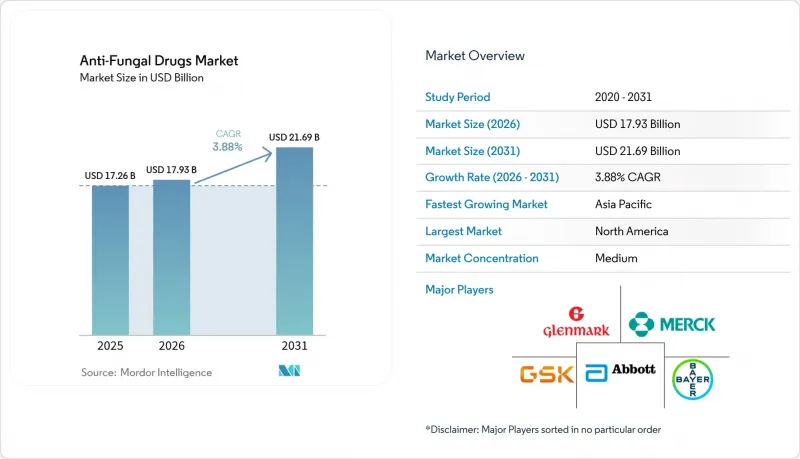
본 보고서는 약물 분류별(아졸계, 에키노칸진계, 폴리엔계, 알릴아민계 및 대사 길항제),적응증(칸디다증, 피부사상균증 등), 제형(캡슐 등), 유통 채널(병원 약국 등), 지역(북미, 유럽, 아시아태평양, 중동 및 아프리카, 남미)별로 분류되어 있습니다. 시장 예측은 금액(달러) 기준으로 제시되어 있습니다.
전 세계 항진균제 시장 동향 및 인사이트
면역결핍 환자 증가
암 치료의 발전과 장기 이식 프로그램의 확대로 인해, 전신성 항진균제를 통한 예방 또는 치료가 필요한 환자층이 증가하고 있습니다. 일부 고위험 암 환자 집단에서는 침습성 진균 감염의 발생률이 25%를 초과하고 있습니다. 또한, 간부전 환자에서 침습성 아스페르길루스증의 사망률은 43.4%에 달하며, 이는 감염되지 않은 환자의 15.75%와 비교했을 때 높은 수치입니다. 레자팽긴과 같은 주 1회 투여하는 에키노칸딘계 약물은 외래 진료 모델에 적합하여, 정맥 주사 투여 빈도를 줄이고 병원의 수용 능력을 확보하고 있습니다. 신흥 경제국에서 이식 센터가 확대됨에 따라 예방 투여 기간이 장기화되면서 환자 1인당 약물 사용량이 증가하고 있으며, 이는 항진균제 시장을 직접적으로 뒷받침하고 있습니다.
외용 항진균제의 OTC(일반의약품)로서의 접근성 확대
소매점에서 구할 수 있는 기회가 늘어나면서, 제품의 보급 범위는 처방전을 통한 유통 경로를 넘어 확대되고 있습니다. 메디케어 파트 D에서는 외용 항진균제의 청구 건수가 650만 건, 비용이 2억 3,100만 달러를 기록했습니다. 이 처방전의 40%는 1차 진료 의사가 발행한 것으로, 일반 임상의의 참여가 주류를 이루고 있음을 보여줍니다. 그러나 클로트리마졸·베타메타손 처방 건수 중 진균증의 확정 진단과 일치한 경우는 고작 31.2%에 그쳐, 약물의 적정 사용 미비가 약물 내성을 가속화할 우려가 있음을 여실히 드러내고 있습니다. 나노 입자 전달체를 통해 피부 침투성이 향상되고 치료 기간이 단축되는 반면, 트리코피톤 인도티네아에(Trichophyton indotineae) 등의 내성 균주 출현으로 인해 대체 외용 아졸계 약물에 대한 수요가 증가하고 있습니다.
주요 항진균제 계열 전반에 걸쳐 증가하는 약물 내성
다제내성 칸디다 아우리스(Candida auris)는 현재 40개국 이상으로 확산되었으며, 아졸계, 에키노칸진계, 폴리엔계에 대한 감수성이 저하되어 있습니다. 메타분석에 따르면, 히포클레아목 및 마이크로아스카목에서 내성이 증가한 것으로 밝혀졌으며, 이는 환경 내 아졸계 약제에 대한 노출을 반영하고 있습니다. FDA 승인을 받은 전신 투여용 약물군은 불과 7종에 불과하며, 예방 요법 중 발생하는 돌파성 진균 감염도 증가 추세에 있어 새로운 표적의 확립이 시급한 과제로 대두되고 있습니다.
부문 분석
2025년, 아졸계 약물은 매출의 53.02%를 차지할 것으로 예상되며, 항진균제 시장은 확립된 광범위 스펙트럼 치료 프로토콜에 의해 뒷받침되고 있습니다. 칸디다속 및 아스페르길루스속에 대한 이 약물의 정균 작용은 여전히 많은 적응증에서 1차 치료법의 기반이 되고 있습니다. 그러나 주 1회 투여하는 에키노칸딘계 약물인 레자펑진은 편의성 면에서 우위를 점하고 있으며, 2031년까지 연평균 성장률(CAGR) 4.76%로 시장을 주도할 것으로 예측됩니다. 병원에서는 입원 기간을 단축하기 위해, 장시간 작용형 에키노칸딘 계열 약물을 외래 정맥 주사 항진균 요법 프로그램에 포함시키고 있습니다. 리포솜형 암포테리신 B와 같은 폴리엔계 항진균제는 내성이나 신장 기능 장애로 인해 치료 선택지가 좁아진 경우, 여전히 구제 요법의 주축을 이루고 있습니다. 알릴아민계 항진균제는 테르비나핀 내성 피부사상균에 대처하기 위해, 임상의들은 치료 초기 단계에서 전신용 아졸계 항진균제로 전환할 수밖에 없습니다. 항대사제의 사용은 크립토코커스증이나 중증 칸디다증에 대한 병용 요법으로 제한되어 있지만, 아졸계 약물의 유효성을 유지할 가능성이 있는 시너지 효과를 가져옵니다. 내성 압력이 높아짐에 따라 병용 요법 전반의 중요성이 커지고 있습니다.
스튜어드십으로의 움직임 또한 조달 동향을 변화시키고 있습니다. 비용이 최적화된 아졸계 제네릭 의약품이 처방 목록을 장악하는 한편, 고가의 에키노칸진은 입원 기간 단축으로 이어지는 약제경제학적 근거에 의존하고 있습니다. 그 결과, 항진균제 시장은 규모를 무기로 삼는 아졸계 제약사와 혁신을 주도하는 에키노칸진 개발 기업이라는 양극화된 경쟁 환경을 유지하고 있습니다.
칸디다증은 2025년 매출의 39.55%를 차지하고 있으며, 이는 면역 억제 상태의 환자에서 발병 빈도가 높고 침습적인 의료 환경과의 관련성을 반영하고 있습니다. 약물 내성 칸디다 아우리스와 관련된 높은 사망률로 인해 전신 치료 프로토콜은 지속적으로 재검토되고 있으며, 병원의 항진균제 예산에 대한 투자가 유지되고 있습니다. 한편, 손발톱 백선은 고령화와 전 세계 당뇨병 환자 증가에 힘입어 연평균 성장률(CAGR) 4.52%로 가장 빠르게 성장할 전망입니다. 일본의 처방 감사에서는 새로운 치료법에 따른 경제적 부담이 부각되고 있지만, 치료 기간 단축에 대한 환자의 지불 의향이 높아짐에 따라 이러한 치료법이 더욱 널리 보급될 조짐이 보입니다. 피부사상균증은 열대 지역에서 꾸준한 수요를 유지하고 있지만, 기후 변화로 인해 온대 지역의 유병률이 확대될 것으로 예측됩니다.
환자 중심의 혁신이 소비자의 기대를 재구성하고 있습니다. 경구용 테르비나핀 요법 대신, 간에 가해지는 부담을 줄여주는 이트라코나졸의 분지 용량 펄스 요법이 보급되고 있습니다. 이식 센터에서의 적극적인 선별 검사로 칸디다혈증의 조기 발견이 증가하는 한편, 외래 발 질환 클리닉에서의 신속 항원 검사를 통해 발톱 감염증의 치료율이 향상되고 있습니다. 이러한 모든 동향이 항진균제 시장의 판매량 점진적 증가에 기여하고 있습니다.
지역별 분석
2025년, 북미는 34.45%라는 가장 높은 지역별 매출 점유율을 차지했습니다. 암 치료 및 이식 사례 수가 많기 때문에 전신 항진균제 수요가 유지되고 있으며, FDA의 신속한 심사 주기로 인해 ‘퍼스트-인-클래스(First-in-class)’ 치료법이 시장에 빠르게 진입하고 있습니다. 메디케어 데이터에 따르면, 외용 항진균제의 연간 지출액은 2억 3,100만 달러에 달하며, 외래 진료가 활발함을 보여줍니다. 밸리열이 북쪽으로 확산됨에 따라, 해당 지역에서는 토양 유래 병원체를 추적하고 지역 치료 지침을 조정하기 위해 감시 예산을 증액하고 있습니다. 강력한 보상 제도로 인해 차세대 약제의 높은 가격 책정이 뒷받침되고 있지만, 약제 적정 사용 의무화로 인해 처방약 목록 기준이 엄격해지고 있습니다.
아시아태평양은 2031년까지 연평균 성장률(CAGR)이 5.03%를 나타낼 것으로 예측되는 가장 빠르게 성장하는 지역입니다. 가처분 소득 증가와 공적 보험의 확대에 힘입어 진단율과 치료율이 향상되고 있습니다. 인도의 제네릭 의약품 제조업체들이 세계 공급의 기반을 이루고 있으며, 글렌마크(Glenmark)와 같은 기업들은 외용제 부문에서 국내 시장 점유율의 26.4%를 차지하고 있습니다. PIC/S 준수를 통해 국경을 넘는 무역이 간소화되고, 다국적 기업의 지역 생산 거점에 대한 투자가 촉진되고 있습니다. 디지털 약국과 원격 피부과 플랫폼은 특히 오프라인 약국 밀도가 여전히 낮은 지방 도시에서 접근성을 더욱 확대되고 있습니다. 고령자 및 당뇨병 환자 증가는 발톱 백선 치료에 대한 지속적인 수요로 이어져 항진균제 시장의 성장세를 뒷받침하고 있습니다.
유럽은 기후 변화에 따른 감염 위험 분포의 변화에 직면해 있으며, 아스페르길루스속의 서식 환경 모델에 따르면 감염 위험에 노출되는 인구가 77.5% 증가할 것으로 예측됩니다. 농업 분야에서의 아졸계 약제 규제는 교차 내성을 억제하는 것을 목적으로 하고 있지만, 이행 상황은 회원국마다 달라 적정 사용의 일관성을 확보하기 어렵습니다. 브렉시트를 계기로, 기업들이 공급 차단을 막기 위해 EU 역내에 생산 거점을 설립하는 움직임이 나타나며, 병행 공급망이 형성되고 있습니다. 이 지역에서 항생제의 적정 사용에 주력함에 따라 신속 진단법 및 표적 예방 프로토콜에 대한 투자가 촉진되고 있습니다. 여름 기온이 과거 평균치를 상회하는 지중해 국가들에서는 콜드체인 최적화 프로젝트가 진행 중이며, 에키노칸딘의 안정적인 공급이 확보되고 있습니다.
기타 혜택:
- 엑셀 형식 시장 예측(ME) 시트
- 3개월간의 애널리스트 지원
자주 묻는 질문
목차
제1장 서론
제2장 조사 방법
제3장 주요 요약
제4장 시장 구도
제5장 시장 규모와 성장 예측
제6장 경쟁 구도
제7장 시장 기회와 향후 전망
LSH 26.09.09According to Mordor Intelligence, the anti-Fungal drugs market size was valued at USD 17.26 billion in 2025 and estimated to grow from USD 17.93 billion in 2026 to reach USD 21.69 billion by 2031, at a CAGR of 3.88% during the forecast period (2026-2031).
This report is Segmented by Drug Class (Azoles, Echinocandins, Polyenes, Allylamines, and Antimetabolites), Indication (Candidiasis, Dermatophytosis, and More), Dosage Form (Capsules, and More), Distribution Channel (Hospital Pharmacies, and More), and Geography (North America, Europe, Asia-Pacific, Middle East and Africa, South America). The Market Forecasts are Provided in Terms of Value (USD).
Global Anti-Fungal Drugs Market Trends and Insights
Rising incidence of immunocompromised patients
Oncology advances and organ-transplant programs are enlarging the pool of individuals who require systemic antifungal prophylaxis or therapy. Invasive fungal infection rates surpass 25% in several high-risk cancer cohorts, while invasive aspergillosis mortality reaches 43.4% among liver failure patients compared with 15.75% for non-infected counterparts. Once-weekly echinocandin regimens such as rezafungin are aligning with outpatient care models, reducing infusion frequency and freeing hospital capacity. As transplant centers expand in emerging economies, longer prophylaxis windows inflate per-patient drug volumes, directly supporting the anti-fungal drugs market.
Growing OTC availability of topical antifungals
Retail access is broadening product reach beyond prescription channels. Medicare Part D recorded 6.5 million topical antifungal claims, costing USD 231 million. Primary care prescribers wrote 40% of these scripts, signaling mainstream clinician engagement. Yet only 31.2% of clotrimazole-betamethasone orders matched confirmed fungal diagnoses, underscoring stewardship gaps that may accelerate resistance. Nanoparticle carriers improve skin penetration and shorten treatment courses, while resistant strains such as Trichophyton indotineae spur demand for alternative topical azoles.
Escalating drug resistance across major antifungal classes
Multidrug-resistant Candida auris now spans more than 40 countries and shows reduced susceptibility to azoles, echinocandins, and polyenes. Meta-analyses reveal rising resistance in Hypocreales and Microascales orders, reflecting environmental azole exposure. Only seven FDA-approved systemic classes exist, and breakthrough mold infections during prophylaxis are becoming more common, heightening the urgency for novel targets.
Other drivers and restraints analyzed in the detailed report include:
- Heightened awareness and diagnostics for fungal infections
- Shifting climate patterns driving pathogenic fungi emergence
- Adverse-event profile and product recalls of systemic agents
For complete list of drivers and restraints, kindly check the Table Of Contents.
Segment Analysis
Azoles retained 53.02% revenue in 2025, grounding the anti-fungal drugs market in well-established, broad-spectrum protocols. Their fungistatic action across Candida and Aspergillus species still underpins first-line therapy for many indications. The once-weekly echinocandin rezafungin, however, introduces a convenience advantage that is expected to propel the class at a 4.76% CAGR to 2031. Hospitals are integrating long-acting echinocandins into outpatient parenteral antifungal programs to curtail inpatient stays. Polyenes such as liposomal amphotericin B continue to anchor salvage regimens when resistance or renal impairment narrows options. Allylamines confront terbinafine-resistant dermatophytes, forcing clinicians to switch to systemic azoles earlier in treatment courses. Antimetabolite use remains confined to combination therapy for cryptococcosis and severe candidiasis but offers synergy that may preserve azole efficacy. Combination regimens overall are gaining prominence as resistance pressures grow.
A pull toward stewardship is also reshaping purchasing dynamics. Cost-optimized azole generics dominate formularies, whereas premium-priced echinocandins rely on pharmaco-economic justification linked to shorter hospital stays. As a result, the anti-fungal drugs market maintains a two-tier competitive field: scale-driven azole producers and innovation-led echinocandin developers.
Candidiasis accounted for 39.55% of 2025 revenue, reflecting its frequency among immunosuppressed patients and its association with invasive care settings. High mortality linked to drug-resistant Candida auris keeps systemic treatment protocols under constant review and sustains investment in hospital antifungal budgets. Onychomycosis, conversely, will expand the fastest at a 4.52% CAGR, supported by aging populations and the global rise of diabetes. Japanese prescription audits underline the monetary burden of newer therapies and hint at wider traction as patient willingness to pay for shorter regimens grows. Dermatophytosis retains solid volume demand in tropical regions, though climate change is expected to broaden its prevalence in temperate zones.
Patient-centric innovations are reshaping consumer expectations. Oral terbinafine courses are giving way to brunch-dose itraconazole pulse regimens that lessen hepatic strain. Proactive screening in transplant centers is increasing early candidemia detection, while rapid antigen tests in outpatient foot clinics are raising treatment rates for nail infections. Each of these dynamics feeds incremental volumes into the anti-fungal drugs market.
Complete Report Scope:
- By Drug Class
- Azoles
- Echinocandins
- Polyenes
- Allylamines
- Antimetabolites
- By Indication
- Candidiasis
- Dermatophytosis
- Aspergillosis
- Onychomycosis
- Other Systemic & Opportunistic Mycoses
- By Dosage Form
- Capsules
- Topical Ointments/Creams
- Parenteral Injectables
- Powders & Sprays
- By Distribution Channel
- Hospital Pharmacies
- Retail Pharmacies
- Online Pharmacies
- By Geography
- North America
- United States
- Canada
- Mexico
- Europe
- Germany
- United Kingdom
- France
- Italy
- Spain
- Rest of Europe
- Asia-Pacific
- China
- Japan
- India
- Australia
- South Korea
- Rest of Asia-Pacific
- Middle East & Africa
- GCC
- South Africa
- Rest of Middle East & Africa
- South America
- Brazil
- Argentina
- Rest of South America
- North America
Geography Analysis
North America generated the largest regional revenue slice at 34.45% in 2025. High oncology and transplant caseloads sustain systemic antifungal demand, and swift FDA review cycles grant first-in-class therapies rapid market entry. Medicare data showing annual topical antifungal spending of USD 231 million illustrates robust outpatient activity. As valley fever spreads northward, the region is ramping surveillance budgets to track soil-borne pathogens and adjust local treatment guidelines. Strong reimbursement frameworks support premium pricing for next-generation agents, though stewardship mandates are tightening formulary thresholds.
Asia-Pacific is the fastest-growing geography with a 5.03% CAGR forecast to 2031. Rising discretionary incomes and public insurance expansion are lifting diagnosis and treatment rates. India's generic manufacturers anchor global supply, and firms such as Glenmark hold 26.4% domestic share in topical segments. PIC/S alignment is simplifying cross-border trade and inviting multinational investment in regional production hubs. Digital pharmacies and tele-dermatology platforms further expand access, particularly in secondary cities where brick-and-mortar pharmacy density remains low. Growing elderly and diabetic cohorts translate into sustained onychomycosis demand, reinforcing the anti-fungal drugs market trajectory.
Europe faces climate-related exposure shifts, with Aspergillus habitat models forecasting a 77.5% rise in population at risk. Agricultural azole regulation aims to curb cross-resistance, but implementation varies across member states, complicating stewardship consistency. Brexit has triggered parallel supply chains as companies establish EU-based production to secure uninterrupted distribution. The region's focus on antimicrobial stewardship is fuelling investments in rapid diagnostics and targeted prophylaxis protocols. Cold-chain optimization projects are underway in Mediterranean countries where summertime temperatures exceed historical norms, ensuring stable echinocandin delivery.
- Abbott Laboratories
- Astellas Pharma
- Bayer
- GlaxoSmithKline
- Glenmark Pharma Ltd.
- Arcadia Consumer Healthcare
- Merck
- Novartis
- Pfizer
- SCYNEXIS
- Mycovia Pharmaceuticals
- Apex Laboratories Pvt Ltd.
- Gilead Sciences
- Basilea Pharmaceutica Ltd.
- Sun Pharmaceuticals Industries
- Cipla
- Cadila Healthcare (Zydus Lifesciences)
- Hikma Pharmaceuticals
- Alkem Laboratories Ltd.
- Lupin
Additional Benefits:
- The market estimate (ME) sheet in Excel format
- 3 months of analyst support
TABLE OF CONTENTS
1 Introduction
- 1.1 Study Assumptions & Market Definition
- 1.2 Scope of the Study
2 Research Methodology
3 Executive Summary
4 Market Landscape
- 4.1 Market Overview
- 4.2 Market Drivers
- 4.2.1 Rising Incidence of Immunocompromised Patients
- 4.2.2 Growing OTC Availability of Topical Antifungals
- 4.2.3 Heightened Awareness & Diagnostics for Fungal Infections
- 4.2.4 Shifting Climate Patterns Are Contributing to the Emergence and Spread of Pathogenic Fungi
- 4.2.5 Extensive Use of Azole Fungicides in Agriculture Accelerating Clinical Resistance
- 4.2.6 Ongoing Innovation in Antifungal R&D Pipelines
- 4.3 Market Restraints
- 4.3.1 Escalating Drug Resistance Across Major Antifungal Classes
- 4.3.2 Adverse-Event Profile & Product Recalls of Systemic Agents
- 4.3.3 Cold-Chain Limitations for Parenteral Echinocandins in LMICs
- 4.3.4 Lengthy Regulatory Processes and High Development Costs
- 4.4 Regulatory Landscape
- 4.5 Porter's Five Forces Analysis
- 4.5.1 Threat of New Entrants
- 4.5.2 Bargaining Power of Buyers
- 4.5.3 Bargaining Power of Suppliers
- 4.5.4 Threat of Substitutes
- 4.5.5 Competitive Rivalry
5 Market Size & Growth Forecasts (Value in USD)
- 5.1 By Drug Class
- 5.1.1 Azoles
- 5.1.2 Echinocandins
- 5.1.3 Polyenes
- 5.1.4 Allylamines
- 5.1.5 Antimetabolites
- 5.2 By Indication
- 5.2.1 Candidiasis
- 5.2.2 Dermatophytosis
- 5.2.3 Aspergillosis
- 5.2.4 Onychomycosis
- 5.2.5 Other Systemic & Opportunistic Mycoses
- 5.3 By Dosage Form
- 5.3.1 Capsules
- 5.3.2 Topical Ointments/Creams
- 5.3.3 Parenteral Injectables
- 5.3.4 Powders & Sprays
- 5.4 By Distribution Channel
- 5.4.1 Hospital Pharmacies
- 5.4.2 Retail Pharmacies
- 5.4.3 Online Pharmacies
- 5.5 By Geography
- 5.5.1 North America
- 5.5.1.1 United States
- 5.5.1.2 Canada
- 5.5.1.3 Mexico
- 5.5.2 Europe
- 5.5.2.1 Germany
- 5.5.2.2 United Kingdom
- 5.5.2.3 France
- 5.5.2.4 Italy
- 5.5.2.5 Spain
- 5.5.2.6 Rest of Europe
- 5.5.3 Asia-Pacific
- 5.5.3.1 China
- 5.5.3.2 Japan
- 5.5.3.3 India
- 5.5.3.4 Australia
- 5.5.3.5 South Korea
- 5.5.3.6 Rest of Asia-Pacific
- 5.5.4 Middle East & Africa
- 5.5.4.1 GCC
- 5.5.4.2 South Africa
- 5.5.4.3 Rest of Middle East & Africa
- 5.5.5 South America
- 5.5.5.1 Brazil
- 5.5.5.2 Argentina
- 5.5.5.3 Rest of South America
- 5.5.1 North America
6 Competitive Landscape
- 6.1 Market Concentration
- 6.2 Market Share Analysis
- 6.3 Company Profiles (includes Global level Overview, Market level overview, Core Segments, Financials as available, Strategic Information, Market Rank/Share for key companies, Products & Services, and Recent Developments)
- 6.3.1 Abbott Laboratories
- 6.3.2 Astellas Pharma Inc.
- 6.3.3 Bayer AG
- 6.3.4 GSK plc
- 6.3.5 Glenmark Pharma Ltd.
- 6.3.6 Arcadia Consumer Healthcare
- 6.3.7 Merck & Co., Inc.
- 6.3.8 Novartis AG
- 6.3.9 Pfizer Inc.
- 6.3.10 SCYNEXIS Inc.
- 6.3.11 Mycovia Pharmaceuticals Inc.
- 6.3.12 Apex Laboratories Pvt Ltd.
- 6.3.13 Gilead Sciences Inc.
- 6.3.14 Basilea Pharmaceutica Ltd.
- 6.3.15 Sun Pharmaceutical Industries Ltd.
- 6.3.16 Cipla Ltd.
- 6.3.17 Cadila Healthcare (Zydus Lifesciences)
- 6.3.18 Hikma Pharmaceuticals plc
- 6.3.19 Alkem Laboratories Ltd.
- 6.3.20 Lupin Ltd.
7 Market Opportunities & Future Outlook
- 7.1 White-space & Unmet-Need Assessment


