|
시장보고서
상품코드
2121704
스페인 호흡기 기기 : 시장 점유율 분석, 업계 동향과 통계, 성장 예측(2026-2031년)Spain Respiratory Devices - Market Share Analysis, Industry Trends & Statistics, Growth Forecasts (2026 - 2031) |
||||||
 Mordor Intelligence
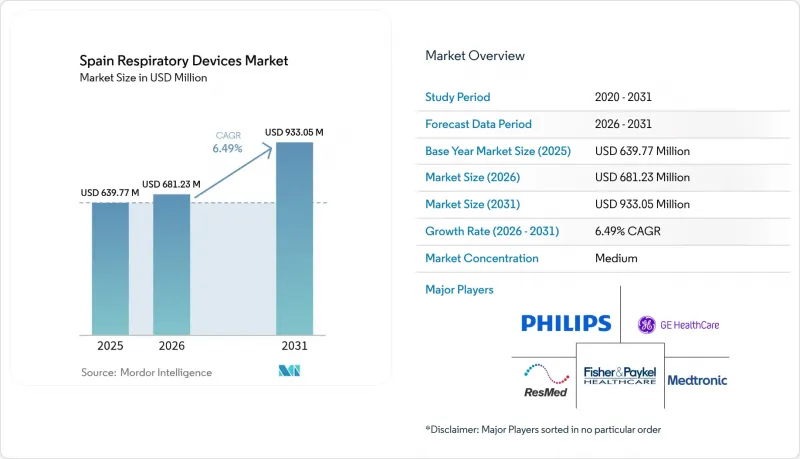
Mordor Intelligence에 의하면, 스페인 호흡기 기기 시장 규모는 2025년에 6억 3,977만 달러로 평가되었고, 2026년6억 8,123만 달러에서 2031년까지 9억 3,305만 달러에 이를 것으로 예측되며, 예측 기간(2026-2031년) CAGR은 6.49%를 기록할 전망입니다.
본 보고서는 제품 유형별(진단·모니터링 기기, 치료용 기기, 일회용 제품), 적응증별(COPD, 천식, 수면 무호흡증, 낭포성 섬유증, 결핵, 기타 호흡기 질환), 최종 사용자별(병원 및 클리닉,재택 간호, 외래수술센터(ASC), 장기 요양 시설), 지역별(스페인)로 분류되어 있습니다. 시장 전망은 금액(달러) 기준으로 제시되어 있습니다.
스페인 호흡기 기기 시장 동향 및 인사이트
COPD, 천식, 결핵, 수면 무호흡증의 유병률 증가
COPD는 스페인 성인의 11.8%에게 영향을 미치고 있으며, 호흡기 질환으로 인한 퇴원 환자 수를 35.9% 증가시켰습니다. 이러한 추세로 인해 인공호흡기, 네뷸라이저, 폐기능측정기의 장기적인 판매가 촉진되고 있습니다. 수면 무호흡증은 치매 위험이 높은 고령자의 거의 절반에게 영향을 미치고 있음에도 불구하고 여전히 진단이 크게 부족한 상태이며, 이는 양압 호흡 요법(PAP) 장치와 가정용 수면 검사 키트에 새로운 성장 여지를 창출하고 있습니다. 민감도 100%의 결핵 PCR 키트의 발전으로 공중보건연구소에서의 휴대용 진단 시스템 수요가 확대되고 있습니다. 이러한 역학적 변화들이 맞물리면서 의료기기의 교체 주기가 장기화되고, 스페인의 호흡기 기기 시장은 급성기 의료 현장을 훨씬 넘어 확장되고 있습니다.
스페인 인구의 급속한 고령화
90세 이상 연령층은 2013년부터 2023년까지 58.29% 증가하여 60만 8,321명에 달했습니다. 고령화 지수가 142.35%에 달함에 따라, 재택 사용에 특화된 비침습적 인공호흡기, 산소 농축기, 기도 청결 기기에 대한 수요 증가가 두드러지고 있습니다. 2039년까지 1인 가구가 전체 가구의 33.5%를 차지할 것으로 예상되는 가운데, 각 제조업체는 고령자가 자립적인 생활을 유지할 수 있도록 직관적인 조작 인터페이스와 원격 모니터링 기능을 우선적으로 도입하고 있습니다. 이미 83%의 의료 기관에 비침습적 인공호흡기 전용 유닛이 설치되어 있으며, 노화에 따른 질환에 대한 지속적인 조달이 예상됩니다. 이러한 인구 통계학적 현실은 스페인 호흡기 기기 시장에 구조적인 성장을 가져오고 있습니다.
첨단 기기의 높은 초기 비용
병원들은 최근 공중보건 관련 지출 이후에도 엄격한 예산 한도 내에서 운영되고 있으며, 그 결과 고급 인공호흡기나 AI 탑재 모니터의 조달 주기가 장기화되고 있습니다. 지방 자치 단체는 검증된 중급 제품을 우선시하는 ‘질 조정 생존 연수(QALY)당 비용’ 기준을 따르고 있습니다. 카나리아 제도가 의료기기에 대한 IGIC 세율을 0%로 인하하기로 한 결정은 표적형 재정 조치가 가격 면에서의 제약을 어떻게 완화할 수 있는지를 보여줍니다. 전국적인 부가가치세(VAT) 감면 조치가 없는 한, 가격 민감도가 계속해서 스페인 호흡기 기기 시장의 당분간 성장을 억제할 것으로 보입니다.
부문 분석
2025년 매출액 중 치료용 기기가 56.14%를 차지하고 있으며, 이는 지속적 기도 양압(CPAP) 시스템, 인공호흡기, 산소 농축기에 대한 임상 현장의 선호도를 반영한 것입니다. CPAP와 같은 양압 호흡 요법(PAP)의 혁신은 수면 무호흡증 환자의 편안함과 치료 순응도를 향상시켜 마스크 및 튜브의 지속적인 매출을 보장하고 있습니다. 국가의 경기 회복책에 따라 자금을 지원받은 인공호흡기 개발 프로그램은 가격 장벽을 낮추고 보급률을 더욱 확대되고 있습니다. 네뷸라이저는 여전히 만성폐쇄성폐질환(COPD) 관리에 필수적이며, 한편 휴대용 산소 시스템은 증가하는 재택 간호 수요를 뒷받침하고 있습니다. 스페인 호흡기 기기 시장에서 치료용 기기 시장 규모는 고령화에 따른 동반 질환 증가에 따라 확대될 것으로 예측됩니다.
진단 및 모니터링 기기 시장 규모는 작지만, 7.54%라는 가장 높은 연평균 성장률(CAGR)을 기록하고 있습니다. 원격의료의 보급이 확대됨에 따라, 네트워크 연결형 폐활량계, 웨어러블 카프노그래프, 재택 수면 검사 수요가 증가하고 있습니다. 호흡기 질환의 조기 진단은 입원 건수를 줄이기 때문에 선별 검사 도구에 대한 정책적 지원이 강화되고 있습니다. 그 결과, 진단 플랫폼은 스페인 호흡기 기기 시장에서 점유율을 확대되고 있습니다.
기타 혜택
- 엑셀 형식 시장 예측(ME) 시트
- 3개월간의 애널리스트 지원
자주 묻는 질문
목차
제1장 서론
제2장 조사 방법
제3장 주요 요약
제4장 시장 구도
제5장 시장 규모와 성장 예측
제6장 경쟁 구도
제7장 시장 기회와 향후 전망
LSH 26.09.02According to Mordor Intelligence, the Spain respiratory devices market size was valued at USD 639.77 million in 2025 and estimated to grow from USD 681.23 million in 2026 to reach USD 933.05 million by 2031, at a CAGR of 6.49% during the forecast period (2026-2031).
This report is Segmented by Product Type (Diagnostic & Monitoring Devices, Therapeutic Devices, Disposables), Indication (COPD, Asthma, Sleep Apnea, Cystic Fibrosis, Tuberculosis, Other Respiratory Disorders), End User (Hospitals and Clinics, Homecare Settings, Ambulatory Surgical Centers, Long-Term Care Facilities), and Geography (Spain). The Market Forecasts are Provided in Terms of Value (USD).
Spain Respiratory Devices Market Trends and Insights
Growing Prevalence of COPD, Asthma, Tuberculosis, and Sleep Apnea
COPD affects 11.8% of Spanish adults and drove a 35.9% rise in hospital discharges for respiratory diseases, a pattern that strengthens long-term sales of ventilators, nebulizers, and spirometers. Sleep apnea remains widely underdiagnosed despite affecting nearly half of older adults at elevated dementia risk, creating fresh headroom for positive airway pressure devices and home sleep testing kits. Advances in tuberculosis PCR kits with 100% sensitivity expand demand for portable diagnostic systems in public health laboratories. Together, these epidemiological shifts lengthen device replacement cycles and enlarge the Spain respiratory devices market far beyond acute care settings.
Rapid Ageing of Spain's Population
The cohort aged 90 years or older swelled 58.29% from 2013 to 2023, reaching 608,321 citizens. An ageing index of 142.35% highlights growing demand for non-invasive ventilation, oxygen concentrators, and airway clearance devices tailored to home use. With single-person households forecast to account for 33.5% of all households by 2039, manufacturers prioritise intuitive interfaces and remote monitoring features that let older adults remain independent. Hospitals already maintain dedicated non-invasive ventilation units in 83% of facilities, signalling sustained procurement for ageing-related disorders. These demographic realities embed structural growth in the Spain respiratory devices market.
High Upfront Cost of Advanced Devices
Hospitals operate under strict budget ceilings even after recent public-health outlays, causing extended procurement cycles for premium ventilators and AI-enabled monitors. Regional authorities lean on cost-per-quality-adjusted-life-year thresholds that favour proven mid-range products. The Canary Islands' decision to reduce its IGIC tax on medical devices to zero illustrates how targeted fiscal levers can mitigate affordability constraints. In the absence of nationwide VAT relief, price sensitivity will continue to cap immediate growth in the Spain respiratory devices market.
Other drivers and restraints analyzed in the detailed report include:
- Expansion of Home-based Respiratory Care and Tele-monitoring
- Surge in e-cigarette-related Lung Injuries
- EU MDR Compliance Delaying Product Launches
For complete list of drivers and restraints, kindly check the Table Of Contents.
Segment Analysis
Therapeutic devices accounted for 56.14% of 2025 revenue, reflecting a clinical preference for continuous airway pressure systems, ventilators, and oxygen concentrators. Positive airway pressure innovations such as KPAP enhance comfort and adherence among sleep apnea patients, locking in recurring mask and tubing sales. Ventilator development programs funded under national recovery schemes lower price barriers, further widening penetration. Nebulizers remain critical for COPD management, while portable oxygen systems support growing homecare demand. The Spain respiratory devices market size for therapeutic equipment is projected to rise in tandem with ageing-linked comorbidities.
Diagnostic and monitoring devices hold a smaller base but record the fastest 7.54% CAGR. Connected spirometers, wearable capnographs, and home sleep tests gain popularity amid wider telehealth rollouts. Early diagnosis of respiratory disease lowers hospital admissions, strengthening policy support for screening tools. As a result, diagnostic platforms capture a rising share of the Spain respiratory devices market.
Complete Report Scope:
- By Product Type
- Diagnostic & Monitoring Devices
- Spirometers
- Sleep Test Devices
- Peak Flow Meters
- Other Diagnostic & Monitoring Devices
- Therapeutic Devices
- Positive Airway Pressure (PAP) Devices
- Humidifiers
- Nebulizers
- Ventilators
- Inhalers
- Oxygen Concentrators
- Other Therapeutic Devices
- Disposables
- Breathing Circuits
- Masks
- Filters
- Other Disposables
- Diagnostic & Monitoring Devices
- By Indication
- COPD
- Asthma
- Sleep Apnea
- Cystic Fibrosis
- Tuberculosis
- Other Respiratory Disorders
- By End User
- Hospitals and Clinics
- Homecare Settings
- Ambulatory Surgical Centers
- Long-term Care Facilities
List of Companies Covered in this Report:
- Koninklijke Philips
- Resmed
- Dragerwerk AG
- Fisher & Paykel Healthcare
- Medtronic
- Hamilton Medical
- GE Healthcare
- Smiths Medical MD, Inc.
- Fosun Pharma (Breas Medical AB)
- Invacare
- GlaxoSmithKline
- Rotech Healthcare
- Becton Dickinson & Co.
- Air Liquide
- Teleflex
- Drive DeVilbiss Healthcare
- Apex Medical
- Lowenstein Medical GmbH
- Vyaire Medical
- Vapotherm Inc.
Additional Benefits:
- The market estimate (ME) sheet in Excel format
- 3 months of analyst support
TABLE OF CONTENTS
1 Introduction
- 1.1 Study Assumptions & Market Definition
- 1.2 Scope of the Study
2 Research Methodology
3 Executive Summary
4 Market Landscape
- 4.1 Market Overview
- 4.2 Market Drivers
- 4.2.1 Growing Prevalence of COPD, Asthma, TB & Sleep-Apnea
- 4.2.2 Rapid Ageing of Spain's Population
- 4.2.3 Expansion of Home-Based Respiratory Care & Tele-Monitoring
- 4.2.4 Surge In E-Cigarette-Related Lung Injuries
- 4.2.5 Post-COVID Government Incentives for Local Ventilator Output
- 4.2.6 Adoption of AI-Enabled Predictive Maintenance for Ventilators
- 4.3 Market Restraints
- 4.3.1 High Upfront Cost of Advanced Devices
- 4.3.2 EU MDR Compliance Delaying Product Launches
- 4.3.3 Shortage of Respiratory Therapists
- 4.3.4 Environmental Curbs on Single-Use Plastics In Disposables
- 4.4 Supply-Chain Analysis
- 4.5 Regulatory Landscape
- 4.6 Technological Outlook
- 4.7 Porter's Five Forces Analysis
- 4.7.1 Threat of New Entrants
- 4.7.2 Bargaining Power of Buyers
- 4.7.3 Bargaining Power of Suppliers
- 4.7.4 Threat of Substitutes
- 4.7.5 Intensity of Competitive Rivalry
5 Market Size & Growth Forecasts (Value)
- 5.1 By Product Type
- 5.1.1 Diagnostic & Monitoring Devices
- 5.1.1.1 Spirometers
- 5.1.1.2 Sleep Test Devices
- 5.1.1.3 Peak Flow Meters
- 5.1.1.4 Other Diagnostic & Monitoring Devices
- 5.1.2 Therapeutic Devices
- 5.1.2.1 Positive Airway Pressure (PAP) Devices
- 5.1.2.2 Humidifiers
- 5.1.2.3 Nebulizers
- 5.1.2.4 Ventilators
- 5.1.2.5 Inhalers
- 5.1.2.6 Oxygen Concentrators
- 5.1.2.7 Other Therapeutic Devices
- 5.1.3 Disposables
- 5.1.3.1 Breathing Circuits
- 5.1.3.2 Masks
- 5.1.3.3 Filters
- 5.1.3.4 Other Disposables
- 5.1.1 Diagnostic & Monitoring Devices
- 5.2 By Indication
- 5.2.1 COPD
- 5.2.2 Asthma
- 5.2.3 Sleep Apnea
- 5.2.4 Cystic Fibrosis
- 5.2.5 Tuberculosis
- 5.2.6 Other Respiratory Disorders
- 5.3 By End User
- 5.3.1 Hospitals and Clinics
- 5.3.2 Homecare Settings
- 5.3.3 Ambulatory Surgical Centers
- 5.3.4 Long-term Care Facilities
6 Competitive Landscape
- 6.1 Market Concentration
- 6.2 Market Share Analysis
- 6.3 Company Profiles (includes Global level Overview, Market level overview, Core Segments, Financials as available, Strategic Information, Market Rank/Share for key companies, Products & Services, and Recent Developments)
- 6.3.1 Koninklijke Philips N.V.
- 6.3.2 ResMed
- 6.3.3 Dragerwerk AG
- 6.3.4 Fisher & Paykel Healthcare Ltd
- 6.3.5 Medtronic plc
- 6.3.6 Hamilton Medical AG
- 6.3.7 GE HealthCare
- 6.3.8 Smiths Medical MD, Inc.
- 6.3.9 Fosun Pharma (Breas Medical AB)
- 6.3.10 Invacare Corporation
- 6.3.11 GlaxoSmithKline plc
- 6.3.12 Rotech Healthcare Inc.
- 6.3.13 Becton Dickinson & Co.
- 6.3.14 Air Liquide Healthcare
- 6.3.15 Teleflex Inc.
- 6.3.16 DeVilbiss Healthcare LLC
- 6.3.17 Apex Medical Corp.
- 6.3.18 Lowenstein Medical GmbH
- 6.3.19 Vyaire Medical Inc.
- 6.3.20 Vapotherm Inc.
7 Market Opportunities & Future Outlook
- 7.1 White-space & Unmet-need Assessment