

|
시장보고서
상품코드
2121705
유럽 유리병·용기 : 시장 점유율 분석, 업계 동향과 통계, 성장 예측(2026-2031년)Europe Glass Bottles And Containers - Market Share Analysis, Industry Trends & Statistics, Growth Forecasts (2026 - 2031) |
||||||
 Mordor Intelligence
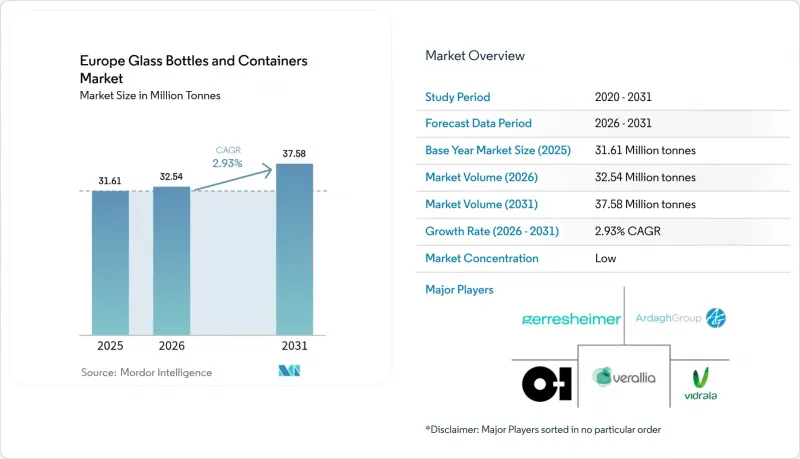
Mordor Intelligence에 의하면, 유럽 유리병·용기 시장 규모는 2025년 3,161만 톤에서 2026년에는 3,254만 톤으로 확대되어 2026-2031년 CAGR 2.93%로 성장을 지속하여 2031년에는 3,758만 톤에 이를 것으로 예측됩니다.
본 보고서는 최종 사용자별(음료(주류(맥주, 와인, 증류주, 기타 주류) 및 무알코올 음료(탄산음료(CSD), 유제품 베이스 음료, 기타)), 식품(잼·젤리, 조미료·소스 등), 화장품 및 퍼스널케어, 기타), 색상별(플린트, 앰버, 그린, 기타)별로 분류되어 있습니다. 시장 예측은 수량(톤) 기준으로 제시되어 있습니다.
유럽 유리병·용기 시장 동향 및 인사이트
수출 지향형 유리 포장 제품이 EU GDP에 수십억 단위로 기여
와인, 맥주, 의약품의 활발한 수출이 국내 소비가 둔화되고 있는 상황에서도 유럽 유리병 및 용기 시장의 꾸준한 수요를 뒷받침하고 있습니다. 2024년, 독일은 14억 5,000만 리터의 맥주를 수출했고, 이탈리아의 와인 수출액은 5.5% 증가한 81억 3,600만 유로에 달하여, 전 세계 유통 채널에서 유리가 품질의 증표로 자리매김하고 있음을 입증하고 있습니다. EU의 표시 규정과 지리적 표시 제도가 프리미엄 제품을 보호하고 있어, 유럽 유리병·용기 시장의 안정적인 공급을 뒷받침하고 있습니다. 음료 수출업체들은 유리가 제품의 품질을 보증하고, 성숙 시장과 신흥 시장 모두에서 브랜드 스토리텔링을 지원하기 때문에 높은 포장 비용을 감수하고 있습니다. 이러한 수출 지향적 경향은 지역 수요의 주기적인 침체를 완화하고, 고사양 포장에 맞춘 용해로 업그레이드를 촉진합니다. 대규모 수출 계약을 수주한 생산자들은 대개 장기 공급 계약을 체결하여 설비 가동률과 현금 흐름 전망을 개선하고 있습니다.
순환 경제 및 탄소 중립 목표에 따른 용해로 현대화 촉진
EU 배출권 거래 제도로 인한 압박으로 인해, 유럽의 유리병 및 용기 시장 전반에서 100% 전기식 및 하이브리드식 용해로에 대한 투자가 가속화되고 있습니다. Verallia의 코냑 공장은 재생에너지만으로 가동되며, CO2 배출량을 60% 감축하고 있습니다. 한편, Ardagh의 오버른키르헨 넥스트젠 생산 라인은 80%의 친환경 전력과 20%의 가스를 조합하여 탄소 발자국을 64% 줄이고 있습니다. O-I는 보슈 공장의 전기화에 6,500만 달러를 투자했습니다. 이는 현재의 개조 주기에서 단순한 생산 능력 확충보다 탈탄소화가 우선시되고 있음을 보여줍니다. 하이브리드 설계는 전력망 변동 시에도 용융 안정성을 유지함으로써 운영 위험을 줄이고, 기업이 급변하는 가스 가격 및 전력 가격에 대한 헤지를 할 수 있게 해줍니다. 제안된 ‘탄소 국경 조정 메커니즘’을 포함한 장기적인 탄소 비용으로 인해, 조기에 도입한 기업에는 지속적인 비용 우위가 주어집니다. 설비 투자 부담은 크지만, EU의 혁신 보조금 및 그린본드를 통한 공동 자금 조달을 통해 대차대조표에 미치는 부담이 경감됩니다.
에너지 가격 급등이 용해로의 수익성 및 이익률에 미치는 영향
40유로/MWh 가까이까지 상승한 천연가스 가격(위기 전 수준의 4배)으로 인해, 많은 유럽의 용해로에서 연료비가 최대 비용 항목이 되고 있습니다. O-I, Ardagh, Verallia 각사는 2024-2025년 실적 전망에서 EBITDA에 대한 압박을 지적하고 있으며, 이로 인해 일시적인 가동 중단이나 인력 감축이 발생하고 있습니다. 연료 집약도가 높기 때문에 각사는 적극적인 헤지를 할 수밖에 없지만, 전력 가격 변동이 하이브리드 생산 라인의 리스크 관리를 복잡하게 만들고 있습니다. 단기적으로는 생산 능력의 합리화가 가격 규율을 뒷받침하겠지만, 규모의 경제를 훼손할 가능성도 있습니다. 소규모 가족 경영 공장은 자금 사정이 어려워지고 있어, 산업 재편이 가속화되고 있습니다. 재생에너지 전력 구매 계약이 만료되고 송전망 업그레이드가 진행되기 전까지는 에너지 인플레이션이 유럽 유리병·용기 시장의 발목을 계속 잡을 것으로 보입니다.
부문별 분석
음료 부문은 계속해서 유럽 유리병·용기 시장의 주축을 이루며, 2025년 생산량의 63.35%를 차지하여 와인, 맥주, 증류주의 뿌리 깊은 전통을 활용하는 형태를 보였습니다. 2024년 수확량이 18% 감소한 프랑스에서는 와인 생산량의 변동으로 인해 병 주문이 주춤했으나, 이탈리아의 140억 유로에 달하는 와인 매출과 견조한 수출 덕분에 남부 지역의 유리 공장은 풀가동을 유지했습니다. 독일에서는 맥주 판매량이 감소했음에도 불구하고, 수제 맥주와 무알코올 음료의 확대에 힘입어, 특히 보증금 제도가 뒷받침하는 재사용 용기에 대한 프리미엄 병 수요는 유지되었습니다. 주류 브랜드들은 주력 제품의 평균 유리 중량을 높여 진정한 품질을 어필하는 동시에, ESG 점수를 유지하기 위해 저탄소 용해로를 도입했습니다. 음료 부문 이외에는 화장품 및 퍼스널케어 부문이 2031년까지 연평균 성장률(CAGR) 3.52%로 가장 빠르게 성장하고 있으며, 이는 재활용 가능한 포장에 대한 노력과 고수익률의 스킨케어 제품 라인에서 유리병이 주는 촉감적인 매력에 힘입은 결과입니다.
의약품 용기의 성장은 음료 시장의 안정성을 보완해 줍니다. 유형 I 바이알 생산은 톤당 이익률이 높아 경기 변동의 영향을 완화하는 역할을 하고 있습니다. SCHOTT Pharma의 헝가리 신규 생산 라인은 주사용 의약품 수요를 대상으로 하며, ISO 15378 준수 및 수출 등급 품질 기준을 모두 충족하고 있습니다. 식품 용도는 소스, 잼,유아식 분야에서 여전히 주류를 이루고 있지만, 대중용 식사 솔루션에서는 경량 PET의 채택이 점점 더 확대되고 있습니다. 이러한 동향을 종합해 보면, 유럽의 유리병 및 용기 시장이 기존 음료 부문의 생산량과 신흥 고부가가치 틈새 시장 간의 균형을 어떻게 맞추고 있는지가 뚜렷이 드러납니다. 이를 통해 용해로의 가동률이 유지되며, 전기화 및 하이브리드 용해로에 대한 계획적인 설비 투자가 뒷받침되고 있습니다.
기타 혜택
- 엑셀 형식 시장 예측(ME) 시트
- 3개월간의 애널리스트 지원
자주 묻는 질문
목차
제1장 서론
제2장 조사 방법
제3장 주요 요약
제4장 시장 구도
제5장 시장 규모와 성장 예측
제6장 경쟁 구도
제7장 시장 기회와 향후 전망
LSH 26.09.02According to Mordor Intelligence, the Europe glass bottles and Containers market size is expected to grow from 31.61 million tonnes in 2025 to 32.54 million tonnes in 2026 and is forecast to reach 37.58 million tonnes by 2031 at 2.93% CAGR over 2026-2031.
This report is Segmented by End-User (Beverages [Alcoholic {Beer, Wine, Spirits, Other Alcoholic Beverages}, and Non-Alcoholic {Carbonated Drinks (CSDs), Dairy Product Based Drinks, and More}], Food [Jam and Jelly, Condiments and Sauces, and More], Cosmetics and Personal Care, and More), Color (Flint, Amber, Green, and More). The Market Forecasts are Provided in Terms of Volume (Tonnes).
Europe Glass Bottles And Containers Market Trends and Insights
Export-oriented glass-packaged goods add billions to EU GDP
Strong outbound trade in wine, beer, and pharmaceuticals underpins steady offtake for the European glass bottles and containers market, even when domestic consumption cools. Germany shipped 1.45 billion liters of beer in 2024, and Italy's wine exports rose 5.5% to EUR 8.136 billion, reinforcing glass as a quality signal in global channels. EU labelling rules and geographical indications protect premium products, sustaining volume stability for the European glass bottles and containers market. Beverage exporters accept higher packaging costs because glass ensures product integrity and supports brand storytelling in mature and emerging markets alike. This export orientation mitigates cyclical dips in regional demand and encourages furnace upgrades tailored to high-spec packaging. Producers that win large export contracts often lock in long-term supply agreements, enhancing utilization rates and cash-flow visibility.
Circular economy and carbon-neutral goals fuel furnace modernization
EU emissions trading pressures have propelled investments in 100% electric and hybrid furnaces across the European glass bottles and containers market. Verallia's Cognac unit runs entirely on renewable power and cuts CO2 by 60%, while Ardagh's Obernkirchen NextGen line blends 80% green electricity with 20% gas for a 64% footprint reduction. O-I allocated USD 65 million to electrify its Veauche plant, illustrating how retrofit cycles now prioritize decarbonization over simple capacity additions. Hybrid designs lower operational risk by preserving melt stability during grid fluctuations, and they let companies hedge against volatile gas and electricity prices. Long-run carbon costs, including the proposed Carbon Border Adjustment Mechanism, give early adopters a durable cost advantage. Capital-expenditure intensity is high, yet co-funding from EU innovation grants and green bonds eases balance-sheet strain.
Rising energy prices threaten furnace economics and profit margins
Natural-gas quotes near EUR 40/MWh, quadruple pre-crisis norms, have turned fuel into the dominant cost line for many European furnaces. O-I, Ardagh, and Verallia all flagged EBITDA pressure in 2024-2025 earnings updates, triggering temporary shutdowns and job cuts. High fuel intensity forces companies to hedge aggressively, yet volatile electricity prices complicate risk management for hybrid lines. In the short term, capacity rationalization supports pricing discipline but can also erode economies of scale. Smaller family-owned plants face liquidity strain, accelerating industry consolidation. Until renewable-power purchase agreements mature and grid upgrades progress, energy inflation remains a drag on the European glass bottles and containers market.
Other drivers and restraints analyzed in the detailed report include:
- Consumer preference for recyclable and aesthetic packaging favors glass
- Pharmaceutical export growth spurs demand for Type I and III glass vials
- Plastic and metal packaging alternatives erode glass share in mass SKUs
For complete list of drivers and restraints, kindly check the Table Of Contents.
Segment Analysis
Beverages continued to anchor the European glass bottles and containers market, absorbing 63.35% of 2025 volume and leveraging entrenched wine, beer, and spirits traditions. Wine output volatility in France, where harvests fell 18% in 2024, tempered bottle orders, yet Italy's EUR 14 billion wine turnover and resilient exports kept southern furnaces busy.Beer volumes slid in Germany, but specialty craft and no-alcohol extensions preserved premium bottle demand, especially for returnable formats backed by deposit schemes. Spirits brands raised average glass weight for flagship expressions, signaling authenticity while adopting lower-carbon furnaces to protect ESG scores. Outside beverages, cosmetics, and personal care are rising fastest at a 3.52% CAGR to 2031, prompted by recyclable-pack commitments and the tactile appeal of glass jars for high-margin skin-care lines.
Growth in pharmaceutical containers complements beverage stability, as Type I vial production commands higher per-ton margins and buffers cyclicality. SCHOTT Pharma's new Hungary line targets injectable drug demand, pairing ISO 15378 compliance with export-grade quality benchmarks. Food applications remain a staple for sauces, jams, and baby food, though mass-market meal solutions increasingly trial lightweight PET. Collectively, these trends underscore how the European glass bottles and containers market balances heritage beverage volumes with emerging high-value niches, sustaining furnace utilization and underpinning calculated CAPEX in electrification and hybrid melts.
Complete Report Scope:
- By End-user
- Beverages
- Alcoholic
- Beer
- Wine
- Spirits
- Other Alcoholic Beverages (Cider and Other Fermented Drinks)
- Non-Alcoholic
- Juices
- Carbonated Drinks (CSDs)
- Dairy Product Based Drinks
- Other Non-Alcoholic Beverages
- Alcoholic
- Food (Jam, Jelly, Marmalades, Honey, Sausages and Condiments, Oil, Pickles)
- Cosmetics and Personal Care
- Pharmaceuticals (excluding Vials and Ampoules)
- Perfumery
- Beverages
- By Color
- Green
- Amber
- Flint
- Other Colors
- By Country
- United Kingdom
- Germany
- France
- Italy
- Poland
- Netherlands
- Spain
- Russia
- Austria
- Switzerland
- Rest of Europe
List of Companies Covered in this Report:
- Verallia Group
- BA Glass Group
- O-I Glass, Inc.
- Vidrala, S.A.
- Verescence S.A.
- Gerresheimer AG
- Saverglass Group
- ALGLASS SA
- Quadpack Industries SA
- Berlin Packaging
- Wiegand-Glas Holding GmbH
- Ardagh Group S.A.
- Heinz-Glas GmbH & Co.
- Zignago Vetro S.p.A.
- Beatson Clark
- Stoelzle Oberglas GmbH
- Vetropack Austria GmbH
- CP Glass S.A.
Additional Benefits:
- The market estimate (ME) sheet in Excel format
- 3 months of analyst support
TABLE OF CONTENTS
1 INTRODUCTION
- 1.1 Study Assumptions and Market Definition
- 1.2 Scope of the Study
2 RESEARCH METHODOLOGY
3 EXECUTIVE SUMMARY
4 MARKET LANDSCAPE
- 4.1 Market Overview
- 4.2 Market Drivers
- 4.2.1 Export-Oriented Glass-Packaged Goods Add Billions to EU GDP
- 4.2.2 Circular Economy and Carbon-Neutral Goals Fuel Furnace Modernization
- 4.2.3 Consumer Preference for Recyclable and Aesthetic Packaging Favors Glass
- 4.2.4 Pharmaceutical Export Growth Spurs Demand for Type I and III Glass Vials
- 4.2.5 Premiumization in Food, Beverage, and Cosmetics Boosts Glass Demand
- 4.2.6 Sustainability Push and Plastic Bans Accelerate Glass Packaging Adoption
- 4.3 Market Restraints
- 4.3.1 Rising Energy Prices Threaten Furnace Economics and Profit Margins
- 4.3.2 Plastic and Metal Packaging Alternatives Erode Glass Share in Mass SKUs
- 4.3.3 Logistics and Breakage Risks Add Cost in Long-Haul Distribution
- 4.3.4 Cullet Collection Gaps in Eastern and Southern Europe Limit Recycled Content
- 4.4 Industry Supply-Chain Analysis
- 4.5 Container Glass Furnace Capacity and Locations in Europe
- 4.5.1 Plant Locations and Year of Commencement
- 4.5.2 Production Capacities
- 4.5.3 Types of Furnaces
- 4.5.4 Color of Glass Produced
- 4.6 Export-Import Data of Container Glass - Covering Key Import and Export Destinations
- 4.6.1 Import Volume and Value, 2021-2024
- 4.6.2 Export Volume and Value, 2021-2024
- 4.7 Porter's Five Forces Analysis
- 4.7.1 Threat of New Entrants
- 4.7.2 Bargaining Power of Suppliers
- 4.7.3 Bargaining Power of Buyers
- 4.7.4 Threat of Substitutes
- 4.7.5 Competitive Rivalry
- 4.8 Raw Material Analysis
- 4.9 Recycling Trends for Glass Packaging
- 4.10 Demand vs Supply Analysis for Glass Packaging
5 MARKET SIZE AND GROWTH FORECASTS (VOLUME)
- 5.1 By End-user
- 5.1.1 Beverages
- 5.1.1.1 Alcoholic
- 5.1.1.1.1 Beer
- 5.1.1.1.2 Wine
- 5.1.1.1.3 Spirits
- 5.1.1.1.4 Other Alcoholic Beverages (Cider and Other Fermented Drinks)
- 5.1.1.2 Non-Alcoholic
- 5.1.1.2.1 Juices
- 5.1.1.2.2 Carbonated Drinks (CSDs)
- 5.1.1.2.3 Dairy Product Based Drinks
- 5.1.1.2.4 Other Non-Alcoholic Beverages
- 5.1.1.1 Alcoholic
- 5.1.2 Food (Jam, Jelly, Marmalades, Honey, Sausages and Condiments, Oil, Pickles)
- 5.1.3 Cosmetics and Personal Care
- 5.1.4 Pharmaceuticals (excluding Vials and Ampoules)
- 5.1.5 Perfumery
- 5.1.1 Beverages
- 5.2 By Color
- 5.2.1 Green
- 5.2.2 Amber
- 5.2.3 Flint
- 5.2.4 Other Colors
- 5.3 By Country
- 5.3.1 United Kingdom
- 5.3.2 Germany
- 5.3.3 France
- 5.3.4 Italy
- 5.3.5 Poland
- 5.3.6 Netherlands
- 5.3.7 Spain
- 5.3.8 Russia
- 5.3.9 Austria
- 5.3.10 Switzerland
- 5.3.11 Rest of Europe
6 COMPETITIVE LANDSCAPE
- 6.1 Market Concentration
- 6.2 Strategic Moves and Developments
- 6.3 Company Market Share Analysis, (Based on Latest Production Capacity)
- 6.4 Company Profiles (includes Global level Overview, Market level overview, Core Segments, Financials as available, Strategic Information, Market Rank/Share for key companies, Products and Services, and Recent Developments)
- 6.4.1 Verallia Group
- 6.4.2 BA Glass Group
- 6.4.3 O-I Glass, Inc.
- 6.4.4 Vidrala, S.A.
- 6.4.5 Verescence S.A.
- 6.4.6 Gerresheimer AG
- 6.4.7 Saverglass Group
- 6.4.8 ALGLASS SA
- 6.4.9 Quadpack Industries SA
- 6.4.10 Berlin Packaging
- 6.4.11 Wiegand-Glas Holding GmbH
- 6.4.12 Ardagh Group S.A.
- 6.4.13 Heinz-Glas GmbH & Co.
- 6.4.14 Zignago Vetro S.p.A.
- 6.4.15 Beatson Clark
- 6.4.16 Stoelzle Oberglas GmbH
- 6.4.17 Vetropack Austria GmbH
- 6.4.18 CP Glass S.A.
7 MARKET OPPORTUNITIES AND FUTURE OUTLOOK
- 7.1 White-space and Unmet-Need Assessment


