

|
시장보고서
상품코드
2121979
판유리 : 시장 점유율 분석, 업계 동향과 통계, 성장 예측(2026-2031년)Flat Glass - Market Share Analysis, Industry Trends & Statistics, Growth Forecasts (2026 - 2031) |
||||||
 Mordor Intelligence
Mordor Intelligence에 따르면 판유리 시장 규모는 2025년 8,317만 톤에서 2026년에는 8,648만 톤으로 확대하며, 2026-2031년에 CAGR 3.98%로 추이하며, 2031년까지 1억 514만 톤에 달할 것으로 예측됩니다.
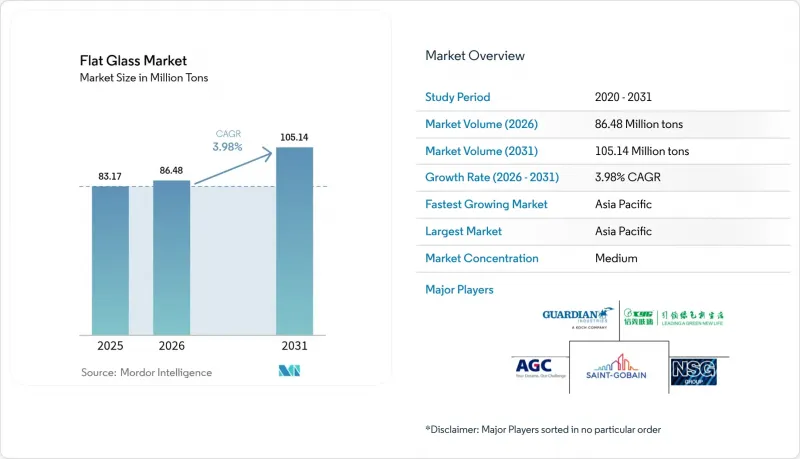
이 보고서는 제품 유형(어닐링 유리, 코팅 유리, 가공 유리, 거울 유리, 무늬 유리), 최종사용자 산업(건축·건설, 자동차, 태양광 유리, 기타 최종사용자 산업) 및 지역(아시아태평양, 북미, 유럽, 남미, 중동 및 아프리카)별로 분류되어 있습니다. 시장 예측은 톤 단위로 표시되어 있습니다.
글로벌 판유리 시장 동향 및 인사이트
상업 및 주택 건설에 대한 투자 확대
차입 비용의 하락과 개발업자의 경기 전망 개선을 배경으로, 전 세계 건설 지출은 증가할 것으로 예측됩니다. 단독주택 가격 급등에 따른 주거비 부담 증가를 배경으로, 공동주택 착공이 가속화되고 있으며, 이는 Low-E 및 삼중 유리 유닛을 적용한 커튼월과 창호 시스템에 대한 지속적인 수요를 창출하고 있습니다. 개발사들은 LEED 인증 점수를 획득하기 위해 고성능 유리를 지정하고 있으며, 이는 스퍼터 코팅 및 아르곤 가스가 충전된 단열 제품의 판매량 증가를 견인하고 있습니다. 따라서 판유리 시장은 첨단 유리 솔루션을 권장하는 건축 기준에 따른 ‘창문 대 벽 비율’ 요건으로부터 직접적인 혜택을 받고 있습니다.
전기자동차(EV)의 안전성 및 경량화를 위한 자동차용 유리에 대한 요구 증가
전기자동차(EV) 플랫폼에서는 배터리의 무게를 상쇄하기 위해 경량 유리가 필수적인 반면, 구조용 유리에 대한 수요가 증가하고 있습니다. 푸야오 글라스(Fuyao)는 신에너지차(NEV) 수요에 대응하기 위해 2024년에 2개의 신규 공장 건설에 91억 위안(12억 6,000만 달러)을 투자했습니다. 얇은 접합 유리로 제작된 전면 유리, 파노라마 루프, 헤드업 디스플레이(HUD) 대응 전면 유리는 가공 유리의 보급률을 확대하고 있습니다. 내장형 센서 패키지는 차량 1대당 부가가치를 높여, 광범위한 판유리 시장 내에서 수익성이 높은 성장 분야를 창출하고 있습니다. 얇아짐에 따른 공기역학적 성능의 향상은 주행 거리 최적화와도 결합되어, 예측 기간 중 유리가 경량화를 위한 중요한 기판으로서의 입지를 확고히 하고 있습니다.
폴리머, 아크릴, 폴리카보네이트 소재 대체품의 등장
각 자동차 제조사들은 동등한 유리 패널에 비해 최대 50% 가벼운 폴리카보네이트 재질의 사이드 윈도우와 파노라마 루프의 시범 도입을 추진하고 있습니다. 광학적 투명도와 자외선에 대한 안정성은 향상되었으나, 내스크래치성과 내열성 면에서는 여전히 유리에 미치지 못하는 상황입니다. 전면 유리에 대한 엄격한 규제로 인해 폴리카보네이트의 사용은 틈새 분야에 그치고 있으며, 대체 위험은 주로 비내력 유리에 국한되어 있습니다. 유리 재활용의 이점과 사용 후 제품에 대한 순환 경제 목표가 더욱 엄격해지고 있는 점도 판유리 시장의 공급량을 더욱 지원하고 있습니다.
부문 분석
2026-2031년에 가공 유리는 4.65%라는 가장 높은 연평균 성장률(CAGR)을 기록하며 판유리 시장 전체를 상회했습니다. 접합유리와 강화유리는 내충격성이 중요한 자동차 전면 유리, 커튼월, 보안 파사드 등에 공급되고 있습니다. 2025년 기준, 하류 공정에서 가공의 기판이 되므로 어닐링 유리의 생산량이 여전히 79.62%를 차지하며 시장을 독점하고 있었습니다. 이 부문은 비용 면에서의 우위 덕분에 범용 건축 분야에서 여전히 중심적인 위치를 차지하고 있지만, 건축 기준 및 안전 기준의 강화에 따라 부가가치 가공에 대한 수요가 증가함에 따라 그 점유율은 완만하게 감소할 전망입니다.
열에 관한 의무적 기준에 따라 코팅 유리, 반사 유리, Low-E 유리는 병행하여 발전하고 있습니다. AGC Glass Europe사의 CO₂ 환산 5.5 kg/m2의 저탄소 유리는 프리미엄 가격을 실현하는 제품 차별화의 좋은 예입니다. 전기자동차(EV)에 착색 유리를 사용하는 것은 차량 내부의 냉각과 배터리 효율 향상에 기여하고 있습니다. 거울 유리와 무늬 유리는 여전히 틈새 시장이지만, 인테리어 및 사생활 보호 용도로 매력적인 선택지가 되고 있습니다. 전반적으로 전문화로 인해 평균 판매 가격이 상승함에 따라 예측 기간 중 판유리 시장 규모에서 가공 유리의 점유율이 확대될 것으로 전망됩니다.
지역별 분석
아시아태평양은 2025년 출하량의 63.88%를 차지하며 연평균 성장률(CAGR) 4.63%로 확대되고 있으며, 이는 각 지역 중 가장 높은 수치입니다. 인도에서는 아사히 인디아 글라스와 INOX 에어 프로덕츠 간의 20년 공급 계약에 따라 그린 수소로의 시범 운영을 진행하는 한편, 새로운 플로트 라인 증설이 추진되고 있습니다.
유럽은 탈탄소화 리더십에 주력하고 있습니다. 생고뱅과 AGC는 EU 혁신 기금의 지원을 받아, 50%의 전기화와 산소 연료 연소를 통해 CO₂를 75% 감축하는 하이브리드 용광로의 시험을 시작했습니다. 2026년에 발효되는 탄소국경조정메커니즘(CBAM)의 부과금은 현지 조달을 촉진하고 지역내 판매를 지원할 가능성이 있습니다. 북미 제조업체들은 비트로(Vitro)사의 1억 8,000만 달러 규모 현대화 사업과 O-I사의 영국 투자를 필두로, 가스 가격 변동과 ESG 관련 심사를 견딜 수 있도록 생산 라인업그레이드를 추진하고 있습니다.
남미, 중동 및 아프리카에서는 도시화가 진행되고 있지만, 인프라 부족과 아시아산 수입품과의 경쟁에 직면해 있습니다. 그린필드 플로트 유리 프로젝트는 여전히 선별적인 상황이지만, 지역 건설사들은 운임 할증을 피하기 위해 현지산 유리를 선호하고 있으며, 이것이 생산량의 완만한 증가를 지원하고 있습니다. 전반적으로 지역적 변화에 따라 아시아는 생산량 점유율 측면에서 여전히 확고한 입지를 유지하고 있는 반면, 다른 지역들은 판유리 시장에서 부가가치가 높은 특수 제품을 추구하고 있습니다.
기타 혜택:
- 엑셀 형식의 시장 예측(ME) 시트
- 3개월간의 애널리스트 지원
자주 묻는 질문
목차
제1장 서론
제2장 조사 방법
제3장 개요
제4장 시장 구도
제5장 시장 규모와 성장 예측
제6장 경쟁 구도
제7장 시장 기회와 향후 전망
KSA 26.09.04According to Mordor Intelligence, the flat glass market size is expected to grow from 83.17 Million tons in 2025 to 86.48 Million tons in 2026 and is forecast to reach 105.14 Million tons by 2031 at 3.98% CAGR over 2026-2031.
This report is Segmented by Product Type (Annealed Glass, Coated Glass, Processed Glass, Mirror Glass, and Patterned Glass), End-User Industry (Building and Construction, Automotive, Solar Glass, and Other End-User Industries), and Geography (Asia-Pacific, North America, Europe, South America, and Middle-East and Africa). The Market Forecasts are Provided in Terms of Volume (Tons).
Global Flat Glass Market Trends and Insights
Growing Investments in Commercial and Residential Construction
Global construction outlays are forecast to climb, aided by lower borrowing costs and an uptick in developer sentiment. Multifamily starts accelerate in response to single-family affordability gaps, channeling sustained demand for curtain wall and window systems that integrate Low-E and triple-glazed units. Developers specify higher-performance glass to secure LEED credits, driving volume growth for sputter-coated and argon-filled insulating products. The flat glass market, therefore, benefits directly from code-driven window-to-wall ratios that favor advanced glazing solutions.
Rising Automotive Glazing Requirements for EV Safety and Lightweighting
Electric vehicle platforms intensify structural glazing needs while mandating lighter glass to offset battery mass. Fuyao committed CNY 9.1 billion (USD 1.26 billion) in 2024 for two new plants aimed at new-energy vehicle demand. Thin laminated windshields, panoramic roofs, and heads-up display-ready windscreens expand processed glass penetration. Embedded sensor packages elevate value per car, creating a lucrative growth pocket inside the broader flat glass market. Aerodynamic gains from slimmer profiles further align with range optimization, cementing glass as a critical lightweight substrate over the forecast horizon.
Availability of Polymer, Acrylic and Polycarbonate Substitutes
Automakers trial polycarbonate side windows and panoramic roofs that weigh up to 50% less than comparable glass panels. Optical clarity and UV stability have improved, yet scratch resistance and thermal tolerance still lag glass. Stringent windshield regulations keep polycarbonate use niche, confining substitution risk mostly to non-load-bearing glazing. Glass recycling advantages and tighter end-of-life circularity goals further insulate flat glass market volumes.
Other drivers and restraints analyzed in the detailed report include:
- Rapid Capacity Additions for Solar PV Module Glass
- Energy-Efficient Building Codes Boosting Low-E and Triple Glazing Demand
- Volatile Soda-Ash and Natural-Gas Input Costs
For complete list of drivers and restraints, kindly check the Table Of Contents.
Segment Analysis
Processed glass generated the fastest 4.65% CAGR between 2026 and 2031, outpacing the broader flat glass market. Laminated and tempered variants supply automotive windscreens, curtain walls, and security facades where impact resistance is critical. Annealed output still dominated in 2025 with 79.62% of volume because it serves as the base substrate for downstream upgrades. The segment's cost edge keeps it central to commodity construction, yet its share is set to moderate as codes and safety norms elevate demand for value-added treatments.
Coated, reflective, and Low-E sheets advance in parallel due to mandatory thermal standards. AGC Glass Europe's 5.5 kg CO2 eq/m2 Low-Carbon Glass exemplifies product differentiation that commands premium bids. Tinted glass usage in EVs supports cabin cooling and battery efficiency. Mirror and patterned glass remain niche but attractive for interior and privacy applications. Altogether, specialization raises average selling prices, widening the processed share in the flat glass market size over the forecast horizon.
Complete Report Scope:
- By Product Type
- Annealed Glass
- Clear Glass
- Tinted Glass
- Coated Glass
- Reflective Glass
- Low-E Glass
- Processed Glass
- Laminated Glass
- Tempered Glass
- Mirror Glass
- Patterned Glass
- Annealed Glass
- By End-user Industry
- Building and Construction
- Automotive
- Solar Glass
- Other End-user Industries
- By Geography
- Asia-Pacific
- China
- India
- Japan
- South Korea
- Malaysia
- Thailand
- Indonesia
- Vietnam
- Rest of Asia-Pacific
- North America
- United States
- Canada
- Mexico
- Europe
- Germany
- United Kingdom
- Italy
- France
- Spain
- Nordic Countries
- Turkey
- Russia
- Rest of Europe
- South America
- Brazil
- Argentina
- Colombia
- Rest of South America
- Middle-East and Africa
- Saudi Arabia
- Qatar
- United Arab Emirates
- Nigeria
- Egypt
- South Africa
- Rest of Middle-East and Africa
- Asia-Pacific
Geography Analysis
The Asia-Pacific region secured 63.88% of 2025 shipments and is expanding at a 4.63% CAGR, the highest among regions. India is scaling new float lines while testing green hydrogen furnaces under a 20-year offtake pact between Asahi India Glass and INOX Air Products.
Europe focuses on decarbonization leadership. Saint-Gobain and AGC started trials of a hybrid furnace that cuts CO2 by 75% through 50% electrification and oxy-fuel combustion, supported by the EU Innovation Fund. Carbon Border Adjustment Mechanism fees, effective 2026 incentivize local sourcing, potentially boosting intra-regional sales. North American producers, led by Vitro's USD 180 million modernization and O-I's UK investment, upgrade lines to withstand gas-price volatility and ESG scrutiny.
South America, the Middle East, and Africa post rising urbanization but face infrastructure deficits and competition from Asian imports. Green-field float projects remain selective, though regional builders prefer local panes to avoid freight surcharges, supporting gradual volume growth. Altogether, geographic shifts keep Asia unchallenged in volume share while other regions chase value-added specialties within the flat glass market.
- Adamant Holding Company
- AGC Inc.
- Cardinal Glass Industries Inc.
- Central Glass Co., Ltd.
- China Glass Holdings Limited
- Euroglas
- Fuyao Group
- Guardian Industries
- Nippon Sheet Glass Co. Ltd
- Phoenicia
- Saint-Gobain
- SCHOTT
- Sisecam
- Taiwan Glass Industry Corporation
- Vitro
- Xinyi Glass Holdings Limited
Additional Benefits:
- The market estimate (ME) sheet in Excel format
- 3 months of analyst support
TABLE OF CONTENTS
1 Introduction
- 1.1 Study Assumptions and Market Definition
- 1.2 Scope of the Study
2 Research Methodology
3 Executive Summary
4 Market Landscape
- 4.1 Market Overview
- 4.2 Market Drivers
- 4.2.1 Growing Investments in Commercial and Residential Construction
- 4.2.2 Rising Automotive Glazing Requirements for EV Safety and Lightweighting
- 4.2.3 Rapid Capacity Additions for Solar PV Module Glass
- 4.2.4 Energy-Efficient Building Codes Boosting Low-E And Triple Glazing Demand
- 4.2.5 Uptake Of Antimicrobial Glass in Healthcare and Hospitality
- 4.3 Market Restraints
- 4.3.1 Availability of Polymer, Acrylic and Polycarbonate Substitutes
- 4.3.2 Volatile Soda-Ash and Natural-Gas Input Costs
- 4.3.3 EU Carbon Border Adjustment Mechanism Compliance Costs
- 4.4 Value Chain Analysis
- 4.5 Porter's Five Forces
- 4.5.1 Bargaining Power of Suppliers
- 4.5.2 Bargaining Power of Buyers
- 4.5.3 Threat of New Entrants
- 4.5.4 Threat of Substitute Products and Services
- 4.5.5 Degree of Competition
5 Market Size and Growth Forecasts (Volume)
- 5.1 By Product Type
- 5.1.1 Annealed Glass
- 5.1.1.1 Clear Glass
- 5.1.1.2 Tinted Glass
- 5.1.2 Coated Glass
- 5.1.2.1 Reflective Glass
- 5.1.2.2 Low-E Glass
- 5.1.3 Processed Glass
- 5.1.3.1 Laminated Glass
- 5.1.3.2 Tempered Glass
- 5.1.4 Mirror Glass
- 5.1.5 Patterned Glass
- 5.1.1 Annealed Glass
- 5.2 By End-user Industry
- 5.2.1 Building and Construction
- 5.2.2 Automotive
- 5.2.3 Solar Glass
- 5.2.4 Other End-user Industries
- 5.3 By Geography
- 5.3.1 Asia-Pacific
- 5.3.1.1 China
- 5.3.1.2 India
- 5.3.1.3 Japan
- 5.3.1.4 South Korea
- 5.3.1.5 Malaysia
- 5.3.1.6 Thailand
- 5.3.1.7 Indonesia
- 5.3.1.8 Vietnam
- 5.3.1.9 Rest of Asia-Pacific
- 5.3.2 North America
- 5.3.2.1 United States
- 5.3.2.2 Canada
- 5.3.2.3 Mexico
- 5.3.3 Europe
- 5.3.3.1 Germany
- 5.3.3.2 United Kingdom
- 5.3.3.3 Italy
- 5.3.3.4 France
- 5.3.3.5 Spain
- 5.3.3.6 Nordic Countries
- 5.3.3.7 Turkey
- 5.3.3.8 Russia
- 5.3.3.9 Rest of Europe
- 5.3.4 South America
- 5.3.4.1 Brazil
- 5.3.4.2 Argentina
- 5.3.4.3 Colombia
- 5.3.4.4 Rest of South America
- 5.3.5 Middle-East and Africa
- 5.3.5.1 Saudi Arabia
- 5.3.5.2 Qatar
- 5.3.5.3 United Arab Emirates
- 5.3.5.4 Nigeria
- 5.3.5.5 Egypt
- 5.3.5.6 South Africa
- 5.3.5.7 Rest of Middle-East and Africa
- 5.3.1 Asia-Pacific
6 Competitive Landscape
- 6.1 Market Concentration
- 6.2 Strategic Moves
- 6.3 Market Share (%)/Ranking Analysis
- 6.4 Company Profiles (includes Global level Overview, Market level overview, Core Segments, Financials as available, Strategic Information, Market Rank/Share, Products and Services, Recent Developments)
- 6.4.1 Adamant Holding Company
- 6.4.2 AGC Inc.
- 6.4.3 Cardinal Glass Industries Inc.
- 6.4.4 Central Glass Co., Ltd.
- 6.4.5 China Glass Holdings Limited
- 6.4.6 Euroglas
- 6.4.7 Fuyao Group
- 6.4.8 Guardian Industries
- 6.4.9 Nippon Sheet Glass Co. Ltd
- 6.4.10 Phoenicia
- 6.4.11 Saint-Gobain
- 6.4.12 SCHOTT
- 6.4.13 Sisecam
- 6.4.14 Taiwan Glass Industry Corporation
- 6.4.15 Vitro
- 6.4.16 Xinyi Glass Holdings Limited
7 Market Opportunities and Future Outlook
- 7.1 White-space and Unmet-need Assessment


