

|
시장보고서
상품코드
2122903
레저용 차량 렌탈 : 시장 점유율 분석, 업계 동향 및 통계, 성장 예측(2026-2031년)Recreational Vehicle Rental - Market Share Analysis, Industry Trends & Statistics, Growth Forecasts (2026 - 2031) |
||||||
 Mordor Intelligence
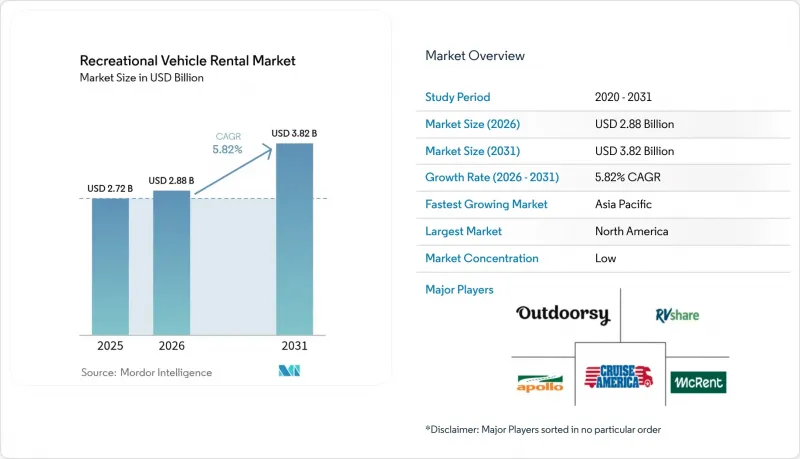
Mordor Intelligence에 의하면, 레저용 차량 렌탈 시장 규모는 2025년 27억 2,000만 달러로 평가되었습니다. 2026년 28억 8,000만 달러에서 2031년까지 38억 2,000만 달러로 확대되어 2026-2031년까지 연평균 복합 성장률(CAGR)은 5.82%를 나타낼 것으로 예측됩니다.

본 보고서는 렌탈 업체 유형(민간·개인 소유주, 플릿 사업자), 예약 유형(오프라인 예약 및 온라인 예약), 제품 유형(자주식 RV 및 견인식 RV), 렌탈 기간(단기, 중기, 장기),지역(북미, 남미, 유럽, 아시아태평양, 중동 및 아프리카)별로 분류되어 있습니다. 시장 전망은 금액(달러) 기준으로 제시되어 있습니다.
세계의 레저용 차량 렌탈 시장 동향 및 인사이트
국내 로드트립 관광의 급증
레저 여행객들은 해외 항공편에 할당되던 예산을 자동차로 이동할 수 있는 휴가로 전환하고 있으며, 탁 트인 도로를 달리는 여정의 매력이 높아지고 있습니다. 2024-25년도 호주 국제 관광객 도착자 수는 840만 명에 달하고, 2023-24년도의 797만 명에서 증가했습니다. 국립공원 방문객 증가로 인해 캠핑장의 수용 능력이 한계에 달하면서, 렌탈 이용자들은 공공 토지에 위치한 분산형 캠핑장으로 이동하고 있습니다. 산업 조사에 따르면, 현재 수백만 가구가 매년 최소 한 번의 RV 여행을 계획하고 있으며, 항공 여행에서 육로 여행으로의 행동 변화가 정착되고 있는 것으로 확인되었습니다. 차량 렌탈에 캠핑장 예약 및 사전에 계획된 경로를 패키지로 묶어 제공하는 사업자들은 편의성을 중시하는 첫 렌탈 이용자들을 유치하고 있습니다. 유연성, 혼잡한 공항 회피, 인적이 드문 경관으로의 접근성은 이 주요 고객층에게 여전히 주요 매력 요소로 작용하고 있습니다.
피어 투 피어(P2P) 렌탈 플랫폼의 확대
디지털 마켓플레이스는 활용되지 않는 개인 소유 RV에 수익원을 제공하는 동시에, 렌탈 이용자에게는 더 폭넓은 차종 선택지를 제공합니다. 이 모델에서는 유지보수나 감가상각의 위험이 소유주에게 전가되므로, 플랫폼 측은 막대한 자본 지출 없이 사업을 확장할 수 있습니다. 신뢰의 기반이 되는 것은 효과적인 신원 확인 절차와 예약 시마다 양측을 보호하는 전용 보험입니다. 동적 가격 책정 기능을 통해 소유자는 가동률 목표를 달성하면서도, 예산을 중시하는 여행객에게도 매력적인 요금 체계를 유지할 수 있습니다. 거래가 늘어남에 따라, 편리한 예약 절차, 투명한 리뷰, 신속한 고객 지원 덕분에 플랫폼에 대한 충성도가 높아집니다.
높은 유지비와 보험 비용
엔진, 타이어, 자동차 장비의 정기 점검에 더해 종합적인 보험 가입이 소규모 사업자의 이익률을 압박하고 있습니다. 플랫폼 측은 고장 발생 전에 문제를 감지하는 텔레매틱스 기술이나 부품 공동 구매를 통해 일부 비용을 경감하고 있습니다. RV 수리 숙련 기술자는 여전히 부족하며, 정비소의 시간당 단가는 높은 수준을 유지하고 있고, 수리 완료까지 소요되는 시간도 예측하기 어려운 상황이 지속되고 있습니다. 소유주는 상승한 비용을 임차인에게 전가하기도 하지만, 가격에 대한 민감성 때문에 추가 요금에는 상한선이 있습니다. 따라서 비용 절감을 위해서는 예측 유지보수, 사내 서비스 팀 운영, 협상을 통한 보험 적용 범위 확보가 필수적입니다.
부문별 분석
2025년, 레저용 차량 렌탈 시장의 70.37%를 플릿 사업자가 차지했으며, 이는 표준화된 차량, 신뢰할 수 있는 서비스, 종합적인 유지보수를 제공하는 잘 조직된 네트워크를 반영합니다. 이러한 규모 덕분에 A, B, C급 모터홈을 안정적으로 이용할 수 있어, 편의성과 일관된 품질을 중시하는 렌탈 고객을 유치하고 있습니다. 또한, 높은 브랜드 인지도와 확립된 고객 지원 덕분에 장거리 여행객의 여행 계획도 수월해지고 있습니다. 가족 단위 여행객, 은퇴자, 해외 관광객 사이에서 RV 여행이 확대되는 가운데, 대형 사업자들은 차량 현대화 및 주요 관광 노선을 따라 서비스 구역을 확대함으로써 우위를 유지하고 시장 전반에 걸친 지배력을 강화하고 있습니다.
개인 소유자는 가장 빠르게 성장하는 부문으로, 피어투피어(P2P) 플랫폼의 기세가 높아짐에 따라 2031년까지 연평균 성장률(CAGR) 6.95%로 성장할 것으로 전망됩니다. 사용하기 쉬운 앱을 통해 소유자는 이용률이 낮은 차량으로 수익을 창출할 수 있어, 교외 및 지방 지역공급이 확대되고 있습니다. 이용자들은 기업 소유 차량에서는 찾아볼 수 없는 독특한 모델과 합리적인 가격을 높이 평가했습니다. 젊은 여행자들 사이에서는 디지털 인증, 보험 패키지, 집 앞까지의 배송 서비스에 대한 신뢰가 높아지고 있으며, 이는 이용 확대와 시장 수요의 다양화를 가속화하고 있습니다.
온라인 예약은 2025년 시장 규모의 61.55%를 차지하며 가장 빠르게 성장한 채널이었으며, 여행자들이 디지털의 편의성을 점점 더 추구함에 따라 연평균 성장률(CAGR) 8.01%로 성장하고 있습니다. 모바일 플랫폼을 이용하면 사용자는 몇 분 만에 가격 비교, 차량 내부 구조 확인, 차량 예약을 완료할 수 있습니다. 내장된 GPS 경로 계획 기능, 디지털 체크인, 사용법 설명 동영상을 통해 절차가 효율화되어 주말 직전 여행도 온라인으로 간편하게 예약할 수 있게 되었습니다. 사용자 리뷰, 원활한 결제, 맞춤형 추천 정보를 통해 인터넷은 예약의 주요 수단으로 자리 잡아가고 있습니다.
2025년, 오프라인 예약은 전체 렌탈의 38.45%를 차지했습니다. RV를 처음 이용하는 여행객 중 다수는 보험, 장비 사용법, 경로 계획에 대해 직접적인 조언을 원하기 때문에 국립공원이나 고속도로 거점 근처에 위치한 렌탈 센터에서의 대면 서비스는 여전히 중요합니다. 복잡한 여정이나 장기 여행을 계획하는 고객은 여전히 대면 상담을 선호하며, 오프라인 채널은 시장 수익에서 중심적인 역할을 계속하고 있습니다.
지역별 분석
북미는 뿌리 깊은 로드트립 문화와 광범위한 캠핑장 네트워크에 힘입어 2025년 전체 시장의 46.78%를 차지하며, 레저용 차량 렌탈의 최대 수익원으로 자리매김했습니다. 공공 부지에서의 분산형 캠핑은 수용 능력을 늘리고 있지만, 인구 밀집 도시 지역의 주차 금지 조치가 현장에서의 숙박을 방해하고 있습니다. 보험 상품이 표준화됨에 따라 미국과 캐나다 간의 국경 간 렌탈이 탄력을 받고 있습니다. 멕시코는 따뜻한 겨울을 찾는 ‘스노우버드’라고 불리는 여행객들을 끌어들이고 있지만, 도로변 긴급 지원 및 차량 보안에 대한 우려가 더 광범위한 보급을 저해하고 있습니다. 각 브랜드가 서비스 및 마케팅 분야에서 규모의 경제를 추구하는 가운데, 공급업체 간의 통합은 앞으로도 지속될 전망입니다.
아시아태평양은 호주의 확고한 아웃도어 라이프스타일 문화와 중국·인도 수요 증가를 원동력으로 삼아, 2031년까지 11.35%라는 가장 높은 성장률을 보일 것으로 예측됩니다. 정부가 휴게소 및 캠핑장 확충을 위한 노력을 기울임에 따라, 중산층 가정의 첫 이용이 가속화되고 있습니다. 보험 가입 가능성이나 우측 핸들 차량에 대한 대응이 차량 구성에 영향을 미치는 한편, 소형 차종은 도시 지역의 주차 공간 제약에 대응하고 있습니다. 소셜 미디어에 힘입은 여행에 대한 동경으로 인해, 사업자들은 상징적인 경관과 안정적인 통신 환경을 결합한, 사진 찍기 좋은 여행 일정을 기획하고 있습니다. 지역 관광청과의 제휴는 선구자들에게 신뢰성과 마케팅 영향력을 제공합니다.
유럽에서는 쉥겐 지역 내 비자 없이 여행할 수 있을 뿐만 아니라, 긴밀한 공급업체 네트워크 덕분에 편도 국경 간 여행이 실현되고 있습니다. 북반구와 남반구의 기후에 따른 계절적 변화로 인해 사업자들은 차량 구성의 균형을 조정할 수 있지만, 한편으로는 유가 변동과 끊임없이 변화하는 배기가스 규제의 영향도 받습니다. 마을의 좁은 도로와 치솟는 연료비로 인해 소형 캠핑카는 계속해서 인기를 끌고 있습니다. 소유 형태가 세분화되어 있어, 범유럽적 통합 플랫폼과 지역 전문 업체가 공존할 여지가 생기고 있습니다. 도시들이 저배출 구역을 도입하고 여행자들이 더욱 친환경적인 휴가 옵션을 찾는 가운데, 전기화 시범 사업이 주목을 받고 있습니다.
기타 혜택
- 엑셀 형식 시장 예측(ME) 시트
- 3개월간의 애널리스트 지원
자주 묻는 질문
목차
제1장 서론
제2장 조사 방법
제3장 주요 요약
제4장 시장 구도
제5장 시장 규모 및 성장 예측
제6장 경쟁 구도
제7장 시장 기회 및 향후 전망
KTH 26.09.08According to Mordor Intelligence, the recreational vehicle Rental market size is projected to expand from USD 2.72 billion in 2025 and USD 2.88 billion in 2026 to USD 3.82 billion by 2031, registering a 5.82% CAGR between 2026 to 2031.
This report is Segmented by Rental Supplier Type (Private and Individual Owners and Fleet Operators), Booking Type (Offline Booking and Online Booking), Product Type (Motorized RVs and Towable RVs), Rental Duration (Short-Term, Mid-Term, and Long-Term), and Geography (North America, South America, Europe, Asia-Pacific and Middle East and Africa). The Market Forecasts are Provided in Terms of Value (USD).
Global Recreational Vehicle Rental Market Trends and Insights
Surge in Domestic Road-Trip Tourism
Leisure travelers are redirecting budgets from overseas flights to drivable vacations, reinforcing the appeal of open-road itineraries. In 2024-25, Australia witnessed 8.40 million international visitor arrivals, up from 7.97 million in 2023-24. Heavier visitation at national parks tightens campground capacity and nudges renters toward dispersed public-land sites. Industry surveys show that millions of households now plan at least one RV trip each year, confirming a lasting behavioral shift from air to road travel. Operators that package vehicles with campsite reservations and pre-planned routes capture first-time renters who value convenience. Flexibility, avoidance of crowded airports, and access to remote scenery remain the primary pull factors for this driver segment.
Expansion of Peer-to-Peer (P2P) Rental Platforms
Digital marketplaces unlock income for idle privately owned RVs while giving renters a wider selection of vehicle styles. The model shifts maintenance and depreciation risk to owners, allowing platforms to scale without heavy capital outlay. Trust hinges on effective verification procedures and purpose-built insurance that protects both parties during each booking. Dynamic pricing engines help owners reach occupancy targets while keeping rates attractive for budget-sensitive travelers. As transactions grow, platform loyalty rises due to ease of booking, transparent reviews, and responsive customer support.
High Maintenance and Insurance Costs
Routine service on engines, tires, and onboard appliances, coupled with comprehensive insurance, compresses margins for small operators. Platforms mitigate some expenses through telematics that flag issues before breakdowns and through pooled purchasing of parts. Skilled labor for RV repair remains scarce, keeping hourly shop rates high and turnaround times unpredictable. Owners sometimes pass rising costs to renters, though price sensitivity places an upper limit on surcharges. Cost containment, therefore, relies on predictive maintenance, in-house service teams, and negotiated insurance coverage.
Other drivers and restraints analyzed in the detailed report include:
- Rising Disposable Income Among Millennials and Gen-Z
- Zero-Emission RV Incentives Accelerating Electrified Fleets
- Seasonality-Driven Low Asset Utilization
For complete list of drivers and restraints, kindly check the Table Of Contents.
Segment Analysis
Fleet operators accounted for 70.37% of the recreational vehicle rental market in 2025, reflecting well-organized networks that offer standardized fleets, reliable service, and comprehensive maintenance. Their scale ensures steady availability of Class A, B, and C motorhomes, attracting renters who value convenience and consistent quality. Strong brand recognition and established customer support also make trip planning easier for long-distance travelers. As RV vacations grow among families, retirees, and overseas visitors, large operators maintain their lead by modernizing their fleets and expanding coverage along major tourist routes, reinforcing their dominance in the overall market.
Private and individual owners form the fastest-expanding category, growing at a 6.95% CAGR through 2031 as peer-to-peer platforms gain momentum. Easy-to-use apps let owners earn income from underused vehicles, expanding supply in suburban and rural areas. Renters appreciate the unique models and budget-friendly prices often found outside corporate fleets. Trust in digital verification, bundled insurance, and driveway delivery services is rising among younger travelers, accelerating adoption and diversifying market demand.
Online booking accounted for 61.55% of the 2025 market size and is the fastest-growing channel, growing at an 8.01% CAGR as travelers increasingly expect digital convenience. Mobile platforms let users compare prices, view layouts, and secure a vehicle in minutes. Built-in GPS planners, digital check-ins, and instructional videos streamline the process, while last-minute weekend trips have become easier to arrange online. User reviews, seamless payments, and personalized recommendations are cementing the internet as the preferred route for reservations.
Offline reservations accounted for 38.45% of rentals in 2025. Many first-time RV travelers look for personal guidance on insurance, equipment use, and route planning, so in-person service at rental centers near national parks and highway hubs remains important. Customers arranging complex itineraries or lengthy trips still prefer face-to-face advice, keeping offline channels central to market revenue.
Complete Report Scope:
- By Rental Supplier Type
- Private and Individual Owners
- Fleet Operators
- By Booking Type
- Offline Booking
- Online Booking
- By Product Type
- Motorized RVs
- Class A Motorhomes
- Class B Motorhomes
- Class C Motorhomes
- Towable RVs
- Fifth-Wheel Trailers
- Travel Trailers
- Truck Campers
- Sports Utility Trailers
- Motorized RVs
- By Rental Duration
- Short-term (1-7 days)
- Mid-term (8-30 days)
- Long-term (More than 30 days)
- By Geography
- North America
- United States
- Canada
- Rest of North America
- South America
- Brazil
- Argentina
- Rest of South America
- Europe
- Germany
- United Kingdom
- France
- Spain
- Italy
- Russia
- Rest of Europe
- Asia-Pacific
- China
- India
- Japan
- South Korea
- Australia
- Rest of Asia-Pacific
- Middle East and Africa
- United Arab Emirates
- Saudi Arabia
- Turkey
- South Africa
- Rest of Middle East and Africa
- North America
Geography Analysis
North America remains the largest revenue pool for RV rentals, accounting for 46.78% of the 2025 market, supported by a deep road-trip culture and an extensive campground network. Dispersed camping on public land adds capacity, though parking bans in dense urban areas deter spontaneous overnight stays. Cross-border rentals between the United States and Canada gain traction as insurance products become more standardized. Mexico attracts snowbird travelers seeking warmer winters, yet concerns over roadside assistance and vehicle security slow broader adoption. Continued consolidation among suppliers is likely as brands chase economies of scale in servicing and marketing.
Asia-Pacific is expected to grow at the fastest rate of 11.35% to 2031, driven by established outdoor-lifestyle cultures in Australia and emerging demand in China and India. Government initiatives to build rest areas and campgrounds accelerate first-time adoption among middle-class families. Insurance availability and right-hand-drive compatibility influence fleet composition, while compact vehicle formats meet urban parking constraints. Social-media-driven wanderlust pushes operators to curate photo-friendly itineraries that combine iconic landscapes with reliable connectivity. Partnerships with regional tourism boards provide credibility and marketing reach for early movers.
Europe benefits from visa-free Schengen travel and a dense supplier network that enables one-way, cross-border journeys. Seasonal shifts between northern and southern climates let operators rebalance fleets but also expose them to fuel-price volatility and evolving emissions regulations. Compact campervans remain popular due to tight village roads and higher fuel costs. Fragmented ownership creates space for local specialists to coexist alongside pan-European aggregators. Electrification pilots gain attention as cities adopt low-emission zones and travelers seek greener holiday options.
- Cruise America
- Apollo Tourism & Leisure Ltd
- Outdoorsy, Inc.
- RVshare
- McRent
- Indie Campers
- RoadSurfer GmbH
- Camplify
- Yescapa
- El Monte RV
- Just Go Motorhome Hire
- Escape Campervans
- JUCY Rentals
- Spaceships Rentals
- Bunk Campers
Additional Benefits:
- The market estimate (ME) sheet in Excel format
- 3 months of analyst support
TABLE OF CONTENTS
1 Introduction
2 Research Methodology
3 Executive Summary
4 Market Landscape
- 4.1 Market Overview
- 4.2 Market Drivers
- 4.2.1 Surge in Domestic Road-Trip Tourism
- 4.2.2 Expansion of Peer-To-Peer (P2P) Rental Platforms
- 4.2.3 Rising Disposable Income Among Millennials and Gen-Z
- 4.2.4 Zero-Emission RV Incentives Accelerating Electrified Fleets
- 4.2.5 Telematics-Enabled Fleet Uptime Optimization
- 4.2.6 Corporate Use of RVs as Mobile Pop-Up Spaces
- 4.3 Market Restraints
- 4.3.1 High Maintenance and Insurance Costs
- 4.3.2 Seasonality-Driven Low Asset Utilization
- 4.3.3 Municipal Restrictions on Overnight RV Parking
- 4.3.4 Spare-Part Supply Bottlenecks Delaying Turnaround
- 4.4 Value / Supply-Chain Analysis
- 4.5 Regulatory Landscape
- 4.6 Technological Outlook
- 4.7 Porter's Five Forces
- 4.7.1 Bargaining Power of Suppliers
- 4.7.2 Bargaining Power of Consumers
- 4.7.3 Threat of New Entrants
- 4.7.4 Threat of Substitute Products
- 4.7.5 Intensity of Competitive Rivalry
5 Market Size & Growth Forecasts (Value (USD))
- 5.1 By Rental Supplier Type
- 5.1.1 Private and Individual Owners
- 5.1.2 Fleet Operators
- 5.2 By Booking Type
- 5.2.1 Offline Booking
- 5.2.2 Online Booking
- 5.3 By Product Type
- 5.3.1 Motorized RVs
- 5.3.1.1 Class A Motorhomes
- 5.3.1.2 Class B Motorhomes
- 5.3.1.3 Class C Motorhomes
- 5.3.2 Towable RVs
- 5.3.2.1 Fifth-Wheel Trailers
- 5.3.2.2 Travel Trailers
- 5.3.2.3 Truck Campers
- 5.3.2.4 Sports Utility Trailers
- 5.3.1 Motorized RVs
- 5.4 By Rental Duration
- 5.4.1 Short-term (1-7 days)
- 5.4.2 Mid-term (8-30 days)
- 5.4.3 Long-term (More than 30 days)
- 5.5 By Geography
- 5.5.1 North America
- 5.5.1.1 United States
- 5.5.1.2 Canada
- 5.5.1.3 Rest of North America
- 5.5.2 South America
- 5.5.2.1 Brazil
- 5.5.2.2 Argentina
- 5.5.2.3 Rest of South America
- 5.5.3 Europe
- 5.5.3.1 Germany
- 5.5.3.2 United Kingdom
- 5.5.3.3 France
- 5.5.3.4 Spain
- 5.5.3.5 Italy
- 5.5.3.6 Russia
- 5.5.3.7 Rest of Europe
- 5.5.4 Asia-Pacific
- 5.5.4.1 China
- 5.5.4.2 India
- 5.5.4.3 Japan
- 5.5.4.4 South Korea
- 5.5.4.5 Australia
- 5.5.4.6 Rest of Asia-Pacific
- 5.5.5 Middle East and Africa
- 5.5.5.1 United Arab Emirates
- 5.5.5.2 Saudi Arabia
- 5.5.5.3 Turkey
- 5.5.5.4 South Africa
- 5.5.5.5 Rest of Middle East and Africa
- 5.5.1 North America
6 Competitive Landscape
- 6.1 Market Concentration
- 6.2 Strategic Moves
- 6.3 Market Share Analysis
- 6.4 Company Profiles (Includes Global Level Overview, Market Level Overview, Core Segments, Financials as Available, Strategic Information, Market Rank/Share for Key Companies, Products and Services, SWOT Analysis, and Recent Developments)
- 6.4.1 Cruise America
- 6.4.2 Apollo Tourism & Leisure Ltd
- 6.4.3 Outdoorsy, Inc.
- 6.4.4 RVshare
- 6.4.5 McRent
- 6.4.6 Indie Campers
- 6.4.7 RoadSurfer GmbH
- 6.4.8 Camplify
- 6.4.9 Yescapa
- 6.4.10 El Monte RV
- 6.4.11 Just Go Motorhome Hire
- 6.4.12 Escape Campervans
- 6.4.13 JUCY Rentals
- 6.4.14 Spaceships Rentals
- 6.4.15 Bunk Campers


