

|
시장보고서
상품코드
2123561
의약품 폐기물 관리 시장 : 점유율 분석, 업계 동향과 통계, 성장 예측(2026-2031년)Pharmaceutical Waste Management - Market Share Analysis, Industry Trends & Statistics, Growth Forecasts (2026 - 2031) |
||||||
 Mordor Intelligence
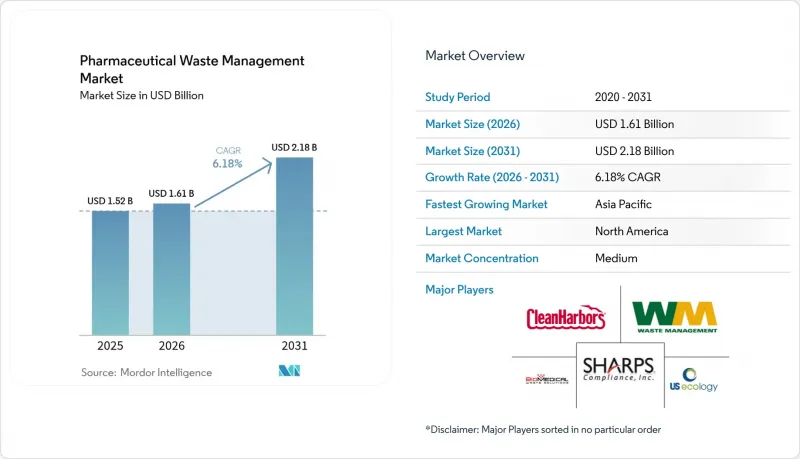
에 의하면, 의약품 폐기물 관리 시장 규모는 2025년 15억 2,000만 달러에서 2026년에는 16억 1,000만 달러로 확대되어 2026년부터 2031년까지 CAGR 6.18%로 성장을 지속하여, 2031년까지 21억 8,000만 달러에 이를 것으로 예측됩니다.
본 보고서에서는 업계를 ‘폐기물 유형(처방약, 규제 약물 등)’, ‘폐기물 발생원(병원 및 진료소, 소매 약국 등)’, ‘처리 장소(현장 처리 및 비현장 처리)’, ‘지역(북미, 유럽, 아시아태평양, 중동 및 아프리카, 남미)’별로 분류하고 있습니다. 시장 전망은 금액(달러) 기준으로 제시되어 있습니다.
세계 의약품 폐기물 관리 시장 동향 및 인사이트
의약품 생산량 증가
세계 의약품 생산량은 계속 증가하고 있으며, 바이오의약품에서는 전문적인 격리와 고온에 의한 파괴가 필요한 복잡한 세포 독성 잔류물이 배출되고 있습니다. 일회용 바이오프로세스 기술은 교차 오염 위험을 줄여주지만, 많은 재활용 업체가 처리할 수 없는 양의 플라스틱 폐기물을 발생시키고 있습니다. ‘폐수 무방류’를 목표로 하는 제조업체들은 생화학적 산소 요구량(BOD) 및 화학적 산소 요구량(COD)을 최대 90%까지 감축하고 있으며, 규정 준수 향상은 물론 명확한 운영 비용 절감도 실현하고 있습니다. 인도, 베트남,필리핀에서 부상하는 생산 거점은 해당 지역들이 처리 능력 확대에 맞추어 폐기물 처리 인프라 구축을 서두르면서 의약품 폐기물 관리 시장을 더욱 확대시키고 있습니다. 고형, 액체 및 세포독성 폐기물에 대한 솔루션을 통합할 수 있는 종합 서비스 제공업체는 현재 경쟁 우위를 누리고 있습니다.
엄격한 규제 준수
유해 의약품의 하수도로의 배출을 금지하는 미국 환경보호청(EPA)의 규제, 비소각 처리 옵션에 관한 미국 마약단속국(DEA)의 검토, 그리고 유럽의 ‘확대 생산자 책임(EPR)’에 기반한 비용 회수 모델로 인해 폐기 비용은 업스트림 단계로 이동하고 있습니다. 서브파트 P(Subpart P)를 채택한 관할 구역의 병원에서는 현재 발생부터 처분에 이르는 전 과정을 상세하게 기록한 매니페스트 관리가 의무화되어 있으며, 극소량의 폐기물을 발생시키는 기관에 대해서도 더욱 엄격한 교육 의무가 부과되고 있습니다. 독일의 제약 기업만 해도 향후 30년 동안 360억 유로의 미량 오염 물질 제거 비용이 발생할 것으로 예상되며, 이는 견고한 규정 준수 컨설팅 부서를 갖춘 의약품 폐기물 관리 시장 진출기업들이 더 대규모의 계약을 수주하고 있는 이유를 여실히 보여줍니다. 또한, 국경을 넘어 사업을 전개하는 사업자는 회수, 표시, 역물류에 관한 서로 다른 규정을 준수해야 하므로, 세계 차원의 중요성이 더욱 높아지고 있습니다.
유해 의약품 폐기물의 높은 처리 및 규정 준수 비용
규제 대상 의료 폐기물의 처리 비용은 1파운드당 0.20-0.50달러인 반면, 일반 쓰레기는 0.03-0.08달러이므로, 매월 160-360달러를 처리 비용으로 지출하는 소규모 진료소에게는 큰 부담이 되고 있습니다. 폐기된 1회 투여용 의약품에 관한 CMS(미국 의료보험 및 의료서비스 센터)의 환급 규정 또한 추가적인 행정적 부담을 가중시키고 있습니다. 잘못된 분류는 여전히 만연해 있으며, 조사에 따르면 교육 프로그램을 실시함으로써 올바른 분리 수거율이 65% 향상되는 것으로 나타났지만, 예산이 부족한 시설에서는 교육이 미뤄지고 있습니다. 가격 압박으로 인해 구매자들은 경쟁 입찰에 내몰리고 있으며, 사업자들이 새로운 소각로 및 고도 산화 장치에 대한 설비 투자 증가를 부담하고 있음에도 불구하고 이익률은 압박받고 있습니다.
부문 분석
2025년 시점에서 처방약은 의약품 폐기물 관리 시장 규모의 39.96%를 차지했습니다. 병원, 장기 요양 시설 및 소매 약국에서는 이를 혼합 유해 폐기물로 취급하며, 안전한 폐기를 위해 소각 또는 고도 산화 처리가 필요합니다. 한편, 규제 당국의 전용 규제가 강화되는 가운데, 향정신성 약물은 가장 빠르게 성장하는 분야로 연평균 성장률(CAGR) 7.35%로 성장을 지속하고, 있습니다.
DEA(미국 마약단속국)의 감시 강화가 오피오이드 우편 반송 봉투 제도를 뒷받침하고 있으며, 현재 시범 운영 중인 화학적 분해 시스템을 통해 소각 없이 분자 수준에서 완전한 분해가 가능해졌습니다. 의약품 폐기물 관리 시장에서는 추적 가능한 컨테이너, 감시된 보관소, 블록체인 로그를 통해 관리 이력의 무결성을 유지할 수 있는 공급업체가 점점 더 중요시되고 있습니다. 세포독성 항암제는 규모는 작지만 수익성이 높은 부문을 형성하고 있으며, 밀폐형 이송 장치가 필요합니다. 한편, 동물용 의약품 및 일반의약품(OTC)은 개정된 EPA의 니코틴 제외 규정에 따라 간소화된 절차가 적용되어 시장 구성을 보완하고 있습니다.
지역별 분석
2025년, 북미는 성숙한 규제 집행과 자본 집약적인 인프라를 바탕으로 의약품 폐기물 관리 시장에서 39.55%의 점유율을 차지하며 선두 자리를 유지했습니다. 최근 투자 사례로는 폐기물 발전과 물 재사용을 결합한 네바다주의 1억 1,000만 달러 규모의 소각 시설, 향후 5년간의 소각 능력을 확보할 아칸소주의 계획 중인 시설 등을 들 수 있습니다. 바젤 협약에 따른 국경을 초월한 규제 조화로 인해 미국, 캐나다, 멕시코 간의 운송이 효율화되었으며, 전국적인 서비스 네트워크를 통해 운송 경로의 최적화와 배출량 감축이 가능해졌습니다.
아시아태평양은 2031년까지 연평균 성장률(CAGR)이 8.47%로 가장 빠르게 성장하고 있는 지역입니다. 중국의 스파이 방지 규제로 인해 API 수출이 복잡해지는 동시에 국내 폐기물 처리 수요가 증가하고 있는 반면, 인도의 ‘2024년 액체 폐기물 관리 규정(중)’에서는 대량의 물을 사용하는 사업자에게 확대된 책임이 부과되고 있습니다. 일본이 막식 주사용수 시스템 도입을 추진하고 있는 것은 해당 지역이 에너지 효율이 높은 처리 방식으로 기울고 있음을 보여줍니다. 동남아시아 국가들은 계속해서 수탁 제조를 유치하고 있으며, 고도의 폐기물 처리 서비스에 대해 규모는 크지만 인프라가 제한적인 수요를 창출하고 있습니다.
유럽에서는 의약품 포장, 폐수 내 미량 오염 물질 제거, 그리고 제조자 책임을 연계하는 규제의 근본적인 재검토가 진행되고 있습니다. 독일에서 30년까지 발생한 360억 유로에 달하는 규정 준수 비용은 향후 예정된 규제 강화에 따른 재정적 부담이 얼마나 큰지를 여실히 보여주고 있습니다. 유럽의약품청(EMA)의 지침에는 환경 위험 평가에 잔류성, 생물 축적성, 독성 기준이 포함되어 있으며, 제조업체는 하류 처리 비용을 부담해야 합니다. EU 전역을 아우르는 규정 준수 체계와 고온 처리 전문 역량을 갖춘 서비스 제공업체는 자금 조달 제약으로 인해 소규모 회수 업체들이 시장에서 철수하는 가운데 시장 점유율을 확대될 전망입니다.
기타 혜택:
- 엑셀 형식 시장 예측(ME) 시트
- 3개월간의 애널리스트 지원
자주 묻는 질문
목차
제1장 서론
제2장 조사 방법
제3장 주요 요약
제4장 시장 구도
제5장 시장 규모와 성장 예측
제6장 경쟁 구도
제7장 시장 기회와 향후 전망
JHS 26.09.07According to Mordor Intelligence, the pharmaceutical waste management market size is expected to grow from USD 1.52 billion in 2025 to USD 1.61 billion in 2026 and is forecast to reach USD 2.18 billion by 2031 at 6.18% CAGR over 2026-2031.
This report Segments the Industry Into Type of Waste (Prescription Drugs, Controlled Substances, and More), Waste Generator (Hospitals & Clinics, Retail Pharmacies, and More), Treatment Site (Onsite Treatment and Offsite Treatment), and Geography (North America, Europe, Asia-Pacific, Middle East and Africa, South America). The Market Forecasts are Provided in Terms of Value (USD).
Global Pharmaceutical Waste Management Market Trends and Insights
Increasing Pharmaceutical Production
Global drug output continues to climb, and biologics add complex cytotoxic residues that require specialized containment and high-temperature destruction. Single-use bioprocessing lowers cross-contamination risk but raises plastic volumes that many recyclers cannot handle. Manufacturers pursuing zero-liquid-discharge have cut biological and chemical oxygen demand by up to 90%, showing clear operational savings alongside compliance gains. Emerging production hubs in India, Vietnam, and the Philippines deepen the pharmaceutical waste management market as these regions race to match disposal infrastructure with capacity expansion. Full-service providers able to integrate solid, liquid, and cytotoxic waste solutions now enjoy a competitive edge.
Stringent Regulatory Compliance
The EPA ban on sewering hazardous pharmaceuticals, the DEA review of non-incineration destruction options, and Europe's Extended Producer Responsibility cost-recovery model shift disposal costs upstream. Hospitals in jurisdictions adopting Subpart P now maintain detailed cradle-to-grave manifests, and very small quantity generators face sharper training mandates. German drug makers alone expect EUR 36 billion in micropollutant removal fees over three decades, underscoring why pharmaceutical waste management market participants with robust compliance consulting departments win larger contracts. Cross-border operators also navigate differing take-back, labeling, and reverse-logistics rules, reinforcing the value of global scale.
High Disposal & Compliance Costs for Hazardous Pharma Waste
Regulated medical waste often costs USD 0.20-0.50 per pound versus USD 0.03-0.08 for general trash, straining small clinics that spend USD 160-360 monthly on disposal. CMS refund rules on discarded single-dose drugs add further administrative burden. Misclassification remains rampant-studies show education programs can boost correct segregation by 65%, but facilities lacking budget postpone training. Price pressure pushes buyers to competitive bids, compressing margins even as operators shoulder higher capital outlays for new kilns or advanced oxidation units.
Other drivers and restraints analyzed in the detailed report include:
- Growing Environmental Concerns
- Advancements in Waste Treatment Technologies
- Resistance to Adoption of New Technologies
For complete list of drivers and restraints, kindly check the Table Of Contents.
Segment Analysis
Prescription drugs represented 39.96% of pharmaceutical waste management market size in 2025. Hospitals, long-term care facilities, and retail pharmacies treat these as mixed hazardous streams demanding incineration or advanced oxidation for safe destruction. Meanwhile, controlled substances comprise the fastest-growing slice, logging a 7.35% CAGR as regulators tighten diversion controls.
Heightened DEA oversight fuels mail-back envelope schemes for opioids, and pilot chemical degradation systems now deliver complete molecular breakdown without incineration. The pharmaceutical waste management market increasingly prizes vendors capable of preserving chain-of-custody integrity through tracked containers, monitored vaults, and blockchain logs. Cytotoxic chemotherapy agents form a smaller yet high-margin segment requiring closed-system transfer devices, while veterinary pharmaceuticals and OTC products round out the mix with simplified protocols under updated EPA nicotine exclusion rules.
Complete Report Scope:
- By Type of Waste
- Prescription Drugs
- Over-The-Counter (OTC) Waste
- Controlled Substances
- Chemotherapy Drugs
- Veterinary Pharmaceuticals
- Other Waste Type
- By Waste Generator
- Hospitals & Clinics
- Retail Pharmacies
- Biopharma Manufacturing Sites
- Long-term Care & Nursing Homes
- Research Laboratories
- By Treatment Site
- Onsite Treatment
- Offsite Treatment
- By Geography
- North America
- United States
- Canada
- Mexico
- Europe
- Germany
- United Kingdom
- France
- Italy
- Spain
- Rest of Europe
- Asia-Pacific
- China
- Japan
- India
- Australia
- South Korea
- Rest of Asia-Pacific
- Middle East & Africa
- GCC
- South Africa
- Rest of Middle East & Africa
- South America
- Brazil
- Argentina
- Rest of South America
- North America
Geography Analysis
North America led the pharmaceutical waste management market with 39.55% share in 2025, anchored by mature regulatory enforcement and capital-intensive infrastructure. Recent investments include a USD 110 million Nevada incinerator that couples waste-to-energy with water reuse, plus a planned Arkansas facility that guarantees incineration capacity for another five years. Cross-border harmonization under the Basel Convention streamlines shipments between the United States, Canada, and Mexico, enabling nationwide service networks to optimize routing and reduce emissions.
Asia-Pacific is the fastest-growing region at an 8.47% CAGR through 2031. China's anti-espionage rules complicate API exports and raise domestic disposal demand, while India's draft Liquid Waste Management Rules 2024 impose extended responsibility on high-volume water users. Japan's push for membrane-based water-for-injection systems underscores the region's tilt toward energy-efficient treatment methods. Southeast Asian countries continue to attract contract manufacturing, creating sizeable yet infrastructure-limited demand for advanced destruction services.
Europe is undergoing a regulatory overhaul that links pharmaceutical packaging, wastewater micropollutant removal, and producer responsibility. Germany's EUR 36 billion compliance tab over 30 years epitomizes the financial magnitude of forthcoming upgrades. European Medicines Agency guidelines now embed persistence, bio-accumulation, and toxicity criteria in environmental risk assessments, compelling manufacturers to support downstream treatment costs. Providers with pan-EU compliance platforms and specialized high-temperature capacity stand to consolidate market share as smaller collectors exit due to capital constraints.
- Stericycle
- Waste Management Inc.
- Clean Harbors Inc.
- Veolia Environnement SA
- Suez
- Sharps Compliance
- BioMedical Waste Solutions LLC
- Covanta Holding
- US Ecology Inc.
- Daniels Health
- Triumvirate Environmental
- Remondis Medison GmbH
- GIC Medical Waste Disposal
- PharmWaste Technologies Inc.
- Republic Services Inc.
- MedPro Disposal LLC
- GRP & Associates
- Sterimed Medical Waste Solutions
- Ecocycle Inc.
- Heritage Environmental Services
Additional Benefits:
- The market estimate (ME) sheet in Excel format
- 3 months of analyst support
TABLE OF CONTENTS
1 Introduction
- 1.1 Study Assumptions & Market Definition
- 1.2 Scope of the Study
2 Research Methodology
3 Executive Summary
4 Market Landscape
- 4.1 Market Overview
- 4.2 Market Drivers
- 4.2.1 Increasing Pharmaceutical Production
- 4.2.2 Stringent Regulatory Compliance
- 4.2.3 Growing Environmental Concerns
- 4.2.4 Advancements in Waste Treatment Technologies
- 4.2.5 Public Awareness and Corporate Responsibility
- 4.2.6 Expansion of Healthcare and Biopharma Manufacturing Capacity
- 4.3 Market Restraints
- 4.3.1 High Disposal & Compliance Costs for Hazardous Pharma Waste
- 4.3.2 Resistance to Adoption of New Technologies
- 4.3.3 Limited Infrastructure in Developing Regions
- 4.3.4 Fragmented Reverse Logistics Regulations Across Borders
- 4.4 Porter's Five Forces Analysis
- 4.4.1 Threat of New Entrants
- 4.4.2 Bargaining Power of Buyers
- 4.4.3 Bargaining Power of Suppliers
- 4.4.4 Threat of Substitutes
- 4.4.5 Intensity of Rivalry
5 Market Size & Growth Forecasts (Value in USD)
- 5.1 By Type of Waste
- 5.1.1 Prescription Drugs
- 5.1.2 Over-The-Counter (OTC) Waste
- 5.1.3 Controlled Substances
- 5.1.4 Chemotherapy Drugs
- 5.1.5 Veterinary Pharmaceuticals
- 5.1.6 Other Waste Type
- 5.2 By Waste Generator
- 5.2.1 Hospitals & Clinics
- 5.2.2 Retail Pharmacies
- 5.2.3 Biopharma Manufacturing Sites
- 5.2.4 Long-term Care & Nursing Homes
- 5.2.5 Research Laboratories
- 5.3 By Treatment Site
- 5.3.1 Onsite Treatment
- 5.3.2 Offsite Treatment
- 5.4 By Geography
- 5.4.1 North America
- 5.4.1.1 United States
- 5.4.1.2 Canada
- 5.4.1.3 Mexico
- 5.4.2 Europe
- 5.4.2.1 Germany
- 5.4.2.2 United Kingdom
- 5.4.2.3 France
- 5.4.2.4 Italy
- 5.4.2.5 Spain
- 5.4.2.6 Rest of Europe
- 5.4.3 Asia-Pacific
- 5.4.3.1 China
- 5.4.3.2 Japan
- 5.4.3.3 India
- 5.4.3.4 Australia
- 5.4.3.5 South Korea
- 5.4.3.6 Rest of Asia-Pacific
- 5.4.4 Middle East & Africa
- 5.4.4.1 GCC
- 5.4.4.2 South Africa
- 5.4.4.3 Rest of Middle East & Africa
- 5.4.5 South America
- 5.4.5.1 Brazil
- 5.4.5.2 Argentina
- 5.4.5.3 Rest of South America
- 5.4.1 North America
6 Competitive Landscape
- 6.1 Market Concentration
- 6.2 Market Share Analysis
- 6.3 Company Profiles (includes Global level Overview, Market level overview, Core Segments, Financials as available, Strategic Information, Market Rank/Share for key companies, Products & Services, and Recent Developments)
- 6.3.1 Stericycle
- 6.3.2 Waste Management Inc.
- 6.3.3 Clean Harbors Inc.
- 6.3.4 Veolia Environnement SA
- 6.3.5 Suez SA
- 6.3.6 Sharps Compliance Inc.
- 6.3.7 BioMedical Waste Solutions LLC
- 6.3.8 Covanta Holding Corporation
- 6.3.9 US Ecology Inc.
- 6.3.10 Daniels Health
- 6.3.11 Triumvirate Environmental
- 6.3.12 Remondis Medison GmbH
- 6.3.13 GIC Medical Waste Disposal
- 6.3.14 PharmWaste Technologies Inc.
- 6.3.15 Republic Services Inc.
- 6.3.16 MedPro Disposal LLC
- 6.3.17 GRP & Associates
- 6.3.18 Sterimed Medical Waste Solutions
- 6.3.19 Ecocycle Inc.
- 6.3.20 Heritage Environmental Services
7 Market Opportunities & Future Outlook
- 7.1 White-space & Unmet-need Assessment


