

|
시장보고서
상품코드
2154753
남미의 PIN 기반 출입 통제 : 시장 점유율 분석, 업계 동향과 통계, 성장 예측(2026-2031년)South America Pin-Based Access Control - Market Share Analysis, Industry Trends & Statistics, Growth Forecasts (2026 - 2031) |
||||||
 Mordor Intelligence
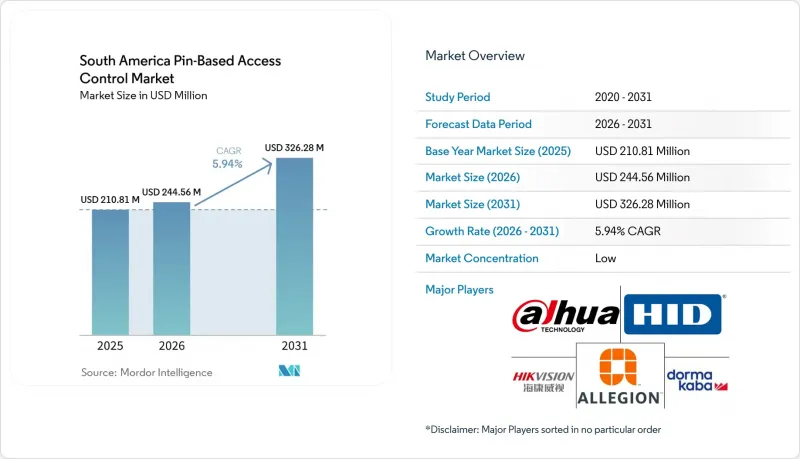
에 따르면 남미의 PIN 기반 출입 통제 시장 규모는 2025년 2억 1,081만 달러에서 2026년에는 2억 4,456만 달러로, 더욱 2031년까지 3억 2,628만 달러로 확대될 것으로 예측되며, 2026년부터 2031년까지 CAGR 5.94%를 기록할 전망입니다.
남미 PIN 기반 출입 통제 시장의 동향 및 인사이트
증가하는 보안 및 개인정보 보호에 대한 우려
보안 및 개인정보 보호에 대한 우려가 높아짐에 따라 남미의 PIN 기반 출입 통제 시장에서 체계적인 조달이 촉진되고 있습니다. 브라질, 콜롬비아, 멕시코는 미주 대륙 전체 살인 사건의 70%를 차지하고 있으며, 주요 상업 및 금융 회랑에 대한 보안 압박이 가중되고 있습니다. 브라질의 LGPD(개인정보 보호법)는 데이터 처리 사업자에게 개인정보 보호를 위한 보안 대책 도입을 의무화하고 있습니다. 2024년 12월에 공포된 ANPD(국가데이터보호청) 결의 제23호에서는 소규모 데이터 처리 사업자에 대한 보안 대책 요건이 규정되었습니다. 이러한 요건은 신뢰성 높은 출입 기록을 작성하고 감사에 대응할 수 있는 시스템을 권장하는 것입니다. 따라서 기계식 잠금 장치를 사용하는 시설에서는 네트워크화된 PIN 시스템이나 카드·PIN 병용 시스템으로의 전환이 진행되는 추세입니다.
중소기업을 위한 합리적인 가격의 보안 시스템 도입
클라우드 구독을 통해 초기 비용이 절감됨에 따라, 중소기업은 남미의 PIN 기반 출입 통제 시장에서 진입 장벽이 낮은 고객층으로 자리 잡고 있습니다. 문별 월정액 요금제 덕분에 온사이트 서버가 불필요해지며, 초기 도입 규모도 축소됩니다. 많은 소규모 기업은 설비 투자가 제한적인 경우에도 보안상의 과제를 인식하고 있습니다. 현지 제공업체나 세계 벤더는 단계별 요금제나 관리형 서비스를 제공함으로써 이러한 수요에 대응할 수 있습니다. 경비원 인건비 상승 또한 소규모 시설에서 유인 출입 관리 지점 대신 전자 출입 관리 시스템을 이용하도록 촉진하고 있습니다.
생체 인증 및 모바일 인증으로의 전환
남미의 PIN 기반 출입 통제 시장에서 생체 인증 및 모바일 인증의 보급으로 인해, PIN 전용 시스템이 대상으로 하는 고객 기반은 점차 축소되고 있습니다. HID의 보고서에 따르면, 2025년에는 조직의 73%가 다중 요소 인증 전략의 일환으로 생체 인증을 채택했습니다. 2025년 11월 브라질에서 실시된 조사에 따르면, 인증 수단으로서 얼굴 인증이 지문 인증보다 더 널리 보급된 것으로 나타났습니다. 2026년 6월에 시행된 브라질의 ‘스포츠 종합법’에서는 대규모 경기장 및 스타디움에 얼굴 인증 도입이 의무화되어 있습니다. 많은 조직이 다단계 인증 구성에서 PIN을 백업 요소로 사용하고 있기 때문에 PIN이 완전히 폐지되는 것은 아닙니다. 하지만 규제 대상인 대규모 시설에서는 생체 인증이나 모바일 액세스에 대한 투자를 확대하는 경향이 있을 것으로 보입니다.
부문 분석
2025년, 남미의 PIN 기반 출입 통제 시장에서 하드웨어가 72.12%의 점유율을 차지했습니다. 이는 새로운 시스템을 도입할 때 리더기, 컨트롤러, 잠금 장치 및 배선이 필요하기 때문입니다. 키패드 리더기나 PIN 컨트롤러는 오프라인에서도 접근이 가능하기 때문에 여전히 중요한 역할을 하고 있습니다. 또한, 기존 도어 네트워크에 클라우드 관리 기능을 추가할 때에도 하드웨어는 필수적입니다. 소프트웨어는 여러 도어에 걸친 중앙 집중식 관리, 감사 기록 및 모바일 관리를 지원합니다.
서비스 부문은 2031년까지 연평균 성장률(CAGR) 6.44%로 성장할 것으로 예상되며, 이는 각 구성요소 중 가장 높은 성장률입니다. 설치, 관리형 모니터링, 구독 및 기술 지원은 장비 판매 후에도 지속적인 수익을 창출합니다. 이는 일회성 설치 계약이 아닌 장기적인 고객 관계를 구축하고자 하는 통합 업체에게 중요합니다. 브라질의 공공 입찰에서는 통합형 액세스 시스템에 대해 사이버 보안 관련 기능을 요구하는 사례가 증가하고 있으며, 이는 모니터링 및 규정 준수 지원을 포함한 서비스 제안을 뒷받침하는 요인이 되고 있습니다. 따라서 남미의 PIN 기반 출입 통제 시장에서는 하드웨어와 지속적인 지원을 결합할 수 있는 공급업체가 우위를 점할 것으로 예상됩니다.
2025년, 남미의 PIN 기반 출입 통제 시장에서 대기업이 61.28%의 점유율을 차지했습니다. 이는 대기업이 복잡한 시설 관리, 더 큰 예산, 그리고 공식적인 감사 요건을 가지고 있기 때문입니다. 은행, 정부 기관, 기술 기업들은 PIN, 카드, 생체인식 리더기를 결합한 다층적 시스템을 자주 도입하고 있습니다. 또한, 여러 거점을 보유한 이러한 기업들은 계약당 지출액도 높은 경향을 보입니다. 이러한 구매자들은 앞으로도 대규모 프로젝트와 갱신 수요를 계속 주도할 것입니다.
중소기업(SME) 시장은 2031년까지 연평균 성장률(CAGR) 6.23%로 성장할 것으로 예측됩니다. 클라우드 기반 관리형 플랫폼을 통해 전용 서버, 사내 IT 팀, 대규모 도입 계약의 필요성이 줄어듭니다. 소규모 기업도 전자 출입 통제 시스템을 활용함으로써 출입구 인건비를 절감할 수 있습니다. LGPD(브라질 개인정보 보호법)의 의무는 조직 규모와 관계없이 개인 데이터를 처리하는 민간 사업자에게 적용됩니다. 이에 따라 브라질의 소규모 기업에서도 감사 가능한 출입 기록 시스템 도입이 규정 준수 요건으로 확산되고 있습니다.
기타 혜택:
- 엑셀 형식의 시장 예측(ME) 시트
- 3개월간 애널리스트 지원
자주 묻는 질문
목차
제1장 소개
- 조사 가정과 시장 정의
- 조사 범위
제2장 조사 방법
제3장 주요 요약
제4장 시장 구도
- 시장 개요
- 시장 성장 촉진요인
- 시장 성장 억제요인
- 거시경제 요인이 시장에 미치는 영향
- 업계 공급망 분석
- 기술 동향
- 규제 상황
- Porter's Five Forces 분석
제5장 시장 규모와 성장 예측
- 구성요소별
- 조직 규모별
- 최종 이용 산업별
- 전개 방식별
- 인증 모드별
- 지역별
- 브라질
- 아르헨티나
- 콜롬비아
- 칠레
- 기타 남미 국가
제6장 경쟁 구도
- 시장 집중도
- 전략적 동향
- 시장 점유율 분석
- 기업 개요
- Allegion plc
- dormakaba Holding GmbH
- HID Global Corporation
- Hangzhou Hikvision Digital Technology Co., Ltd.
- Zhejiang Dahua Technology Co., Ltd.
- Axis Communications AB
- Avigilon Corporation
- SALTO Systems, S.L.
- Nedap N.V.
- Identiv, Inc.
- Napco Security Technologies, Inc.
- Suprema Inc.
- ZKTeco Co., Ltd.
- Anviz Global Inc.
- Gallagher Group Limited
- Paxton Access Limited
- Inner Range Pty Ltd
- Keri Systems, Inc.
- Essex Electronics, Inc.
- DoorKing, Inc.
- Silgan Holdings Inc.
- ALPLA Werke Alwin Lehner GmbH & Co KG
제7장 시장 기회와 향후 전망
KSM 26.10.29According to Mordor Intelligence, the South America Pin-Based access control market size is projected to expand from USD 210.81 million in 2025 to USD 244.56 million in 2026, and to USD 326.28 million by 2031, registering a CAGR of 5.94% between 2026 and 2031.
South America Pin-Based Access Control Market Trends and Insights
Rising Security and Privacy Concerns
Rising security and privacy concerns are supporting structured procurement in the South America Pin-Based Access Control Market. Brazil, Colombia, and Mexico accounted for 70% of homicides in the Americas, concentrating security pressure in major commercial and financial corridors. Brazil's LGPD requires processing agents to adopt security measures that protect personal data. ANPD Resolution No. 23, published in December 2024, set requirements for security measures by small processing agents. These requirements favor systems that create reliable entry records and can support audits. Facilities using mechanical locks are therefore more likely to replace them with networked PIN or card-and-PIN systems.
Affordable Security Adoption by Small and Medium-Sized Enterprises
Small and medium-sized enterprises are becoming more accessible customers for the South America Pin-Based Access Control Market because cloud subscriptions reduce initial costs. Monthly per-door pricing eliminates the need for an on-site server and reduces the scale of the initial installation. Many smaller firms have identified security gaps even when capital spending remains limited. Local providers and global vendors can address this demand with tiered offers and managed services. Rising labor costs for guarding also encourage smaller sites to use electronic entry controls instead of staffed access points.
Biometric and Mobile Authentication Substitution
Biometric and mobile credentials are limiting the addressable base for PIN-only systems in the South America Pin-Based Access Control Market. HID reported that 73% of organizations used biometrics as part of their multi-factor authentication strategy in 2025. A November 2025 Brazilian survey found that facial recognition had become more popular than fingerprint recognition for authentication. Brazil's General Sports Law took effect in June 2026 and requires facial biometrics at large arenas and stadiums. PINs are not always eliminated because many organizations use them as a backup factor in a multi-factor configuration. Even so, large regulated sites are likely to allocate more spending to biometrics and mobile access.
Other drivers and restraints analyzed in the detailed report include:
- Cloud-Managed and Mobile-Enabled PIN Administration
- Growth of Commercial, Logistics, and Multi-Tenant Facilities
- PIN Theft, Shoulder Surfing, and Credential Sharing
For complete list of drivers and restraints, kindly check the Table Of Contents.
Segment Analysis
Hardware held 72.12% of the South America Pin-Based Access Control Market share in 2025 because every new system requires readers, controllers, locks, and cabling. Keypad readers and PIN controllers remain important because they provide offline-capable access. Hardware also remains necessary when a site adds cloud administration to an existing door network. Software supports centralized control, audit records, and mobile administration across multiple doors.
Services are forecast to grow at an 6.44% CAGR through 2031, the highest rate among components. Installation, managed monitoring, subscriptions, and technical support create recurring revenue after the equipment sale. This is important for integrators who want longer customer relationships rather than isolated installation contracts. Brazilian public tenders increasingly require cybersecurity-related capabilities for integrated access systems, which can support service proposals with monitoring and compliance support. The South America Pin-Based Access Control Market is therefore likely to reward suppliers that can pair hardware with ongoing support.
Large enterprises held 61.28% of the South America Pin-Based Access Control Market share in 2025 because they manage complex facilities, larger budgets, and formal audit requirements. Banks, government organizations, and technology companies often use layered systems with PIN, card, and biometric readers. Their multi-site estates also support higher spending per contract. These buyers will continue to drive large projects and replacement demand.
SMEs are forecast to grow at an 6.23% CAGR through 2031. Cloud-managed platforms reduce the need for dedicated servers, internal IT teams, and large installation contracts. Smaller firms can use electronic access controls to reduce staffing costs at entry points. LGPD obligations apply to private entities that process personal data, regardless of organization size. This broadens the compliance case for auditable entry records among smaller Brazilian businesses.
Complete Report Scope:
- By Component
- Hardware
- Keypad Readers
- PIN Controllers
- Electronic Locks and Door Hardware
- Power, Cabling, and Ancillary Hardware
- Software
- On-Premises Access-Control Software
- Cloud-Based Access-Control Software
- Mobile and Web Administration
- Services
- Professional Services
- Managed Services
- Hardware
- By Organization Size
- Small and Medium-Sized Enterprises
- Large Enterprises
- By End-User Industry
- Banking and Financial Services
- Government Services
- Retail
- Information Technology and Telecommunications
- Healthcare
- Power and Utilities
- Residential
- Other End-User Industries
- By Deployment Mode
- Standalone
- Networked On-Premises
- Cloud-Managed
- Hybrid
- By Authentication Mode
- PIN Only
- Card and PIN
- Mobile Credential and PIN
- PIN With Biometric or Multi-Factor Authentication
- By Geography
- Brazil
- Argentina
- Colombia
- Chile
- Rest of South America
List of Companies Covered in this Report:
- Allegion plc
- dormakaba Holding GmbH
- HID Global Corporation
- Hangzhou Hikvision Digital Technology Co., Ltd.
- Zhejiang Dahua Technology Co., Ltd.
- Axis Communications AB
- Avigilon Corporation
- SALTO Systems, S.L.
- Nedap N.V.
- Identiv, Inc.
- Napco Security Technologies, Inc.
- Suprema Inc.
- ZKTeco Co., Ltd.
- Anviz Global Inc.
- Gallagher Group Limited
- Paxton Access Limited
- Inner Range Pty Ltd
- Keri Systems, Inc.
- Essex Electronics, Inc.
- DoorKing, Inc.
- Silgan Holdings Inc.
- ALPLA Werke Alwin Lehner GmbH & Co KG
Additional Benefits:
- The market estimate (ME) sheet in Excel format
- 3 months of analyst support
TABLE OF CONTENTS
1 INTRODUCTION
- 1.1 Study Assumptions and Market Definition
- 1.2 Scope of the Study
2 RESEARCH METHODOLOGY
3 EXECUTIVE SUMMARY
4 MARKET LANDSCAPE
- 4.1 Market Overview
- 4.2 Market Drivers
- 4.2.1 Rising Security and Privacy Concerns
- 4.2.2 Affordable Security Adoption by Small and Medium-Sized Enterprises
- 4.2.3 Compatibility With Existing Access-Control Infrastructure
- 4.2.4 Cloud-Managed and Mobile-Enabled PIN Administration
- 4.2.5 Growth of Commercial, Logistics, and Multi-Tenant Facilities
- 4.2.6 Retrofit Demand From High-Crime Urban Corridors
- 4.3 Market Restraints
- 4.3.1 Biometric and Mobile Authentication Substitution
- 4.3.2 PIN Theft, Shoulder Surfing, and Credential Sharing
- 4.3.3 Inflation-Driven Hardware and Installation Costs
- 4.3.4 Fragmented Installer Capability and After-Sales Support
- 4.4 Impact of Macroeconomic Factors on the Market
- 4.5 Industry Supply-Chain Analysis
- 4.6 Technology Outlook
- 4.7 Regulatory Landscape
- 4.8 Porter's Five Forces Analysis
- 4.8.1 Threat of New Entrants
- 4.8.2 Bargaining Power of Suppliers
- 4.8.3 Bargaining Power of Buyers
- 4.8.4 Threat of Substitutes
- 4.8.5 Intensity of Competitive Rivalry
5 MARKET SIZE AND GROWTH FORECASTS (VALUE)
- 5.1 By Component
- 5.1.1 Hardware
- 5.1.1.1 Keypad Readers
- 5.1.1.2 PIN Controllers
- 5.1.1.3 Electronic Locks and Door Hardware
- 5.1.1.4 Power, Cabling, and Ancillary Hardware
- 5.1.2 Software
- 5.1.2.1 On-Premises Access-Control Software
- 5.1.2.2 Cloud-Based Access-Control Software
- 5.1.2.3 Mobile and Web Administration
- 5.1.3 Services
- 5.1.3.1 Professional Services
- 5.1.3.2 Managed Services
- 5.1.1 Hardware
- 5.2 By Organization Size
- 5.2.1 Small and Medium-Sized Enterprises
- 5.2.2 Large Enterprises
- 5.3 By End-User Industry
- 5.3.1 Banking and Financial Services
- 5.3.2 Government Services
- 5.3.3 Retail
- 5.3.4 Information Technology and Telecommunications
- 5.3.5 Healthcare
- 5.3.6 Power and Utilities
- 5.3.7 Residential
- 5.3.8 Other End-User Industries
- 5.4 By Deployment Mode
- 5.4.1 Standalone
- 5.4.2 Networked On-Premises
- 5.4.3 Cloud-Managed
- 5.4.4 Hybrid
- 5.5 By Authentication Mode
- 5.5.1 PIN Only
- 5.5.2 Card and PIN
- 5.5.3 Mobile Credential and PIN
- 5.5.4 PIN With Biometric or Multi-Factor Authentication
- 5.6 By Geography
- 5.6.1 Brazil
- 5.6.2 Argentina
- 5.6.3 Colombia
- 5.6.4 Chile
- 5.6.5 Rest of South America
6 COMPETITIVE LANDSCAPE
- 6.1 Market Concentration
- 6.2 Strategic Moves
- 6.3 Market Share Analysis
- 6.4 Company Profiles (includes Global Level Overview, Market Level Overview, Core Segments, Financials as available, Strategic Information, Market Rank/Share, Products and Services, Recent Developments)
- 6.4.1 Allegion plc
- 6.4.2 dormakaba Holding GmbH
- 6.4.3 HID Global Corporation
- 6.4.4 Hangzhou Hikvision Digital Technology Co., Ltd.
- 6.4.5 Zhejiang Dahua Technology Co., Ltd.
- 6.4.6 Axis Communications AB
- 6.4.7 Avigilon Corporation
- 6.4.8 SALTO Systems, S.L.
- 6.4.9 Nedap N.V.
- 6.4.10 Identiv, Inc.
- 6.4.11 Napco Security Technologies, Inc.
- 6.4.12 Suprema Inc.
- 6.4.13 ZKTeco Co., Ltd.
- 6.4.14 Anviz Global Inc.
- 6.4.15 Gallagher Group Limited
- 6.4.16 Paxton Access Limited
- 6.4.17 Inner Range Pty Ltd
- 6.4.18 Keri Systems, Inc.
- 6.4.19 Essex Electronics, Inc.
- 6.4.20 DoorKing, Inc.
- 6.4.21 Silgan Holdings Inc.
- 6.4.22 ALPLA Werke Alwin Lehner GmbH & Co KG
7 MARKET OPPORTUNITIES AND FUTURE OUTLOOK
- 7.1 White-Space and Unmet-Need Assessment


